Josh Staub has had quite a career. The renowned Disney animator and visual effects artist has worked on some of the biggest hits of the modern era, including Wreck-It Ralph, Tangled, and the iconic Frozen, which is more of a phenomenon than just a film.
But despite the accolades, he was ready for a new challenge. A few years ago, he began developing a script for a new animated series, a project that would take him on an incredible and unexpected journey.
New project sparks a deep connection with the Deaf community
Staub began developing an idea for an animated series that would tackle big themes of family, empathy, and the ways we communicate with one another. There was just one complication: the animated family at the core of the series would include characters who are deaf.
Staub knew that if he wanted to pursue this idea, called Small Talk, he couldn’t simply translate parts of his script into American Sign Language for the animation. As a hearing person, he needed to really learn much more about Deaf culture and the community behind it.
He began learning ASL from a Deaf teacher, which he says is the absolute best way to learn. Staub took to the lessons immediately, writing in a LinkedIn post, “I began learning about Deaf culture and fell in love with the Deaf community, forging deep friendships.”
The people he met as he forged friendships within the Deaf community became collaborators on the series, helping shape the animation, filmmaking, story, and art behind the show.
But as Staub got further along on his journey, he began using ASL learning apps to supplement his in-person instruction. That’s when he saw another opportunity to take the world, characters, and message of Small Talk even further.
An opportunity bigger than the series
The Small Talk ASL app was born.
“I want it to be very clear that learning from a Deaf ASL teacher is by far the best way to learn the language,” Staub told Upworthy.
Apps are a useful supplement, but Staub found the existing ones had some frustrating limitations: most notably, they weren’t very engaging, typically featuring bland photos or short video loops of people signing with little expression.
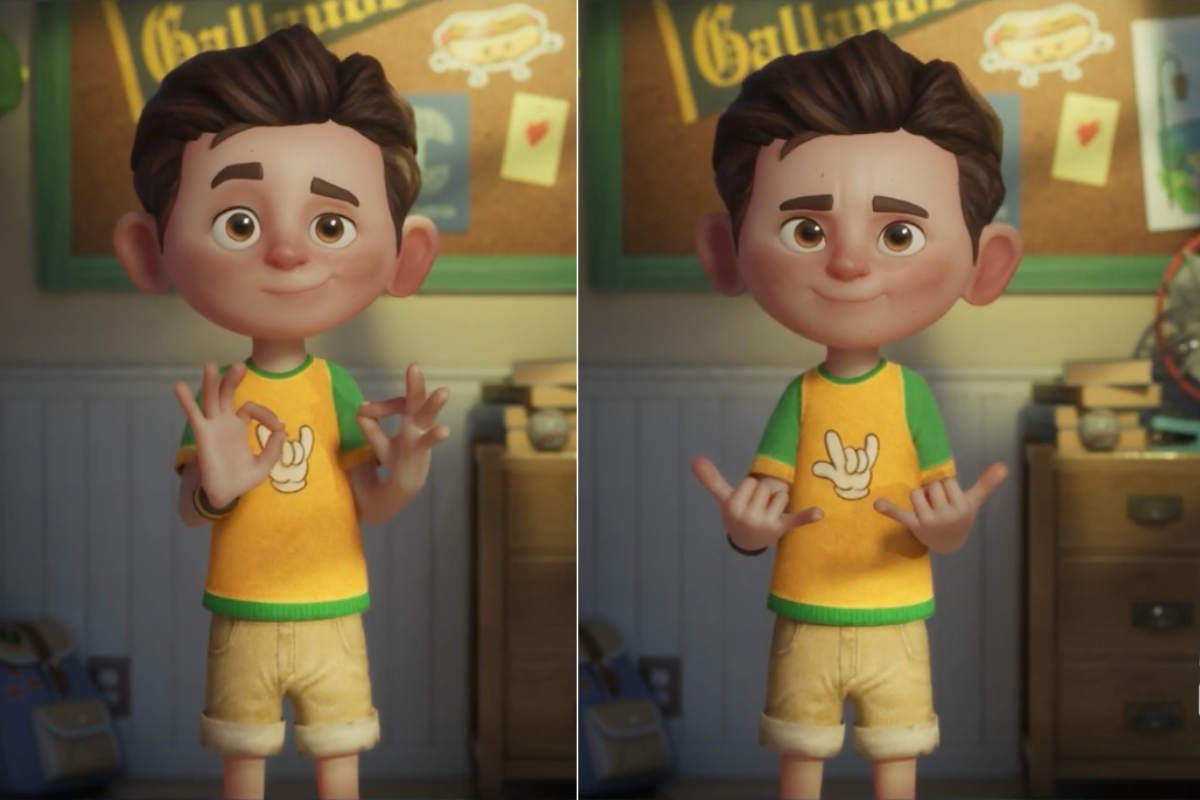
That’s where the lively design of one of Staub’s characters, Oscar, comes into play. In the app, Oscar isn’t your teacher, he’s your friend.
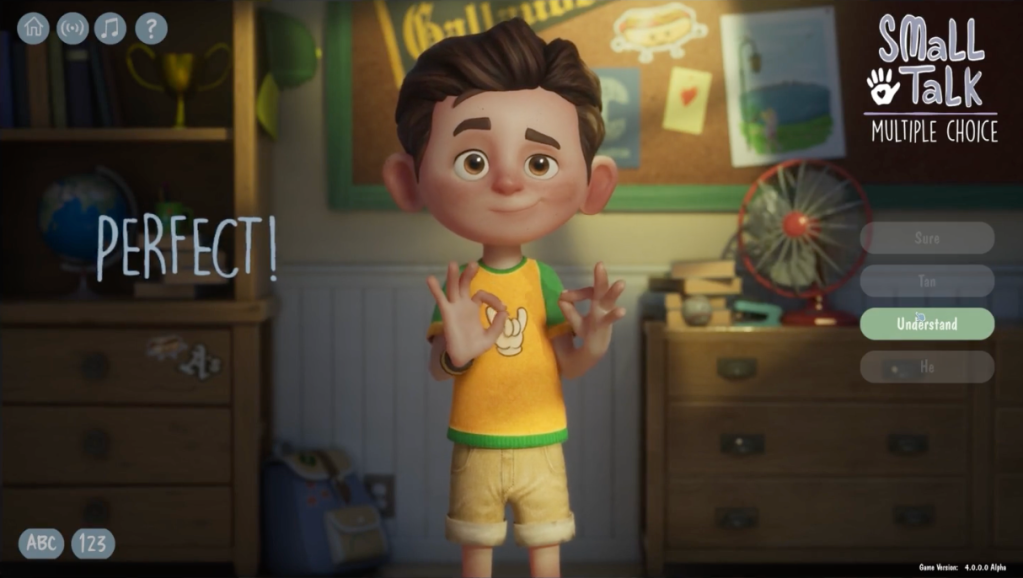
“[The app] helps hearing and Deaf of all ages learn the rich and expressive ASL language in an innovative and engaging way like only animation can,” the Small Talk website states.
Because Oscar is fully animated as he signs and fingerspells, users can rotate him to view his signs from different angles, making it easier to see how his hands and fingers move. They can also adjust the playback speed, slowing it down as they learn or speeding it up to test their fluency and handshape recognition. Crucially, they can experience Oscar’s larger-than-life facial expressions (unsurprisingly reminiscent of Disney and Pixar characters), which are an essential part of communication in ASL.
“Facial expressions are supremely important with ASL and that is where the whole ‘character’ or ‘friend’ part comes in. Pre-recorded videos of teachers tend to be pretty stern,” Staub said. “Deaf folks in general are extremely outgoing and ‘animated’ when they communicate, so why not express that in the character?”
But perhaps the most important thing about the app is that it doesn’t cost a penny. And it never will.
“It’s completely free, and because there should never be an obstacle to learning ASL, we’re committed to keeping it that way, forever,” Staub said.
It’s all backed by a world-class team of Deaf, hard-of-hearing, and hearing animators, consultants, engineers, and producers.
App doesn’t replace anyone or anything
Staub doesn’t really view other ASL learning apps as competition. He sees Small Talk ASL as just another tool in the world, admittedly a pretty fun one, to help more people learn ASL and overcome barriers to human communication.
“There are 48 million Deaf and hard-of-hearing people in America, yet the… community is, in many ways, an isolated community. There is a hidden barrier which impedes a hearing person and a deaf person from building deep relationships. ASL overcomes that barrier,” the website states. It adds that about 70% of parents of deaf children don’t learn ASL.
Further research shows that parents are often discouraged from learning ASL because they’re told it will be difficult, and some are led to believe it will interfere with their child’s ability to learn spoken language, which isn’t true.
An app like Small Talk ASL could help make it a little easier, and a little more fun, for anyone who wants to communicate with Deaf and hard-of-hearing people.
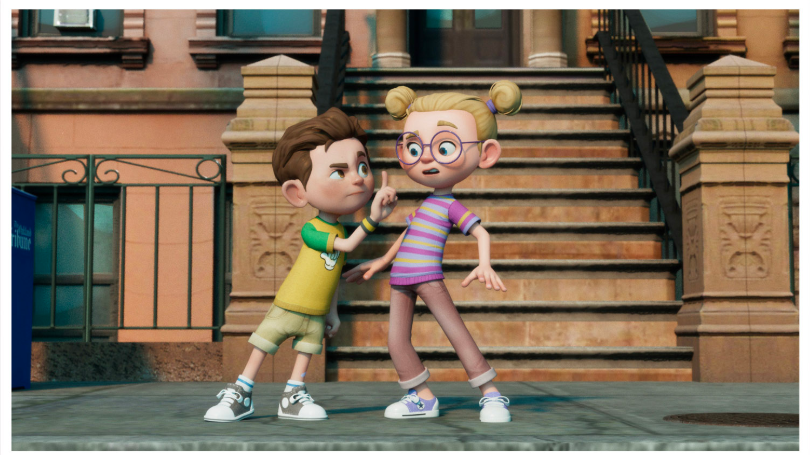
Photo credit: Jubilee Studios
Learning from an actual Deaf teacher is the best way to learn the language. Apps and videos can help. Small Talk ASL brings a special flavor to the table: a friendly character you’ll grow to love and free access forever.
Anyone can download the app from the Apple App Store or the Microsoft Store right now. Instead of asking for payment, Staub asks just one thing:
“For some of you, Oscar is your first Deaf friend. Don’t make him your last. Learn about Deaf culture. Seek opportunities to immerse yourself and communicate with the Deaf community. Make mistakes. Keep trying. The Deaf community is diverse and inviting and will embrace you as they have me. It might just change your life. It changed mine.”
This article originally appeared in July. It has been updated.