
People always talk about how crazy today’s fashion trends are. When you take a look at our history, though, you’ll find that humans have always done questionable things in the name of style.
From toxic beauty treatments to accessories that made it difficult to walk, see, or even breathe, fashion has long been tied to ideas about status, wealth, and desirability. Practicality…not so much. Looking back at some of history’s strangest fads reveals just how far people have been willing to go in pursuit of the perfect look, long before the era of BBLs and hideous but stupidly expensive handbags.
Here are some of the most unusual fashion trends people eagerly embraced throughout history, despite the risks, inconvenience, or sheer ridiculousness involved.
Consumptive chic (18th & 19th century)
Long before heroine chic, Victorian women tried to mimic the symptoms of tuberculosis, aka consumption, because paleness and frailty conveyed ideas of a pure, tragically beautiful leading lady from a Brontë novel. Fragility, after all, was considered peak femininity at the time.
If you weren’t lucky enough to be afflicted with the disease, you could use makeup to get the pale skin and crimson lips, and wear a dress that slumped your posture.
Eye-Popping Belladonna (Renaissance Venice to Victorian era)
As the story goes, dilated pupils were considered incredibly attractive, and Venetian ladies of the court would squeeze drops of highly toxic belladonna into their eyes to achieve the look. Even though side effects included blurred vision and even blindness.
And again, as consumptive chic took over Victorian England, the drops once again became popular as a way to make the eyes look watery and on the verge of death. Hot.
Hobble Skirts (1908 and 1914)
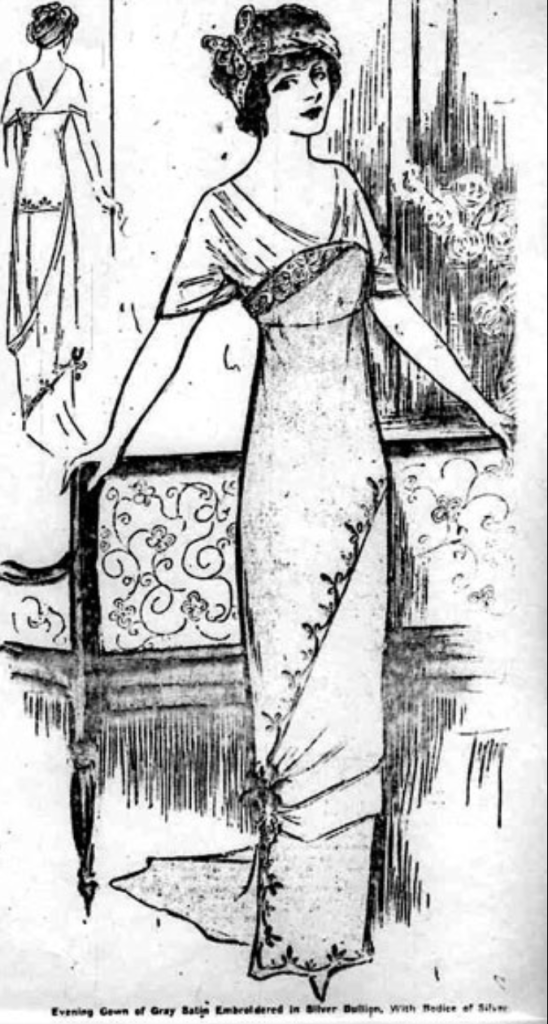
As the name suggests, these extremely tight ankle-length skirts, first introduced in France, were so snug that the wearers were forced to take teeny tiny steps.
When World War I began, these skirts were thought to be seen as wasteful, and quickly went out of vogue. However, they paved the way for the more timeless pencil skirt.
Lavish nail guards (Qing Dynasty)
Nails in general have long been adorned and revered in Chinese culture. To protect them while growing, high-status women would wear meticulously decorated nail guards (or hu zhi) made from metal, shells, and even jade. Peonies, symbolizing good luck and wealth, were a popular motif.
While most would only wear this sharp, talon-like nail guard on either the ring or pinky finger, Empress Dowager Cixi, who ruled from 1835 to 1908, infamously wore them on all of her nails. The behavior helped lead to her dynasty’s downfall, as it became a symbol of the excessive opulence of imperial rule.
Black teeth (Edo period, Elizabethan era)
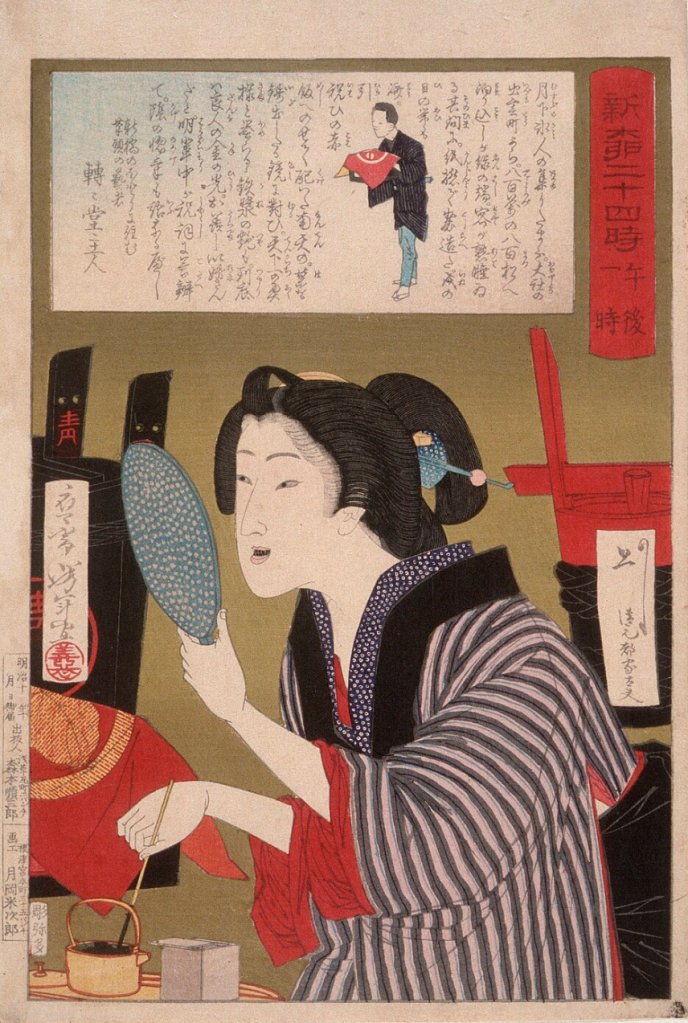
In Japanese culture, pitch-black objects were viewed as profoundly beautiful. Against the stark white face paint worn by nobility, natural teeth looked dingy and yellow; blackening them created a striking, intentional contrast. And thus, Ohaguro, the practice of teeth blackening with a solution of iron filings and vinegar, was born. As extreme as it may seem through a modern lens, the iron-based mixture acted as an early dental sealant, filling pores and protecting the enamel, which actually helped prevent tooth decay.
Meanwhile in Europe, when Elizabeth I became Queen of England in 1558 and gained access to sugar by means of colonization, she quickly developed a sweet tooth…which caused her teeth to decay and become black. Because terrible dental hygiene soon implied that someone had means to buy sugary food, English women in high society tried to blacken their own teeth so that they could showcase status.
Fake pregnancy pads (1793)
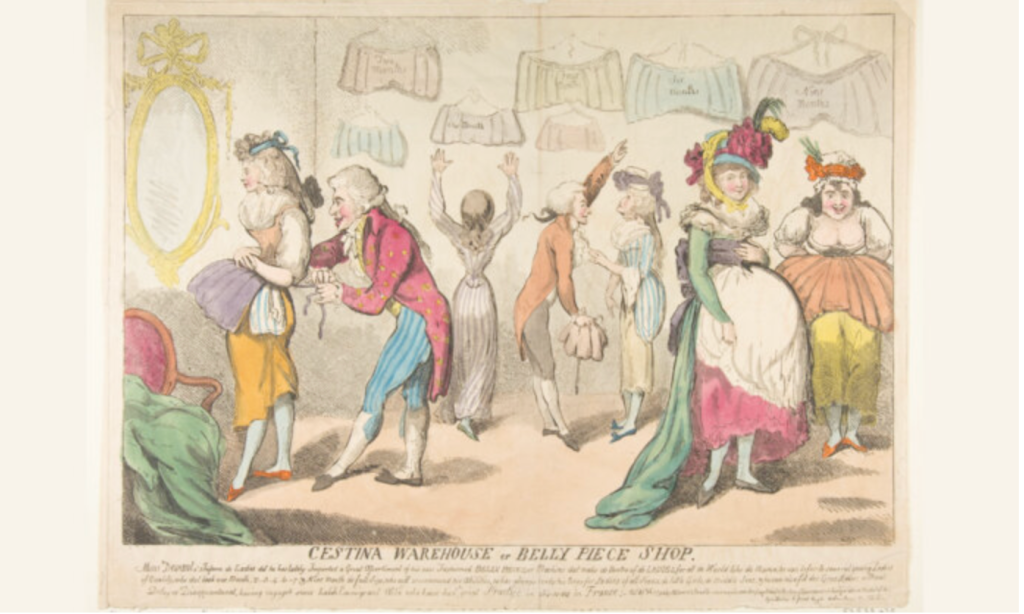
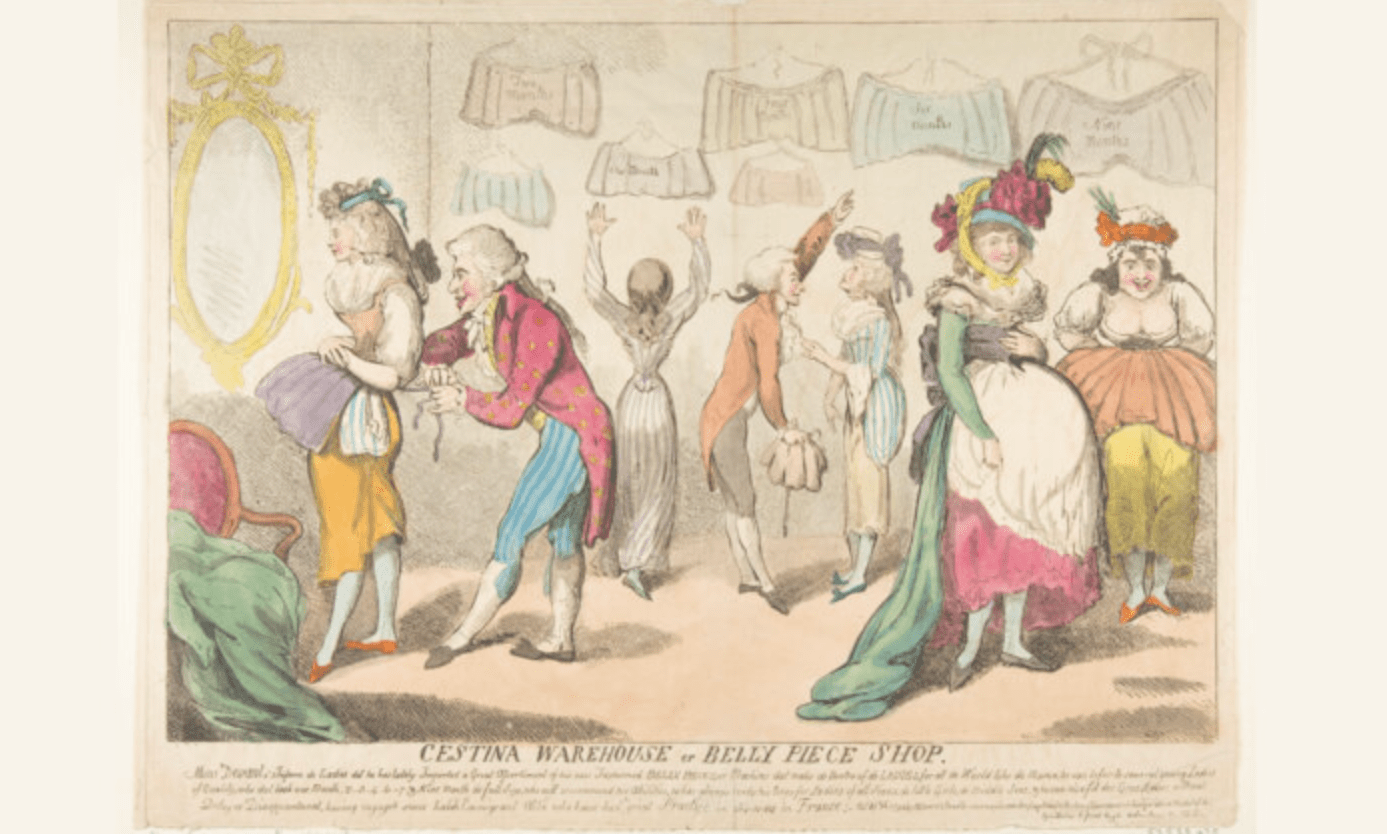
In 1793 England, the chicest thing you could do would be to buy a false bump, aptly named The Pad, to look as though you were expecting. The trend was supposedly started by a well-to-do woman named Lady Charlotte Campbell, who tried to mimic the look of the classical statues she saw while touring the country.
This desire to look pregnant also might have been exacerbated by the empire waist dress, which very much showed any protruding bellies. Campbell and her cohorts likely were inundated with women flaunting their fertility and tried to follow suit.
This, of course, would only be the beginning of using padding to emphasize certain womanly features.
Bosom rings (late 1890s)
That’s right, the uptight, super restrained Victorians were also into nipple piercings, or “anneaux de sein,” as they were called in Paris, where they were first offered. These rings were inserted through the nipple, sometimes linked together, with a delicate chain, and thought to keep a woman in a state of constant arousal.
And if you think women were the only ones behind these wild fashion crazes, guess again.
Macaroni hats (1760s Britain)
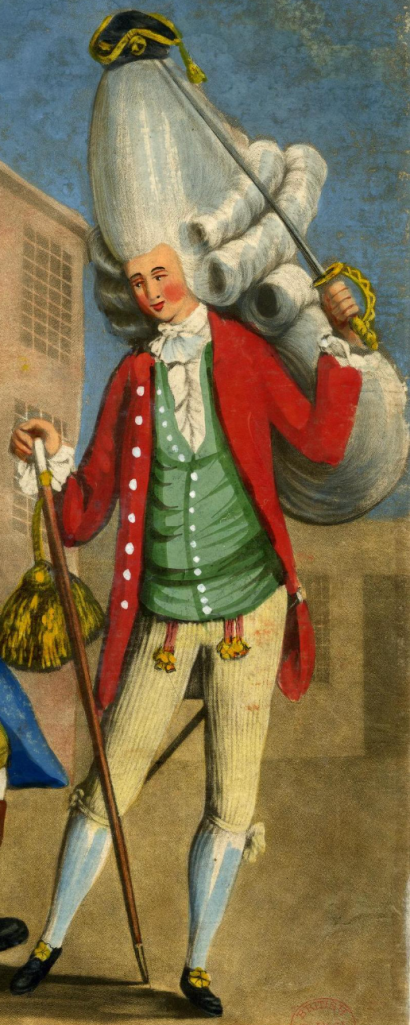
Macaroni hats are essentially a tiny, miniature version of the traditional tricorn hat. Rebellious, aristocratic young men known as Macaronis wore them atop ginormous, towering powdered wigs…which in hindsight doesn’t read rebellious so much as it reads cartoonish.
“Edwardian” collars (19th century)
These detachable collars were a mainstay of men’s fashion. However, they were starched to be so stiff that they were life-threatening.
One such victim was a man named John Cruetzi. As the New York Times reported, Cruetzi had been found dead on a park bench in 1888 after getting a little too drunk, falling asleep in such a way that his stiff collar blocked air and blood flow, and he suffocated.
So many men fell victim to this deadly fashion accessory that the collars were eventually dubbed “father killers,” according to Fashionably Fatal author Summer Strevens. (Which is honestly a metal name. Kudos.)
And then, there were trends for men and women alike…
The Titus cut (Regency era)
Think of this as an old-timey pixie cut, supposedly named after the French actor François-Joseph Talma who wore his hair short to play Roman Emperor Titus in a production of Voltaire’s play Brutus.
However, this “guillotine cut” also shared the look of condemned royalty on their way to the chopping block. So this cut, along with wearing a red ribbon around the neck to simulate the guillotine cut, was a macabre, rebellious fashion statement.
Crakows, aka poulaines (15th century)
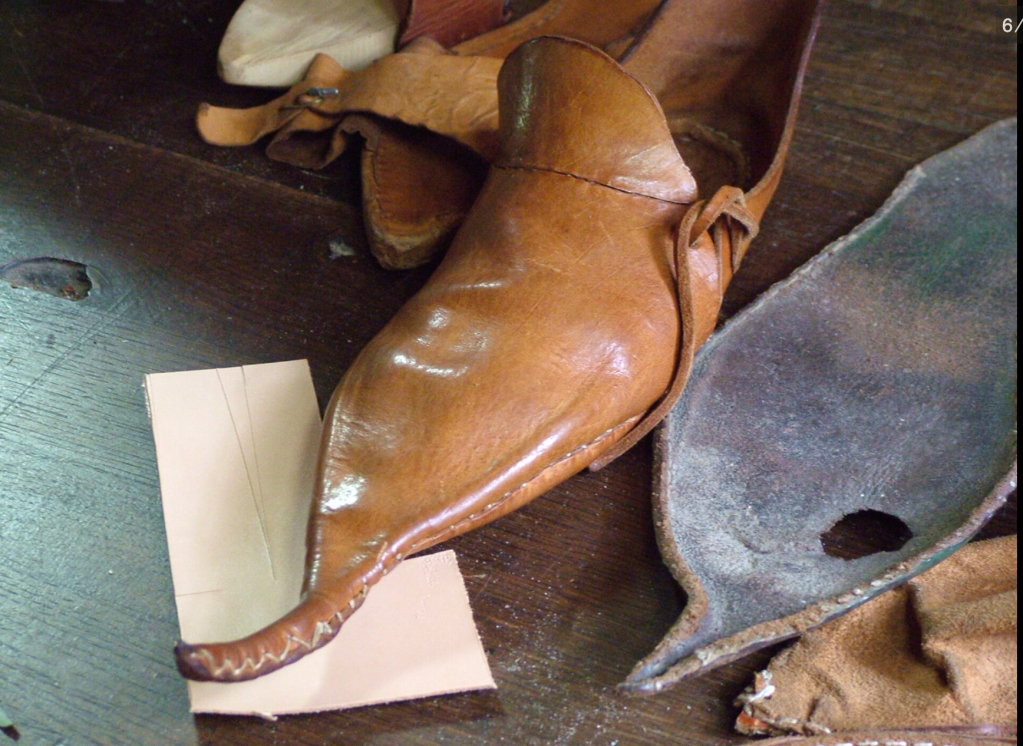
With this unisex shoe, the longer the tip, the wealthier you were. Because what says status like not being able to walk?
Named after the Polish capital, Kraków, they featured toes extending from four to 20 inches, often requiring stuffing with moss or wool to maintain their shape.
Fun fact: A 2005 study of early and late medieval remains found bunions exclusively in corpses from “fashionable” neighborhoods who wore these deathtraps.
When will we learn?
The common denominator we see with most of these trends, regardless of time or location, is that they are dictated by the wealthy. General health, practicality, and even common sense go out the window so long as wealth and status are conveyed. Which…sounds a bit familiar, doesn’t it? Celebrity-endorsed GLP-1 drugs, cosmetic procedures, “luxury” brands…would any of these things actually seem aspirational if they didn’t seem to solely belong to a lifestyle that feels out of reach for any of us?
The answer (hopefully) feels like an obvious no. So while people online fall into discourse over the latest and greatest trends entering the scene, perhaps our time is better spent cultivating what we find beautiful for ourselves, and taking solace in the fact that it’s only a matter of time before said trends get gawked at by future generations.










.jpg)
