We all want to live a long and healthy life. But as we enter our 60s and beyond, and a lifetime of choices and genetic luck begins to show, the issue becomes increasingly urgent.
When it comes to longevity, our bodies give us many clues about how well they will age. The good news is that we can improve many risk factors, no matter our age.
Healthcare expert shares good signs that someone over 60 will have longevity
Neal Shah is a healthcare researcher, innovator, and advocate for health equity in aging populations. He’s also a wildly popular social media creator with nearly half a million followers on YouTube.
He recently filmed a short video about the signs he sees that someone over 60 is in for a long, healthy life.
1. Walking speed
“This is one of the most reliable predictors that doctors have to assess your health,” Shah says. “Multiple studies show that older adults who walk at a brisk, natural pace live significantly longer than slow walkers.”
He says that our muscular health, heart health, and balance are reflected in our natural walking speed, which is what makes it such a powerful indicator.
“If you can still walk with purpose, I think that’s a very good sign.”
2. Grip strength
“How hard you can squeeze is a surprising window into your whole body’s strength,” Shah says, adding that poor grip strength is often associated with higher rates of heart disease and earlier death.
Grip strength is easy to test and improve at home. Dead hangs, or hanging from a bar for as long as possible, are a great indicator—30 seconds for women and 60 seconds for men are great targets. With practice and repetition, anyone can improve their numbers and their overall strength and health.
3. Standing up from a seated position
“Can you stand up from a seated position without using your hands to push off?” Shah asks. “This one simple move tests your leg strength and balance all at the same time.”
Other, similar tests include standing up from sitting on the floor with minimal use of hands and knees.
Why is balance so important for longevity? One big reason is that balance issues contribute to falls in older adults, and falls often result in injuries that can rob a person of their ability to independently care for themselves, as well as shorten their lifespan.
Avoiding falls by maintaining good strength and balance is a major key to living a long and healthy life.
4. Overall balance
The next sign underscores the need for balance by directly testing it.
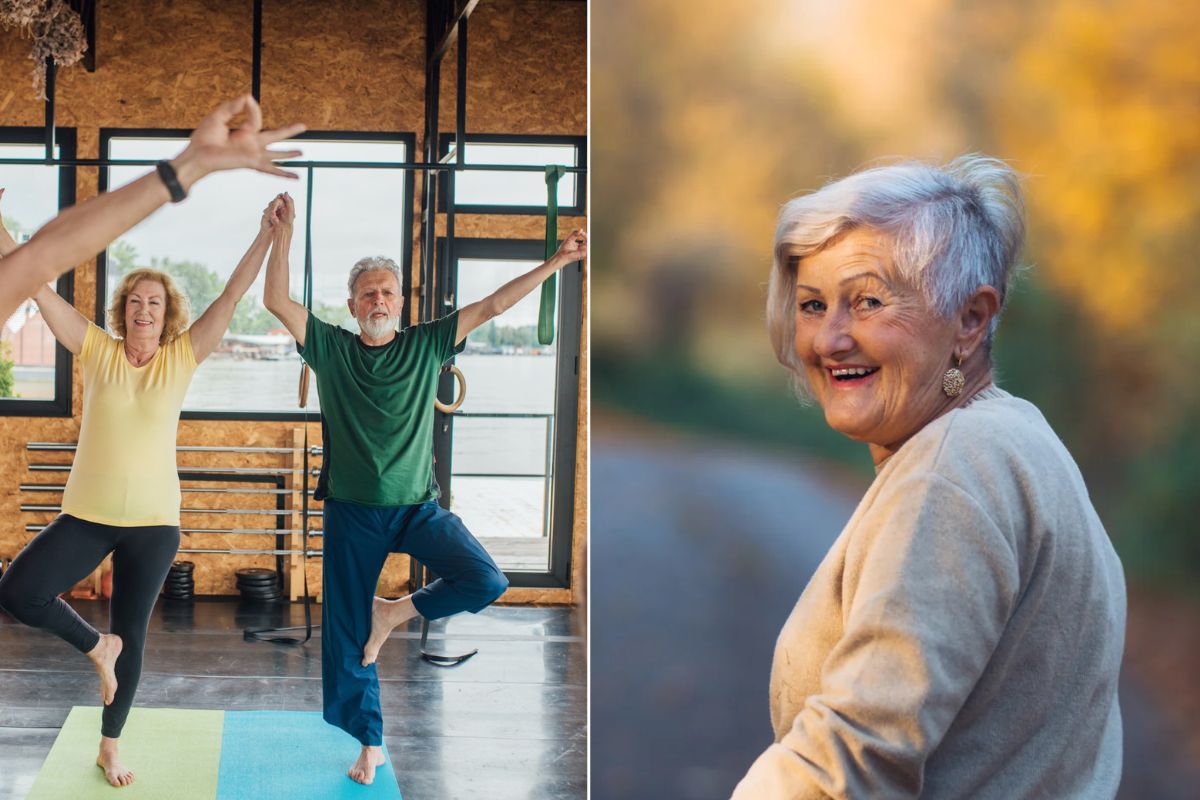
“Being able to stand on one leg for about 10 seconds is a strong marker of longevity. Research has linked the inability to do it with a higher risk of dying in the years that follow.”
Shah reiterates that after age 65, falls become one of the biggest dangers for many adults.
5. Staying socially connected
“People with strong friendships and regular connection live longer than people who are isolated.”
It doesn’t mean it’s not okay to enjoy quiet and solitude, but avoiding loneliness is massively important for adults over 60.
“Chronic loneliness is as damaging to your health as even smoking 15 cigarettes a day.”
6. Quantity of movement
A lot of people—not just older adults—exercise for 30 or 60 minutes per day but remain sedentary for much of the rest of the time. Shah says what’s actually more important as we age is the amount of time we spend moving rather than the intensity.
“The people who live the longest tend to move constantly in small ways. Things like gardening, standing up often, walking to the mailbox. It’s that steady all day movement that matters most.”
You don’t need to be a triathlete to live a long and healthy life. In fact, gentler and more consistent movement may be the key.
Shah adds that people over 60 shouldn’t panic if they don’t pass any of the above tests with flying colors.
“Every single one of these things can be improved at any age,” he says.
Depending on where you start, improvement might mean adding a gentle daily walk and gradually increasing your walking speed. It might mean practicing balancing on one leg or incorporating strength training to improve full-body power and conditioning. Or, it might mean filling your calendar with more time spent with family and friends.
None of the items above are a death sentence for anyone, but together they paint an extremely accurate picture of overall health that we can use to live a longer and healthier life.