Congrats to US astronaut Christina Koch for breaking the women’s space mission record
Christina Koch has come back down to Earth after a record 328 days in space—the longest mission of any female astronaut in history. Koch touched down on an icy steppe in Kazakhstan on February 6. She will now make her way to NASA headquarters in Houston, Texas, where she will undergo medical testing. Seeing how…
Christina Koch has come back down to Earth after a record 328 days in space—the longest mission of any female astronaut in history.
Koch touched down on an icy steppe in Kazakhstan on February 6. She will now make her way to NASA headquarters in Houston, Texas, where she will undergo medical testing. Seeing how Koch’s body fared in space for nearly 11 months will inform current plans for a manned mission to Mars. It has been proven that staying in a microgravity environment for long periods of time leads to bone and muscle loss, and researchers have been working on ways to mitigate those effects for long space missions.
According to CNN, Koch spent much of her time in space conducting experiments. She also completed six space walks during her mission, including the first all-female space walk with fellow NASA astronaut Jessica Meir. (In case you missed it, that much-anticipated space walk had to be temporarily postponed due to not having the proper sized space suits for the two women. The walk was completed successfully in October 2019.)
The previous space mission record for a woman was 289 days, set by U.S. astronaut Peggy Whitson in 2017.
Koch says there are some thing she will miss about being in space. “Sleep in space has been some of the most restful I’ve ever had—no hotspots, no tossing, no turning, never too hot or too cold,” she said, according to CNN. “I just float in my body’s natural position. How will I sleep when I return to Earth?”
It will take time to readjust to the weight of her own body and to objects dropping to the ground again. However, there are definitely things Koch is looking forward to experiencing again. Before ending her mission, she said:
“Oh, how I miss the wind on my face, the feeling of raindrops, sand on my feet, and the sound of the surf crashing on the Galveston beach. We take daily sensory inputs for granted until they are absent. The environmental inputs on the space station consist mostly of the constant hum of the ventilation system. It stirs the air, allowing the purification system to scrub and clean our atmosphere so it’s breathable. While some places on the space station are as loud as a lawn mower, others are as quiet as the vacuum of space. I cannot wait to feel and hear Earth again.”
In March 2023, after months of preparation and paperwork, Anita Omary arrived in the United States from her native Afghanistan to build a better life. Once she arrived in Connecticut, however, the experience was anything but easy.
“When I first arrived, everything felt so strange—the weather, the environment, the people,” Omary recalled. Omary had not only left behind her extended family and friends in Afghanistan, she left her career managing child protective cases and supporting refugee communities behind as well. Even more challenging, Anita was five months pregnant at the time, and because her husband was unable to obtain a travel visa, she found herself having to navigate a new language, a different culture, and an unfamiliar country entirely on her own.
“I went through a period of deep disappointment and depression, where I wasn’t able to do much for myself,” Omary said.
Then something incredible happened: Omary met a woman who would become her close friend, offering support that would change her experience as a refugee—and ultimately the trajectory of her entire life.
Understanding the journey
Like Anita Omary, tens of thousands of people come to the United States each year seeking safety from war, political violence, religious persecution, and other threats. Yet escaping danger, unfortunately, is only the first challenge. Once here, immigrant and refugee families must deal with the loss of displacement, while at the same time facing language barriers, adapting to a new culture, and sometimes even facing social stigma and anti-immigrant biases.
Welcoming immigrant and refugee neighbors strengthens the nation and benefits everyone—and according to Anita Omary, small, simple acts of human kindness can make the greatest difference in helping them feel safe, valued, and truly at home.
A warm welcome
Dee and Omary's son, Osman
Anita Omary was receiving prenatal checkups at a woman’s health center in West Haven when she met Dee, a nurse.
“She immediately recognized that I was new, and that I was struggling,” Omary said. “From that moment on, she became my support system.”
Dee started checking in on Omary throughout her pregnancy, both inside the clinic and out.
“She would call me and ask am I okay, am I eating, am I healthy,” Omary said. “She helped me with things I didn’t even realize I needed, like getting an air conditioner for my small, hot room.”
Soon, Dee was helping Omary apply for jobs and taking her on driving lessons every weekend. With her help, Omary landed a job, passed her road test on the first attempt, and even enrolled at the University of New Haven to pursue her master’s degree. Dee and Omary became like family. After Omary’s son, Osman, was born, Dee spent five days in the hospital at her side, bringing her halal food and brushing her hair in the same way Omary’s mother used to. When Omary’s postpartum pain became too great for her to lift Osman’s car seat, Dee accompanied her to his doctor’s appointments and carried the baby for her.
“Her support truly changed my life,” Omary said. “Her motivation, compassion, and support gave me hope. It gave me a sense of stability and confidence. I didn’t feel alone, because of her.”
More than that, the experience gave Omary a new resolve to help other people.
“That experience has deeply shaped the way I give back,” she said. “I want to be that source of encouragement and support for others that my friend was for me.”
Extending the welcome
Omary and Dee at the Martin Luther King, Jr. Vision Awards ceremony at the University of New Haven.
Omary is now flourishing. She currently works as a career development specialist as she continues her Master’s degree. She also, as a member of the Refugee Storytellers Collective, helps advocate for refugee and immigrant families by connecting them with resources—and teaches local communities how to best welcome newcomers.
“Welcoming new families today has many challenges,” Omary said. “One major barrier is access to English classes. Many newcomers, especially those who have just arrived, often put their names on long wait lists and for months there are no available spots.” For women with children, the lack of available childcare makes attending English classes, or working outside the home, especially difficult.
Omary stresses that sometimes small, everyday acts of kindness can make the biggest difference to immigrant and refugee families.
“Welcome is not about big gestures, but about small, consistent acts of care that remind you that you belong,” Omary said. Receiving a compliment on her dress or her son from a stranger in the grocery store was incredibly uplifting during her early days as a newcomer, and Omary remembers how even the smallest gestures of kindness gave her hope that she could thrive and build a new life here.
“I built my new life, but I didn’t do it alone,” Omary said. “Community and kindness were my greatest strengths.”
Are you in? Click here to join the Refugee Advocacy Lab and sign the #WeWillWelcome pledge and complete one small act of welcome in your community. Together, with small, meaningful steps, we can build communities where everyone feels safe.
This article is part of Upworthy’s “The Threads Between U.S.” series that highlights what we have in common thanks to the generous support from the Levi Strauss Foundation, whose grantmaking is committed to creating a culture of belonging.
Flying on airplanes with dozens of perfect strangers is, in many ways, a social experiment. We’re forced to sit in seats that aren’t big enough for most of us, uncomfortably close to people we don’t know (some of whom are stressed out or anxious), with unclear social etiquette rules we haven’t all collectively agreed upon.
And yet we do it because the miracle of human flight enabling us to travel in hours to places that used to take days, weeks, or even longer, is too awesome to pass up. Most of us have things we’d prefer our fellow passengers do or not do to make the experience better for everyone, however, so we asked our Upworthy Facebook audience, “If you could enforce one social rule during flights, what would it be?” The responses were largely what you might expect and you can see them below, but there was one unexpected comment that stood out. The rule that received the most love, with over 1,200 likes, was this one:
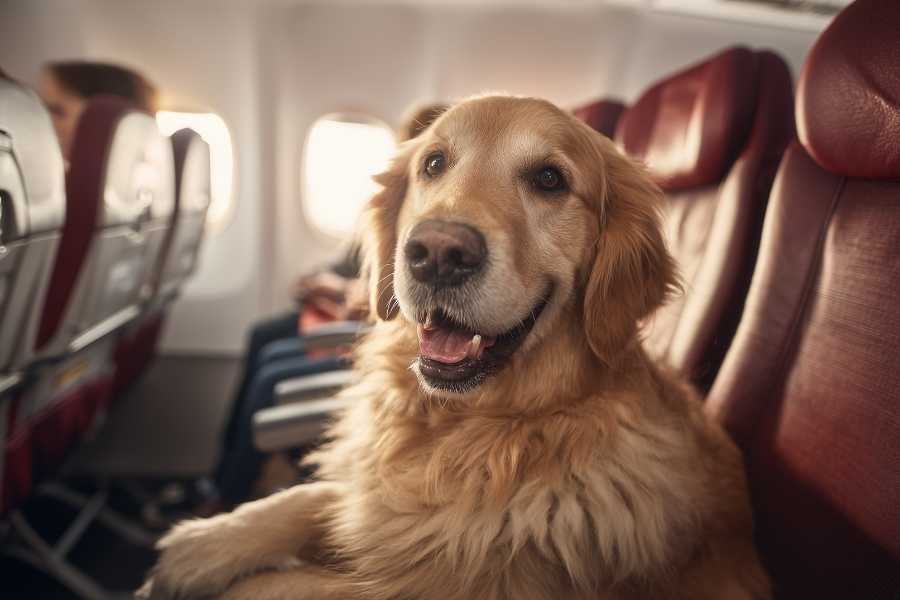
Any dog on the plane has to visit every passenger that requests
While not everyone loves dogs, most people do. And what would make a flight more enjoyable than getting to meet a dog on board? Perhaps we can start a petition to make cabin doggy visits for anyone who wants them an official thing…
Other responses were helpful reminders of both common courtesy and somewhat standard airplane etiquette for those who might not fly often enough to be familiar with it. In addition to the “meet the dog” rule, here are 10 more social rules people wish they could enforce on flights:
Be nice to flight attendants
Imagine being responsible for both the comfort and safety of 100+ people from different places with different needs in a cabin hurtling through the sky 30,000 feet above the Earth. Flight attendants deal with a wide array of people day in and day out, and we should all make sure we treat them with the kindness and respect that they deserve.
Middle seat gets the armrests
Nobody should be hogging the armrests, but if anyone has a right to them, it’s the sacrificial soul who has to sit in the middle seat. (And window seat controls the window, in case that’s not common sense.)
No matter your age, headphones to listen to things on a flight are a must. Photo credit: Canva
Headphones, please
No one wants to listen to your video but you. Imagine if everyone listened to movies or YouTube videos or whatever without headphones—total social chaos. In public and on planes, use headphones to listen or watch something.
No ‘manspreading’
We all know the legroom on flights has become practically non-existent, and for people with long legs it can be hard to not bang your knees up against the seat in front of you. But spreading your legs apart so wide that it infringes on other people’s leg space just isn’t cool. We’re all in the same boat, so we have to respect one another’s space.
Keep your shoes and socks on
There may be an exception here for long-haul flights as long as you keep your socks on and don’t have stinky feet, but bringing a pair of slippers or something is still courteous. But definitely keep your socks on and be aware that you might not be able to tell if your own feet smell.
One overhead bag per passenger until everyone’s got their luggage settled. Photo credit: Canva
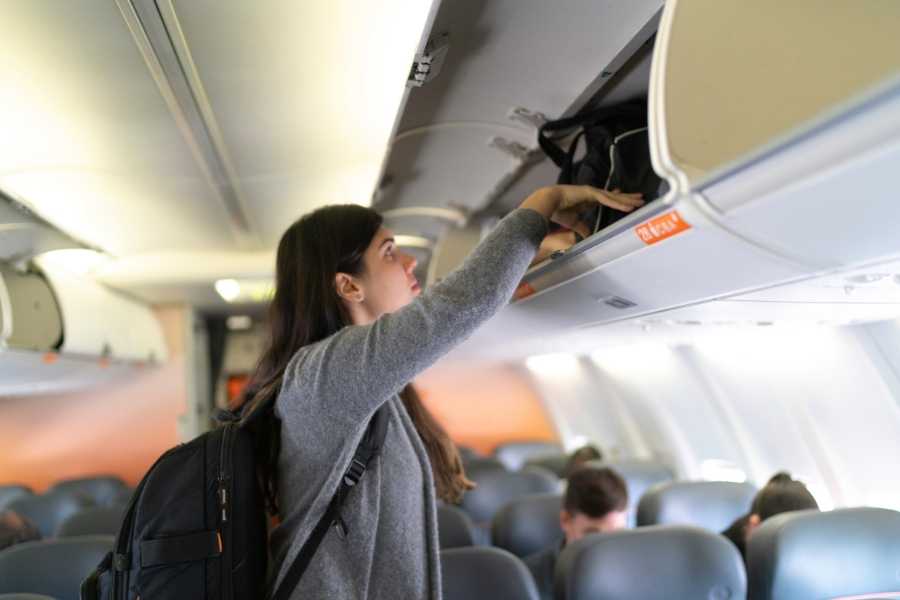
Don’t put a second bag or a jacket in the overhead bin until everyone has put their first bag in
Overhead space is limited, so wait until everyone has had a chance to get their carry-on into that space before adding more than your one bag to it. Once everyone’s settled in, feel free to add whatever overflow you have.
Try not to fart
We’ve all been on a flight where someone let one rip and made everyone’s eyes water. Unless you have zero choice in the matter, refrain from dropping gas bombs on your fellow passengers. We’re all human and humans fart, but an airplane cabin is a tight spot where people can’t get away. At least take it to the lavatory if you can.
Be aware of smells in general
Come clean and fresh, but not perfumed. Deodorant? Yes, please. Strong cologne or perfume? No. Food that emits a strong odor? Also no.
Even if you know it by heart, please don’t talk during the safety demonstration. Photo credit: Canva
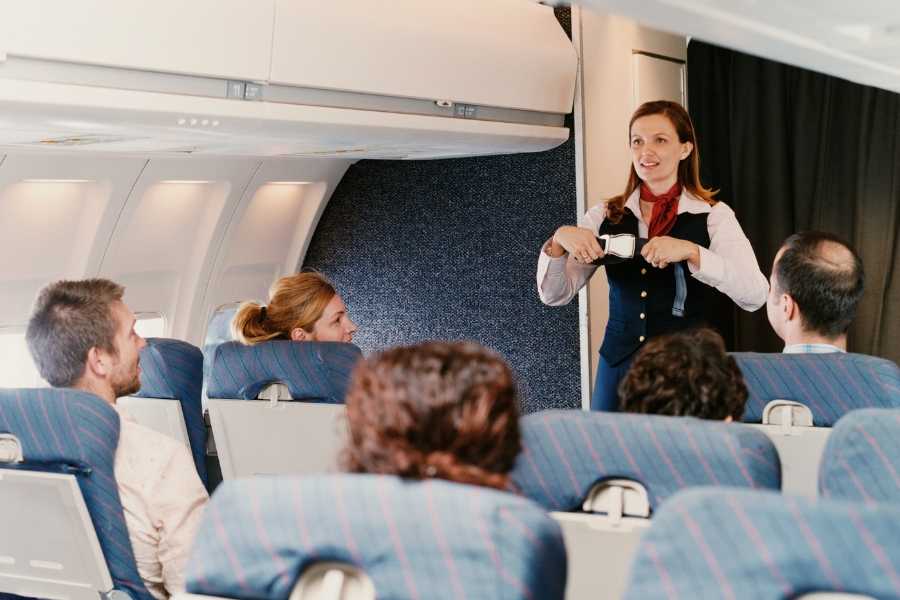
Stay quiet during the safety demonstration
Some people fly all the time and could recite the safety demonstration spiel by heart, but that doesn’t mean everyone is familiar with it. It only takes a few minutes and first-time flyers need to hear it. It’s respectful to the flight attendants to not talk through their presentation and courteous to other passengers who need to listen.
Remain seated until it’s your row’s turn to deplane
On most flights, as soon as the plane arrives at the gate and the seatbelt sign is turned off, people rush to stand up and gather their luggage. But it’s always going to take several minutes to even start getting the first passengers off the plane, and it’s not going to go any faster to crowd into the aisle.
If we all follow these “rules,” flying can be a more pleasant experience for everyone—even our good doggo friends who might be on board.
This article originally appeared last year It has been updated.
Evan Edinger moved to London over 13 years ago to study abroad but never planned on staying overseas permanently. His goal was to get his degree, return to the United States, start his career, and make a life for himself. He thought of his time in London as a “temporary adventure.”
But when he finished his degree, he found himself in an unexpected situation: He didn’t want to go back. “The longer I stayed in London,” Edinger shares on his YouTube channel, “the more I began to notice all of the assumptions that I’d grown up believing in America, the things I was brought up to believe were undeniably true and just the way the world worked—it turns out they weren’t true at all.”
One of the benefits of living in another country is seeing your country of origin through different eyes. That perspective can cause you to appreciate some things and question other things. Edinger shares nine realizations he’s had about the U.S. since he left, starting with one of the most quintessentially American realities he found himself questioning.
1. Guns
Edinger grew up in New Jersey and describes it as “quite a blue state,” but he was still immersed in the gun culture that views gun ownership as a fundamental part of being an American.
“I was raised in a very pro-gun household,” Edinger says. “In my family home in America, we had a 12-gauge shotgun, a 10-gauge, a black powder rifle, and a .410 shotgun for the children. My dad would take us out some days to shoot empty cans of beer or play pigeons or sometimes go hunting for pheasants or deer.”
He says the notion of not owning a gun was unthinkable in his upbringing. “The idea that other countries do not allow guns is viewed more like these other countries are missing a fundamental right,” he says.
His ideas about guns have changed dramatically since moving to London and living in a society without ubiquitous access to guns. “Visiting Philadelphia when I was younger was always scary to me because I never knew who had a gun, who wanted to rob me,” Edinger shares. “Visiting New Orleans a couple years ago, I was told by my hotel staff that a few days prior, a tourist was shot and died in the local Popeye’s Chicken because he caught a stray bullet of two people having an argument in the restaurant. So, that’s just something that people just have to deal with. This constant fear of I could just die being caught in a crossfire and there’s nothing I can really do about it because freedom. I’ve pretty much never felt that level of fear in London at all. And that alone was enough to sway my opinion on guns.”
“One thing that’s really drilled into you pretty much every year of American school is that American democracy is the end-all be-all of government and that it is the beacon of freedom other countries look to emulate. Then, once you become an adult and you see how dysfunctional the U.S. government is, you search for anything to feel better about it and usually settle on ‘Well, at least it’s not a third world dictatorship.’”
But those aren’t the only two options. Edinger explains how the parliamentary system in the U.K. is far from perfect, but it tends to be more effective at actually getting things done because lawmakers aren’t constantly stymied by the inherently destructive two-party gridlock we have in the U.S.
“It’s messy, yes, but after 13 years away, I’ve come to the belief that no system of government is perfect,” he says. “But most systems in Western Europe are far more effective than what I grew up believing was the ‘best in the world.’”
3. Walkability and Public Transport
In the U.S., having a car is practically a symbol of freedom, but Edinger says he’s never felt the need to have a car in his 13 years living in London. He says it’s been incredibly freeing to be able to walk and take public transit everywhere, and not just in the city. He’s been able to travel all over Europe, in larger cities and small towns, and the focus on walkable neighborhoods and public transportation is everywhere.
“After having spent some time living in walkable neighborhoods, I would never ever choose to live in a car dependent place ever again,” Edinger says. “It is truly one of the most life-changing parts of living over here. And because I’m always walking everywhere, because I’m always cycling everywhere, it’s so much easier to be healthy and physically fit without even trying.”
4. Food Quality and Price
Europe has different regulations than the U.S., Edinger explains, with an approach that leads to a lot less additives and chemicals being added to foods.
“Europe’s food agency focuses on possibilities and the U.S.’s focuses on probabilities. Is it possible an unnecessary additive could be harmful? Europe prohibits it just to be safe. The US agency, the FDA, they only step in if the probability of it being harmful is high. So, that risk is passed on to the average American consumer.”
Edinger also points out that the ability to walk down to the store to get fresh ingredients regularly makes it a lot easier to eat well. “It’s one of those things where once you experience both, there is no contest. No contest. So, it’s much easier to be healthy in Europe than in America.”
5. Healthcare in the U.S. vs. Europe
“If my health does have issues, I am glad it’s not something that would ever bankrupt me or cause me to ever think about how much it would have to cost me just to be sick,” says Edinger.
Americans often hear horror stories about socialized medicine, but Edinger’s experience with going to the doctor and even going to the hospital have been positive, and barely cost him anything.
The U.S. is an outlier in the world when it comes to healthcare costs. Photo credit: Canva
“There are only two types of people that are against the freeing social safety net that is universal healthcare,” says Edinger. “People that have never experienced socialized healthcare and people that profit from the broken system. That’s it.” Most Americans want it, but “most Americans” is not where the money is.
6. Consumer Protections in the U.S. vs Europe
Edinger shares that he bought a MacBook Pro in 2019 that didn’t work right, and he hadn’t purchased AppleCare because he knew he didn’t have to.
“If you buy a tech product in Europe, you have a reasonable expectation that it should last you at least two years free of defects,” says Edinger. “And if it’s not up to your expectations or breaks down before then, you can demand a return or replacement. This law protects consumers from shady business practices.”
He ended up getting his full money back on the computer due to those consumer protections.
“It’s laws like this where you really begin to notice a pattern that life in Europe is one that gives more rights to the everyday person over giant corporations and shared benefit over private,” says Edinger.
7. Worker Rights
“A quick summary would be 28 days minimum paid holiday, one year paid maternity leave, two weeks paid paternity leave, sick leave, even the right against unlawful termination,” said Edinger. “When working part-time at Urban Outfitters in London, even though I worked less than 20 hours a week, I still got two days paid holiday per month. That’s insane, right? No, that’s just life over here. Meanwhile, I worked five years at a Pizza Hut in New Jersey for over 30 hours per week. Never got a single day of paid vacation.”
Indeed, there’s more than a handful of European countries that guarantee at least a month of paid days off, with some countries actually requiring a certain number of days or weeks off.
Europeans get far more generous paid leave than Americans do. Photo credit: Canva
Edinger points out the irony that he was always taught that the U.S. was for the individual, for individual freedoms. But in his experience, in Europe individuals have more rights than those with money or power, while it’s the opposite in the U.S.
8. Money (Live to work or work to live?)
Edinger says that most things are more affordable in Europe, from groceries to data plans, but Americans do earn higher salaries.
“So if you earn a lot of money and money is your sole defining metric of success, then you can feel a lot more successful in the U.S.,” he says. “But because the culture in Europe is work to live and not live to work, you might find that the stress and cost tradeoffs and quality of life erode the value of that higher salary quite quickly.”
9. On Romanticizing Europe
People often wonder if Americans romanticize Europe too much, and Edinger says the same question used to be asked of Europeans romanticizing America. But now that we have YouTube and social media and a better ability to see the realities of both places, he says what Americans “romanticize” about Europe is really just the things we want and don’t have.
Work-life balance is something a lot of Americans struggle with. Photo credit: Canva
“I think most Americans who are eyeing up Europe are doing so because of the things that America is lacking. Nearly two in three Americans want universal healthcare. Well, America doesn’t offer that. Again, two in three Americans want European style vacation policies. America doesn’t offer that. And 53% of Americans would prefer to live in a walkable neighborhood, but sorry, America doesn’t offer that. The list goes on. If America were an actual democracy, I don’t think many of these people would be having romanticized views of Europe at all because they wouldn’t need to. They could have everything they wanted in the country they were born and raised.”
Of course, every country has its problems and there are certainly downsides to moving abroad. Edinger acknowledges that but says it really boils down to what you value in life. Americans are taught to romanticize the U.S., and leaving it helps you see the reality, what’s good about your country and where it has room for improvement.
“I think the main thing though out of everything that I miss about the U.S. that I can’t really get here is not rights, not freedoms, not anything that’s big on quality of life improvements,” says Edinger. “It’s just Mexican food and good ice cream.”
You can follow Evan Edinger on YouTube for more on his experiences as an American living abroad.
This article originally appeared last year. It has been updated.
Not so fast. As some of the younger generations have noticed, the 1970s is often spoken about with nostalgic fondness but portrayed differently in entertainment. That observation led someone to ask Gen Xers and Boomers, “Were the 1970s really as grimy and gloomy and sleazy as the movies make it look?” Surprisingly, folks who lived through the ’70s took off their rose-colored glasses to remind us all of how far we’ve actually come in the past 50 years.
While “grimy” and “gloomy” and “sleazy” may be strong terms, they’re not entirely inaccurate, according to the older folks who responded to the question. Of course, some places had more problems than others and big cities had it the worst, but some of the “grime” was widespread. Here are the truths behind the film portrayals:
Downtown 1968. Yeah, this tracks. Those of us who grew up in LA up thru the 1970s recall not being able to make out buildings or mountains just blocks away on bad smog days & you'd cough just by inhaling a deep breath. I've never smoked but I'm sure my lungs think otherwise. 😆 pic.twitter.com/QEljzskXrn
“I lived in Los Angeles as a kid, and it wasn’t unusual to have days we weren’t allowed to go outside at school because the smog was so bad it literally hurt to breathe.”
“A old joke that probably doesn’t make sense nowadays: ‘What do you see in California when the smog lifts? UCLA.’”
“We called them Smog alerts. We couldn’t go out for recess on those days.”
“The mountains were mythical, growing up in L.A. On the occasional clear day you’d hear people saying, ‘Wait, those are there all the time?’ Thank goodness for better emissions control.”
On the creation of NOAA & EPA under his signature:
“Congress, the Administration and the public all share a profound commitment to the rescue of our natural environment, and the preservation of the Earth as a place both habitable by and hospitable to man.”
“Yes. 60’s and 70’s every major American city had days where there was really low visibility, distant landmarks obscured, brown, white, rusty, hazy cast and layers. Car, truck and bus exhaust pollution. In some areas, strong chemical and odors fr factories and animal processing plants. In the winter you could taste the sulfur in the air from some smaller city power stations burning coal. Flying into some cities was a descent from clean air into a dark brown layer of pollution.”
“Bad enough that the EPA was born at that time; Woodsy Owl, the ‘Give a Hoot, Don’t Pollute’ mascot was born; the Crying Indian commercial was first broadcast; the Clean Water Act was amended (originally from 1948 and called Federal Water Pollution Control Act).
We lived near a refinery town in the 60s and 70s. Gawd, I had asthma and was constantly having to go to the hospital, to the point the doctors told my parents to keep me inside. Or course, them being smokers made it pretty much from the frying pan to the fire.
The 70s were the years of introducing environmental awareness to a population that was coughing, hacking and used to brown air.”
“That was when people finally said ‘Wait, you mean rivers aren’t supposed to catch fire when a train passes by and some sparks fly off the rail?’ and ‘What do you mean they’re actually supposed to have flowing water in them, instead of oozing sludge?’”
Littering was commonplace
It might be hard to imagine now, but it was totally normal in certain eras to just throw your trash out the window of your car or leave your bottles or cans wherever you finished them.
“I think everyone kinda forgets how much trash there was. My generation grew up with the crying Indian and ‘give a hoot, don’t pollute.’ Before that, people really did just throw their trash out the car windows. There was a LOT more trash on the roads.”
“We used to make a fair bit of money picking up aluminum cans, and smashing them to sell for scrap. Loads of them.”
“It was quite common for people to throw trash out of their cars. beer bottles by the side of the road. In the late 1970s, Michigan voted in bottle deposits, and afterwards there was quite a difference in the roadside as you crossed the Ohio border in I-75. With the deposits, there was more incentive to pick them up, too, because each one was worth a dime. Didn’t take too many to pay for a $1 movie that had already been in the big theaters for a month or two.”
“Recycling was pretty much non-existent. It seemed that people burned trash a lot more commonly, as well.”
“There’s a scene in Mad Men where they have a picnic and Don casually pitches his beer can into the woods. It used to be like that.”
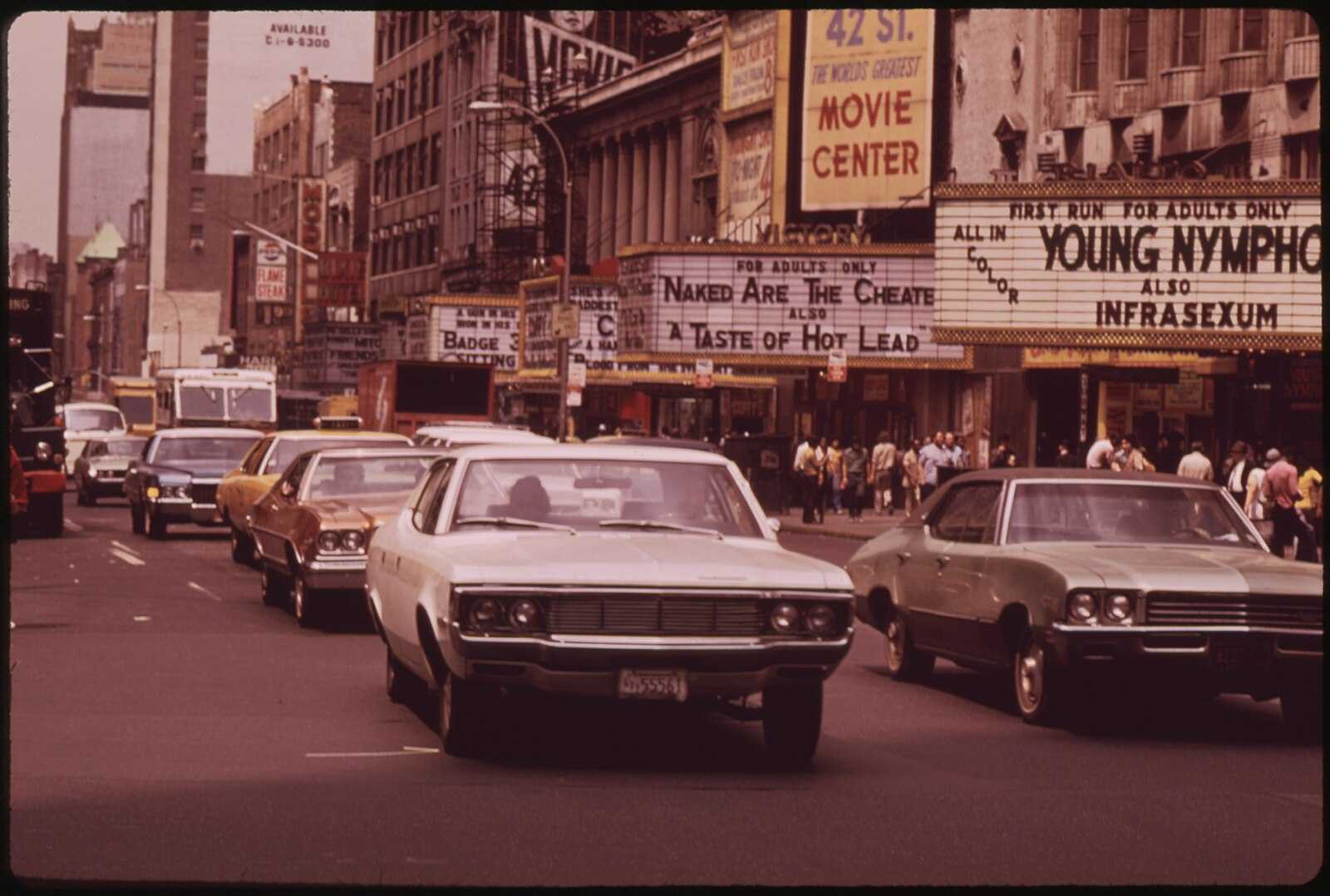
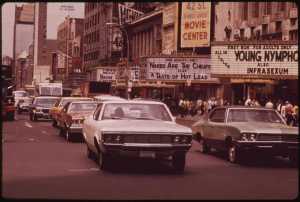
Times Square was NSFW
If people think Times Square is tacky now, with all of its flashy billboards, it’s a far cry from the “sleazy” strip it used to be.
“That Times Square scene in Taxi Driver was Cinema Verite, it was exactly like that.”
“Yeah, I used to have to travel to New York in the late ‘70s. The sleaze factor around Times Square was significant.”
“Times Square was full of porn theaters and you didn’t go to what is now the High Line neighborhood unless you wanted hookers and blow.”
“First time I went to NYC as a kid in like 1994 I remember a ton of porn theaters. They must have cleaned them all up within a few years, because I never saw them again on later visits.”
“Everyone smoked. Everyone and everywhere. I can’t believe we all don’t have lung cancer. Even us nonsmokers.”
“Restaurants and Bars were smoky greasy and pretty grimy. It had to be a really nice place to smell fresh. The lighting was terrible. Most places had terrible air circulation. Everywhere reeked of cigarette, pipe and cigar smoke. Food odors. Old grease.”
“Grimy? Yes. People smoked in their offices. After hours outside in the unemployment line, get to stand in line an oxygen free smoke filled enclosed sea of humanity with one bathroom to be insulted by cranky civil servants. Seems every building had cigarette and cigar tar wall and ceiling coatings.”
Were there a lot of great things about the 1970s? Of course. There’s a lot that we can take from every decade that was positive, including the one we are living through now. But this reflection on the less-than-stellar elements of the ’70s and the big improvements we’ve made since then on all of these fronts should give us hope that we are capable of collectively moving in the right direction.
This article originally appeared last year. It has been updated.
When living in a community, people are expected to chip in to improve it. This is typically done through taxes or donation checks—or sometimes through anonymous gifts. In Osaka, Japan, however, an anonymous donor sent 46 pounds of solid gold to help fix the water system.
In a press conference, Mayor Hideyuki Yokoyama shared that a mystery donor sent his office gold bars worth a total of $3.6 million. Why? The donor wanted their donation to fund the repair and replacement of the aging water pipes in Osaka.
“It’s a staggering amount and I was speechless,” said Yokoyama. “Tackling aging water pipes requires a huge investment, and I cannot thank enough for the donation.”
Osaka is home to more than three million people and is the third-largest city in Japan. While it’s bustling, it’s also an aging city. Its water system has had more than 90 reported cases of leaking pipes beneath its streets. As a major commercial hub, tourist destination, and home to so many residents, the donor was motivated to make such a large gold donation. Reportedly, the same donor had previously donated 500,000 yen to the municipal waterworks.
Aging public water pipe systems aren’t just an issue in Japan, but also in the United States. With much of the country’s piping installed 50 or more years ago, the system is deteriorating. This has led not only to water leaks, but to contamination within the pipes as well.
The mayor and the Osaka City Waterworks Bureau intend to use the gift in accordance with the donor’s intentions, while also respecting their wish to remain anonymous.
Other bizarre anonymous donations
Osaka’s golden donation isn’t the first odd or eccentric mystery donor case—and likely won’t be the last.
In 2009, a mystery donor approached 14 colleges throughout the U.S. and donated a total of $81.5 million. Each college received the same note and instructions: Don’t try to figure out the identity of the donor, and use the money for financial aid for women and minority students.
In 2021, a package sent to City College of New York contained $180,000 in cash. Delivered to the physics department, it sat unopened for more than a year. The donor remained a mystery, but a note inside said they had enjoyed a “long, productive, immensely rewarding to me, scientific career.” The money was ultimately used to fund undergraduate scholarships.
In 2025, a charity bucket at a Salvation Army location in Vermont contained a gold coin wrapped in a dollar bill. The coin was worth $4,100.
These stories, along with the Osaka gold donation, show that there are people out there who want to give back to their communities without needing credit or praise.
Baby Boomers and the Boomer microgeneration known as Generation Jones grew up on classic foods from the 1960s. Back then, food was typically home-cooked but was entering an era of convenience, thanks to an abundance of processed and frozen foods.
“The American housewife spends 11 hours a week fixing food for her family, less than 1/3 the time it took her when she used raw ingredients,” an article in LIFE magazine said about 1960s food in a November 1961 issue (via the National Museum of American History).
The museum also cited a 1965 report from the Quick Frozen Foods trade journal: “the industry had enjoyed . . . the largest single increase in both dollars and poundage in frozen food history. Products were now valued at $5.2 billion and production estimated at close to 10 billion pounds.”
Boomers and Generation Jonesers on Reddit shared the specific foods and meals they miss from the 1960s. They recalled nostalgic dishes served at family dinners, along with snack foods, drinks, and sweets.
1960s meals
“Pork chops simmered with a giant can of Campbell’s chicken noodle soup on low-medium heat on the stovetop for an hour or more.” – Katesouthwest
“Swanson tv dinners.” – WhenTardigradesFly
“Meat loaf with mashed potatoes and canned corn.” – Excitable_Grackle
“Salisbury steak, which was always chewy and tough.” – AccomplishedPurple43
“Cabbage leaves stuffed with ground beef and rice, covered in tomato soup. (Halupki).” – AccomplishedPurple43
“Salad was iceberg lettuce only. With Russian dressing. In summer, add a tomato and cucumber.” – esg1957
“Gravy lots of gravy. Homemade biscuits (catheads according to dad), fatback, fried corn freshly cut off the Cobb, new potatoes, salad consisting of leaf lettuce and green onion cut up with hot grease (rendered from fatback) poured over it. Cornbread.” – Vegetable_Apple_7740
“My grandmother cooked lamb in the 60s/early 70s until it was shoe leather. To make up for it, it was served with mint jelly as a condiment. 10-year old me would take the smallest piece of lamb and the biggest scoop of mint jelly. Nowadays I prefer my lamb shank slow cooked to medium rare, no jelly required.” – NegotiationNo7947
“Casseroles involving canned veggies, cream of mushroom soup, chicken, and potato chips.” – moinatx
“Things in boxes and envelopes. Hamburger Helper. Noodles Romanoff. When I learned to cook I couldn’t understand why my mother leaned on these so much, until I realized she was the first generation to have any kind of convenience foods.” – Altaira99
“Lime Jello with shredded carrots!!!!” – Maleficent-Pilot1158
“Scalloped Potatoes. That is a great dish for these times too, it provides a wonderful flavor profile and the ingredients are inexpensive.” – User Unknown
“Instant mashed potatoes was a thing.” – LukeSkywalkerDog
“Bread and butter (actually it was usually margarine) on the table at every meal.” – Giraffe1951
1960s drinks
“TANG instead of orange juice.” – Next-Edge-8241
“Getting your juice from the freezer. Mixing those cans of concentrate with water.” – want-answers-fl
“Coffee was Folgers made in a percolator.” – kincherk
1960s sweets
“As a kid candy was at its peak in the 60s. A 5 cent Sweet Tart was a solid mass the size of a child’s fist. Popeye Cigarettes. And Pixie Sticks that seemed like they were a yard long, pure sugar with dye and some citric acid. Chocolate bars the size of a small dog. I may be exaggerating a bit but the candy back then was something.” – drammer
“On the plus side, they still had boxed frosting, which tasted so much better than the ready made frosting you get now.” – kincherk
Gen X is sometimes referred to as “the Sesame Street generation,” a moniker many of us wear with pride. Sesame Street was a childhood staple, along with Mister Rogers’ Neighborhood and The Electric Company. Countless Gen Xers owe a great deal of our early childhood education to those public television programs.
Decades later, Gen X still finds songs and phrases from Sesame Street indelibly imprinted on our brains. If you say to an avid watcher, “A loaf of bread, a container of milk…,” they’ll automatically add, “and a stick of butter.” But there may be no more recognizable clip from the show than this iconic pinball counting song:
📺On February 22, 1977, ‘Pinball Number Count,’ with vocals by the Pointer Sisters, made its debut on ‘Sesame Street’ pic.twitter.com/vZmGKsk7pd
It’s the jazz-funk earworm that never leaves us, and people have been resharing it in a wave of nostalgia. Comments like these are popping up on social media shares:
“You never realize you’re missing something until you hear and see it 40 years later.”
“I don’t think I’ve ever counted to 12 any other way in my life.”
“Still my favorite way to count. I taught my daughters how to count like this & am now singing it to my granddaughter to teach her how to count. This has been stuck in my head my whole life.”
Some people were surprised to discover that the song was sung by The Pointer Sisters, whose 1980s hits included “I’m So Excited,” “He’s So Shy,” and “Jump (For My Love).”
“1. Love that song. Still sing it today, much to the annoyance of my family. I admit that sometimes I sing it, in fact, to be annoying. 2. Had no idea, at all, that it was anyone famous singing it. Until now.”
“Damn it saw the graphic and now the song will be in my head for 2 days lol. That said I didn’t know it was the Pointer Sisters so that’s pretty cool.”
“I have never forgotten and will always remember! But I did not know it was the Pointer Sisters! See, they are still teaching!”
Jack Black talks about the pinball countdown masterpiece
The brilliance of the pinball countdown lies in both the music and the animation. First, it’s so ’70s in the absolute best way. So very funky. So very psychedelic. But when you consider that the lyrics include only numbers—one to 12, plus whichever single number is featured—it’s amazing that it took such a permanent place in our psyches.
Actor Jack Black has talked about the influence this specific song had on him and his creativity as a kid.
“When I was a kid, I used to watch PBS,” he shared. “I’d watch Sesame Street, and I loved Jim Henson and all of his puppets. And all the people there were so funny and great, and I learned a lot. And one of my favorite things was this little cartoon that taught me how to count to…12.”
Then he sang the counting part with his signature Jack Black flourish.
“It was just really good music and really good animation, and it fired up my creativity like crazy,” he said. “And it inspired me.”
How the Pointer Sisters helped create one of the most iconic Gen X memories
The catchy little ditty was composed and produced by Walt Kraemer, whose company, Imagination, Inc., produced many animation pieces for the Children’s Television Workshop. He shared details of the 1976 recordings of the pinball countdown pieces in an email to blogger Matt Jones:
“Those were indeed the Pointer Sisters. All four of them. At the time only three were performing regularly and I recall budgeting for just the three when June showed up at the session with the rest. It was a bonus. The basic track was performed by San Francisco Bay Area musicians and since there were to be eleven pieces of animation I had the track structured to accomodate three different lead instrument overdubs to give the pieces some variety. On some numbers Andy Narell plays a steel drums solo, on others Mel Martin plays a soprano sax solo, on the rest… I forget. Much credit should go to Ed Bogas for interpreting my melody ideas and for the musical arrangements.”
“The concept and design was devised by our animation director, Jeff Hale. It was his idea that I create basic tracks then record as ‘wild-lines’ the Pointers shouting the various 2-11 numbers in different intensities and different compliments of voices. Then, each time the pin ball hit a selected number he would drop in these (off-key—couldn’t be helped) wild lines.”
He also said that he realized after the fact that he “may have stolen the first five notes of the Woody Woodpecker Song.” Pretty sure no one noticed.
… six, seven, eight, nine, ten, eleven, twelve
There were actually videos for numbers 2 to 12, not 2 to 11. If you want to see all 11 of the shorts, here you go. (Fair warning: you’ll likely never get the song out of your head if you watch them all.)
And why isn’t there a segment for the number 1, you may wonder? It’s a true Gen X mystery.
Who deserves the honorary title of “fifth Beatle“? You could make a case for several people: guest keyboardist Billy Preston, early drummer Pete Best, even manager Brian Epstein. But on a musical level, no one was more crucial to The Fab Four than producer George Martin, who worked on all of their albums.
That close connection only highlights the beauty of a recently unearthed video: In 1997, an all-girls choir surprised a visibly emotional Martin by singing The Beatles’ “Because” at a Brazilian airport.
It’s unclear exactly where the clip originated, but a Brazilian TV network appears to have shared it during a broadcast. Multiple social media profiles have also posted the footage, including Instagram account the_beatlesrevolution, who offered some additional context. The video, they write, shows Martin arriving at the Rio de Janeiro airport to find the Meninas Cantoras de Petrópolis choir sweetly singing “Because.”
The video opens with Martin approaching the choir, his eyes welling. (It’s a fitting response for a song with the lyric, “Because the sky is blue, it makes me cry.”) He smiles, vigorously applauds, and even wipes the tears from his face. Beatles fans reacted in the comments with a similar warmth, including these top replies:
“A genius & a gentleman!! ❤️”
“My god, the beauty of this moment… I’m weeping.”
“George Martin – he had one of the most amazing ‘jobs’ ever, the musical history he helped shape was astounding. 🙌”
“This guy wrote a history! There’s no musician or a Beatles fan that wouldn’t cry to this. Tears with goosebumps!”
“Wonderful legacy❤️”
“When you realize that what you’ve achieved with your friends (and what friends!) is truly remarkable”
“Just a beautiful video. Thank you so much for posting it. Sir George played a huge part in the Beatles story and here we see the joy he had, many years after they broke up, still being loved for his contribution to the Fab Four’s legacy ❤️”
“I am moved by the performance as well. What a beautiful brilliant human he was. I am grateful he existed in my lifetime.”
“Because” exemplifies George Martin’s connection with The Beatles
“Because,” a highlight from 1969’s Abbey Road, was an ideal choice as a Martin tribute. The recorded version, built on lush vocal harmonies, opens with one of his signature instrumental contributions: a chiming electric harpsichord.
The song also symbolizes his deep relationship with The Beatles: While he was less involved in recording 1970’s Let It Be, which featured final production by Phil Spector, Martin resumed his usual role on their studio swan-song Abbey Road. (For clarity’s sake, The Beatles didn’t complete and release Let It Be until after Abbey Road, even though they recorded it before.)
In an archival interview, Martin explained that “Because” features triple-layered three-part harmonies from John Lennon, Paul McCartney, and George Harrison. (While drummer Ringo Starr doesn’t appear on the recording, he did provide a metronomic hi-hat pulse in the others’ headphones.)
For the song’s arpeggiated riff, Lennon was inspired by Beethoven’s “Moonlight Sonata,” after hearing Yoko Ono play it on piano. In multiple interviews, he recalled telling her to play the chords “backward,” using the result as a springboard into something new.
Optical illusions are wild. The way our brains perceive what our eyes see can be way off base, even when we’re sure about what we’re looking at. Plenty of famous optical illusions have been created purposefully, from the Ames window that appears to be moving back and forth when it’s actually rotating 360 degrees, to the spiral image that makes Van Gogh’s “Starry Night” look like it’s moving.
But sometimes optical illusions happen by accident. Those ones are even more fun because we know they aren’t a result of someone trying to trick our brains. Our brains do the tricking all by themselves.
The popular Massimo account on X shared a photo that appears to be a person and two dogs in the snow. The more you look at it, the more you see just that—two dogs and someone who is presumably their owner. Turn the photo every which way and it’s still the same conclusion.
That’s a person and two dogs, right?
This is how optical illusions mess with your mind.
But there are not two dogs in the photo. There are actually three dogs in this picture. Can you see the third?
Full confession time: I didn’t see it at first. Not even when someone explained that the “human” is actually a dog. My brain couldn’t see anything but a person with two legs, dressed all in black, with a furry hat and some kind of furry stole or jacket. My brain definitely did not see a black poodle, which is what the “person” actually is.
Are you looking at the photo and trying to see it, totally frustrated? The big hint is that the poodle is looking toward the camera. The “hat” on the “person” is the poodle’s poofy tail, and the “scarf/stole” is the poodle’s head.
Once you see it, it fairly clear, but for many of us, our brains did not process it until it was explicitly drawn out. This outline helps somewhat:
That one took me AGES to see. Owner is is a 3rd dog closer to the camera. The black fur hides the contours. pic.twitter.com/X8OvGfqlBV
As one person explained, the black fur hides the contours and shadows, so all our brains take in is the outline, which looks very much like a person facing away from us.
People’s reactions to the optical illusion were hilarious.
One person wrote, “10 years later: I still see two dogs and a man.”
Another person wrote, “I agree with ChatGPT :)” and shared a screenshot of the infamous AI chatbot describing the photo as having a person in the foreground. Even when asked, “Could the ‘person’ be another dog?” ChatGPT said it’s possible, but not likely. Ha.
One reason we love optical illusions is that they remind us just how very human we are. Unlike a machine that takes in and spits out data, our brains perceive and interpret what our senses bring in—a quality that has helped us through our evolution. But the way our brains piece things together isn’t perfect. Even ChatGPT’s response is merely a reflection of our human imperfections at perception being mirrored back at us. They say seeing is believing, but when what we interpret what we’re seeing incorrectly, we end up believing things that might not be real.
Sure is fun to play with how our brains work, though. Also a good reminder that what we think we see, even with our own eyes, may not be an accurate picture of reality.
This article originally appeared two years ago. It has been updated.