upworthy
Add Upworthy to your Google News feed.
Google News Button
Pop Culture

How a man with a love of words created a dictionary for our most complex emotions

Got a particularly hard-to-describe feeling? Don't worry—there's a word for that.

Obscure Sorrows, defining, newly minted words, emotions
Image pulled from YouTube video linked to website.

Unique words defining emotions beyond the scope of a typical dictionary.

What if you needed a word for something that you can't quite define? Where would you turn?

Have you ever tried to explain something but gave up because the person you're talking to wouldn't be able to relate? Or worse yet, there's not an actual word for what you're trying to explain?


Well, there's a word for that feeling: exulansis.

Haven't heard that term before? How about this one:

Anecdoche — a conversation in which everyone is talking, but nobody is listening.

No? How about this:

Opia — the ambiguous intensity of looking someone in the eye.

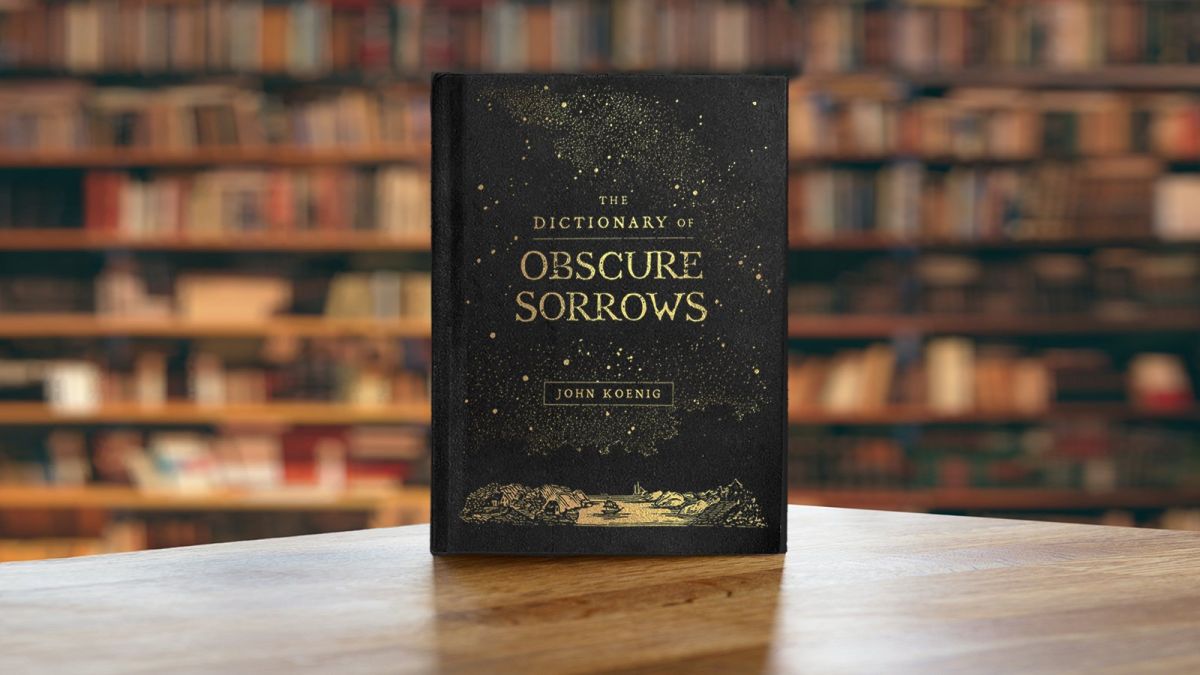
Now, before you start doubting your own vocabulary skills, you won't find those words in any of the major dictionaries. Instead, they come from The Dictionary of Obscure Sorrows, a collection of newly minted words for life's hard-to-define feelings.

So, these words aren't real? Well, it's not quite that simple.

Dictionary of (@ObscureSorrows) / Twitter

twitter.com

What makes something a "real" word?

It's a word that's found in the dictionary, you might say. That leads to an entirely separate question: Whose dictionary? Merriam-Webster? Oxford? Cambridge? Urban?

The truth is that language is ever-changing, and what one might say is a "fake" word today could very well be a "real" word tomorrow (or within a few years, at least).

In June 2015, the Oxford English Dictionary added a handful of new words to its rolls, including "Interweb," "jeggings," "hot mess," "crowdfunding," and "cisgender." Will all of these words stick with us for the long haul? Almost certainly not. Still, in the mind of OED's editors, those words are just as real as any others.

The Dictionary of Obscure Sorrows, on the other hand, contains many useful terms that you won't find in a traditional dictionary ... yet.

You'll find words like "Vellichor" ("The strange wistfulness of used bookshops") and "Adronitis" ("Frustration with how long it takes to get to know someone") buried within the dictionary's six-year history.

While some terms come off as, well, obscure, others seem to fill meaningful voids left by the limitations of language for common emotions.

Its existence feels almost otherworldly, like spells from the mind of J.K. Rowling.

"I've been writing a dictionary of emotions for about five years, and still the most common question I get is, 'Are these words real?'" Dictionary of Obscure Sorrows creator John Koenig told Upworthy over email.

To answer that question, Koenig says (emphasis mine):

"One answer is an obvious 'no,' [they're not real] because you couldn't find them in a leather-bound dictionary — and because I create them myself by twisting together word roots from any one of a dozen different languages, from French, Japanese and Mayan to my personal favorite, Greek.

On the other hand, of course these words are real, because in reality there is no such thing. A word is not like a gold coin that you bite to tell whether it's counterfeit, so you might be able to trade it for a mule. It becomes real when it's spoken and understood. And by that standard, I've seen some of my words (particularly 'sonder') used earnestly in many different conversations online. Are they all wrong? Is 'sonder' any less meaningful because it hasn't yet been enshrined on the page of a leather-bound book? After all, almost every word in the Oxford English Dictionary has a birthdate, a notation of its first recorded use, back when it was just a yawp of nonsense that only made sense to one person, then two. All words were born this way."

Here's "sonder" by the way:

When it comes to how we think about words, popularity is often a stand-in for legitimacy.

You might not find the verb "retweeted" in the dictionary on your bookshelf, but it's an understood term. Koenig has thoughts on that, as well:

"So then, does realness require the blessing of popular use? How many millions of people does it take to change the word 'literally' to mean 'figuratively'? Is a word still alive if only one person knows its meaning? Or is that too far?"

"Personally, I think words should exist for their own sake, regardless of how they are used," Koenig says, pointing out that our language is particularly lacking when it comes to describing emotions.

"When I post a new definition or a new episode of The Dictionary of Obscure Sorrows, I often have no idea if anyone else out there feels the emotion I'm trying to pin down. Because it's a one-man show, it's totally possible that it's just me. So then this question about realness [of a word] becomes just another way of asking, 'Am I the only person who feels this way?'"

Koenig isn't alone in his curiosity about the authenticity of words. English professor Anne Curzan gave a TED Talk on this exact topic.

During her talk, Curzan recounts someone asking her if "defriend" is a "real word." She wound up in the same sort of existential rabbit hole:

"What makes a word real? My dinner companion and I both know what the verb 'defriend' means, so when does a new word like 'defriend' become real? Who has the authority to make those kinds of official decisions about words, anyway?"

Here's Curzan giving her TED Talk "What makes a word 'real'?" in March 2014.


She touched on the process of words making their way into the dictionary. This might seem like a stale topic, but it's pretty fascinating.

To her, dictionary editors are similar to anthropologists — that's a way most of us probably hadn't thought about them before (if we thought about them at all).

"So how does a word get into a dictionary? It gets in because we use it and we keep using it, and dictionary editors are paying attention to us. If you're thinking, 'But that lets all of us decide what words mean,' I would say, 'Yes it does, and it always has.'

Dictionaries are a wonderful guide and resource, but there is no objective dictionary authority out there that is the final arbiter about what words mean. If a community of speakers is using a word and knows what it means, it's real. That word might be slangy, that word might be informal, that word might be a word that you think is illogical or unnecessary, but that word that we're using, that word is real."

So, what makes a "real" word? That's entirely up to you.

This article originally appeared on 07.02.15

crowd, unique, personality type, nonconformist
Photo Credit: Canva

A person stands out in a crowd.

So many of us have the desire to compartmentalize our personality traits into neat little boxes. "Oh, she's such an INFJ. Oh, he's such a Gemini." Some of it is rooted (well sort of) in psychology, such as the Myers-Briggs Type Indicator, based loosely on Jungian ideas. Others rely on arguably less scientific data like stars and "rising signs." Humans aren't usually that simple.

That said, there's still value in understanding one's own personality and inclinations. Here's a confession: I've taken countless personality tests because I just couldn't figure out if I was an extrovert or an introvert. Neither description quite fit, and as someone constantly trying to understand what makes me tick, this has been frustrating.


Turns out, there are other options. The term "ambivert" got popularized in the 1930s (after being coined by Edmund S. Conklin in 1923), and it refers to a person "who has features of both an introvert (someone who prefers to spend time alone) and an extrovert (someone who prefers to be with other people) in their personality."

@tedtoks

Replying to @Factura🛄 now knowing what an ambivert is, how would you describe yourself? #ambivert #introvert #extrovert #adamgrant #psychology #TEDTalk #worklife

But for those who still don't quite relate, meet the otrovert. Just recently, psychiatrist Rami Kaminski published The Gift of Not Belonging, in which he discusses his coined term to describe a whole new type of personality. In an Insta-reel captioned "What is an Otrovert?" Kaminski mentions the polarization of introverts and extroverts. "When Jung invented the terms extrovert and introvert, he saw them as two fundamental orientations of the personality. I see the otrovert in the same way. A personality trait that faces away from the group."

He continues, "Extroverts and introverts are inherently communal, while the otrovert is an outsider to the group. In itself, it is not a problem or condition, nor is it a diagnostic label. It simply means that while most people learn to develop a sense of belonging to a specific group through social conditioning, otroverts remain social but not communal."

In writer Sarjna Rai's piece, "Struggle to Fit the Mold? The 'Otrovert' Personality Explains Why" for Business Standard, they write: "Unlike introverts or extroverts, otroverts are not defined by where they draw their social energy. Instead, the concept captures people who constantly feel like outsiders, and tend to look in a different direction altogether, not necessarily aligned with the rest of the group."

While it's impossible to group people into perfect categories, Rai explains that Kaminski claims the main thing that sets otroverts apart is their "reluctance to conform to group norms."

Writer Avery White lists signs one might be an otrovert in the article "7 Signs You Might Be an Otrovert" for VegOut. Among them is preferring "high-signal conversations and low-maintenance relationships." They give this as an example: "You’ll happily spend three hours exploring one idea with one person—and then not speak for weeks without either of you taking it personally. In other words, low pressure, low expectations, high connection.

Another on the list—and this is a big one according to Kaminski—is: "You can look extroverted in public—yet feel fundamentally 'other.'" This is actually the crux of the term, and in fact, what Kaminski formed The Otherness Institute for: as their website says, "those who feel they don't belong."

The site also shares that recognizing aspects of this type in yourself and others (if it applies) will help "balance between your individuality and your function as part of the social matrix that determines your well-being. The experience of otherness in a togetherness-minded world can be emotionally bruising. Often misunderstood and misdiagnosed, otherness may lead individuals to feel strange, lonely, and unwelcome in groups. Left unidentified, otroverts' non-belonging can result in a frustrating, futile lifetime effort of trying to 'fit in.'"

Some Redditors are scrambling to figure out if they fit into this category. In the subreddit r/INTP (referencing one of the Myers-Briggs personality types), the OP asks, "Maybe I am an 'otrovert?'" Under this, they write, "Dr. Kaminski described the otrovert child as 'neurotypical, friendly, curious, well-adjusted, and often popular' yet 'they resist being pressured into group activities.'"

While this can seem inconsequential in childhood, joining the peer group "becomes critically important" in adolescence, said the psychiatrist, and teens "start to gauge their self-worth based on the group’s ranking of popularity (or unpopularity).'

"Membership in a group, no matter how lowly, is better than being an outsider," he added. "Otroverts, however, are comfortable with being outsiders and find it impossible to feel like insiders, regardless of how welcome they are.'

There are a handful of commenters who feel seen, but many push back, claiming the term could easily apply to other personality traits. One writes, "I think it's easy to resonate with this description... but as some warning noted, there aren't enough studies done about this term that people should be running to adopt it. I resonated with it after reading about it... But I have ADHD and persistent depressive disorder... both of which coincide with the descriptions of an otrovert."

Time will tell if this new term sticks, but for now, it's helping a lot of people feel more understood.

This article originally appeared last year.


cats; pets; cat lovers; cat parents; cats on counters; cat butts, pets, animals, humor, funny, science

Do cat buttholes touch every surface they sit on? Science answers.

Cat owners are a special breed. Sometimes when dealing with feline friends, they have unique questions that even Google can't seem to answer. This is probably the sole reason cat forums exist, but in 2021, one kid who needed a 6th grade science project decided to skip the cat forums for answers and instead use the scientific method. Kaeden Henry, then a sixth grader, bravely pondered a question few (if any) have been brave enough to ask: do cat buttholes touch every surface they sit on?

Since cats do whatever the heck they want, training them not to jump on kitchen counters is a feat even Hercules struggles to complete. These fierce felines don't care if you're cooking dinner or trying to get comfy in bed. If they want to sit somewhere, they're going to do it. The thought of cat butts on that expensive Serta pillow designed to feel like you're sleeping on a cloud can gross people out, but thanks to Kaeden, you no longer have to wonder if the butthole itself is also making contact.


cats; pets; cat lovers; cat parents; cats on counters; cat butts, pets, animals, humor, funny, science The scientific method as it was meant to be used. Courtesy of Kerry Hyde

The curious sixth grader was homeschooled and well-versed in the scientific method thanks to his mother's PhD in animal behavior with a concentration in feline behavior. And, since they own cats, the science experiment was pretty straightforward (and directly impactful).

The experiment

To complete the experiment, Henry and his mom, Kerry Hyde, bought non-toxic lipstick and applied it to each of their cat's anuses. Then, the cats were given commands.

cats; pets; cat lovers; cat parents; cats on counters; cat butts, pets, animals, humor, funny, science What are you planning on doing with that lipstick?Courtesy of Kerry Hyde

"Non-toxic lipstick was applied to their bum-bums, they were then given a series of commands (sit, wait, lie down, and jump up. Side note: Both cats have been trained since kittenhood with a variety of commands, they also know how to high-five, spin around, and speak.), they were compensated with lots of praise, pets, and their favorite treats, and the lipstick was removed with a baby wipe once we collected our data in just under 10 minutes," Hyde wrote in a Facebook post.

The results? Turns out that, no, cat buttholes do not touch every surface cats sit on

Now, let's all take a collective sigh of relief while we go over the details. Kaeden's experiment covered long-haired, short-haired, and medium-haired cats (if your cat is hairless, you better stock up on Clorox wipes just in case).


"His results and general findings: Long and medium haired cat’s buttholes made NO contact with soft or hard surfaces at all. Short haired cats made NO contact on hard surfaces. But we did see evidence of a slight smear on the soft bedding surface. Conclusion, if you have a short haired cat and they may be lying on a pile of laundry, an unmade bed, or other soft uneven surface, then their butthole MAY touch those surfaces!" Hyde shares.

Now every curious cat owner can rest easy knowing that, as long as their cat has hair, their bare bottom balloon knot is not touching the majority of surfaces in their home.

Huzzah, science!

cats; pets; cat lovers; cat parents; cats on counters; cat butts, pets, animals, humor, funny, science You want me to sit on that?Courtesy of Kerry Hyde

The amusing experiment caught the Internet's attention. People laughed and commented, with one person writing, "This is probably the most useful information I’ve learned from a science fair project."

"Good to know!...I can now eat my sandwich left on the counter with confidence!" another writes.

cats; pets; cat lovers; cat parents; cats on counters; cat butts, pets, animals, humor, funny, science High five for an A+! Courtesy of Kerry Hyde

"A+++!!! Whew!! I am very grateful for your sciencing on this subject. My fears from walking in on my cat sitting on my laptop keyboard and subsequently being grossed out and cleaning furiously in a hyper-ocd manner have been somewhat allayed and now maybe I won’t have to use QUIIITE so many wipes." someone chimes in.

"Finally.. Someone answers the important questions!!"

The best part of the story? Even with her Ph.D. in animal behavior, specializing in feline behavior, Kerry learned something new. The power of science!

This article originally appeared last year. It has been updated.

likable, likable person, likable people, conversation, conversation tips

Likable people say these things during conversations to build better relationships.

Making friends and developing deeper, stronger relationships starts with good conversation. Sometimes that means small talk at work, while other times it's the kind of conversation that really takes off at a party.

Some people are naturals when it comes to easy, flowing conversation—especially highly likable people, who tend to attract others and often hold the key to mastering genuine conversation. From their gestures to the way they articulate questions, there's a lot others can learn from them.


Communication experts who spoke to Upworthy say there are 10 things highly likable people do during conversations to build stronger relationships.

- YouTube www.youtube.com

1. They listen without distraction

Listeners often make the best conversationalists.

"That means not looking at your phone or scanning around the room to see who you want to talk to next," says Kerri Garbis, CEO and founder of Ovation Communication. "Focus on the person in front of you only. Make eye contact. This fosters a relationship because when you are fully present, it signals respect, interest, and helps others feel valued versus like they are competing for your attention."

2. They collect data

Being inquisitive about what people need during conversations is key to building stronger relationships.

"If you take a moment to ask your colleague or even friend, 'What are you worried about? What's the biggest concern facing you right now?' you can get great data on how you can help them - in a way that taps into something urgent and top of mind for them," says Kate Mason, PhD, an executive communications coach and author of Powerfully Likeable: A Woman's Guide to Effective Communication. "They'll remember your thoughtfulness and the actions you took."

3. They balance the conversation

Highly likable people never make it all about themselves.

"Sometimes conversations can be 'lopsided' where it's more about the other person than about you," says Rob Volpe, a communication expert and author of Tell Me More About That: Solving the Empathy Crisis One Conversation at a Time. "While that can be okay, you aren't there to be their therapist. Sometimes the context and topic may make it off balance, but if it continues and you aren't feeling seen yourself, feel free to say something like 'I'd love to share my thoughts on this' or 'May I share something I'm dealing with at the moment?'"

4. They mirror their conversation partner

Taking cues from body language can foster deeper relationships.

"It's a subtle way to make someone comfortable because they recognize themself in your actions," says Jennifer Anderson, a communication expert who works with entrepreneurs. "Your energy should match the energy of your counterpart. Think relaxing-in-lounge-chair energy vs. about-to-deliver-a-presentation energy. Those are two very different conversations. If you paired them up, there's definitely about to be some awkwardness."

- YouTube www.youtube.com

5. They skip pre-planned questions

While coming to conversations prepared with questions may help you feel less anxious, highly likable people usually don't use them.

"Often people have questions in their back pocket, like about the weather or sports, but the most likeable people in the room are those who can be present in conversations and ask follow-ups based on what someone is talking about," Garbis says. "This builds a relationship by making conversations feel relational and not transactional."

6. They are self-aware

Highly likable people are masters of self-awareness, especially during conversations.

"Self-awareness of your judgment is key to building relationships," Volpe says. "We all carry biases which can block our view of the person standing in front of us. When you catch yourself being judgmental, have some grace with yourself and get curious about the other person as well as where your judgment is coming from. This clears one of the biggest obstacles to having empathy with others."

7. They respond with affirmation

Highly likable people make others feel seen and heard.

"No matter what is coming out of the person's mouth, make it clear that you're not judging or competing with them," Garbis notes. "If they say: 'I went skiing this weekend,' don't jump in and say that you also went skiing. Say something like, 'Wow, that sounds exciting, tell me more about that.' You can respond with validating statements like: 'That makes sense, or I can see why you're so good at that, or I can see why that matters to you.' This reduces defensiveness and nervousness, and it makes people feel safe to be themselves and creates relationships faster."

@justaskjefferson

it’s been great catching up! #communicationtips #communicationskills

8. They remain calm

Bringing a sense of calm rather than chaos to a conversation can put everyone at ease.

"Calm is the most powerful communication flex you can do," Mason says. "If you can stay calm, especially in a heated conversation, you actually end up looking trustworthy, reliable and unruffled - all very powerful things to be remembered for."

9. They remember names

Highly likable people personalize conversations by using the other person's name.

"Never ever tell people you are terrible at remembering names," Garbis explains. "This will tank the conversation because it signals you don't matter, nothing you say matters, and that you aren't worth remembering. It makes a person mentally check out of the conversation. Use good tricks like repeating a person's name at the beginning and again at the end. If you forgot by the end, say something like, 'It was so fun to hear about your skiing adventure. By the way, I'm Kerri, it was so nice to meet you, and can you remind me of your name? I don't want to forget it?' They'll be so grateful you repeated your name too!"

10. They use humor where they can

Finally, highly likable people make sure to infuse conversations with laughter.

"It's a great connector," Anderson notes. "Don't try to be a standup comic, just find the lighthearted observations and details that you can share in conversations. Humor is never a weapon; judgy and mean-spirited comments convey weakness, not confidence. You'll risk alienating your conversation partner if you come in with a full roast of your friends or coworkers. If all else fails, everyone loves a Dad Joke."

figure skating, skater, ice skating, plus size, inspiration, girls
Canva Photos

Figure skater Laine Dubin doesn't fit the stereotypical mold, and that's why young skaters love her.

The winter Olympic viewership numbers don't lie: Figure skating is one of the most beloved sports in the world. Honestly, is there anything more beautiful and graceful? It's got the gorgeous aesthetics of gymnastics and dance combined with an almost other-worldliness as the skaters glide and fly around the ice. There's a reason people can't seem to look away from the rink when the Olympics roll around every couple of years.

However, the sport of ice skating comes with certain expectations or even stereotypes of what the skaters body should look like. For women, most high level skaters are almost always extremely petite and slight. It stands to reason that this body type must be a requirement to perform at a high level, right?


Wrong. Laine Dubin is one skater who's out to prove that there's no "right way" for an athlete to look.

figure skating, skater, ice skating, plus size, inspiration, girls There's no one right way for an athlete to look. Photo by Kelli McClintock on Unsplash

Dubin, most recently a student at Quinnipiac University where she was a standout on the skating team, began posting videos of her routines online in 2018. Believe it or not, she didn't set out to start a body-positive revolution—she just wanted to document her progress and free up some space on her phone.

But almost instantly, she began to develop a following. No one had ever seen anyone like her pulling off the moves that she could, all with so much personality and showmanship that sucked people in. Not only that, but Dubin displays outstanding power and grace on the ice. If you've only ever watched the "prototypical" Olympic skaters perform, what Dubin does almost looks impossible. It's really amazing to behold.

One clip in particular recently went mega viral to the tune of over 30 million views:

@lainedubin

THE WINNER TAKES IT ALLLLLLLLL🏆🥇 🎥 @Emma #figureskating #figureskatingtiktok #iceskating #iceskatingtiktok #plussizefigureskater #figureskatingtiktoks #iceskater #figureskater #adultfigureskater #adultsskatetoo

Dubin has undoubtedly found her people on social media. The responses to her videos could bring tears to your eyes. Not only are viewers in awe of her skill on the ice, they find so much hope and inspiration in what Dubin is doing:

"Ok but as a bigger Asian girl who has always dreamed of ice skating this made me tear up 😭 so proud of you"

"I NEVER see plus sized rep in figure skating, YOU ARE INCREDIBLE THIS IS SO COOL!!"

"the fact no one knows how absolutely impressive this is especially with girls our size I love ice skating I've been a fan forever the power and strength you need to pull your up and spin like that"

"wait! someone with my body type figure skating?!!! like a GODDESS may I add, this makes me feel so seen, and like, maybe I could do this with some practice as well!!!!!???"

"As a plus sized girl who had the idea of figure skating shot down, thank you for making the lil girl in me happy and I'm so damn proud of you. You're awesome."

Comments just like these roll in on Dubin's videos every single day. But that doesn't mean that general attitudes across the sport are ready to change.

Women skaters, especially, are mercilessly mocked, fat-shamed, and picked apart by viewers, coaches, and even judges of the sport. Five-time Olympic medalist Tessa Virtue has dealt with people nitpicking her body her entire career, calling her either too fat or too muscular. Bronze medalist and two-time US National Champion Gracie Gold had to take a hiatus from the sport to get help with an eating disorder. One of the most promising young figure skaters in recent memory, Yulia Lipnitskaya, was forced to retire at just 19 due to anorexia along with injuries.

There are a lot of factors that contribute to this major problem. The norm is for female skaters in competition to wear incredibly skimpy dresses and outfits that accentuate their form and technique, which would make anyone self-conscious about their body. Canadian skater Kaetlyn Osmond adds that less body mass also helps them achieve sky-high jumps on the ice.

@lainedubin

my first rain skate but it was in my coaching skates😪 #figureskating #iceskating #adultfigureskater #plussize #figureskater 🎥 bry

Dubin is living proof, though, that a plus-sized body can be athletic, graceful, and beautiful. It means so much to all the kids who think they shouldn't bother pursuing their love of the sport because their own body type will never allow them to fit in.

“It’s just people seeing representation in the media of themselves being represented first,” Dubin told US Figure Skating in 2023. “That’s what will make people feel validated and that’s what will lead to change with body inclusivity in the skating space.”

The way she's racking up millions and millions of views, it's fair to say she—along with other plus-sized skaters—could have a real, tangible impact on the next generation of skating athletes. The official Olympics Facebook page even shared one of her clips, exposing her moves and her message to a new, massive audience. She was also interviewed on Behind the Skates on YouTube:

- YouTube www.youtube.com

Keep up with Dubin and watch her progress, play, and fashion on TikTok and Instagram and visit her Linktree for even more.

This article originally appeared in April. It has been updated.

Gen Xers and Boomers discuss the eye-opening signs about aging no one warned them about

"That eventually you will end up in that CVS aisle you always skipped because it didn’t pertain to you."

aging, gen x, boomer, getting older, aging signs

Our bodies change as we get older, but that's not all.

Even though we all know it's inevitable, aging has a way of sneaking up on us, and often in ways we don't expect. The best people to speak on the truths about aging, of course, are Boomers (those born 1946 to 1964) and Gen Xers (those born 1965 to 1980). With decades of life under their belt, these folks possess wisdom and insight into what it's actually like to grow old that they can share with younger generations.

A Reddit user posed the following question to Boomers and Gen Xers on the hilariously named /AskOldPeople channel: "What’s something about aging that no one warned you about, but you wish they had?" Folks did not hold back. Gen Xers and Boomers opened up about their first-hand experiences and let their good, bad, and ugly experiences fly.


aging, gen x, boomer, getting older, aging signs Aging comes with ups and downs.Photo credit: Canva

Here are the best responses to the warning signs about aging from Gen Xers and Boomers:

"The slow loss of everything, your abilities, your health, your friends, relatives, places you loved, etc. Just the eroding away of everything." —@ BreadfruitOk6160

"All the loss you endure." —@southerndude42

"I wish they had warned me that it's OKAY 'not to do anything' when you retire. My husband and I have been retired about two years now, and it's been wonderful. But we're not jetting around the world. We are just relaxing, enjoying being home. And that's okay, it doesn't mean we have a worse life now." —@slenderella148

aging, gen x, boomer, getting older, aging signs You may want to just chill at home, and that's okay.Photo credit: Canva

"The invisibility." —@TimeSurround5715

"Aches and pains don’t go away in a day. Sometimes it takes a week." —@OscarTravolta

"Start appreciating the smallest things… like a quiet morning, or when a friend texts u a meme outta nowhere. those tiny moments hit diff now." —@quietswoon

"It’s so much harder to gain muscle once you age." —@GroundAndSound

"That eventually you will end up in that CVS aisle you always skipped because it didn’t pertain to you." —@IntentionAromatic523

"How fast time goes by. I was 21 yesterday. Now I'm 69. Time went by way to quickly." —@Dry-Cause2061

aging, gen x, boomer, getting older, aging signs There's a freedom that comes with getting older, too.Photo credit: Canva

"That I would feel this great. And content. And so much more in love with my SO, decade after decade. That there would be as much joy in walking fast laps as there was in running full court basketball. That for all the travail I've had a wonderful life. That it would become so easy to understand Robinson Jeffers:"

Still the mind smiles at its own rebellions,
Knowing all the while that civilization and the other evils
That make humanity ridiculous, remain
Beautiful in the whole fabric, excesses that balance each other
Like the paired wings of a flying bird."

—@Own-Animator-7526

"All the napping! I've never needed so many naps..." —@Familiar_Collar_78

"Menopause. I knew so little about it beyond hot flashes, but what absolutely NOBODY told me was: after 40+ years of mostly painful, heavy periods, it is a GLORIOUS feeling not to have a period anymore. 🙌 I especially love the freedom of being able to travel without having to calculate whether I’d need to pack extra products and underwear. (Thank God my agony came pretty much like clockwork every 28 days. 🙄)." —@Technical-Bit-4801

"Death, there are fewer & fewer people that know who you really are & where you came from. I've these parts of my life I shared with friends, & they're dead now. It's a strange feeling, when I'm gone it'll be like those moments never happened. The loss of shared experiences, I guess. It's nothing terribly important, or even very impactful, it's just slightly sad." —@Inside_Ad_7162

aging, gen x, boomer, getting older, aging signs Aging also come with loss. Photo credit: Canva

"How precious time will feel. Every moment matters to me now and I have no patience for squandering it. I consider myself very laid back but if there is anything that will trigger me, it's someone wasting my time. Feels like they're stealing my most precious resource." —@PicoRascar

"As a male. The crazy ear and nose hairs that grow." —@Mikethemechanic00

"Late sixties. ....something about aging no one warned about? Sounds like it's gotta be something bad. I wasn't warned about how independent, footloose and fancy free I'd feel once all work and family commitments and obligations were fulfilled. And I can be cantankerous whenever I wanna be. Most folks get warned about long term health consequences but it is difficult to overcome the insidious long-term ill-health consequences of commercial, corporate, processed, fast food pressures and convenience. way too much is spent on consequences of poor health and not enough on prevention and education --- imho." —@Buzzhoops

"The sensitivity. I have always been a very sensitive person who feels things deeply. But I'm also GenX so calloused, but lord a mercy if middle-age hasn't turned me into a crybaby. I swear I never used to cry so much." —@earthgarden

"That regularly putting money into savings or a retirement account is as important as brushing your teeth every day." —@InternalAcrobatic216

"When you hear a song or band from your youth that you absolutely hated because they were so cheesy and god-awful bad, but now when you hear it.. it brings back smiles and memories…. that’s the cleansing power of Nostalgia!" —@Hillman314

It's easy to forget that growing old is a privilege, one that comes with both upsides and downsides. Knowing what's coming might be helpful, but time will tell if it's something we can ever truly prepare for.

This article originally appeared last year. It has been updated.