World War I began on July 28, 1914, following the assassination of the Austro-Hungarian Archduke Franz Ferdinand and his wife. However, the United States did not officially enter the conflict until April 6, 1917.
During The Great War, the U.S. Army needed extra communication support via telephone switchboard operators. So, General John J. Pershing, commander of the American Expeditionary Forces, began recruiting women who were fluent in both English and French to support U.S. efforts in France.
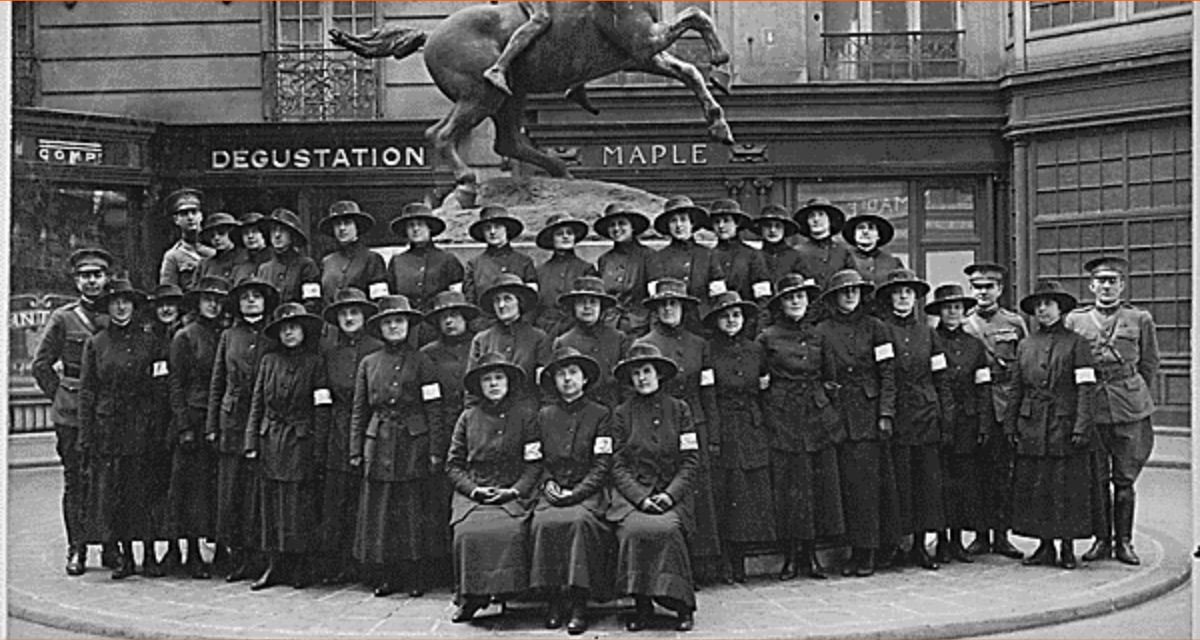
These brave women became the first female soldiers in the U.S Army, and went on to be known as “Hello Girls” thanks to their swift communication and switchboard skills. The term is thought to have originated from greetings sent between the phone caller and operator.
The ‘Hello Girls’ are formed
General Pershing put out newspaper ads to recruit women to become part of the U.S. Army Signal Corps. Over 10,000 applied, and 233 were selected to serve, per the U.S. Department of Veterans Affairs. Each woman was selected by the Secret Service because they would be handling highly confidential information.
Pay began at $50 a month, according to the Library of Congress. They were sent to France in March 1918.
Not only were they required to be skilled in telecommunications, they were also required to go through military drill training. The U.S. Department of Veterans Affairs explains, “They wore a uniform, were given ranks, and were subject to inspections. In every way they appeared to be soldiers.”
These women also handled an incredible workload. They coordinated troop movements and supplies in military code, keeping units and commanders connected on “firing lines.”
In an article published in Stars & Stripes from October 4, 1918, it was reported:
“Six women operators of the Signal Corps—six American girls who jumped at the chance to be there – were in at the start of the St. Mihiel push of September 12, at the headquarters of the First American Army,” the publication shared. “During the six days that followed the 12th’s initial heave, they kept on their jobs, handling an average of 40,000 words a day over the eight lines they operated, and working any hours that were asked of them, day or night.”
Fight for recognition as veterans
During their service, “Hello Girls” were not considered military personnel, but “civilian contract employees” because Army regulations recognized only male soldiers. Therefore, following their service, “Hello Girls” did not qualify for benefits like traditional veterans.
These women fought for recognition of their military service and veteran status for over 60 years. It wasn’t until the 1977 G.I. Improvement Bill was signed that they were finally recognized and given honorable discharge papers. Unfortunately, only 18 women were still alive at that time, per the U.S. Department of Veterans Affairs.
Many women from the unit have now been recognized, including Chief Operator Grace Banker. Banker was awarded the Distinguished Service Medal for her service at the Battles of St. Mihiel and Meuse-Argonne.
Another “Hello Girl, “Renee Messelin, was also recently honored with a ceremony at Abraham Lincoln National Cemetery in Elwood, Illinois, in July 2026. Messelin was the first Black woman soldier to serve overseas for the U.S. military.