Whose idea was it to eat that? The strange ways 11 everyday foods were discovered.

Whose idea was it to let milk go bad and then eat it?

food, food history, origins of food, history, funny, fun facts, eating, culture, nutrition, taste, dining
Photo credit: Canva PhotosMany of our favorite everyday foods have extremely strange origins.

Have you ever stopped to think why we eat the things we eat? Some of it seems natural, of course, like an apple growing from a tree. At some point in history, someone picked one, took a bite, and realized it was delicious.

Hunting and eating animals is similar. It’s part of our DNA, even if you choose not to partake, and you can easily trace the path from early hunter-gatherers to packaged chicken nuggets.

But at some point, humans started getting really creative. We picked coffee cherries, removed the seeds, and brewed them into a dark and bitter drink–why?! We smushed up grapes and let them sit around for a while and then drank their juices. We decided to try consuming cow’s milk that had gone really, really sour.

Whose ideas was it to try these things? Fascinatingly, many of our favorite foods, even the things we eat everyday, were the result of necessity or pure accidents. Here are some of the weirdest yet most interesting food origin stories.

1. Cheese & Yogurt


food, food history, origins of food, history, funny, fun facts, eating, culture, nutrition, taste, dining
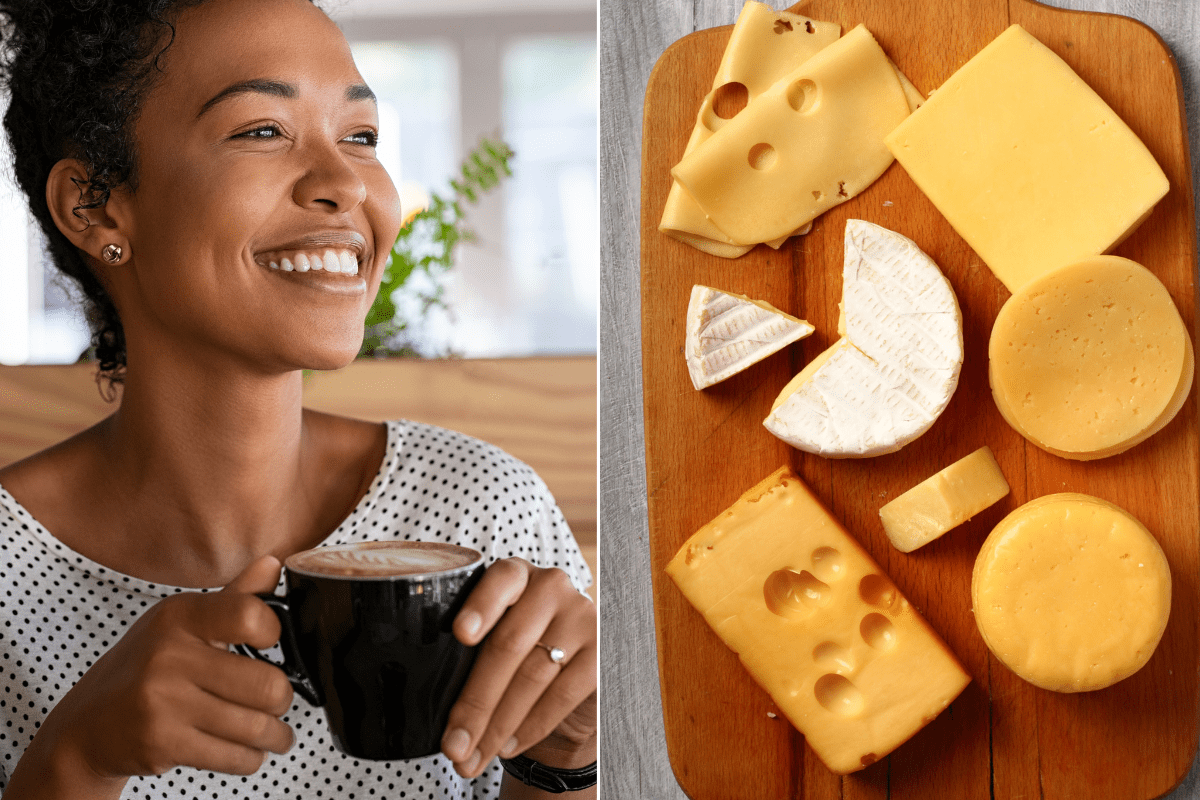
Cheese is essentially just spoiled milk! Photo by David Foodphototasty on Unsplash

We know that cheese and yogurt both come from milk, often cow’s milk. We also know that milk goes bad extremely quickly and disgustingly. So how did we bridge that gap and come to discover these two amazing foods?

According to the National Historic Cheesemaking Center Museum (in Wisconsin; where else?) cheesemaking dates back thousands of years to Greek mythology and the ancient Egyptians. It’s said that milk was often stored in containers made from the stomachs of animals. The only downside of stomach containers is that they contained an enzyme called rennet that triggers coagulation in the milk, allowing it to separate into curds and whey.

Those Greeks and Egyptians must have been mighty surprised when the curds, in particular, turned out to be absolutely delicious. The BBC writes, however, that this accidental process was probably first discovered in the Middle East and Central Asia.

2. Wine
food, food history, origins of food, history, funny, fun facts, eating, culture, nutrition, taste, dining
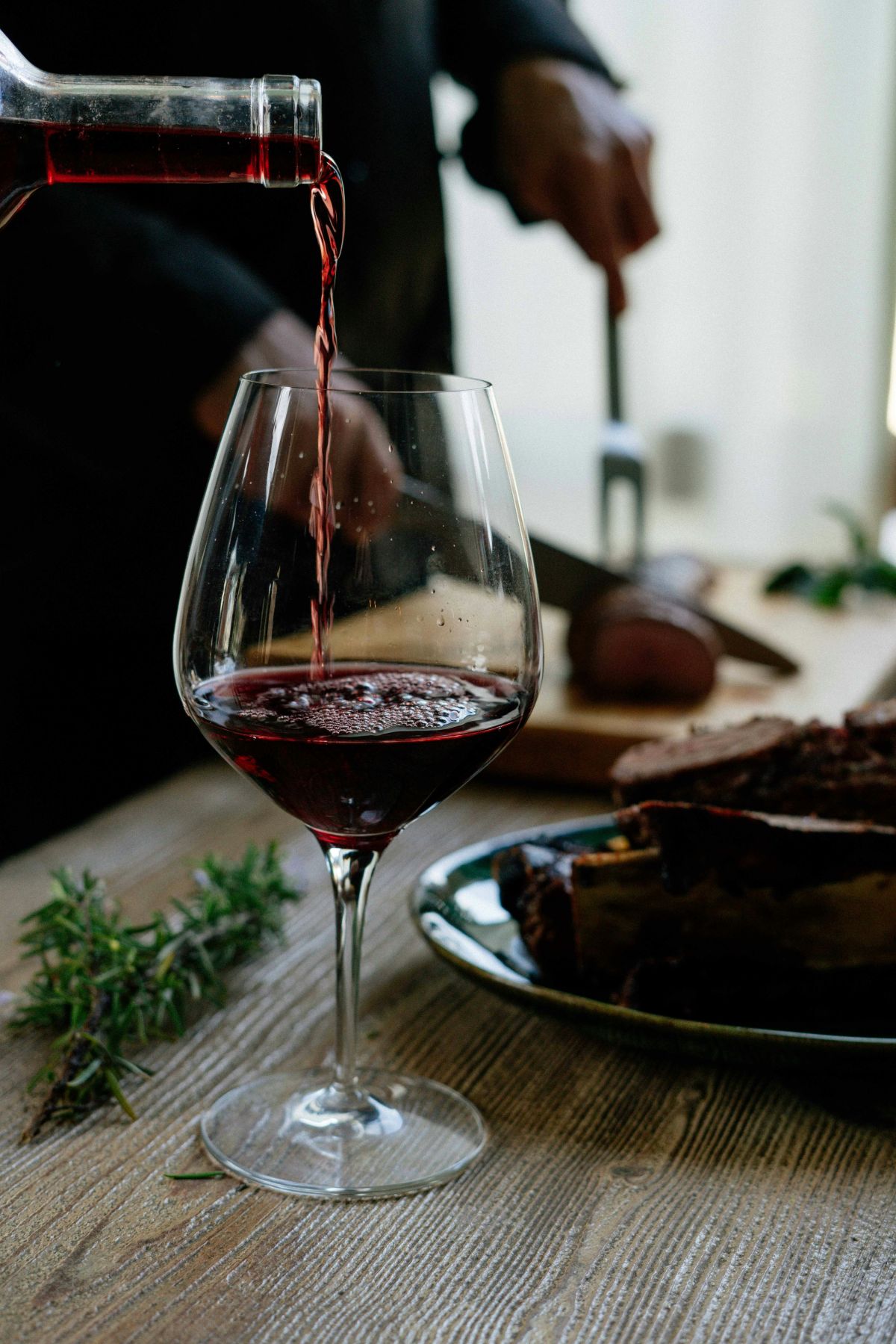
It must have been fun to discover old grapes turned into wine. Photo by Lefteris kallergis on Unsplash

Today, the winemaking process is pretty complex, so much so that some people consider it an art. Or, at the very least, a craft of the highest order.

I’ve always been curious how we ever came up with the idea that we could get drunk off of grapes, long before the days of perfectly pruned vines and aged-oak barrels. Turns out, the story is not that dissimilar to the origins of cheesemaking, except it goes back even further. Humanity’s natural desire for a good party is apparently one of our most ancient traditions!

Early humans would forage large quantities of fruit like grapes and berries. The ones at the bottom, naturally, would get smushed and likely not be eaten for a while. They would have time to ferment, creating an alcohol-like substance, that must have been pretty pleasurable for anyone willing to go digging around at the bottom of the fruit pile.

Beer has a similar origin story, only instead of fruit, it was grains for bread that were left out too long and began to ferment.

3. Coffee

food, food history, origins of food, history, funny, fun facts, eating, culture, nutrition, taste, dining
Coffee fruit was making the goats a little too happy. Photo by Nathan Dumlao on Unsplash

Coffee is definitely one of the weirder things that we consume. The coffee beans we’re used to seeing do not appear exposed in the wild—they’re actually tucked away inside something called a coffee cherry. Each cherry contains two seeds, or coffee beans.

The story goes that an Ethiopian goat herder in the year 850 (give or take) noticed that whenever his goats ate the cherries, they would become energetic, playful, and just plain happier. Kaldi, the herder, is credited with being one of the first to forage the cherries. At first, the leaves were used to make tea, and then the berries were eaten directly to get the happy-energy effects. It wasn’t until a few centuries later that the beans were made into a beverage for the first time.

4. Tikka Masala

I absolutely love getting Indian food whenever possible and, like a lot of Americans, I adore Chicken Tikka Masala. But I never knew that it was created out of necessity as recently as the 1970s.

The widely accepted legend has it that a Glasgow chef named Ali Ahmed Aslam served a customer some chicken tikka one night and found the patron to be very hard to please. The man insisted that the chicken was too dry. So Aslam scoured the kitchen and whipped up a special sauce made of yogurt and tomato, which helped keep the chicken moist.

Pretty quickly, chicken tikka masala became famous across the globe. The Bristorian writes, “it is widely represented as the quintessential Indian dish despite its origin in the United Kingdom.”

5. Tomatoes

food, food history, origins of food, history, funny, fun facts, eating, culture, nutrition, taste, dining
Tomatoes were thought to be poisonous until very recently. Photo by Huzeyfe Turan on Unsplash

It doesn’t seem surprising at first that most cultures around the world regularly eat tomatoes, with a few exceptions. They grow in the ground and look beautiful. It’s not shocking that someone bit into one at some point in history and decided we should all get to enjoy them.

But what is surprising is that, in the Western world at least, tomatoes didn’t catch on for a long time. Even in Italy, which is practically synonymous with the tomato, Italians didn’t really eat them widely until the 19th century. That’s because tomatoes were long thought to be poisonous, a member of the nightshade family which contains many toxic plants.

One story claims that a man named Colonel Robert Gibbon Johnson ate tomato after tomato in front of a crowd in New Jersey to prove to the world they were safe. It’s probably not a true story, but it’s fun to imagine.

6. Tea

food, food history, origins of food, history, funny, fun facts, eating, culture, nutrition, taste, dining
Tea is one of civilization's most ancient drinks. Photo by Nathan Dumlao on Unsplash

Tea, like coffee, seems odd when you really think about it. Boiling dried up leaves and herbs in water? Whose bright idea was that?

It turns out, it was an Emperor’s idea! Tea is truly one of the most ancient beverages, and legend has it that Chinese emperor Shen Nung accidentally discovered the delectable drink in 2737 BC. He was supposedly sitting under a tree while his servant boiled him some drinking water, a common practice at the time. Some leaves are said to have fallen in from the Camellia sinensis tree, which gave the brew a pleasant aroma.

Shen Nung tasted it and was impressed, while also finding that it made him feel great. Tea was initially considered medicinal and didn’t become a daily drink until much later.

7. French fries

food, food history, origins of food, history, funny, fun facts, eating, culture, nutrition, taste, dining
Fried potatoes began as a replacement for fried fish. Photo by Louis Hansel on Unsplash

Despite the name, French fries are said to have initially been discovered in Belgium.

In the 1600s, villagers near one of the country’s rivers would catch fish to try. Fried fish was an incredibly popular treat, but in the winter months, the river would freeze and catching fish would become impossible.

Out of necessity, they tried cutting up potatoes into a similar shape and frying those, instead. The result was delicious! When American soldiers came through the area during World War I, word spread quickly for obvious reasons.

8. Potato chips

The accidental invention of potato chips is a direct offshoot of French fries, so it deserves a spot on this list.

Some 250 years after the invention of fries, the story goes that a chef named George Crum had another difficult customer on his hands. (Seeing a pattern here?) The man was unhappy that his French fries were too soggy and thick.

Smithsonian Magazine writes, “Furious with such a fussy eater, Crum sliced some potatoes as slenderly as he could, fried them to a crisp and sent them out to Vanderbilt as a prank. Rather than take the gesture as an insult, Vanderbilt was overjoyed.”

They were called Saratoga Chips at first, a reference to their birthplace of Saratoga, New York. Experts say the potato chip may have officially been invented before this famous showdown, but George Crum undoubtedly helped popularize the snack.

9. Popsicles

food, food history, origins of food, history, funny, fun facts, eating, culture, nutrition, taste, dining
An 11-year-old accidentally invented popsicles. Photo by Alexander Grey on Unsplash

The official Popsicle brand itself says the frozen treat was invented by an 11-year-old boy in 1905.

Frank Epperson allegedly left a cup of soda, complete with a stick for stirring, outside on a cold night and was chagrinned to later find it frozen. However, one lick and he was convinced—frozen meant delicious! Young Frank named the treat after himself: “The Episcle.”

An entrepreneurial little bugger, Epperson perfected the popsicle and began selling them around local beaches before patenting the pops in 1924.

10. Cheetos/cheese puffs/cheese curls

food, food history, origins of food, history, funny, fun facts, eating, culture, nutrition, taste, dining
Cheetos and cheese puffs have a fascinating accidental origin. Photo by Ryan Quintal on Unsplash

I’ve always been curious about cheese curls, which are one of my all-time favorite snacks. What even is a cheese puff? The potato chip, though unique, makes sense: It’s a deep fried, thin slice of potato. Cheetos and cheese curls are just so far from anything found in nature it boggles the mind how they might have been invented.

Well, boggle no more! In 1935, cheese puffs were accidentally invented in a factory that made animal feed. Corn was ground in a grinder to make the feed, but when it came time to clean the machine, the workers fed moist corn through. The resulting waste product was airy, puffy blobs of corn that would fall to the ground.

A worker named Edward Wilson decided to try some and found them utterly delicious, and thus named them Korn Kurls.

11. Worcestershire sauce

I love a good happy accident almost as much as I love Worcestershire sauce on my burgers and steaks. Luckily, this story has both.

In 1835, drug store owners John Lea and William Perrins were asked to recreate a sauce a local baron had tried during a visit to India. Their creation was an utter failure, smelling horribly and tasting worse. So they hid the batch they created in the basement and forgot about it for nearly two years.

According to Great British Chefs, “When they rediscovered it, it had aged well, turning into the fermented, umami-packed sauce we use today.”

  • Singer in hospice performs soulful ‘Landslide’ cover ‘one last time’
    Photo credit: via Recordsnet and Matt Becker/Wikimedia CommonsSingers Marirose Powell (L) and Stevie Nicks (R).
    ,

    Singer in hospice performs soulful ‘Landslide’ cover ‘one last time’

    She was Stevie Nicks in a Fleetwood Mac cover band for over 20 years.

    The final performance of singer Marirose Powell has people welling up all over TikTok because of the soulful way she sang “Landslide” by Fleetwood Mac while in hospice care. Powell performed as Stevie Nicks in a Fleetwood Mac cover band for over twenty years, so the song was a major part of her life.

    A week before she died from cancer, some friends showed up at her home and asked what she would like to sing. “And she said, ‘I want to sing ‘Landslide.’ And so she sang ‘Landslide’ one last time,” Powell’s daughter-in-law, Sam Xenos, who posted the video on TikTok, told People. 

    In the video, Powell grabs the railing over the medical bed as she sings a song about the inevitability of the passing of time. The song had to have taken on an even greater meaning as Powell was in the final days of her life. “I’ve been afraid of changing because I built my world around you,” Powell sings. “Time makes you bolder, and even children get old and I’m getting older, too.”

    “My mother-in-law performed as Stevie Nicks for decades,” Xenos wrote in a video overlay. “This was her final performance before she passed the following week.” In the caption, she added there wasn’t “a day that goes by that I wish we’d had more time with her. She was truly the only person I’ve ever known to leave people better than she found them. Until we can be together again, mama.”

    Powell passed away on April 10, 2024, at 62.

    @samxenos

    there isnt a day that goes by that i wish we’d had more time with her. she was truly the only person i’ve ever known to leave people better than she found them. until we can be together again mama…

    ♬ original sound – samxenos

    In her obituary, she is remembered for her “infectious smile” that “guaranteed to brighten anyone’s day and she was known for her incredibly kind soul and generous heart. She had the beautiful ability to leave all those she touched better than she found them.”

    In addition to performing as Steve Nicks, Powell released 3 solo albums and worked as an ER nurse. As a lifelong musician, she would probably be more than pleased to learn that her final performance has touched many people.

    “I hope Stevie Nick sees this. She would be proud to know that your mom sung her songs for decades,and her choice of this song was heartfelt,” one commenter wrote. “I’m sobbing. God bless you and your family. Your mom is beautiful,” another added.

    “That might be the most touching performance of ‘Landslide’ to ever exist,” a commenter wrote.

    Xenos and her husband, Powell’s son, are overjoyed that the video has gone viral. At first, she was afraid of how her husband would react to the clip being posted on TikTok. “I remember calling my husband nervous because he didn’t know I posted it,” Xenos told Upworthy. “He was over the moon after reading the comments and seeing people feel her genuine soul from that small clip. He asked me to post more videos of her and they have generated a phenomenal response. She was the most giving and generous person. I would tell her to post her music and she was worried no one would care. I’m so honored to have proved her wrong on that fact.”

    Nicks says she wrote “Landslide” in Aspen, Colorado, at 27. “I did already feel old in a lot of ways,” Nicks told The New York Times. “I’d been working as a waitress and a cleaning lady for years. I was tired.”

    She was also having a hard time in her relationship with Fleetwood Mac guitarist Lindsey Buckingham. She composed the song while looking out her window in the snow-covered Aspen mountains. “And I saw my reflection in the snow-covered hills / Til the landslide brought me down.”

    Here is a full performance of “Landslide” that Powell gave in 2016 at the Prospect Theater in Modesto, California. Jamie Byous joins her on guitar. 

    This article originally appeared last year. It has been updated.

  • Indigenous woman cries tears of joy after hairdresser discovers ‘unruly’ grey hairs
    Photo credit: CanvaIndigenous woman cries tears of joy after hairdresser discovers 'unruly' grey hairs

    Grey hair has been a concern for people since before hair dye was invented. Some people pluck them and dye them as soon as they see them growing in, while others embrace the silvery hairs. Chiara Do’wal Sehi (Sunshine) Enriquez, an Indigenous woman from the Karankawa Tribe, recently shared her excitement about learning she had grey hair.

    For a brief period of time, people were actually dyeing their hair grey prematurely. It wasn’t uncommon to meet a 20-something with “granny grey” purplish-silver hair, but the popularity faded nearly as fast as it started. But for Enriquez, grey hair isn’t a fad or something to hide. It’s a right of passage to celebrate.

    indigenous, grey hair, getting older, culture and humanity, going grey
    Indigenous woman with long braids.
    Photo Credit: Canva

    During the colonization of the Texas Gulf Coast where the Karankawa originated, the Indigenous tribe was nearly eliminated. According to the Texas State Historical Association, the Karankawa people fought to maintain their land from 1685 until 1858 from French and Spanish settlers. Due to this multi-century, on-and-off battle for their territory, the tribe’s numbers became so small that they were considered “extinct.”

    Enriquez is a descendant of the small number of Karankawa that survived. To her, living long enough to experience the growth of grey hair is a gift. The woman shares how much her “unruly” greys mean to her in a video uploaded to her Instagram page.

    indigenous, grey hair, getting older, culture and humanity, going grey
    Indigenous woman standing in sunshine.
    Photo credit: Canva

    “I got my hair styled today. I don’t get it cut. It’s a cultural belief that I was taught by my mother. We don’t cut our hair, we let it grow. We save the cut for very, very serious and important moments in our lives,” she says while sitting in her car.

    The woman explains that while she was having her hair styled, she asked the hairdresser about the texture of her hair. This is when she learned of her wiry new strands. She surprised hairdresser with her delighted response. “She said to me that it was because I had many little greys, and the unruly ones that were pushing up my other hair that weren’t grey were causing it to be a little bit frizzy.”

    Enriquez lights up and smiles while recalling the moment in her hairdresser’s chair. She reveals, “And that felt so incredible. What an honor, and I was…I’ve only ever seen my head grow one grey hair, and even when I knew I had one grey hair, I was incredibly thankful. When she saw that I was smiling and so happy, she said, ‘Oh wow, you really must come from a different culture.’”

    indigenous, grey hair, getting older, culture and humanity, going grey
    Elderly indigenous woman.
    Photo credit: Canva

    She later adds while tearing up, “I’m very happy to report that not only do I have for sure one grey hair, I have many. A plethora of grey hair. What an honor. What a fantastic gift to be lucky enough to see myself grow grey hair. That is so incredible. I am so lucky. What a life it has been. What a life it continues to be.”

    Enriquez wipes away tears as she encourages others to embrace their grey hair. Viewers were moved by her joyfully emotional response to finding out she has a head full of grey hairs pushing their way through.

    One person shares, “As a chemo patient I am always surprised when people are upset about their grey hair. I have come to see it as a privilege and dream of the day I might have greys, though my mom’s hair has never changed colors, and neither did her dads. Their hair has always stayed brown for some reason. Since my hair has begun growing again I have decided not to cut it for as long as possible. So I can say, I’ve been cancer free for this long, and show people my hair for reference.”

    Someone else writes, “This had me in tears because i’ve loss so many people and im only 30 and the day i get grey hairs i will celebrate with them!”

    Another person says, “i’m so happy to hear this expression of delight regarding your grey hair~ i am only just now getting greys & my own natural reaction was very different from my mom’s & grammom’s reactions~ i was surprised to find that i like seeing them appear~ hearing your perspective makes me think that it’s because i am not as tethered to the usa culture as they…
    so thank you for sharing your experience & offering food for thought~ & congratulations.”

    “I have been allowing my greys to come in naturally and have stopped dyeing my hair and it’s very liberating and in a society where ageism is everywhere it feels like resistance. And I love that! I have more greys than my mom. :),” someone else shares.

    indigenous, grey hair, getting older, culture and humanity, going grey
    Elderly Indigenous woman with hair covered.
    Photo credit: Canva

    “What a sacred and healthy perspective,” one person says.

    Another reveals, “I love this so much! Thank you for sharing your joy and gratitude with us. I’m getting grey and have been oscillating between feeling happy about it and feeling like I’m not sure i feel “ready” to have grey hair.”

    Enriquez says, “I’ve always been of the personal belief that humans take the longest to change the color of their foliage in observation of their reconnection with Mother Earth and the cyclicity of her seasons and transitions.” She then explains that trees change with the seasons, grass goes through a cyclical change, and even animals turn grey and calm with age. “And it has always been representative that you have lived a full life. Do you know how many people didn’t get to grow grey hair? Didn’t get to see the hair change? What a gift,” she adds.

  • A young girl tells Carol Burnett ‘hello’ from her neighbor. It happened to have been Carol’s biggest crush.
    Photo credit: Elmer Holloway, NBC, Wikimedia CommonsComedian Carol Burnett in a 1958 TV sketch.

    When a person consistently brings the world joy, it’s extra special when we see them experience it tenfold. This is what happened for iconic comedian Carol Burnett when a young girl relayed a message from her next-door neighbor. Burnett’s response was pure delight.

    A re-surfaced clip of Burnett shows her taking questions at the Q&A segment before her taping of The Carol Burnett Show. A young girl tells Burnett that she “lives next door” to one of her old boyfriends and that he says “Hello.” Burnett, clad in a lively black and yellow dress with a giant chiffon bowtie, confirms, “You live next door to an old boyfriend of mine and he says hello?” She throws her head back in jest. “There were so many!” The audience, as they so often did, laughs uproariously.

    Tommy Tracy?

    Burnett leans toward the girl and asks, “Who?” The firl answers quickly, “Tom Tracy.” Burnett, who had reportedly not planned the reaction, answers in earnest shock, crying, “TOMMY?! You’re kidding? Tommy Tracy?” Clearly, Burnett can hardly believe it. “She lives next door to… I can’t believe this! ” she stutters as she squats down. “How IS he?”

    The audience continues to eat up the exchange, while Burnett adds a vulnerably adorable tidbit to the story. “Did you know that I loved him from the time I was about 12 years old up till the time I was 17? Which was about ten years ago. I always loved Tommy Tracy. And I always dreamed that someday we’d get married and have two children and I’d name them Stacy Tracy and Dick Tracy.”

    An Instagram page shared the clip, noting a super fun fact: “The audience Q&A was one of the most beloved segments on The Carol Burnett Show, which ran on CBS from 1967 to 1978. Carol never knew what she’d be asked, so it was pure improv. The Q&A was done without any wigs, costumes, or character, just Carol herself, and if she ended up with egg on her face, so be it, which is exactly what made audiences connect with her so deeply.”

    Making sure he could find her

    The Instagram handle continued. “Carol has said she actually considered changing her name to Carol Creighton early in her career because she thought it sounded better, but she kept Burnett specifically because she wanted Tommy Tracy to know it was her if she ever became successful. He sent his regards via a little girl in a studio audience decades later.” (This anecdote has been confirmed!)

    The clip had over a quarter of a million likes in less than a week and many comments. Quite a few simply reveled in the brilliance and happiness Burnett brought (and brings) to a crowd. One noted how sincere her “Tommy” squeal was, writing, “That ‘Tommy’ was from the heart.”

    Many joked about Tommy himself. “Tom went to everyone he knew saying, ‘I told y’all I dated Carol Burnett!”

    Jerry Hall

    This wouldn’t have been the only time Burnett was shocked by a crush during Q&A. In 1976, a young girl showed up in the audience and asked, “Did you know Jerry Hall?” Burnett proudly proclaimed, “I had a crush on Jerry Hall!” The audience goes wild, exclaiming, “This is his daughter!”

    Burnett hilariously responds, “You’re Jerry Hall’s daughter? You could have been mine!” She then comes into the audience to give the young girl a giant hug.

    This clip has yielded well over half a million likes as well. One Instagrammer seemed to sum up what so many of us feel, writing, “Every time I see a clip from her show I can’t help but smile. She’s so infectious.”


  • After his father rejected a circus’ offer to buy him for $5,000, 3-foot-tall man becomes a doctor
    Photo credit: via Sir Takhtasinhji General Hospital/InstagramSir Takhtasinhji General Hospital Bhavnagar and Dr. Ganesh Baraiya.

    The odds seemed stacked against Ganesh Baraiya at birth. He had seven brothers and sisters, was born with dwarfism, and has a locomotor disability that impairs his movement. His prospects in life were so limited that while he was in primary school, a circus offered his family 500,000 rupees ($5,350) to take him as a performer. Even though it was a life-changing amount of money, his father refused, in hopes that his son would pursue an education.

    His hard work in school paid off, and in 2018, Ganesh eventually passed India’s medical exam. However, instead of celebrating, Ganesh faced another barrier: the Medical Council of India rejected his admission to an MBBS program because of his physical disability.

    The council believed that his height could be a hindrance during medical emergencies. “I was very disappointed,” Ganesh told the BBC. “I could not see a way out… I was thinking that my dream of becoming a doctor would remain incomplete.”

    Ganesh was hurt, but he wouldn’t take no for an answer

    “When the MCI rejected my application, I was very disappointed. But I didn’t give up,” he told The Federal. “I approached my college principal, Dr. Dalpatghai Katariya, who encouraged me to fight for my right to pursue medicine.” With the help of his friend, he fought the rejection in India’s high court, but his plea was rejected.

    Undeterred, Ganesh appealed the decision, and the case reached India’s Supreme Court. “After four months, the Supreme Court of India ruled in my favor on October 22, 2018,” he told The Federal. “After completing my MBBS and internship, I began my first posting as a medical officer on November 27, 2025. It’s a moment I’ve worked hard for.” Ganesh now works as a medical officer at Bhavnagar Civil Hospital, the same place where he received his medical degree.

    Ganesh’s story is an inspiration for us all 

    While some may believe that being only three feet tall and weighing a little over 40 pounds might pose serious drawbacks as a medical practitioner, Ganesh says his stature offers unique benefits. “Children would open up to me easily,” he told the BBC. “They would tell me their small problems, which they would not share with other doctors.”

    Looking ahead, Ganesh wants to pursue a career that leverages his strengths, including radiology, pediatrics, and dermatology. Now that he has a steady income, he’d also like to build a brick house for his family. 

    Ganesh’s story is a powerful example of what can happen when you refuse to settle, whether that’s joining a circus or giving up when powerful institutions say you can’t pursue your dreams. He’s also a great inspiration for anyone who has had to pick themselves up from a major setback. If a three-foot-tall man born into a humble farming family can fulfill his dreams, then anything is possible.

    “A life without struggle is like not living at all,” he told the BBC. “Many times in life, I feel like I am failing. But you have to keep moving ahead toward your goals.”

  • A bagel shop manager noticed a stroke survivor struggling to order. His response moved her son to tears.
    Photo credit: Canva(L) Restaurant manager approaches a table; (R) An elderly woman having difficultly at her table
    ,

    A bagel shop manager noticed a stroke survivor struggling to order. His response moved her son to tears.

    Chris Hansen didn’t make a fuss. He just quietly made sure she got exactly what she wanted.

    Chris Leavitt had been his mother’s primary caregiver for six months, ever since she suffered a stroke and he moved across the country to help her. He drives her to therapy appointments, helps her communicate, and tries to give her as much independence as possible on the days when that feels within reach.

    December 20 was her 60th birthday. They’d already had a full day of therapy sessions, but Leavitt wanted to mark the occasion. He let his mother choose where to go for lunch, and she navigated them to Hole in One Bagel Deli, a strip mall spot on Route 33 in Neptune, New Jersey. It wasn’t a restaurant he knew. It turned out to be exactly the right place.

    The obstacles of stroke recovery

    Leavitt’s mother walks with a cane and still has difficulty speaking as she recovers. Once inside, ordering proved harder than expected. The menus were displayed on TV screens that were difficult to read in the lighting, and when Leavitt asked whether paper menus were available, there weren’t any. As he worked to help his mother communicate what she wanted, he was aware of the other customers around them, the noise, the weight of the moment.

    That’s when manager Chris Hansen came around the counter.

    The quiet kindness of a stranger

    He didn’t make an announcement or draw attention to the situation. He simply started presenting options to her, one at a time, letting her point at what she wanted. A poppy seed bagel. Then lox. “I got you,” Hansen told her. “Don’t worry about it.” According to Leavitt, Hansen moved fluidly between helping them and the other customers coming in and out, never once making them feel like an inconvenience.

    @notjustabartender

    Just needed a good cry on the internet today.

    ♬ original sound – Chris

    “From the moment we walked in, the manager Chris showed us incredible grace and patience,” Leavitt wrote later on GoFundMe. “In truth, I’m not sure I would have figured out what she wanted on my own.”

    When their food arrived, Hansen returned to the table with something they hadn’t ordered: a chocolate pastry. He told them the whole meal was on the house. When Leavitt tried to refuse, Hansen insisted. “Please, please enjoy.”

    The power of a random act of kindness

    Leavitt said his mother didn’t fully register what had just happened. But he did. “It took everything in me not to sob inside the deli,” he wrote.

    As they were leaving, Hansen said one thing that stayed with Leavitt long after they drove away: “What’s the point of life if you can’t be nice every once in a while?”

    Responding in kind

    Leavitt, who has worked in hospitality for 15 years, posted about the experience to his Instagram following of over 400,000 people. The response was immediate. Within a day, he’d received more than a thousand comments and messages. He also quietly launched a GoFundMe to benefit Hansen directly, as a thank you. As of late December, it had raised more than $16,500.

    He also brought his mother back to the deli to see Hansen in person, as News12 New Jersey reported.

    The comment that seemed to resonate most with viewers came from someone who put it simply: “A man crying because his mom was treated with respect and dignity is pure gold.”

  • A little girl’s classmate asked who the man picking her up was. Her two-word answer made him emotional for the rest of the day.
    Photo credit: CanvaStep-dad picking up girl from school

    Julian wasn’t expecting anything unusual when he pulled up to pick up his stepdaughter from school. Just another ordinary afternoon errand. But when one of her classmates pointed at him and asked who he was, his stepdaughter answered without hesitating for even a second.

    “That’s my dad.”

    Stepping up to just ‘dad’

    Julian shared the moment in a TikTok video that quickly resonated with thousands of viewers, many of whom have lived some version of this story themselves. He said he wasn’t sure she’d ever give him that title — not because things were bad between them, but because he’d never pushed for it. He’d just tried to show up, consistently, and let her lead.

    That’s what made the moment so meaningful. She didn’t say it for him. She said it because it was simply true to her.

    People knew how it made him feel

    The comments filled up almost immediately with people who understood exactly what that kind of moment feels like. One commenter wrote that her husband cried the first time one of his stepsons said the same thing. Another, who grew up with a stepfather herself, offered a perspective worth sitting with: “She will see you differently the moment you just call her your daughter, not a stepdaughter. Just like how you felt — that feeling is the same both ways.”

    Kids are figuring things out, too

    That symmetry is easy to miss in blended families, where so much of the emotional weight tends to fall on the adults trying to figure out their role. Kids are often doing the same calculus quietly on their end, watching to see if this person is going to stick around, wondering what to call them, not wanting to get it wrong either.

    Julian ended his video saying he was going to take her out for food — which, as many commenters pointed out, is about the most dad response imaginable.

    The title of “dad” isn’t something you can ask for or negotiate. It’s conferred. And apparently, a school pickup on an ordinary afternoon is exactly the kind of place where it happens.

    You can follow Julian (@jayvalenz_20) on TikTok for more content on parenting and family. 

  • He googled “what do you put in an obituary” when his dad died and wrote one of the most beloved ones the internet has ever seen
    Photo credit: CANVAPeople smiling at a funeral celebrated a life
    ,

    He googled “what do you put in an obituary” when his dad died and wrote one of the most beloved ones the internet has ever seen

    “We have all done our best to enjoy/weather Robert’s antics up to this point, but he is God’s problem now.”

    Charles Boehm had never written an obituary before. When his father Robert died in October 2024 after a fall in his Clarendon, Texas apartment, Charles sat down in his Houston home, completely stumped, and did what anyone would do.

    He Googled it.

    “I decided to Google, ‘What do you put in an obituary?’” he told The Washington Post. What came up changed everything. He found the obituary of a Connecticut man named Joe Heller, written with wit and irreverence and genuine love, and immediately thought: that sounds like something my dad would do.

    So Charles did the same. What he wrote for Robert Adolph Boehm, 74, of Clarendon, Texas (population 2,000) went viral almost instantly when Robertson Funeral Directors shared it on Facebook. It has since been viewed more than a million times.

    The viral obituary of a Texas man

    It begins like this:

    Robert Adolph Boehm, in accordance with his lifelong dedication to his own personal brand of decorum, muttered his last unintelligible and likely unnecessary curse on October 6, 2024, shortly before tripping backward over ‘some stupid mother****ing thing’ and hitting his head on the floor.”

    It continues. Robert was born in Winters, Texas in 1950, “after which God immediately and thankfully broke the mold and attempted to cover up the evidence.” He managed to avoid the Vietnam draft by getting his wife Dianne pregnant three times between 1967 and 1972. His youngest son Charles arrived in 1983, the obituary notes, “with Robert possibly concerned about the brewing conflict in Grenada.”

    His lack of military service was, the obituary observes, “probably for the best” — given that Robert later took up shooting as a hobby and managed to blow two holes in his own car’s dashboard on two separate occasions. His wife Dianne, “much accustomed to such happenings in his presence, may have actually been safer in the jungles of Vietnam the entire time.”

    Good grief: Humor helps a family heal

    There’s the fashion: homemade leather moccasins, a wide collection of unconventional hats, boldly mismatched shirts and pants. The career: he became “a semi-professional truck driver — not to be confused with a professional semi-truck driver.” The hobbies: historical weapons spanning from a 19,000 BC French atlatl to a Soviet-era Mosin-Nagant, plus a wide selection of harmonicas he kept on hand but rarely played. When Robert’s wife Dianne died in February 2024, Charles wrote that God had gotten her “the hell out of there for some well-earned peace and quiet.” In her absence, Robert had thrown himself into entertaining the people of Clarendon with what the obituary calls his “road show.”

    It closes: “We have all done our best to enjoy/weather Robert’s antics up to this point, but he is God’s problem now.”

    Attendees at the funeral were requested to wear “outlandish or mismatched outfits” in his honor.

    The reaction said it all

    Chuck Robertson, who owns the funeral home and received the obituary, told The Washington Post he almost choked on his breakfast laughing. “I told people in the office, ‘Well, this is going to get us some attention,’” he said. “I’d never had a family come through the doors that wrote an obituary as classic as that one.”

    Charles said he was astonished by the response. “I was sad that my father was going to be forgotten and that my parents’ small life would get packed up into my trailer and that would be the end of it everywhere but inside my own mind,” he told TODAY. “That obituary was intended to ease my own pain and make a handful of people in a town of two thousand smile instead of frown, and it’s probably done that for 2 million at this point.”

    The message behind the laughs

    He also has a message for anyone reading: don’t let your parents slip through the cracks in small towns. “There are people all over the country like my dad,” he said. “They go there to retire, then when they’re old, their kids scatter and they end up alone.”

    When the family cleaned out Robert’s apartment, they found four harmonicas immediately.

  • A Gen Z teacher gave his students 10 minutes to rant about anything they wanted. The essays were gloriously unhinged.
    Photo credit: TikTok | @mrcoachwhiteheadScreenshots of a young teacher talking on TikTok
    ,

    A Gen Z teacher gave his students 10 minutes to rant about anything they wanted. The essays were gloriously unhinged.

    A 23-year-old English teacher cracked the code on getting students excited about writing. It involved a cartoon character getting roasted.

    Dean Whitehead is 23 years old and in his first year of teaching high school English. He’d heard enough complaints from students about boring essay topics to know he needed to try something different. So one day he set up a camera in his classroom, opened a shared document he’d titled “Argumentative Fun,” and gave his students an assignment unlike anything they’d been asked to do before.

    Ten minutes. Any topic. No grammar corrections, no spelling deductions. The only way to win bonus points was to be genuinely convincing.

    “It has to be something you feel so strongly about that you can type for 10 minutes straight,” Whitehead told them, as captured in his TikTok video posted to @mrcoachwhitehead. A few students immediately had questions. One asked for a minute to think. Whitehead gave them eleven. Voice-to-text was off the table.

    Students take writing to another level – their own

    The essays came in. They were, as promised, unhinged.

    @mrcoachwhitehead

    Replying to @Titus.333 the moment you’ve all been waiting for#fyp #foryou #teachersoftiktok #teacher #education

    ♬ original sound – mrcoachwhitehead

    One student ranted about curfews, arguing that weekends should be completely free because school is already hard enough. Another went after boys in general. One made a detailed case for wanting to be rich specifically so they could give money to their friends and family. Someone addressed the injustice of teachers confiscating phones. One student, apparently undaunted by the fact that their teacher was reading this, wrote in the middle of their essay that Whitehead wasn’t actually the best teacher.

    Caillou hits a big nerve

    But the winner, and it wasn’t close, wrote about Caillou.

    For those who have blocked the PBS Kids animated series from memory: Caillou is a perpetually four-year-old Canadian child who whines his way through every episode and faces consequences for approximately nothing. The student’s essay, Whitehead reported in a follow-up video that has now been viewed more than 11 million times, cited Caillou’s baldness as suspicious and his ability to get away with everything as a fundamental injustice. “When I say this was the most convincing rant I’d received, I mean it,” Whitehead told his class. “I also hated Caillou.”

    Five bonus points, awarded.

    Finding passion through freewriting

    What surprised Whitehead most wasn’t the content — it was the quality. When students actually cared about their topic, the mechanics followed. “The craziest surprise was they actually did fantastic on their own with grammar and creating full, complete sentences,” he wrote in the comments. “I was super proud of them.”

    The technique Whitehead stumbled onto has a real name: freewriting. Teachers have used low-stakes, high-freedom writing exercises for decades precisely because removing the fear of being graded wrong tends to unlock students who’ve otherwise decided they hate writing. The catch is getting them to care about the topic enough to sustain it. Turns out strong opinions about animated characters work just fine.

Wholesome

After his father rejected a circus’ offer to buy him for $5,000, 3-foot-tall man becomes a doctor

Culture

A bagel shop manager noticed a stroke survivor struggling to order. His response moved her son to tears.

Culture

A little girl’s classmate asked who the man picking her up was. Her two-word answer made him emotional for the rest of the day.

Culture

He googled “what do you put in an obituary” when his dad died and wrote one of the most beloved ones the internet has ever seen