Businesses can succeed while still being ethical—just ask Warren Buffett

Buffett always considers 6 factors before making a business decision. And none of them have to do with making money.

Warren Buffett, billionaire, wisdom, strategy, financial investments
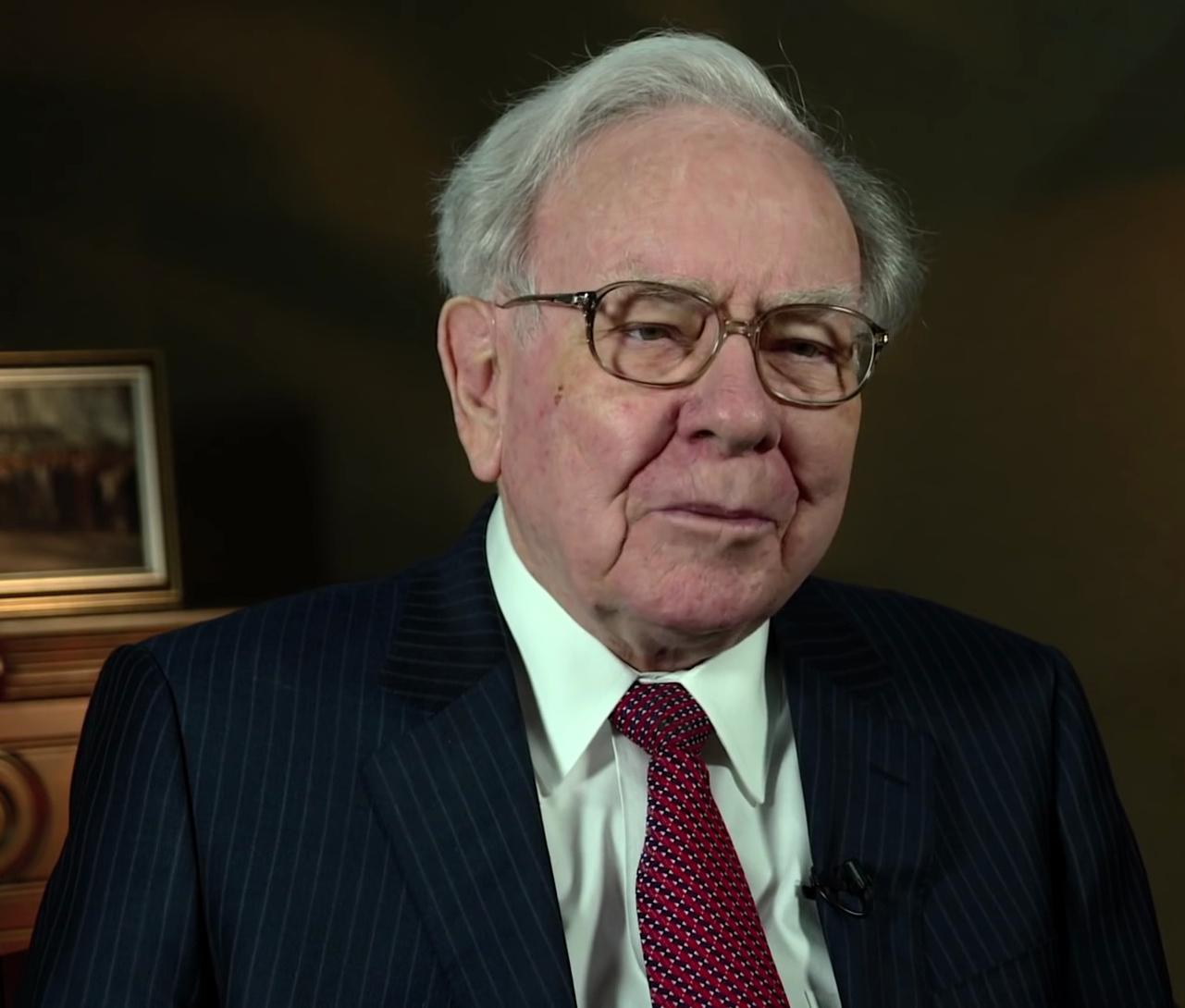
Warren Buffett speaking at the 2015 Select USA Investment Summit.Photo credit: Wikipedia Commons File:Warren Buffett at the 2015 SelectUSA Investment Summit (cropped).jpg

Warren Buffett isn’t just rich. He’s known for being ethical, straightforward, and wise. And also generous. Not just with his money but with his ideas.

Buffett straight up spelled out how he makes decisions on how to invest in and acquire businesses in a public letter sent to his shareholders. To be clear: His instincts and insights are what have made him such a rich man. And that’s what he’s sharing so openly with the world.

These are the six factors Warren Buffett says he considers when he’s making big business decisions.

Maybe they could help the rest of us think through some tough decisions in our own lives? Let’s see.


Maybe you, too, are investing billions of dollars. Or, uh, maybe not. But the day-to-day choices you have to make about life could be just as tough — and important. So let’s see how his lessons could apply:

1. It’s gotta be a big choice and a big win.

Buffett says he prefers to acquire “large purchases (at least $75 million of pre-tax earnings unless the business will fit into one of our existing units).” Aka, go big, go bold. Not everything has to be huge, but in tough times, sometimes doing the big, scary thing is how you reap the big, amazing reward.

2. The decision has to create value for you consistently and currently.

None of this “it’ll pay off in the distant future” or “it just needs some elbow grease” stuff. Whatever you’re choosing, make sure it’s valuable and has concrete, real-life impact. Or, as Buffett says, the acquisition must have “demonstrated consistent earning power (future projections are of no interest to us, nor are ‘turnaround’ situations).”
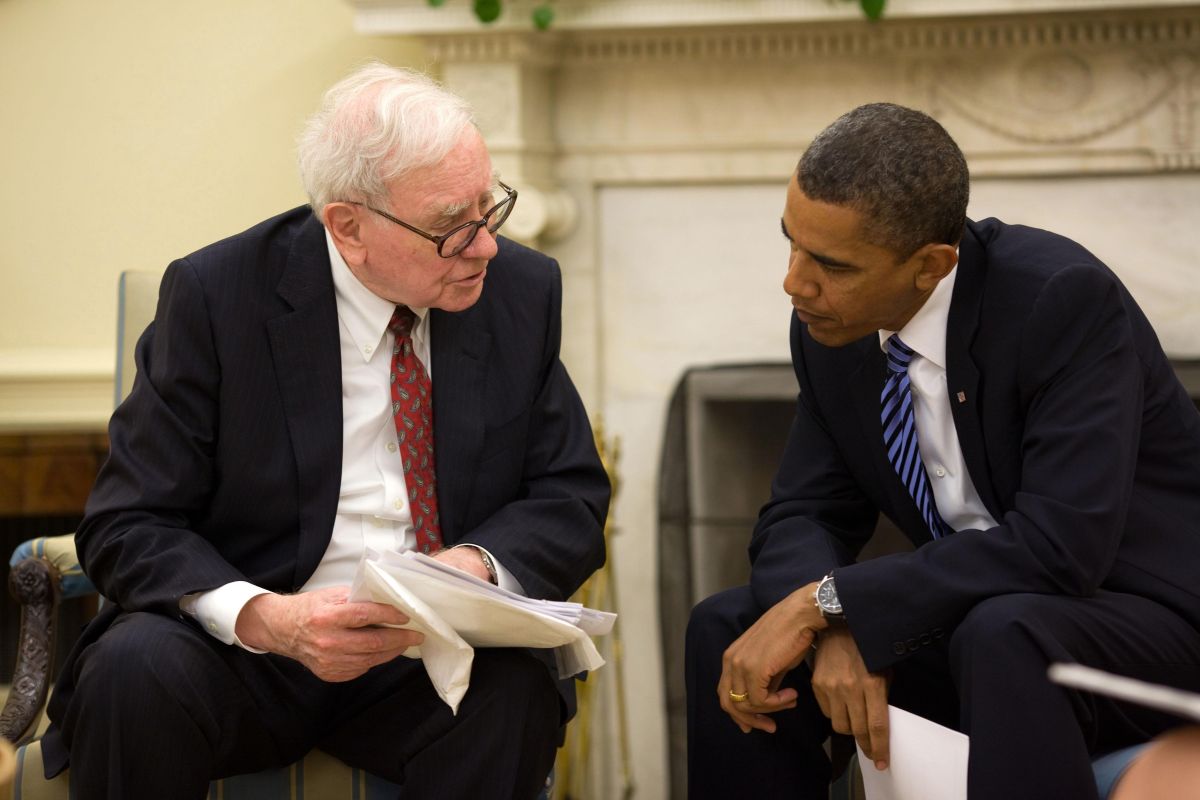
File:President Barack Obama and Warren Buffett in the Oval Office … <a href="https://upload.wikimedia.org/wikipedia/commons/c/c4/President_Barack_Obama_and_Warren_Buffett_in_the_Oval_Office%2C_July_14%2C_2010.jpg">commons.wikimedia.org</a>

3. The decision will benefit everyone who’s invested in it, and it won’t leave anyone hanging.

Buffett wants “businesses earning good returns on equity while employing little or no debt,” aka no one who’s put time/effort/money/love into said life choice (or business move) will come out at the end with less than what they started with. Makes sense, right? Basically, don’t screw people over with the choices you make. Have some heart and fairness.

4. Everything necessary for success should already be in place.

Buffett mentions that there must be “management in place” and that his company “can’t supply it.” Invest time and energy in things that are solid and have demonstrated reliability. That is, “don’t build the ship while you sail it.” Why? According to Buffett’s logic, when making huge decisions, if the part that keeps makes the end result of your decision sustainable is already there, that’s a very good sign.

5. The decision may be hard, but the terms should be simple.

Buffett wants simple businesses, saying — in his awesomely straightforward way — “if there’s lots of technology, we won’t understand it.” Life isn’t always simple and there’s certainly a time for complexity, but the lesson here is a good one: If you’re making a huge choice, don’t overcomplicate it.

man sitting on mountain cliff facing white clouds rising one hand at golden hour Photo by <a href="https://unsplash.com/pt-br/@ianstauffer?utm_source=RebelMouse&utm_medium=referral">Ian Stauffer</a> on <a href="https://unsplash.com/?utm_source=RebelMouse&utm_medium=referral">Unsplash</a>

6. The options are clear and available.

Buffett refers to this availability, basically saying that the company has to have a price on it already and that his firm doesn’t “want to waste our time or that of the seller by talking, even preliminarily, about a transaction when price is unknown.” I take this to mean that the choice is a clear action. No negotiations necessary.

Bingo.

Now I’m not saying that this well-to-do investor has all the answers just because he has all the money, and I know it’s a little out there to think of these investment acquisition tips as something you can apply to your own, non-billionaire life. But think about it. Fearlessness? Fairness? Preparation? These are some helpful themes we could all probably take a few lessons from.

So next time you’re making a big decision, think about them. In a world where financial literacy isn’t exactly the norm, looking at how financial greats make their decisions could be an interesting thing to try. Who knows? It might help you.

  • Watch Colin Jost try Olympic bobsledding and gain a whole new level of respect for the sport
    Colin Jost showed bobsledding is a lot more intense than it looks.Photo credit: Flickr/greg2600 (left), Canva (right)
    , ,

    Watch Colin Jost try Olympic bobsledding and gain a whole new level of respect for the sport

    “I swear to God, I thought I was going to die. I thought my back was gonna snap in half.”

    Some Olympic sports are obviously difficult and, clearly, inherently dangerous. You can’t watch a snowboarder twirl upside down in mid-air, 17 feet above a 22-foot halfpipe wall, and not admire the heck out of the effort it takes to reach that level of courage, skill, and athleticism. Watching skiers barreling down a mountain at 60 to 80 mph with nothing but a thin suit between them and the ground, expertly avoiding obstacles as they do it, is objectively impressive to the average person.

    But the challenge of other sports isn’t as immediately appreciated. Curling may be hard, but it doesn’t look that hard.

    And bobsledding might take some level of athletic ability, but other than a 5-second run before you jump into the sled, it’s really just about momentum and steering, right? Sure, they go fast, but bobsledders sit inside a protective metal casing, so it looks more like a thrilling roller coaster ride than a physically challenging and dangerous sport, right?

    That’s what Saturday Night Live‘s Colin Jost thought. Then he tried it, and thankfully, he took us all along with him.

    In a clip from NBC Sports, Jost describes his bobsled ride in Lake Placid, New York, as “by far, the scariest experience I’ve ever had in my life.”

    First, watch his full run here:

    Jost rode along with an experienced driver and didn’t even have to do anything but feel it. And, boy, did he feel it. We can see how his body was violently jostled from the physics of flying down the track. As the driver said, astronauts take off in a space shuttle at about three Gs. In the bobsled, they did about 5 Gs, which means he was feeling five times his body weight pushing down on him.

    We can see and hear the shift from “Wow!” to “Holy ____!” as Jost’s thrill turned to terror on the track.

    “I was in no way prepared for that,” Jost said. “I truly thought my body was going to break apart. I’m not exaggerating. It was so much more intense than I expected.”

    Jost told NBC’s Mike Tirico that he was “not prepared for the level of terror of this bobsled.”

    “I swear to God, I thought I was going to die,” he said. “I thought my back was gonna snap in half. I thought my bones were gonna fly off my body and be littered all up and down the bobsled track.”

    People loved seeing an average person partake in an Olympic event, especially someone as honest about the experience as Jost was, as evidenced in the comments:

    “Now THIS is the kind of commentary I want!”

    “Huge thank you to whoever put Colin Jost in a bobsled.”

    “Can we have him do every event for a reference point?”

    “This is what we’ve been asking for – an average person participating so we can get a real account! Thank you for your service, Colin Jost!”

    “He was so horrified he couldn’t even be hilarious about it 💀”

    “He completely lost his composure, 😂 you could tell he was scared, and it did look like the fastest thing anyone would ride.”

    “You know what… his explanation really helped me understand how scary bobsledding is and now I’m more interested in watching. Keep this guy on the air. That second scream shows me he’s telling the truth 😂

    The video really does offer a whole different perspective on how difficult bobsledding actually is.

    Jost was just trying to keep his body together. Imagine having to focus and steer on top of handling those G-forces.

    Retired NFL player and popular podcaster Jason Kelce also tried out the bobsled in Park City, Utah, and had a similar “holy ____” experience. He seemed to enjoy it a little more than Jost did, perhaps more accustomed to his body taking a beating as a professional football player, but he said it was far more intense than it looked. It didn’t feel like a roller coaster, he said. The 1,400 pounds of pressure pushing him into the metal bars of the sled bruised his hips, and, at one point, it got so loud he couldn’t hear his own screams.

    Seeing how careening down an ice track in an aerodynamic sled feels really does lend a whole new level of wow to a sport that some might mistakenly see as glorified sledding. It also lends more weight to 41-year-old Elana Meyers Taylor’s monobob (single-person bobsledding) run that earned her her first Olympic gold medal in her sixth Olympic Games in Milano Cortina. She had earned three silver medals and two bronze medals, making her the most decorated U.S. female bobsledder of all time.

    Seriously, nothing but respect for the bobsledders from here on out.

  • Margot Robbie reveals her ‘bogan nacho’ recipe, and people are totally onboard
    Australians do love their baked beans, don't they? Photo credit: Eva Rinaldi/Wikipedia, Canva
    ,

    Margot Robbie reveals her ‘bogan nacho’ recipe, and people are totally onboard

    What a fun and unexpected glimpse into different culinary cultures.

    While recently appearing on the mom-and-daughter run foodie podcast Table Manners, Wuthering Heights star Margot Robbie shared her childhood nacho recipe. It became a delightful glimpse into cultural differences.

    Robbie, who is Australian, shared that she grew up with what she called “Bogan Nachos.” “Bogan” is an Australian slang term signifying the “unsophisticated working class.” It’s similar to “trailer trash” in the US, only it can be used as a bit of lighthearted self-deprecating humor, rather than just an insult.

    To make these nachos (or “narchos,” as Robbie calls them, though she admits that’s more of a personal quirk than an Australian one), you lay out a packet of Doritos on “al foil,” aka aluminum foil or tin foil, then top with baked beans and, of course, melted cheese.

    “That is bogan nachos, and it is bangin’,” Robbie attested.

    @tablemannerspodcast It’s a huge one this week, we have superstar Margot Robbie coming home to Clapham! Fresh from the Eurostar after the Parisian premiere for her new film ‘Wuthering Heights’ (starring Jacob Elordi and directed by friend of the pod, the gorgeous Emerald Fennell) Margot was exactly what we always dreamed she would be; a gem of a guest and gorgeous human! We talked about the juggle with producing and acting in films, the food she ate growing up (including ‘Fivesies’ and ‘Bogan Narrrrchos’), how her own gin ‘Papa Salt’ came to be, teaching Bette Midler about ‘Gavin & Stacey’, the bachelorette party her friends threw for her character Cathy, her husband being a phenomenal cook, the accent training she needed when she started in ‘Neighbours’, and we hear how she nearly killed her grandma-in-law by feeding her raw ham! Margot, you’re welcome to join us every week, and we’re absolutely popping round for one of Tom’s famous ‘egg’ steaks! ‘Wuthering Heights’ is released globally in cinemas on 13th February. #TableManners #MargotRobbie #WutheringHeights #Clapham #Barbie ♬ original sound – Table Manners Podcast


    She’s not the only one who felt this way. Several other Aussies shared their love for bogan nachos in the comments as well as their own tweaks to the Aussie-fied Tex-Mex dish.

    “As an Australian- tin foil, corn chips, salsa, grated cheese into the oven and then out with sour cream.

    “Luxurious Bogan Nachos = layer corn chips, 1 layer grated cheese, repeat microwave until cheese melts, top with hot sauce and sour cream, guac if you feel fancy.”

    “Oh I eat bogan nachos all the time (exactly how she described it but I also add corn kernels) so good.

    “Aussie girl can confirm, especially putting sour cream once out of the oven.”

    Nachos have always been an opportunity for creativity ever since Ignacio Anaya, affectionately known as “Nacho” by his friends and patrons, grabbed some tortilla chips, covered them with freshly grated cheese, and added sliced jalapeño peppers to whip up a last-minute dish for a group of military wives in 1943.

    Since then, other cultures have made tweaks to the types of chips, cheese, toppings, and layering style to create entirely unique takes. Canada’s “nacho poutine,” replaces standard cheese with cheese curds and gravy, for example. In Ireland, sliced potatoes or French fries are used instead of tortilla chips, and often covered in melted cheese plus bacon. Cuba utilizes plantain chips as a base, topped with ropa vieja (shredded beef), cheese, tomatoes, and onions.


    @sunnysbazaar Replying to @AJ The Digital Maestro here you go beta – Loaded Indian Style Nachos #indianfood #foodtok #recipe ♬ original sound – Sunny’s Bazaar


    Nachos can even be made into a breakfast food with eggs and bacon, or into a dessert with cinnamon-sugar-dusted chips, chocolate sauce, and ice cream. The possibilities are deliciously endless.

    This short clip might not seem like anything too extraordinary, but in a mere few seconds, we witnessed one of the best aspects of being human—the fact that we are all so different, yet have so much in common.

    You can find the full Table Manners episode, where Robbie also explains the “Fivesie” tradition in Australia of enjoying a pre-dinner cheese board, below:

  • James Van Der Beek shared his hopes for the spring weeks before his death, and it’s beautiful
    James Van Der Beek speaking at Galaxy Con.Photo credit: John E. Manard/Wikipedia

    James Van Der Beek, best known for his roles in Dawson’s Creek and Varsity Blues, has died at the age of 48 after a journey with stage 3 colorectal cancer.

    Since November of 2024, the actor has been open about some of the struggles he’s faced with the diagnosis, including having to sell off much of his iconic memorabilia to pay off his cancer treatment.

    And yet, Van Der Beek still left the world on perhaps a grounded, somewhat hopeful note, as indicated by the undeniably profound message he made in an Instagram video, posted a mere few weeks before his death.

    Using his signature down-to-earth, friendly sense of humor, Van Der Beek spoke directly to the camera as he asked the essential question: “Why are we celebrating a new year in the dead of winter? Why are we celebrating new beginnings at a time when nature rests?”

    “Animals are hibernating, birds fly south for the winter,” he continued. “The time to celebrate new beginnings, and a new year, and a new you and a new resolution is spring at the vernal equinox, when the flowers bloom and it gets warmer and the birds return.”

    He then quipped that the Gregorian calendar, which marks a new year in the winter, goes against nature, and therefore makes “absolutely no sense.”

    “In the winter, the days are shorter and the nights are longer,” he wrote in his caption. “But instead of being reminded how perfect this season is for cocooning, eating stew, snuggling and sleeping… why are we being told this is the time to buy a gym membership?”

    So, to anyone having trouble keeping to those New Year’s resolutions, Van Der Beek assured, “I don’t think it’s your fault” and offered a different solution: viewing spring as the start of the new year.

    “I’m gonna say screw it,” he said. “I’m gonna take the winter to recover, to rest and I’m gonna make New Year’s resolutions in the spring. Who’s with me?”

    Obviously, the video hits differently now…the optimism a little bittersweet. But it’s nonetheless a huge testament to how he “met his final days with courage, faith, and grace,” as his wife Kimberly Van Der Beek wrote.

    “There is much to share regarding his wishes, love for humanity and the sacredness of time,” she added.

    It’s wisdom that still rings true. We can force ourselves to go against nature. Or we can follow in Van Der Beek’s footsteps and give ourselves the grace to let nature work through us, to trust in our inherent worthiness, and to take time to heal. This is just one of many wonderful contributions that he’s given to us all, and he will be deeply missed.

  • Actress Gabourey Sidibe shocks fans by revealing everyone’s been pronouncing her name wrong
    Actress Gabourey Sidibe shocks fans by revealing everyone's been mispronouncing her namePhoto credit: Greg Hernandez/Wikimedia Commons

    Some names take a few tries to get right. People who grew up with slightly more complicated names often envied those who could find their name on keychains at amusement parks. Gabourey Sidibe is personally familiar with the struggle of living with a unique name. The Oscar-nominated actress is known for her breakout role in the 2009 film Precious.

    Since stepping onto the scene, the pronunciation of her name seems to vary depending on who says it. But recently, in an interview, the actress revealed that no one has pronounced her name the way her parents intended. Nischelle Turner caught up with the actress on Entertainment Tonight as she promotes her directorial debut for Mary J. Blige Presents: Be Happy, premiering on Lifetime.

    After reminiscing on Sidibe’s first interview with the network, the pair shifted gears, eventually landing on the actress’s name pronunciation. Turner appeared shocked when the mom of twins revealed the proper pronunciation.

    It starts with Turner asking if her last name is pronounced ” si-da-bay ” or “si-di-bay.” Neither pronunciation was correct. The actress smiles and says, “It’s actually si-DEE-beh. It’s Senegalese, so it’s got accents that I don’t use, but I usually say Sidi-bay because Americans need things to rhyme, so I say it’s Sidi-bay like city by the bay. For the record, my name also is not Gab-ou-ray,” She laughs. “If that matters.”

    Gabourey Sidibe; names; baby names; name pronunciation; common names; uncommon names
    Gabourey Sidibe John Matthew Smith/Wikimedia Commons

    Turner’s face says what plenty of viewers were probably thinking. Has the world been pronouncing her entire name incorrectly since she became famous? Yes, yes, it has. “It is actually, Ga-BOU-rey,” Sidibe shares while Turner repeats her pronunciation. “You’re from America,” she giggles nearly uncontrollably. The Entertainment Tonight host demands that the actress make people say her name correctly, but she has no plans to correct people.

    Turns out, Sidibe began embracing her Americanized pronunciation when she was still in school. Like many with unique names, she was used to people mispronouncing her name, and she used to correct them. Eventually, she decided that Gabby worked because people didn’t have difficulty saying that name. Some people who struggle with others pronouncing their name correctly can go in the opposite direction. They may start not being confident enough to correct others, but as they age, they begin to find themselves demanding that people put in the effort to learn their actual name.

    As for Sidibe, she says, “I would rather be some name I decide is good enough rather than it being completely butchered.”

    People who viewed the clip are happy to learn the pronunciation of her name, with one person sharing, “I’m actually very happy she is telling us how to properly pronounce her name!!”

    This person says they have regrets about shortening their name, writing, “I shortened my name when I was younger because I got tired of people butchering it. As I got older, I realized that’s their problem, not mine. SAY MY NAME! SAY YOUR NAME!”

    Gabourey Sidibe; names; baby names; name pronunciation; common names; uncommon names
    Gabourey Sidibe Siebbi/Wikimedia Commons

    Another shares that they love how the actress’s name is pronounced, “I LOVE how she actually pronounces it! Beautiful name!”

    “Make us learn your name. I love it and it’s who you are . But I get it, folks call me Mya and correcting my whole life is exhausting.. but if I want you to know who I am, ima correct you – it’s ME’YA Miya,” someone else chimes in.

    Names are important, but everyone has their own approach to how they deal with incorrect pronunciations. Some prefer nicknames that they choose, like Sidibe, while others prefer people pronounce their full names correctly. While others may not correct anyone and answer to whatever name is called, asking someone how they pronounce their name may help stop mispronunciations and help the person feel seen.

  • An emotional Brendan Fraser calls autistic, Superman fan ‘the hero that we need’ in moving interview
    Brendan Fraser and Jonathan CharbonneauPhoto credit: Images via Wikicommons and IMBD

    As an actor, Brendan Fraser can strip down to his core and expose the most vulnerable aspects of humanity. (His heart-wrenching work in Darren Aronofsky’s film The Whale earned him a well-deserved Best Actor Oscar at the 2023 Academy Awards.)

    So, it’s not surprising when he gets emotional discussing things near and dear to his heart—like autism awareness. In past interviews, Fraser has been very open about his son Griffin’s diagnosis and the unexpected beauty that came with it. In a 2022 piece for Interview Magazine, Fraser shared, “And because of the beauty of his spectrum—call it a disorder if you will, I disagree with you—he knows nothing of irony. He doesn’t know what cynicism is. You can’t insult him. He can’t insult you. He’s the happiest person and is, in my life and many others’, also the manifestation of love.”

    In 2024, Fraser co-executive produced the award-winning short documentary film Saving Superman. It tells the heartwarming story of Jonathan Charbonneau, a man in his fifties on the spectrum who loves to dress up as the DC comic book character. As seen in the film, he delightfully appears around his hometown of Glen Ellyn, Illinois, to play music and greet the community. In the movie, Charbonneau shares why he was specifically struck by Superman, which he learned about on Sesame Street. “I believe in the ideals he represents. There’s only one reason why he does ‘no mischief,’ let alone anything criminal or evil. He chooses not to out of respect for morale.”

    On an recent appearance on The Kelly Clarkson Show in November 2025, Fraser tearfully discusses the film and explains how the community in Glen Ellyn wholesomely came together to raise money for Charbonneau after finding out he was not going to be able to afford rent once his apartment building got sold. (In the film, it’s relayed that his dear friend started a GoFundMe which went viral around the world.)

    Fraser tells Clarkson, “I’m the dad of a son with special needs. I want to be a part of it and for that reason—we need to do well by everyone who has a family on the spectrum. We need more services available to them. And I do know that he’s the hero that we need right now.” Getting choked up, Fraser then tearfully hugs Clarkson.

    This has struck such a deep chord in the community, as exemplified by the comments on The Kelly Clarkson Show (@KellyClarksonshow) Instagram Reel. Many people praise Fraser for his kindness, but also relay tales of Jonathan firsthand. One fan writes, “I grew up and came back to live in Glen Ellyn. Everyone knows Jonathan aka Superman here. He’s a staple in our community and we are lucky to have him. Glad he’s getting the support he very much deserves.”

    Another commenter echoes this warm acknowledgement. “As soon as his picture came up in this video, I audibly went ‘Superman!!’ My family is from Glen Ellyn, and I worked in downtown in my late teenage years. Jonathan is a staple!” They later add, “While GE isn’t my hometown, I have spent a lot of time there, and don’t remember him NOT being in town.”

    This comment reflects pure love for Fraser: “And I was thinking I couldn’t love this man more. He just proved me wrong! He is simply wonderful!”

    And this Instagrammer is especially impressed with Fraser using his platform to effect change, writing, “Thank you for using your voice & speaking for those that need it the most we have more that united us than divides us after all.”

  • In 1986, Cher bravely stood up to David Letterman during an uncomfortable, sexist interview
    David Letterman and Cher. Photo credit: Renan Katayama/Wikimedia Commons & Gotfryd, Bernard/Wikimedia Commons

    Cher had accomplished a laundry list of amazing feats by the time the 1980s rolled around. She’d hit number one on the Billboard Hot 100, had international number-one hits, starred on television and on Broadway, and established herself as an acclaimed actress. In 1988, she even won an Oscar for Best Actress for her role in Moonstruck.

    But as of 1986, there was still one major thing she hadn’t done: appear on Late Night with David Letterman.

    It wasn’t for lack of trying on Letterman’s part. He’d been trying to get Cher on his show for years and, with the help of a hefty appearance fee, sealed the deal in 1986. The audience was excited. Letterman was excited. But when Cher finally walked out onstage, things didn’t get off to the smoothest start.


    cher, david letterman, late night, late night show, tv, celebrities, sexism, women, hollywood
    Cher was the biggest phenomenon on the planet for the better part of the '70s and '80s. Casblanca Records/Wikimedia Commons

    After Letterman complimented how she smelled, Cher crossed her arms and deadpanned, “Is this as good as it gets?”

    Letterman and the audience laughed it off, but the vibe was clearly tense from the get-go.

    “I know you didn’t want to come on here, so why, finally… did you decide to come on?” he asked

    Cher laughed and joked that she only came on so she could pay an expensive hotel bill. “No, I don’t know, because I thought that I would never want to do this show with you,” she added.

    “Why?” Letterman asked. “Because you thought I was a…”

    “An a**hole,” Cher bluntly said.

    After Letterman riffed briefly on the audience reaction, Cher elaborated: “It was frightening because I see how you deal with your guests and sometimes it’s really great and you seem to like them, but if you don’t like them, you might as well take a picnic lunch.”

    From there, Letterman pivoted: “You look great… How many tattoos do you have?”

    The interaction has since become an iconic moment, rewatched again and again over the past several decades. The official YouTube clip of the interview currently has more than three million views.

    Though beloved by his male fans, Letterman hasn’t always had the greatest reputation for his treatment of guests, women in particular. This was a pattern that played out for years. Letterman was known to tease, and at times outright bully, certain guests more than others.

    In a 1988 interview, he mocked Shirley MacLaine for her belief in past lives. During a 1986 sit-down with Farrah Fawcett, who appeared nervous and a bit loopy, Letterman had little trouble getting laughs at her expense. Even years later, interviews with Lindsay Lohan, Paris Hilton, and Jennifer Aniston were widely criticized as mean-spirited or gross. And in 1994, an interview with Madonna turned openly contentious, with both sides trading barbs.

    But it wasn’t just Letterman. The cruelty of late-night television reached something of a peak in the early 2000s, when hosts routinely mocked female stars like Britney Spears, who was struggling through a highly public mental health crisis. One notable exception was host Craig Ferguson, whose 2007 monologue stood out for its striking empathy in sharp contrast to many of his peers:

    Even today, women who appear on late-night shows often find themselves either the butt of the joke or an object of desire.

    Research published in The Critical Review of Social Sciences Studies asserts, “Female guests often appear as spectacles for male hosts’ humor rather than as authoritative contributors to public discourse. … The quick-witted, often satirical male hosts discuss political and public affairs in ways that pose hegemonic challenges for female participants, limiting their discursive power.”

    It’s no wonder that Cher didn’t exactly see the Letterman set as a safe space to let her guard down. And in typical Cher fashion, she made her feelings about Letterman clear right from the start. The exchange is an unforgettable moment that works as both a public call-out and an icebreaker. That night in 1986, Cher and Letterman ultimately went on to have a nice (if playfully combative) interview.

    For his part, Letterman has since expressed regret about many aspects of his time hosting Late Night, including what he has described as a “toxic work environment” marked by “sexual favoritism” and scandals. It’s hard not to wonder whether Cher picked up on those bad vibes at the time and chose to call them out in the only way she knew how, which is exactly why people still love her.

  • Actor reveals Alan Rickman’s loving gesture when terminally ill children visited the Harry Potter set
    Alan Rickman in 2011/Photo credit: commons.wikimedia.org
    , ,

    Actor reveals Alan Rickman’s loving gesture when terminally ill children visited the Harry Potter set

    10 years later and we’re still learning more about this true Hollywood legend.

    It’s impossible for many to believe that it has been just over ten years since beloved actor Alan Rickman passed away from pancreatic cancer. Known for his brilliant tapestry of work, from the infamous villain Hans Gruber in Die Hard to the deliciously menacing Professor Severus Snape in the Harry Potter series, he truly made the “bad guy” so fun to watch.

    And of course, there was so much more to his repertoire than villainy. He could powerfully sing, as he portrayed in Sweeney Todd: The Demon Barber of Fleet Street. He showed up with conviction in the Jane Austen adaptation of Sense and Sensibility. He could also portray the lovesick but conflicted husband with perfection as seen in Richard Curtis’s Love, Actually. He was classically trained and loved by fellow entertainers, friends, and family.

    But he was most adored for his down-to-earth generosity of spirit. His widow, Rima Horton, has recently been inspiring others to get involved in the non-profit Pancreatic Cancer UK by urging them to spread the word about the disease. She notes that Rickman had “so much more to give” had his life not been tragically cut short.

    Harry Potter co-star Tom Felton (who is currently reprising his role of Draco Malfoy on the Broadway stage in Harry Potter and The Cursed Child) shared beautiful words about Rickman in a piece for The Guardian. “He was nothing but kind, genuine, seemingly unfazed by anything happening around us, and always had time for everyone. I learned just as much—if not more—from Alan off-camera as I did when we were filming.”

    Felton also notes that Rickman refused special treatment. “He could have had his food delivered to his trailer, like the rest of the cast (including me). Instead, he queued up for his own breakfast and lunch, head to toe in his Snape costume and wig, holding a plastic tray and waiting his turn in the usually long line behind a carpenter, set director, burly cameraman, and Gringotts goblin—an image I will never forget. I didn’t realize it then, but I think now Alan’s silent message was: ‘We’re all in this together.’”

    There was an especially wonderful aspect of Rickman that Felton recalls. “He taught me a great deal about charity. He would often have half a dozen people visit the studio each day, and would claim they were his cousins or friends. Really, he was offering terminally ill children and their families a chance to see behind the curtains. He also taught me that children don’t want to meet actors, but the characters they play.”

    Brian Cox, another actor who worked with Rickman in the 1980 mini TV series, Thérèse Raquin, shared with The Guardian how much he respected him as an artist. “His standards were very high. Alan might have appeared laid back, but he was endlessly driven, very firm, totally reliable. There was nothing flaky about him. No nonsense. No rubbish.”

    He added that his friendship was also extraordinary. “Everybody knew he was an extraordinary actor, but as we became friends, I realized what an extraordinary person he was too. I had so much respect for Alan. So many people relied on him. He was so kind and supportive to those who were struggling. He’d seek them out and sort them out, listen to the problems without presumption, and gently came up with solutions.”

    In Daniel Radcliffe’s glowing tribute to Rickman shortly after his death, he praises him as an actor and a man. “Alan Rickman is undoubtedly one of the greatest actors I will ever work with. He is also, one of the loyalest (sic) and most supportive people I’ve ever met in the film industry. He was so encouraging of me both on set and in the years post-Potter. I’m pretty sure he came and saw everything I ever did on stage both in London and New York. He didn’t have to do that.”

  • In a moving 1994 interview, Robin Williams revealed how he created the iconic ‘Mrs. Doubtfire’ voice
    Robin Williams in 2011.Photo credit: diq.wikipedia.org

    There was just something about actor and comedian Robin Williams that was equal parts vulnerable and hilarious, and that combo created pure magic. Whether it was on stage, on screen, or simply in an interview, Williams had this rare ability to put people at ease.

    Shortly after his 1993 comedy Mrs. Doubtfire was released, Williams gave an interview on Des O’Connor Tonight, a British variety show hosted by comedian and singer Des O’Connor. In the @loveitfilm Instagram clip making the rounds, Williams delightfully explains how he “found” the character’s voice.

    Clad in a suit and tie, Williams is animated as he explains, “I first started doing the voice (he screams) VERY MUCH LIKE THAT. LIKE JULIA CHILD. AND I REALIZED THAT WOULD SCARE EVEN A HYPERACTIVE CHILD. So I had to kind of tune it down and I got more like Margaret Thatcher on steroids. And then I kind of took a little bit of Bill Forsyth and a little bit of this costume designer who’s this wonderful, sweet lady named Merritt and combined them and got this gentle, gentle voice of Mrs. Doubtfire who can still say GET AWAY.”

    O’Connor affirms Doubtfire’s kind nature, agreeing, “She was gentle, wasn’t she?” Williams then works his magic, turning the sweet moment into a brilliant joke: “Oh she’s nourishing. She could breastfeed an entire football team.”

    The Instagram page shares a bit of context: “He drew inspiration from Bill Forsyth, who he just finished shooting a film with at the time, and inspiration from the film’s costume designer. He combined her warmth with a comedic edge to create the gentle yet commanding tone of Mrs. Doubtfire.”

    Williams was brilliant throughout the entire interview. O’Connor, who announces Williams had just gotten a Golden Globe for the character, seems genuinely excited to introduce him. Williams comes dancing out, revealing his very high-waisted black pants. O’Connor offers him tea, to which Williams jokes, “I love that. A little tea and Prozac makes the day go by so quick.” He adds, his mind quickly firing, “And some sugar. A little Betty Ford speedball, great!”

    From there, the jokes simply never stop. They begin discussing Mrs. Doubtfire, and Williams kids that he had a bikini wax for the role, which was “totally unnecessary.” When the topic of the accent comes up, Williams explains, “It’s kind of Glaswegian (Scottish) because I just finished working with Bill Forsyth for four months.” (The film he’s referring to is Being Human, which co-starred Ewan McGregor in his first ever role.)

    As they go on, Williams doesn’t let up. He makes dinosaur and A Chorus Line jokes all in one sentence, keeping the audience on their toes.

    The topic of the 1994 Northridge earthquake comes up, and, in typical Williams style, he gets beautifully serious. “If there’s any good side to earthquakes, it’s that people suddenly drop all the, you know, ‘where’s my fax machine,’ and suddenly simple things—I mean like water, air—and people start to take care of each other. I mean it really happened in San Francisco. Crime goes down. I think crime in L.A. went down 80 percent.”

    Williams then jokes, “I think it’s because they can’t find their ammunition. But people start to forget about everything else and you’re forced back to the bottom line of taking care of each other. It happens. And then people start to realize, ‘You’re my neighbor. I’ve been hooked up to the cable for four years.’”

    He then plugs Comic Relief, a non-profit charity fundraiser he co-hosted with Whoopi Goldberg and Billy Crystal to raise money for the homeless epidemic.

    Comments from across social media are reminders of how much Williams was loved. One adoringly shares, “I love that the interview gave him a chance to remind people he was a humanitarian. He actually cared for people. Such a wonderful man. He brought so much positivity to the world.”

Generations

Seniors ranting about their friend Barbara cheating at Mahjong is the Internet’s best new reality show

Education

It’s not brains or talent. Expert says high achievers have two traits anyone can learn.

Pop Culture

Gen Xers share 17 nostalgic dishes they ate growing up—and still make for dinner

Wholesome

Teacher shares her surprisingly wholesome story of learning what ‘Netflix and chill’ means