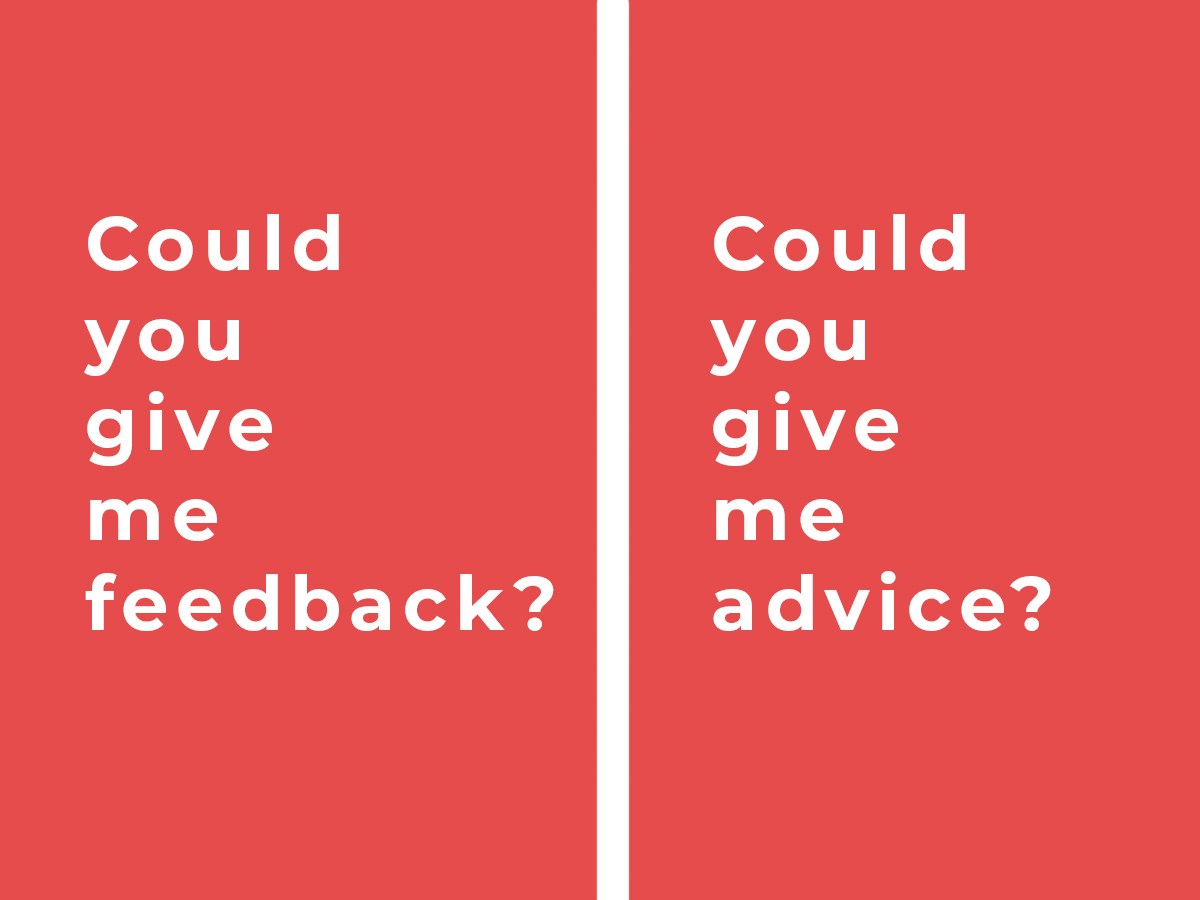
Sometimes, getting more useful feedback may be as simple as changing how you ask for it. Researchers found that asking people for “advice” instead of “feedback” encouraged them to offer more specific, actionable suggestions.
The study, published in Management Science, offers a useful takeaway for anyone trying to improve a presentation, get someone’s opinion on a project, or perform better at work.

What happened when researchers asked for advice instead of feedback?
The researchers sifted through more than 27,000 comments from a workplace study in the U.K. Some employees were asked to provide feedback on their colleagues, while others were asked to offer advice about how they could improve.
Those who were asked to give advice offered more practical suggestions than those asked to provide feedback. Their responses weren’t any longer, but they included more specific ideas about what someone could do differently.

Why does asking for advice make such a big difference?
When asked for feedback, people tend to evaluate what someone has already done. Asking for advice encourages them to think about the future and what that person could do differently next time.
Lisa Sansom, an organizational consultant whose doctoral research focuses on workplace feedback, told Upworthy that asking for advice may also make people more receptive to criticism.
“When people give advice, they tend to be more forward looking rather than backwards looking,” Sansom explained. “This allows the recipient to grow and develop, and they will probably feel less defensive if the focus is ‘here’s what you can do better next time’.”
Media relations specialist Ryan McCormick believes some people give vague feedback because they’re uncomfortable saying something that might hurt another person’s feelings.
“Giving someone honest feedback (especially if it’s not positive) is very respectful,” McCormick told Upworthy. “You’re showing that individual where improvements can be made,” he added.

How can we use these findings in everyday life?
In a 2024 Harvard Business Review article, team effectiveness advisor Liane Davey notes that feedback doesn’t always provide the information people need to improve.
Sansom makes a similar point. She recommends using more focused questions. Instead of requesting a general assessment, ask whether a particular graph is clear or how to strengthen an opening; this gives the other person a better idea of what help is needed.
She also emphasizes the importance of trust, as well as the advice giver’s expertise and genuine concern for the other person’s growth and success.
McCormick suggests not only asking people what they would have done in a similar situation, but “what steps they would have taken to achieve an optimal outcome.”
The same principle may apply outside the workplace. When someone plans a family gathering or weighs an important decision, asking what another person would change shifts the conversation from general opinion to possible improvements.
The researchers didn’t establish whether receiving better suggestions ultimately improved performance. Their findings do, however, show that how a question is asked can influence the quality and type of responses people give.