Actors and mainstream celebrities today receive extensive formal media and PR training. After all, studios can’t have clips of their stars going viral for putting their proverbial foot in their mouth.
But a few decades ago? Things were a lot more fast and loose. The public was gaining access to celebrities via talk shows and live interviews for the very first time. It didn’t always go smoothly and led to some pretty tense yet entertaining moments on live television.
Oliver Reed goes off on “women’s liberation” and Shelley Winters responds perfectly
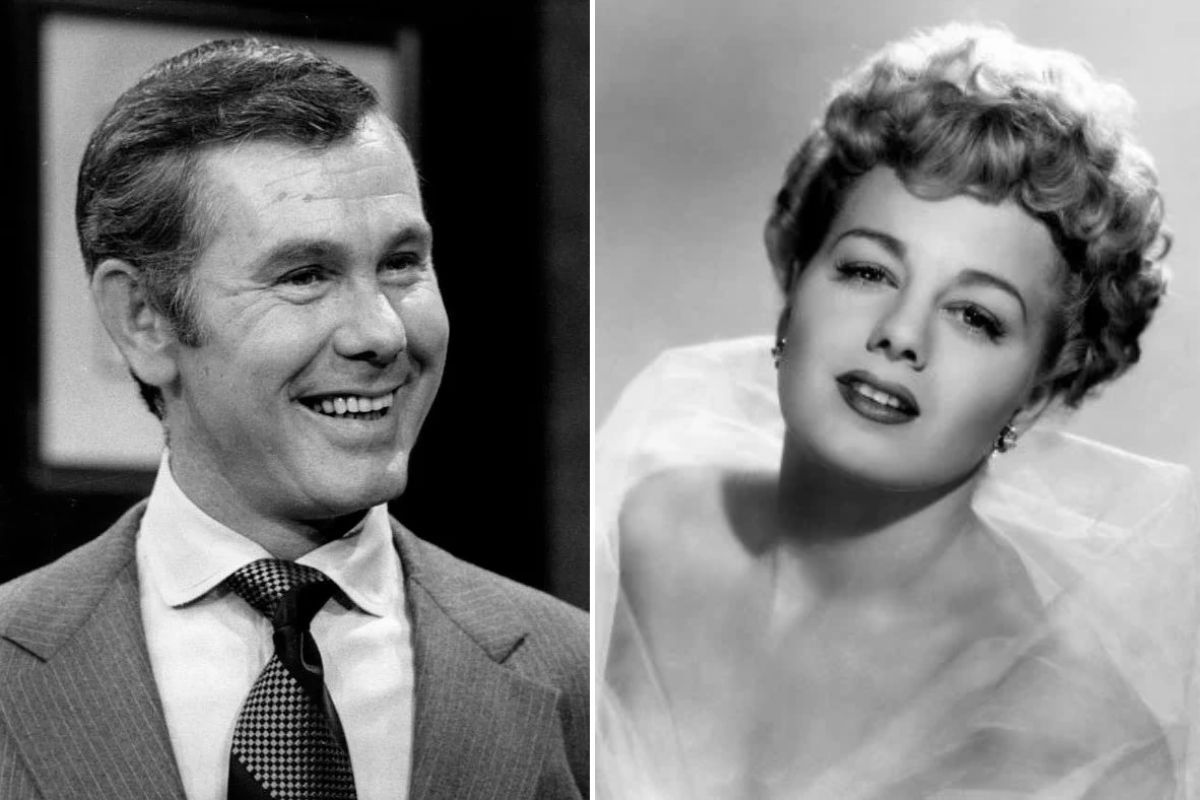
It was September 26, 1975, when Johnny Carson welcomed renowned actor Oliver Reed to the Tonight Show stage. The English actor starred in the film Oliver!, which won an Academy Award for Best Picture a few years earlier. Reed was invited on the show to promote a new film.
Shelley Winters, herself a highly acclaimed, Oscar-winning actress, was interviewed on a previous episode. In addition to her Oscar, Winters also won a Golden Globe and a Primetime Emmy and was twice nominated for a BAFTA Award.
During the interview, Winters sat just off-camera, to Reed’s side. It got off to a cheeky start when Reed, talking about Americans, said, “Some of them behave themselves, and some of them are quite loud.” He then glanced pointedly at Winters.
Some more good-natured banter went back and forth before Reed, feeling too often interrupted by a chatty Winters, cut her off and said, “I’m sorry, I thought it was my turn.”
It was all in good fun, or at least mostly. Eventually, Winters left the stage, claiming she “had to go.”
That’s when Reed began taking his shots. “She’s alright, she can’t shout at us now,” he told Carson. “So much for women’s lib.”
Carson asked him about the women’s liberation movement in the U.K., to which Reed responded: “The women in England are quite good. They’re always in the kitchen, so you can’t hear them when they shout. I think most women are happy in the kitchen.” He then added that men make better chefs.
The audience booed, and Reed shushed them.
Carson couldn’t help but chime in with a classic quip that earned him some applause: “I think if they paid women what they pay chefs, women would love to be in the kitchen.”
Reed went on to say he believed a woman’s place was to take care of “her children and her man.” He received applause for this, and a small smattering of jeers and boos. Again, he shushed the audience, even going as far as to say, “Quiet woman!” to a particular jeerer.
Then, he saw Shelley making her way back to the stage.
Winters dumped her drink on Oliver Reed following sexist comments
Winters didn’t say a word when she returned to the stage, yet Reed seemed to know what was coming.
He stood up, held his arms at his sides, and stood still as she poured an entire glass of liquid directly onto his head. Then she left the stage again, and Reed sat down to continue the interview.
Reed, to his credit, took it in stride with excellent comedic timing and attempted to continue his monologue without missing a beat: “I believe that women’s liberationists…” he began, to raucous laughter.
“I believe that women’s liberationists sometimes do extraordinary things,” he finished, to more laughter. But it was clear he took issue with what Winters had done:
“I don’t think, in actual fact, that it gives them much armament to their cause. I mean, the fact that I have been covered in whiskey, and it is whiskey, pays no cause to the lady. There are a lot of people that watch this program that will probably laugh at that, and there will be several who will probably be quite indignant. I am not indignant, because this is indicative of the bad manners of a lot of chauvinist ladies.”
Carson wrapped it all up with a sly smile. “I like this show myself,” he said.
A bit? Perhaps, but Reed was open about his beliefs
It’s hard to say for sure whether the conflict and the whiskey dumping were entirely authentic or played up for entertainment.
However, Reed had a reputation for being outspoken against the women’s liberation movement. He was also known as something of a volatile personality.
In an infamous appearance on David Letterman’s show, Reed’s interview became quite hostile and was cut short. Another talk show appearance, After Dark in 1991, devolved into chaos when Reed clashed with the female guests, tried to kiss one of them, and was ejected from the studio.
Reed later discussed the incident with Winters in an interview, saying it took him off guard. “I didn’t know what to say, so I said absolutely nothing,” he admitted before adding, “She’s a showman, and I’m a showman. That’s our business.”
Reed died on May 2, 1999, after a drinking contest at a bar in Malta got out of hand while he was filming the movie Gladiator. Weirdly enough, he predicted this almost exactly five years earlier, quipping that he would die of laughter in a bar after taking on a ridiculous bet.
1970s, and previous decades, were rife with sexism in Hollywood and beyond
Though Shelley Winters was a beloved movie star, understanding the Hollywood she came up in helps put her actions into greater context.
Hollywood was not typically a friendly place for women like Winters. Star power often rested solely on beauty, with even top-billed actresses relegated to eye-candy roles or simple tropes. Winters herself debuted in film in the 1940s, when “casting couch” culture was at its worst and most pervasive.
Even safe, lighthearted spaces like late-night talk shows often demeaned actresses. They would be grilled about their love lives and appearance rather than their career achievements.
Winters, for her part, was known for not sitting idly by and tolerating sexism or discrimination of any kind. Vanity Fair writes, “Throughout her life she was a progressive, feminist, and civil rights advocate.”
She attended a Democratic National Convention and spoke at a White House Correspondents’ Dinner around 1960. She also called out John F. Kennedy, directly to his face, for his father’s antisemitic views.
She died in 2006, at the age of 85, as an iconic Hollywood trailblazer. She fought for women’s rights, defied ageism in Hollywood, and stood up to any and all loudmouths who tried to stand in her way.