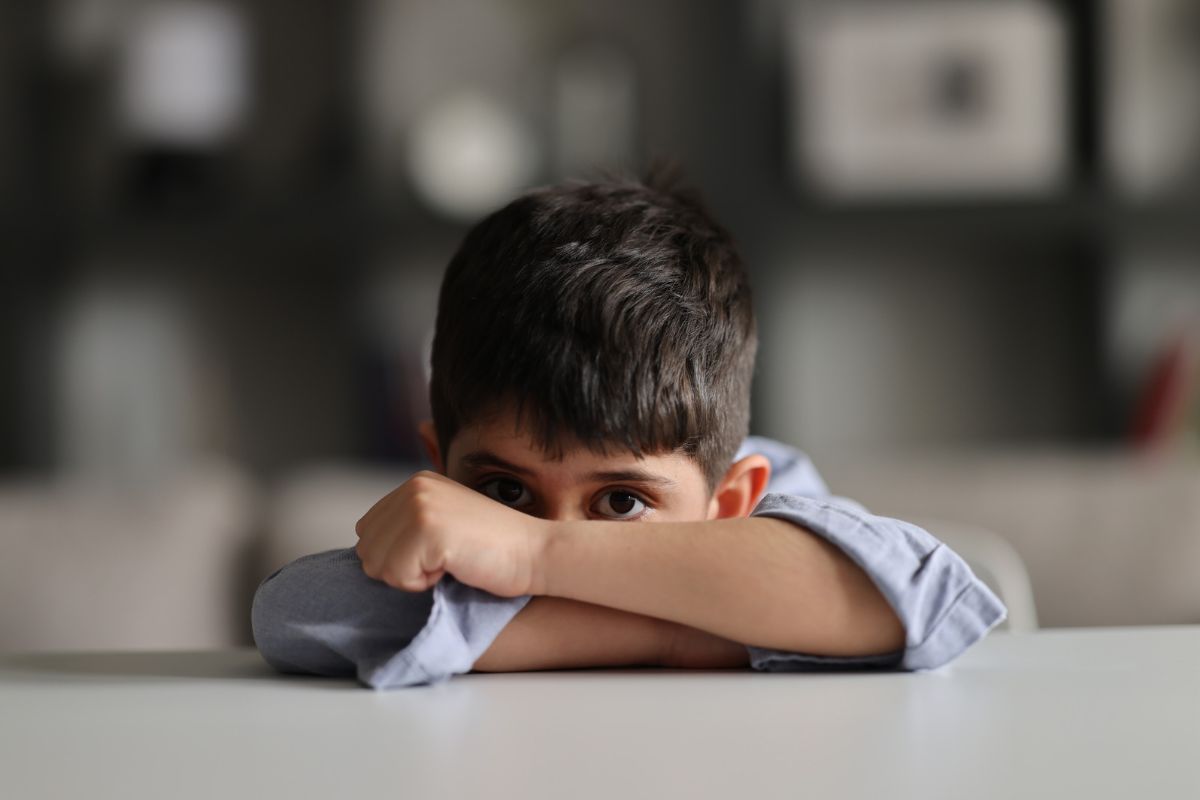
Harvard psychologist Jerome Kagan had a rigid view on nature vs nurture early in his career: “I entered psychology because I wanted to discover how powerful the environment was and I was very reluctant to acknowledge the role of any biological differences between children,” he says in an interview with The Brainwaves Video Anthology YouTube channel.
But the more he studied upbringing, family life, and other environmental factors, the more he felt he was missing a piece of the bigger picture of what shapes a child’s temperament, whether they are shy or outgoing.
Harvard psychologists followed infants and toddlers for years to uncover the roots of shyness
Kagan says he could see differences between infants of different nationalities at just 3 months old, which led him to realize that our natural temperament must have a biological underpinning.
So in the late 1970s, he launched a series of studies following what he called both “high reactive” and “low reactive” children. Researchers screened infants as young as four months for how much they reacted to unfamiliar stimuli. This could be as simple as introducing a new toy or mobile, or taking them to an unfamiliar place. “High reactive” kids would cry and flail, while “low reactive” kids would be mostly unbothered.
The most extreme cases on both ends of the spectrum were selected for long-term follow-ups over the course of several years, with many children being studied well into their adolescence, and some into adulthood.
All-in-all, Kagan studied temperament for decades, and much of what he discovered helped write the so-called book on shy kids.
Here are a few of the most interesting bits of his research:
Being “shy” is mostly physiological
Kagan found that infants only three or four months old could be easily sorted into the high or low reactive bucket.
His research eventually revealed that shyness, or high reactivity, stems from an overactive or hypersensitive nervous system. Physical differences in brain makeup and neurochemistry make some people more attuned to stimulation. Kagan could quite literally see the difference through activity in the amygdala, the part of the brain responsible for our survival instincts and fight-or-flight response.
Previous research had pegged shyness as a fixed personality trait, but Kagan’s long-term studies revealed that it is often biologically based and inherited, which is a total game-changer.
In some cases, he found that people could “develop” shyness over time due to trauma at home or other environmental factors.
But shyness, or being “inhibited,” is not locked in place
One of the most fascinating parts of Kagan’s long-term research was how it clearly showed that shyness can change over time. Even though its basis lies in our nervous system and brain chemistry, the children he studied sometimes became less shy and reactive over time—and sometimes more.
“I would say, if you start with 10 very shy children at age 1, you’ll end up with 3 who are very shy as adolescents,” he said in 1991, per The Harvard Crimson.
The most extreme cases were the least likely to change.
Shy kids can learn to be bold adults, but the brain markers remain
One major follow-up in Kagan’s work was doing brain scans, some 20 years later, on some of the children he identified early on as shy or highly reactive.
He found that many of those kids had become less “fearful” as adults. They had learned to overcome their shyness and be bolder.
However, their brains still showed a highly active, sensitive amygdala upon scanning. This not only supported his original theories that shyness is biological, but it also showed that many of these kids eventually learned coping strategies and social skills that helped them overcome their natural temperament.
The key to parenting a shy child
Understanding shyness as an inherited but flexible physiological trait, and not a rigid one, goes a long way toward understanding kids who are more sensitive than their peers. It helps us see that reserved kids aren’t being difficult or stubborn—they just have a stronger physical reaction to things that wouldn’t faze an “uninhibited child.”
However, parents, teachers, and anyone else who regularly interacts with kids want to know the best way to engage a shy child.
Kagan says pushing them too hard and forcing them out of their comfort zone is the worst thing you can do.
“You have to be sensitive. You don’t want to put too much pressure on such children to join the group and be sociable,” he said in the Crimson.
However, gentle encouragement and help building scaffolding for social skills, coping strategies, and confidence can go a long way. Kagan specifically advocated making the unfamiliar familiar: meeting the teacher in advance, touring a new classroom before the first day, and exposing students to new things whenever possible.
Shy brains may always tell a person that the world is threatening, but they can learn to adjust the way they act on that feeling.
There’s a correlation between shyness and blue eyes
The shy kids Kagan studied were also more likely to have blue eyes, he noted.
He even theorized that the genetic factors that determine our eye color may be the same ones that influence how sensitive our nervous system is to stimulation. However, follow-up studies have either failed to find the same correlation or found it fairly weak.
Kagan also found that the inhibited kids he studied were likely to grow up tall and thin and suffer from conditions like hay fever and eczema due to higher levels of stress hormones.
The magic number for parents
Shyness isn’t inherently bad; Kagan was careful never to treat it as a disorder or something that needed fixing. In fact, a shy temperament often helps people succeed in fields that value being measured, careful, and a good listener.
In extreme cases, however, a sensitive temperament can lead to adults who are fearful, isolated, or who suffer from anxiety disorders. Moreover, modern society tends to reward people who are outgoing, bold, and extroverted.
Kagan says the key to helping a child overcome a shy temperament is early intervention, ideally before age 7.
“The general rule [is], you change a lot between birth and age 7. After age 7, you don’t change very much. If you’re extremely shy and fearful at 7–the odds are about two-thirds of those kids will be shy as adolescents,” he says.
A stigma still remains around people who are labeled as shy.
People often conflate shyness or reserve with fear, weakness, or a lack of confidence. Kagan’s work went a long way toward clearing up misunderstandings about what shyness is and isn’t, but we could all use a bit of a refresher.
A shy temperament is the result of a brain that’s hypersensitive to danger, not a failure of parents to socialize or a child being stubborn or difficult. But temperament and behavior are two different things, and with the right support, many extremely shy kids can go on to become highly social and successful adults.