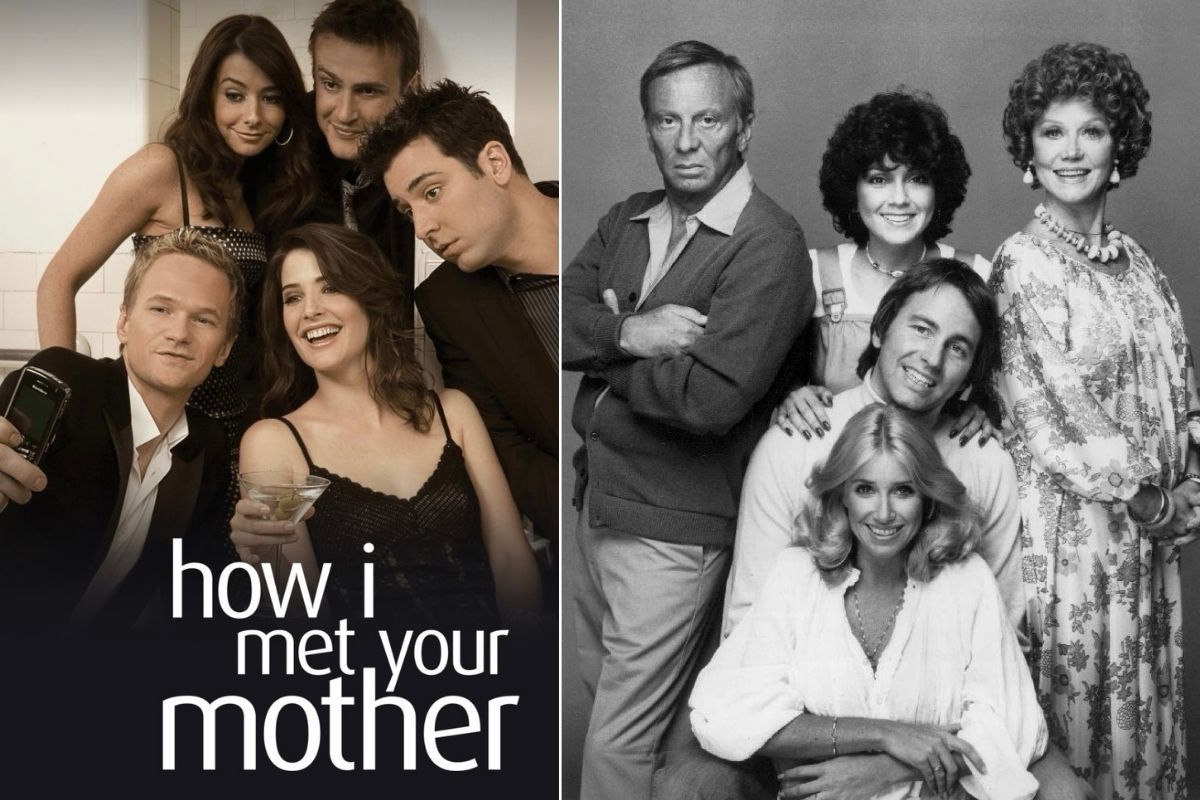
It can be rough watching older TV shows and movies. Sometimes, jokes that were funny 30 or even just 10 years ago come off as horrifically offensive now. When this happens, people use the expression: “This didn’t age well.”
It’s tempting to write off outdated media altogether. But sometimes, some of our all-time favorite pieces of fiction can make us cringe and laugh at the same time. We can be enthralled with a plot despite it being offensive, and we can find ourselves rooting for reprehensible characters.
Are we allowed to enjoy things that don’t hold up to our modern moral standards? Are we bad people for laughing at offensive jokes?
A bold take on ‘this didn’t age well’
Olayemi Olurin is a writer, lawyer, and cultural commentator who goes by Olurinatti. Her humor and sharp insights into pop culture have earned her over 250,000 subscribers and a Webby Award nomination.
In a recent YouTube video, Olurin took on a new cultural epidemic:
“A lot of my and your favorite shows, movies, and characters have all been hit with the dreaded ‘This didn’t age well,’” she began. “But what if I told you that they age exactly how they needed to because we need problematic media?”
She explained that if she mastered anything in law school, it wasn’t case law. Instead, she learned how to think about things, how to know what she doesn’t know, and how to see the bigger picture.
“Every day it becomes clearer and clearer to me that motherf***ers really do not think critically…and everyone is worse off for it,” she added.
Olurin claimed that in the modern social media landscape, people are more commonly dismissing older media that doesn’t hold up to modern virtues and newer media that challenges viewers to look beyond the surface.
Olurin thinks that’s a problem. She pointed out, “We end up missing valuable teaching and learning opportunities that our problematic media provides, in exchange for simply writing it off as ‘this didn’t age well.’”
(Heads up that the video below contains some f-bombs, so view with discretion.)
Mistaking problematic characters for characters that shouldn’t exist
Olurin leaned heavily on the example of Barney Stinson from the sitcom How I Met Your Mother. Stinson is a notorious creep, and his predatory womanizing is a punchline throughout the show.
Yet she still loves the series.
“I have been watching How I Met Your Mother on an infinite loop since it ended more than a decade ago because the show is hilarious. And despite whatever moral judgments I make about the characters, I was invested in each and every one of their lives and relationships, their friendships felt genuine, their heartbreaks felt real, their milestones felt earned,” she reflected.
She noted that whenever she brings up the show to her fans and viewers and discusses how morally imperfect many of the characters are, about half of them take “the negative judgments I’ve made about a character to mean that they’re not allowed to like that character, and that the show did something wrong by creating that character or writing them to do whatever makes them bad or problematic.”
Why ‘virtue mirroring’ is a mistake
She called this concept “virtue mirroring,” a term she introduced and popularized in the context of media consumption. It’s when we think that the shows, movies, books, and characters we engage with should be a reflection of our own morals.
But art holds up a mirror to society at the time it was made, not to any individual viewer at the time they are seeing it. It doesn’t always do this responsibly, and it will never reflect perfection because the artists who created it were never perfect in the first place.
Wil Wheaton described it brilliantly:
“I believe that when some piece of art is deeply meaningful to a person, for whatever reason, that art doesn’t belong to the person who created it, if it ever did. It belongs to the person who found something meaningful in the art. If it feels right to you to put it away and never look at it again, that’s totally valid. But if it brings you comfort, or joy, or healing, or just warm familiarity to bring it out and spend some time with it, that’s totally valid, too.”
The catch: ‘It’s not that deep’ is equally frustrating
Getting upset over a show where a character makes inappropriate jokes might sound silly, but some examples are more serious. Many beloved ’80s movies, including Revenge of the Nerds and Sixteen Candles, contain rape scenes played problematically for laughs. The Cosby Show, one of the most viewed television shows of all time, is forever marred by Bill Cosby’s legacy.
It’s normal for good, moral people to grapple with their feelings about media that makes them uncomfortable.
Olurin stated that about half of the viewers she engages with get stuck in virtue mirroring. The other half refuses to think about their media at all. Instead of “this didn’t age well,” their refrain is “it’s not that deep.” They feel attacked or defensive, as if they’re being accused of being bad for liking something bad. It’s the other side of the same coin.
Olurin claimed that this mindset is just as dangerous. It doesn’t take into account that art and entertainment reflect and influence the world around us. Being unwilling to have critical awareness of problematic media is how harmful ideas, intended as jokes and entertainment, can spread.
Confused? The answer is simple.
Olurin argued for moral media consumption, through which we think critically about where our media doesn’t align with our morals without being influenced by it, replicating it, or holding it up as an ideal. This doesn’t mean being a passive consumer who takes everything at face value. It means being an active consumer who can take the good with the bad of everything we see and parse them accordingly.
Ultimately, Olurin said, “We also have to live.” Not everything has to be political. We don’t need others’ approval before we can enjoy something. And we don’t need to judge ourselves for what we like to indulge in.
She summed it all up perfectly with a clip from author Da’Shaun L. Harrison: “One of my favorite movies is a sci-fi film that was f***ing created by Harvey Weinstein. If it come on, I’m gonna watch it. Like, it’s a great movie, but you just have to also like acknowledge that these are the conditions under which like the film is created…and that’s okay to name.”