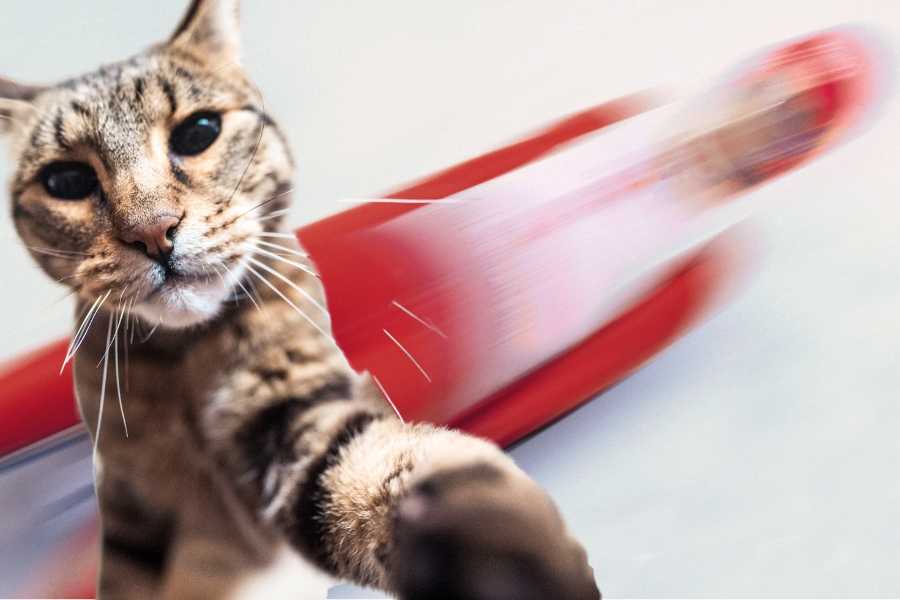
Cats are famously among the most efficient hunters on Earth, total ambush experts with keen hearing, excellent night vision, lightning-fast reflexes, and the ability to stalk in silence. The fact that humans domesticated these carnivorous predators to keep as cuddly pets is pretty wild when you think about it, especially knowing they could do some real damage to us if they wanted to.
Thankfully, they generally don’t want to. Pet cats want to pretend-stalk squirrels from the sofa, go wild with a laser pointer, and do their best to catch Olympic lugers on the TV as they whizz by.
Wait, catch lugers? Yep. Watch:
It’s a perfect little window into just how hardwired that hunting instinct really is, even for a cat who has probably never chased anything more dangerous than a feather toy. And it’s not just luge that gets them going, any sport with fast, unpredictable motion seems to flip the same switch. Skiers, figure skaters, hockey pucks, it all reads as prey to a cat’s brain.
Cats just seem to dig sports
People shared their cats’ love of other sports as well:
Apparently this includes all venues and all levels of competition:
Sometimes being a spectator just isn’t enough.
What triggers a cat’s hunting instincts?
Whether cats were first domesticated to be our furry little friends or to keep rodents away from our food stores is debatable, but there’s no question that their penchant for catching mice was a perk for humans throughout history. Most modern housecats aren’t kept for that purpose, but they still act like they’re hunters-in-training.
Cats’ predatory instincts don’t go away just because they lead a cushy indoor life, as every cat owner cat attest. How often do we see a seemingly bored cat suddenly come to attention, eyes wide, ears engaged, back hunched, locked in on a bird or squirrel out the window? Those instincts are triggered by sudden movements, which is why the luge and other quick-moving sports have so many kitties pawing at the screen.
Horizon Animal Hospital shares some tips for playing with your cat in a way that honors their predatory nature:
Provide views of the great outdoors
Be sure they can look out windows to see the wildlife. Just be aware that some cats may find their inability to catch the prey they see frustrating and become aggressive because of it.
Let them explore outside safely
Veterinarians and wildlife experts recommend keeping pet cats indoors, but there are ways for cats to enjoy outdoor time in ways that are safe for them and other animals. Setting up an outdoor enclosure, or a “catio,” for them is one option. Taking them outside on a harness and leash is another.
Prioritize interactive play
Cats quickly become bored with toys that don’t simulate prey, so finding interactive toys for them is vital. Catnip mice, feathers on a string, and other things they can attack or toss around are great choices. Puzzle toys and interactive feeders can also keep them busy while you’re away.
Try a laser pointer
Laser pointers really are the ideal way to play with a cat. They can’t seem to help themselves when the laser light starts darting around the room, and it’s great entertainment for them and for their humans. Avoid shining it in their eyes, and it’s helpful to end a laser play session by pointing the laser dot on a toy they can “kill,” like a toy mouse, to avoid frustration.
It all comes down to the thrill of the chase
At the end of the day, whether it’s luge, figure skating, or hockey, one thing is clear: cats have absolutely no interest in following the rules of the game, only the thrill of the chase. It’s a small reminder that no matter how many generations removed they are from their wild ancestors, that hunter is still very much in there, just waiting for the right blur of movement to bring it back out. So the next time the Olympics are on, don’t be surprised if your cat ends up glued to the screen right alongside you, rooting for whichever athlete looks most like prey.
This article originally appeared in February. It has been updated.