When people daydream about not having to work for a living, they usually envision being super wealthy. They don’t usually imagine living alongside their ancestors thousands of years ago.
But the reality is that jobs as we know them—working hours, salaries and paychecks, work-life balance, paid or unpaid time off, overtime, etc.—are super recent on the human timeline. Even specialized jobs, which have been around for thousands of years, are still new compared to the roughly 290,000 years of human evolution that preceded anything resembling what we think of as “employment.”
How much time did basic survival take? Less than you might think.
A YouTube video from Axen explores what humans did all day before they had to work for a living, and it’s quite fascinating. The obvious answer is “survive,” but that didn’t actually take up as much time as people might think.
The video points out that modern humans spend about 90,000 hours of their lives working, roughly a third of their waking existence. However, anthropologists have studied pre-agricultural peoples across different continents. The general consensus is that basic survival activities took between 15 and 20 hours per week. That’s a part-time job in terms of hours.
What did people do the rest of the time? Whatever they wanted, basically. It might be easy to assume that prehistoric humans were solely focused on not dying, but that doesn’t appear to be the case.
Our super ancient ancestors were creative
As the video explains, people actually spent time on creative hobbies. Here are a few examples:
“In 1994, explorers discovered Chauvet Cave in southern France. Inside were paintings created roughly 30,000 years ago: horses, lions, and rhinoceroses rendered with perspective, shading, and movement. These weren’t crude stick figures. This was sophisticated art that required skill, planning, and, most importantly, time. Someone spent hours, maybe days, deep inside a cave by firelight, painting animals on a wall. Not for survival. Not for food. But for beauty, for meaning, for something to do.
In Blombos Cave in South Africa, archaeologists found 100,000-year-old perforated shell beads—tiny holes drilled through seashells, clearly meant to be strung together as jewelry. The nearest coastline was 20 km away. Someone walked 40 km round trip just to collect shells, then spent hours carefully drilling holes with stone tools just to look good.
In 2008, researchers found a 40,000-year-old flute carved from a vulture bone in Germany. Five finger holes, perfectly spaced. Whoever made this understood music. They understood pitch. And they spent significant time crafting it. Not for hunting. Not for defense. For music.”
What a day in the life might have looked like
Axen describes what a typical day might have looked like before jobs:
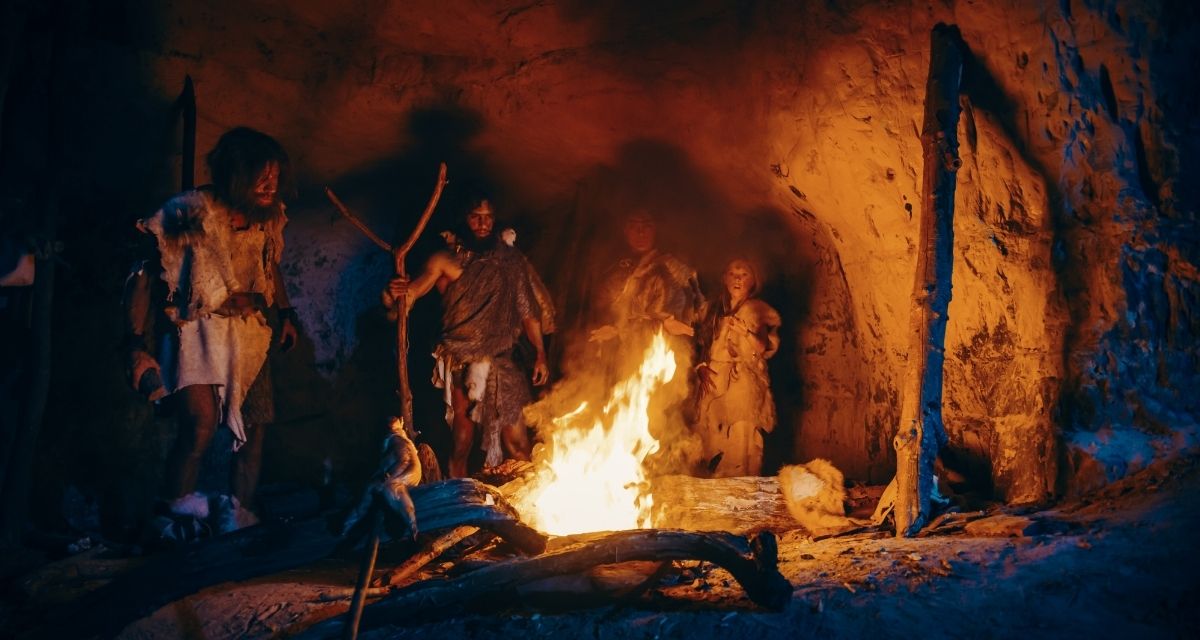
“You wake up around dawn. The fire from last night is still smoldering. Someone adds wood. You eat leftover meat or fish from yesterday. Maybe some nuts or berries collected the day before. Breakfast is social. People talk. They plan loosely for the day. Not because they have to—because that’s what humans do.”
Hunting doesn’t happen every day. You might just stay at camp and build or sharpen tools, weave a basket, or prepare an animal hide.
“This isn’t work in the modern sense,” the video points out. “There’s no clock, no supervisor. You do it because competence matters. Because being skilled earns respect. Because making things well is part of being human.”
If hunting does take place, it’s a small group that does it. Humans didn’t generally chase down prey. We were persistence hunters, tracking animals for hours until they overheated and collapsed, as demonstrated in this video:
That could take three to six hours.
“We’re the only species that can do this effectively because we can sweat and regulate our body temperature while running,” the video explains. “Most animals can’t, so we outlast them.”
After the animal is carried back, butchered, and eaten, the “work” for the day is basically done.
Afternoon and evening were for bonding and leisure
For the rest of the day, people rest, socialize, do arts and crafts, and otherwise engage in leisure activities. Conversations during the morning revolve around survival activities, whereas later in the day, they shift. People laugh, joke, and tell stories around the fire.
This bonding time is important. Time spent talking around the fire builds culture, as myths and legends are created and passed down. And relationships are key to survival.
“In a world without money or police or written contracts, your survival depends entirely on your relationships,” the video explains. “If people don’t like you, they don’t have to share food when you’re hungry. So you invest enormous amounts of time in those bonds. Not because it’s productive. Because it’s how humans stay human.”
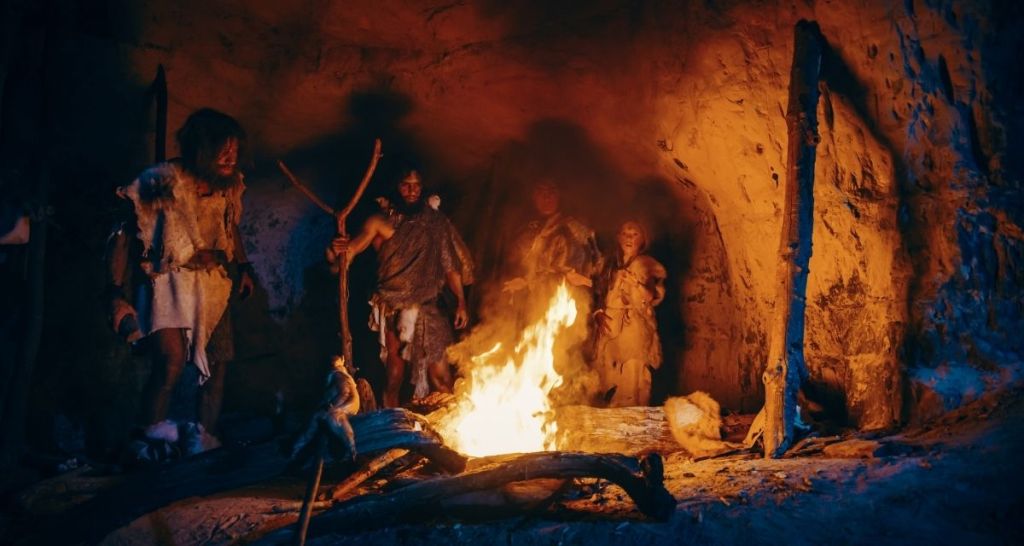
Sleep looked different, too. Researchers have found that before artificial light, humans slept in two phases. People would sleep for about four hours, then be awake for an hour or two in total darkness, before having a second sleep of another four hours.
Does all of this mean life was better 10,000+ years ago?
It’s easy to romanticize a daily life that sounds so simple. Community, relationships, art, and less time on the daily grind—all of that sounds great.
But simple doesn’t mean easy. What the video doesn’t really touch on are the dangers humans had to deal with more directly than we do now, like wild animals and the elements. Diseases and infections from injuries were a lot scarier in the days before science and modern medicine. And naturally, we couldn’t just transport our soft, sofa-accustomed bodies back into ancient times and find ourselves fully enjoying our leisure time. The physical demands of that life alone would require a huge adjustment.
But there’s something we can learn from the lives of our ancient ancestors: Spending time each day on creative pursuits and enjoying time with other people are integral parts of being human. It would be lovely if we could all just work part-time jobs to make a living and have ample free time to spend as we please. Most of us can’t, but perhaps we can use the free time we do have to do more of the things that truly make us human.
You can follow Axen on YouTube for other interesting educational videos.