Fashion trends come and go. What was once cool can always make a comeback (like BumpIts and low-rise jeans of the early ’00s.)
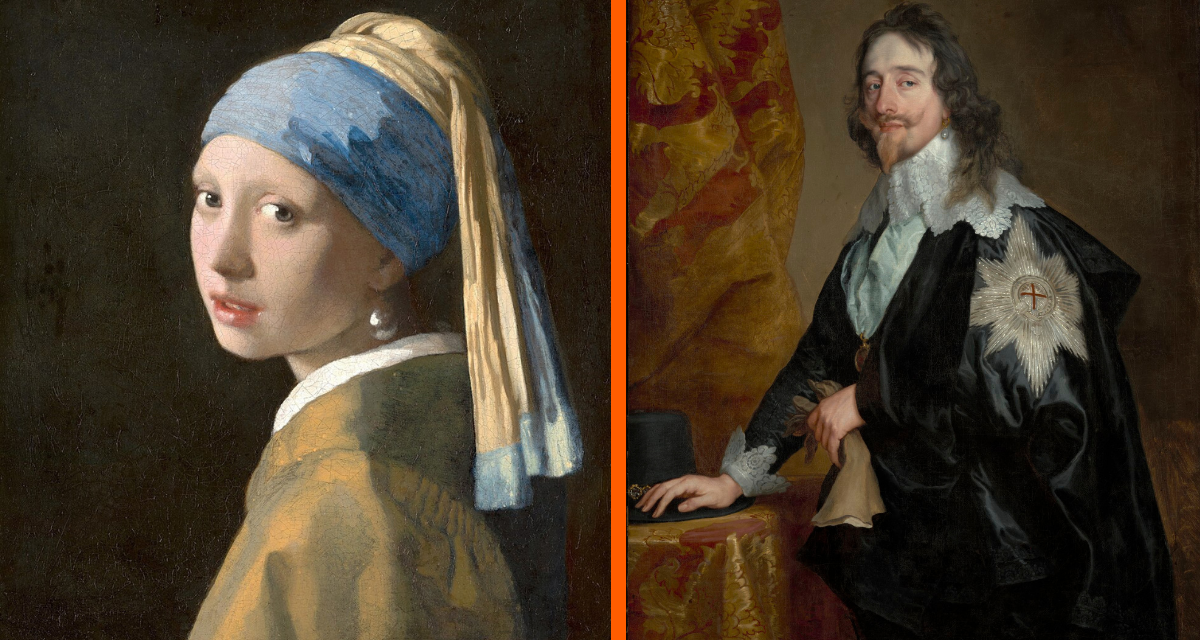
One time period with a recognizable style all its own was the Renaissance. Today, it’s easy to see what was trending back then based on portraits from the era, such as artist Johannes Vermeer’s iconic Girl with a Pearl Earring (c. 1665).
One accessory commonly spotted in many of them is a single pearl earring. In a TikTok, historian Dr. Amy Boyington explained why pearls (and only wearing one in earring-form) was a trending fashion choice during the Renaissance.
Why pearl earrings were popular
In the video, Dr. Boyington leads with a famous portrait of Sir Walter Raleigh (1554-1614), a world explorer, soldier and “literal pirate for hire,” who sports a double pearl earring on his left ear. She explains that while today men wearing earrings may be seen as a “modern or rebellious trend,” back in the 16th and 17th centuries it was a status symbol.
“It was the ultimate sign of high luxury status,” she explains. “If you were a man of power, you wore gold to demonstrate that. But you also wore the gems of the sea.”
The history of earrings in Europe
Dr. Boyington also shares how wearing earrings came into fashion in Europe in the 16th century.
“Before the 16th century, earrings in men and women were considered bad. And this is because it went against Bible teachings, and it was also associated with the unknown East,” she says.
However, it took one woman to change that—a woman named Eleanor of Austria who “arrived in France to marry Francis I. She was wearing jeweled earrings. And soon, this trend began to be copied by women, and also men.”
Dr. Boyington shows a portrait of Eleanor’s stepson, Henry II of France, who is wearing a gold hoop pearl earring.
“Wearing a single high quality pearl earring, either a pearl or a ruby, was the sign of the ultimate luxury,” she adds.
The value of pearls
Pearls symbolized wealth because they were “incredibly rare and expensive,” as Dr. Boyington explains.
“Only royalty and their courtiers could usually afford them,” she says. “At the same time, pirates were also wearing earrings. They were usually wearing golden hoops, a way of carrying their portable wealth. But it was also a fashionable trend.”
Not only did pearls symbolize wealth, they symbolized “the future” and power.
“These pearls came from the New World and the Indian Ocean. So, it was about demonstrating their global reach and power,” she adds. “They were able to bring these world luxuries to their very earlobes.”
The trend from France quickly made its way to England, where King Charles I participated as a young prince during the trend’s peak.
“He would wear pearl earrings throughout his life, and famously he went to his execution wearing his favorite pearl earring,” she adds, noting that the trend in England also “died” with him.
However, trends can come back. In 2019, Harry Styles rocked a pearl earring on the red carpet for the 2019 Met Gala.
The history of pearls
The popularity of pearls in the West began in Rome after 61 B.C., according to Roman scholar Pliny. He documented Queen of Egypt Cleopatra’s love for pearls:
“There have been two pearls that were the largest in the whole of history; both were owned by Cleopatra, the last of the Queens of Egypt—they had come down to her through the hands of the Kings of the East…In accordance with previous instructions the servants placed in front of her only a single vessel containing vinegar, the strong rough quality of which can melt pearls. She was at the moment wearing in her ears that remarkable and truly unique work of nature. Antony was full of curiosity to see what in the world she was going to do. She took one earring off and dropped the pearl in the vinegar, and when it was melted swallowed it….With this goes the story that, when that queen who had won on this important issue was captured, the second of this pair of pearls was cut in two pieces, so that half a helping of the jewel might be in each of the ears of Venus in the Pantheon at Rome.”
Roman historian Suetonius reported that Caesar “was said to have invaded Britain for the fresh-water pearls to be found there and ‘in comparing their size he sometimes weighed them with his own hand.’”