As workers struggle to land good jobs and employers struggle to find ideal candidates in the ever-changing job market, a new trend is emerging. Many applicants are turning to artificial intelligence to give them an edge—with mixed results at best. Because interviews are one of the most stressful parts of the job search, it’s become common for folks to input questions into ChatGPT to find the “perfect” response. However, a former recruiter warns that this is a bad idea, noting that you end up “sounding so fake” when using it.
Former recruiter turned career coach Madeline Mann showed an example of why ChatGPT shouldn’t be used to answer written interview questions. In a TikTok video, Mann shared a ChatGPT response to the question, “Why did you leave your last role?” ChatGPT replied with the following:
“I decided to move from independent work to a team environment so I can build deeper lifecycle expertise and learn from a strong mission-driven leadership team.”
It is common to use AI to help write your job interview answers, but often they are sounding too verbose and not human. If you are reading your interview answers from a script, you are likely to be rejected in the job interview and not get the job offer. Here is an example of how to sound more normal and like a coworker during a hiring process. Follow for more job interview tips, and job search strategies! #jobsearch#jobsearchtips#jobinterviewtips#jobinterview♬ original sound – Madeline Mann
Did that sound like something a human would say? Mann argued that ChatGPT used so much professional jargon that it sounded like a robot wrote it (because it did). Mann said that in interviews, it’s best to “sound like a coworker.”
“If you do not already sound like their coworker, they will have trouble picturing you as their coworker, and they won’t give you the job offer,” said Mann.
Mann said that a better response would be a quick and simple: “After freelancing for X years, I really missed being on a team.” She said that a reply like that is sincere, direct, and more like how a person would normally speak to a coworker. She added that if you were to use AI for interview responses, you should edit them down and remove any “bungle” to “talk like a person.”
Upworthy spoke to AI pros, business leaders, and recruiters about using artificial intelligence for job interviews. The majority arrived at the same conclusion: If you choose to use AI, it can be a useful tool for interview preparation. However, it shouldn’t sub in to do the actual interview for you.
“AI can be a useful tool for preparing for an interview,” said Megan Sweeney, public relations director at the American Staffing Association. “However, at the end of the day, the interviewer still needs to know you’re capable of doing the job.”
“If a company requests written interview questions, then using AI as a starting point is fair game in my book,” said Russell Taris, an expert on how managers can best use AI in the workplace. “The key statement, though, is ‘as a starting point.’”
“Candidates should use AI to organize their thoughts and firm up their language, but the examples and experiences need to be their own,” said Taris. “Managers can now tell right away when someone submits a response straight from ChatGPT without any editing. Smart candidates use AI the way you’d use a good friend who happens to be a great editor.”
Authenticity is key
“The problem is being authentic,” said Magical Brands CEO Mark Coffie. “Candidates who prepare and deliver scripted, overly polished answers tend to fail when asked questions spontaneously. You can use AI to outline your ideas but speak and answer questions in your own voice. That’s different from reading something generated. Interviews are a testing of judgment, communication, and problem-solving…Technology cannot substitute for that.”
“Using AI to pressure test your answers ahead of time can truly benefit candidates,” said Taris. “Run your ‘Why did you leave your last role?’ answer through it and ask it to poke holes, or practice your ‘greatest weakness’ answer until it’s specific and honest. The best answers I hear in interviews aren’t the most polished; they’re the ones where the candidate clearly thought it through beforehand and can go deeper, if needed. AI is one of the best prep tools available right now, and most candidates aren’t taking advantage of it.”
“Using AI for interview prep is helpful, but you will be the one being evaluated,” concluded Sweeney.
An Operation Smile volunteer reverses an oxygen mask so a child with a cleft condition can blow a bubble for the first time in Guadalajara, Mexico. (Operation Smile Photos)
For thousands of children born with cleft conditions, Operation Smile provides simple, playful tools—like bubbles—to strengthen the skills they need to speak and thrive.
While a bottle of bubbles might seem out of place in a hospital setting, you might be surprised to learn that, for thousands of children around the world born with cleft lip and palate, they can be a helpful tool in comprehensive cleft care. Lilia, who was born with cleft lip and palate in 2020, is one of the many patients who received this care.
As a toddler, Lilia underwent two surgeries to treat cleft lip and palate with Operation Smile’s surgical program in Puebla, Mexico. Because of Operation Smile’s comprehensive care, it wasn’t long before her personality transformed: Lilia went from a quiet and withdrawn toddler to an exuberant, curious explorer, babbling, expressing herself with a variety of sounds, and engaging with others like any child her age.
Lilia is now a healthy five-year-old, with the same cheerful attitude and boundless energy. Her progress is the result of care at every level, from surgery to speech therapy to ongoing support at home—but it’s also evidence that small, sustained interventions throughout it all can make a meaningful difference.
Lilia at age 1, before surgery, and at age 5, 4 years post-surgery
Cleft Conditions: A Global Problem
Since 1982, Operation Smile has provided cleft lip and cleft palate surgeries to more than 500,000 patients worldwide with the help of generous volunteers and donors. Cleft conditions are congenital conditions, meaning they are present at birth. With cleft lip and palate, the lip or the roof of the mouth do not form fully during fetal development. Cleft conditions put children at risk for malnutrition and poor weight gain, since their facial structure can make feeding challenging. But cleft conditions can have an enormous social impact as well: Common difficulties with speech can leave kids socially isolated and unable to meet the same developmental milestones as their peers.
Surgery is a vital step in treating cleft conditions, but it’s also just one part of a much larger solution. Organizations like Operation Smile emphasize the importance of multi-disciplinary teams that provide comprehensive, long-term care to patients across many years. This approach, which includes oral care, speech therapy, nutritional support, and psychosocial care, not only aids in physical recovery from surgery but also helps children develop the skills and confidence to eat easily, speak clearly, and engage in everyday life. This ensures that each patient receives the full range of support they need to thrive.
Marie, 11 months, with her mother at Operation Smile Madagascar before her cleft surgery (Operation Smile Photos)
A Playful (and Powerful) Solution
Throughout a patient’s care, simple tools like bubbles can play a meaningful role from start to finish.
Immediately before surgery, children are often in a new and unfamiliar environment far from home, some of them experiencing a hospital setting for the first time. When care providers or loved ones blow bubbles, it’s a simple yet effective technique: Not only are the children soothed and distracted, the bubbles also help create a sense of joy and playfulness that eases their anxiety.
Milagros Rojas, a volunteer speech therapist in Peru, using bubbles in a screening with a patient. (Operation Smile Photos)
In speech therapy, bubbles can take on an even more important role. Blowing bubbles requires controlled airflow, as well as the ability to form a rounded “O” shape with the lips, which are skills that children with cleft conditions may struggle to develop. Practicing these skills with bubbles allows children to gently strengthen their facial muscles, improve breath control, and support the motor skills needed for speech development. Beyond that, blowing bubbles can help kids connect with their parents or providers in a way that’s playful, comforting, and accessible even for very young patients.
Finally, bubbles often follow patients with cleft conditions home in the “smile bags” that each patient receives when the surgical procedure is finished. Smile bags, which help continue speech therapy outside of the hospital setting, can contain language enrichment booklets, a mirror, oxygen tubing, and bubbles. While regular practice with motor skills can help with physical recovery, small acts of play help as well, giving kids space to simply enjoy themselves and join in on what peers are able to do.
Bubbles at Home and Beyond
Today, because of Operation Smile’s dedication to comprehensive cleft care, Lilia is now able to make friends and speak clearly, all things that could have been difficult or impossible before. Instead of a childhood defined by limitation, Lilia—and others around the world—can look forward to a childhood filled with joy, learning, discovery, friends, and new possibilities.
CTA: Lilia’s life was changed for the better with the care she received through Operation Smile. Find out how you can make an impact in other children’s lives by visiting operationsmile.org today.
If there’s one thing individuals and Fortune 500 companies have in common, it’s the inability to resist a personality test. Employers have long used tests like the Myers-Briggs Type Indicator or the Enneagram to understand their employees better and build more compatible teams. And people in general seem strangely addicted to quizzes that categorize them by personality type.
It’s long been known that most personality tests aren’t scientifically sound, but that doesn’t stop people from taking them. Part of the reason is that those tests tell us something about ourselves as individuals while also making us feel like we’re part of a group identity. They seem to help us understand ourselves and one another better, and thus appear to “work.”
“Personality tests and profiles take advantage of a weird psychological tendency that also benefits everything from horoscopes to fortune tellers to Buzzfeed quizzes,” Leembruggen said. It’s called the Barnum effect.
“The Barnum effect was named after P.T. Barnum, the iconic and problematic showman known for his ability to captivate, and often manipulate, an audience,” she explained. “The Barnum effect is the phenomenon where if you give someone a personality test, they’re pretty likely to believe that the results are true and accurate, regardless of how hard the profile-maker actually tried. There’s something about taking the test itself that makes an audience more likely to believe the end result.”
Personality tests became popular after WWI, when someone developed an assessment to determine which soldiers might be prone to PTSD. In the decades that followed, personality profiles appeared in popular magazines and psychologists’ offices alike. But researcher and college professor Bertram Forer felt skeptical about their accuracy. He basically said the results weren’t any more specific than saying that a person has opposable thumbs.
Professor Forer’s 1949 personality test experiment
In 1949, he conducted an experiment to test his hypothesis. He gave his Intro to Psychology students a personality questionnaire. Then, he told them he’d analyze the results and create a unique personality profile for each student. When they got their results, they rated them for accuracy. Only one student rated their results below a 4 out of 5, indicating nearly all students felt their results reflected their personality. However, Forer had duped them. He had actually given every student the exact same analysis.
“Forer made a list of general, vaguely flattering, and universally relatable statements,” Leembruggen explained. “So, why did everyone believe that their list was so perfectly tailored to them? Well, that’s the Barnum effect.”
Essentially, most personality descriptors in personality profiles are fairly relatable to most people. And when you combine any sense of the trait being positive, most people will see themselves in it.
The SciShow video gives these statements as examples:
“You have an analytical mind, though you also might space out at times.”
“You pride yourself as an independent thinker, and don’t accept other people’s statements without good proof.”
“You love variety and tend to rebel against too many restrictions and limitations.”
“You don’t always reveal all of yourself to others.”
“You have a great desire for other people to like and admire you.”
Most people see themselves in some, if not all, of those statements because they’re vague enough to feel true.
However, 1949 was a long time ago. Haven’t psychologists gotten better at creating real personality profiles?
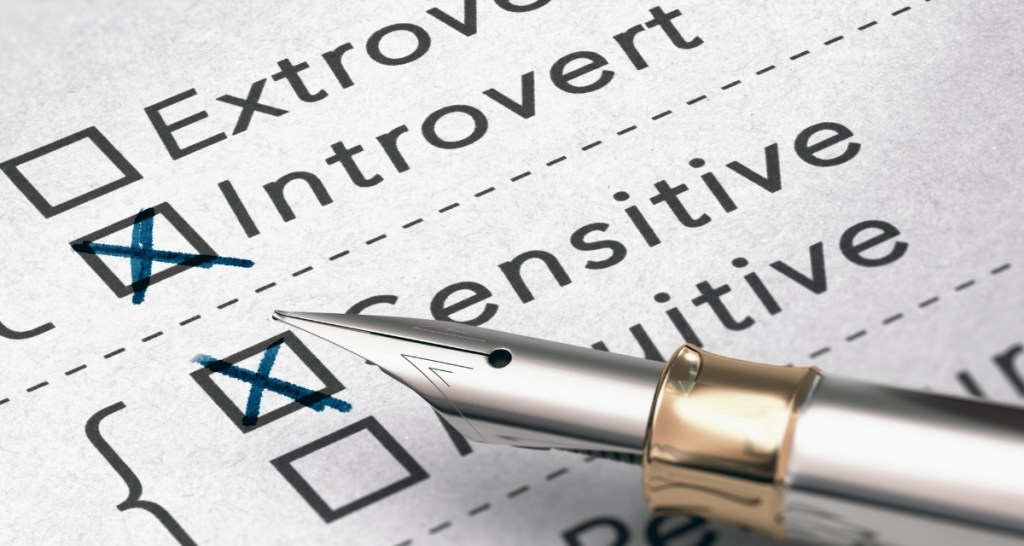
Many personality tests have binary categories of traits. (Photo credit: Canva)
How accurate is the Myers-Brigg Type Indicator, though?
One of the most popular personality tests of the past 50 years is the Myers-Briggs Type Indicator, or MBTI. This test splits people into 16 personality categories based on combinations of eight traits or preferences: Introversion/Extroversion, Sensing/Intuition, Thinking/Feeling, and Perceiving/Judging. Your “type” would be a combination of four letters, like INTP or ESFJ, with a corresponding description of that personality.
Many people have taken an MBTI test at work, but is it really accurate?
“When researchers want to see how well a certain assessment tool, test, or survey actually works, one thing they’ll do is have the same people take the same test multiple times,” Leembruggen said. “If they get the same score each time, we’d say that tool has good test-retest reliability. And in studies of MBTI where participants took the assessment multiple times, up to half or even more test takers received a different result for at least one of the four letters.”
Accurate or not, people love their Myers-Briggs. However, psychologists prefer a more recent personality indicator known as the Big Five Personality Trait model.
12 Things Everyone Should Know About Personality
1. Most psychologists agree that most personality variation can be captured with just a handful of higher-order traits. The most popular approach posits five traits, often known as the Big 5.
In the Big Five, people rank as low, medium, or high in five personality dimensions: extroversion, neuroticism, openness, conscientiousness, and agreeableness. (A more recent test known as HEXACO includes honesty-humility as a trait.)
“These tests, and newer variations that include subcategories of these five, do seem to show better test-retest reliability,” Leembruggen shared. “One major reason that newer tests based on the Big Five are more reliable is that they’re based on accumulating data from multiple long-term studies from the 1990s onwards. And they’re rooted in the principle that, if a personality trait exists in humans, languages will adopt words to describe it.”
However, she notes, most research only includes people from WEIRD countries: Western, Educated, Industrialized, Rich, and Democratic. That reality alone makes it hard to extrapolate universal personality traits or types.
The way personality tests are designed is inherently flawed
Finally, the nature of personality tests with multiple-choice answers, most of which only offer two options, is flawed.
“When you have to answer every question from a list of predetermined options, it’s called a forced-choice measure,” Leembruggen explained. “These tests are easy to administer and to grade, but the downside is that they’re really rigid and can flatten nuance, including how people’s personality traits can change due to the passage of time and other variables. We’ve all stared at a multiple-choice question and wished there was an option to check ‘other.’ So trying to make a questionnaire-style test that can accurately gauge anybody’s personality might be kind of impossible.”
That certainly won’t stop a lot of people from taking those tests, though. Accurate or not, there’s something about them that draws us in. Maybe it’s just fun to self-analyze. Maybe we yearn to know ourselves better, and those tests offer a structured and largely harmless way to do that—or at least to feel like we’re doing it.
If you’re not one, you probably know one: conscientious people are never late, they’re organized, and their word is their bond. They do things the “right” way. They like things in order. And they have a strong, nearly unbreakable sense of right and wrong.
They’re often good people. Very good. It’s hard to imagine there could be a downside to this personality type. But new research indicates there’s a little more to it than meets the eye.
New research reveals the costs of being too “good”
A recent study out of the University of Galway aimed to find out how personality traits affect the way we experience emotions.
Researchers began by measuring participants using a Five-Factor Model, which breaks personality into five key dimensions: Openness to Experience, Extraversion, Agreeableness, Neuroticism, and Conscientiousness.
Then they exposed the volunteers to several video clips which were each designed to elicit a specific emotion: anger, disgust, fear, joy, sadness, and surprise.
Interestingly, the clip the team chose to elicit joy was none other than the famous diner scene from When Harry Met Sally: a comedy classic.
People who scored high in conscientiousness were among the only group to react negatively to finding the scene funny or enjoyable. It did not trigger nearly as much joy in this group as it did for the others.
The research team theorized that, with such a powerful correlation, it was relatively safe to say that extremely orderly, structured, and conscientious people may have a lower capacity for experiencing spontaneous joy.
But there’s still a powerful upside to being conscientious
Here’s the tradeoff: while highly conscientious people laughed less and felt less joyful during the comedy scene, they also reacted less powerfully to the scene that primarily stimulated sadness.
What scene was that? The Lion King, of course. You know the one.
The findings suggest that, perhaps, living a structured and highly-orderly life can protect against negative emotions—even at the cost of some of the good ones.
Think about it. Imagine a person who never misses a deadline, forgets to pay a bill, or runs a red light. They’re never in trouble. People don’t get angry at them. They don’t wind up on probation at work or, worse, in jail.
“How people structure their environment may be a key shield from experiencing sadness, which may represent a significant motivator for people high in orderliness if they are sensitive to this emotion,” the researchers wrote.
If that doesn’t sound like a worthwhile tradeoff, another recent study builds on these findings and explores even more of the upside to living a conscientious life.
“Good” people excel at finding meaning and satisfaction in their work
Psychology Today reveals details of another recent study where, again, the Big Five personality dimensions were used to sort people into buckets.
Researchers out of KU Leuven found that highly conscientious people were among those most likely experience a “flow state.”
Flow is a mental state where you become completely immersed in your work, to the point that you don’t even notice the passage of time. It’s sometimes known as being “in the zone,” a state of effortless momentum, and generally people find it to be an enjoyable and deeply meaningful feeling.
“The characteristics of Conscientious individuals are essential for maintaining focus, managing challenges, and regulating efforts toward meaningful tasks,” the study’s authors write.
Psychology Today sums up the cutting-edge research: “Being dutiful, organized, and especially orderly may have its limitations, at least in terms of joy. However, there is the advantage of being less likely to get into the type of trouble that would trigger negative emotions. Then there is the upside of being able to bury yourself in your daily tasks to the point of not becoming bored or finding them useless.”
One bummer for conscientious people: being structured and organized to the point that you’re less joyful and less likely to laugh at something funny might make you less likable overall. But, you probably won’t care: further research suggests conscientious people live longer and stay sharper and healthier into old age better than their peers.
If it all seems like a moot point—after all, you’re either conscientious or you’re not—think again. Personality can, and often does change, over the course of a person’s life. It is possible to dial down your structured, risk-averse ways of thinking and open yourself up to more spontaneous joy. And it’s also possible to become more orderly and reliable, minimizing negative emotions and getting more done.
It’s a worthwhile exercise for anyone to see the upsides of their personality, who they truly are, and to know that who they are never has to be set in stone.
We’ve all been there: it’s 90 degrees outside, absolutely sweltering, and you’re walking home from a new smoothie shop less than a mile away from your apartment, and everything is melting. The smoothie in your right hand. The açaí bowl in your left. Your old, broken headphones slowly slip off your head as a song you’ve never heard before blares through the speakers. Your willpower is diminishing by the second, and no one is around to help you.
Okay, that might be a bit specific (and precisely what happened to me about an hour ago). Still, you’ve likely had a similar experience: an encounter that left you annoyed, frustrated, or feeling hopeless.
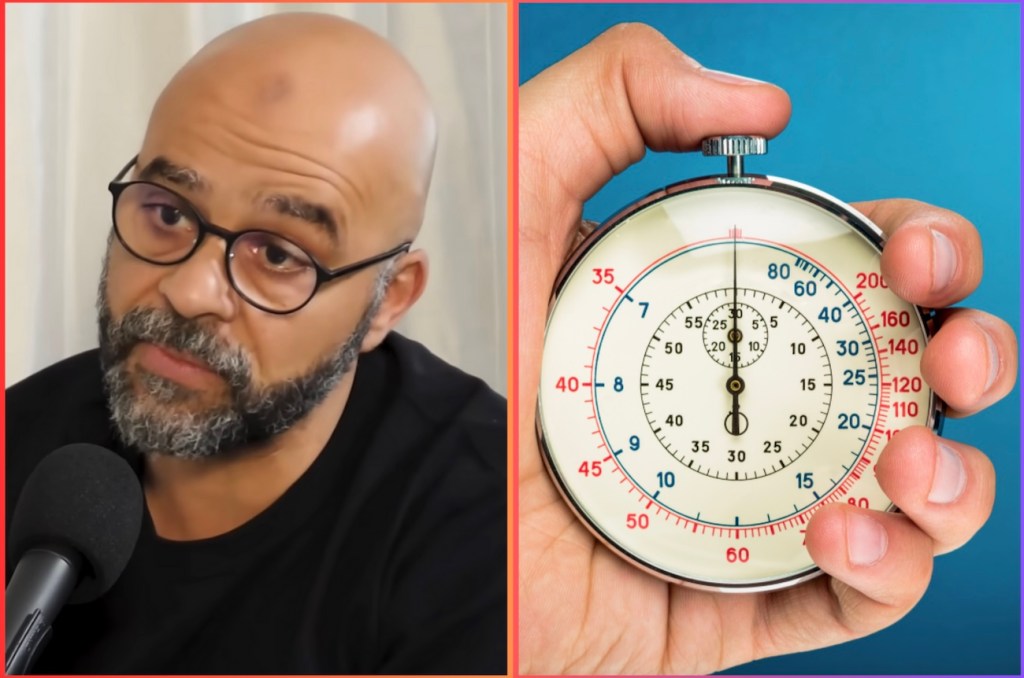
But what if I told you that, according to Mo Gawdat, a former Google executive who has spent the last 20 years researching the mechanics of happiness, you only need to endure that emotional roller coaster for precisely 90 seconds?
Meet the man behind the 90-second rule
It’s time to meet the man who is revolutionizing our understanding of our emotions by giving us all a science-backed way to hit the reset button on our worst days.
Mo Gawat isn’t your typical wellness guru peddling crystals and manifestation journals. This is a guy who spent years as Chief Business Officer at Google X, the company’s “Moonshot Factory,” where he pursued ambitious, high-risk but potentially world-changing projects that tackled large-scale global problems like climate change, healthcare, and communications. But his most profound discovery about human happiness stemmed from his darkest hour.
When Gawdat’s 21-year-old son Ali died from preventable medical negligence during what should have been a routine surgery in 2014, he faced a darkness that would define the rest of his career. A clear choice emerged. He could either let this grief consume him, or honor his son by dedicating his analytical mind to a path Ali had always encouraged him to pursue: spreading happiness to as many people as possible.
Seventeen days after losing his son, Gawdat sat down and began writing Solve for Happy: Engineer Your Path to Joy. Through this book, he uncovered a revolutionary truth: our emotions aren’t permanent. They have expiration dates.
The fascinating brain science behind your emotional meltdowns
Here’s where things get fascinating. When developing what would later be known as the “90-second rule,” Gawdat stumbled upon the findings of Harvard-trained neuroscientist Dr. Jill Bolte Taylor. Similarly, her research was also formed in the pressure cooker of an unexpected, dramatic life experience: the moment when she underwent a massive stroke.
As Dr. Taylor’s left brain hemisphere shut down, she gained unprecedented real-time insight into how emotions function in the body.
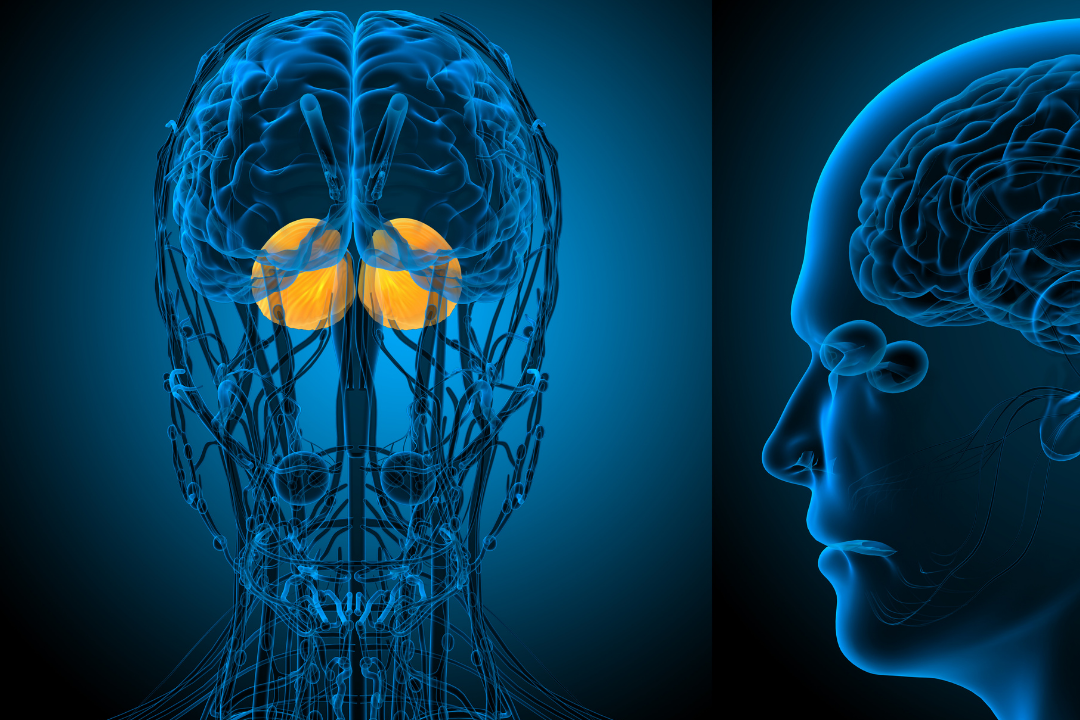
What she discovered is that when something triggers you, be it a spilled smoothie or a coworker’s passive-aggressive “per my last email” message, your amygdala (think of it as your brain’s overly cautious security guard) floods your system with stress hormones like cortisol and adrenaline. Your heart starts to race as if you’ve just spotted a bear and begun to run, your muscles tense up, and that instinctual fight-or-flight response surges through your body.
However, this chemical cascade has a built-in timer. As Dr. Taylor discovered, it takes approximately 90 seconds for these stress hormones to be flushed from your bloodstream. Meaning that, after that initial surge, the physical component of your emotional reaction is over.
But why doesn’t it feel like that? Why do we marinate in our emotions (anger, sadness, confusion, delusion) for hours, days, or more? That’s because, after those 90 seconds, we make a choice, usually without realizing it, to keep those emotions going by mentally rewinding and replaying the triggering event.
Why do we keep choosing emotional suffering?
“What happens is, you run the thought in your head again, and you renew your 90 seconds,” Gawdat explains. It’s like poking a bruise that’s formed on your knee, or hitting refresh on your personal stress response button. Every time you mentally revisit a stressful event, analyzing what you should have said, reimagining confrontations, and crafting the perfect comeback, you’re essentially retriggering that same potent chemical reaction that occurred in the first place.
So, while that 90-second episode of emotions ends quickly, we end up ruminating about what happened: over and over and over and over again.
This is more than a mere annoyance. Ift’s rewiring our brains in a bad way. Research shows that rumination doesn’t just prolong our bad moods, it intensifies them and can lead to anxiety and depression. We’re thinking ourselves into extended mental states simply by focusing too much on the past.
The three questions that reality-check your brain
What happens when you’ve successfully coasted through those initial 90 seconds but still feel like the world is out to get you? Gawdat developed a handy three-question reality check that serves as an emotional fact-checker for your brain:
Question 1: Is it true?
Gawdat claims that “90% of the things that make us unhappy are not even true.” Think about it: your partner seems distracted during dinner, and suddenly your brain spins an entire narrative about how they’ve fallen out of love with you. But how much of that is real? And what percentage of your little daydream can be chalked up to your brain being its usual dramatic self?
At best, our brains are excellent storytellers. The problem is that they’re prone to writing fiction and presenting it as truth.
So, the next time you find yourself spinning up a stressful “what if?” situation in your head, take a beat, and ask yourself a different question: “Is it true?”
Question 2: Can I take action?
If the answer to question one is “Yes, it is true,” then move on to Gawdat’s second question. Are there steps you can take?
If you have a real problem on your hands, then perfect! Channel that energy into solving it rather than drowning in it.
Question 3: Can I accept it and still create a better life despite it?
Here’s where things get tricky. If you can’t do anything about the situation, the final question before you becomes about “committed acceptance.” No, not passive resignation, but actively choosing to move forward and build something better despite the circumstances.
This can be difficult (remember, this process began with Gawdat searching for a way to make sense of his son’s death) but these questions aren’t about forcing toxic positivity or pretending like problems don’t exist. They help your brain make sense of what’s happened, distinguishing between productive and unproductive emotional energy.
Your brain: the overprotective parent
To understand how this works, it helps to think of your brain as an overprotective, hovering parent who sees danger everywhere. “Your brain isn’t your source of truth,” Gawdat explains. “It’s just a survival machine. A search party. It throws thoughts at you, hoping something will protect you. But that doesn’t mean any of them are true.”
Your mammalian brain evolved to keep you alive, not happy. When modern life presents you with stressful situations like traffic jams, work pressures, and particularly hot and evil temperatures, your ancient survival systems register these “threats” with the same emotional urgency as a saber-toothed tiger attack.
Putting the 90-second rule into practice
So, what does this really look like in real life knowing the science is only half the battle?
Step 1: Notice the surge
When you feel that familiar rush of anger, frustration, or anxiety, create a mental note. “Okay, this is a chemically induced wave of emotion,” you might say to yourself without judgment.
Step 2: Set a timer, literally
For the first 90 seconds, your job is to observe. Feel every emotion to its fullest: your heart racing, your muscles tensing, your breath shortening. Acknowledge these physical sensations without trying to fix or stop them.
Step 3: Breathe and wait
Deep breathing can help calm your nervous system after an onslaught of chemical reactions and prevent your brain from fueling the emotional fire mentally.
Step 4: Choose your response
When those 90 seconds pass, you have what Gawdat calls a “buffer,” a moment of clarity when you can decide what to do next.
Step 5: Apply the three questions
If you’re still upset after the initial wave, run through Gawdat’s reality-check framework.
The 90-second rule offers a unique perspective on relating to your vitally essential emotions. Emotions provide information about the environment and motivate us to take action. The 90-second rule helps us experience our emotions fully without letting them hijack our entire day or our entire life.
The happiness equation connection
This framework connects to Gawdat’s broader “happiness equation,” which posits that happiness equals life events minus expectations. Much of our suffering comes not from what happens to us, but from the gap between the triggering event and what we think should happen.
As Gawdat puts it, “Life doesn’t give a damn about you. It’s your choice how you react to every one of [life’s challenges].” Which may sound harsh, but when put into practice, can prove quite liberating.
The next time you feel yourself crashing out, remember: you have 90 seconds to feel as irrational as humanly possible. After that? You get to decide how to spend the rest of your day.
This article originally appeared one year ago. It has been updated.
You finally have good news. A promotion at work. The text you’ve been waiting all week for. You watch your kid take those first wobbly steps across the living room.
You excitedly tell a friend, your heart still racing a little, and they glance at their phone, mumble, “That’s great,” and slump back into their chair. Technically, they said the right thing. But their body told a different story.
Nonverbal cues are like the backstage crew of every conversation. Just because you don’t always notice them doesn’t mean they’re not there, controlling the lights, the mood, and the entire show. Psychologist Albert Mehrabian suggested that when we express feelings, only a small portion of the message comes from words, while much of the rest comes from tone and body language.
In other words, you can say “I’m listening” with your mouth, but your posture, eye contact, and tone of voice might be saying “I’m not.”
But there’s hope! These are skills, not personality flaws, and once you see the patterns—a handful of automatic, low-awareness habits that can unintentionally make others feel judged, dismissed, or unimportant—you can start to shift them.
Here are nine common “silent habits” that can create distance, plus gentle ways to adjust your behavior:
1. Avoiding eye contact
You’re halfway through a story about how your previous apartment was infiltrated by bees, and you can feel it: the other person’s gaze keeps sliding past your shoulder, down to the table, anywhere but your face. You finish the story, but something deep within you recoils.
In many cultures, steady, comfortable eye contact is one of the simplest tools we have to convey, “I’m here with you. You matter.” Without it, words can feel hollow. When the opposite happens—when we rarely look someone in the eye during a conversation—they may feel invisible or boring, even if it’s just meant to give them some space or to “not stare.”
How Much Eye Contact is Too Much? Use The 50/70 Rule Unlocking the power of eye contact is about balance, not rigid percentages. Speaking requires about 50% eye contact while listening demands around 70%. Quality trumps quantity, so make it meaningful. #eyecontact#dating#turnons#datingtips#datingadvice
Eye contact can be hard or even painful for some people, including folks who are shy, anxious, or neurodivergent. Others may have been raised in a culture that did not demand steady eye contact. That is why it helps to treat it as a flexible tool rather than a moral test.
How to shift: Try the “50/70” guideline, and hold eye contact about half the time while you speak and a little more while you listen. Let your gaze rest on their eyes or the bridge of their nose, then drift away naturally. If direct eye contact feels intense, look near their eyes instead; you’ll still create a sense of connection.
2. Crossing your arms
This one is tricky. Sometimes, you cross your arms because it’s cold outside and you forgot to bring a jacket. Other times, you truly don’t know what to do with your hands.
A tightly crossed posture often reads as “closed off,” “annoyed,” or “not open to what you are saying,” even when you feel fully engaged. Body language researchers describe it as creating a physical barrier. The perception is the problem, not necessarily the posture itself. As nonverbal behavior expert Alison Henderson has noted, “The perception is the important part. They may think a gesture is harmless because they don’t mean anything by it, but it’s how it’s perceived that becomes the issue.”
Over time, friends may stop sharing things with you. It’s difficult to be vulnerable with someone whose body keeps bracing for impact.
How to shift: Experiment with opening your stance. Rest your arms at your sides, in your lap, or around a cup, notebook, or bag. When you show your hands—especially with palms relaxed or open—you tend to look warmer and more approachable.
3. Phubbing (or phone snubbing)
Even a quick glance at your phone’s notification screen can feel like a tiny rejection, especially during emotionally charged moments. Research suggests that “phubbing” (a blend of “phone” and “snubbing”) can chip away at relationships over time, as it signals to the other person, “I’m checking to see if something more interesting has popped up.”
Checking your phone, even for a second, can have negative social impact. Photo credit: Canva
The worst part is that most people check their phones without trying to be rude—often, they don’t even care what’s on it. Our phones are simply irresistible, and our daily habits have hard-wired constant checking.
How to shift: When you’re with someone, try putting your phone fully away. Not face-down on the table or across the room, but away, either in another room or in your backpack. When you’re impervious to its seductive hum calling for your attention, you can be truly present with what matters: the other person in the room. However, if you truly expect an urgent call or text, name it upfront: “Just a heads up, I’m waiting for a call from so-and-so. I might check my phone once or twice, but I’m listening; I really want to hear this.” This tiny disclaimer can do wonders.
4. Slouching or “checked out”
No one’s perfect; we all have days when we want to melt into our couch and become one with its cushions. But when your shoulders cave in, your gaze drifts, and your whole body tilts away from the person speaking, your posture can come across as disinterest or apathy, no matter how engaged you are in the conversation. As body language consultant Dr. Lillian Glass puts it, poor posture conveys that you’re “not positive, not energetic, not caring.” Even if you’re fully mentally present, a rounded-in posture can make you appear inattentive or guarded.
Posture is a complex subject: it shapes not only how people see you, but also how you feel. A more upright, supported posture can boost alertness and mood, making it easier to stay present.
How to shift:Practice at home. Sit with your lower back supported and your feet on the floor if you can. Let your shoulders relax instead of locking them in place. Maybe lean forward a bit. Doing this when someone talks (just a few degrees, not “invading your space” territory) can come across as an act of solidarity.
5. Eye rolling and other “I’m above this” expressions
Few gestures cut as sharply as an eye roll. A sigh, a smirk, or a raised eyebrow at an inopportune moment can sting as much as harsh words.
Relationship researcher Dr. John Gottman points to contempt—often expressed through eye‑rolling, mocking faces, or sneering tones—as one of the most corrosive behaviors in close relationships. To the person on the receiving end, it does not just say, “I disagree.” It says, “You are beneath me.”
But it’s not so simple, is it? The movement can reflect many things: frustration, fatigue, overwhelm, or thinking. Someone might roll their eyes because they’re searching for the right words (and looking up is just part of how they process information), or because they are reacting playfully or dramatically, but it lands in a way they didn’t intend. However, it’s important to be mindful of when, how, and where you roll your eyes—eye rolling is easy to misread.
How to shift: When you feel that “Ugh, I can’t believe this” frustration rise, hit pause. Take a breath and soften your expression on purpose, even for a second. If you disagree or feel hurt, try putting it into words instead of rolling your eyes. “I’m having a strong emotional response, and I’m not sure why. Can you tell me more about where you’re coming from?” A simple phrase like this leaves little room for interpretation. Respectful curiosity keeps the door open.
6. Standing too close and invading personal space
Everyone carries an invisible bubble around their body, a personal “comfort zone” that shifts with culture, relationship, and context. When you stand too close, especially with acquaintances or coworkers, you can trigger a sense of intrusion or even threat.
Anthropologist Edward T. Hall’s classic research on proxemics identifies a hierarchy of space around every person: an intimate zone (roughly 0–1.5 feet) reserved for close loved ones; a personal zone (1.5–4 feet) for good friends; and a social zone (4–12 feet) for colleagues and acquaintances.
You do not need to create charts outlining everyone’s “personal space parameters” (nor should you). The key lies in what you can see: in real life, people lean back, step away, or angle their bodies when they want more room.
Bouncing a leg, tapping the table, clicking a pen, or twisting your hair can all help your body release nervous energy. These aren’t “bad” habits per se, but during a conversation—especially in small spaces or during meetings—they can distract or even irritate those around you.
In extreme cases, constant fidgeting can trigger a biological response. Some people live with misokinesia, a strong negative reaction to repetitive movements in their field of vision, and a jiggling foot can be overwhelming, preventing them from hearing your actual message.
How to shift: Start by noticing your patterns. Do you fidget more when you feel anxious, bored, or overstimulated? The next time you feel those emotions, check if you’re fidgeting. When you catch yourself, do a quick realignment, and gently plant your feet on the floor. Rest your hands on a steady surface. Move your energy into slower, deliberate actions, like taking a deep breath, sipping water, or uncurling your shoulders. You don’t have to be perfectly still. Just find a calmer rhythm.
8. Being late and acting like it’s “no big deal”
Most of us understand that sometimes, life gets in the way. There was a crash on the highway, leading to an extra 15 minutes of traffic. The kids refused to put their shoes on and leave the house. Your boss monopolized your attention after work.
But more than the actual act of lateness, what hurts is the failure to acknowledge it. When someone walks in late and acts as if nothing happened, the people who waited and were patient can feel like their time isn’t important. Like they’re supporting characters in the late person’s life, just waiting in the wings until they arrive. If that pattern repeats, the warmth and trust that once permeated the relationship can run dry, as friends and coworkers start to pull back emotionally, even if they never say exactly why.
How to shift: As soon as you realize you’re running late, send a quick message. “Running 10 minutes behind—so sorry, I’ll be there soon.” When you arrive, offer a simple, sincere apology: “Sorry for being late! Thanks for waiting for me.” No one’s expecting an Oscar-winning speech or monologue. You don’t have to be long-winded or self-flagellating to convey how sorry you are. Owning the impact can restore more goodwill than you think.
9. Finger pointing, literally
During a conversation, you extend your index finger toward another person. You’re just being helpful, identifying the person you’re talking about, which often happens unconsciously in moments when emotions run high.
But there’s a reason this is one of the older taboos in social gesturing: finger-pointing has historically been associated with accusation, blame, and aggression. In Western cultures, finger-pointing at a person reads as lecturing, dominant, or confrontational. Even in calmer contexts, it can make the person on the receiving end feel singled out or diminished. In a casual disagreement with a friend, even a gentle finger jab toward them while speaking can make the exchange feel more combative than it needs to be.
How to shift: When you feel the itch to gesture for emphasis, use an open hand instead, with your palms facing upward. You can even gesture in the air between you and the other person, instead of directly at them. When you refer to something specific, try using your whole hand to point in that direction rather than a single extended finger.
Body language is a learnable skill
As we’ve mentioned, there are a million reasons why these habits join our autopilot, and they don’t always come from mean, judgmental places. No one wakes up and thinks, “Today I will cross my arms and glance at my phone to make my friend feel small.”
The nine habits described here share one important quality: nearly all of them are unintentional.
But the truth is, your body keeps talking, even when you stay quiet. When your body tells a different story than the one that lives in your heart, people feel that mismatch. And often, they go with the one they can see, not hear.
Here is the hopeful piece: you can learn to excel at nonverbal communication, just like any other skill. With gentle awareness, you can sit up a little straighter, maintain steady eye contact, and treat even the smallest gestures with care.
You don’t need to fix everything at once. Conversations shouldn’t feel like a system overload of monitoring every aspect of your body (actually listening to what’s being said is still important, so don’t forget that). Maybe you uncross your arms on purpose, or throw your phone in the other room. Over time, those small shifts add up. Others will feel a little more seen, a little more respected, a little more at ease in the space around you.
Sean Lans got an invitation to his friend’s birthday dinner. He looked up the restaurant. The cheapest entree on the menu was $41. There was also a $35 cover charge at the bar they were hitting afterward. He did the math and proposed a compromise: he’d skip dinner and meet everyone out later.
His friend was not happy about it.
Sean posted about it on TikTok (@seanlans), and the video took off because almost everyone watching had been on one side of this exact conversation at some point. “I’m not looking to spend the equivalent of a week of grocery money on a single night out,” he said in the video. That line landed for a lot of people.
The responses split along pretty predictable lines. Some thought $41 wasn’t that bad and he should have saved up if this friend mattered to him. Others pointed out that nobody should be put in the position of choosing between their budget and showing up for someone’s birthday.
Diners celebrate at a restaurant. Photo credit: Canva
One commenter offered the most reasonable take: “If someone is unable to attend my boujee birthday dinner, that’s fine. I’ll schedule another affordable dinner date for us to celebrate together.”
Sean later told Bored Panda he was surprised to learn how many people assume the birthday host covers everyone, and also surprised that several commenters thought $41 for a single entree was totally reasonable. He also noted that other people in the group didn’t actually want to go to that restaurant either. He was just the one who said so.
You can follow Sean Lans (@seanlans) on TikTok for more financial-based content.
Studies show that when we meet someone new, we check for two traits to decide if we like them. First, we decide whether they have a warm personality. Do they come off as kind, friendly, or accepting? Second, we assess their competence. Are they intelligent, skilled, and do they have basic social skills?
If you pass the warmth/competence round of meeting someone new, another way to make sure that people like you is to make a small blunder. People have already assessed that you’re competent. Making a small mistake and having fun with it will make you more relatable. The psychological phenomenon is known as the Pratfall Effect.
What is the Pratfall Effect?
Psychologist Elliot Aronson first identified the Pratfall Effect in a 1966 experiment in which he had participants listen to an audio recording of someone taking a quiz and doing incredibly well. At the end of the recording, some participants heard the quiz-taker spill coffee on themselves, while others didn’t. Those who heard the coffee spill rated the quiz-taker much higher on likability than those who did not.
The basic reasoning behind the Pratfall Effect is that when someone is seen as competent, a mistake makes them more relatable. A terrific example of this is Jennifer Lawrence tripping at the 2013 Academy Awards. At the moment when she was being awarded for her incredible performance in Silver Linings Playbook, she fell on her face. No doubt this made her all the more likable because everyone watching on TV thought, “Oh, she’s just like me.”
If Lawrence had become angry or cursed the stairs for the fall, people would have thought less of her, but after she fell, she received a standing ovation, and she laughed about it. “You guys are just standing up because you feel bad that I fell, and that’s really embarrassing, thank you,” she opened her speech.
The Pratfall Effect doesn’t work in every situation
Now, the Pratfall Effect will only work to your advantage in a situation where people think that you are competent. If you are really good at your job and you accidentally mispronounce a word in a speech to your coworkers and laugh it off, they will like you more. However, if this is a situation where you are less competent, say, you are learning how to golf, and during a practice swing, you accidentally let go of the club, launching it into the air, people will probably think less of you.
Not everyone has the same reaction to a competent person making a blunder. A follow-up paper published in the Journal of Personality and Social Psychology found that people’s reaction to the mistake will differ depending on their level of self-esteem. People with lower self-esteem will feel greater admiration for their boss who spills coffee on their shirt while driving to work because it levels the playing field. But people with high self-esteem who are more comfortable around their boss won’t care as much if they make a mistake.
Ultimately, being likable isn’t about impressing people; it’s about knowing how to be human. The key is that once you’ve proven to others that you know what you’re doing, you can feel free to trip up every once in a while because it’ll make them like you even more.
Fisher was a biological anthropologist and senior research fellow at the Kinsey Institute, best known for pioneering the use of brain imaging to study romantic love. She noted early in her research that love appears in every human society ever studied, and across 170 cultures, there is no example of a society without it. What varies is the expression. What doesn’t vary is the experience.
To understand what love actually does to the brain, Fisher and her colleagues scanned 17 people who described themselves as newly and madly in love. When shown photographs of their partners, a specific region deep at the base of the brain lit up: the ventral tegmental area, or VTA. This is the area that produces dopamine, the neurotransmitter associated with wanting, motivation, focus, and craving. It is, Fisher noted, the same region that activates during the rush from cocaine.
Romantic love, she concluded, is not an emotion. It is a drive — a chemical push toward another person that functions like an addiction when it’s working, and like withdrawal when it isn’t.
Then she scanned the people who had been dumped.
All 15 showed activity in the same VTA. The drive, the craving, the wanting was all still there. But two additional regions also lit up. One was associated with calculating gains and losses, the part of the brain that runs obsessive post-mortems, asking what went wrong and whether it could be fixed. The other was associated with deep attachment. In the recently published obituary in The Telegraph, Fisher’s research was described as showing activity also in areas linked to physical pain, risk-taking, obsessive-compulsive behavior, and anger. All of this, running simultaneously, in someone who just wants to stop thinking about a person they no longer have.
“Romantic love is an addiction,” Fisher said. “A perfectly wonderful addiction when it’s going well, and a perfectly horrible addiction when it’s going badly.”
One person who found Fisher’s framing genuinely useful was Dessa, a Minneapolis-based rapper. She had tried and failed to get over an ex-boyfriend and was frustrated by her own inability to move on despite wanting to. “It really bothered me that, no matter how much effort I tried to expend in trying to solve this problem, I was stuck,” she told NPR. Fisher’s explanation of the VTA gave her a new angle. “That you could objectively measure and observe ‘love,’ that had never occurred to me before.”
Dessa went on to try neurofeedback, a technique in which participants learn to consciously alter their own brain wave activity. A study published in Neuron found that participants trained to modulate their VTA activity were eventually able to do so without any external stimulus, effectively learning to turn down the volume on the craving.
It isn’t a cure. Fisher was careful about what she claimed. But understanding that the pain of heartbreak is neurologically structured, that it has a physical location in the brain and follows identifiable patterns, at least makes it feel less like a personal failing and more like a process that, with time, tends to resolve.
Fisher finished the manuscript for her final book five days before she died.
Having a healthy communication style isn’t just about how you speak. It’s how you listen and perceive the other person or people to whom you’re talking. Knowing the strengths (and sometimes more importantly, the weaknesses) they might bring to a conversation can often help produce a better outcome.
Licensed therapist Jason VanRuler developed an efficient quiz to help people determine their communication style. After answering a short series of questions, an individual can find out if they lean toward the “peacemaker, the advocate, the harbor, the thinker, or the spark.” Of course, most of us don’t fit neatly into one box or another. To account for that, each archetype (to borrow Carl Jung’s term) is given a number, so one can see how they relate to each style.
In an Instagram Reel posted by VanRuler, he explains how essential mere perception can be. “You may think great communication is about saying the right thing, but it’s actually about knowing how to read the room. When something doesn’t land, we often blame the other person for not understanding, instead of asking how our message may not have connected with them. Different people process information differently, and ignoring that creates disconnect.”
How to reframe
There are ways in which he says a person can reframe. “What to Do About It: Shift your focus from ‘Why didn’t they get it?’ to ‘How can I say this in a way that connects with them?’ Pay attention to how people respond and adjust your approach accordingly. Great communicators don’t just express well, they adapt well.”
In the clip, he describes a time when he was giving a conference to a room full of accountants. “So I got up and I talked a lot about feelings, and I went really deep and got really emotional. And it was really, really quiet. And I left thinking, ‘what was wrong with the audience? Why didn’t they resonate with what I just said?’ But what I didn’t really think about is, what is it about what I just said that didn’t resonate with them?”
Learning your “style” can help facilitate better relationships through stronger communication. On VanRuler’s website, he explains who he’s attempting to help, writing, “Whether it’s leadership coaching, relationship building, couples therapy, addiction, trauma, or something different, my goal is the same: to speak truth and grace into every life I work with.”
“Strength: Creates peace and eases tension in difficult or trying moments. Opportunity: Can avoid necessary conflict, which delays resolution and repair.”
Advocate
“Strength: Focused on justice, fairness, and upholding morals; advocates for their beliefs. Opportunity: Can present as intense or overpowering, or advocate when it’s not needed.”
Thinker
“Strength: Focused on logic, thoughts, facts, and getting things correct. Opportunity: Can miss cues for feelings and appear distant or emotionally unavailable.”
Harbor
“Strength: Creates a safe space for others to go deep and talk about feelings and emotions. Opportunity: May struggle to express their own needs, communicate boundaries, or be the focal point of a conversation.”
Spark
“Strength: Brings lots of energy, creativity, and momentum to conversations. Opportunity: Can struggle with consistency and initiating difficult conversations.”
He makes it clear that understanding these “paths” is a great start to elevating a relationship, saying, “Each path speaks a different ‘language,’ and the more fluent you become in other styles, the better you can bridge the gap between you and the people you care about.”