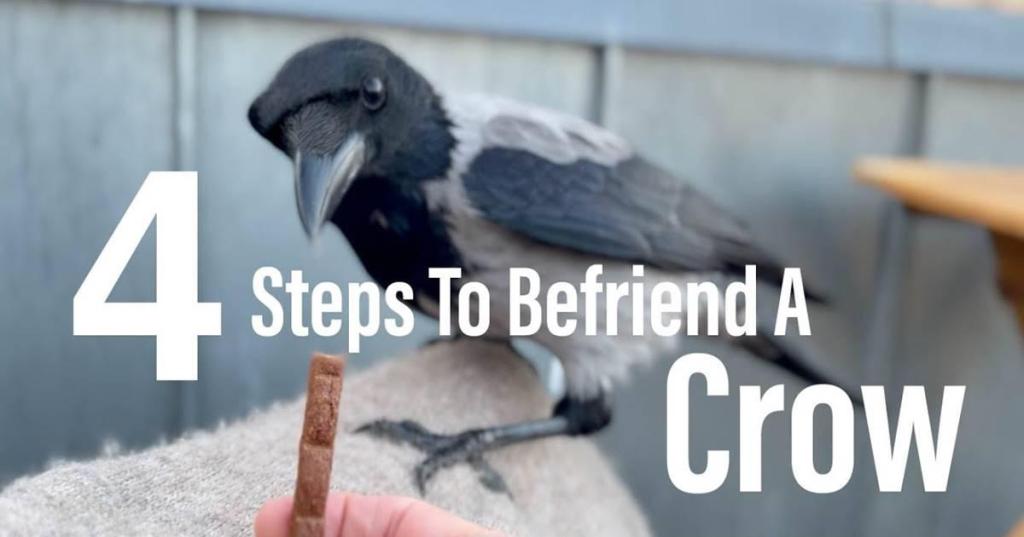
When it comes to keeping birds as pets, people usually think about parrots or canaries. Nobody ever considers having a crow. But research has shown that crows are incredibly clever, curious, and self-aware.
They recognize the faces of people they like or don’t like, have the ability to use tools, and can even mimic human speech. Looking to experience the magic of crows yourself? A YouTube user named Kräri The Crow from Germany made a video on how you can befriend the crows in your neighborhood in four easy steps. All it takes is “some food and some patience.”
1. Find a pair of crows
Crows tend to live in areas populated by humans, so chances are there are crows in your neighborhood. The best place to start is to find a pair with a fixed territory that you see on a regular basis. That way, you’re cultivating a relationship with the same animal day after day and you can “slowly get to know each other.”
2. Offer food
Crows will eat just about anything from insects to invertebrates to meat. They also enjoy nuts, worms, and vegetables. If you offer the food in the same place at the same time of day, you’ll establish a routine.
3. Be mindful
When interacting with the crow, make sure they aren’t anxious or displaying signs that they are prepared to fly away at any moment. Approach the birds with an open, indirect gaze so as to not cause alarm. Sit quietly while you wait for the bird to approach and avoid quick movements.
4. Let the birds come to you
This requires patience. The crow will be shy at first, but they know you better than you think. They will remember your face and your kindness. Give them a chance to observe you and earn your trust.
A the end of the video, Kräri The Crow reminds everyone that while we should make friends with crows, they are supposed to live free in the skies and not be stuck in a cage.
If you succeeded in befriending a feathered genius, tell your new crow friend we say hi!
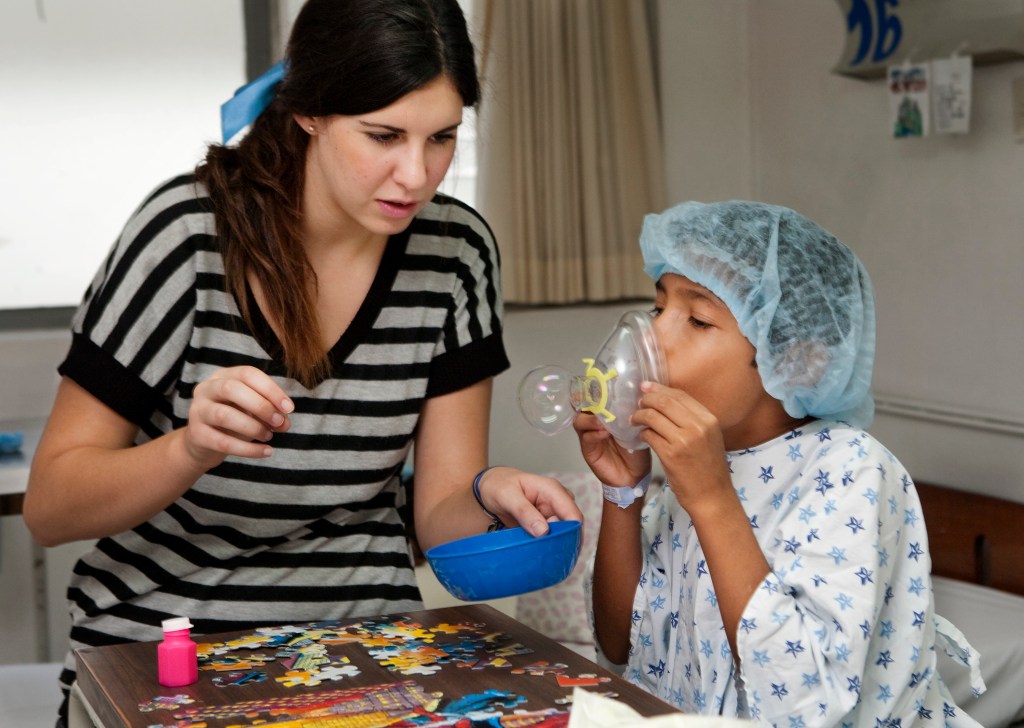
An Operation Smile volunteer reverses an oxygen mask so a child with a cleft condition can blow a bubble for the first time in Guadalajara, Mexico. (Operation Smile Photos)
For thousands of children born with cleft conditions, Operation Smile provides simple, playful tools—like bubbles—to strengthen the skills they need to speak and thrive.
While a bottle of bubbles might seem out of place in a hospital setting, you might be surprised to learn that, for thousands of children around the world born with cleft lip and palate, they can be a helpful tool in comprehensive cleft care. Lilia, who was born with cleft lip and palate in 2020, is one of the many patients who received this care.
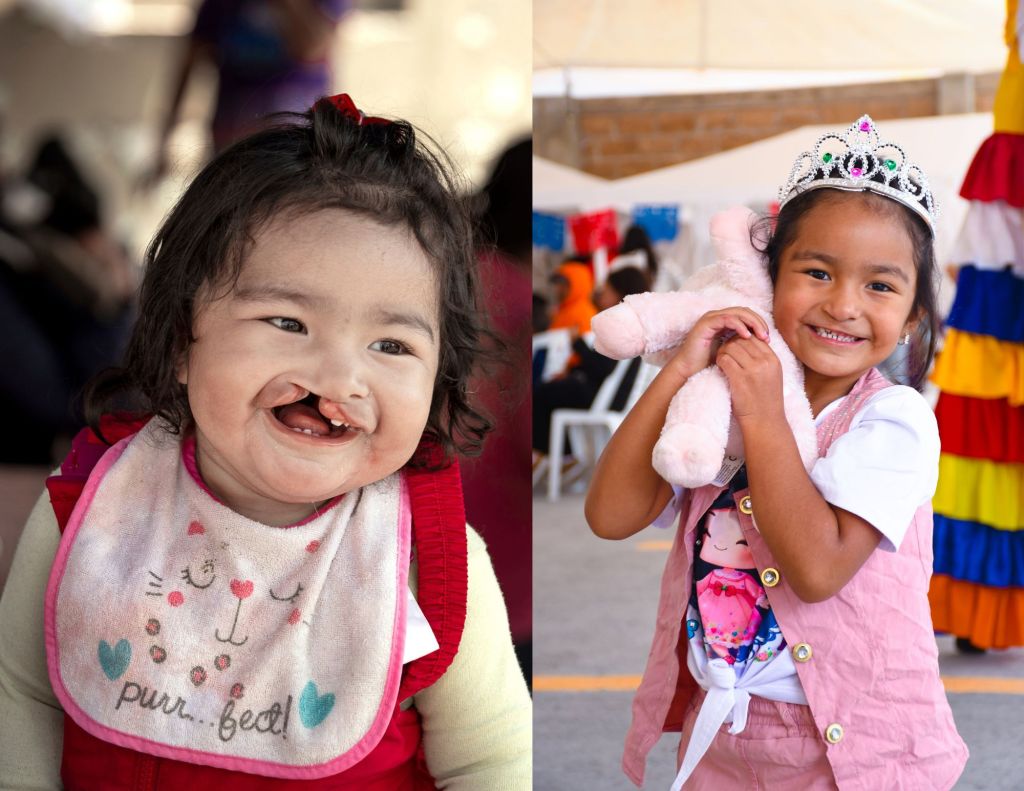
As a toddler, Lilia underwent two surgeries to treat cleft lip and palate with Operation Smile’s surgical program in Puebla, Mexico. Because of Operation Smile’s comprehensive care, it wasn’t long before her personality transformed: Lilia went from a quiet and withdrawn toddler to an exuberant, curious explorer, babbling, expressing herself with a variety of sounds, and engaging with others like any child her age.
Lilia is now a healthy five-year-old, with the same cheerful attitude and boundless energy. Her progress is the result of care at every level, from surgery to speech therapy to ongoing support at home—but it’s also evidence that small, sustained interventions throughout it all can make a meaningful difference.
Lilia at age 1, before surgery, and at age 5, 4 years post-surgery
Cleft Conditions: A Global Problem
Since 1982, Operation Smile has provided cleft lip and cleft palate surgeries to more than 500,000 patients worldwide with the help of generous volunteers and donors. Cleft conditions are congenital conditions, meaning they are present at birth. With cleft lip and palate, the lip or the roof of the mouth do not form fully during fetal development. Cleft conditions put children at risk for malnutrition and poor weight gain, since their facial structure can make feeding challenging. But cleft conditions can have an enormous social impact as well: Common difficulties with speech can leave kids socially isolated and unable to meet the same developmental milestones as their peers.
Surgery is a vital step in treating cleft conditions, but it’s also just one part of a much larger solution. Organizations like Operation Smile emphasize the importance of multi-disciplinary teams that provide comprehensive, long-term care to patients across many years. This approach, which includes oral care, speech therapy, nutritional support, and psychosocial care, not only aids in physical recovery from surgery but also helps children develop the skills and confidence to eat easily, speak clearly, and engage in everyday life. This ensures that each patient receives the full range of support they need to thrive.
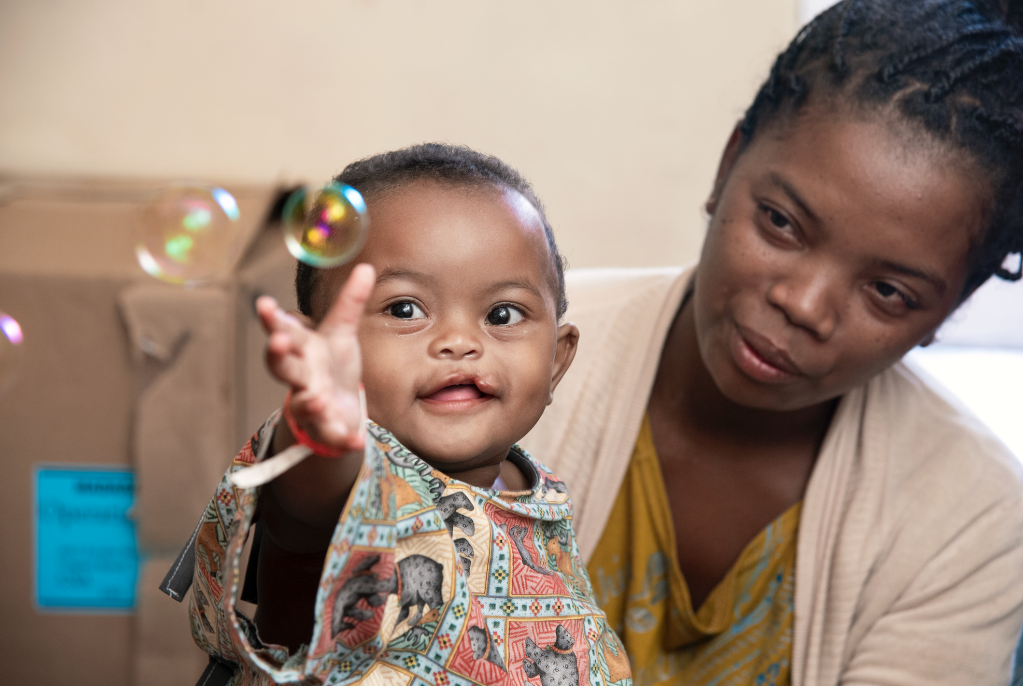
Marie, 11 months, with her mother at Operation Smile Madagascar before her cleft surgery (Operation Smile Photos)
A Playful (and Powerful) Solution
Throughout a patient’s care, simple tools like bubbles can play a meaningful role from start to finish.
Immediately before surgery, children are often in a new and unfamiliar environment far from home, some of them experiencing a hospital setting for the first time. When care providers or loved ones blow bubbles, it’s a simple yet effective technique: Not only are the children soothed and distracted, the bubbles also help create a sense of joy and playfulness that eases their anxiety.
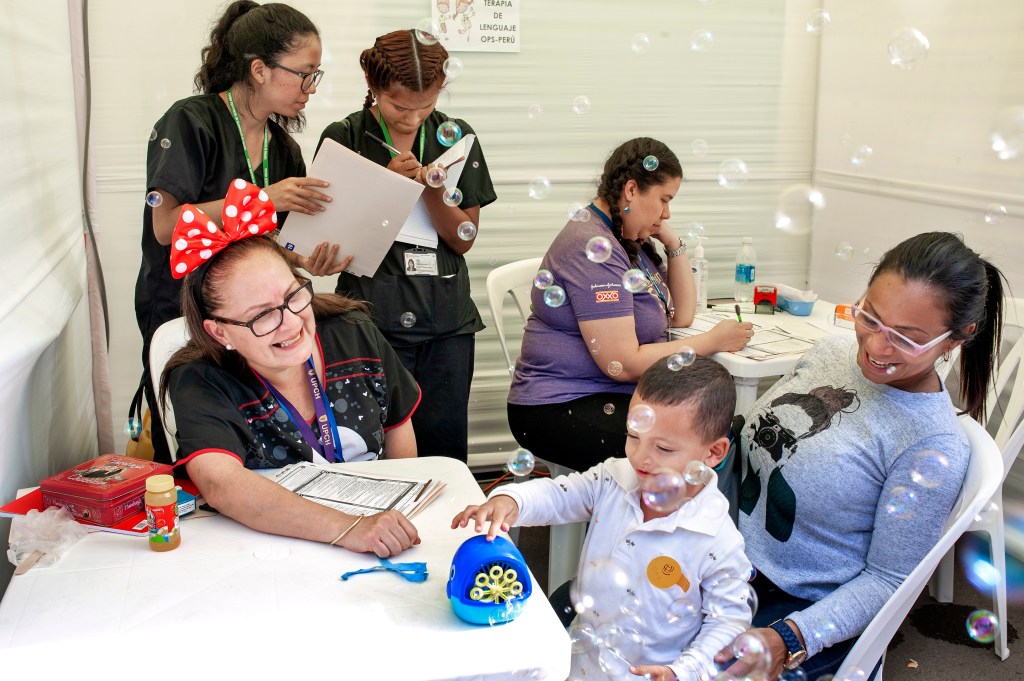
Milagros Rojas, a volunteer speech therapist in Peru, using bubbles in a screening with a patient. (Operation Smile Photos)
In speech therapy, bubbles can take on an even more important role. Blowing bubbles requires controlled airflow, as well as the ability to form a rounded “O” shape with the lips, which are skills that children with cleft conditions may struggle to develop. Practicing these skills with bubbles allows children to gently strengthen their facial muscles, improve breath control, and support the motor skills needed for speech development. Beyond that, blowing bubbles can help kids connect with their parents or providers in a way that’s playful, comforting, and accessible even for very young patients.
Finally, bubbles often follow patients with cleft conditions home in the “smile bags” that each patient receives when the surgical procedure is finished. Smile bags, which help continue speech therapy outside of the hospital setting, can contain language enrichment booklets, a mirror, oxygen tubing, and bubbles. While regular practice with motor skills can help with physical recovery, small acts of play help as well, giving kids space to simply enjoy themselves and join in on what peers are able to do.
Bubbles at Home and Beyond
Today, because of Operation Smile’s dedication to comprehensive cleft care, Lilia is now able to make friends and speak clearly, all things that could have been difficult or impossible before. Instead of a childhood defined by limitation, Lilia—and others around the world—can look forward to a childhood filled with joy, learning, discovery, friends, and new possibilities.
CTA: Lilia’s life was changed for the better with the care she received through Operation Smile. Find out how you can make an impact in other children’s lives by visiting operationsmile.org today.
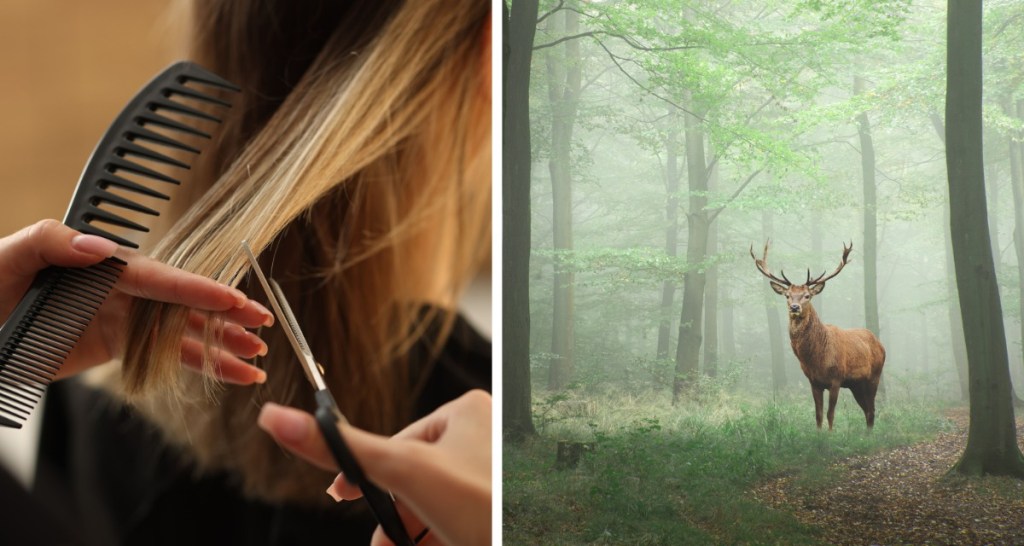
Every day, hair salons sweep countless hair clippings off their floors and toss them into the trash without much thought. But in parts of France, Belgium, and Luxembourg, those discarded strands are finding an entirely different purpose: helping forests grow.
French recycling company Capillum has developed a surprisingly effective way to reuse human hair by turning it into biodegradable mulch that protects young trees from hungry deer. The company collects hair from participating salons and transforms it into flattened fiber sheets that can be wrapped around vulnerable saplings.
What sounds unusual at first actually solves several environmental problems at once.
A second life for salon clippings
Hair salons generate an enormous amount of waste each year. Most clippings are simply thrown away, even though human hair is remarkably durable because it is made largely from keratin, a fibrous protein that breaks down slowly over time.
Capillum saw potential in a material most people never think twice about. The company accepts hair regardless of texture, length, color, or whether it has been dyed. Once gathered, the hair is fed into a machine that minces everything together into dense fiber sheets that can be laid around the base of trees. The process transforms something typically viewed as garbage into a practical tool for conservation efforts.
Many forests depend on saplings surviving long enough to mature and replenish the ecosystem. However, young trees often struggle in areas with large deer populations. Deer are known to chew on bark, especially during seasons when food is scarce. Because saplings have thin bark and delicate trunks, even small amounts of damage can stunt their growth or kill them entirely.
Foresters have historically relied on plastic fencing and tree guards to keep deer away. While those barriers can work well, they also create waste and require maintenance over time.
Capillum’s recycled hair mats offer another approach. The scent of human hair naturally discourages deer from getting too close to the trees, steering them toward other vegetation instead. The method protects saplings without harming wildlife.
A biodegradable alternative to plastic
Unlike plastic guards, the hair fibers gradually decompose and return nutrients to the soil. As the keratin breaks down, it releases nitrogen and amino acids that can support plant growth. That nutrient-rich quality is one reason some gardeners have long experimented with placing hair into compost piles or using it directly in garden beds. Knowing this, Capillum sells its eco-friendly hair mulch to home gardeners interested in more sustainable growing methods.
Human hair is more useful than most people realize
This is far from the first time Capillum has found creative uses for human hair. The company previously mixed hair with wool to help absorb pollutants from water because both materials naturally attract oil.
Around the world, scientists and environmental groups have similarly explored using recycled hair for oil spill cleanup, agricultural mats, and composting projects. Some studies have even examined whether hair fibers could eventually help create insulation materials or textiles.
All this to say: a routine haircut may not seem connected to forest conservation, yet thousands of discarded strands now helping protect young trees suggest otherwise. This is a brilliant example of humanity using creativity for good, and how making just one element of human life less wasteful can have a profound impact.
There are kitten lovers…and then there are Ricky’s grandparents. When Izzie Grass left her kitten, Ricky, with her parents for two weeks, she had no idea what was in store for her after she got him back. Not only had Ricky been well taken care of, but his adventures with his human grandparents were fully documented in a photobook created by Grass’ mother, which she titled “Ricky Goes to Gramma’s and Grampa’s.”
“The photo album that reads like a children’s book first went viral when Grass shared it on TikTok in 2020. Now, it has resurfaced again and people are clamoring for more riveting Ricky content after reading about how the kitten “helped Gramma do the dishes” and how “Cousin Jasper and Charlie ate most of” the pancakes Gramma made for him.
“I would die for Ricky, Gramma, and Grampa,” wrote one commenter.
“This is GOLD. I want to see ‘Ricky Learns to Drive.’” wrote another.
“My parents didn’t even put this much effort into making scrapbooks for ME,” shared another.
And apparently Grass isn’t the only one with pet grandparents who are a little extra. “My mom made a full year calendar of my dog after only watching her for two days,” a commenter wrote.
Grass told Newsweek that her mom told her she made the book because “that’s what she does,” adding, “She is known for creating very sentimental gifts.”
But Ricky almost didn’t make it at all
Grass also shared that the book almost didn’t get made because Ricky almost didn’t make it as a kitten. He was brought to the veterinary clinic where Grass worked when he was 9 weeks old to be euthanized.
The individuals who dropped him off reported that they found a kitten with broken legs and that was throwing up everything they tried to feed him,” she said. “I came back from my lunch early to care for this kitten and in the kennel was Ricky.”
As it turned out, Ricky had some birth defects and health problems that required specialized care, but he didn’t need to be euthanized. Grass took him home but needed a little time to prepare to give him the care he needed.
“My mom stepped up and offered to watch him for a couple weeks while I got a handle of my schedule,” Grass told Newsweek. “It was during this time that she created the book.”
The fact that Ricky had specialized care needs at the time makes Gramma’s photobook all the more endearing.
“He has made so much progress,” Grass told Newsweek. “His esophagus works significantly better, he has learned how to walk, climb and run, and he continues to help me raise other foster kittens. Ricky is very loved and lives the life he deserved to have.”
With a mom and grandparents like he has, it’s not a surprise.
About those unusual paws in the photos
Of course, the internet’s going to internet, and some people apparently looked at Ricky’s photobook a couple of years after the fact and complained that it was AI generated because of the way Ricky’s paws looked. However, as Grass shared in a video in 2024, those paws aren’t due to AI. They’re just Ricky’s real-life deformities that, ironically, make him appear AI-generated in the photobook. (It’s also worth mentioning that the photobook video came out well before AI-generated technology became available to the masses.)
He spent two weeks with grandma because I was starting college again as was scared of him being home alone. Mamaw had to be his nanny and make sure he didnt hurt himself. #cat#kitten#animals#pet#goldfishclub#radialhypoplasia
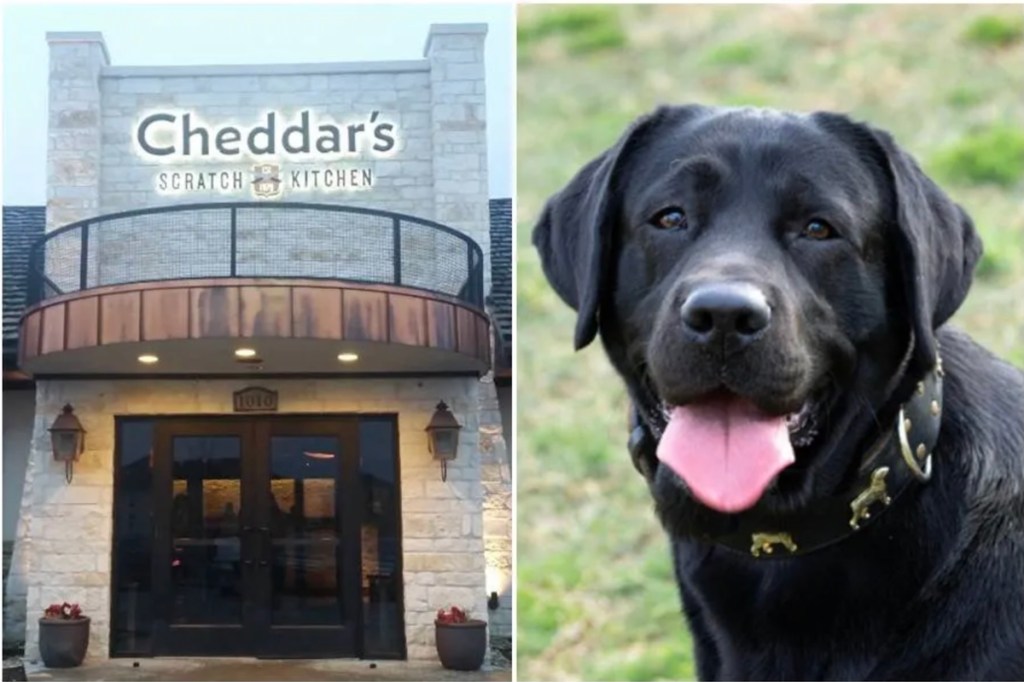
CousinHomer, a country musician in Missouri, faced the terrible decision to put down his 13-year-old dog, Bella, back in 2023, Bella, so he wanted her last meal to be something truly special: a “big, juicy steak.” The staff at the restaurant asked him what he wanted for sides, and CousinHomer said he just wanted the steak. “They told me it would be the same price with or without them, so I might as well get them. I explained to them that I was having my dog, Bella, put to sleep later that day, and I wanted her last meal to be a nice, juicy steak,” CousinHomer said in his video.
Five-finger breathing is a simple but powerful breathing technique that induces deep relaxation — and you can do just about anywhere! 🖐️ Unlike other types of breathwork, five-finger breathing is a multisensory experience where you concentrate on more than just your breath. You also focus on the movement and sensation of one hand touching another, slowly and with intentionality. This helps your brain enter a state of deep relaxation, which causes it to release endorphins.
It’s worth noting that Bella actually passed away in 2023, but it took Homer nearly two years before he felt ready to share the story publicly.
An incredible act of kindness
“When I showed up at the restaurant about 30 minutes later to pick up her food, the manager handed me the bag of food and said, ‘We are so sorry about your dog. This meal is on us.’ I really couldn’t believe it. It was so nice of them,” CousinHomer said. However, when he got home, he saw that they had done something even more special: the entire staff had signed a card that read: “Our deepest sympathy in the loss of your best friend. She’ll be waiting for you over the Rainbow Bridge.”
“So I just want to publicly say, thank you, Cheddar’s, for being so kind and thoughtful. It really meant the world to me,” CousinHomer concluded his video. But that wasn’t the end of the story. CousinHomer asked people to tag Cheddar’s in the post, so they know how many saw their act of kindness. Cheddar’s followed up with another act of kindness, which CousinHomer documented in a follow-up video.
After Cheddar’s was flooded with people tagging them in the story, they sent CousinHomer a branded fleece that he can wear like a snuggie. “May comfort wrap around you like a warm Honey Butter Croissant. Your Cheddar’s family is here for you, Cousin,” the company wrote in the comments.
Why the loss of a pet hurts so much
Losing a pet can be just as hard as losing a human loved one, but there is one thing that’s uniquely painful about putting down a pet. No matter how much we know we made the right decision, it still won’t stop us from ruminating over it.
“You do that because emotional pain hurts just like physical pain. And we are hard-wired to recognize pain as a teacher,” Sarah Hoggan, DVM, a veterinarian and pet loss grief advocate, said in a TED Talk. “Our body has reflexes that will pull our hand off a hot stove. We have pulled ourselves to safety even before we know the burn has occurred. Unfortunately, no such instant rescue mechanism exists for emotional pain. That means we need to study the events that led to the pain, to try to learn something from it and avoid it in the future.”
Ultimately, CousinHomer is going to be in a period of grief for quite a while, but it’s nice to know that there are a whole lot of people who recognized his pain and let him know that it was completely warranted to need some love after the death of a pet. At a moment when you have to make an incredibly difficult decision, having people understand your pain can make all the difference.
This article originally appeared last year. It has been updated.
Sixty-five years ago, Soviet cosmonaut Yuri Gagarin became the first human to make it into space and the first to experience what scientists now call the “overview effect.” This change occurs when people see the world from far above and notice that it’s a place where “borders are invisible, where racial, religious and economic strife are nowhere to be seen.”
Garan has spent 178 days in space and traveled more than 71 million miles in 2,842 orbits. From high above, he realized that the planet is a lot more fragile than he thought.
What Garan saw from up there changed everything
“When I looked out the window of the International Space Station, I saw the paparazzi-like flashes of lightning storms, I saw dancing curtains of auroras that seemed so close it was as if we could reach out and touch them. And I saw the unbelievable thinness of our planet’s atmosphere. In that moment, I was hit with the sobering realization that that paper-thin layer keeps every living thing on our planet alive,” Garan said in the video.
“I saw an iridescent biosphere teeming with life,” he continues. “I didn’t see the economy. But since our human-made systems treat everything, including the very life-support systems of our planet, as the wholly owned subsidiary of the global economy, it’s obvious from the vantage point of space that we’re living a lie.”
It was at that moment he realized that humanity needs to reevaluate its priorities.
“We need to move from thinking ‘economy, society, planet’ to ‘planet, society, economy.’ That’s when we’re going to continue our evolutionary process,” he added.
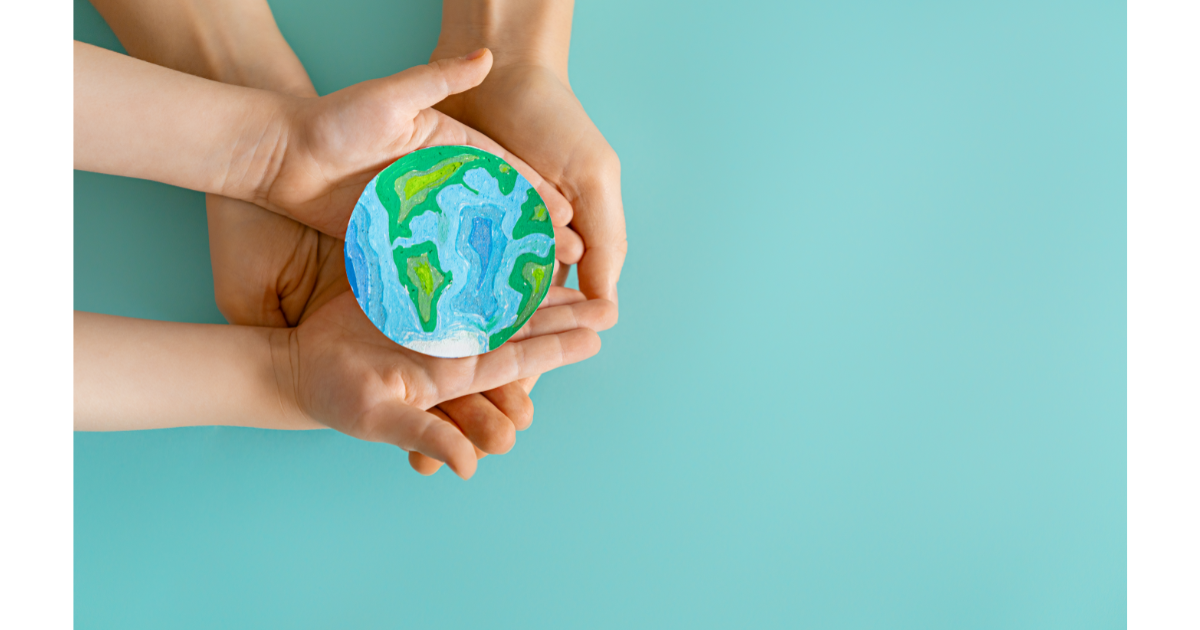
The earth is in our hands. Canva Photos.
Garan says that we are paying a very “high price” as a civilization for our inability to develop a more planetary perspective and that it’s a big reason why we’re failing to solve many of our problems. Even though our economic activity may improve quality of life on one end, it’s also disastrous for the planet that sustains our lives.
It’s like cutting off our nose to spite our face.
He wasn’t the only one moved by the view
Actor William Shatner, who spent years playing the iconic Captain James T. Kirk on the original Star Trek series, had a similar experience to Garan’s when he went to space for real in October 2021:
“It was among the strongest feelings of grief I have ever encountered,” Shatner wrote. “The contrast between the vicious coldness of space and the warm nurturing of Earth below filled me with overwhelming sadness. Every day, we are confronted with the knowledge of further destruction of Earth at our hands: the extinction of animal species, of flora and fauna … things that took five billion years to evolve, and suddenly we will never see them again because of the interference of mankind.”
“We’re not going to have peace on Earth until we recognize the basic fact of the interrelated structure of all reality,” Garan said.
And yet Garan still has hope for us
However dire the situation looks from the surface of Earth, the astronaut has hope that we can collectively evolve in consciousness and wake up and embrace a larger reality. “And when we can evolve beyond a two-dimensional ‘us versus them’ mindset, and embrace the true multi-dimensional reality of the universe that we live in, that’s when we’re going to no longer be floating in darkness … and it’s a future that we would all want to be a part of. That’s our true calling.”
This article originally appeared four years ago. It has been updated.
Dogs are toddlers in little furry bodies, or at least that’s how they behave sometimes. They constantly get into things they shouldn’t and act like they’re hyped up on a batch of Pixy Stix when they are excited about something. Their uncontrollable zoomies can have dogs crashing into walls, furniture, and people without a care in their tiny dog world.
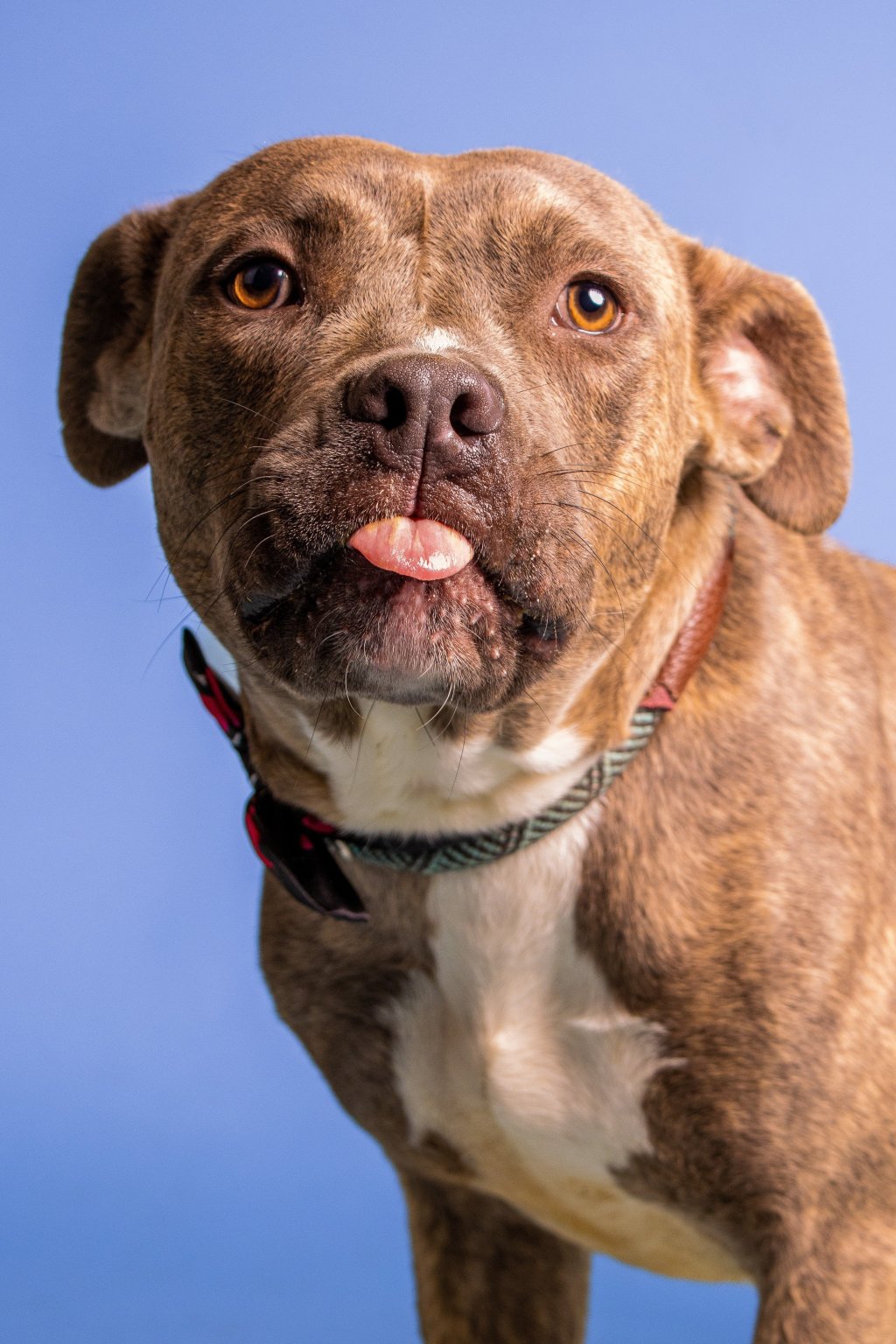
Turns out that the pittie has exquisite manners with his mother, Shauna. He loves cuddling with her and listens the first time he’s asked to do something, but as soon as mom goes to work, Bishop runs amock.
But Shauna doesn’t believe her sweet little dog could ever do anything as wild as grandma reports, which is exactly why grandma started recording Bishop’s hijinks. This is what seems to have led to an intervention with the hyperactive pit bull.
“We want to have a conversation with you,” Jayla says. “Because I’m noticing when mom is at work, your behavior is getting worse. You don’t listen when grandma says ‘drop it,’ you run.”
The intervention did not go as planned
Bishop Ace refused to make eye contact for much of the intervention, and when Grandma was done speaking, Shauna gave the obviously guilty dog scratches and denied that it was him causing the problem. Even with the video evidence, Bishop Ace is still his mama’s baby and can do no wrong in her eyes, so all of Grandma’s intervention efforts never work. But if you want to see some adorably hilarious “bad dog” shenanigans, you can check out the video from The Dodo below.
The comments are absolutely sending people
The commenters loved how Bishop interacts with his family, even if he is mischievous.
“I love this! The look on his face during the intervention is priceless! He looks over at his mama like, ‘I don’t know what this woman is talking about!’ When mama was holding him like a baby he was looking up at grandma like, ‘Just wait until she leaves!’” Andi wrote.
“I love how he acted like that wasn’t him in the video when Mom was looking at the phone and showing him how he was acting. This was just too hilarious, and it was so sweet how grandma was holding him and singing Amazing Grace, and he was so peaceful and relaxed,” KWeaver added.
“Love this video, especially the mock intervention. Grandma is awesome. Bishop just knows which play buttons to push,” Jenny wrote in the comments.
At the end of the day, Bishop Ace isn’t a bad dog, just a smart one. He knows exactly who he can push the limits with and who will hold the line, which, honestly, is more self-awareness than a lot of humans have. Grandma Jayla may never win the battle, but she’s clearly not giving up the fight. And as long as Bishop Ace keeps getting away with it, this family is going to keep the rest of us very entertained.
This article originally appeared three years ago. It has been updated.
Well, thanks to one person, we need wonder no more, at least about the what-they’re-seeing part.
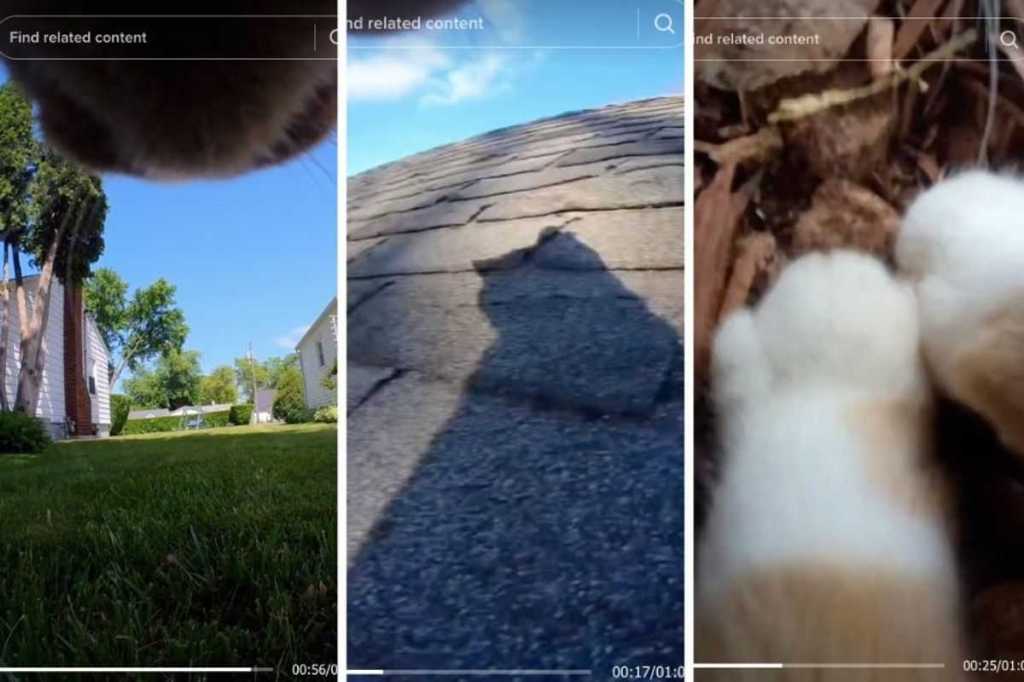
The TikTok channel Mr. Kitters the Cat (@mr.kitters.the.cat) gives us a cat’s-eye view of the world with a camera attached to Mr. Kitters’ collar. The result is an utterly delightful POV experience that takes us through the daily adventuring of the frisky feline as he wanders the yard.
In a video titled “Spicy cats,” which has accumulated tens of millions of views on TikTok, we begin with the cutest cat sneeze ever. Then we hear Mr. Kitters’ meow as we walk with him through the grass before the scene switches to a thrilling, yowling cat chase he witnesses across the yard (while tucking himself even more securely under the bush he’s in).
The best is seeing his kitty paws as he walks and then digs in the mulch. And there’s apparently something very exciting that needs to be pounced on right along a chain link fence.
The comments are as good as the video
The commenters made their delight known.
“I love how he saw the cat fight and was like that’s not my business today,” wrote one person.
“WHEN HE DIGS WITH HIS LIL PAWS,” declared another.
For those who can’t get enough, here is WAY more Mr. Kitters:
Why does this captivate so many of us?
It’s funny how something as simple as putting a camera around the neck of a cat can draw in tens of millions of people. We’re all so curious about the lives of the creatures we see every day, and the adorable quirkiness of cat behavior is a big part of why we keep them as companions in the first place. Seeing the world through their point of view is just one more way we can enjoy and learn about our pet friends.
This article originally appeared three years ago. It has been updated.
Bees can fly, but that doesn’t mean they don’t sometimes need a ride. In fact, massive colonies of bees and their beehives are often shipped around the country by truck to help pollinate crops. They’re a crucial cog in our food supply chain, and these commutes are critically important.
The rides, however, don’t come without their risks.
Truck carrying 480 beehives breaks down and begins to overheat
One such shipment was on its way through Utah, navigating a mountain pass near Salt Lake City, when the truck carrying hundreds of hives broke down.
The weather was hot, and without a running engine or airflow from the movement of the vehicle, the inside of the trailer was rapidly heating up.
Twenty-five million bees—tens of thousands per hive—were inside and were minutes away from dying.
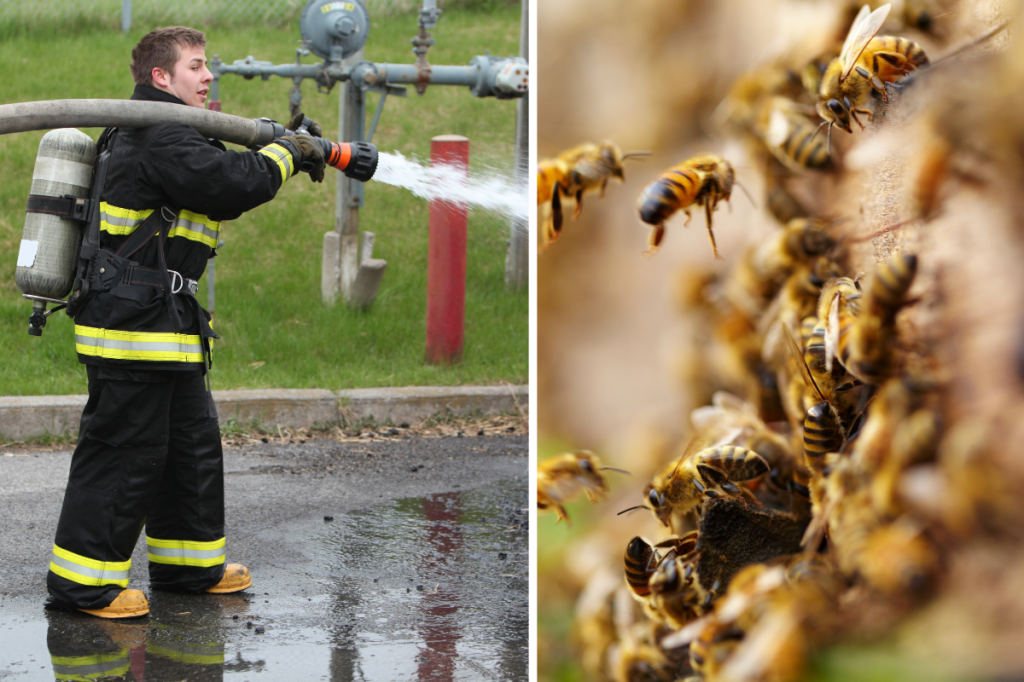
A mechanic arrived to work on the truck, but there was no telling how long it would take to get things moving again. Luckily, the Millcreek Fire Department and the Unified Fire Authority also happened to arrive. While they weren’t going to be much help getting the engine going again, they had a brilliant idea to help keep the bees safe in the meantime.
Firefighters drench the trailer with hoses to keep the bees inside cool
Quick-thinking fire authorities used their equipment to mist and spray the truck, keeping it cool in the hot sun.
One neat cooperative detail: no firefighters were stung during the operation. In the photos and footage provided by Unified Fire Authority, bees are clearly seen flying around outside the trailer. That’s because the breathable mesh keeps the hives and most of the colony inside, but the bees need airflow while the truck is moving, so many of them slip in and out during the journey.
In the end, the truck got moving again, and not a single bee—nor firefighter—was harmed.
Heartwarming story was almost a devastating loss
Pesticides and habitat loss have wreaked havoc on wild bee populations. Fair Planet notes that about 80% of flowering plants, including many fruits and vegetables, depend on pollinators like bees to reproduce. So while bees can sometimes be viewed as a nuisance or pest by humans, their presence is critical to the natural world around us—and our food supply.
Managed honeybee populations are doing better than wild ones, but the death of 25 million bees would still have been a significant loss. Not only would it represent a six-figure cost and be tragic in its own right, it would put the crops they were on their way to pollinate at risk.
Kudos to the quick thinking of the Unified Fire Authority and the Millcreek Fire Department, and to their willingness to help, even in unusual ways.
Many a canine lover would agree that all dogs add value to our lives. But let’s face it, Ollie takes it to a whole new level. In 2022, Adam Clark and Kim McGuire of Blackpool, England, originally bought little Ollie as a surprise for their daughter Alicia. However, it would turn out they were in store for a lovely surprise as well.
Meet Ollie, the world’s luckiest puppy
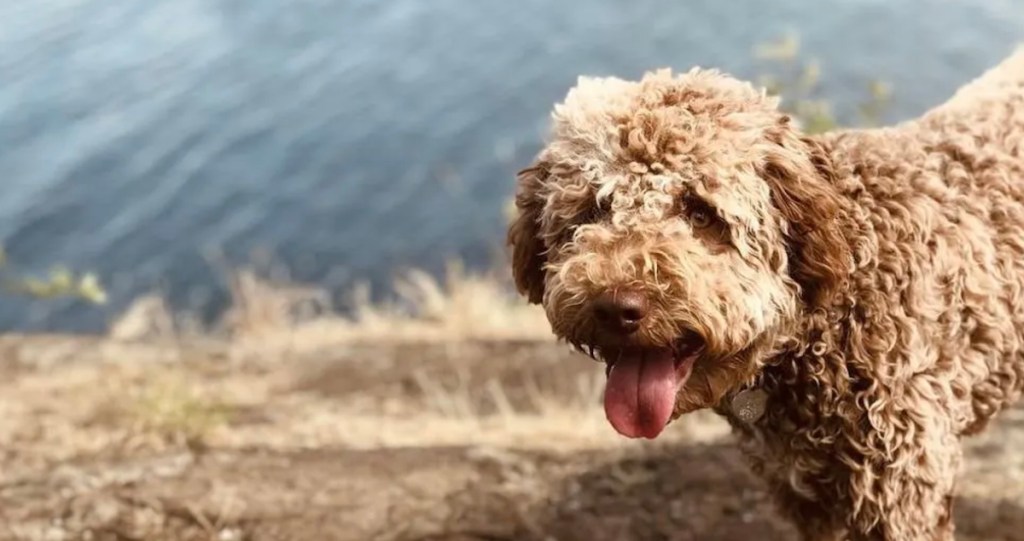
Ollie is much more than an adorable face. His breed, the Lagotto Romagnolo, once used its keen sense of smell to hunt waterfowl in the wet marshlands of Italy, according to Dog Time. Here’s an example of what a Lagotto Romagnolo looks like:
Pretty much a teddy bear on four legs.
These pups are also natural diggers, and nowadays the only dogs bred specifically to hunt for truffles. These talents came into play rather quickly when after only 10 minutes into his first family walk in the park, Ollie began to frantically dig into the soil.
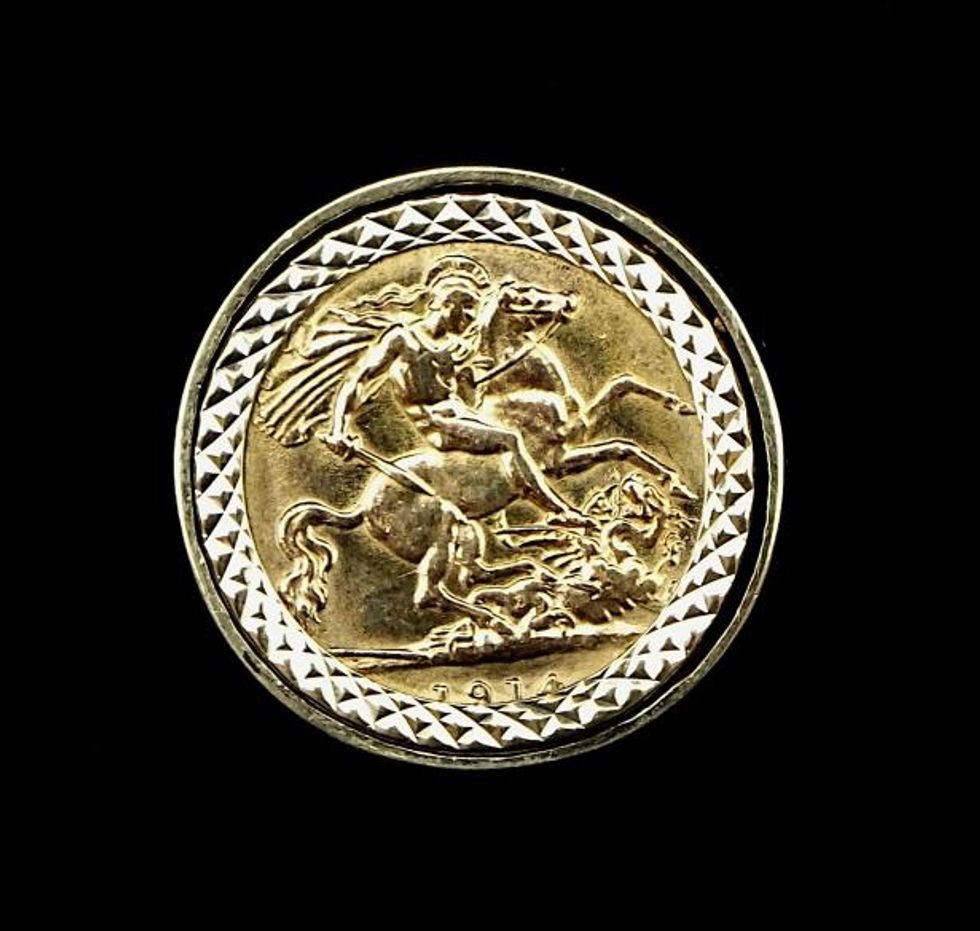
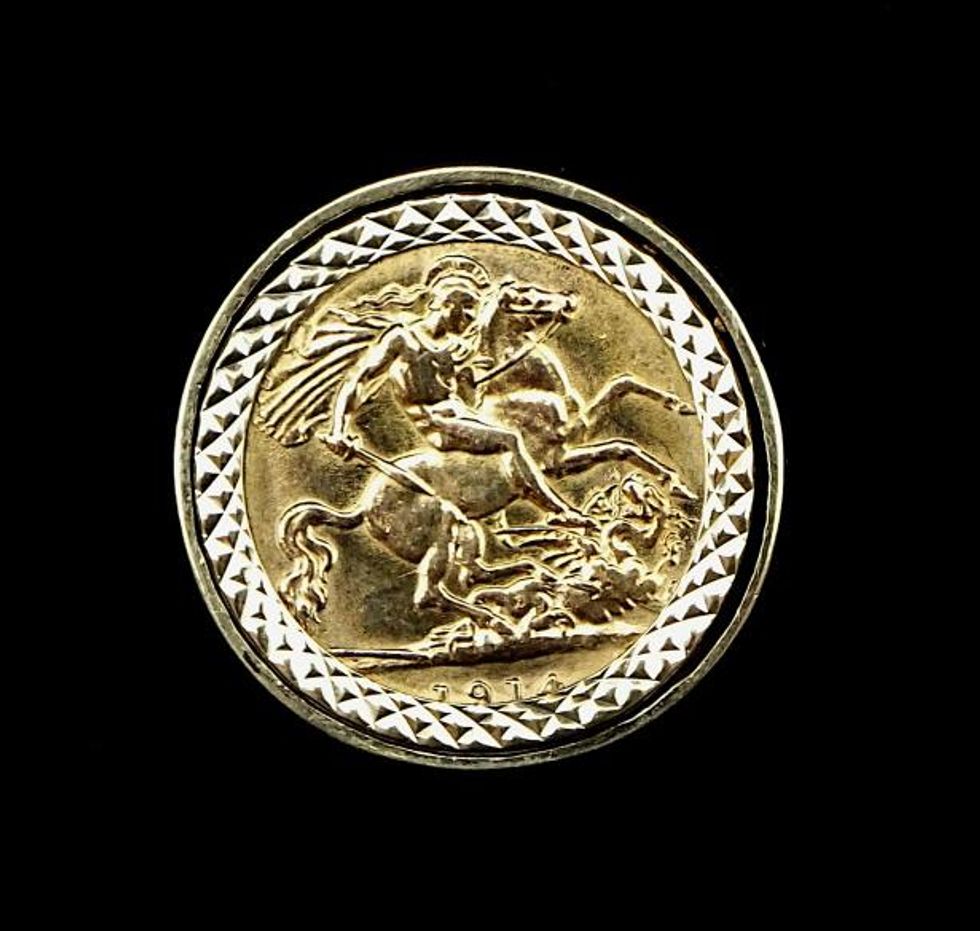
Much to everyone’s surprise, Ollie dug up what appeared to be 15 sovereign coins, meaning pieces of gold thought to date back to the 19th century. The gold sovereign was first minted under King Henry VII in 1489 and has been produced across multiple eras since.
Clark took the coins to be examined by a reputable gold dealer, who not only deemed the coins legitimate, but valued them to be £5,943.96, equivalent to $7,564. It’s not clear how much the family paid for Ollie, but it seems safe to say that they got their money back …and then some.
Though Ollie’s find is remarkable, Clark still finds his presence to be the ultimate gift. “The treasure is one thing, but the fact is, I’ve bought myself my very own gold hunter, and I cannot wait to take him out again,” he told The U.S. Sun. “He is obviously a very special pup, and I’m thrilled with what he brings to the table, quite literally!”
Lucky puppy digs up treasure trove of gold coins worth £6,000 on his first walk https://t.co/UPl6YqBaUM
While Lagotto Romagnolos work really well for finding truffles (and potentially 500+ year old gold coins), they also make for great companions. Dog Time adds that they are easily trainable, good with children, and their hypoallergenic coats keep allergies at bay, though they do require dedicated grooming. It’s a pretty even trade-off for their undying affection and easy-going attitudes. Especially if they happen upon a small fortune!
There’s no real telling what other trinkets Ollie might dig up. But one thing’s for sure, he’s making his family very happy, and that is priceless.
This article originally appeared four years ago. It has been updated.