
Remember Party City? In the early 2000s, it was the place to buy Halloween costumes, birthday party decorations, or helium balloons. Sadly, Party City filed for bankruptcy in recent years and closed the last of its stores in early 2025. The move took a lot of people who still enjoyed shopping there by surprise.
If it feels like Party City isn’t the only mainstay business Millennials grew up frequenting that’s shut down lately—and that’s because it’s not. Other big nostalgic chains that have all-but closed up shop in recent years include Toys R Us, KB Toys, Red Lobster, Joanne’s Fabrics, TGI Fridays, Hooters, Big Lots, Kmart, Sports Authority… the list goes on and on and on.
A lot has changed in recent years, certainly. The pandemic permanently altered our in-person shopping habits and, of course, more and more of us are shopping online. Why go to a store when Amazon can bring anything to your doorstep in just two days? That shift has made it hard on a lot of businesses that were popular in the early 2000s.

But Americans, collectively, didn’t just decide to stop going to stores and restaurants. In fact, younger generations surprisingly prefer in-store shopping to online.
So, why are Toys R Us and Party City gone? Why has Red Lobster’s Endless Shrimp finally come to an end? It would be an oversimplification to say these business failed and that time passed them by, an explanation that’s missing one crucial factor: Private equity.
Sometimes these business were in trouble before shutting down. Sometimes, they weren’t, or maybe could have adapted to modern times if given the chance.
David Lu, a former corporate strategist with Capital One, now makes informative TikTok videos where he breaks down complex historical and geopolitical topics in a way that anyone can understand. He recently tackled this exact problem.
Lu explains that there’s a lot of financial trickery involved but essentially the process (at its worst) goes something like this:
- Private equity firm wants to buy a business for a huge sale price
- That price is contingent on the business taking on massive loans and debt
- The private equity firm milks as much profit as possible from the business, by slashing costs and quality and driving up prices
- The business, saddled with unmanageable debt and a cratering reputation, eventually declares bankruptcy and closes its doors
- Private equity firm, owners, and CEOs make a fortune while stores close and workers lose their jobs
To make his point, Lu references the infamous case of senior living facility brand ManorCare. An essay in the New York Times explains exactly how selling to a private equity firm rapidly destroyed the company, and worse, hurt the seniors who lived there:
“In 2007, Carlyle—a private equity firm… bought HCR ManorCare for a little over $6 billion, most of which was borrowed money that ManorCare, not Carlyle, would have to pay back. As the new owner, Carlyle sold nearly all of ManorCare’s real estate and quickly recovered its initial investment. This meant, however, that ManorCare was forced to pay nearly half a billion dollars a year in rent to occupy buildings it once owned. Carlyle also extracted over $80 million in transaction and advisory fees from the company it had just bought, draining ManorCare of money.
“ManorCare soon instituted various cost-cutting programs and laid off hundreds of workers. Health code violations spiked. People suffered. The daughter of one resident told The Washington Post that ‘my mom would call us every day crying when she was in there’ and that ‘it was dirty — like a run-down motel. Roaches and ants all over the place.’”
A few years later, ManorCare filed for bankruptcy while the Carlyle firm made out like bandits.
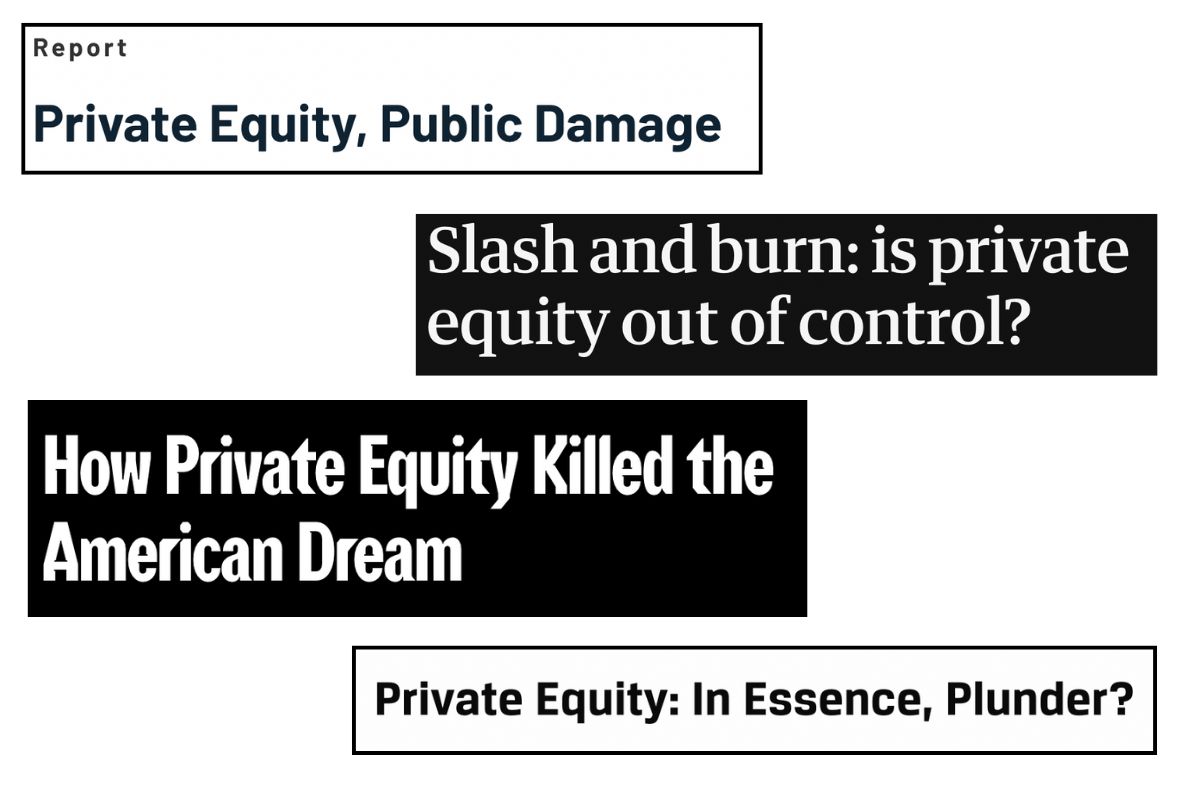
Party City is a perfect example of this same ruthless profit-seeking strategy in action.
CNN reported the company had a staggering $1.7 billion in debt as of 2023 before filing for bankruptcy. If that seems like a ridiculous amount of debt for a store that sells paper plates and balloons, that’s because it is. The founder of Party City later blamed private equity for the brand’s collapse.
Red Lobster has the same story. The investors tried to blame it on the high costs of Endless Shrimp, but the restaurant was never going to survive paying exorbitant rents to its private equity firm for buildings it used to own.
Toys R Us? Yep, you know the tale.
To be fair, private equity doesn’t ruin everything. In fact, some of America’s favorite institutions have been revived by the process when it works as intended.
Dunkin’ Donuts was on the brink in 2005 before private equity investments helped its resurgence. The firm then exited and Dunkin’ became public again. (Of course, now Dunkin’ is owned by private equity once again.)
Blackstone, one of the biggest private equity firms in the world, revived a near-dead Hilton hotel chain into one of the top hospitality brands.
Even Party City was doing just fine with private equity investments for about a decade.
The idea is that struggling but well-established brands can take an infusion of cash to reinvest in the business, along with having a lot of seasoned strategists come on board to right the ship. The private equity firm will make money in the process, of course, but ideally they will exit and leave behind a thriving business—not a debt-ridden husk.
Ultimately, the world will probably be OK without Red Lobster and KB Toys. But people need—and want—places to go, places that have been around for years that we’ve come to know and trust.
According to RetailBrew, “29% shoppers said they were ‘morally opposed’ to shopping at Amazon, but 85% ended up purchasing something there anyway,” in part due to a lack of other options.
Millennials and Gen Xers yearn for the days of walking around and touching things with our hands before buying them, talking to knowledgeable sales staff who could answer our questions, or having a sit down meal at a chain restaurant that didn’t cost a fortune (if it included unlimited shrimp, all the better). The Economist reports that malls are making a comeback—only, mainstays like Claire’s and Brookstone are dead (in large part because of… you guessed it).
It’s fun to imagine a world in which Radio Shack could have evolved to thrive in the world of smart phones, or where we could still get a cheap pair of shoes at Payless instead of being limited to what the local Target has in stock.
That kind of thing is unlikely to happen while the private equity problem goes unchecked.
Bipartisan lawmakers have been eyeing tighter regulations on private equity firms for a while now, although progress is slow.
Long-established brands bringing in outside help and cash to adapt to the modern age could be a good thing, but there needs to be mechanisms in place that keep all of our favorite businesses from being bled dry.
But there’s good news for the nostalgic among us: Toys R Us, for its part, is attempting a comeback this year. So is Payless. Here’s a chance for Millennials to show that those nostalgic favorites never should have gone away in the first place.