Steal these 4 questions a 36-year-old happiness researcher asks himself before worrying

“If I’m not feeling better, then it’s quite serious.”

man, writing, scientist, doctor, wellbeing
Photo credit: CanvaDr. Michael Plant developed a checklist for wellbeing.

Whether you’re stuck in a slump or having trouble finding motivation at work, when melancholy strikes, there’s nothing in the world that more appealing than lying in bed for hours. But what if there were a simple tool, like a checklist, that could help pinpoint the reason you’re feeling so glum?

Meet Michael Plant, a 36-year-old global happiness researcher at the Happier Lives Institute, a unique nonprofit that “connects people and organizations together to fund happiness and improve wellbeing around the world.” He’s also a postdoctoral research fellow at Oxford University’s Wellbeing Research Centre, which is responsible for publishing the world’s foremost annual publication on wellbeing, the World Happiness Report. To put it plainly, the man knows how to feel good.

During an interview with CNBC, Plant shared his wisdom: “I have this mental checklist I run through that I write down. So if I’m in a bad mood, I check it,” he explained.

https://youtube.com/watch?v=-MJBzut6cF4%3Fsi%3DoUOB8nOmDjk_v_Gl


“Have I eaten something? Have I left the house? Have I spoken to someone? And have I exercised? Once I’ve run through those four, if I’m not feeling better, then it’s quite serious.”

Could finding joy really be that simple? The beauty of his checklist lies in its simplicity: by addressing the basic physical and social needs of our bodies first, we might be able to bypass the rushed, hasty conclusions that almost always lead to nowhere. Let’s breakdown each question and why they’re so essential to overall wellbeing.


Question #1: Have I eaten something?

eating well, nutritional psychiatry, diner, meals, food
Eating the right foods is crucial for mental health. media3.giphy.com

Our bodies need fuel. A statement that may feel as obvious as “the sky is blue,” but hunger has an enormous impact on our moods and cognitive function. There’s even an entire discipline dedicated to researching the link between what we eat and mood disorders, like depression and anxiety, called “nutritional psychiatry.”

In a study published in the Journal of the Missouri State Medical Association, researchers found that several nutritional deficiencies, such as vitamin B12, B9, and zinc, can cause depression and dementia-like symptoms, including low mood, fatigue, cognitive decline, and irritability.

“Like an expensive car, your brain functions best when it gets only premium fuel. Eating high-quality foods that contain lots of vitamins, minerals, and antioxidants nourishes the brain and protects it from oxidative stress… which can damage cells.”
Dr. Eva Selhub for Harvard Health.

Luckily, you don’t need to seek out expensive supplements or fancy treatments to get back on track.

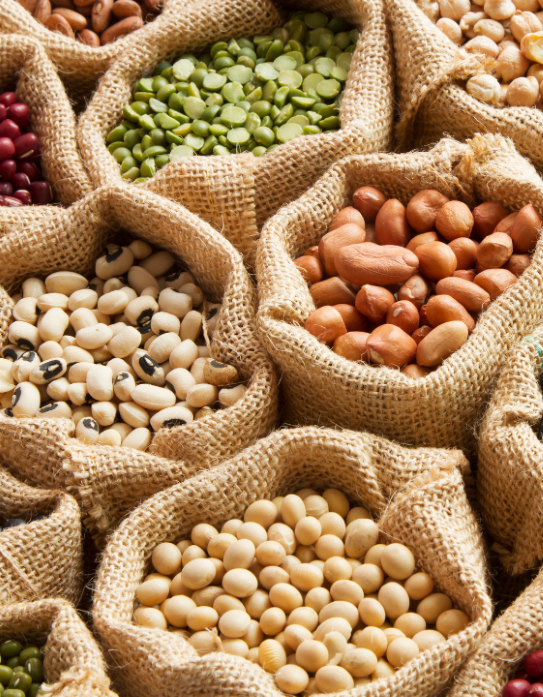
Vitamin B9, also known as folate or folic acid, naturally occurs in “super” foods like dark leafy greens (kale, spinach, collard greens), legumes (lentils and beans), and nuts and seeds, Similar to B9, zinc-rich foods include shellfish, eggs, red meat, and dairy products.

For an extra bump in Vitamin B12, look to animal products like red meat, chicken, milk, eggs, dairy, and fish. Vegans, however, must be extra vigilant: Stephen Walsh, a Vegan Society Trustee, warns that to avoid deficiencies, vegans must eat fortified foods found in select plant milks and breakfast cereal or take supplements.

beans, legumes, healthy, vitamins, B9
Legumes, like beans and lentils, are super foods and chockful of Vitamin B9. Photo credit: Canva


Question #2: Have I left the house?

Exposure to the outdoors is central to Plant’s daily routine. And for good reason: a groundbreaking study published in Scientific Reports indicated that a growing number of epidemiologists are encouraging people to embrace natural environments (think beaches, parks, and woods) on a more regular basis, due to their massive health benefits.

The same study found that spending at least 120 minutes per week in natural environments–just two hours!–significantly lowered cortisol levels, blood pressure, and mental fatigue, while also improving overall mood and cognitive performance: a true win/win.

woman, walking, outdoors, nature, mood
Spending time in nature for at least two hours a week is great for overall wellbeing. media4.giphy.com

If you, like many others, struggle with getting outside enough, start small. Try eating lunch outside, or take a phone call while walking around the neighborhood. Every moment counts, and even a short five-minute stroll outside could help elevate your mood and reduce stress.
jeff goldblum, talking, social interaction, connection
There's an innate need for human connection. media0.giphy.com

Question #3: Have I spoken with someone?

Plant’s third question on his mental checklist recognizes the innate, human need for social connection. In the longest-running study on happiness to date, over 700 people from across the world allowed scientists to monitor and examine their lives and health records for 85 years. It was the Harvard Study of Adult Development, and researchers found that the key to living a long, happy, and healthy life is lies in nurturing your relationships: spouses, family members, friends, and even your acquaintances.

“The surprising finding is that our relationships and how happy we are in our relationships has a powerful influence on our health. Taking care of your body is important, but tending to your relationships is a form of self-care too. That, I think, is the revelation.”Dr. Waldinger, the psychiatrist who directed the Harvard study.

Plant echoes this, recommending: “Branch out: Do you have weaker ties with people who you see every now and then, who make you feel like part of a community? You have to actively work to form social bonds.”


Question #4: And have I exercised?

Why is Plant’s final question about exercise? It’s because the link between your physical health and mental health are inextricably tied. If one falters, so does the other.

Research on the relationship between exercise and depression found that regular physical activity “releases endorphins, boosts neurotransmitters (serotonin, dopamine), and can match the efficacy of psychotherapy and pharmacotherapy for mild-to-moderate depression.”
 Hikes, people walking, mental health, outdoors, exercise
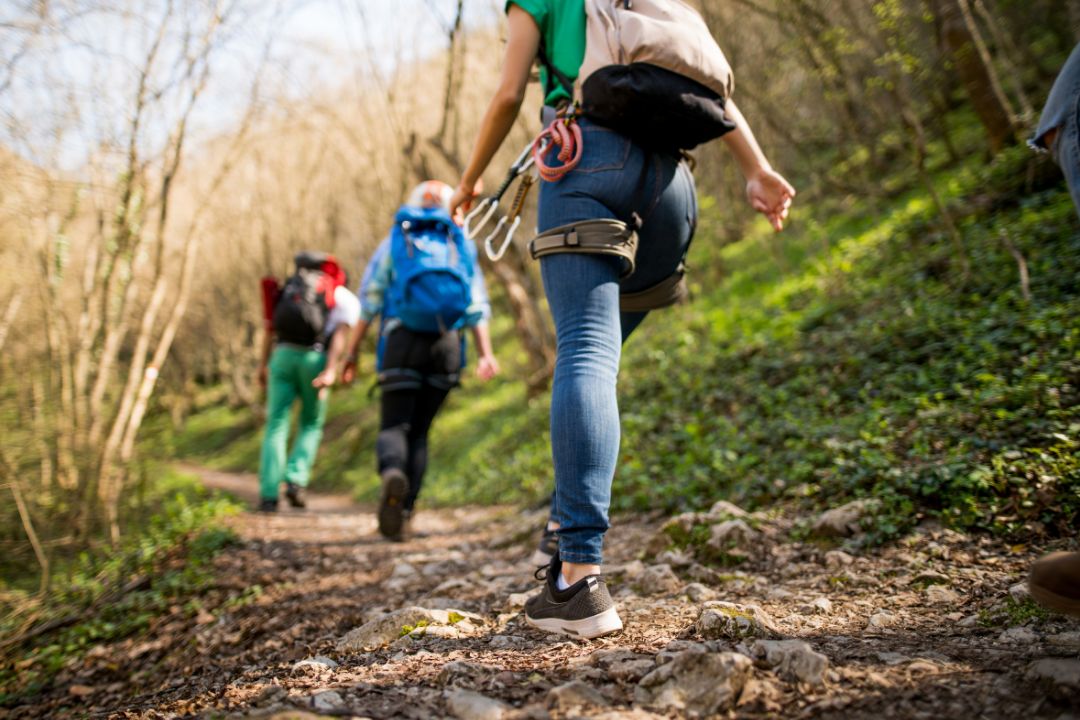
Even a simple hike, no matter what the pace, is effective when combatting feeling bad. Photo credit: Canva

That doesn’t mean you have to be Michael Phelps or do Olympic-level training just to feel good. A slow-paced hike on your favorite trail is just as effective as training for a triathlon when it comes to mental wellbeing.

Even just 11 minutes of moderate exercise per day can change your life: it reduces all-cause mortality (death in general) by 23% and lowers the risk of cancer by 7%.

Feel like an impossible task? Try incorporating a few low-effort strategies into your daily life:

  • Taking the stairs when possible
  • Intentionally park further away, or get off the train or bus a stop early
  • Walk during your lunch break
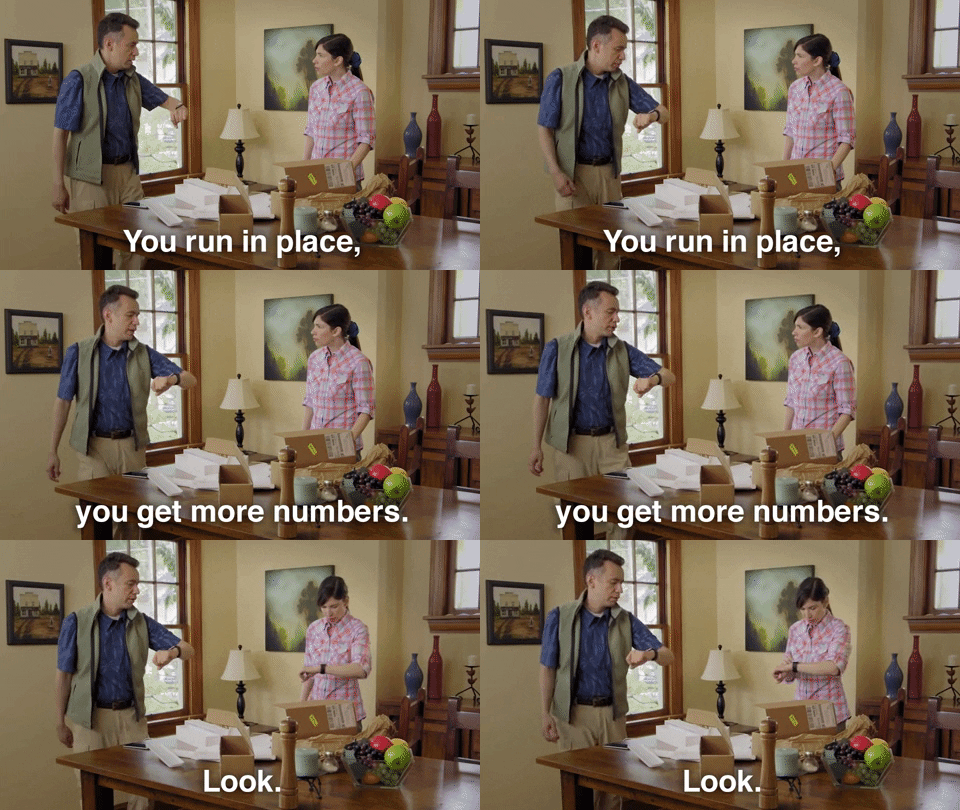
  • Use a step tracker to stay aware, either with an app or a physical pedometer, like this vintage digital one that fits in your pocket.

Walking, pedometer, mental health, physical health, wellness
Tracking your steps can help motivate you and keep you motivated. media0.giphy.com

Dr. Michael Plant’s four-part checklist may be simple, but aren’t many of the best things in life? This useful blueprint maximizes daily happiness—and quells any fears that something might be seriously wrong with us.

“I don’t think that’s reasonable,” he says at the end of the interview regarding “good vibes only” culture. “We should try for good vibes, mostly.” Straightforward and practical, the next time you’re feeling out of control, consider Dr. Plant’s sage four-question checklist.

  • Richmond hospital’s 73-year-old ‘baby cuddler’ whispers these 6 words into every newborn’s ear
    Photo credit: CanvaBaby cuddling is a pretty sweet volunteer gig.
    ,

    Richmond hospital’s 73-year-old ‘baby cuddler’ whispers these 6 words into every newborn’s ear

    He calls his volunteer baby cuddler job “the best gig I’ve ever had.”

    Volunteer work is often rewarding, but few volunteer gigs are as delightfully enjoyable as baby cuddling. Maternity wards around the country train baby cuddlers who provide human comfort for newborn babies in nurseries and neonatal intensive care units (NICUs).

    One Richmond, Virginia, man shared with WTVR News why he shows up at Children’s Hospital of Richmond at VCU every Tuesday and Thursday to hold babies. Dave Whitlow, 73, has been a baby cuddler for eight years, calling it “the best gig I’ve ever had.”

    Baby cuddling involves more than just holding babies

    infant, newborn, NICU, baby cuddling
    NICU babies need specialized care. Photo credit: Canva

    Cuddling babies in the NICU is delicate work. Whitlow puts on a gown and gloves before picking up the babies, who can sometimes weigh as little as two pounds. He’s been trained to watch the monitors while cuddling them. If a baby’s oxygen saturation dips, they may need to be repositioned.

    Whitlow, a retired local government manager, also checks with the nurses to see what a baby’s specific needs are.

    “I ask the nurse, ‘Tell me. Tell me what this child is receiving. What kind of treatment? Is there anything special I need to know about it?’” the father of two and grandfather of three told WTVR.

    But perhaps the best part of Whitlow’s time with the dozen or so babies he cuddles each week is what he whispers in their ear: “Grow strong, grow smart, grow kind.”

    That’s really what he wants from people in general, he said.

    Baby cuddling is often a great way for retired people to volunteer, as it’s not too physically demanding.

    @worthfeed099

    Charity never failith ❤️ ❤️Lyn Harris, an 80yo Vietnam Veteran, spends his free time comforting babies. He’s part of the NICU Cuddler Program at St. David’s Medical Center in Austin. He’s says he’s happy to help the staff and parents. Lyn says it’s very rewarding and he’ll help the cuddles coming for as long as he can.❤️ Credit to @stdavidshealthcare/IG #children #hospital #childrenshospital #volunteer #love

    ♬ original sound – Worth feed

    How do you become a baby cuddler?

    If baby cuddling sounds like a dream volunteer opportunity, check with your local hospital to see if it has a program. Some hospitals have volunteer coordinators you can speak with or sections on their websites for volunteers.

    Though volunteer requirements differ from place to place, you can likely expect:

    • age requirement (often a minimum age of 18 to 21)
    • commitment of a certain number of hours per week over a minimum time period (such as a year)
    • personal interview
    • background check
    • health screening, including immunization verification and updated flu vaccines
    • orientation and training

    Baby cuddlers serve an important purpose in infant care

    Cuddling a baby may be beneficial for the cuddler, but it genuinely helps the infants as well. One study found that the length of stay in the NICU for newborns with Neonatal Abstinence Syndrome was six days shorter for babies who were part of a volunteer baby cuddling program. And according to Intermountain Healthcare, research shows that human touch helps a baby’s brain and body develop. Short-term and long-term benefits of positive touch for babies include increased stability in vital stats, faster weight gain, shorter hospital stays, better pain tolerance, improved sleep, stronger immune systems, and more.

    Baby cuddling truly is a win-win volunteer experience, especially when you’re someone who whispers words of strength, wisdom, and kindness in babies’ ears.

  • Blue Zone expert shares why partying all night isn’t decadent, it’s a key to longevity
    Photo credit: CanvaPeople enjoying a house party.

    In American culture, which still carries a hint of Puritanism from its early years, excessive partying can be seen as hedonistic, immature, and unhealthy. Party people are often criticized for being undisciplined, directionless, and irresponsible with their money.

    Dan Buettner, a National Geographic fellow and expert on Blue Zones, says that going out and dancing until the crack of dawn is good for us and can even help us live longer. He learned the power of partying through his research on Blue Zones, five regions of the world where people live longer and have the greatest chance of reaching 100.

    The five Blue Zones are:

    • Ikaria, Greece
    • Loma Linda, California 
    • Nicoya Peninsula, Costa Rica
    • Okinawa, Japan
    • Sardinia, Italy

    “So in America, we tend to associate partying with decadence. But in the Blue Zones, partying is actually a longevity hack,” Buettner said in an Instagram video. “Why? Because when people get together for celebrations in the Blue Zone, they’re dancing. It can be an all-night dance party where they’re getting great physical activity. They’re remaking social bonds that exist throughout the village, and they last for years.”

    Buettner adds that in many Blue Zones, people don’t just party to hang out with their friends; they also help their communities.

    “In Icaria, for example, people donate all the food and the wine. The partygoers pay for that food and wine, but the proceeds all go to a school or to build a bridge the village needs or to a family that’s down on its luck,” he said. “So it’s this beautiful, virtuous circle. People get physical activity, build their connections, and help others. That’s what builds a Blue Zone, and that is the foundation to longevity.”

    dancing, party, ocean view, woman jumping, chef's hat
    People enjoying a dance party. Photo credit: Canva

    What are the “Power 9”?

    According to Buettner, there are nine common denominators across the five Blue Zones, and their party habits satisfy four of them:

    Move Naturally

    Dancing and milling about socializing is practical exercise. “The world’s longest-lived people don’t pump iron, run marathons, or join gyms. Instead, they live in environments that constantly nudge them into moving without thinking about it.”

    Downshift

    A party is a great way to de-stress after a hard week. “What the world’s longest-lived people have that we don’t are routines to shed that stress.”

    Wine At 5

    There’s nothing wrong with having a drink or two; in fact, it may help with longevity. “People in all Blue Zones (except Adventists) drink alcohol moderately and regularly.”

    Purpose

    Having a party that supports the community gives people a sense of purpose. “Knowing your sense of purpose is worth up to seven years of extra life expectancy.”

    partying, club, dancing
    People in the club. Photo credit: Canva

    The remaining “Power 9”

    The remaining “Power 9” includes:

    • 80% Rule (eating smaller meals)
    • Plant Slant (eating a lot of vegetables and beans)
    • Belong (having a faith-based community)
    • Loved Ones First (centenarians in the Blue Zones put their families first)
    • Right Tribe (strong social networks)

    Buettner’s video asks us to rethink what’s really going on when people go out to party. On the one hand, it can look decadent, but on the other, we’re building stronger social connections, getting some exercise, and enjoying a few drinks—which may help us live longer.

  • Love spicy food? Research shows it could reduce your risk of death by 25%.
    Photo credit: Navin Rajagopalan/FlickrBuffalo wings from the famous Anchor bar.

    American food doesn’t have a reputation for being very spicy. But if things keep going the way they have over the past 20 years, that could change. America is going through a spicy renaissance that is hard to miss at fast-casual restaurants, drive-thrus, and in the snack aisle.

    As of 2025, 19 out of every 20 restaurants in the United States offer at least one spicy item. Frito-Lay now sells at least 26 varieties of Flamin’ Hot snacks, and as of last year, more than half of Americans were likely to buy an item listed as “spicy,” compared to 39% in 2015.

    While this massive shift in American tastes sounds like it is bound to cause more pain than pleasure, research suggests the opposite. In fact, multiple studies associate eating spicy food with living a longer life. A 2025 study published in the Chinese Medical Journal found that people who ate spicy food at least once a week had a lower risk of vascular disease than those who rarely or never ate it.

    A 2017 study from Larner College of Medicine at the University of Vermont found that Americans who ate hot red chili peppers had a 13% lower risk of death. Here is the big one: In 2020, research presented at American Heart Association Scientific Sessions, using data from more than 570,000 people, found that those who regularly consumed chili peppers had a 26% lower risk of death from cardiovascular disease and a 25% lower overall risk of death.

    spicy food, hot sauce, mango hot sauce, hot food, peppers
    Bottles of hot sauce. Photo credit: Dominik Gryzbon/Pexels

    The studies show that eating spicy food is associated with greater longevity, but they have yet to pinpoint a direct cause. Correlation is not causation, so other lifestyle factors could be involved. However, capsaicin, the compound that gives peppers their heat, has been found to have numerous health benefits that may directly affect longevity, particularly heart health. Plus, it binds to receptors throughout the body, so its greatest benefits may yet be discovered.

    According to Mayo Clinic, capsaicin has been found to increase the body’s ability to burn calories. It is also known to fight low-grade inflammation, which may contribute to heart health. One study found that capsaicin significantly reduced risk factors in adults with low HDL cholesterol levels. 

    indonesian food, sambal, hot food,
    Indonesian sambal. Photo credit: Fadli Octora Channel/Pexels

    “Chili peppers have many life-extending benefits and can be used in many meal preparation strategies,” Dr. Philip Goglia told Your Tango. “Capsaicin, which can be found in chilies, has been shown through past studies to have antibacterial, anticarcinogenic, and anti-diabetic properties. Additionally, it can reduce cholesterol levels in obese individuals.”

    In a world where things that taste good are often bad for your health, this is great news for people who love food with a kick. It is a great excuse to carry a little bottle of Tabasco wherever you go. If you are not into spicy food but want the health benefits of capsaicin, take it slow by trying a little spice here and there, and you may build a tolerance. Before you know it, you could be graduating from mild chicken wings to Molten Lava Atomic Inferno sauce and cruising down the road to longevity.

  • A stylist noticed a subtle change in client’s hair and immediately asked if she was pregnant
    Photo credit: CanvaA hairdresser takes a photo of her client's hair.
    ,

    A stylist noticed a subtle change in client’s hair and immediately asked if she was pregnant

    The science behind what she spotted in her client’s hair is genuinely fascinating.

    Beth Lunn was doing what hairstylists do: examining a client’s hair, moving pieces up and checking the texture and color. Then she stopped. She picked up another section. Looked closer. And then, without any prior conversation about it, asked her client, “Are you pregnant?”

    The video she’d been recording for her Instagram page, @honeylunnhair, cut off there. The client, later identified as Chanelle Adams, laughed nervously and kept asking, “What? Why?” Lunn asked again. Adams repeated, “Why?” A few rounds of that, and then Adams looked straight at the camera and said, “Not in the video,” before Lunn ended the recording.

    Within three days, the clip had reached 126 million views and 5 million likes, with one question dominating every comment section: how on earth did she know?

    The answer, it turns out, is rooted in real biology. Lunn followed up with a second video after being flooded with questions, sharing photos of a client who was five months postpartum and walking through the science. As she explained it, “hormonal change causes an increase in estrogen and progesterone, which can alter the hair’s pigment (melanin).” She was careful to note that results vary from person to person, and that there is no “scientific evidence” that coloring one’s hair while pregnant causes harm to the baby, though she leaves that decision to her clients.

    The hormonal explanation holds up. According to experts at BehindTheChair.com, elevated estrogen and progesterone during pregnancy can prolong hair growth cycles, change density, and shift the way hair looks and feels entirely. Texture, color, and even how it takes dye can all change.

    On the question of coloring specifically, the NHS notes that most research shows it’s safe to dye or color your hair while pregnant. The chemicals in permanent and semi-permanent dyes could cause harm, but only in very high doses, and the amount absorbed through the scalp during a normal appointment is very low. Still, many people choose to wait until after the first 12 weeks, when the risk is lower. Worth knowing: if you’re in your second or third trimester, your hair may react differently to color than it normally would.

    Commenters who watched the original video had their own theories about exactly what Lunn saw. @nicole.marie44 wrote, “Your hair tells you so much about your health! She probably saw banding in her hair, and that is common with pregnancy.” @asmaiel_soulvane put it simply: “If she could tell someone is pregnant from their hair. She’s worth the money hands down.”

    Lunn hasn’t revealed exactly what visual cue tipped her off, which probably explains why people keep watching.

    You can follow Beth Lunn (@honeylunnhair) on Instagram for more entertaining and hair-related content.

  • The heartbreaking reason why this man is running marathons with a 55-lb fridge strapped to his back
    Photo credit: theftdborthers/Instagram (used with permission)Jordan Adams is running with a fridge to raise awareness of dementia.

    Among the thousands of runners participating in this year’s London Marathon, one figure stood out in a way that was impossible to ignore. As 30-year-old Jordan Adams completed the race with a 25-kilogram (55-pound) fridge secured to his back, heads turned at every mile.

    Yes, it was unusual, but the heartbreaking reason behind it gave the moment a depth that stayed with those who witnessed it.

    Carrying more than weight

    Adams took on the challenge to bring attention to frontotemporal dementia, a condition that has shaped his family’s life for years. His mother, Geraldine, was diagnosed in her 40s when Adams was a teen, and died after living with the illness for six years. Since then, multiple relatives have also been lost.

    He and his brother Cian later learned they both carry the same genetic mutation.

    “I am a carrier. I have a 99.9% chance of getting familial FTD. It’s not a matter of if. It’s a matter of when,” Adams told the BBC, according to the Bristol Post. “And I just want do as much as I can in the time that I have to help those living with dementia, those impacted by it, so that I leave this world, hopefully in a better place when dementia does take my life.”

    The fridge was never about pure spectacle. It was meant to represent something less visible but viscerally felt nonetheless.

    “Because that’s what it feels like sometimes – like you’re carrying something heavy that no one else can see. I’m doing this to make dementia visible,” Adams said, according to LAD Bible. “But more than that… to show you that whatever you’re carrying, you don’t have to carry it alone.”

    A moment shared with thousands

    Running a marathon under normal circumstances demands months of preparation. Doing so with added weight required an even more careful approach, from building strength gradually to repairing equipment when it failed during training.

    Still, it was the atmosphere on race day that left the strongest impression. Cheers from the crowd helped carry him through the most difficult stretches, turning an intensely personal mission into something shared by many.

    “Honestly, it felt like the whole of London was with me and I’ve never experienced anything like that. I probably never will [again] in my life,” Adams recalled. 

    What comes next

    The finish line in London marked the start of another challenge. Within hours, Adams traveled to begin a 32-day run across Ireland, completing a marathon in each county alongside his brother.

    Beyond raising awareness, Adams shared that the “FTD Brothers” had an additional goal: “to try and raise a million pounds before we die of dementia.” This money would go toward research and provide support for families affected by the illness. 

    “We’re on a mission because we have a clock kind of ticking against us, and we want to make as much of a difference in the next 10, 15 years that we have and the time that we have left,” Adams said.

    Choosing how to move forward

    Living with that knowledge hasn’t been easy. Adams has spoken openly online about the emotional toll of his diagnosis, including periods of depression and uncertainty about the future. What helped him through it most was the encouragement he received from those around him. He now aims to provide that kind of hope to others facing similar realities.

    “Losing my mum the way I did changed everything,” he told the Irish Examiner. “Now being diagnosed myself, I had a choice and I chose to do something that shows life doesn’t stop here.”

    How to help the mission

    Donations to the FTD Brothers’ GoFundMe have already climbed rapidly as more people hear their story. 

    If you want to help, you can donate directly to the FTD Brothers’ GoFundMe page here. Every contribution, no matter the size, supports dementia research and resources for families facing the same diagnosis.

  • Doctor explains how to accurately predict your longevity with simple at-home test
    Photo credit: via Pexels A woman sitting cross-legged on a yoga mat

    Death: It’s hard to talk about, and sadly, even harder to avoid. That’s why everyone wants to know how long they will live and there are many indicators that can show whether someone is thriving or on the decline. But scientists have yet to develop a magic formula to determine exactly how long someone should expect to live. Which, let’s be real, is probably a good thing. Knowing exactly how much time you have left to enjoy your life could cause a lot of anxiety, to say the very least.

    NBC News medical contributor Dr. Natalie Azar appeared on the TODAY show on March 8, 2023, to demonstrate a surprisingly simple test that may predict how long someone aged 51 to 80 has to live. The test is called the sit to stand test, also known as the sit-rising test or SRT, and it takes less than a minute to perform.

    How to take the sit to stand test

    The test is pretty simple. Go from standing to sitting cross-legged, and then go back to standing without using any parts of your body besides your legs and core to help you get up and down. The test measures multiple longevity factors, including heart health, balance, agility, core and leg strength and flexibility.

    You begin the test with a score of 10 and subtract points on your way up and down for doing the following:

    Hand used for support: -1 point

    Knee used for support: -1 point

    Forearm used for support: -1 point

    One hand on knee or thigh: -1 point

    Side of leg used for support: -1 point

    Two studies, 13 years apart, came to the same conclusion

    A 2012 study published by the European Society of Cardiology found a correlation between the SRT score and how long people live. A follow-up study published in 2025 in the European Journal of Preventive Cardiology further confirmed the SRT as a strong predictor of both natural and cardiovascular causes of death, reinforcing the original findings.

    The study was conducted on 2002 people, 68% of whom were men, who performed the SRT test and were followed by researchers in the coming years. The study found that “Musculoskeletal fitness, as assessed by SRT, was a significant predictor of mortality in 51–80-year-old subjects.”

    Those who scored in the lowest range, 0 to 3, had up to a 6 times greater chance of dying than those in the highest scores (8 to 10). About 40% of those in the 0 to 3 range died within 11 years of the study.

    What does your score actually mean?

    Azar distilled the study on TODAY saying: “The study found that the lower the score, you were seven times more likely to die in the next six years.”

    “Eight points or higher is what you want,” Azar said. “As we get older, we spend time talking cardiovascular health and aerobic fitness, but balance, flexibility and agility are also really important,” she stressed. A score of eight or nine means you’re allowed to roll forward onto your knees and then rise, which a lot of people will find more comfortable. If you can rise that way, you’re still in a pretty good spot health wise.

    One should note that the people who scored lowest on the test were the oldest, giving them a naturally elevated risk of death.

    Dr. Greg Hartley, Board Certified Geriatric Clinical Specialist and associate professor at the University of Miami, told the Atlanta Journal-Constitution that we should take the study with a grain of salt. “Frailty, strength, muscle mass, physical performance: those things are all correlated to mortality, but I would caution everybody that correlation doesn’t mean causation,” he said.

    And of course, the test doesn’t take into account injuries or disabilities that may make doing the test impossible. But one of the study’s authors says that the study is a call to take our mobility seriously.

    “The more active we are the better we can accommodate stressors, the more likely we are to handle something bad that happens down the road,” Dr. Claudio Gil Araujo, told USA Today.

    seniors, longevity, physical fitness, exercise, health, aging
    Even low-impact exercise like yoga can increase your mobility and flexibility and, thus, your SRT score. Photo credit: Canva

    What to do if your score is low

    What should you do if you can’t manage a good score on the SRT? First of all, don’t panic! It’s never too late to improve your overall health, fitness, and strength, so regular exercise is a great thing to incorporate if you’re not already doing it.

    A couple of specific skills that will help are boosting your ankle flexibility, hip mobility, and core strength. Trainers recommend incorporating squats, lunges, and planks into your regular routine. Just using your own bodyweight is plenty to get started, though if you’re up for incorporating any added loads, the strength training will do wonders for your bone density, as well.

    But remember that the SRT is just a measure of strength and mobility, which could correlate to an older person’s likelihood of suffering from a fatal fall. It doesn’t do anything to measure your cardiovascular health (vitally important especially in older people), for example. And it may not even be the most reliable longevity test out there. It has been criticized for its extremely unnatural range of motion. For starters, rising by pushing up on the sides of our ankles with our knees pointed outward is certainly not representative of a real-life situation. Some doctors insist that your comfortable walking speed is a better indicator of health and longevity, while others say grip strength is the key measurement.

    Remember, it is never too late to start healthy routines for a better quality of life.

    This article originally appeared three years ago. It has been updated.

  • One simple shift in your morning routine can improve your sleep and energize you all day
    Photo credit: CanvaA woman enjoys the sunset

    Most of us have a desire to improve our health, sleep more soundly, have more energy and just generally feel better in our daily lives. And yet those things feel elusive to many of us, so we’re always on the hunt for hacks that can help us, and if those hacks don’t require a huge change in lifestyle or herculean feats of willpower, all the better.

    Thankfully, there’s one small change you can make to your morning routine that can make a big difference in how you feel, think and sleep, and it’s refreshingly simple.

    The simple morning habit that changes everything

    In a nutshell: Go outside and face the sun. More specifically, go outside as soon as possible after waking, but definitely within the hour, and look toward the sun for 2 to 10 minutes if it’s a bright, sunny day and a little longer on a cloudy one.

    Most of us know we get vitamin D from sun exposure on our skin, but that’s really not what getting morning sunlight is about. It’s about the sun’s light energy hitting our eyes.

    As Dr. Andrew Huberman, associate professor of neurobiology and ophthalmology at Stanford University School of Medicine, explains, “This is not some ‘woo’ biological thing. This is grounded in the core of our physiology. There are literally hundreds if not thousands of quality peer-reviewed papers showing that light viewing early in the day is the most powerful stimulus for wakefulness throughout the day and it has a powerful positive impact on your ability to fall and stay asleep at night.”

    Huberman calls it a “power tool” for getting a great night’s sleep and lists it as one of the six pillars people should invest in every day—morning sunlight, daily movement, quality nutrition, stress control, healthy relationships and deep sleep.

    While the advice to look toward the sun flies in the face of all the times we’ve been warned not to look at the sun, in the early morning, the sun is less intense and you don’t need to look directly at it to get the benefits of its light rays. The photons still enter your eyes through indirect light, triggering the cortisol spike that sets your circadian rhythm in order.

    Andrew Huberman, morning sunlight, circadian rhythm, improve sleep, biohacking, cortisol, wellness routine, natural light, sleep hygiene, energy boost
    A woman faces the warm sun. Photo credit: Canva

    Why sunlight is so important

    “Getting sunlight in your eyes first thing in the morning is absolutely vital to mental and physical health,” Huberman says. “It is perhaps the most important thing that any and all of us can and should do in order to promote metabolic well-being, promote the positive functioning of your hormone system, get your mental health steering in the right direction.”

    And you can also see Dr. Huberman go a lot more in depth about the benefits of sunlight and light therapies of all kinds here.

    This article originally appeared two years ago. It has been updated.

  • Strong 71-year-old woman is showing that heavy weightlifting is for seniors. Doctors agree.
    Photo credit: @HealthLongevity1/YouTubeAt 71, Emmie Sanh feels stronger than ever.

    During the COVID-19 pandemic, Emmie Sanh was at a low point. She didn’t feel good, barely exercised, and was tasked with caring for her aging mother. Like many people, she realized her life needed to change, so she decided to take up weight training. Here’s the thing, though: she started at the ripe young age of 68.

    Now Sanh’s commitment to strength training has gotten her noticed, with many people inspired by the videos she uploads to her social media. Commenters have remarked on her energy level and have been impressed by the number of squats, curls, lunges, and other weight-room exercises she showcases.

    “If you told me 50 years ago that I’d be lifting heavier than ever and feeling my most energetic at 71, I never would’ve believed you – but here I am,” Sanh told Women’s Health. “Getting older is inevitable but weakness is optional, and I’m so grateful that I get to do hard things at 71. After all, I don’t lift for my age – I lift for my life.”

    Why many doctors recommend weight training for seniors

    Understandably, many people consider weight training to be a younger person’s game. Typically, many older adults become weaker and lose size or stature, making weight training look like it’s for younger people. But that is precisely why many doctors recommend that adults include more weight training and resistance exercise as they get older.

    Studies have found that heavy weight training by seniors can benefit their lives. Such strength training can help prevent muscle mass from deteriorating and can improve mobility. Muscles build, tendons get stronger, and bone density increases. Building bone density is important as a person ages, helping reduce the risk of osteoporosis.

    What weight training exercises should seniors try?

    Personal trainers who spoke to Upworthy offered exercise recommendations and tips for seniors who want to head to the weight room.

    United States Marine Corps veteran and professional trainer Victor Kanashiro suggests Smith machines as a great place for older lifters to start.

    “A few examples of safe heavy weightlifting exercises for older adults include Smith machine squats, Smith machine bench press, and Smith machine rows are effective options,” said Kanashiro. “These movements provide the benefits of compound barbell lifting while adding built-in safety features like adjustable safety stops, which help reduce the risk of injury and make heavy lifting more accessible.”

    Strength and fitness trainer Allison Kalsched echoed that weightlifting machines can offer more stability and safety. Kalsched also recommends that older lifters start much lighter than they might think, as they are not in the same bodies they were in during their 20s.

    “I would always suggest starting simple with the basic movements such as squats, pulling movements, pushing movements and carrying weights while walking,” said Kalsched. “These moves mimic the activities we all have to complete to be an active participant in life, so training in the gym should prepare us for a long and strong life.”

    Other workout tips

    Kalsched also mentioned that seniors can check their eligibility for SilverSneakers through Medicare to receive free memberships to participating gyms. On top of that, she recommends a private session with a personal trainer for exercise guidance. If they cannot afford it long term, one or two sessions should be enough to help a senior learn a routine and proper form so they can continue their fitness journey independently, if they wish.

    To keep your golden years golden, it is worth going to the gym to lift some iron.

Health

Blue Zone expert shares why partying all night isn’t decadent, it’s a key to longevity

Politics

76-year-old farmer refuses to leave his Godley Green land, even as 2,150 homes are built around him

Wholesome

A professor’s students gave him 152 pages of wisdom they’d learned from him. It’s a must-read.

Culture

Woman proposes to girlfriend on hockey jumbotron in sweet ‘Wheel of Fortune’ reveal