Add Upworthy to your Google News feed.
Culture

13 behaviors that were totally normal in 2019 but make you look like a 'psychopath' today

"Posting every meal, every location, and every thought in real time."

culture, generations, 2019, 2016, 2000s, society, america, askreddit, people, humanity

People are sharing things that were totally normal in 2019 that are more than a little unusual today.

The world is changing faster than ever. Cultural shifts that may have taken decades before can now happen in just a few short years thanks to rapidly evolving technology and global interconnectedness.

To demonstrate just how much society has changed in the last couple of years, users on social media are sounding off in response to the prompt: "What was normal in 2019, but looks like 'psychopath behavior' in 2026?"

Here are some of the best responses from the viral Reddit thread:

1. Going to work sick
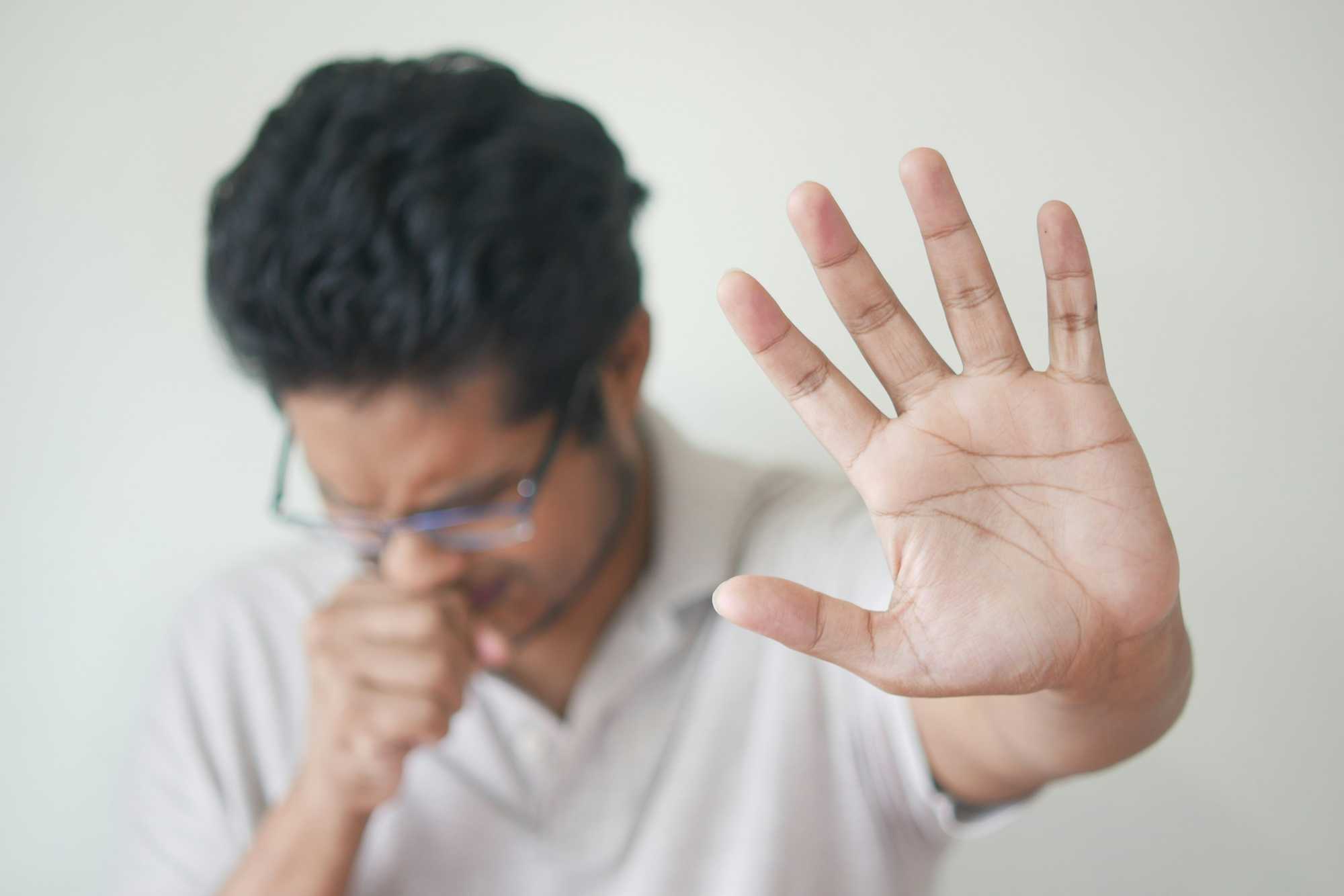
culture, generations, 2019, 2016, 2000s, society, america, askreddit, people, humanity Going to work or school sick. Photo by Towfiqu barbhuiya on Unsplash

"Being sick but still showing up somewhere because its 'just a little cold' but you’re visibly unwell. After the pandemic, showing up to work with a cough or the sniffles is a total no-go."

"Going to work/school sick and acting proud about it. Absolute villain behavior now."

"I had to gently insist with my boss that I could not return to work while still showing positive for the flu."

"going to work sick and bragging about it. coughing through meetings, no mask, acting like you’re a hero for 'powering through' instead of realizing you’re just spreading illness. pre-2020 that was normal grind culture. now it just looks selfish and unhinged."

2. Posting frequently on social media

"Posting your location, meals, and every thought in real time. Totally normal in 2019, kinda unhinged in 2026"

Data confirms that regular people are posting far less on social media. Most users are "passively active," meaning they just scroll and interact with others' content without posting much of their own. The days of the early Instagram algorithm sure are long gone.


@cntrtnr

It's important to remember that people who post on tiktok are not representative of most of humanity. #socialmedia #anxiety

3. Commuting unnecessarily

"Spending 2 hours a day in a cramped train just to sit at a desk you have at home"

Prior to 2020, work from home was typically a special perk reserved for certain workers on certain days. Then it became the norm, and even in 2026 amid the return to office push, a majority of "office" workers work from home either full or part time.

4. Visiting the US for vacation

"Visiting family in the US, sadly"

"There was a dip in international tourism to US in 2025, but it was only 6%. International travelers are still very much visiting the US."

The most recent data shows international visits to America are down about 5-6%. It's hardly a drastic fall-off, but considering that many of the most-visited countries in the world are actually seeing increases, it tells a tale about how foreigners are feeling about the United States right now.

5. American flags

"Having an American flag in your yard. It used to be a sign of patriotism."

American flags have certainly not gone completely out of style, but in 2026 it has gotten much harder to separate any American flag paraphernalia from certain political beliefs. Most people won't buy and display a flag unless they're intending to send a specific message.

culture, generations, 2019, 2016, 2000s, society, america, askreddit, people, humanity Displaying an American flag. Photo by Andrew Ruiz on Unsplash

6. Hustle culture

"Bragging about how hard you work. Work culture stuff like a sign on your desk that says 'The Boss'. Bragging about how much coffee you have to drink to stay up for all the extra work you're doing for your 9-5 job. Making being a good employee a big part of your personality."

Gen Z is primarily driving this change. They work to live, not the other way around.

- YouTube www.youtube.com

7. Apps for everything

"Ordering literally everything through an app. Groceries, food, furniture, therapy, dates all normal now."

COVID-19 was clearly the main driver of a huge surge in apps like UberEats, but they've stuck around and even expanded their foothold since then into new categories.

8. Using Twitter/X

X, formerly Twitter, used to be a main hub for breaking news, live-sports analysis, and funny one-liner jokes. In recent years, usage has fallen significantly and the app has been embroiled in scandals involving its built-in AI assistant, Grok.

9. Having tons of kids

The reasons are many, including inflation, housing costs, and the demands of career. But however you slice it, people are widely choosing to have fewer children, or not to have kids at all. The trend has been steady since the '60s, but the birth rate has fallen even since 2019, with couples finding going with just one child (or even zero) gives them more financial and social freedom.

10. Using public water fountains

COVID-19 definitely took its toll on public drinking fountains, but so did the rise of bottled water and, even more recently, trendy water bottles. Fountains that fill reusable bottles are a lot more popular now than the traditional models where the water went straight into your mouth.

11. Buying a Tesla

In 2019, the Tesla was seen primarily as a marvel of modern engineering and a huge step toward more environmentally friendly transportation. Today, much like the American flag, it's become much harder to separate the product from its political ties. Tesla sales slumped dramatically in 2025 as a result.

12. Calling people on the phone

"Calling someone without texting first. In 2019 it was normal. In 2026 it feels unhinged. If my phone rings now, I assume it’s bad news or an emergency."

Calling was well on its way out in 2019, but the drop off has been accelerated by a rapid rise in spam and robocalls. Junk calls reached an all-time high in 2025 and now, many Americans simply ignore it when their phone rings.
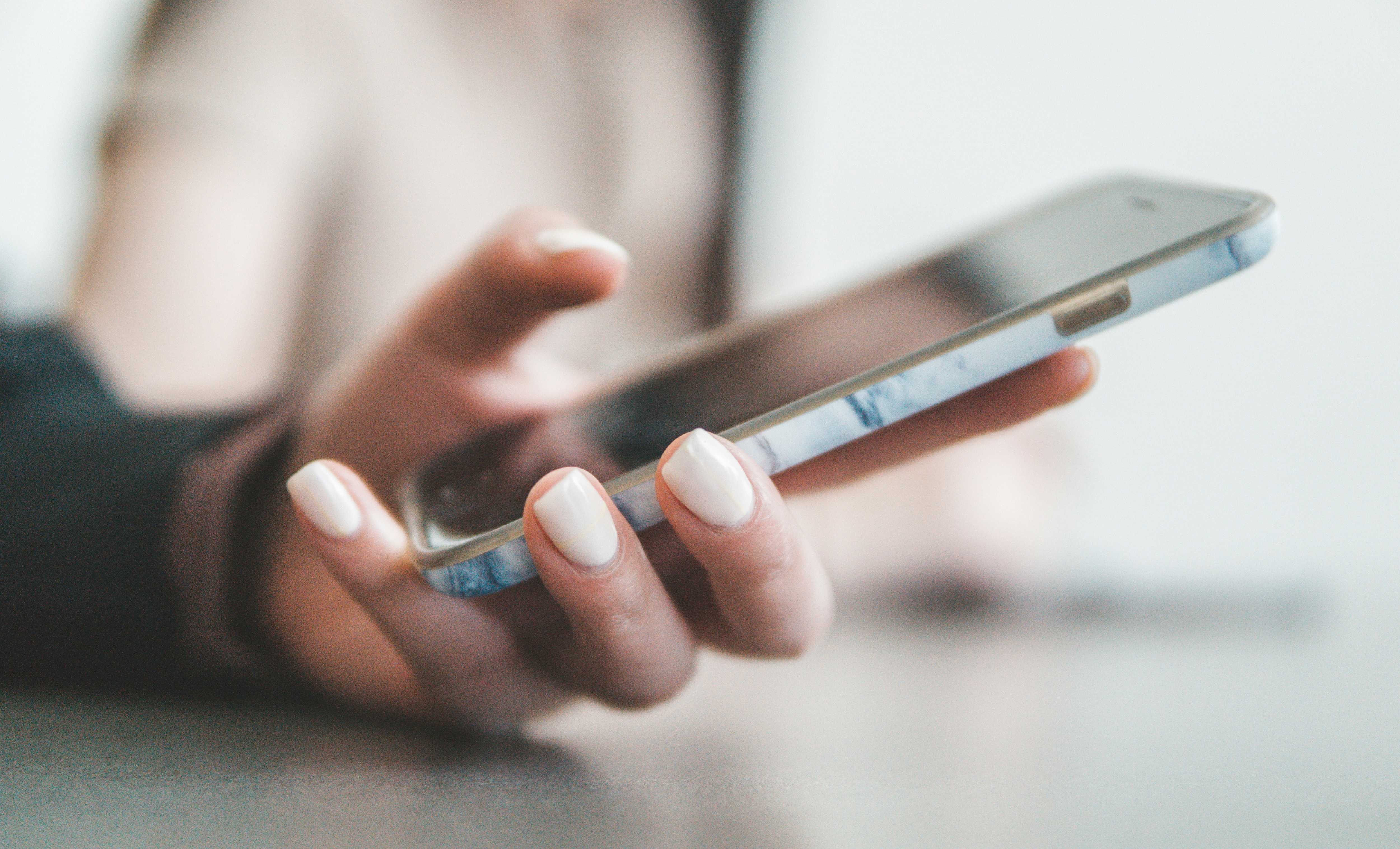
culture, generations, 2019, 2016, 2000s, society, america, askreddit, people, humanity Calling people on the phone unannounced. Photo by Jae Park on Unsplash

13. Questioning the validity of everything

"Is this AI?"

It's a question that inspires many Google searches and even has its own popular subreddit. ChatGPT wasn't released until 2022, so in 2019, AI was a fledgling, far-off idea. In 2026, people all over the world must question almost everything they see and hear on the Internet.


Education

Gen Z is the first generation less cognitively capable than their parents but Denmark has a solution

"Since the late 1800s, every generation has outperformed their parents."

Gen Z; Millennials; technology; cell phones; social media; teens and technology; teens social media

Gen Z is the first generation less cognitively capable than their parents. Denmark has the solution.

Nearly every parent hopes their child will be better off than they are: smarter, more secure, and more well-adjusted. Many parents see this as a stamp of successful parenting, but something has changed for children growing up today. While younger generations are known for their empathy, their cognitive capabilities seem to be lagging behind those of previous generations for the first time in history.

Dr. Jared Cooney Horvath, a teacher turned cognitive neuroscientist who focuses on human learning, appeared before Congress to discuss concerns about cognitive development in children. In his address to the members of Congress, he says, "A sad fact that our generation has to face is this: our kids are less cognitively capable than we were at their age. Since we've been standardizing and measuring cognitive development since the late 1800s, every generation has outperformed their parents, and that's exactly what we want. We want sharper kids."


kids, intelligence, sharp kids, generations, education, cognitive abilities Student smiling in a classroom, working on a laptop.Photo credit: Canva

Horvath explains that the reason this happens is that each generation has gone to school longer than the previous generation. Gen Z is no exception to the longer duration of time spent in school, but they're the first ones who aren't meeting this normal increase in cognitive development. According to the cognitive neuroscientist, the decline is due to the introduction of screens in the classroom, which started around 2010.

"Across 80 countries, as Jean was just saying, if you look at the data, once countries adopt digital technology widely in schools, performance goes down significantly. To the point where kids who use computers about five hours per day in school for learning purposes will score over two-thirds of a standard deviation less than kids who rarely or never touch tech at school," Horvath reveals.

In most cases, the decline in performance doesn't result in better strategies. The neuroscientist shares that the standardized testing has been adjusted to accommodate lower expectations and shorter attention spans. This is an approach that educators, scientists, and researchers went to Capitol Hill to express wasn't working. But not every country is taking the approach of lowering standards to meet lowered cognitive ability. Denmark went in the opposite direction when it realized their students were slipping behind.

France24 recently interviewed educators in Denmark following their seemingly novel approach to students struggling with cognitive development. Since the beginning of the 2025/2026 school year, Denmark has not only been having students turn in their cellphones, but they've also taken tablets, laptops, and computers out of the classroom. No more digital learning for the majority of the school day. Danes went old school by bringing back physical textbooks, workbooks, and writing assignments. The results have been undeniable. Even the students can't seem to deny the success of the countrywide shift in educational approach.

"I think the biggest issue has been that, because we kind of got rid of the books and started using screens instead, that we've noticed that a lot of the kids have trouble concentrating, so it's pretty easy to swipe with three fingers over to a different screen and have a video game going, for example, in class," Copenhagen English teacher, Islam Dijab tells France24.

Now, instead of computers being part of every lesson, Denmark uses computers very sparingly and with strict supervision. One student says that it has been nice not having screen time at school because she loves to read and write. But it wasn't just the lack of attention span children were developing, they were also developing low self-esteem and poor mental health due to the amount of time spent on devices.

kids, intelligence, sharp kids, generations, education, cognitive abilities Students focused and ready to learn in the classroom.Photo credit: Canva

The data showing the negative impact of screens on teens' brains has prompted a nationwide change in Denmark that extends outside of the classroom. Afterschool activities are eliminating or extremely limiting electronic use. There is also a national No Phone Day that encourages everyone to put away their devices for the day, and Imran Rashid, a physician and digital health expert, is petitioning parliament to ban social media use for children under the age of 15. The no phone movement in Denmark is a nationwide effort that hopes to right the ship before another generation feels the effects.

speaking, public speaking, vinh giang, nervousness, voice shaking

Does your voice shake when you're nervous? Here's how to prevent it.

One of the hardest parts of speaking in front of a group is managing the nerves that often accompany public speaking. No matter how much you want to appear cool, calm, and collected, nervousness can hit even experienced speakers, and when it does, it's hard to figure out how to handle it. It's especially disconcerting when your voice shakes, because that's the last thing you want when you're trying to project confidence.

Instinctively, we may try techniques to calm our bodies, such as meditation or deep breathing. But there's a counterintuitive hack that public speaking expert Vinh Giang shared with a woman who asked how to keep her voice from shaking when she gets too nervous.


- YouTube www.youtube.com

"If your voice shakes, what must be shaking?" Giang asked in the YouTube video. "Your body, right? Why do you shake? Because you're nervous. But the main physiological reason why we shake is because of excess adrenaline, because the body's preparing for fight or flight."

The fight-or-flight response is the body's way of revving up with energy, which triggers a surge of adrenaline. But because we're not actually going to fight or flee, we don't know what to do with that adrenaline. Giang pointed out that this is why speakers tend to pace onstage, trying to burn off the excess energy.

"Instead of getting on stage, having a shaky voice, and pacing, get rid of the adrenaline backstage," he said. "Go for a really brisk walk for 3 to 5 minutes. Wim Hof breathing. Twenty star jumps. Five pushups."

Giang said this forces you to take deep breaths, and you'll soon find that the adrenaline has left your body.

It makes sense when you think about it. Adrenaline needs to go somewhere, so doing a few minutes of brisk body movements gives it a place to be processed.

speaking, public speaking, vinh giang, nervousness, voice shaking Star jumps can help you move adrenaline out of your body. Photo credit: Canva

Commenters on Giang's video said they've tried this method and that it works:

"I used to do this before going on stage as a solo pianist. Looked funny at times doing star jumps in my dress and heels or a wall push in the same, but it worked!!"

"I usually have like really bad anxiety before speaking in front of people. I'm talking about hyperventilating, vomiting, and all. For my latest presentation, I remembered this video. I tried shaking my hands aggressively for maybe 1 - 2 minutes, and I kid you not, it works wonders. No nauseousness, lightheadedness, and all that. Thank you so so much for this."

"This is the best piece of advice that I have ever come across... Ever since I saw this video a few months ago I have never been jittery during a performance since THANK YOU!!"

speaking, public speaking, vinh giang, nervousness, voice shaking There are ways to stop the shakes without exercise, too. Photo credit: Canva

What if you aren't able to exercise just before speaking?

While getting your adrenaline out backstage is great, that's not always an option. Sometimes you might be sitting in a room full of people, waiting for your turn to speak, when the nerves hit.

Neuroscientist Andrew Huberman shared that research shows a "double inhale" method can quickly reduce stress without having to move your body around.

- YouTube www.youtube.com

The basic technique, known as a "physiological sigh," involves taking a deep breath through your nose, then inhaling again without letting any air out first, followed by a slow exhale.

Huberman said this method works because it offloads a large amount of carbon dioxide all at once. Carbon dioxide builds up when we're stressed, causing the tiny air sacs in the lungs to partially collapse. Taking that extra, quick breath when the lungs are already full helps reopen those sacs, allowing the body to release more carbon dioxide than it would with a single deep breath and exhale.

People in the comments on Giang's video also shared personal tips for those who can't go for a walk or do pushups before speaking:

"I used to clench my fists under the table with all the strength I got over and over again. Or even my whole lower body. And I learned a breathing technique, where I inhale for 4 seconds, then hold my breath for 4 seconds and then release my breath for 4 seconds or even longer, but it's crucial that your exhale takes as long or even longer as your inhale. Another trick is from a mental coach. You play the presentation in your head like a movie and every time you get anxious you stop for a moment and just breathe. When you feel at ease again you continue the movie in your head. In the end nourish the vision of yourself after a wonderful presentation and experience all the emotions like pride, happiness, relief, feel them in your body, let them thrive. Do it as often as you want to or need to."

"I would get up early and go for a run. You're still getting your blood pumping and releasing endorphins even though it's a good few hours before your presentation."

So many options to try in different situations. Check out this article for more expert ideas to stop your voice from shaking when nerves hit, and follow Vinh Giang on YouTube.

parenting, teens, raising teens, teen hangout, high school, game night for teens, activities for teens, parenthood

Amy White explains how her house became "the house" for her teens.

I grew up in "the house." In high school, my home was the designated place where my friends gathered, sometimes in big groups, sometimes just my small core squad. My three best friends spent the night there almost every Friday and/or Saturday night for four years straight. We devoured Totino's frozen pizzas by the dozen, inhaled soda, and laid waste to any snacks or leftovers that were brave enough to survive in the kitchen. Not only that, but my house was pretty small — four teenage boys took up a lot of space in the living room (the whole thing) and made a lot of noise playing video games deep into the night. It must have driven my parents and older brothers crazy. It's a wonder anyone put up with it.

Or so I thought when I was younger. When I became a parent myself, I started to understand a little more why my mom and dad were so willing to host and feed all my friends and me every single weekend. Why the outrageous grocery bill and constant chaos in the house were probably a small price to pay.


Mom explains how to make your house 'the house' where teenagers hang

One mom has perfectly encapsulated the value of turning your home into "the house" for your kids and their friends, and exactly how she did it for her family.

teens, teen house, teens hanging out, teens having fun, teenagers Teens hanging out in a living room.via Canva/Photos

Amy White shared a reel on Instagram showing her college-aged son hanging in her dining room with a group of friends playing cards. The text overlay reads "What makes your kids' high school friends want to come over, play cards & spend the night on their College Christmas Break." I think most parents can agree that we want our kids to keep coming home as long as possible! So how exactly did White pull this off?

Her explanation in the caption was spot-on.

First, White says that you have to start early. Become "the hang out house" in high school or even earlier. Then you have a better chance of holding onto the mantle into your kid's college years.


Next, be ready to stock the house with snacks and drinks, and don't make a fuss when your kid's friends have at it. "The kids knew we had food," she writes, "BUT they also knew I didn't care what they had. They knew they could eat anything in my pantry and fridge."

Third, and this is a big one, don't mistake being the "cool house" for being "the house." Some parents choose to allow their underage kids and friends to drink alcohol under their supervision, but you don't have to bend your morals and the law to lure the squad over to your place. Pizza and Coke is plenty to keep most teens happy. "We were not the house that served alcohol or even allowed the kids to bring alcohol to our house. And Guess What?? The kids still came and wanted to hang at our house!"

teens, teen house, teens hanging out, teens having fun, teenagers Teenagers eating pizza.via Canva/Photos

Fourth, always say Yes (as often as possible, anyway) when your kids want to have friends over. "They know my answer is 99% of the time YES," White writes. "You have to have your kids take the leadership of offering your home and if your home was 'open' to their friends in high school, they know it will be 'open' to their friends in college."

As a bonus tip, White pleas with parents not to worry about the mess having friends over makes. "I love a clean house and organization, BUT I would much rather have a crazy messy house for the kids where memories are made than a quiet house with nothing going on just to keep my house 'clean.'"

Should parents allow teens to drink at home?

There's an age-old debate over whether parents should allow teens to drink at home because it's better than if they do is unsupervised or keep their home dry as a bone. A recent study out of the University of Buffalo found that kids who grew up drinking at home had a greater chance of having addiction problems when they got older. "A robust relationship was found between parental permission to use alcohol during adolescence and increased alcohol use frequency and quantity, alcohol use disorder symptoms, and alcohol-related harms in young adulthood," the study says.

White writes, "It's worth being 'the house', so let go of control & get to know your kids friends." Commenters agreed.

White's video went viral to the tune of 8.5 million views and hundreds of comments. Parents shared their own experiences of what it's like being the default hang out house.

"Our house was the high school hangout for my son and friends... every weekend... I loved it!! Miss it now that they are all college graduates and have moved away. I love seeing them when they do come home for the holidays"

"A wise man once said don't be the house with the alcohol. Be the house with the food."

"Amy 1000% agree!!! My house is full of teenagers on the weekends and I love every bit of it. Even though I wake up to a kitchen that looked much different from when I left it"


teens, teen house, teens hanging out, teens having fun, teenagers Teenagers eating pizza.via Canva/Photos

"We never allowed alcohol, drugs, bad language, always respectful, and guess what, our house was always the house where the kids hung out. First my daughter, then my son. Through grade school, high school, then when my kids went out of state for college their college friends would come spend a couple weeks during the summer. I always thought of it this way, I loved knowing my kids friends and, who knows, maybe some of those kids, especially during the younger years, just maybe those kids just needed an adult to care. Anyway, it was always fun to have them here!"

"It used to crack me up when my daughter would bring over a bunch of her friends (girls and boys) in high school and instead of hanging out in the family room they all wanted to crowd into either the kitchen with me or our tiny office and happily share all the gossip with me."

Experts say that knowing your kids' friends, and their parents, can have huge benefits. Not only will it bring you the peace of mind of knowing where your kid is and who they're with when they get to those crucial high school years, it has been shown to tangibly improve kids ability to create positive relationships and problem-solve collaboratively. Plus, it can actually be really fun! Kids and teens are the funniest, silliest, most interesting people on the planet. Having a house full of them is messy and loud, but it's always a good time.

One caveat: "don’t feel bad if your house isn’t the chosen house," one commenter reminds us. "Just be happy your kid has a good group of friends and be thankful they have somewhere safe to hang out."

This article originally appeared last year.

millennials, awkward, slang, catchphrases, generations, cringe, millennial slang
Photo credit: Canva, pixelshot (main image, cropped) / SkaHero42 from pixabay (text box)

Millennials are playfully cringing at the outdated slang they still love.

Every generation has its own signature slang: back in the '70s, a Boomer might have labeled their disappointment a "bummer," while a Gen Zer might react with a "big yikes." Some of these phrases linger on, and others suffer an awkward death—signifiers of an age long gone.

Millennials, of course, are not exempt from this general rule. In a recent Reddit thread, people of that generation looked back at the cringe-worthy things they used to say (or perhaps still do). In some cases, these goofy phrases seem to carry a nostalgic sweetness, or perhaps a charming kind of irony. As one person proudly wrote, "Everything is cringe. Therefore nothing is cringe. We are free."


- YouTube www.youtube.com

"I don't cringe at my cringe, I revel in my cringe, it makes me smile."

Lots of people reflected on this topic in the r/Millennials subreddit, highlighting outdated phrases like "I did a thing," "I was today years old when I learned," "And go!", and "adulting." But one person defended the latter, saying, "I actually liked that. Previous generations tended to downplay how difficult the mundane parts of adulthood can be. It was refreshing to see people actually talk about it."

And many other users said they enjoy looking back at the awkwardness of their younger days. One wise Redditor wrote:

"I'm proud of everything I do badly and with enthusiasm. I don't cringe at my cringe, I revel in my cringe, it makes me smile. I hope I'm wholeheartedly cringe for many years to come. I think we're pretty awesome. I'm going to get that annoying, stupid little 'ironic,' mustache tattooed on my finger this year. I love it, I've always wanted it, and imma get it done. I think humanity in all its messy glory is a beautiful thing."

On that tattoo note, other Millennials ventured beyond the spoken word to reflect on the charmingly cringe behaviors of their youth. As you might expect, given the demographic, social media played a big role. Here are some interesting comments:

"Every now and then my Facebook memories will pop up from 2005 and 2006 when it was still 'is ____' and I can't help but laugh at how often I'd post 'is working,' 'is tired after a long day,' and of course the vague 'is not ready for this.' I literally laughed out loud when one from 2008 came up and it said 'I hate what has to happen is going to happen, but it has to happen.' I have no clue what I was talking about, but there were definitely updates where I was basically begging for someone to message me and be like 'Are you ok? What's wrong?' But my life was boring as hell back then and I think I just wanted attention haha."

"I mostly posted Radiohead song lyrics to show everyone how mysterious I was"

"It's so cringe too, when you look back at it. It's almost like the duck face peace sign pics we all took, LOL"

"Cryptic AIM away messages hinting at the pain. It even creeped into Facebook briefly"

"Planking anyone?"

"Song lyrics on photos. Yelling 'YOLO' before doing something. Hash-tagging. Anything during Tumblr days. Facebook honest answers lol like 'rate me, tell me what you think of me' and then posting something cringey on that person's wall."

"I got on Facebook when I was 13 or 14. Being 30 now I have a love hate relationship with my FB memories. It's s--- that I would obviously never post these days, but still hilarious to look back on."

- YouTube www.youtube.com

You may cling to your cringe slang. But why?

Let's say you're one of those Millennials who still adds "lol" to the end of every text or shouts "YOLO" before a night out, even when it's not a trendy thing to do. What's the reasoning? Why do some of us still use outdated phrases? LaNysha Adams, PhD, an author and applied linguist, says we cling to old slang due to "identity, memory, and connection."

"Because language is tied to memory and emotion, some words function like time capsules from a psychological point of view," Adams explains to Upworthy. "The social component is also very real, too, because slang is a form of belonging where these verbal inside jokes reinforce a shared history from a previous time in life."

To illustrate, she points to the phrase "no cap," a recent favorite of hers. "Since 2000, I have been tracking since it's hit enough people and spread through so many different social networks," she says. "It's gained traction for the past five years, but I would imagine it may fade over time. Linguistically, neologisms like this are spread widely depending on who says them because the right people say them in the right places."

Valerie Fridland, PhD, a linguistics professor at the University of Nevada, Reno, tells Upworthy that slang is simultaneously about "showing that we belong to a certain in-group, often of age-matched peers, and of giving off a cool 'IYKYK' vibe." But things change as we get older and start our lives.

"As we get jobs, get paired up, and have kids, we might outgrow the youth culture that inspired us to use slang, but we don't leave behind the identity those words helped us claim," she says. "Hearing or saying words like 'sick' or 'totes' triggers memories and an emotional connection to that person we were in the same way that we can't help but sing along to a song that we loved in our teen or college years. In other words, that person and the slang terms that once made us cool is still part of who we are, even if we have to laugh at ourselves a bit because of it."

- YouTube www.youtube.com

inflation, inflation prices, food inflation, grocery inflation, grocery prices inflation

Inflation has impacted food prices.

Grocery prices have have continued to soar in the United States due to inflation. According to a new U.S. Bureau of Labor Statistics report on food inflation prices, they continue to increase in January 2026.

Certain foods have been impacted more than others. Coffee prices increased 20% from December 2024 to December 2025, while beef prices increased 15.5% percent, per ABC News.


Current grocery prices have impacted how people shop. Frugal people on Reddit discussed how inflation has changed their grocery shopping habits to stick to a budget. Many shared the foods and ingredients they have stopped buying due to increasing costs. Plus, they explained how it has positively impacted them—from becoming better bakers to making swaps that they like even better.

From meat to desserts, these are how frugal people are dealing with food inflation costs.

- YouTube www.youtube.com

Protein

"Haven't bought any beef other than hamburger in over a year. The prices are laughable." - polishprince76

"Yeah, we switched from ground beef to ground turkey over a year ago bc it was cheaper. Steak was never in the budget and now neither is ground beef." - TraditionalChest7825

"Beef, of course, is ridiculous. We've learned to make a lot of our recipes with chicken these days. I make chicken meatballs, chicken burgers and chicken meatloaf. We found it is cheaper to make our own ground chicken when boneless, skinless chicken is on sale than to buy it already ground. I don't mind as chicken is healthier than beef, anyway." - aeraen

"I swapped a lot of meat for tofu/ beans. If I do have meat on sale or something, I always make it last longer by like mixing it with beans/ mushrooms to go the distance too." - rockdog85

"Not sure if this is what you are after, but I moved from a place where peanut butter was cheap and tahini was expensive to a place where tahini is cheap and peanut butter is expensive, so now I use tahini in all the recipes where I used to use peanut butter." - tlatlsaddlebattle

"We try to find rib roast sales as it brings the price down and then we cut them to our liking or sometimes we will have the butcher do it." - Florida1974

Carbs

"I’m eating more oatmeal. Cereals are so expensive and they require milk." - EmmelinePankhurst77

"Chips. Every so often if there's a really good sale (4 bags for $10 isn't too bad) but no way is a bag of Lay's worth $4.79 or more." - myystic78

"I've switched to buying popcorn kernels instead, but I'd probably make an exception for something like a party." - Signal_Error_8027

"$7 for a loaf of bread? No thanks, I’ll bake my own. Getting a bread machine makes it super easy, too!" vozzov, Pretend-Policy832

"I learned how to make bagels! Honestly, just google homemade bagel recipe and pick the one that works for you! I’ve only made them with Greek yogurt so far (and they came out great), but I’m going to try making some with yeast next." - Efficient_Swan_9182

"Frozen pizzas. We make fresher single serve pizzas using Greek pita breads, or flatbreads as the base, with olive oil, shredded mozzarella cheese and whatever leftover/stored garden vegetables we have." - SnooMarzipans6812

Drinks

"Any sort of beverage. I used to buy Diet Coke pretty regular as it’s one of my few vices, but I can’t justify the price anymore. Occasionally I’ll buy the Aldi brand flavored seltzers but beyond that, we just drink filtered water from the fridge." - Alpacalypsenoww

"I started making jugs of iced tea, using (relatively inexpensive) tea bags. Soda is, indeed, too expensive, but sometimes I like having something to drink that isn't water." - witty_grapefruit

"I’ve found the Walmart version of Sprite called 'Twist Up' I feel is almost identical to Sprite & only costs $1 for a 2-liter." - Jedi_Hog

"Coffee pods. I bought a canister of Illy ground coffee on sale and it’s lasting me a lot longer than buying those Starbucks Nespresso pods. I love the smell of the ground coffee too. And less Vital Farm’s eggs and more from Costco." - Easy_Growth_5533

"I don’t drink coffee, but I do need a little caffeine or gogo juice as I call it, to get me going. So I started buying the Mio drink mix that you put in water. Certain ones do have caffeine in them and it doesn’t take much, so it saves money." - Florida1974

Sweets

"Any kind of cake. I learned how to bake and glad for it. I didn't realize how easy it is to do most of the basics (muffins, banana bread, Madeira cake, blueberry loaf, shortbread, etc). Most of the cakes and treats I used to buy are better homemade." - Chancevexed

"I stopped buying candy bars also. Instead, I substitute a bag of dark chocolate baking chips/morsels. Lasts months longer than a candy bar and still get a small chocolate fix a couple of times per week." - Katesouthwest

"My jaw dropped when I saw a small bag of chocolate chips was 6 dollars a bag. Hard pass! Sometimes large bars of chocolate go on sale. We just chop it for baking. It is way better than chocolate chips." - HappyinBC, HappyinBC