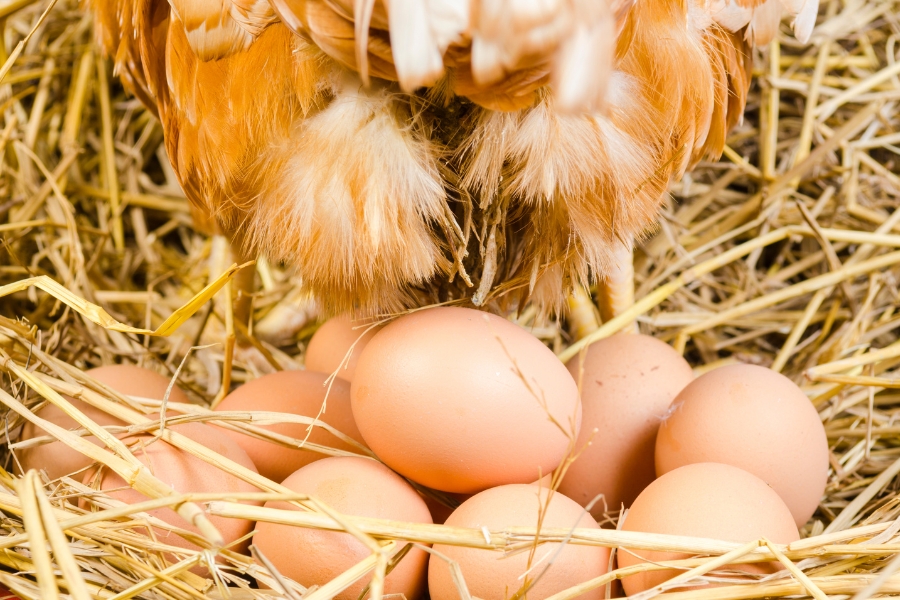
Have you ever watched a chicken lay an egg? Think hard before you answer. Many of us may instinctively say, “Of course I have!” but then realize we’ve only seen movie scenes or cartoons depicting hens laying eggs. Few of us have actually witnessed a real egg come out of a real hen in real life.
Even fewer of us have seen it the way the folks at @chickenwifehappylife captured it. One of their chickens hopped onto a workbench and laid her egg right on the table in front of them. No nesting-box privacy for this lady. She wanted to show the world what she goes through to lay a single egg, and frankly, she has every right.
Watch a hen lay an egg:
Now see if the comments match what you were thinking:
“Was I the only one that wasn’t sure exactly where the egg was going to pop out of?”
“Great. Now I feel awful eating eggs. She went through all that and I just come along and see breakfast. Damn.”
“Totally makes sense why chickens are so mean. If I had to go through childbirth every day of my life, I’d be a raging lunatic too!”
“I never stopped to appreciate the eggs I consumed. After watching this, I have more respect for eggs and the chickens that lay them.”
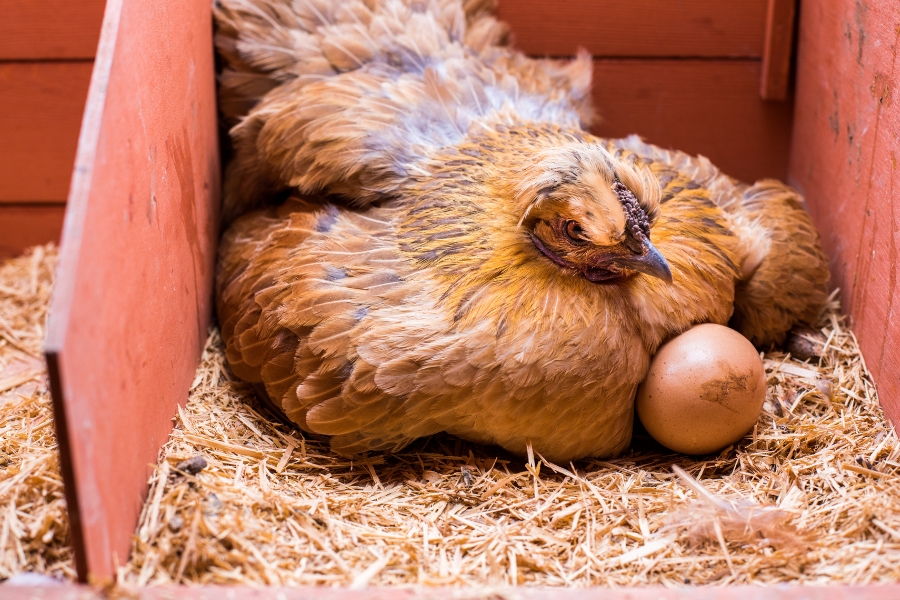
“Girl… I promise not to complain about the price of eggs. Please take a day off, you deserve it.”
“I’d be pissed if I had to lay an egg every day.”
“We should have a moment of silence every time we crack an egg as respect. That was some work!”
The overwhelming sentiments people shared were: (1) “Wow, I have truly never watched a hen lay an egg before,” and (2) “Wow, I will never take eggs for granted again.” Some also said, “I don’t know if I want to eat eggs anymore,” rethinking their breakfast choices.
Does it hurt a chicken to lay an egg?
Watching this hen lay her egg on the workbench had people feeling for her. It’s a bit reminiscent of giving birth, especially with her bearing down and “singing the egg song” just before it popped out.
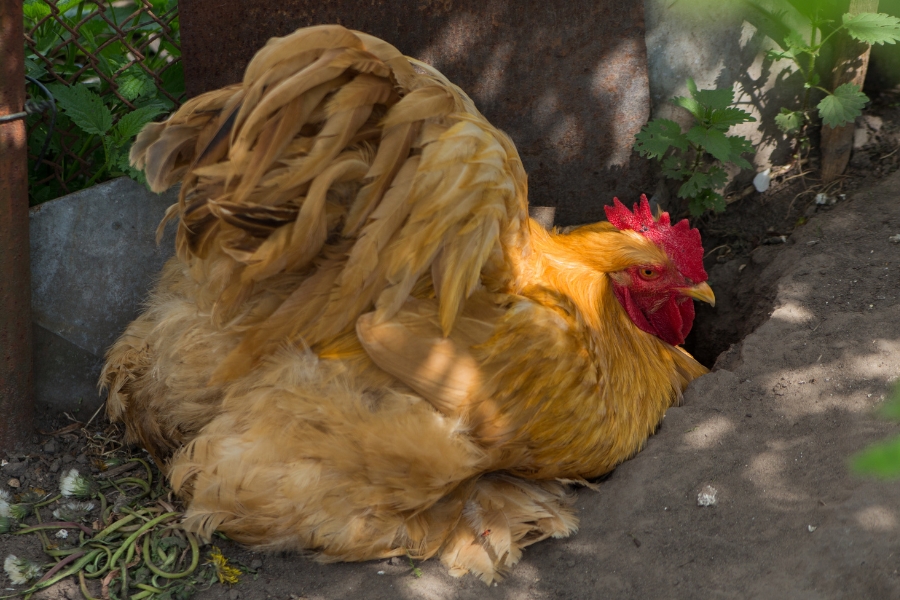
According to The Humane League, most experts agree that laying eggs is not generally painful for hens. How do they know? Here are the specifics:
“The reason it is hard to answer this question with complete clarity is because, of course, chickens cannot tell us for sure whether they’re experiencing pain when laying eggs. There are some signs, but we have to be careful not to misread them. For example, for a long time humans (including that first century Roman writer, Columella) believed that the sound many chickens make before laying indicated pain. However, studies found that the sound was instead an “egg song,” which could have a number of explanations, including happiness and scaring off predators. Another study found that when a hen “sings” it is more likely to be associated with contentment, while cackling aligns with danger.”
Naturally, there are things that can go wrong during the egg-laying process that can make it painful. Signs that a hen is in distress while laying include wheezing, distressed squawking, not eating or drinking, isolating, hunching over, drooping, avoiding movement or activity, and slow or awkward movements. Most of the time, however, a hen will recover immediately after laying an egg and go on with life as if nothing happened.
How often do chickens lay eggs?
Hens basically lay eggs daily, but that’s a bit oversimplified.
The University of Wisconsin–Madison notes that hens ovulate, releasing an egg yolk, every 24 to 26 hours. It then takes about 26 hours for the egg white and shell to form around the yolk. As a result, hens typically lay one egg per day, but the timing shifts later each day. Once in a while, a hen will also “skip” a day or two.
Hens did not originally lay more than 300 eggs a year, however. Through centuries of selective breeding, humans have “engineered” chickens to become more prolific egg layers.
Many people have concerns about the well-being of hens used in the industrial production of eggs. Even when we try to make ethical choices about the food we consume, the details are not always clear. Labels on egg cartons, such as “organic,” “cage-free,” and “pasture-raised,” can be confusing, but Certified Humane offers an explainer that helps demystify these terms.
Whatever egg choices we make, seeing the laying process may at least give us a newfound respect and gratitude for the hens who lay them.