
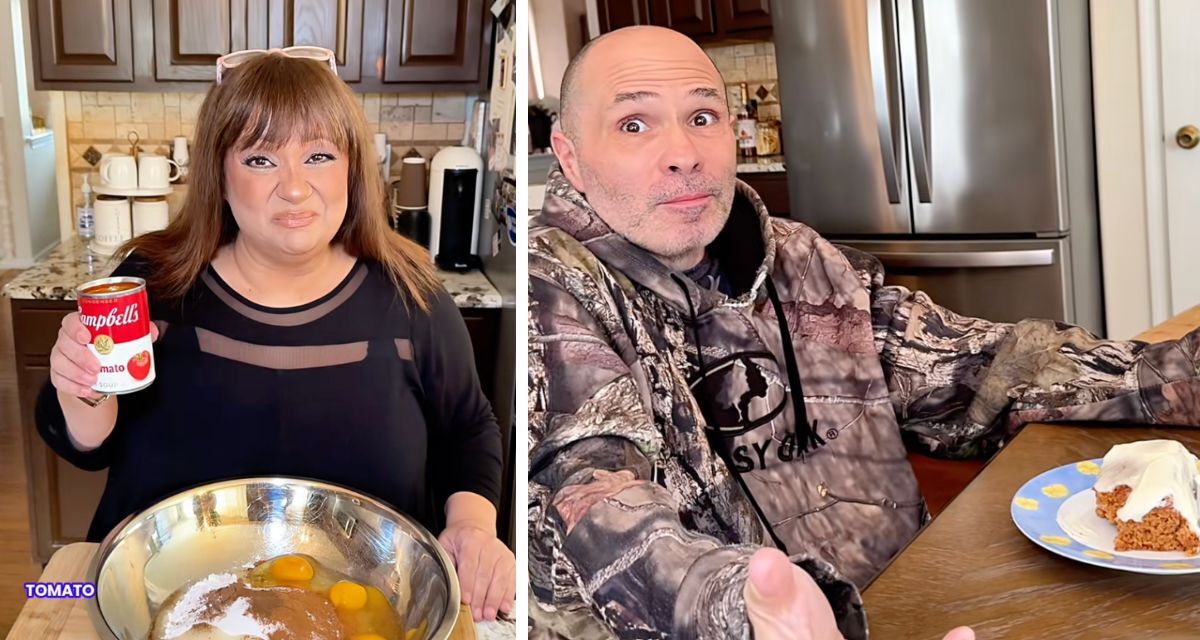
You say “tomato,” I say…“dessert”?
That would certainly be the case if I were living during the Great Depression and World War II. This era was known for its recipes featuring cheap and long-lasting, albeit unconventional, ingredients and less-than-appetizing names. “Wacky cake,” “water pie,” “poor man’s pudding,” just to name a few. And yet, against all odds, these desserts tend to be surprisingly tasty.
The tomato soup cake is no different. Wait! Hear us out.
A Depression-era (?) dessert that refused to be forgotten
Printed iterations of the cake date back as early as the 1920s, sometimes under different pseudonyms like “Soup to Nuts Cake,” “Believe It Or Not Cake,” or “Husband’s Cake,” that last one possibly because the robustness of the spices? Who’s to know… Regardless, it really surged in popularity in the 1930s and 1940s.
Campbell’s Soup Company, which had already been selling canned tomato soup since 1895, really tried to cash in on the trend by promoting the recipe in ads. Eventually, they would branch out to offer a recipe for chocolate tomato soup cake as well as an apricot (or prune) upside-down tomato soup cake, among other variations. And around 1966, a cream cheese–frosted version surfaced, which remains the most popular version to this day.
Why tomato soup is actually a baking MVP
When you consider the acidity and thickness of tomato soup, particularly condensed tomato soup, it actually makes for a multifaceted quick-fix for ensuring lift and moisture retention. It can be used the same way we might use applesauce in lieu of eggs.
Plus, with the spices, frosting, and other bits and bobs, the tomato doesn’t really come across in the taste. Same way that carrot cake doesn’t really taste of carrots if you do it right.
However, no matter how logistically sound, every recipe has its heyday. By the 1960s, the tomato soup cake was already associated with a bygone era. And yet…
From poets to influencers: the tomato soup cake is finding new life

This didn’t stop literary icon (and baking enthusiast) Sylvia Plath from loving it though. As her diaries revealed, on the day she wrote “Death & Co.” in 1962, Plath had also baked this signature dessert of hers, using her mother Aurelia’s recipe.
According to a 2003 Guardian piece, Plath went so far as to write home to ask her mother about the sizing of American vs. British soup cans, because the cake she had made in England was “too wet.”
Of course, thanks to TikTok, tomato soup cake is having a comeback. This baby might have been born out of necessity, but her novelty has proven itself timeless.
If you’re feeling adventurous and would like to make one of these for yourself. Here’s a recipe originally from the King Arthur Baking Company and adopted by Atlas Obscura, below:
Tomato Soup Cake
Cake Ingredients:
1 large egg, at room temperature
¼ cup vegetable oil
1 cup granulated sugar
1 can (10.5 ounces) plain condensed tomato soup
1 1/2 cup all-purpose flour
1 teaspoon baking soda
½ teaspoon salt
2 teaspoons cinnamon
½ teaspoon nutmeg
½ teaspoon allspice
½ teaspoon cloves
1 tablespoon grated orange zest
¾ cup raisins
¾ cup walnuts, toasted and coarsely chopped
Frosting Ingredients:
8 ounces cream cheese, at room temperature
4 tablespoons butter, at room temperature (optional)
½ teaspoon salt
2 cups confectioners’ sugar
1 teaspoon grated orange zest
Instructions:
- Preheat the oven to 350° F. Lightly grease and flour a 9-inch square cake pan.
- Mix together the egg, oil, and sugar until the sugar is fully incorporated. Stir in the canned tomato soup.
- Add in the flour, baking soda, salt, spices, and orange zest to the wet ingredients and beat until smooth. Fold in the raisins and nuts until evenly distributed.
- Pour the batter into the prepared cake pan. Bake for 35 to 40 minutes, or until the edges begin to pull away from the pan and a toothpick or cake tester inserted into the center comes out clean. Remove the cake from the oven and allow it to cool completely on a rack.
- While the cake cools, combine the softened cream cheese, confectioners’ sugar, orange zest, and butter (if using) in a large mixing bowl and beat until smooth and fluffy. Spread over the cooled cake and serve.









.png)