upworthy
Add Upworthy to your Google News feed.
Google News Button
Joy

Perfectly unique toddler is bringing joy across social media with his 'uncombable hair'

We think Locklan (and his hair) are perfect.

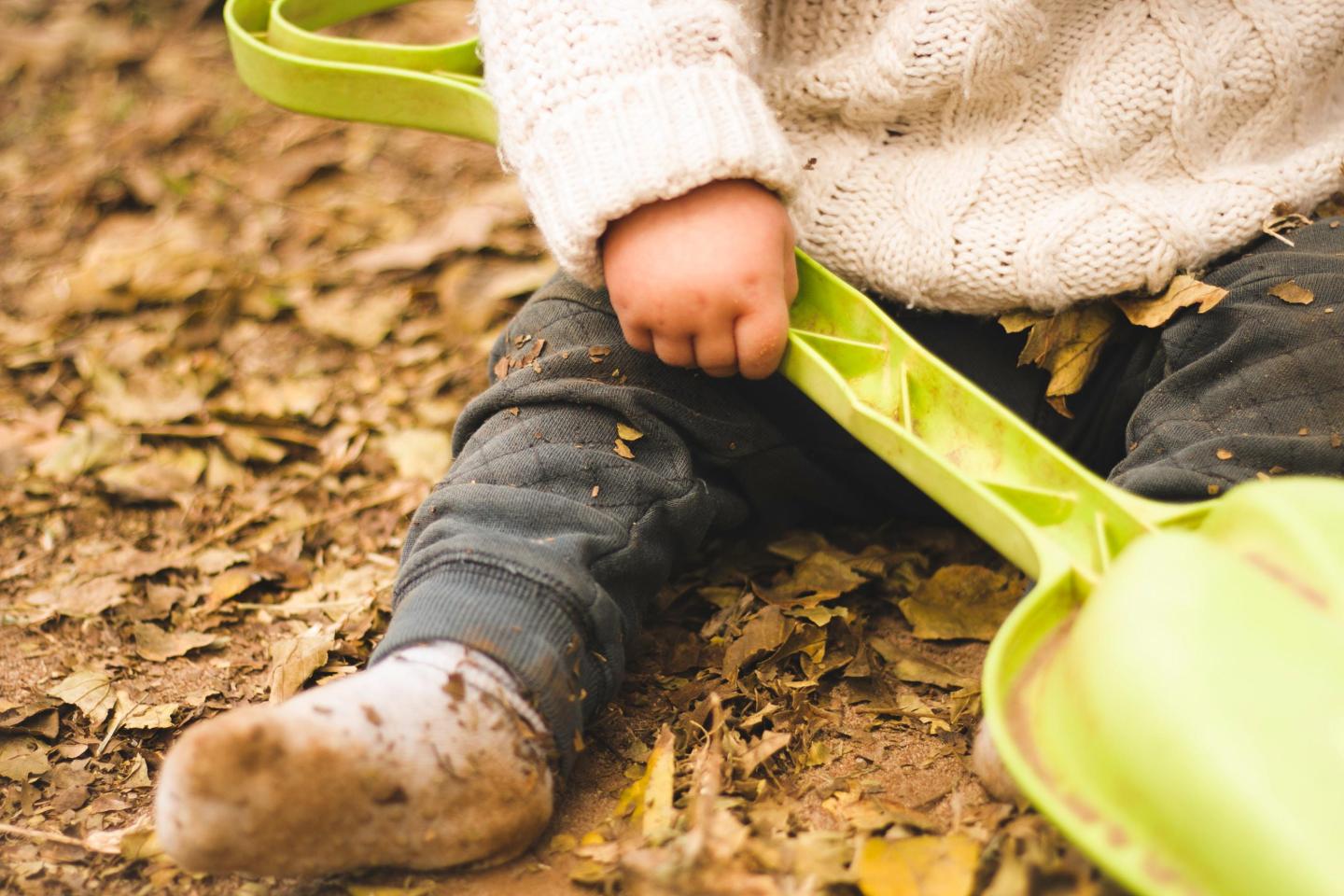
Close up of a toddler sitting in leaves playing with a toy
Photo by Meghan Holmes on Unsplash

There are only about 100 known instances of people with uncombable hair syndrome.

Have you ever come across something online that instantly made you smile? That’s what happens when people see Locklan Samples pop up on their Instagram feed. The cute dimple-faced toddler has a rare condition known as Uncombable Hair Syndrome, which results in locks that stick straight up no matter how you try to manipulate them. It also causes the hair to be extremely fragile, so frequent combing can cause it to break off. The syndrome is so rare that Locklan is just one out of 100 people known to have it.

Locklan’s parents spoke with People Magazine about how they discovered he was living with this ultra rare condition. Katelyn Samples, Locklan’s mom, explained that when he was born he had a head full of jet black hair, but eventually it fell out and was replaced with peach fuzz. A newborn baby’s hair is often completely different than the hair they end up with by the time they’re toddlers. It’s not uncommon for their hair to fall out in one spot or another, but it’s also not unheard of for their whole head to end up bald while their second sprigs of hair grow in.

Hair can grow back coarser, curlier or a completely different color. In Locklan’s case, his hair went from being jet black to platinum blonde peach fuzz, which eventually grew into hair that stood on end. Locklan’s parents said the color of his hair matched his brother’s hair, so it wasn’t a surprise, but the texture threw them for a loop.

When Katelyn posted pictures of Locklan on Instagram, a stranger messaged her asking if he had “uncombable hair syndrome.” This started Katelyn on a journey to find answers to what was going on with her infant’s hair, and if the condition was something she needed to be concerned about health-wise. Katelyn told People, it sent her into a “tailspin on Google.” Eventually, after climbing out of the Google rabbit hole, Katelyn called her son’s pediatrician to get answers. This turned out to be the first step toward an accurate diagnosis.

Locklan’s pediatrician had not heard of the condition and referred them to Atlanta's Emory Hospital to see a specialist. It was there they got the diagnosis. Katelyn explained to People, “We went to see her and she said she’d only seen this once in 19 years.” The doctor “didn’t think it was uncombable hair syndrome because of how rare it is, but they took samples and a pathologist looked at it under a special microscope,” and confirmed the diagnosis, she said.

He joins the very small club of people with the syndrome. Thankfully, this condition only affects the toddler’s hair and he is developing normally in all other aspects of his childhood. Katelyn revealed she hardly ever has to wash his hair unless it gets visibly dirty as it doesn’t collect oils at the scalp. Everywhere they go people are fascinated by Lock’s locks and ask to touch his soft tresses.

The family documents their journey on their Instagram account, and have found a support group via Facebook, where Katelyn says “it’s cool to see how other kids' hair has changed over the years—for some people it does not go away, and for others it becomes a little more manageable.” For now, Locklan enjoys the attention he gets from strangers, and he continues to bring a smile to people’s faces wherever he goes.

This story originally appeared three years ago.

dance, motherhood, mommy daughter dance, mother daughter relationship, parenting, wholesome
Umi4ika/Youtube

Svetlana Putintseva with her daughter Masha.

In 2005 at only 18 years old, Russian rhythmic gymnast Svetlana Putintseva became a world champion, after which she retired and eventually became a mom. Then, in 2011, Putintseva came out of retirement for one special Gala performance.

Little did anyone know that her then two-year-old daughter named Masha would be the key to making that performance so special.


As the story goes, the young child refused to leave her side that night. But rather than stopping the performance, Putintseva did what so many incredible moms do: she masterfully held space for two different identities.

As we see in the video below, Putintseva simply brought Masha onto the dance floor and incorporated her into the routine—holding and comforting her at times, performing impressive moves while she ran around at others…letting it all become a lively, endearing interaction rather than a rote routine. It became something really touching:

Watch:

Now, a bit of fact-checking as this video has once again started going viral. Despite what many captions say, Putintseva‘s daughter was likely always a planned part of the performance (the tiny leotard is a bit of a giveaway). But that doesn’t really take away from the message behind it: motherhood weaves another soul into one's identity, forever. And one of the biggest lessons it teaches is how to hold someone else steady, all while becoming ourselves.

Every day, moms are engaging in a similar type of “dance”: navigating through the world while guiding and nurturing their little ones. It probably doesn't always feel quite as graceful as what Putintseva put out, and, yet, it is just as beautiful.

dance, motherhood, mommy daughter dance, mother daughter relationship, parenting, wholesome A mother hugging her daughter.Photo credit: Canva

Maybe so many thought it was an improvised moment because improvising is a very real parent superpower. That’s certainly the takeaway we get from some of these lovely comments:

“You cannot control life but you can learn to dance with it. 🤍”

"This is beyond beautiful. 🥲"

“If this isn't a metaphor for motherhood. We improvise so much.”

“A mother’s unconditional love 🥹❤️ She just made my whole month.”

“I do this sometimes while deejaying. My daughter comes up so I hit the slicer and let her chop it up. A few chops and she is happy and goes about her business. 🥰”

“I can see my daughter doing this to me soon whenever I get up on stage on perform. She already stares long and hard at me whenever I am onnstage singing. She doesn't take her eyes off me. Sure she would be running up to stand with me when she starts walking 😂😂 i look forward to it tho”

“Sobbing 😭😭😭😭 As a dancer who hasn’t performed since having a kid, this inspires me in so many ways 🥹🥹 So beautiful and it’s clear that she admires her mom so much 🥰”

- YouTube www.youtube.com

Though not much is written on Putintseva following this performance, one blog post says that Masha has followed in her footsteps by getting into rhythmic gymnastics. Maybe it all started with this one performance. ❤️

Science

Her groundbreaking theory on the origin of life was rejected 15 times. Then biology proved her right.

Lynn Margulis had the audacity to challenge Darwin. And we're lucky she did.

lynn margulis, lynn margulis symbiosis, biology, scientific breakthroughs, darwin, darwinism, women in science
Facts That Will Blow Your Mind/Facebook

A photo of Lynn Margulis.

Throughout her prolific and distinguished career, biologist Lynn Margulis made several groundbreaking contributions to science that we take for granted as common knowledge today. For example, she championed James E. Lovelock’s “Gaia concept,” which posited that the Earth self-regulates to maintain conditions for life.

But by far, her most notable theory was symbiogenesis. While it was first written off as “strange” and “aesthetically pleasing” but “not compelling,” it would ultimately prevail, and completely rewrite how we viewed the origin of life itself.


In the late 1960s, Margulis wrote a paper titled "On the Origin of Mitosing Cells," that was quite avant-garde. In it, she proposed a theory: that life evolved through organisms merging together to become inseparable.

In essence, cooperation is the driver of life, not competition and domination. This directly went against Darwin’s “survival of the fittest” principle that was considered gospel in scientific circles. Margulis’ paper was rejected by fifteen journals before getting accepted into the Journal of Theoretical Biology.

- YouTube www.youtube.com

Time would be on Margulis’ side, however. By the late ‘70s and early ‘80s, research proved that the two major building blocks of plants and animals, chloroplasts and mitochondria were at one time independent bacteria. This solidified the fact that on a biological level, connection trumps autonomy for longevity. And now that fact is written in textbooks, with no real story of the adversity it overcame to get there.

While it is customary for most new scientific theories to be met with criticism, especially those that completely shift the current narrative, many have noted that sexism played a key part in Margulis’ initial lack of acceptance. On more than one occasion, she herself had hinted that women were seen as mothers and wives first, and scientists second. She recalled that while married to fellow scientist Carl Sagan that “Carl would finish his sentence, unperturbed” while she was expected to “handle all the duties of a 1950s housewife, from washing dishes to paying the household bills.”

And yet, Margulis would have other ideas that were controversial that had nothing to do with her gender. Most famously, she did not believe that AIDS was caused by HIV, and instead believed it was cause by a syphilis-causing type of bacteria, despite there already being decades of research proving otherwise. That view was seen as an endorsement of AIDS denialism, which undermined prevention and treatment effort. Then later in life, Margulis became a vocal proponent of 9/11 conspiracy theories suggesting government involvement the in Twin Towers attacks.

And yet, perhaps this is one of those “you gotta take the good with the bad” situations. Margulis’ inherent contrarian nature gave us both these unfounded, even harmful stances, in addition to entirely new paradigms that altered our understanding of life itself.

And if nothing else, it illuminated the need for science to include multiple points of view in order to unlock the truth. It seems life is, after all, about coming together.

Animals & Wildlife

Woman says we are 'severely underreacting' to octopuses, then proves she's not wrong

"However impressed or fascinated you are by octopuses, it's honestly probably not enough."

octopus, octopuses, wildlife, ocean life, marine life

Octopuses are just wildly interesting creatures.

What creatures have eight legs, nine brains, and dozens of fun and fascinating facts about them? Octopuses, of course. (Wait, is octopuses or octopi? Octopodes, perhaps?)

However interesting we think our suction-cupped, cephalopodic friends are, we're probably selling them short. That's the contention of Sarah, a comedic content creator on TikTok who's been sharing everything she's learned about octopuses, because they're far more bizarre than we might think.


"However impressed or fascinated you are by octopuses, it's honestly probably not enough," she says. "We are severely underreacting to octopuses collectively."

Once you see her video, it's clear she's not wrong.

@sarahmakesmelaugh

Octopuses are fascinating and I DO want to hold a tiny guy if possible just putting that out in to the universe 😬🐙#creatorsearchinsights #octopus #weirdanimals #animalfacts #didyouknow

With a hilariously understated sense of humor, Sarah shares facts like the idea that octopuses don't have tentacles, as many of us have been led to believe, but arms instead. Tentacles have suckers only at the end, while an octopus's arms have them from top to bottom.

"They decorate their front yards with shells and other shiny things they find in the ocean," Sarah says, adding, "I wonder if they judge other octopuses for how they decorate their front yard. Like, is there an octopus HOA?"

Sarah points out that The Beatles' song "Octopus's Garden" was inspired by this delightful fact.

Many of us know that octopuses are smart, but we may not know that they have a brain in each arm in addition to the brain in their heads, which is shaped like a donut. They can solve mazes and complete tricky tasks. And if their beak can fit through a hole, so can their whole body.

"So a fully grown giant Pacific octopus, which can literally be 30 feet long, can fit through a hole the size of a lemon," says Sarah. "And I don't care for that, particularly. I would never say that to an octopus's face because, evidently, they can recognize us, which I find unsettling. Note to self: Do not be mean to an octopus."

Because each arm has its own brain, it can operate independently, complete with its own sensory system.

Octopus, octopus arms, ocean life, marine life, octopus brains Each of those arms has its own brain?Photo credit: Canva

"I feel like they're smarter than us," Sarah says. "Are we confident they're not smarter than us? For instance, they will prank their prey. You know the joke where like old men will tap you on one shoulder, but surprise, they're at the other shoulder? Octopus do that. If they're hunting a shrimp, they'll tap it on the faraway shoulder so the shrimp runs directly into them. Like, 'gotcha!' I don't want octopus to do gotcha."

On a positive note, Sarah shows some examples of exquisitely colorful octopuses, though some of the most "fancy and beautiful" ones are also highly venomous.

That may have been the end of Sarah's video, but she wasn't finished. There's a part two that features blanket octopuses, the female superheroes of the sea. And that's not even the wildest part:

@sarahmakesmelaugh

Replying to @LalainID did yall know about the blanket octopus and didn’t tell me? Except those of you who did thank you 😂 #octopus #animalfacts #science #learnontiktok #learnwithme


A male blanket octopus is basically an inch tall and the female can grow to over six feet. The males can fit inside the pupil of the female's eye. What?! Basically, their only job is to produce sperm, which just raises way too many questions.

Sarah also talks about the mimic octopus, which she calls "the Jafar of the ocean" because it's basically a sorcerer (and one of them genuinely looks like Jafar from Aladdin).

That wasn't all. Even after the second video, she still wasn't done. Part three was every bit as fascinating, terrifying, wonderful, and chuckle-worthy as the first two (and also slightly NSFW in the most PG way possible):

@sarahmakesmelaugh

More Octopus species, this could go on forever y’all 😂 #octopus #weirdanimals #learnwithme #funfacts #creatorsearchinsights

The blob octopus? Who even knew? The eighth-arm situation is too much. Sarah was 100% right. We are, collectively, not reacting to octopuses nearly as strongly as we should be.

You can follow Sarah (@SarahMakesMeLaugh) on TikTok.

top sheet, flat sheet, bedding, duvet, generations, millennials, Gen Z, hygiene, sleep, making the bed

A woman sleeps peacefully in bed.

Once again, the youngins are flabbergasting the older generations with their disregard for once-important things they now deem unnecessary. There's always something that gets dropped or altered generation to generation. We learn better ways to do things and technology makes certain practices obsolete. But in one area, it doesn't matter how far we've come: our beds still need sheets to cover the mattress.

The debate is on the use of top sheets, also known as flat sheets. They're the sheets that keep your body from touching the comforter, and most Gen X and Boomers are firmly for the use of top sheets as a hygiene practice. The idea is the top sheet keeps your dead skin cells and body oils from dirtying your comforter, causing you to have to wash it more often.


Apparently, Millennials and Gen Zers are uninterested in using a top sheet while sleeping. In fact, they'd rather just get a duvet cover, though they may be cumbersome. A duvet cover can be washed fairly frequently, but some may opt for a simple comforter, a cheaper option that should be washed even more often. Still, many young people don't care how much more frequently they'll need to wash their comforters because their distain for a top sheet is that strong.

top sheet, flat sheet, bedding, duvet, generations, millennials, Gen Z, hygiene, sleep, making the bed A man sleeps peacefully. Canva Photos

But why on earth do Millennials and Gen Zers hate top sheets? It turns out it's mostly about practicality. Many Millennials are on the move holding a full-time job and a side hustle or two to make ends meet. Thus, to add an extra step when making the bed seems unnecessary.

“For a younger demographic, eliminating that step when making the bed in the morning really gives you a jump start on the day," Ariel Kay, CEO of Parachute tells Wall Street Journal.

Parachute is a company that offers bedding sets sans top sheets for folks who just don't like them and, boy, has Kay heard everyone's unsolicited opinions on the matter. She told WSJ that people will stop her on the street to get into debates about the importance or unimportance of top sheets. Yikes.

In a since deleted tweet, @JesseLynnHarte writes, "People say millennials 'killed' chain restaurants, marriage, & napkins... But WHEN will they acknowledge our greatest take-down yet?? TOP SHEETS. I don’t know a single millennial who uses one. Top sheets are archaic. This is just the truth."

It would seem that Millennials and Gen Z would much rather wash their duvet covers weekly than to add a flat sheet into the mix. One big complaint about the flat sheet that adds another con to the list is they get bunched up or tangled around your legs if you're a restless sleeper. Not everyone likes hotel tucked corners on their sheets because it can feel confining.

top sheet, flat sheet, bedding, duvet, generations, millennials, Gen Z, hygiene, sleep, making the bed Woman snuggled in bed.Canva Photos

But if you run hot, Boomers and Gen Xers might be onto something with the top sheet. It would seem that that thin piece of material that irritates some people can help control your body temperature according to USA Today. Even if you don't tend to need the cooling effect of a top sheet, what Mary Johnson, Tide Principal Scientist at Procter & Gamble has to say in a USA Today follow up article, just may make you rethink ditching the top sheet.

Simply by existing, "people produce one liter of sweat, 40 grams of sebum, 10 grams of salt, and 2 billion skin cells. All that stuff that happens below the waist [and] up by your head—skincare products, hair care products, ear wax, snot, drool, lots of really gross stuff—is transferred to your sheets," Johnson tells the outlet.

So whether you're team top sheet or not, it may be a good idea to at least wash whatever you use to cover your bed at least once a week. It couldn't hurt.

@goodhousekeepingofficial

We asked the #GoodHousekeeping team what they really think about #topsheets, and the answers might surprise you. 😆 Keep watching to find out where everyone stands in this epic #bedding #debate.

This article originally appeared last year. It has been updated.

american, americans, proud american, funny things about americans, people in the united states, hilarious americans, united states

Non-Americans share the funniest things they've heard about what Americans are like.

The United States is unlike any other country in the world. From its sheer size to the abundance of free refills, it's a place and culture that many non-Americans can't wrap their heads around.

On the flip side, it can lead to lots of funny (and sometimes true) assumptions about what the United States and American culture is really like. A Reddit user asked Americans for “the funniest thing a foreigner has said to you about America.”


The answers were a great mix of cultural misunderstandings, myth-busting, and much-needed geography lessons. Here are 15 of the funniest things non-Americans have told Americans about the U.S.

- YouTube www.youtube.com

1. Slick Willy

"While being transported from the airport to the hotel in Morocco, the cab driver said, 'American?' I responded, 'Yes.' His response: 'Ahhh yes. Bill Clinton.'"

"Buddy was in Eastern Europe in the 90s, and a little old lady who spoke no English found out he was American and just said 'Monica Lewinsky' and then laughed."

2. American monsters

"An International Student (from Malta) and I were hanging out at the 'Smoker's Lounge,' aka the place in front of the dorms where people smoked. A raccoon popped out of one of the trash cans, and he freaked out and said that the animals in North America were the size of monsters."

3. It's a big country

"A Japanese person once told me that the US is 'enviably wide.'"

"Because Japan is similarly tall, but lamentably skinny."

japan, size of japan, size of united states, japan vs united states, map of united states The size of Japan compared to the United States.Image via Wikimedia

4. Melon farmers?

"A guy from the UK I know loves to refer to Americans as melon farmers. Melon farming imbeciles. Doesn't know what some object I refer to is? Must be some kind of weird melon farming contraption. Where have I been the last few days? Must have been tending to my melon farm. I wish I had a backyard instead of a dumb asphalt apartment parking lot? Ah, I must be missing life back on my melon farm."

5. No wood houses

"This man I knew in college was from rural Kenya. Apparently, your temporary house was constructed of wood. Folks that had gained enough wealth no longer had a wooden house."

"We had a guy from Kenya bring pumpkin spice muffins to a potluck. He said something like 'I see how you keep pumpkins on your porches, so I figured you must really love them.'"

6. We love ranch

"A French guy asked me if we really put ranch on everything. I said, 'Yes, even salad,' and he stared at me like I’d just admitted to living in a dumpster."

- YouTube www.youtube.com

7. Guns, guns, guns

"A Persian man that I worked with did a redneck impression. He said 'I'm an American and I like guns and Jesus' in a perfect southern accent."

"When I lived in Italy, one of the first questions my neighbors asked was 'How many guns do you have and where do you keep them all?' They were absolutely floored that I didn’t own any guns."

8. Small world

"A waiter in Prague asked where I was from. I told him Boston. He said, 'Oh, I have a friend named Tomas Dvorak in Wyoming. Do you know him?'"

9. We love peanut butter

"When I studied abroad in Germany, my host family told me 'We bought lots of peanut butter for you. We know Americans need peanut butter.' I do love peanut butter, but I had definitely never heard that stereotype before!"

I did once startle a lovely Australian couple with my PBJ. Apparently, PB and J are only considered compatible here in North America. They looked at the sandwich I made with the same kind of horror I might’ve used on something with, IDK, tuna and marshmallow fluff."

10. Are cheerleaders real?

"'Are cheerleaders real?' Cheerleaders were in movies, but a teenager in London had no idea if that was a real thing. It was a charming conversation as a teenager."

"I like how foreigners will believe that everyone in America is dodging gunfights and car chases on their morning commute, but then think we made up cheerleaders and yellow busses for the movies."

11. Sweet tea is addictive

"A British friend of mine called southern sweet tea 'the most vile, disturbing, horrific swill ever created. Please bring another pitcher.'"

"If they don't have to amputate a foot after your first glass it needs more sugar."

@landontalks

Let’s discuss: Sweet Tea in the south. #southern #southernaccent #sweettea #southernliving #thesouth @ibbkate

12. Angry sink

"Saying I had an angry sink because it had a garbage disposal in it."

13. Crossed-up

"My fiancé from the Netherlands asked what the 'zing' road sign meant that he kept seeing everywhere. I couldn’t figure out what the heck he was talking about at first. It was the X-ing (crossing) sign."

"My international colleague thought it was a word in Chinese (Xing) and was very confused by this lol."

14. It's bigger than you think

"My wife's Swedish cousins thought they could go explore both New York City and Los Angeles in a single weekend."

"Also had Swedish visitors, and we live in New England. They wanted to take a drive to California during the 5 days they were going to be here, and they wanted to stop and see the Grand Canyon along the way, then be back in time to catch their flight home out of Boston."

15. The Ohios

"Was at a pub in Italy with a friend, and some of the guys found out we were American. Proceeded to take shots with them toasting ‘to the Ohios!’… we’re not from Ohio lol."

"Which Ohio are you not from, North Ohio, or South Ohio?"

This article originally appeared last year. It has been updated.