Isn’t it wild to think that spies are actually real? Governments all over the world send secret agents to other countries to steal information or conduct missions. The key element that makes a spy, of course, is the secretive nature of their work. They go undercover, sometimes even wearing disguises, and carry out their missions without attracting attention. That means they’re masters of psychology and social science rather than combat and weaponry.
In a revealing interview with Steven Bartlett on his “Diary of a CEO” podcast, former Secret Service Special Agent Evy Poumpouras shared how to get people to do what you want them to do. The key, according to Poumpouras, is to understand what motivates them. Once you know the psychological framework behind what makes them tick, you can persuade them to behave as you like.
“The biggest mistake people make is they talk a lot,” Poumpouras said in the video clip. “Steven, if I’m doing all the talking and you’re doing all the listening, you’re learning everything about me. You’re learning about what I care about, my values, my belief systems, getting a good read on me and I’m learning nothing about you.”
The former Secret Service Agent says that you should listen to determine the subject’s motivational mindset. Are they motivated by money, sex, admiration, status, freedom, relationships, or safety?
“Everybody’s motivated by something different. But I have to hear you and pay attention to you to understand what that is. Everybody’s purpose is different,” she continued. “If you give people enough space, they will reveal themselves to you.”
To be clear, Poumpouras isn’t in the business of helping people trick others. Instead, she hopes the techniques she teaches will, “Increase your self-confidence, your self-worth, and your ability to trust and believe in yourself.”
The commenters on TikTok loved the advice:
“People are so interested in themselves and want to talk about themselves… We give our power away by talking.”
“Changed my life when I was told to stop filling the silence”
“As a parent, I needed this reminder too.”
Yes, the parents came out in full force to support Poumpouras’ tip. Perhaps no one, other than espionage experts, better understands the importance of learning how to get other people to do things without threats and violence. (OK, sometimes there are threats).
It’s also a wonderful tactic because your subject will have no idea they are part of a manipulation because they are the ones doing the talking. It’s nearly impossible to give yourself away when you’re sitting in silence.
Understanding what motivates people is essential when protecting the safety of the nation’s most important assets and dealing with shady, dangerous people. But it’s not only useful for spies and double agents.
This so-called “trick” can also benefit the layperson by giving us a framework to understand people better. Knowing what motivates someone is very important, whether you’re on a date, in a business deal, or in a leadership role at work. It’s also very important when raising children or training an animal.
The data agrees. Forbes writes about the experiments of Dan Ariely, who found that, “People are much more likely to go above and beyond for tasks that they’re emotionally (rather than financially) invested in.” So, if you want people to do things that benefit you, sure you can pay them or convince them that it’s in their best interest, but you’ll have far better luck if you appeal to their core principles and desires. To do that, you first have to listen and find out what they are.
Understanding your personal motivators is also essential for making the best choices in life.
It helps us determine which actions will be genuinely beneficial. It’s also a great way to ensure that we are involved with people, organizations, and activities for the right reasons.
In other words, digging into someone else’s (and your own) core beliefs and motivation can be used for good! Not just protecting state secrets and preventing assassinations.
Productivity consultant Ashley Janssen says the key to understanding your motives is knowing your values.
“When you know what you value, you can identify how an activity or goal will support and foster those values,” Janssen writes. “When you decide to try something, consider whether it’s what you think you should want to do or what someone else has said you should do. Those conditions are often not enough to sustain a behavior or activity. It’s hard to keep moving forward on something that you don’t really care about or are not invested in.”
This article originally appeared two years ago. It has been updated.
From Pakistan to Tanzania, the most effective education solutions are community-led. Here’s how local leaders, in partnership with Malala Fund and supported by Pura, are mobilizing entire communities.
When asked to describe what Tanzania smells like, Grace Isekore closes her eyes and breathes in deep. For a moment, she’s somewhere else entirely. Tanzania is a rich tapestry of sights and scents, from the smell of sea mist that permeates the coastline to the earthy cardamom and cloves she cooks with in her kitchen. But when Grace emerges from her reverie, her answer is unexpected.
“Tanzania smells like peace,” she says, her eyes still closed. “I see a beautiful country where we are free to move, free to speak. And there is peace within the community.”
For Grace, that sense of peace isn’t just something she smells; it’s something she works toward every day. As a project coordinator with Pastoral Women’s Council (PWC), a women-led organization that empowers pastoralist communities in northern Tanzania, she has seen firsthand how girls flourish when they have the opportunity to attend school. Like scent, education not only connects girls to their own culture, but also helps broaden their horizons, realizing new possibilities for themselves and others. That transformation reshapes entire communities and ripples outward, with the potential to change countries and transform the world for the better.
Different scents, different approaches, and communities driving change
Spices in Tanzania. Captured by James Roh for Pura
For Grace and others around the world, education is freedom, as well as a pathway to a stronger community. Rooted in that shared belief, Pura, a home fragrance company, was inspired to build on their four-year partnership with Malala Fund to create something truly unique: a fragrance collection that connects people through scent to communities in Tanzania, Nigeria, Pakistan, and Brazil, where barriers to girls’ education are among the highest.
Using ingredients from each region, the new Pura x Malala Fund Collection uses scent to transport people to these regions directly. “Future in Bloom,” for example, invokes Pakistan’s lush valleys through notes of jasmine, cedarwood, and mango; while Tanzania’s fragrance, “Heart on Fire,” evokes the spirit and joyfulness of the girls who live there through cardamom, lemon, and green tea.
The new Collection honors the work Malala Fund does every day, partnering with locally-led organizations in these four countries to ensure every girl can access and complete 12 years of education. Each scent celebrates the joy, tenacity, and courage of the women and girls driving change on the ground, while also augmenting Pura’s annual grant to Malala Fund by donating eight percent of net revenue from the Pura x Malala Fund Collection to Malala Fund directly.
Just as each country’s scent is unique, so too are their needs related to education. But with support from Malala Fund and Pura, local leaders are coming up with creative ways to mobilize entire communities (parents, teachers, elders, and the students themselves, in their pursuit of solutions, understanding that educating girls helps everyone thrive. Here’s how their efforts are creating real, durable impact in Tanzania and Pakistan, and creating a ripple effect that changes the world for the better.
Parent-teacher associations help Maasai girls and their communities in Tanzania problem-solve
A girl’s school in Tanzania. Captured by James Roh for Pura
Northern Tanzania, Grace’s home, is home to pastoralist communities like the Maasai, a nomadic people who have moved with the seasons to nurture the land and care for their livestock for centuries. The nomadic nature of this lifestyle creates significant and unique barriers to girls’ education. Longstanding gender roles have enabled Maasai to survive in the harsh environment and have placed great value on both women and men. Over time, as nomadic life has been threatened by the privatization of land and stationary education models have been implemented, the reality of pastoralist livelihood has shifted and introduced new complexities. Now, the sheer distance to schools is both a practical challenge and one that often comes with danger from the landscape, predators, and potential exposure to assault along the journey. Girls shoulder the responsibility of household chores and there is often cultural pressure around early marriage – both leading to boys’ education being prioritized over girls’.
“There are very, very good [pastoralist] cultural practices, which are passed from generation to generation,” says Janet Kimori, an English teacher at Lekule Girls Secondary School in Longido, Tanzania. But when cultural practices act as educational barriers, “you have to sit down and look for where you are going to assist. As a school, as an individual, the school administration—all of us will chip in and know how we are going to deal with this problem.”
PWC works to ensure girls are able to exercise their right to an education while also preserving pastoralist culture. One successful approach, the organization found, has been the formation of Parent Teacher Associations (PTAs), created with help from Malala Fund. In PTA meetings, students, parents, teachers, elders, and government officials meet, discuss educational barriers, and come up with community-led solutions that preserve and honor their culture while advancing educational outcomes.
PTA meeting in Tanzania. Captured by James Roh for Pura
One recent PTA meeting highlights how these community-led solutions are often the most effective. At Lekule Girls Secondary School, the lack of fresh water forces girls to walk long distances to collect water for the school’s kitchen during the school day, and these long journeys not only disrupt class time but can leave girls vulnerable to sexual assault in isolated areas. Through facilitated discussion, PTA members landed on a solution: installing a borehole to pipe in fresh water to the school. Reliable access to water creates a better learning environment for the girls, but it also benefits the community at large, as local governments are then more likely to invest in health clinics and other community resources nearby.
With a solution in place, the PTA was then able to discuss ideas and map out a course of action. The women would raise money for the cost of the borehole, while the men would recruit workers to dig the hole and lay the pipe. Together, they would ask government officials to match their investment.
The benefits of PTA meetings within the pastoralist communities are undeniable. “The girls are talking and addressing issues in a confident way, and parents feel they are part of the resource team to solve challenges happening at school,” Grace says. One unexpected benefit: The larger cultural impact these PTA meetings have created. Thanks to the success of PTAs within pastoralist communities, the models are now being endorsed on a national level, and schools across Tanzania are starting to use them to solve problems in their own communities. When a community creates opportunities for girls to learn, everyone benefits.
Safe spaces in rural Pakistan help students and their parents connect, then drive change
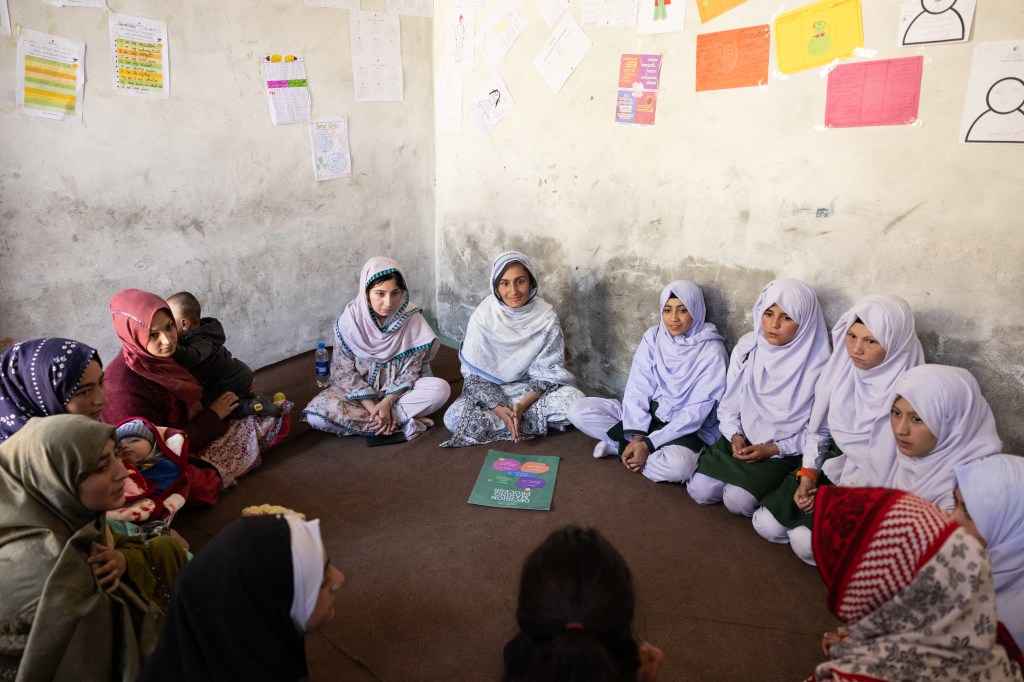
Safe space for girls meeting in Pakistan. Captured by Insiya Syed.
A continent away in Pakistan, the country’s northernmost region of Gilgit-Baltistan seems like a land untouched by time. The region’s looming mountains, snow-capped peaks, lush valleys and crystalline lakes draw nature lovers and landscape photographers from around the world, but living among this kind of breathtaking scenery has its drawbacks. Schools in the region are few and far between, and the area’s harsh climate often makes roads inaccessible for travel. Poverty and gender-based discrimination are additional obstacles, making school even further out of reach, and girls are affected disproportionately. Going up against these barriers requires a persistent, quiet strength that’s found in the women who live there and reflected in Pakistan’s signature scent.
Saheli Circles are how local leaders in Gilgit-Baltistan are bridging the gap between girls and education. An Urdu term for “female friend,” Saheli Circles are after-school safe spaces where girls explore subjects like art and climate change, while also developing skills that help them manage emotions, set goals, and build positive relationships. Girls study in groups, visit the library, play sports, and tackle filmmaking and photography projects, all designed to develop self confidence and teach the girls how to advocate for issues that matter to them. But the work doesn’t stop there.
“What we’re trying to achieve here will only be impactful if it trickles down to the home environment and the school environment,” says Marvi Sumro, founder and program director of Innovate, Educate, and Inspire Pakistan (IEI), the local organization that developed the Saheli Circles model and partnered with Malala Fund in 2021 to make it a reality. Ever since, Saheli Circles have grown to involve teachers, elders, and parents to encourage relationship building that’s essential for young girls and adolescents. “Our spaces can give mothers and daughters an opportunity to interact a little differently—do an art activity, or have a cup of tea together, or some good conversation,” Marvi says.
The relationship building is what makes the biggest positive impact throughout the community. Recently, one Saheli Circle was able to bring together parents, teachers, and administrators to advocate for better education at their local school, and together they convinced the department of education to hire a science teacher. Another Saheli Circle organized a fund where members of the community can contribute monthly to pay for uniforms, books, and other school expenses for the girls in their village, eliminating those small, hidden costs that are often a barrier to education for many. A third Saheli Circle was able to produce a short film about how gender-based household chores can take away valuable study time from girls, leaving them at a disadvantage. “The girls put the film together and showed it to the mothers, and the response from the mothers was just beautiful,” Marvi says.
Girls smiling in Pakistan. Captured by Insiya Syed.
The education and relationship building that the girls receive in Saheli Circles connects them to larger opportunities and economic freedom that are not possible in their hometown. “For girls in Gilgit-Baltistan, education is extremely important because of the fact that we’re so far away from where the economy is, where the opportunity is. Education becomes this bridge for us, for our girls, to access all the opportunity and economy that exists in [larger cities].”
From rural Tanzania to remote Pakistan, local organizations prove every day that prioritizing girls’ education benefits everyone. Communities that lift up girls are able to secure resources like clean water and well-staffed schools, as well as build stronger relationships.
These outcomes are only possible because of the women and girls who work tirelessly in these regions to overcome barriers and drive progress. The Pura x Malala Fund Collection is a way to honor them, celebrate their achievements, and unite people the world over around a shared belief that education is freedom. Like scent, that belief can build, travel, and has the possibility to transform the world.
Experience the Pura x Malala Fund Collection here, and connect with the stories of real girls leading change across the globe.
The evolution of candles from lighting necessity to scented ambience creator is kind of funny. For thousands of years, people relied on candles and oil lamps for light, but with the invention of the light bulb in 1879, fire was no longer needed for light. At that time, people were probably relieved to not have to set something on fire every time they wanted to see in the dark, and now here we are spending tons of money to do it just for funsies.
We love lighting candles for coziness and romance, relishing their warm, soft light as we shrink from the fluorescent bulb craze of the early 2000s. Many people use candles for adding scent to a room, and there are entire candle companies just for this purpose (Yankee Candles, anyone?). As of 2022, candles were an 11 billion dollar business.
With their widespread use, you’d think we’d know a thing or two about candles, but as it turns out, a whole bunch of us have been burning candles wrong our entire lives without knowing it.
Wax on wax off: avoiding the ‘memory ring’
A recent post on Twitter X started the education session:
“Just learned that my fiancé, who buys candles all the time and we literally always have candles burning, did not actually know how they work and blew out a medium first burn candle 30 minutes after I lit it when I wasn’t paying attention and ruined it,” the user wrote.
Many people had no idea what she was talking about. In fact, the original since-deleted post went viral with hundreds of people asking: Huh? So the OP explained.
“If a candle is not burned for long enough on first burn to melt edge to edge it will create a ‘memory ring.’ Once a candle has a memory ring, it will continue to tunnel and never burn all the way across.”
Now THAT’S something almost everyone has experienced. Candles are pretty expensive, so it’s frustrating when all that delicious-smelling wax gets left behind. Apparently, a short first burn (in this case, just 30 minutes) is one of the main culprits of a ruined candle.
Memory rings are also called ‘tunnels’
Tunneling is the name of the phenomenon where a narrow tube-shaped area of candle continues to burn deeper and deeper, leaving lots of “waste” wax around its edges. Experts agree that the first burn should last 2-4 hours at least to avoid an uneven or narrow memory ring. However, burning a candle for over 10 hours at a time can cause carbon buildup on the wick.
“This is why you should not light a large candle at night, which is unlikely to burn all the way across before you need to blow out to go to bed. Allow at least one hour per inch of candle width,” she went on.
So that’s why candles always end up with a hole in the middle, making us think the candle companies are just running a scam to make us go through candles faster. Nope. It’s a user error, and many people were flabbergasted by this realization.
“This is the most useful information I’ve been given my entire adult life,” wrote one person.
“This skill should be taught in schools,” shared another. “The amount I’ve wasted on half burnt candles is outrageous, the amount of times I’ve used Algebra since leaving school = 0.”
“When I worked at Pier 1 in the 90s I got to go to some candle workshop that taught us the correct way to use (and therefore sell) candles and that is probably some of the most useful knowledge I’ve carried in my head this long life,” shared another.
Well, never say ‘never,’ because here’s the good news: a tunneled candle can be fixed!
How to fix an existing tunnel
Probably the easiest way is to avoid tunneling your candles in the first place by burning them long enough upon first burn to liquify the entire top layer of wax. Again, that’s usually 2-4 hours.
It also helps to care for the wicks regularly! Good wicks allow for a clean, even burn. Trim the burnt ends before lighting the candle and, if possible, use a snuffer instead of blowing out the flames with your mouth. Using a candle warmer is another way to get an even melt; with the added perk of making the scented wax last much, much longer.
But even if you do accidentally “ruin” a candle, it can be recovered. Placing a ring of foil around the candle with just a small opening at the top for the flame will help trap heat and help the edges of the wax melt on the next burn. Once the memory ring evens out, you can burn the candle like normal again.
In fact, you can even use a candle warmer to melt the wax back to even and then resume burning. Some clever candlers even put candles on the hot pad of their coffee makers as a DIY hack.
What about indoor air quality?
The candle posts also prompted a separate discussion about candles and indoor air quality and the volatile organic compounds that are released when they are burned.
Some people equated burning candles with having a small engine running in your living room, though according to the Cleveland Clinic, there’s scant evidence that the amount of toxins released by burning candles is actually hazardous to your health, especially if you use high quality candles in a well-ventilated area.
But if you tolerate them, feel free to enjoy as recommended,—just make sure that first burn melts the wax all the way to the edges to avoid the dreaded tunneling.
This article originally appeared 2 years ago. It has been updated.
Doing laundry can be a bewildering process. For starters, most people don’t know how to properly use a washing machine (or what wash cycles actually do.)
Laundry also presents challenges when it comes to removing odors. And many people don’t know how often they should *really* be washing their sheets.
Even for the most seasoned launderers, there is always a new laundry skill or lesson to learn. On Reddit, a wife struggling “for years” to remove sweat stains in the armpits of her husband’s undershirts shared what finally worked for her.
Wife removes husband’s pit stains
User Bupperoni shared with fellow laundry enthusiasts on the social media platform that she discovered the laundry hack after being fed up with her normal go-to detergent.
“I have been at a loss with my husband’s undershirt pit stains/buildup for years,” she explains. “Recently, I learned that my detergent is crap (All Free & Clear) and it was recommended here that I try adding Biz until my detergent runs out.”
Next, she explains that she “took around 20 of my husband’s undershirts” and applied Biz to them by creating a paste.
“I put some Biz in a cup with water to make a paste and one by one I poured the paste onto each armpit (inside and outside) and lightly scrubbed with a toothbrush. After that I let them sit for an hour,” she explains. “Then I added 1/2 cup of Biz to the washer, added the shirts, then added detergent. I washed with hot water and did an extra rinse cycle.”
The end result was a major success. “They came out so good! They aren’t perfectly white but the greasy deodorant, sweat, and dead skin buildup is gone!” she added.
What is Biz?
Biz is an enzymatic laundry powder that contains a number of enzymes (including lipase) to break down lipids (fats) and oils. It also comes in liquid form.
It was invented in 1968. Laundry lovers on Reddit sing its praises, with many calling it “the best kept laundry secret.” One fan of Biz shared:
“I had given up hope on the armpit stains on our workout clothes, but today, I decided to soak them in Biz before washing and it’s like they were never there! I didn’t even bother making a paste and leaving them on the pit area — just 1/2 cup in a medium load using the auto soak feature in our washing machine for 1 hour. I wish I had before and after pics!”
It is also affordable. A 60 ounce box of Biz powder (available at Walmart) sells for $6.53, which can take care of 40-60 loads. The cost breakdown is about 11 cents per wash.
Lipase is one of the most important ingredients in laundry right now, and here’s why you should care!!! Lipase is an enzyme that breaks down fat and oil and is the same thing your body uses to digest a greasy meal. In detergents and stain removers, it targets sebum, which is the body oil your skin produces constantly. Sebum is the number one stain on your clothes, and when it builds up it causes yellowing and body odor. Here’s how enzymes work: think of them as tiny scissors. They cut big molecules into small ones so surfactants and water can actually wash them away. And unlike surfactants, enzymes aren’t destroyed in the process, they work over and over, which is why a little goes a long way with enzymatic pretreatments. The most important thing with enzymes: give them time. Just like digestion, they need to sit and work. Minimum one hour, maximum one week. When you’re reading ingredient labels, look for lipase, protease, amylase, cellulase, and mannanase. Each one targets something different. I like to keep my enzymatic stain remover on my hamper and pretreat stains when I take my clothes off. Do you want me to talk more about the different types of enzymes in laundry products? #laundry#detergent#cleantok
Professional dry cleaner explains what causes pit stains
Zachary Pozniak, a professional dry cleaner who runs YouTube channel Jeeves NY, breaks down why removing sweat stains can be so difficult. He explains that the root cause of pit stains is sebum.
“Your body produces around 40 grams of oil everyday. It’s called sebum,” he says. “It lubricates and protects our skin and hair.”
He adds that sebum is the main cause behind body odor and acne, and also causes yellowing of clothing.
“Over time, sebum will oxidize, or turn things yellow,” he shares. “This is the same exact thing that happens to apples or avocadoes, and this is commonly seen on the underarm area.”
Iced coffee is a must for many Americans. A 2025 survey from the National Coffee Association reported that 31% of Americans have iced coffee daily.
And Americans are shelling out their hard-earned cash for it. Data from food research firm Technomic found that in 2023, Americans spent $17.7 billion on iced coffee drinks. Coffee prices in the U.S. are also on the rise, and an August 2025 report noted that the average cost for hot coffee was $3.52, and $5.47 for cold brew.
Frugal people looking to save money on their daily coffee fix took to Reddit where a trucker shared his affordable iced coffee recipe. It’s earning major praise from his fellow frugal foodies.
49-cent iced coffee hack
User asu3dvl explained how he keeps his iced coffee costs down while on the road:
“Trucker here. Every morning I mix two tablespoons of Great Value 100% Columbian instant coffee into my 20 oz Stanley tumbler. A splash of Hazelnut creamer and add water and ice. Shake it up,” he shared.
He noted how affordable it is, as well as how “It’s like $0.49 a day, lasts me all morning and keeps me sane when I roll through your town as you people try to kill yourselves around my 40 ton 18 wheeler. 🤣🤣🤣 The coffee and the large creamer last around three weeks.”
He also added, “Tastes just as good if not better than the fresh brewed stuff we get out here, anyway.”
A former barista commented, “I worked in a coffee shop for years and I drink instant now. Its come a long way.”
Fellow iced coffee drinkers offered their best iced coffee tips to save money.
“I really like Cafe Altura instant coffee. They have one of the best instant coffees I’ve ever had and it’s a medium roast! It’s a bit spendy, but def less if you’re buying coffee from a coffee shop.” – 4077
“Juan Valdez makes great instant coffee too.” – jameson71
“Try Bustelo instant!” – disasterous_fjord
“I use about a cup and 1/3-ish of milk, 3 tablespoons of brown sugar, a couple of ice cubes, 2 scoops (I think they are tsp, but I have them heaping) of instant coffee. And a tiny bit of vanilla. I put it in a blender and tastes like a Tim Hortons Iced Capp. Instant coffee is super handy for iced coffee drinks! To make black coffee, I don’t like instant, but with milk and brown sugar, its so good!” – Just_Cake4512
“Cold brew concentrate is another good one for anyone who wants to level up from instant without spending starbucks money. throw ground coffee in a mason jar with water overnight, strain it in the morning, and you’ve got concentrate that lasts like a week in the fridge. cost works out to maybe 30-40 cents a cup. but honestly 49 cents a day for something that keeps you sane while driving an 18 wheeler through traffic is probably one of the best ROI purchases anyone in this sub is making lol.” – Couponpicked
“Try Taster’s Choice medium dark, next time you get a chance, also available at Walmart.” – ditto3000
“There’s a somewhat famous finance youtuber who had pretty much the same recipe for his “20 cent iced coffee” compared to coffee chains’ iced coffee:
– make a pot of coffee (i think he grinds his own beans) – put the whole pot in the fridge overnight – add mocha creamer (or whatever) to taste the next day. 20 cent (or is it 10 cent) ice coffee. save $5 (this was at the time, save more $ now).
I think the main part is the overnight icing of the coffee in the fridge. if you just add ice cubes to making it straight away its not the same.” -Silly-avocatoe
Despite the massive amount of time we spend on the Internet, if we’re honest with ourselves, we bounce between the same five or six websites every single day. Which is fine! But living like that makes it easy to forget how vast and weird the Internet can be. There are dozens (if not hundreds) of sites out there that are truly useful little gems that make you feel like you’ve discovered some kind of cyber secret. These are the kinds of websites you bookmark immediately.
Luckily, Reddit made discovering these Internet gems much simpler. User @powerfulsites posed the following question: “What’s the most powerfully useful underground website that most people don’t know about?”
And the Internet responded in droves. (Guess the Internet enjoys talking about itself.) We grabbed 10 of the best, most wonderful recommendations, from powerful image editors to science-backed white noise generators. And once you know about them, you’ll wonder how you got along without them.
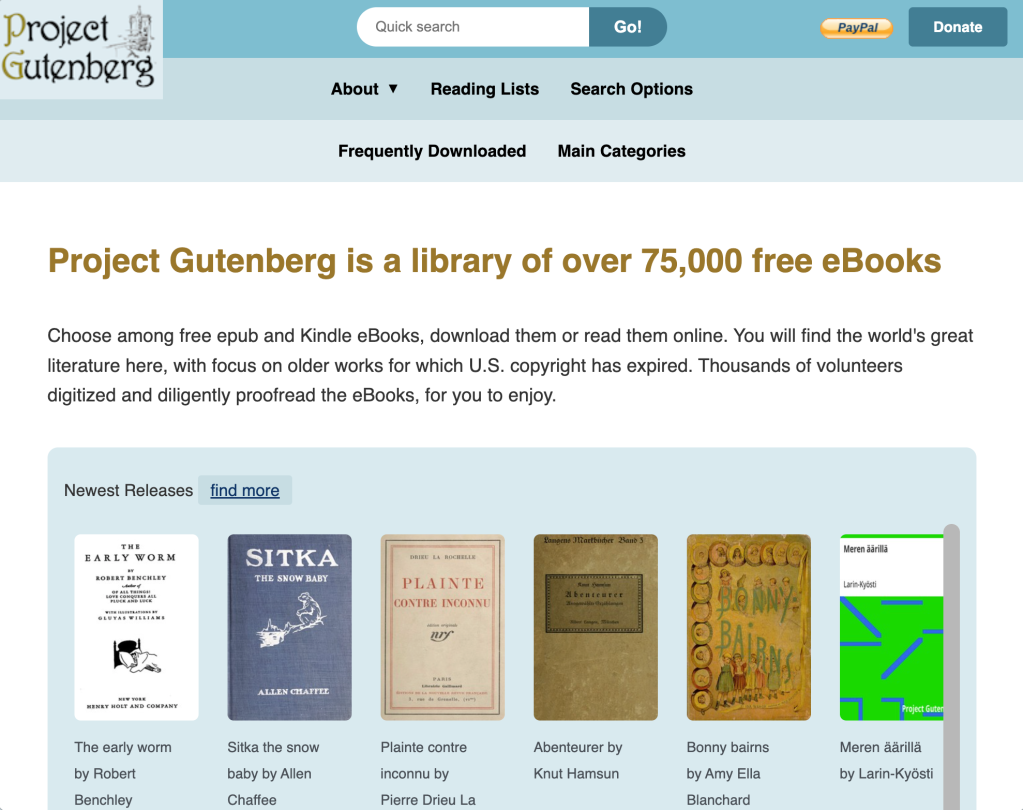
In 1971, a college student named Michael Hart typed out the Declaration of Independence on a university computer and uploaded it for anyone to download. It was free forever, and that small act of Internet generosity became the foundation for Project Gutenberg (PG). More than 50 years later, PG has grown into an incredible library of over 78,000 free eBooks in 60+ languages. Frankenstein by Mary Wollstonecraft Shelley; Jane Austen’s Pride and Prejudice. Crime and Punishment by Fyodor Dostoyevsky.
Every classic you can think of, available in seconds, at no cost.
You know that annoying, nagging feeling when you’re reading through an article that references a new study (about Internet addiction, or candy consumption, or why people feel the need to buy those AMC popcorn buckets at ridiculous prices) and you wish you could see the actual data? Google Scholar fixes that. It’s a free search engine for academic papers, journal articles, and dissertations—over 160 million documents—that anyone can use, no university login required. Just type your question and find out what scientists actually found. It’s a superpower most people don’t know they have access to.
Photo credit: Etymology Online – Screenshot of Etymology Online.
Did you know “disaster” literally means “bad star”? Or that “salary” comes from the Latin word for salt? Douglas Harper spent years building Etymology Online, a free dictionary of over 50,000 word origins, to provide information just like this to the masses. Here, you can trace the origins of modern English words back to their ancient roots. It’s the kind of site where you look up one word and resurface forty-five minutes later, cognizant of the terrifying origin of the word “nightmare.” You’re welcome.
Science confirmed what coffee shop regulars always knew: a moderate level of ambient noise makes you more creative. Rainy Cafe bottles that affect into two sliders: one for café sounds, one for rain. Blend them to your taste and get to work. No ads, no account, no upsell. Writers and remote workers have been quietly using it for years.
Removing a background from a photo used to require Photoshop skills or a graphic designer friend. And something called a “lasso tool”? Now it takes about five seconds. Drop your image into Remove.bg, and its AI cleanly cuts the background out, including tricky edges like hair and fur, then hands it right back to you. The site processes over 150 million images a month, which is, like, so many images. It feels almost like cheating.
Browser bookmarks are where good intentions go to die. Everyone has hundreds of them. Nobody can find anything, no matter how many late-night sessions you spend obsessively reorganizing them. Skip the hassle and head to Booky.io, a clean, private bookmark manager with color-coded collections you can navigate with ease. Works on every device, has a browser extension, and—crucially—doesn’t track you or sell your data.
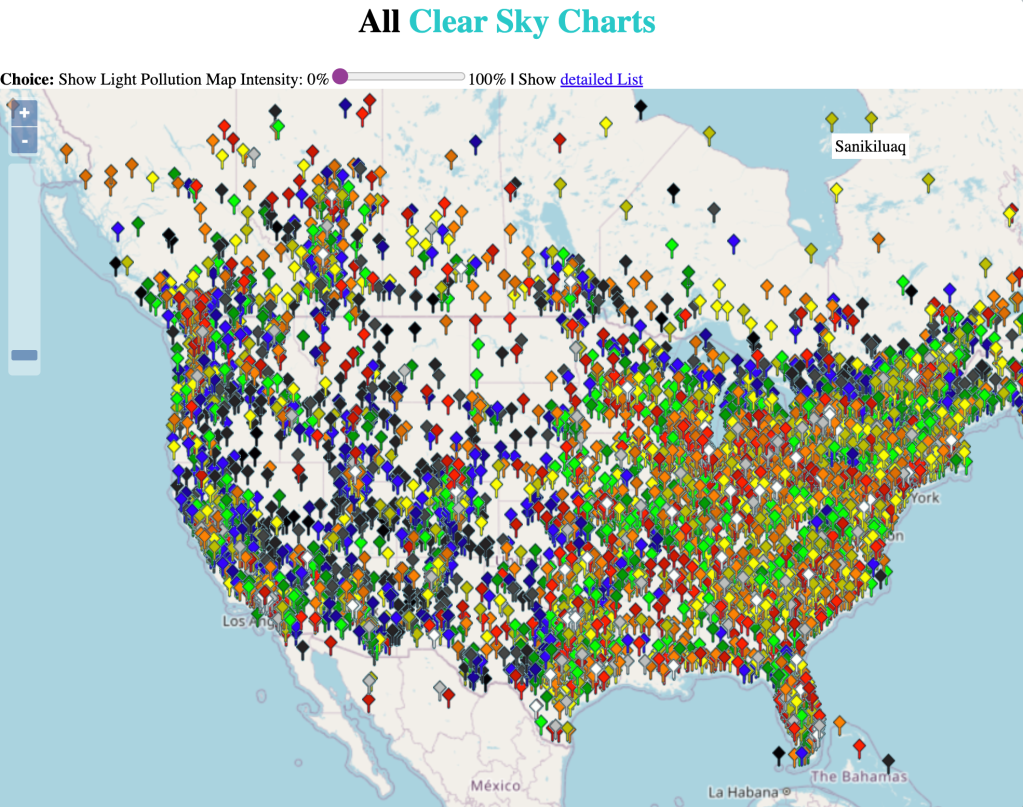
Amateur astronomers and star enthusiasts have a very specific weather problem: “Is it going to be clear enough tonight?” Unfortunately, regular forecasts don’t answer that. But Clear Dark Sky Charts does. This beautifully nerdy site delivers hour-by-hour predictions for cloud cover, transparency, and atmospheric “seeing” for over 6,100 locations across North America. If you’ve ever wanted to stargaze but never knew when to try, start here.
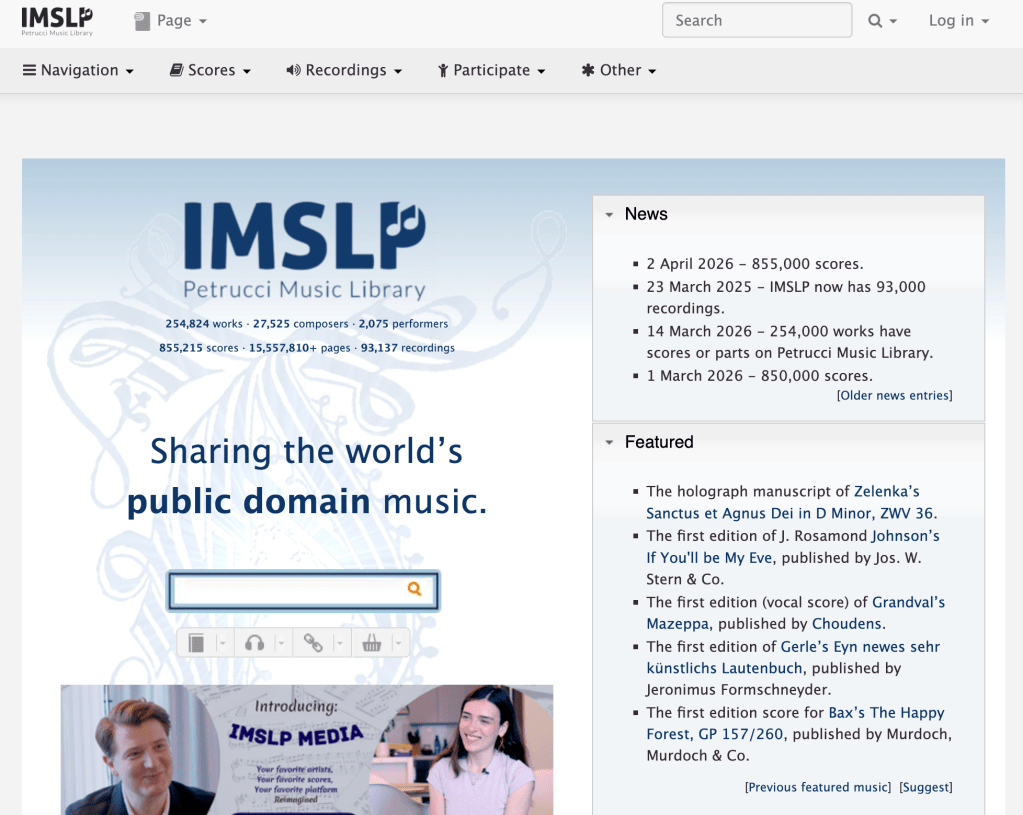
Sheet music is expensive. Buying a tuba, even if it’s used and from eBay, is expensive. IMSLP is not. The International Music Score Library Project hosts over 855,000 free, public-domain scores—you’ll find Bach, Beethoven, Brahms, and thousands more—that any musician or music lover can download instantly. Before this site existed, tracking down a rare orchestral score meant haunting university libraries. Now it’s three clicks away.
In 1997, an 11-year-old in Orlando named Alyssa had trouble remembering HTML codes. So, she built a website to keep track of them…and accidentally became one of the Internet’s first teachers. By her early teens, her site had 500,000 monthly visitors. Lissa Explains It All is still live, still free, and still one of the warmest places on the Internet to learn the basics of building a webpage.
In conclusion…
The Internet is bigger, stranger, and more generous than the algorithm usually shows you. These 10 sites are proof. Bookmark them. (Or, use Booky.io!) Enjoy the feeling of having found something genuinely worth finding.
Most of us have a self-improvement checklist. Exercise more. Stress less. Sleep better. Be more present. It’s a lovely list. But it can also be quite mean and vague. And it tends to sit there, quietly judging us, while we scroll our phones in bed at 11 p.m.
However, you don’t need an elaborate morning routine or a 45-minute meditation practice to shift how you feel. Science keeps arriving at the same surprising conclusion: tiny actions, repeated consistently, change lives. Not because of magic. Because of biology.
Instead of a grand, sweeping declaration like, “Stress less” (what does that even mean?), start small. These 15 micro-habits take two minutes or less. Some take ten seconds. All of them have real research behind them. Begin with one. See what happens.
Morning habits for a strong start
Photo credit: Canva – Jot down the messy, unfiltered stuff.
1. Write it out
Before you pick up your phone—before the news, the texts, the notifications—grab a notebook and spend two minutes writing down whatever is on your mind. Not a diary entry. Not a to-do list. Just the messy, unfiltered stuff, like the dream you just woke up from or an event later you’re nervous about. Psychologist James Pennebaker spent decades studying what happens when people do this, and the results are striking: expressive writing reduces anxiety, improves emotional processing, and even strengthens immune function. Think of it as taking out the mental trash before the day fills back up.
2. Get moving, even a little
To change your day (on a micro level, at least), you don’t need a gym. You need two minutes and an open space. Go nuts! Jump. Sprint up your stairs. Do jumping jacks in the kitchen. Anything to warm up those muscles. Researchers at Victoria University found that just two minutes of all-out effort triggers the same cellular adaptations in your muscles as a 30-minute workout. Surprisingly, your body genuinely cannot tell the difference.
3. Anchor your identity
Spend 60 seconds stating—out loud or on paper—one true thing about who you are. Not a wish. A fact. Think along the lines of, “I am someone who shows up.” Or, “I take care of the people I love.” Neuroscientists have confirmed that self-affirmation activates brain reward pathways and buffers against stress. So, this is more than a pep-talk: it’s a reminder of who you are.
4. Savor that first sip
Before you gulp your coffee or tea, pause. Wrap both hands around the mug. Notice the warmth radiating from its contents. Breathe in the smell. Then, take one slow sip and actually taste it. Woohoo, that’s it! Research shows that even brief moments of sensory awareness lower cortisol and reduce anxiety. Who knew? Your morning drink has been waiting to do this for you the whole time.
5. Catch ten seconds of sunlight
Step outside, or at least to a window, within the first hour of waking, and let natural light reach your eyes for ten seconds. Andrew Huberman has spent years explaining why this matters: morning sunlight triggers a healthy cortisol spike that wakes up your immune system, sets your circadian clock, and produces serotonin. Skip it regularly, and your body’s internal timing slowly drifts. Ten seconds. That’s all it takes.
6. Visualize a good day
Close your eyes for one minute and picture one thing going well today. Not perfectly and not the entire day. Just one thing, well. The research here comes from the sports world, where mental rehearsal has been studied extensively. Studies show that imagining yourself performing an action fires the same neural pathways as actually doing it.
Mid-day habits to ease stress
Photo credit: Canva – The antidote is choosing, for once, not to hurry.
7. Slow down on purpose
Once a day, pick one task that doesn’t actually need to be rushed, and deliberately don’t rush it. Walk a little slower. Eat a few bites without looking at a screen. Wash those dishes at a snail’s pace. Researchers who study “hurry sickness” (yes, it’s a real clinical term) have found that chronic time urgency keeps your amygdala on high alert, flooding your system with cortisol for hours. The antidote is choosing, for once, not to hurry. Your nervous system will slowly get the message that not everything is an emergency.
8. Leave your phone out of the bathroom
This one isn’t glamorous, but it matters. Studies have found that phones carry roughly ten times more bacteria than toilet seats. Besides, neurologists note that bathroom scrolling creates dependency, fragments attention, and eliminates one of the last quiet spaces in the day. The bathroom used to be a sanctuary. Reclaim it.
9. Sigh or hum out loud
A Stanford study published in 2023 found that the “physiological sigh”—a double inhale through the nose followed by a long exhale through the mouth—reduced stress hormones more effectively than mindfulness meditation in head-to-head trials. Alternatively, try humming. Humming for 60 seconds stimulates the vagus nerve through vibration, effectively shifting your body from fight-or-flight to rest-and-digest.
10. Run cold water over your hands
When anxiety peaks, hold your hands under cold running water for 30 seconds. Cold water on the skin activates what physiologists call the “diving reflex,” triggering the vagus nerve to slow your heart rate and engage the parasympathetic nervous system. It’s an ancient mammalian stress response that still works remarkably well.
11. Unclench that jaw
Right now, check: are your teeth touching? Is your tongue pressed against the roof of your mouth? Most of us spend hours a day with our jaws subtly clenched, and researchers now recognize this as a nervous system pattern, not just a dental one. The simple act of letting the jaw go slack, teeth apart, sends a signal to your brain that the perceived threat has passed.
Around sunset, switch off your overhead lights and use softer lamps instead. The reverse can be catastrophic: a 2021 study in PNAS found that just a few weeks of bright evening lighting can delay your circadian rhythm by two to three hours, disrupting sleep, memory, and mood.
13. Hold a smile for five seconds
Yes, even a fake one. A landmark 2022 study involving nearly 4,000 people across 19 countries found that deliberately holding a smile—even without genuine emotion—makes people feel measurably happier. The science behind that? Facial muscles feed information back to the brain, meaning your mind will get the message. So, hold that grin for five seconds.
14. Give one genuine compliment
Before the day ends, tell someone something specific you admire about them. Not a generic compliment, like “great job.” Dig for something real. Maybe they handled a tricky moment with poise, or put in some extra effort while crafting that company-wide email. It could be as simple as, “Hey, your sandwich looked incredible during lunch.” Cornell researchers discovered that we consistently underestimate how much our words mean to others, and that compliment recipients feel far better than givers ever predict. The kicker? The givers feel better, too.
15. Finish your shower with 30 seconds of cold
A Dutch randomized controlled trial of over 3,000 people found that ending a shower with just 30 seconds of cold water reduced sick days by 29%. Going even further, there was no difference between 30, 60, or 90 seconds: the benefit kicks in almost immediately. This little dose of freezing also produces a lasting surge of dopamine and norepinephrine. So, while it’s unpleasant for about five seconds. Then it isn’t, and you feel great.
Don’t go overboard, okay?
Despite the headline of this article, you don’t have to do all 15. How about you just pick two? Try them for a week and notice what shifts. The point here isn’t perfection; it’s incorporating the smallest acts into your daily routine and watching them compound into tangible benefits. Remember, your nervous system is paying attention, even when you think nothing is happening. Feed it something good to work with.
In a time when inflation is forcing people to make their dollars go as far as possible, an Instagram video by Jose Rojas shows how a little creativity can help families stretch their food budget a long way. In the video, Rojas nearly does the impossible: he makes a tasty, healthy meal for two for exactly $1.
Rojas is the creator of Beyond Food Market, which teaches people in underserved communities and food deserts how to make affordable, nutritious meals. Roajs was inspired to help his community after he lost 90 pounds and kept it off. “Because food did so much for me. It changed my life. It transformed my life. I’m like, I gotta share this,” Rojas said.
Rojas makes a really smart move when buying the ingredients for his meal by weighing exactly what he needs, so he doesn’t pay for what he doesn’t need. He purchased a medium russet potato, a small tomato, and a small onion for just $0.65 at the Jimenez Fresh Market on Belmont Ave. in Chicago. He also got a break because the cashier threw in the serrano pepper for free.
Sometimes, making your dollar stretch means going to more than one store (we’ll forget the cost of gas right now). Rojas remembered seeing that pinto beans were just $0.69 a pound at his local Jewel Osco, and he bought half a pound for $0.35, bringing the total cost of his meal to $1.
Rojas’ bill at Jimenez and Jewel Osco. Credit: BeyondFoodMarket (used with permission)
How to cook Rojas’ simple $1 recipe
½ lb pinto beans
1 medium russet potato
1 small tomato
1 small onion
1 serrano pepper
Total cost: $1.00
To cook the meal, Rojas used a pressure cooker, soaking beans in water along with chunks of the potato cut about 1/2” thick. While the beans and potatoes cooked, he made pico de gallo by mixing tomatoes, onions, and serrano pepper. (Is he cheating by including the pepper that he should have paid for? That’s for you to decide.)
The final dish was delicious-looking and could be marketed as a Southwest Burrito Bowl or a Vegan Mexican Bowl if you bought it at a Chipotle-style restaurant. The meal is healthy, too. “The recipe was very simple and inspired by the way many of our families have cooked for generations,” Rojas told Upworthy.
This $1 meal is:
High protein
Extremely high in fiber
Loaded with potassium, iron, and vitamins
100% gluten-free & plant-based
Made from real, whole ingredients
The video has gone viral across multiple platforms, and the response has been overwhelmingly positive. “The best reaction has been people telling me that the video reminded them of how their parents or grandparents used to cook during tough times. Others have said the video gave them hope that they can still cook something warm and nourishing even when money is tight,” Rojas told Upworthy.
Ultimately, Rojas’ desire to help people everywhere change their eating habits is a natural extension of his lived experience. “I learned to be resourceful from my upbringing and life experiences. I grew up in a working-class family, and later in life, I had to completely change the way I ate to improve my health,” he told Upworthy. “I ended up losing 90 pounds by going gluten-free and focusing on simple, whole foods like beans, vegetables, and traditional ingredients. Those experiences taught me that good food doesn’t have to be expensive.”
Chicken, and chicken breast in particular, is a staple in many households. It’s relatively affordable compared to other meats, versatile, and can be cooked in a variety of ways. It works well in pasta, casseroles, sandwiches, tacos, or even on its own. It’s easy to see the appeal.
However, let’s be honest: not many people get overly excited about chicken night. Chicken breast, in particular, is high in protein but can be bland due to its low fat content. It needs the right seasonings or marinade, along with the right cooking methods, to really bring it to life.
Professional chefs are sharing the secret techniques to “gourmet-ify” chicken without adding much, if any, extra cost. These tips can help turn a $3 chicken breast into a restaurant-quality dish:
1. Brine
Experts overwhelmingly recommend one step that almost everyone skips: brining.
A dry brine is popular for Thanksgiving turkeys, where salt is rubbed all over the skin the night before. But chicken breasts can benefit even more from a wet brine, or soaking overnight in a saltwater bath. This technique not only allows the salt to penetrate deep into the meat, enhancing flavor, but also helps it retain moisture during cooking, resulting in a more tender texture.
Brines can be as simple or as complex as you like, from just salt and water to mixtures with garlic, vegetables, vinegar, and more. Alternatively, a longer marinade can have a similar effect.
2. Sous vide
Baking in the oven isn’t necessarily the worst way to cook chicken (take a bow, microwave), but it’s definitely one of the easiest to screw up. Most people are all too familiar with baked chicken that’s dry and bland, or even undercooked.
One easy way to achieve perfectly cooked chicken every time is to skip the oven and use a sous vide instead. A sous vide device heats a water bath to a precise temperature and maintains it for as long as needed. Better yet, it doesn’t require close monitoring like a grill or pan.
You can usually pick one up for under $100 and use it every week.
Just bag the chicken with your chosen marinade, butter, oil, and spices, then set the sous vide. All that juicy goodness will infuse into the perfectly cooked chicken in just an hour or two.
Alternatively, many chefs prefer searing chicken in a pan on high heat. It quickly locks in juices and flavors, gives the outside a nice golden color, and doesn’t require constant poking and prodding.
Crucially, it’s important not to oversear and burn the chicken breast. Expert chefs recommend removing it from the heat when it’s just slightly underdone—around 155°F internally—and allowing it to finish cooking as it rests.
(Cooking chicken to 165°F is one of the biggest mistakes people make with chicken breasts, according to cooking educator and YouTuber Ethan Chlebowski.)
4. Trim and slice
Jack Croft, head chef at one of London’s top restaurants, Fallow, demonstrates how he prepares a chicken breast in a recent YouTube video, using techniques from a Michelin-starred kitchen.
Before cooking, he painstakingly removes blood spots, sinew, and other imperfections from the chicken breast to ensure the most tender final product possible. It’s not a necessary step for home chefs, but if you’re buying cheaper cuts—and who could blame you—it can make a noticeable difference in the final result.
5. Use the juices
“Chicken au jus” sounds fancy, but it really just means the chef saved some of the chicken’s natural cooking juices and reincorporated them into the dish. Anyone can do that at home.
Pan drippings from a chicken breast are often rich in flavor, despite the meat’s low fat content, and can easily be turned into a sauce or gravy that really elevates the dish.
The jus can even be stored with leftover chicken to help keep it moist when reheating.
6. Salt and butter
Chlebowski is adamant that you’re probably not using enough salt on your chicken breast.
“Undersalted chicken tends to taste like diet food,” he says. “Properly salted food tastes like dinner.”
If all else fails, add butter. Chicken’s dryness problem can be easily solved with a little butter in the pan before and toward the end of cooking, while its flavor problem can be fixed with the right amount of salt. It may make the dish slightly less “healthy,” but the flavor improves dramatically.
Anthony Bourdain famously said that butter is the main reason restaurant food often tastes better than what we make at home.
7. Wrap or stuff it
Croft says stuffing chicken is one of the best ways to impress at a dinner party or date night at home—and it’s not nearly as difficult as it looks.
Some great fillings for chicken breast include:
Mushrooms
Cream cheese mixtures
Spinach
Sauces (pesto, BBQ)
Mozzarella
Inviting someone over and serving chicken breast isn’t likely to wow anyone. But a mushroom-stuffed chicken breast wrapped in bacon? That’s guaranteed to have people’s eyes popping.
Chicken, when cooked right, is a good choice amid rising prices
The price of most foods is going up. While chicken breast may be hard to describe as a “cheap” option (especially a quality cut) it is still more affordable than ground beef, lunch meat, ground chicken or turkey, and many other protein options. That’s what makes it such a great building block for your family’s meal plan.
With a few chef-approved techniques up your sleeve, you can make it taste like a dish from your favorite restaurant.
Taking a 20-hour economy flight can feel incredibly daunting. Your back aches, your legs cramp, and finding a comfortable position can seem impossible. Recently, a viral TikTok video brought this shared experience into the spotlight. User @hiera.coffee asked her followers for their “most outrageous carry-on travel tips” before embarking on a massive journey.
The Internet did not disappoint. The video racked up more than 256,000 views and nearly 5,000 comments from expert flyers, flight attendants, and long-haul savants who shared decades of hard-earned travel wisdom.
We combed through every tip, cross-referenced the best ones with what frequent flyers and cabin crew actually swear by, and compiled a definitive list. Whether you’re facing a four-hour hop or a soul-testing 20-hour marathon, these are the secrets you need to know before you buckle in.
Sleep enhancers and comfort must-haves
Finding a way to sleep comfortably in an airplane seat is a universal struggle. Thankfully, a few specific items can make a world of difference when your seat feels less than ideal.
1. The Sleeper Hold and mini massage guns
Sometimes, investing in some special gear can really help you unwind. One traveler shared a great way to deal with restlessness and sore muscles:
“The only time I’ve been able to sleep on a plane was thanks to a Sleeper Hold pillow. It keeps your neck supported so you don’t wake up in pain. A miniature handheld massage gun is also a game-changer. If I needed to stretch but couldn’t get up, I’d use it to massage my legs when they started to ache. Tremendous help!”
2. Sacrum pillows for spinal support
Sitting for hours at a time puts intense pressure on your lower back. A simple cushion can significantly reduce discomfort, especially for those prone to back pain.
“A sacrum pillow placed under your bum alleviates the pressure on your lower spine and helps prevent Sciatica. It’s a small adjustment, but it makes a big difference.”
3. The backwards hoodie trick
You don’t need to splurge on expensive travel blankets or specialized gear to stay warm and comfortable. A simple hoodie can double as a cozy travel accessory:
“Bring a big, zip-up hoodie and wear it backwards. It works like a blanket, and you can pull the hood over your head to block out light and create a mini cocoon. Best of all, it’s easy to tie around your waist when navigating the airport. Combine with food, water, and a neck pillow, and you’re set.”
Taking care of your body at high altitudes isn’t just about comfort—it’s crucial for your health. Flight attendants know these tips well after spending countless hours in the sky.
4. Essential hydration
It’s tempting to avoid drinking water on flights to skip frequent bathroom trips, but staying hydrated is non-negotiable. One flight attendant shared this vital reminder:
“HYDRATE. I know people don’t want to be the person constantly getting up to use the bathroom, but you lose water faster on a plane. Staying hydrated will significantly improve how you feel on arrival, preventing headaches, fatigue, and more.”
Airplane cabins can be full of unexpected and unpleasant smells. A small aromatherapy kit can help combat motion sickness and keep you feeling fresh, another flight expert explained:
“I always carry a small bottle of eucalyptus oil and some alcohol pads. If I get nauseous or there’s an unpleasant smell, I dab a little oil under my nose. It works wonders.”
“Compression socks are a must! Put them on before takeoff and take them off after landing. Medical-grade compression (15–20mmHg) works best. Your legs will feel less fatigued, which is especially useful if you’re planning to walk and enjoy good food once you arrive.”
Food, perks, and mind hacks
Travel is always better when you prepare for your own needs and show kindness to others. These tips will help you stay nourished and may even brighten someone else’s day.
7. Flight attendant goodie bag
Showing appreciation to the flight crew can go a long way—and sometimes comes with unexpected perks:
“My friends and I make goodie bags for flight attendants. We fill them with local snacks and include our business cards since we’re stylists. We usually pack six bags per trip. I’ve never paid for alcohol on a flight since starting this!”
It can’t hurt to get on your flight attendant’s good side, can it? Photo credit: Canva
8. Instant ramen on the go
Airplane food can be hit or miss. Bringing your own comfort meal ensures you won’t go hungry:
“Bring a cup of instant ramen and ask for hot water, either from a restaurant before boarding or during the flight. This trick has saved me from starving when plane food options weren’t great.”
9. Pavlovian sleep training
You can train your brain to fall asleep more easily on flights by creating a routine before your trip:
“Use the same sound or playlist to fall asleep every night leading up to your flight. Then your brain associates it with sleep. I have two airplane playlists that immediately put me to sleep because I’ve used them for 12 years. Add a neck pillow, an eye mask with built-in flat speakers, and layers of cozy clothing. A boring audiobook and noise-canceling headphones seal the deal.”
Maximizing space and ultimate relaxation
When space is tight or patience runs thin, these tips can help you stay organized and calm through every stage of your journey.
10. The airport bag hack
Sometimes you need creative solutions to bring extra items on board without hassle:
“If your carry-on is full but you absolutely need to bring more, buy something small like gum at the airport and grab a large shopping bag. Put your stuff in there and keep the receipt. Works every time.”
Creating the perfect sensory cocoon can help you tune out the busy, crowded cabin and fully relax:
“Use a heated eye mask underneath a regular one for total darkness and warmth. Pair it with an inflatable travel pillow (the J-shaped kind), a foot hammock, a cozy blanket, and a dose of melatonin or Tylenol PM an hour before lights out. Add noise-canceling headphones and a boring audiobook, and you’ll sleep through most of the flight.”
12. Embracing the journey
Even with the best preparations, long-distance flights can be exhausting. One traveler humorously admitted their ultimate strategy:
“I just suffer through all the pain until it’s over, to be honest.”
Arrive rested and ready to explore
These clever packing secrets prove we have the power to make long flights more bearable. By planning ahead and packing a few supportive items, a grueling 20-hour journey can feel less like a survival mission and more like a wonderful adventure. Good luck, bon voyage, and safe travels!