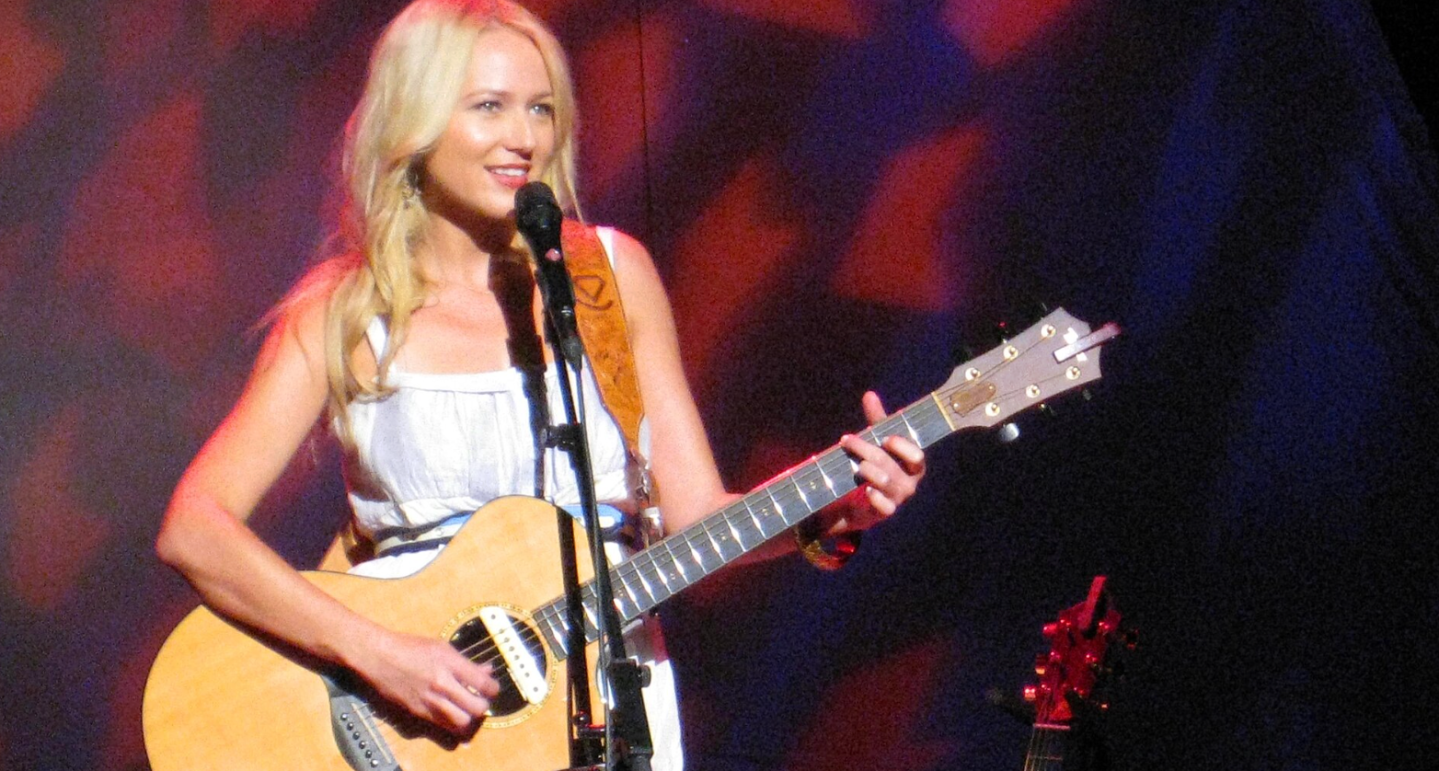
Before Jewel sold 30 million albums and earned four Grammy nominations, she was sleeping in her car in San Diego. She hadn’t chosen the situation romantically — she’d been fired after refusing her boss’s sexual advances, lost her paycheck, and couldn’t make rent. Then the car was stolen, leaving her fully homeless. She was 19.
It was in the middle of all of this that the music industry came looking for her.
Jewel had found a coffee shop that was going out of business and struck a deal with the owner: she’d bring people in, and she’d keep the door money. She started playing five-hour sets of original material on Thursday nights. Four people became twelve, became twenty, became fifty. A bootleg recording ended up on the radio. Record labels started showing up.
A bidding war broke out. The biggest offer on the table included a $1 million signing bonus.
She said no.
Before making that decision, she did something practical and slightly remarkable: she went to the library and read a book about the music business. What she learned changed everything. “I learned that you owe that money back,” she explained in an interview on ABC’s No Limits with Rebecca Jarvis. “If my record wasn’t successful within a year, I would have been dropped. I would have ended up homeless again. I would have had to make a record that was guaranteed to be a hit, which I didn’t know how to do. I was a folk singer at the height of grunge.”
In other words: the million dollars wasn’t a gift. It was a loan with conditions attached, and the conditions were essentially designed for her to fail.
She recently revisited the decision in a conversation with entrepreneur Blake Mycoskie, posted March 30. In it she described the guiding principle she had formed for herself, even without words for it at the time. “I made myself a promise that my number one job in life would be to learn. I called it being a ‘happy whole human,’ not a human full of holes.” She wanted to be an artist more than she wanted to be famous — and she’d learned enough about the industry to know those weren’t the same thing.
“Do I want to be famous and rich, or do I want to be an artist?” she told ABC. “I used that as my road map.”
Instead of taking the advance, she negotiated a deal structured around the back end — one that gave her room to build a fan base slowly and stay true to her music. Her debut album, Pieces of You, came out in 1995. It eventually sold more than 12 million copies in the United States alone.
She has since become a bestselling author, a producer, and an advocate for mental health and emotional resilience. Her motto, which she’s repeated across decades of interviews: “Hardwood grows slowly.”
“If you can emotionally connect with a human being and cause them to emotionally invest with you, you have something,” she said. “Then you just have to go about it the old-fashioned way.”