Lorraine Dowler

  • Guy shares the simple setting change to get studio-level sound quality on Spotify
    A man listening to music on headphones.Photo credit: Canva

    Ever since digital music entered the picture, it’s just sort of been a given that we’ve traded quality for quantity. Nothing might sound as crisp as a record, but hey, we now have bajillions of songs at our fingertips. ‘Tis the price of modern convenience. 

    But for those who do want to enhance their listening experience, content creator Mike Sheffer (@mike.sheffer) can help. He claims Spotify users can make a simple setting tweak that’s apparently like switching from “240p” to “4K,” only for sound. 

    So, what is the secret to this magical sound setting? Lossless audio.

    Streaming services automatically compress files to make them take up less storage space and play more reliably. However, with lossless audio, all the original data is preserved, offering something much more faithful to a studio recording. While other apps have offered a lossless audio option, it’s a relatively new feature that Spotify rolled out in September 2025.

    @mike.sheffer

    How to fix your life in under 60 seconds #spotify #audioquality

    ♬ original sound – Mike Sheffer

    “It’s a night-and-day difference,” says Sheffer. “Drums will sound better, singers will sound better, you’ll hear background stuff, you’ll hear little ear candy that maybe you weren’t picking up on before. The instruments are always going to be better. No downside.”

    He even added that this shift can be heard whether you’re listening via headphones, speakers, or car audio systems.

    Enabling lossless audio on Spotify

    As Sheffer explains, after going to the home screen and tapping on the circle with your picture on it, you’ll click on “Settings and Privacy.”

    Next, tap “Media Quality,” and choose lossless audio for Wi-Fi, cellular, or downloads. 

    One caveat: Spotify warns that higher-quality audio files are larger and may require stronger connections or compatible devices.

    music, hack, tech
    A band recording in a studio. Photo credit: Canva

    In addition to lossless audio, Sheffer suggested incorporating other settings like “gapless playback,” which removes pauses between songs, as well as turning off “volume normalization,” which adjusts volume levels across tracks and can compromise sound quality. Both can be found in the “Settings” section. 

    Of course, even small upgrades like this come with a familiar tradeoff. As mentioned, higher-quality audio uses more data, demands stronger connections, and may not be noticeable to every listener, especially in everyday environments. For some, the convenience of seamless streaming will always outweigh the pursuit of perfect sound.

    spotify, music, streaming
    A laptop showing sheet music with headphones attached. Photo credit: Canva

    As streaming services have expanded—whether for music, movies, or television—we’ve gained unprecedented access to vast libraries of content, often at the expense of the meticulous quality that once defined physical formats. The result has been an ongoing push and pull between having more and having better. While convenience still reigns, it is nice that options like lossless audio are increasingly available for those who want to fine-tune their experience. 

  • Self-made millionaire read 997 personal finance books. Here are the 5 he says actually changed his life.
    A man reading a book and the cover of "The 48 Laws of Power" by Robert Greene.Photo credit: Canva

    Mark Tilbury left school at sixteen with no qualifications and a bunch of haters telling him he wouldn’t amount to much.

    He didn’t listen to them. Instead, he did something quite remarkable: he read. And read. And read. Nearly a thousand books on personal finance, investing, mindset, and business strategy—not because it was easy, but because he believed that if he could just understand how money and success really worked, he could build a different kind of life.

    Guess what? He was right. Today, Tilbury celebrates life as a self-made millionaire with multiple businesses and a social media following of millions who tune in for exactly that kind of hard-won wisdom.

    He’s also dropping nuggets of wisdom on his channels, particularly about those books: out of 997 that he read, only five truly moved the needle for him.

    Who is Mark Tilbury, exactly?

    Tilbury had a different upbringing than many of today’s millionaires—not a rich kid with trust funds and endless connections. He started from scratch with humble beginnings. What he lacked in monetary assets, he made up for in curiosity, grit, and an almost obsessive belief that knowledge is the great equalizer.

    mark, tilbury, reading, list, millionaire
    Mark credits his knowledge and wisdom for his success. Photo credit: Canva

    That’s what makes his reading list so compelling. These aren’t recommendations from someone who got lucky or was born into the right family with the right name. They’re the books that genuinely shaped how he thinks: about people, power, money, and himself.

    The 5 books that changed everything

    1. Influence: The Psychology of Persuasion by Robert B. Cialdini

    Here’s a slightly uncomfortable truth: every financial interaction you’ve ever had—every negotiation, every sale, every ask for a raise—is also a persuasive event, whether you knew it or not.

    Robert Cialdini spent years undercover on sales floors, in fundraising groups, and in advertising agencies to discover why people say “yes.” He identified seven universal psychological principles that quietly influence most decisions, including:

    • Reciprocity (we feel a strong urge to return favors)
    • Scarcity (we desire what we might lose)
    • Social proof (we follow others when we’re unsure)

    What does this book have to do with wealth? Two aspects to consider: First, understanding these triggers makes you a dramatically better negotiator and communicator. That’s key in the world of personal finance. Second, when you’re able to recognize these tactics in the wild, you won’t be the one who gets played. Knowing the psychology of persuasion is both an offensive and defensive playbook for the financial world.

    2. The 48 Laws of Power by Robert Greene

    Robert Greene spent years studying three thousand years of history—from Niccolò Machiavelli to P. T. Barnum—to map out how power actually operates in human systems. Not how we wish it did, but how it does. Some of his laws are blunt (“Never outshine the master”). Some feel counterintuitive. All are grounded in real historical examples of people who won, and those who lost, based on whether they understood the dynamics at play.

    For anyone building wealth in the real world, the book’s core gift is this: look around and finally recognize the game that’s always been playing out around you. Once you see it, you can play it—or at least stop being blindsided by it.

    3. Principles for Dealing with the Changing World Order by Ray Dalio

    Ray Dalio built the world’s largest hedge fund by doing something most investors never do: he studied history instead of chasing trends.

    His detailed insights in this book reveal that events shocking to most investors—such as market crashes, currency devaluations, and geopolitical upheavals—are not surprises, but patterns. The same cycles that brought down the Dutch and British empires are still active today. Recognizing these patterns doesn’t lead to pessimism; it equips you to be prepared.

    For Tilbury and millions of readers, the key lesson is a radically different way to protect wealth: diversify not only among stocks and bonds, but also across asset classes, currencies, and regions. History favors those who see the bigger picture.

    4. Psycho-Cybernetics by Maxwell Maltz

    Maxwell Maltz was a plastic surgeon who noticed something troubling: many of his patients remained stuck and unhappy even after successful procedures. Their faces had changed, but their self-image hadn’t. That observation launched one of the most important books ever written about the relationship between the mind and success.

    Maltz’s central idea is that your self-image functions like a thermostat: it sets the ceiling on your performance, your income, and your ambition. The “Success Mechanism” in your brain is always working—the question is, what target have you programmed it to hit? Through visualization, mental rehearsal, and the deliberate reprogramming of that inner narrative, you can raise the ceiling on your abilities.

    Thirty million copies later, his core message still lands: the biggest limits on your wealth aren’t external—they’re the stories you carry about what you deserve.

    5. Zero to One: Notes on Startups, or How to Build the Future by Peter Thiel

    Peter Thiel co-founded PayPal, made the first outside investment in Facebook, and has supported some of the most influential companies of the last twenty years. So, when he writes about how wealth is really built on a large scale, it’s worth paying attention.

    His central argument is deceptively simple: real wealth comes from creating something truly new—”going from zero to one”—rather than copying what already works. And the counterintuitive kicker? Competition is actually the enemy of wealth. “All happy companies are different,” he writes. “Each one earns a monopoly by solving a unique problem.” The businesses that generate lasting fortunes aren’t the ones that compete best; they’re the ones that make competition irrelevant.

    For anyone building a business or identifying investments, this reframe alone is worth the price of the hardback.

    The bigger picture

    The striking thing about Tilbury’s reading list? These books have a lot in common: none of them is actually about money in the traditional sense. There are no budgeting tips or compound interest charts. Instead, they’re about something deeper: how the world actually works—how people are persuaded, how power moves, how history cycles, how minds are wired, and how genuine value gets created.

    Tilbury’s thesis, after 997 books, seems to be this: financial success is less a matter of hard skills and more a matter of understanding. Understand people, and you can influence them. Understand power, and you can navigate it. Understand history, and you can anticipate it. Understand your own mind, and you can finally get out of your own way. Understand innovation, and you can build something that lasts.

    That’s the real reading list. And lucky for you, it’s only five books long.

  • Japan’s Yakult Ladies are quietly preventing lonely deaths and improving thousands of elderly lives
    Yakult Ladies are improving eldery lives.Photo credit: Wikimedia Commons
    ,

    Japan’s Yakult Ladies are quietly preventing lonely deaths and improving thousands of elderly lives

    They’ve became one of the most important social safety nets in the world’s oldest nation.

    Imagine you’re an older woman sitting alone in a small apartment in Tokyo. Your children live across the country. Your husband passed away years ago. Most days, you don’t talk to anyone at all. But on Mondays? On Mondays, you get dressed. You straighten the cushions on the couch. You wait by the door. Because you know someone is coming.

    That someone is your Yakult Lady—one of more than 31,000 women who crisscross Japan on bicycles and motorbikes, delivering small bottles of probiotic drinks to elderly homes. On paper, it’s a sales job. In practice, it may be one of the most important social welfare roles in the country.

    And most people outside Japan have never heard of it.

    It started with a doctor who wanted everyone to be healthy, not just the rich

    The story begins in 1930 with a young Japanese medical student named Minoru Shirota. He was deeply concerned that poor children kept dying from preventable diseases, something most doctors at the time ignored. This wasn’t because medicine didn’t exist, but because it had no way of reaching them.

    So Shirota made it his life’s work to change that.

    Minoru Shirota, portrait, history
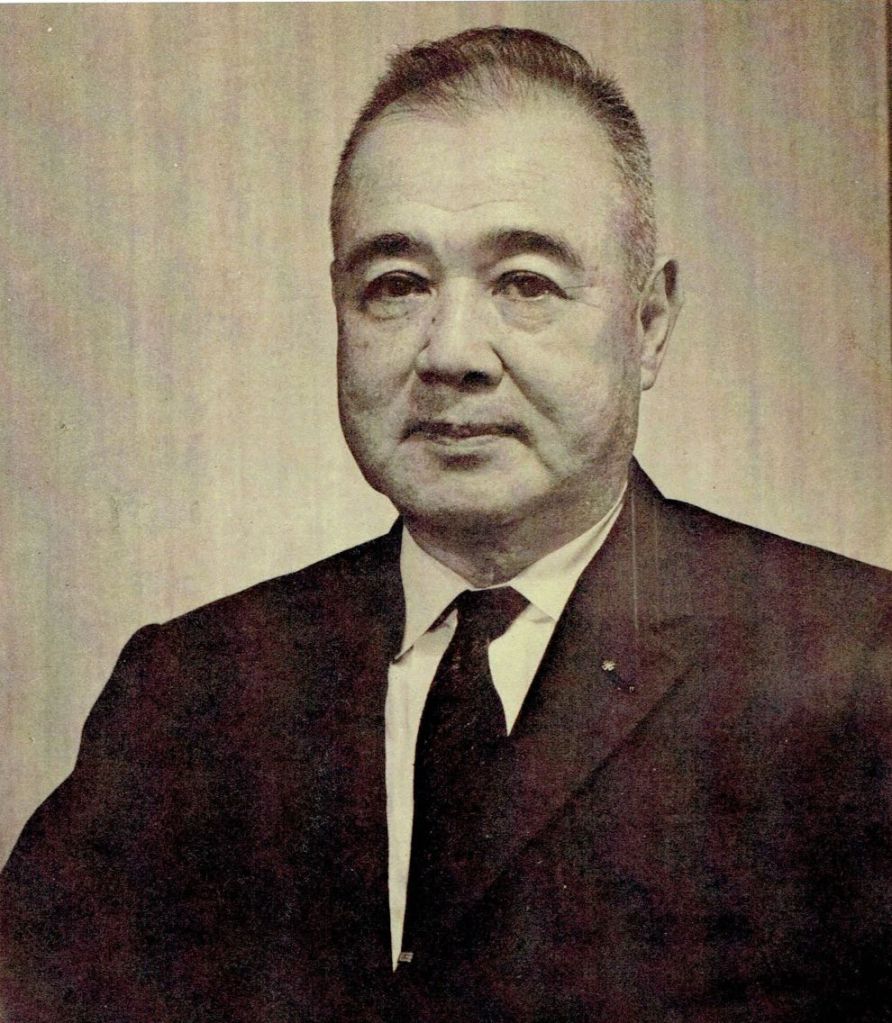
    Minoru Shirota. Photo credit: Wikimedia Commons

    He spent years in a lab at Kyoto Imperial University working to isolate a cultured strain of beneficial bacteria strong enough to survive the journey through your digestive system and actually do something good when it got there. By 1935, he had turned this concoction into an affordable fermented milk drink and named it “Yakult,” taken from the Esperanto word for yogurt.

    Here’s the thing that makes Shirota genuinely remarkable: he refused to let it become a luxury product. He insisted the price remain low enough for the poorest families to afford. Good health, in his view, wasn’t something only wealthy people deserved.

    By 1963, Yakult had launched a home-delivery network staffed by women from local neighborhoods: people they trusted, who knew their communities, and who could sit with a customer and explain what “good bacteria” actually meant in plain terms. Thus, the Yakult Lady was born. Today, 81,288 of these women operate across 40 countries and regions worldwide, with 31,341 working in Japan, visiting between 30 and 50 homes a day, up to four days a week.

    Japan’s loneliness crisis is bigger than most people realize

    In 2024, 76,020 people died alone in Japan, and 76.4% of them were over 65. Some of those bodies weren’t found for weeks. In 130 cases, they weren’t discovered for more than a year.

    This problem is so widespread and serious that it even has a name in Japanese: “kodokushi”—lonely death.

    Japan is the oldest society on earth, with nearly 30% of its population now over 65. Multigenerational households that once defined Japanese family life have dwindled to just 12.2% of homes. Millions of elderly people now live entirely alone, and that number is expected to grow by 47% by 2050. The problem has become so severe that, in 2021, Japan became the first country to appoint a government minister for loneliness.

    So when a woman on a bicycle shows up at your door with a cooler box and a warm smile—when she’s been doing it every week for years, when she remembers your knee has been bothering you and asks how it’s going?—that’s not just a sales call. That’s a lifeline.

    “We are watchers”: What Yakult Ladies actually do

    Asuka Mochida is 47 years old and has been a Yakult Lady for years. When the BBC asked her to describe her role, she didn’t mention sales targets. “We are watchers in a sense,” she said. “People who look out for others. We notice small changes in health or lifestyle.”

    That phrase—”small changes”—is everything.

    What makes a Yakult Lady genuinely irreplaceable isn’t the probiotic drink (though research does suggest it helps). It’s the consistency. She sees the same faces week after week. She knows Mrs. Tanaka takes her delivery at 9 a.m. sharp, and that if it’s still on the step at noon, something is wrong. She knows Mr. Yamamoto doesn’t like to talk about his health directly, but always mentions his energy levels when you ask how his garden is doing.

    That kind of knowledge—intimate, earned over months and years—can’t be replicated by a government form or a wellness app. When something seems off, these women act. They’ve contacted family members, alerted local authorities, and in multiple documented cases, helped locate seniors who were in real medical danger.

    They’re neighbors who show up, and keep showing up.

    One anonymous customer said it better than any policy paper ever could: “Knowing that someone will definitely come to see my face each week is a tremendous comfort. Even on days when I feel unwell, hearing her say, ‘How are you today?’ at my doorstep gives me strength.”

    Small bottle, big idea

    There’s something almost quietly revolutionary about what the Yakult Ladies represent. In a world that keeps looking to technology to solve the loneliness epidemic—chatbots, wellness trackers, social apps—Japan’s most effective answer turns out to be a woman on a bicycle who remembers your name.

    It doesn’t require a smartphone or a subscription fee. It simply requires someone to show up, consistently, and actually pay attention.

    The next time you walk past an elderly neighbor’s door and wonder if they’re doing okay, maybe this story is a gentle nudge to knock.

    You don’t need a cooler box filled with probiotic yogurt. You just need to connect.

  • Toddler befriends a lonely elderly man at McDonald’s
    Toddler (left), elderly man (middle), McDonald's drive-thru (right).Photo credit: Canva
    ,

    Toddler befriends a lonely elderly man at McDonald’s

    “Protect his positive energy at all costs.”

    Children often possess a remarkable ability to make friends wherever they go, largely because they operate with an innate openness that’s not yet hindered by learned social barriers. It can make for some unexpected friendships and truly heartwarming stories. 

    That was certainly the case for Hudson Drew, a three-year-old Oklahoma boy who went viral for his sweet interaction with an elderly man during breakfast at McDonald’s.

    As Ashlyn Drew, Hudson’s mother, explained to KFOR-TV, they had made a “last-minute” decision to stop at the fast-food chain for a quick breakfast. That’s when Hudson, affectionately known as “Huddy,” noticed the senior eating alone. 

    loneliness, intergenerational friendship, kids
    An elderly man eating alone. Photo credit: Canva

    Curious, Huddy asked his mom where the man’s children might be. She replied, “They probably grew up and moved away.”

    This didn’t sit well with the boy, so he immediately marched over to the man so they could share a meal together. This kind gesture left Drew “crying in the middle of a McDonald’s.” 

    “My little boy has the biggest heart,” she proudly wrote in her TikTok video’s caption.

    @ashlyntaylor88

    My little boy has the biggest heart. He was sad that this man was eating alone so he took his food over and sat with him. Made this momma’s heart happy and sad at the same time 🥺❤️#fyp #raisingaman #bigheart #mcdonalds #toddlersoftiktok

    ♬ Raising a Man – Whitley Morgan

    Viewers were equally moved 

    “I just know that made that man’s whole week.”

    “This is the cutest thing I’ve seen ever.”

    “Did u know seniors are the least touched, talked to, or hugged? Ur son prob did more for that gentleman than any medication could ever do!!”

    mcdonalds, friendship, elderly
    An elderly couple hugging. Photo credit: Canva

    ​​Even major brands praised Huddy’s kindness.

    Duracell’s official account urged folks to “protect his positive energy at all costs.”

    “Pass me the tissues,” echoed Pizza Hut. Meanwhile, Eggo shared, “immediately starting sobbing this is SO sweet.”

    This kind of behavior is typical of Huddy

    “Since he was born, he has always lit up the world,” she told KFOR-TV. “He’s a very sweet kid. I didn’t think I would get emotional. I always say ‘Live like Huddy’ because he doesn’t see people any differently. He loves everyone.”

    He also apparently has an affinity for intergenerational friendships. As Drew explained in the comments, “he loves all old people like they are his own grandparents.” At the restaurant his family owns, “he always sits with older couples.”

    “He lost his great-great-grandparents and misses them dearly,” she explained. 

    Interestingly, Drew later discovered that the man lives just three miles away, and was good friends with Huddy’s late great-grandfather. Perhaps their connection was destined. Either way, more Mickey D’s meetups are in store.

    As for the overwhelming positive response to Huddy’s video, Drew hopes it inspires others to show some love to the elderly community.

    “When you see an older person, more than likely their spouse has passed away or is in a nursing home, so I just say take the time to say hi, smile,” she said. “A smile can do a lot. Sit with them. They can tell you some great stories.”

  • Elementary teacher steps in when the audio suddenly cuts out during school talent show
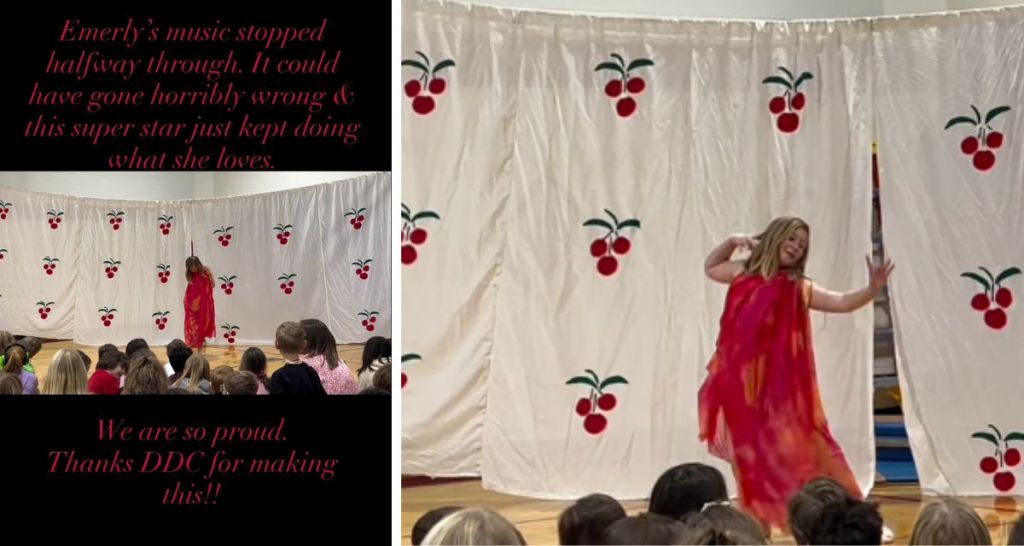
    Emberly Lau dances to "Girl on Fire" by Alicia Keys with help from her former teacher.Photo credit: @dpkymeg/Instagram (used with permission)

    A teacher in Northern Michigan became the living embodiment of “the show must go on” during a school talent show. 

    On March 24, eight-year-old Emberly Lau took to the stage to perform a dance set to Alicia Keys’ “Girl on Fire.”

    Like many young performers, she had spent weeks preparing for her big moment, carefully practicing each move and building up the courage to step into the spotlight.

    Only, midway through the routine, the audio suddenly cut out, leaving Emberly dancing in silence.

    talent show, positive news, wholesome
    Little girl having stage fright. Photo credit: Canva

    For a brief second, it could have spelled disaster. A missing soundtrack can throw even seasoned performers off their game, and for a child, it can feel overwhelming.

    Teacher comes to the rescue

    But without missing a beat, Emberly’s former first-grade teacher, Kurstin Frank, began singing the lyrics from the audience.

    Even when she did not know every word, she carried the rhythm and melody forward, giving Emberly exactly what she needed to continue. It helped that Frank had a lovely voice, but more importantly, she had the instinct to support her student without hesitation.

    Thanks to that spontaneous act, Emberly never stopped dancing. Instead of freezing or running offstage, she pushed through, finishing her routine with confidence. What could have been an awkward interruption turned into something unexpectedly beautiful. Other audience members began to join in, clapping and singing along, transforming the would-be catastrophe into a shared experience filled with encouragement and joy.

    Emberly’s mother, Meg, who caught the whole thing on camera, shared in a sweet Facebook post that Emberly had been working on her routine since Christmas. Understandably, Meg felt “mom panic” set in when the music glitch set out to ruin Emberly’s hard work, but those fears were quickly set at ease by Frank. 

    In the post, Meg hailed Frank as a “true hero,” thanking her for creating a “magical, special, and memorable” moment completely on the spot, all with a student on her lap.

    Other folks were equally quick to praise the teacher as the video began making the rounds online. 

    “Teachers can really change a person’s life”

    Check out some of these lovely comments from Instagram

    “Anyone else get CHILLS? I can only imagine how she felt once the music cut off. Go teach. 🙌”

    “This is probably gonna be a formative memory for this young girl who was vulnerable and went onstage for perhaps the first time.”

    “Teachers can really change a person’s life.”

    “The way she lit up at ‘burn baby burn baby’ that confidence came right back! 💐🥹 There are truly teachers who stay with you 😭”

    ​​”Best teacher EVER 👏🙌❤️”

    Moments like this remind us that sometimes it isn’t perfection that makes an experience unforgettable, but the people who show up when things don’t go as planned. It’s also a testament to the teachers who go out of their way to make sure their students can succeed—whether in the classroom, onstage, or in adulthood. All in all, it’s a truly feel-good story.

    ​​ 

  • A 13-year-old shares how he bravely protected a girl for being mocked for having her period
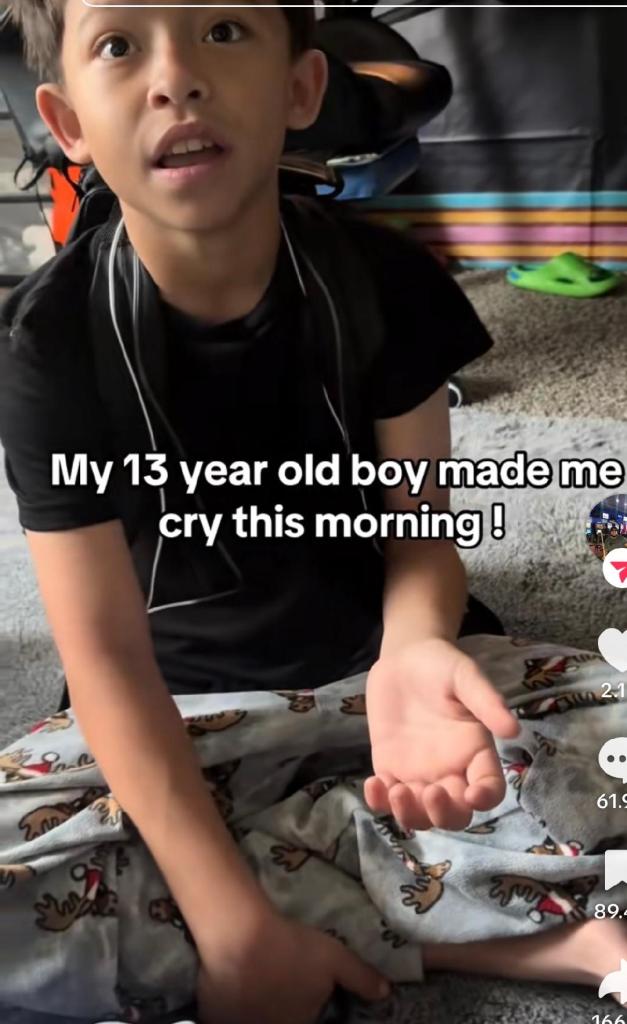
    Josue Carrizosa tells his dad Junior a story.Photo credit: Junior Carrizosa/TikTok

    Not all heroes wear capes. Some wear black Savage jackets. And some aren’t even 14 yet. Such is the case for Josue Carrizosa, who shared a piece of his day with his dad, Junior. His simple act of kindness brought Junior (and many others on social media) to tears.

    In a now-viral clip posted on TikTok, Josue sits on a carpeted floor and casually tells his father about something that happened at school that day. “A girl had her period mid-class, and she was wearing khaki pants. So it was showing right here.” (He shows on his thigh where menstrual blood might have appeared.)

    @juniorcarrizosa

    I’m so proud of my 3 kids. They amaze me everyday ! They are a reflection of me #proudfather #myoldest he set a great example without being asked to !

    ♬ original sound – Junior Carrizosa

    Empathy at a young age

    He continues, “And when she got up to walk to the nurse, everyone was laughing at her. But me and my friends, we were the nice ones. And I gave her my jacket…the Savage one? I gave her that one because it’s black, so you can’t see it.”

    Josue pantomimes wrapping a jacket around his waist to represent what his young female friend might have needed at the time.

    Junior asks, “Did she ask you for it?” Josue confirms she didn’t. “No, I just said ‘Here. Use my jacket.’ And then me and my friend took her to the nurse. And we got signatures for it.”

    “Do you know the girl?” “No,” Josue answers matter-of-factly, as he gets up and moves over to a desk area. Junior lets him know he’s proud: “That was nice of you!”

    Joeue Carrizosa, TikTok, kindness
    Josue Carrizosa. Photo credit: TikTok

    “Aligned with kindness”

    A young boy showing such profound, unprompted empathy is truly resonating with the online community. The clip has garnered more than 2.1 million likes and 61,000 comments from people sharing how impressed they are. (Many even want to put together a wish list of gifts to send Josue for his lovely good deed.) One commenter beautifully writes, in part, “He’s already aligned with kindness.”

    Another makes a checklist: “He knows about periods. He has empathy. He did something to help. He was comfortable telling his dad about it. Someone is raising a good man.”

    A self-described “girl mom” was extra impressed, writing, “As a girl mom, you don’t even understand how comforting this is.”

    This TikToker says what many are thinking: “We need more boys like this in the world.”

    Junior shares their story

    Upworthy had the honor of speaking with Junior, who shared that Josue has always exemplified this level of empathy. “When he was little, he came home one Christmas week and asked me for wrapping paper. He wanted to wrap his old toys for kids that didn’t have anything. His idea.”

    And this has become a pattern. “He has shown empathy in the past from giving to the homeless. And when we collected old pillows and blankets to pass out to the less fortunate.”

    Although Junior isn’t sure whether Josue and the girl stayed friends, he said his son has “a lot of friends because he’s the smallest in his class, but is one of the coolest, nicest souls.”

    When asked where that empathy might have come from, at least in part, Junior spoke with pride, saying, “He learned empathy from me because I have taught them to donate to the homeless since they were little.”

  • Giant tortoises return to Galápagos island after 150 years. Scientists say it changes everything.
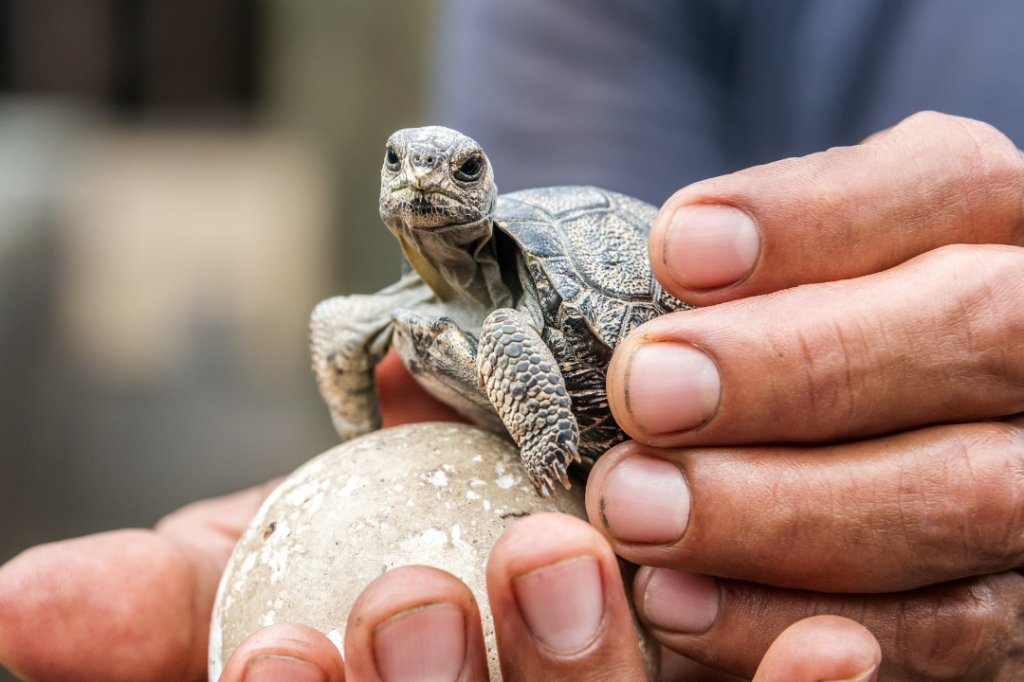
    A baby tortoise.Photo credit: Canva

    Extinction isn’t like leaving for a long trip or studying abroad. When it happens, there’s no coming back. The moment a species disappears, it takes with it millions of years of evolution and an irreplaceable thread in the fabric of life on Earth. That’s it. Bye! Gone forever.

    Which is why what happened on February 20, on a remote volcanic island in the Pacific Ocean feels so extraordinary.

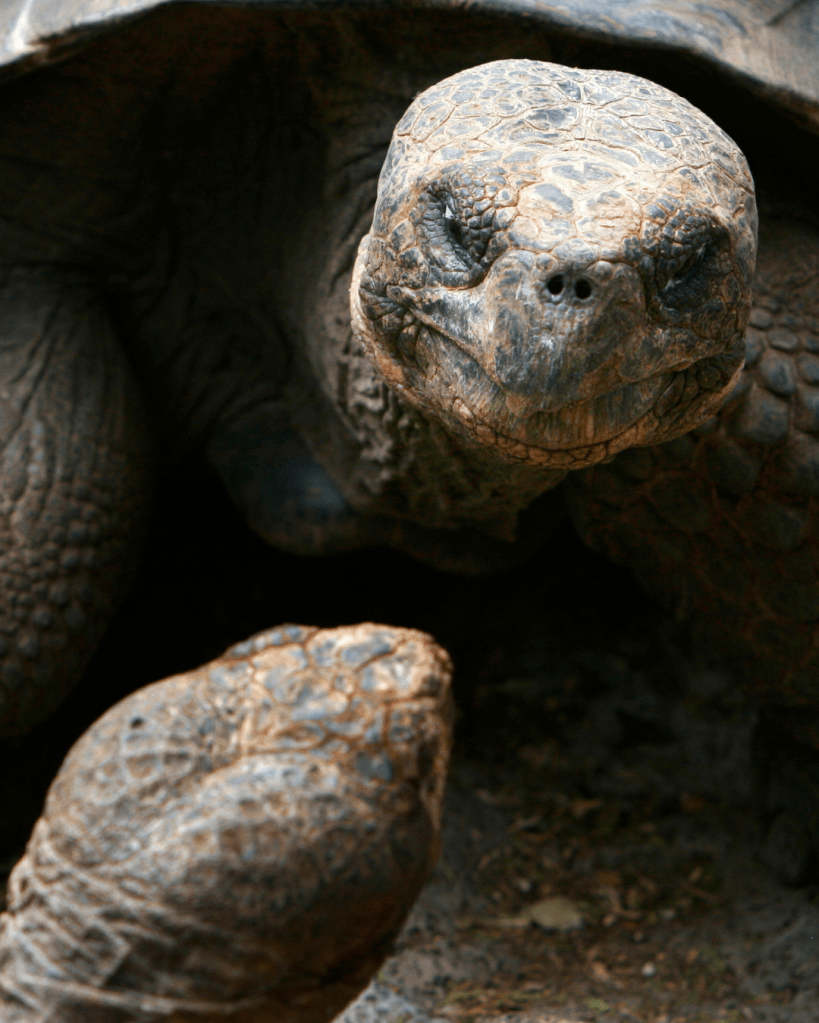
    A species that, by all accounts, should have been extinct returned home. That morning, rangers on Floreana Island in Ecuador’s Galápagos Islands set down their packs and gently placed 158 juvenile giant tortoises onto the wet ground—the first of their lineage to set foot on the island in roughly 175 years.

    These animals weren’t supposed to exist. Their subspecies was declared extinct in the 1850s. The forces that wiped them out—overhunting, invasive predators, habitat destruction—are exactly the kinds that usually can’t be reversed. But this time, somehow, they have been.

    First, here’s what was lost

    Long ago—before whalers, settlers, feral cats, and invasive rats—Floreana Island was home to as many as 20,000 giant tortoises. These weren’t just large, slow animals living out their days in the sun. They were ecosystem engineers that carved trails through the vegetation, swallowed whole fruits and deposited seeds miles away, planting forests with every lumbering step. The island’s entire web of life depended on these tortoises.

    galapagos, tortoises, island, conservation, science
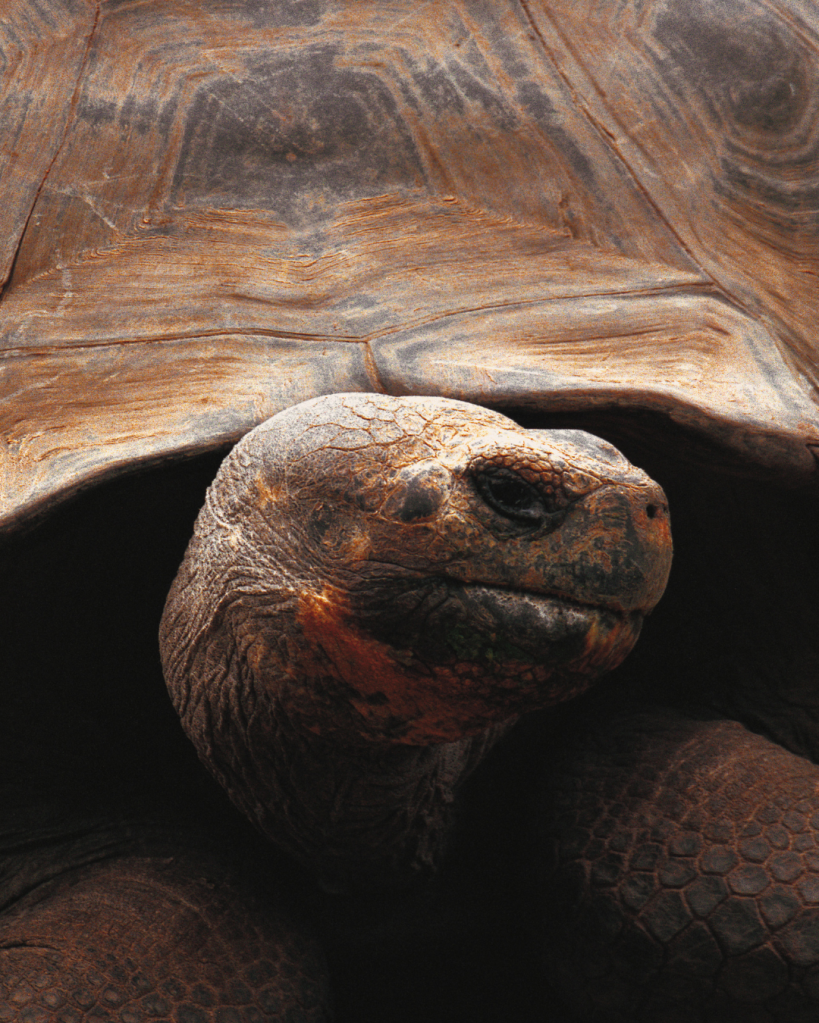
    A tortoise. Photo credit: Canva

    Then the whalers came.

    In the 1800s, passing ships discovered that giant tortoises were essentially the perfect food supply for long sea voyages. They could survive in a ship’s hold for months without food or water. A single vessel could haul away 700 tortoises in one visit. Altogether, passing ships took an estimated 100,000 tortoises from across the Galápagos.

    And then, sometime around 1850, the Floreana tortoise was simply…gone. On top of that, humans had brought rats, cats, dogs, goats, and pigs with them—devastating the surrounding environment. These new animals destroyed native vegetation and ate tortoise eggs. A massive wildfire in 1820 didn’t help either.

    By the time anyone thought to do something, it was too late. Or so everyone thought.

    A wild tale

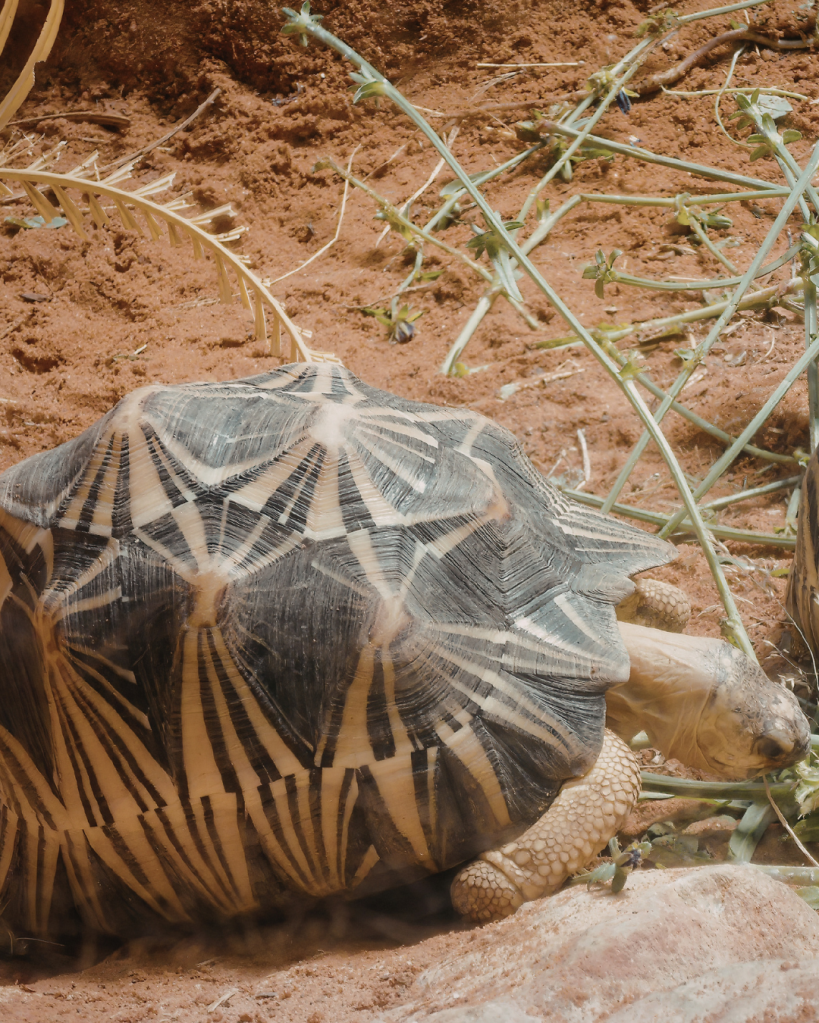
    In 2008, scientists exploring Wolf Volcano on Isabela Island noticed something strange. Some of the tortoises had an unusual shell shape: the unique saddleback shell associated with Floreana.

    They conducted DNA tests, and the results were nearly unbelievable. These tortoises carried the genetic fingerprint of the “extinct” Floreana lineage.

    It turns out that centuries earlier, those same whalers who had stripped Floreana of its tortoises had occasionally offloaded live tortoises onto Isabela Island, as provisions to be retrieved later or to lighten their ships. Some of those tortoises survived, bred, and passed their genes on for nearly 200 years.

    The Floreana tortoise had been hiding in plain sight the whole time.

    Scientists sprang into action. They selected 23 hybrid tortoises from Wolf Volcano that showed the strongest Floreana genetic signal and brought them to a breeding center on Santa Cruz Island. Starting in 2017, they carefully bred them over generations, patiently guiding their lineage back toward its original form.

    By 2025, they had more than 600 hatchlings.

    galapagos, tortoises, island, conservation, science
    A tortoise with a distinctive shell pattern. Photo credit: Canva

    Dr. Jen Jones, chief executive of the Galápagos Conservation Trust, described the moment as “truly spine-tingling,” adding that it validated two decades of collaboration among scientists, charities, and the local community.

    But wait—they didn’t just show up and release tortoises

    Before a single tortoise set foot on Floreana, the island needed years of preparation.

    Remember, Floreana had been overrun with invasive rats and feral cats, the same forces that drove the tortoises to extinction in the first place. They needed to go. In October 2023, the Floreana tortoise team launched a massive eradication campaign with helicopters, aerial baiting, and ground traps.

    Oh, and here’s a crucial aspect that’s often overlooked: the island’s approximately 150 residents were actively involved in this endeavor, not mere spectators.

    Before the baiting began, community members set up protective enclosures for their pets to prevent harm. Farmers adapted their agricultural practices to best serve the project. Locals also helped with the trapping.

    The results were almost immediate. Native Galápagos rails—small birds that disappeared from the island entirely because of rat predation—have already started coming back on their own. Nature, it turns out, is extremely ready to bounce back the moment you give it a chance.

    And they’re watching every step

    Each of the 158 released tortoises carries a GPS tracker that pings its location every hour via satellite.

    On top of that, NASA Earth observation data is overlaid to map vegetation, rainfall, and soil conditions across the island. Scientists use all of this information to build habitat models that can project ecosystem conditions decades into the future, which matters a lot when you’re dealing with an animal that can live over a century.

    galapagos, tortoises, island, conservation, science
    Slow and steady wins the race. Photo credit: Canva

    The plan is to release 25 to 100 more tortoises each year, with each group’s release location guided by data on where current tortoises are thriving. Slow and steady. Rather fitting, really.

    This is just the beginning

    The 158 tortoises are Phase One of a plan to reintroduce 12 locally extinct species to Floreana over the coming decade. Next up? The Floreana mockingbird, a fascinating species that arguably inspired Charles Darwin’s theory of evolution when he visited the island in 1835. Sadly, it now only exists on two tiny offshore islets.

    After that: Darwin’s finches, Galápagos racer snakes, the lava gull (the world’s rarest gull), and, eventually, the Galápagos hawk, the apex predator whose return would signal a fully restored food chain.

    Each species added to the island increases the likelihood that the next will succeed. That’s how ecosystems work. And honestly, it’s a pretty good lesson for the rest of life.

  • In 1979, eight old men lived as if it were 1959 for a week. Their aging reversal was extraordinary.
    Can living as if it were the past actually help reverse aging? Photo credit: Canva

    It may sound like a scene from a sci-fi film, but it’s not. In 1979, eight men arrived at a week-long retreat in a converted monastery in New Hampshire. As soon as they stepped foot in the door, they traveled 20 years into the past. The newspapers and magazines lying around were from 1959. Fifties music played on the radio. Old episodes of The Ed Sullivan Show aired on the black-and-white television. The entire environment was set up to feel like a 20-year time jump.

    The men, who were in their late 70s and early 80s, were instructed to live for the week as if it really were 1959. They were to speak in the present tense, as if what they were seeing, reading, and living was the present day. Events in the newspapers were to be regarded as happening in real time, not as part of the past.

    Living as if it were 20 years earlier seemed to make the men age backwards

    What was the point of all of this? Dr. Ellen Langer, a Harvard University psychologist, wanted to see how the mind affected the body when it came to aging. To study this question, she created an environment that took participants back to a time when they were younger.

    “We were going to take old men, put their minds back in time, and see the effects on the body,” Langer said in a 2024 interview. “What we found in a week: Their vision improved, their hearing improved, their memory improved, their strength, and they looked noticeably younger. Now, I don’t know about you, but I don’t think I had ever heard of an elderly person’s hearing improved without any medical intervention.”

    Another study group, with a tweak to the instructions, also showed improvements

    After that week-long experiment, another group of old men stayed a week in the same environment. This time, however, they didn’t live as if it were 1959, but rather reminisced about that time in their lives. They used past tense language instead of present tense. That group also showed improvement in aging symptoms at the end of the week, but to a lesser degree than the group that had fully immersed themselves in the past.

    “The study had a problem in that I didn’t have the funding to do several relevant control groups — a vacationing group and so on — but the results were startling,” Langer said in 2018. “Most people did not think that older people were going to have improved vision, improved hearing, and look younger.”

    It may have been a small study, but Langer’s research has continued in the decades since. She has become known to many as the “mother of mindfulness” for her ongoing work on the mind-body connection. She has published several books focused on mindful health, mindful learning, mindful creativity, and more.

    “We have no idea what our limits are”

    Much of Langer’s research focus comes down to how we think about what is and isn’t possible. She shared on the Mighty Pursuit podcast that the attitude of “It’s all downhill from here” as we get older “can easily become a self-fulfilling prophecy.”

    “We have no idea what our limits are, and we’re severely limiting ourselves across the board,” she shared. “Fifty years of data show that many of the things we think we can’t do any longer actually can be reversed…Most of our abilities, we don’t know how far we can actually push things.”

    happy, healthy, aging, elders, mindfulness
    How much effect does mindset have on aging? Photo credit: Canva

    “Most of what people believe, what they’ve been taught and read about, they’ve learned mindlessly, they’ve learned as absolute fact,” she said in another interview. “And, as I said before, because everything is always changing and the context is changing, absolutes need to be questioned. And I question them. You say something ‘has to be’ and my first — almost mindless — knee-jerk reaction is, well, ‘Why?’ And, ‘How might it be other?’”

    What if we all asked ourselves those questions when we start having limiting thoughts? How much could we improve our lives by being mindful of the stories we tell ourselves and adopting a mindset of possibility?

    You can learn more about Langer’s research on her website.

Kids

A 13-year-old shares how he bravely protected a girl for being mocked for having her period

Animals

Giant tortoises return to Galápagos island after 150 years. Scientists say it changes everything.

Health

In 1979, eight old men lived as if it were 1959 for a week. Their aging reversal was extraordinary.

Generations

Gen Z’s ‘Western Revival’: Why line dancing, rodeos, and honky-tonks are exploding in cities like NYC and Atlanta