Katie Neeves

  • Grandma offers wake-up call for grandparents who can’t stop buying the grandkids presents
    Gift giving should feel good for the giver and the receiver. But around the holidays, it can be a major cause of stress. Photo credit: @morethangrand/TikTok
    , , ,

    Grandma offers wake-up call for grandparents who can’t stop buying the grandkids presents

    She’s got the perfect solution for what to do when you just can’t pass up a great deal at the store.

    Parents and grandparents find themselves at odds frequently. It could be a disagreement over how much screen time the kids get, battles over grandma giving them too many sweets, or arguments around how often grandma and grandpa should be babysitting. Conflict in their relationships is almost a given, and navigating disagreements in a healthy, productive way is key for the relationship to evolve and grow.

    One huge source of that conflict comes in the form of… stuff! All parents can relate to the sense of dread they feel at the sight of the grandparents arriving for a visit with a trunk-full of of presents. Toys, furniture, costumes, decor, you name it. And that’s just on a regular Tuesday. Around the holidays, it can get even worse. It’s not that they don’t want their kids getting gifts, it’s just all too much, especially when you live in a home with a finite amount of storage.

    DeeDee Moore, a grandma behind the website More Than Grand, recently shared on the her TikTok account that “too much stuff” given from grandparents to their grandkids is one of the main sources of holiday frustration for parents.


    gift guide for grandparents, christmas gifts, in law at christmas, grandparents, parents, kids, family, love
    Moore says experience gifts, and spending quality time, are better options than trunk-loads of presents. Photo by Christian Bowen on Unsplash

    “75% of the parents that we surveyed wished grandparents would respect their wishes about gifts,” she explained, noting that while there are myriad reasons why this would be the case, the most common one (and incidentally the one most “waved off” by the grandparents) is the lack of physical space to accommodate.

    Now, you might be thinking: How much harm can it really do to give a kid a new card game or a baby doll? Certainly those don’t take up that much room. But when Moore breaks down the math, it’s a bit hard to deny.

    “Say your grandson has four other grandparents and four aunts and uncles. Each of these people get him one gift for a second birthday. That’s already nine gifts plus something for mom and dad. We’re up to 10,” she said.

    “If all of those grandparents buy him three things, and two of the aunts get him a little extra something, that’s 22 presents for a 2 year old who would be just as happy with a box.”

    Add in gifts from friends, and random gift-dumps from grandma when she’s been on a hot-streak at the thrift store, and you’ve got a serious storage problem on your hands.

    @morethangrand

    Gifts should be a joy for both the giver and recipient, but at this time of year, they can end up being a source of conflict. Watch for a tip on how to channel your grandparent generosity! For more ways to navigate hotspots during upcoming holidays, make sure you are on our email list! Go to my bio to sign up! #grandparents #grandparent #CommunicationTips #GrandparentsLove #AdultChildren #NewGrandparent #newgrandma#newgrandparents #newgrandma #Grandparenting #grannytok #HealthyBoundaries #Boomer #EffectiveCommunication #GentleGrandparenting

    ♬ original sound – MoreThanGrand

    Yikes, gotta admit that’s a lot. And that’s not counting the additional problems too much gift-giving can incite listed on the More Than Grand website, which included:

    • Undermining the parent’s values that they are trying to instill to their children
    • Damaging a child’s ability to use their imagination
    • Normalizing overconsumption
    • Teaching children to associate seeing grandma or grandpa with getting a gift, rather than focusing on the actual relationship
    (Here’s another one: Too many gifts steals Mom and Dad’s thunder! Parents often put a lot of thought into picking out presents they know their kids will love, only for them to get buried in the avalanche of surprise presents.)

    These are all good points, and yet, what to do with all those good intentions and a desire to spoil some precious little nugget? Luckily, Moore has the perfect fix.

    “While your grandchildren are faced with getting too many gifts, many children are in the opposite situation. Take some of the things you bought to Toys for Tots or another organization that provides gifts for less fortunate families.”

    This allows folks to step into the “true spirit of giving,” Moore concluded.

    Viewers by and large seemed to agree, though many also noted how powerful experiential or future-building gifts could be, even if they’re not as cute as toys or as fun to open.


    @morethangrand

    How often do we hear “it takes a village to raise a child’? Grandparents can be that village, but it can be hard to show up the way today’s parents need. We created a digital grandparenting course that will teach you everything you need to know to be the village for your grandchild’s parents. It’s called New Grandparent Essentials, and you can find a link in my profile! It’s the best investment you can make in your family as you become a grandparent! #grandparents #grandparent #CommunicationTips #GrandparentsLove #AdultChildren #NewGrandparent #newgrandparents #newgrandma #Grandparenting #grannytok #HealthyBoundaries #Boomer #EffectiveCommunication #GentleGrandparenting

    ♬ original sound – MoreThanGrand

    “My in-laws opened up a college fund for both my kids. Instead of stuff they put more money in the account. I’m so grateful!” one person wrote.

    Another added, “I am giving experiences and putting money in an account for future needs (college, 1st house, starting business, etc).”

    In the vein, here are two other tips grandparents can use for intentional gift-giving…

    First and foremost: open up a discussion with the parents. See if they need help with a big ticket item, find out which hobby or sport the child is interested in, ask what’s a definite “no.” this can save a lot of headaches for everyone.

    “The gifts should surprise the grandkids, not their parents,” as one commenter wrote on the video.

    Second: prioritize memories over stuff. A trip to the zoo, an education membership, a ticket for two to the movies…these are often the gifts that truly keep on giving.

    And grandparents, don’t forget: just because you’re honoring boundaries, it doesn’t mean you have to pass up that sweet little something you see in the aisles. After all, shopping is fun, and it’s even better when you find a great deal or a cool discovery. But it can easily go to a little one who could really use it.

    For even more tip on all things grandparenting, give More Than Grand a follow here.

    This article originally appeared last year. It has been updated.

  • 15 hard truths that people swear made their lives so much better
    A woman learns a harsh truth about her friends. Photo credit: via Liza Summer/Pexels

    A significant part of adulthood is realizing that many uncomfortable truths are indeed real, even if we wish they weren’t. At first, these harsh truths may dampen our spirits and make us feel that the world is a bit colder. However, understanding some of life’s hard lessons opens us up to greater possibilities and can help us overcome the obstacles holding us back.

    Harsh truths help us realize when relationships aren’t as great as they can be. They also prevent us from having too much faith in people and institutions that will ultimately disappoint us. Knowing dark truths can also help us appreciate the things that are truly beautiful, honest, and good. A Redditor named Rare_Can_5418 asked the AskReddit forum, “What difficult truths, the sooner you accept them, the better your life will be?” and received over 6,500 responses. Many of them were centered around harsh truths about relationships and the fact that even if we do our best in life, we can still end up with the short end of the stick.

    The key is to keep going and never let failure get you down.

    Here are 15 of the “difficult truths” that made people’s lives a lot better.

    1. Stop comparing yourself

    “There will always be someone better looking, better educated, younger, more experienced, more intelligent or wealthier than you. Do your best, live without regret, have empathy and kindness, give when you can, expecting nothing in return. Focus on your heart value more than what others have.”

    “Comparison is the thief of joy.”

    Research shows we have a tendency to compare ourselves to highly visible and highly skilled people, which makes us feel worse. We wonder why we can’t cook as well as our foodie friend or why we’re not as organized and put-together as our Type A neighbor. No wonder comparisons make us feel like crap!

    harsh truths, hard truths, life lessons, reality, adult life, adulting, psychology, imposter syndrome, askreddit, life hacks
    Comparison is the thief of joy. Giphy

    2. Some people won’t like you

    “You can be sweetest, juiciest peach on the tree. But some people don’t like peaches.”

    “In Spanish, there’s a saying: ‘Nadie es moneda de oro para que lo quiera todo el mundo,’ which translates to something like nobody is a gold coin to be liked/wanted by everyone else.”

    Worrying too much about making everyone like you is a quick path to becoming a people pleaser, an impossible task that takes a serious toll on your mental health.

    3. Things are just things

    “They don’t have feelings. They don’t care if you give them away or sell them or throw them out. If a thing is useful, keep it. If not, get rid of it.”

    Psychologists refer to perceiving that inanimate objects have feelings as anthropomorphizing. Psych Central says that humans project feelings onto objects to relate to them more deeply. “People generally anthropomorphize to make sense of events and behaviors they experience. Further, attributing emotions, attitudes, mental states, faces, and values to non-human things can help you feel connected to something,” Sarah Barkley writes in a PhD-reviewed article.

    harsh truths, hard truths, life lessons, reality, adult life, adulting, psychology, imposter syndrome, askreddit, life hacks

    Things don’t care if you throw them away. Giphy

    4. Not all friendships last

    “Surprisingly though, the ones that last are not necessarily the best (or even good) ones.”

    “Most friendships are based on convenience, I’ve found. Unless two people are willing to put in a lot of effort, time and distance will do more to end a friendship than any disagreement.”

    It’s natural and OK to outgrow friendships. If you’ve put in a solid effort and it’s not working the way it used to, being comfortable with letting the relationship go will do wonders for your guilt and stress levels.

    5. You may be the bad guy

    “You can do your best with someone and still be the villain in their story.”

    “One of my current favourite memes is: I don’t care if I’m the villain in your story, you’re the clown in mine.”

    The truth is we’re all just people doing our best, even the people who have wronged you.


    harsh truths, hard truths, life lessons, reality, adult life, adulting, psychology, imposter syndrome, askreddit, life hacks

    You might be the villain in someone’s story. Giphy

    6. You can’t change people

    “You can only help people who actually want it. If they’re not ready to change or put in the effort, there’s not much you can do. Realizing this can save you a lot of frustration and help you focus on people who actually appreciate your help.”

    “It’s always tough having those friends who are constantly complaining but doing nothing to address what they are complaining about. But as an adult, you just have to sit there and listen. No point in offering help to someone who isn’t asking for it. Kinda like how it’s really tough to teach someone who isn’t interested in being taught.”

    Expecting others to change is bound to lead to disappointment. There’s a saying that goes, “When people show you who they are, believe them.” Hoping and wishing and working to make them somewhere else, more often than not, gets you nowhere.

    7. How we judge ourselves and others

    “We judge ourselves by our intentions. We judge others by their actions.”

    “In psychology, this is called fundamental attribution error.”

    The Fundamental Attribution Error is a psychological phenomenon where we assume someone’s actions reflect their personality without considering the situation. It’s like when we blame someone’s driving skills for being in an accident instead of the curvy road.

    harsh truths, hard truths, life lessons, reality, adult life, adulting, psychology, imposter syndrome, askreddit, life hacks

    We judge others differently than how we judge ourselves. Giphy

    8. Depending on people

    “Once you’re an adult, there really isn’t anyone you can 100% depend on except yourself. There will still be people in your life to lean on, but everyone has their limits in how they can help you.”

    Perhaps one of the harshest truths of all, but once you accept it, the path forward becomes extremely clear. It’s up to you to make everything happen, and there’s really no one else to blame if you don’t.

    9. Nice doesn’t equal good

    “Nice people aren’t always good people.”

    “One of my bosses doesn’t greet/make small talk and is known for being quite firm. He’s been the most helpful throughout my most difficult period dealing with tragedy. Some people with that personality type simply get things done when you need them done without the chattering.”

    Niceness can even be toxic when it’s not coming from a place of genuine authenticity. Sometimes hard conversations and conflict are necessary, and avoiding them is not healthy.

    10. Everything is temporary

    “You can suddenly lose anything and anyone at any time…and maybe all at once or in quick succession without so much warning.”

    11. Nobody is thinking about you

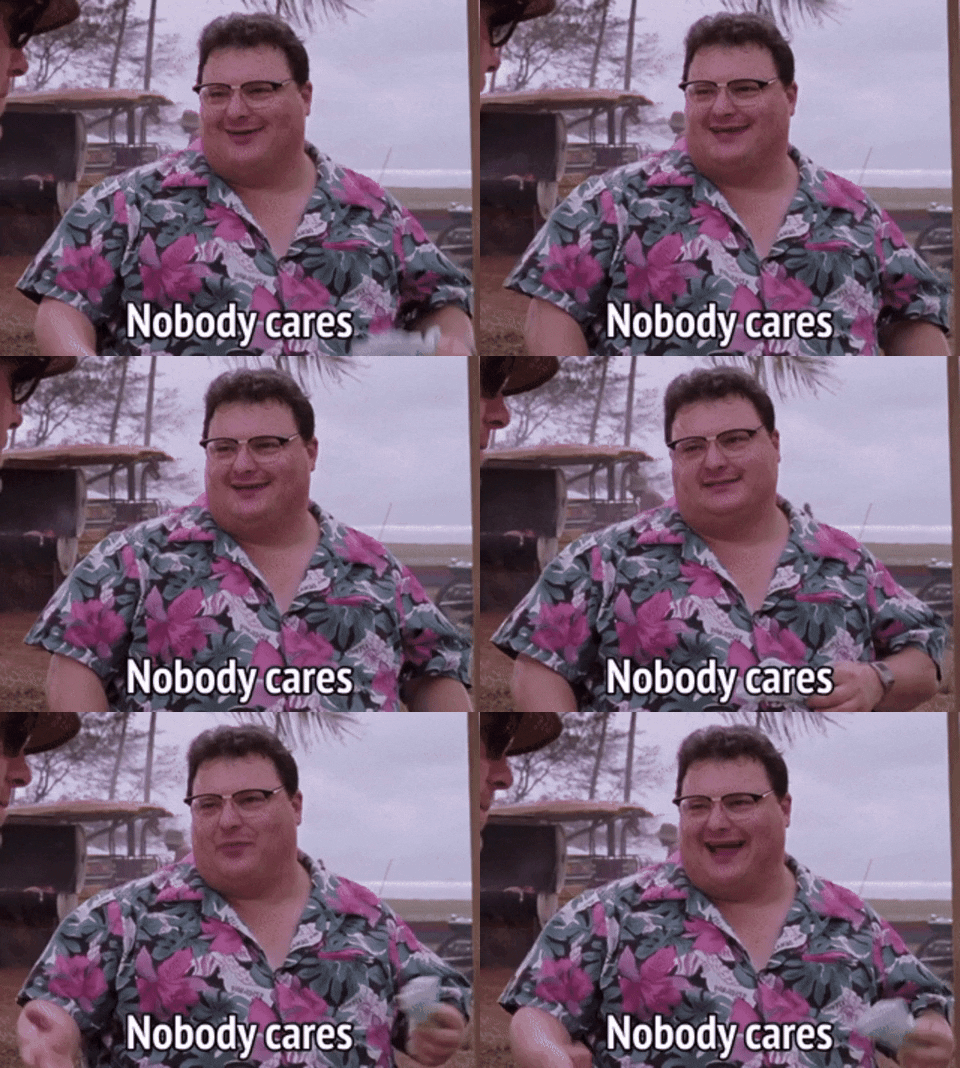
    “In general, people in the real world are oblivious to you. You’re not even a blip on their radar. If you’re insecure about something you wear or how you look, remember: nobody cares.”

    Worried about something small like how the sleeves on your shirt fit you? It’s OK if you care, but no one else will. People are far too consumed with their own lives and problems to remember the minutiae of some stranger they saw in passing. Accepting this is incredibly freeing!

    harsh truths, hard truths, life lessons, reality, adult life, adulting, psychology, imposter syndrome, askreddit, life hacks

    Nobody is paying attention to you (and that’s a good thing). Giphy

    12. No one is coming to save you

    “No one is coming to save you, so you have to do it all yourself.”

    “And once you internalize this and do it, your self-esteem will be through the roof.”

    13. Nobody knows what they’re doing

    “Before i graduated high school I thought, thank god, I finally won’t have to deal with annoying obnoxious kids and I’ll be treated like an adult, I come to find out 95% of adults are worse then the actual kids, nobody knows what they’re actually doing and life is actually a big joke.”

    This realization could help cure your Imposter Syndrome. Most people are just making it up as they go along and so you shouldn’t feel ashamed of doing the same.

    14. Love is reciprocal

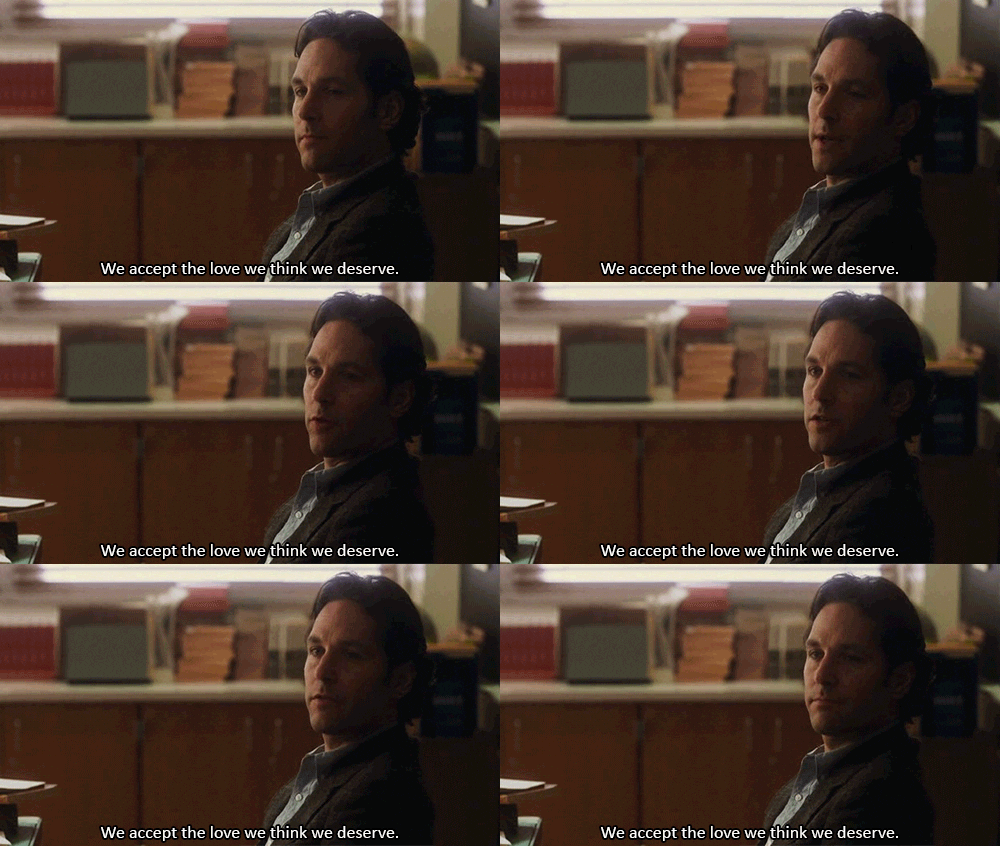
    “If a romantic interest is not giving you the same attention/respect you give them, they don’t really care about or want you, and you’re in for a world of hurt if you keep telling yourself otherwise.”


    harsh truths, hard truths, life lessons, reality, adult life, adulting, psychology, imposter syndrome, askreddit, life hacks

    We accept the love we think we deserve. Giphy

    15. Who’s good for you?

    “People who are good for you will make you feel happy, joyful, accepted, cared for, and filled with fun times, despite any differences. People who are not good for you will make you feel anxious, sad, down, slighted, judged, and never check in on you if you’re not okay, and won’t even bother noticing when you’re not okay. Genuine people will never let you suffer in silence or watch you suffer. Stay away from those who make you feel negative emotions and thoughts.”

    These are called harsh or hard truths for a reason. It’s human nature to feel self-conscious, feel like an imposter, try to change people, or worry if other people like us. But the more of these you can free yourself from, the better you’ll feel.

    This article originally appeared last year. It has been updated.

  • People are shocked to learn the real meaning behind The Lion King’s ‘Circle of Life’ song
    The meaning of the Zulu chant in "The Lion King" song "Circle of Life."Photo credit: Wikipedia/ Walt Disney Feature Animation

    The Disney movie The Lion King was released in 1994, and it had a soundtrack full of bangers. Produced by Hans Zimmer with assists from Elton John, there are so many songs that remain classics—including “Circle of Life.”

    The song begins with the iconic Zulu chant by singer and composer Lebo M at the start of the Disney film, as the sun rises and baby Simba is lifted into the sky by Rafiki: Nants ingonyama bagithi Baba Sithi uhm ingonyama

    And more than 30 years later, people are finally learning what it translates to. On the One54 Africa podcast, Zimbabwean comedian Learnmore Jonasi shared with hosts Akbar Gbajabiamila and Godfrey Daneschmah (and the rest of the world) the meaning of the Disney tune’s chant—and it’s hilariously underwhelming.

    “I’ve seen The Lion King 100 times,” Gbajabiamila says, before giving his own soulful rendition of the chant. “What did I say?”

    Jonasi tells him he said “nothing,” adding that it’s Zulu, a language from South Africa, and that it translates to: “Look! There is a lion. Oh my God.”

    The three burst into guttural laughter. Gbajabiamila and Daneschmah react in disbelief, saying, “You are joking! That is not what that means!”

    Jonasi assures him that’s exactly what it means, and they can’t contain their laughter.

    “This whole time I thought it was like this beautiful, majestic [thing],” Gbajabiamila howls.

    People react to Zulu chant meaning

    On Reddit, people did not hold back their shock and hilarious disappointment about the song’s iconic opening:

    “And here I thought it was some majestic phrase about life 😂.”

    “It does. It does mean that. I found this out and had the same reaction. I f**king howled. ‘Oh look, here comes a lion, father a lion’ or something was how I was told it was. I was amused and somehow disappointed. But like… it’s accurate.

    “I mean it works in the song too since all the animals look at the lions at this part.”

    “You know what… I’m okay with this.”

    “See? This simpleton answer actually fits. Try and think about the sheer amount of people who’ve run around shouting this phrase in public looking like idiots (myself included), and then match their idiocy with the simplicity of this answer!!!”

    “Okay so quite mundane and hilariously so.”

    How “The Circle of Life” was made

    The film’s composer, Hans Zimmer, “tapped Lebo M, a then-exiled South African composer living in the U.S., to help with the music,” according to Rotten Tomatoes.

    Zimmer and Lebo M “riffed” together to come up with the film’s opener, along with Elton John and lyricist Tim Rice, but struggled to nail down an idea until inspiration came to Lebo.

    “Then, suddenly, Lebo cried out ‘Nants ingonyama bagithi Baba,’ and all present agreed—instantly—that the chant would open the film,” the publication noted.

    “Circle of Life” was nominated for an Oscar for Best Original Song at the 1995 Academy Awards but lost to another of the film’s iconic songs, “Can You Feel the Love Tonight?”

  • How one teacher came up with the now-viral ‘Tattle Phone’ idea being hailed as a classroom gamechanger
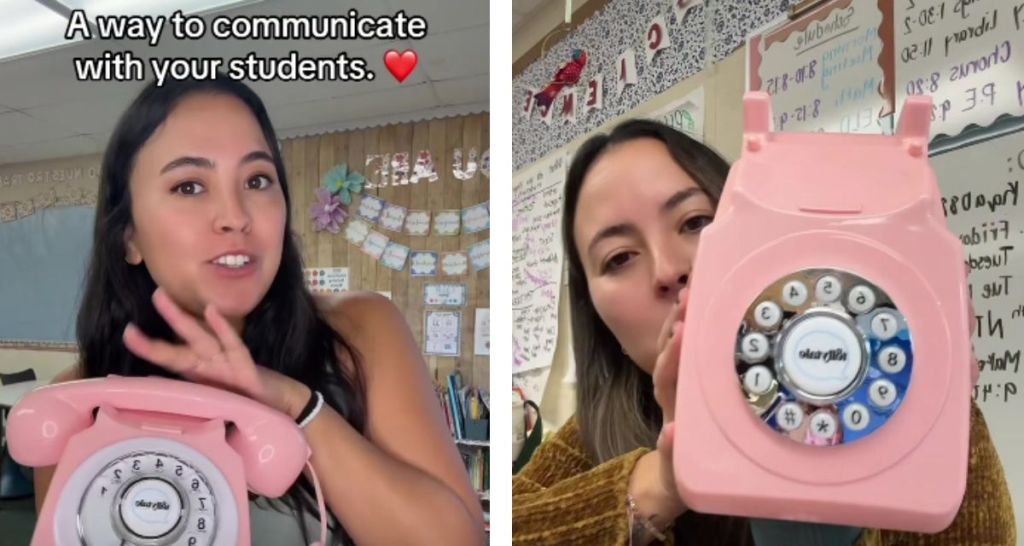
    Anais Zavala shows how to use the Telly Tale Phone.Photo credit: @tellytalephone/TikTok

    If you teach young children, or have young children in school, you might have heard of the viral “Tattle Phone.”

    On TikTok, you’ll find several videos of teachers raving about the product, which they’ve largely purchased on Amazon, for the way it gives students a way to vent while sparing their own sanity.

    Not to mention it provides some grade-A entertainment to boot. Because who can resist piping-hot tea like “Micha burped on purpose!” and “Evan has TWO erasers in his pencil pouch!”

    But what you may not know is that this trendy product stems from the brainchild of a real educator looking for impactful ways to curb tattling in her own classroom.

    @tellytalephone

    Telly Tale Phone ❤️ record your memories, tattles, stories and so much more. #fyp #parati #teacherlife #teachersoftiktok #maestra #education #tattletail

    ♬ original sound – Telly Tale ™ ❤️

    Over her 12 years working as a teacher and counselor for transitional kindergarten students through fifth grade, Anais Zavala noticed that “constant tattling” had become a major disruptor to learning. Knowing that kids already associate phones with being listened to, she thought it might be the perfect way to make them feel seen in a structured setting without being so distracting for everyone else.

    And thus the original “Tattle Phone” was born in 2023

    The idea is pretty simple: students walk up to the phone, which has a small Bluetooth recording device that captures all their complaints. But Zavala didn’t stop there. After all, the intention wasn’t just to “stop kids from speaking,” she tells Upworthy, but to focus on “teaching them how to speak, reflect, and resolve conflicts.”

    So, using both her teaching experience and behavioral specialist expertise, Zavala also created a curriculum (available in English and Spanish) that helps educators teach kids to manage conflict and express emotions, also known as Social-Emotional Learning, or SEL.

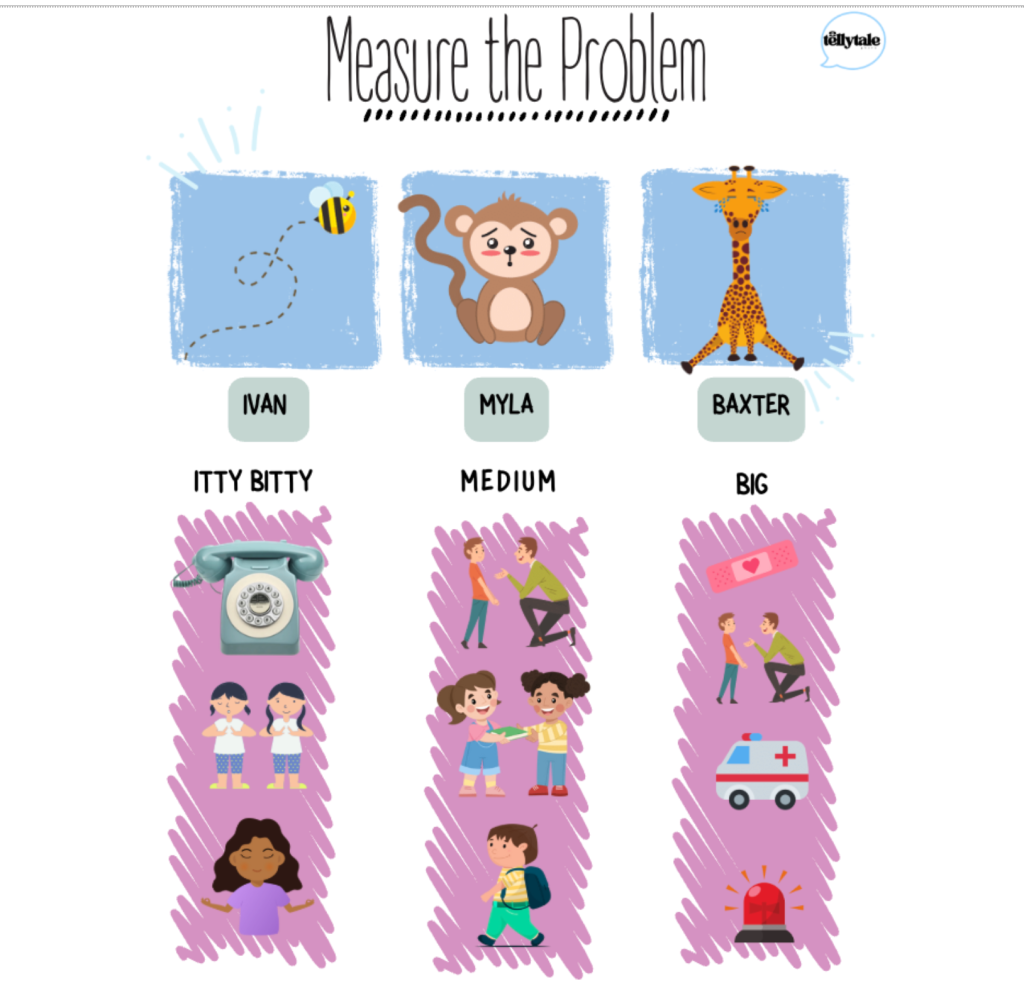
    One example is learning how to identify the “size” of a problem. In the cute graph below, “itty bitty” problems are represented by a bee, “medium” problems by a monkey, and “big” problems by a giraffe. Each category also includes images of possible solutions, such as breathing deeply, talking to an adult, or calling an ambulance.

    tattle phone, classroom etiquette, teachers, gifts for teachers, parents, kids, kindergarten
    Measuring the size of a problem. Photo credit: Anais Zavala, used with permission

    The reflective aspect became so integral that Zavala eventually renamed and trademarked her device the “Telly Tale Phone,” because she wanted it to feel less about reporting and more about processing what happened. Telling, versus tattling, if you will.

    So, did it work? Yes, in more ways than one 

    Zavala noticed that not only did the Telly Tale Phone result in fewer classroom interruptions, but students also became more mindful with their tattles. They began pausing to rethink what they wanted to say and often tried to solve problems on their own. Other teachers reported similar results: increased independence, better peer conflict resolution, and reclaimed instructional time.

    Unsurprisingly, as Zavala’s Telly Tale Phone began making a splash, similar products started popping up. While Zavala understands that competition is “normal when something meets a real need,” she maintains that what makes the Telly Tale Phone more than a “novelty” item is its structured reflection system. It treats tattling as a learning opportunity rather than something to be squelched entirely.

    “Even though more products are coming out, my focus has always been staying true to the educational mission,” she said. “Our focus has always been impact — not just popularity.”

    Where to buy your own Telly Tale products

    In addition to the Telly Tale Phone, Zavala also sells an adorable Ellie the Telly Elephant stuffie with a similar Bluetooth recording device tucked into its ear, for kiddos who might need something on the softer side.

    If you’d like to support Zavala’s small business, you can check out the Telly Tale Phone website here, as well as follow the Telly Tale Phone socials here and here

  • Gardener shares ‘revolutionary’ way of starting seeds indoors using recycled packaging
    A "seed snail" is a compact way of getting your garden started.Photo credit: GrowVeg/YouTube
    ,

    Gardener shares ‘revolutionary’ way of starting seeds indoors using recycled packaging

    The space-saving method is known as a “seed snail” or “seed sushi.”

    As spring approaches, gardeners begin planning what they want to plant and when. Often, they starting seeds indoors rather than outside. Usually, seeds are planted in trays or small cups and nurtured into seedlings before being transplanted outdoors once the danger of frost has passed.

    Seed starts require space, though, and not everyone has it in abundance. That’s why a “revolutionary” method of starting seeds using recycled packaging materials has people excited. Using the “seed snail” or “seed sushi” method, you can grow far more seedlings in a much smaller area than with traditional trays or cups.

    When you start seeds, they need to be spaced far enough apart that their roots don’t get entangled, which is why traditional seed starter trays have small compartments. The seed snail keeps seedlings’ roots separate while allowing them to grow in a compact space.

    Benedict Vanheems, author of GrowVeg: The Beginner’s Guide to Easy Vegetable Gardening, demonstrates how to make the seed snail using different kinds of packaging materials. However, he says bubble wrap is his “absolute favorite.”

    “This, with its air pockets, helps to create a slightly sturdier roll so it sits firmer,” Vanheems says in a YouTube clip. “And the air pockets will also help to insulate the roots from swings in temperature, which our seedlings will much prefer. Bubble wrap is flexible, retains moisture well, and can be reused time and again.”

    Bubble wrap can be used for starting seeds
    Bubble wrap isn’t an obvious gardening tool, but it’s useful. Photo credit: Canva

    However, he acknowledges concerns people may have about microplastics and offers a solution. First, he cuts the bubble wrap into long strips about three inches wide. Next, he cuts a strip of baking parchment twice as wide. He then folds the parchment in half and wraps it over both sides of the bubble wrap. This ensures the soil never touches the plastic while still providing the temperature-regulation benefits of the bubble wrap.

    Vanheems adds water to the potting mix to make it very moist. Depending on the size of the seeds you plan to use, you’ll cover the strip of packaging with between 1/2 inch and 2 inches of soil. Pat the soil down fairly firmly, and leave an inch or two uncovered at the end.

    After you roll up the “snail,” use painter’s or masking tape to secure it. Then it’s ready for you to add your seeds according to the individual seed instructions. Vanheems doesn’t recommend sowing the seeds before rolling, as they can get moved around and dislodged. He also gives tips for retaining moisture in the snail rolls, from misting or light watering to keeping them covered with clear plastic.

    Seedlings started in a seed plug tray
    Traditional seed trays take up more space than a seed snail. Photo credit: Canva

    Vanheems showed what the seedlings looked like once they had developed roots and shoots. This method allows long, deep roots to grow, making it easy to separate the plants after unrolling the snail.

    Some seedlings may need more soil added to the roll once their roots begin to grow. Simply unroll the snail, sprinkle more soil over the roots, and reroll. Easy peasy. The main thing to watch with the snail is that it stays moist, since it uses less soil per seedling than traditional trays.

    Both amateurs and pros are loving the idea in the YouTube video comments:

    “Your method is a LOT cheaper than buying these expensive plastic containers in the DIY garden market that barely survive one year in the garden. I surely will give it a try. Thank you!”

    “I just ran across these a few days ago and I’ve already got a bunch of them going! This is going to be a game changer! I’m using disposable shower caps to cover the ones that need it – they’re infinitely reusable as long as you don’t break the elastic.”

    A gardener planting seedlings in a garden bed
    Once your seedlings grow large enough, you can transplant them. Photo credit: Canva

    “I tried this ‘seed snail’ method with my Sweet Peas last week and I’m officially a convert! The vertical root growth is incredible, but the real win for me was the space saving—I fit twice as many under my grow lights than I usually do. If you’re tight on indoor space, this is a total game-changer. Great tutorial!”

    “I’ve been wondering how to go about growing a large number of native plant plugs without having to buy more plastic. Using this technique I’m going to stretch my supplies to grow even more seeds in a single season. Thank you so much for the tip. You weren’t kidding when you said it would change the way you do things. I’m officially converted.”

    “A little advice from an old nurseryman, when handling tiny seedlings, it is much safer to handle them by their leaves, not the stems. Even a finger can damage a very sensitive seedling stem and can cause damping off that will kill the seedling. The seed snail idea is brilliant and I will start using it myself. It has several advantages but the best for me is the unrolling and the easy removal of the seedlings without damage to their root systems. Thank you!”

    You can follow GrowVeg on YouTube for more cool gardening tips.

  • ‘Millennial Parenting Whisperer’ shares the most important moment to have with your child
    A mom talking to her son and Dr. Becky Kennedy.Photo credit: Canva and Business Wire

    Parents spend 18 years raising their children (and sometimes more), so it’s hard to pinpoint the exact moment that matters most in their upbringing. Is it helping them with homework when they’re struggling? Inspiring them to get back up after failure? Or is it the example you set when interacting with loved ones?

    According to Dr. Becky Kennedy, dubbed the “Millennial Parenting Whisperer,” the most important moment comes after you’ve messed up as a parent.

    Kennedy, known online as “Dr. Becky,” is a clinical psychologist and the founder and CEO of Good Inside, a parent-coaching platform designed to “help you solve current challenges and get ahead of future ones.”

    dr. becky, dr. rebecca kennedy, world economic forum, psychology, families
    Dr. Becky Kennedy. Photo credit: World Economic Forum/Flickr

    On a recent episode of What Now? With Trevor Noah, Dr. Becky shared why repairing relationships is the most important thing a parent can do. Even though she is one of America’s most popular family psychologists, she often falls short of perfection and loses her cool, just like any parent. But these moments of imperfection matter because they allow her to grow with her child—and that’s invaluable.

    “I mean it with such honesty that my kids don’t have some Dr. Becky person as a mom,” she said. “I also mean equally that I wouldn’t wish that upon anyone. I mean, we learn the most in our relationships when people take responsibility for their behavior, when people repair. I wouldn’t want to deprive my kids of that opportunity, and that’s such [an important] part of healthy relationships.”

    Why repair is so important in relationships

    “After all, there’s almost nothing within our interpersonal relationships that can have as much impact as repair,” Dr. Becky said in a 2023 TED Talk. “Repair is the act of going back to a moment of disconnection. Taking responsibility for your behavior and acknowledging the impact it had on another. And I want to differentiate a repair from an apology, because when an apology often looks to shut a conversation down, ‘Hey, I’m sorry I yelled. Can we move on now?’ A good repair opens one up.”

    Dr. Becky shares how to repair a relationship with a child

    “I often think about three elements: name what happened, take responsibility, state what you would do differently the next time. It could come together like this:

    ‘Hey. I keep thinking about what happened the other night in the kitchen. I’m sorry I yelled. I’m sure that felt scary. And it wasn’t your fault. I’m working on staying calm, even when I’m frustrated.’

    A 15-second intervention can have a lifelong impact.”

    Dr. Becky’s advice should be uplifting to parents everywhere because no one is perfect—not even Dr. Becky—and we will all lose our cool at times. But when it happens, it gives us the opportunity to teach our kids the most important interpersonal skill: how to repair a relationship that has ruptured.

    When we learn how to repair our relationships, we can ensure they won’t fail at the first sign of trouble. Instead, stronger relationships have the potential to stand the test of time.

  • Timeboxing: The science-backed productivity method that can double your output
    Welcome to the world of timeboxing. Photo credit: Canva
    ,

    Timeboxing: The science-backed productivity method that can double your output

    Science says to do lists actually make you less productive. Here’s what works instead.

    Have you ever heard of timeboxing?

    Probably not. It’s a powerful productivity method used by some of the world’s most successful people, but many of us are completely unaware of its existence. That’s our loss: in a survey of 100 productivity techniques, timeboxing was ranked the most useful.

    This article dives into timeboxing, and why it’s such an effective technique—and why it remains underused by the general public. By the end, you will have the tools to incorporate timeboxing into your daily routine.

    What is timeboxing?

    It’s simple. Timeboxing is a time management technique in which you set a specific, fixed time limit for a single task. You then commit to focusing on it exclusively during that period. It’s like setting up a personal one-on-one with your to-do list. When the allocated time is up, you stop and move on to the next scheduled task. What if you’re not done? Too bad. You move on to the next task, regardless of whether the previous one is fully finished.

    Think of it as setting healthy boundaries for yourself and your work. By enforcing this strict, self-imposed deadline, you naturally eliminate distractions and sharpen your focus. You channel all your energy into completing the task within that set timeframe. It turns a vague goal like “work on the report” into a specific action like “spend the next 45 minutes writing the introduction to the report.” Genius. 

    Why does it work?

    The secret to timeboxing lies in its simplicity. By allocating a fixed period to a specific task, you avoid open-ended to-do lists. No vague goals to “get it done today.” You’re left with clear, defined work.

    The method was popularized by Marc Zao-Sanders in his December 2018 article in the Harvard Business Review, “How Timeboxing Works and Why It Will Make You More Effective,” and has since changed how millions of people organize their days.

    Where timeboxing comes from

    The origins of timeboxing date back to the mid-1900s. In November 1955, British naval historian Cyril Northcote Parkinson published a satirical essay in The Economist with a now-famous observation: “Work expands so as to fill the time available for its completion.” The illustration that accompanied it was a drawing of a woman focused on a single task—sending a postcard—who spent the entire day doing it.

    timeboxing, productivity, time, management, science
    Parkinson’s Law gives us a sharp, accurate insight into human behavior. Photo credit: Canva

    This concept, known as Parkinson’s Law, is a sharp, accurate insight into human behavior. Give a task with no clear deadline, and it will expand to fill all available time.

    The concept of timeboxing first took formal shape in the 1980s, emerging as a practical solution to the problem Parkinson observed. The term “timebox” was first documented in 1988 as a central component of Scott Schultz’s Rapid Iterative Production Prototyping method. Just a few years later, in 1991, IT consultant James Martin championed this idea in his influential book, Rapid Application Development.

    This structured approach to time management soon became a core element of Agile software development methods like Scrum. Instead of letting projects drag on indefinitely, developers began using fixed-length “sprints”—in essence, timeboxes—to complete specific chunks of work. This shift brought predictability and focus to what was often a chaotic process.

    While timeboxing originated in software engineering, its power wasn’t limited to coding. The practice has since been widely adopted for personal productivity, and it’s supported by fascinating science that explains why it works so well across so many tasks.

    What the research says

    A significant 2021 meta-analysis published in PLOS ONE examined 158 studies involving 53,957 participants to determine whether structured time management is effective. The results even caught the researchers off guard.

    They found that time management increased life satisfaction by 72%, whereas job satisfaction rose by only 19%. Researchers also discovered that “time management may primarily enhance wellbeing rather than boost performance.” What does that mean? Essentially, the main advantage of managing your time well is not just higher productivity, but a more fulfilling and meaningful life.

    The psychological reasoning behind timeboxing is even more important. Research by psychologist Roy Baumeister shows that decision-making is a limited resource that gets used up. Every moment you spend wondering “what should I work on next?” uses up the same mental energy you need for your most important work. Timeboxing removes those small, repetitive decisions completely. Your past self, during the planning stage, decides for you, so your current self can just focus on doing the work.

    Then there’s the cost of distraction. Gloria Mark’s research at the University of California, Irvine, found that it takes an average of 23 minutes and 15 seconds to fully regain focus after being interrupted. Timeboxing creates protected windows where interruptions are explicitly blocked, preserving the deep focus that makes real progress possible.

    How timeboxing flips the traditional approach

    Most people organize their work—and life—around to-do lists. The issue with these lists, as Zao-Sanders points out in his HBR article, is that they lack a system for when tasks should be done or how long they should take. Tasks often remain on lists forever, growing and shrinking, getting delayed, mainly because there’s no sensible limit.

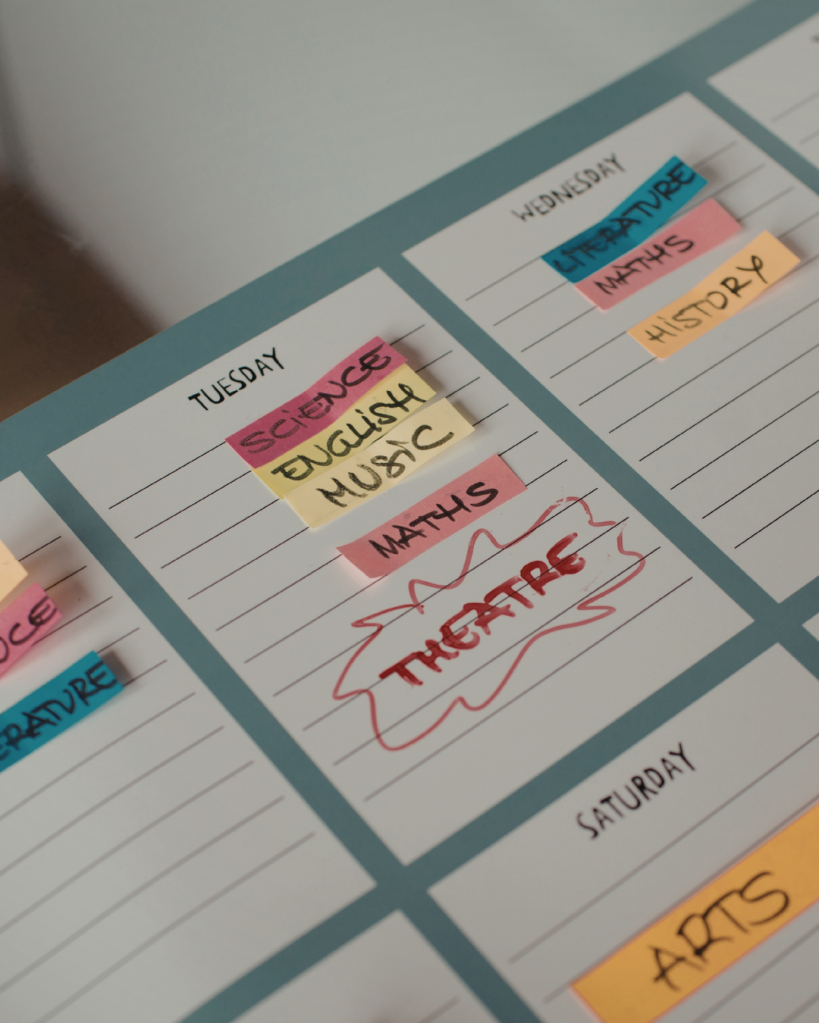
    timeboxing, calendar, scheduling, time, management
    Timeboxing moves tasks from a list to your calendar. Photo credit: Canva

    Timeboxing moves tasks from the list to your calendar. Each task is assigned a specific start time, an end time, and a clear goal. Your calendar becomes more than just a schedule: it offers a full view of how your time is really used. It becomes a record of what you’ve achieved and a tool for understanding how long things truly take.

    This shift matters beyond just personal productivity. When your timeboxed calendar is visible to colleagues, it becomes a tool for coordination. Teams can plan around each other’s focus periods. Shared visibility decreases the constant flow of “quick questions” that disrupt the workday.

    The people who already live by it

    Some of the most demanding schedules in the world operate on timeboxing principles. Both Bill Gates and Elon Musk reportedly divide their days into five-minute blocks: a hyper-detailed version of the same core practice. Jack Dorsey, former CEO of Twitter and Square, used a broader approach called “day theming,” dedicating each day of the week entirely to a specific business function. Author Cal Newport has estimated that “a 40-hour time-blocked work week produces the same amount of output as a 60+ hour work week pursued without structure.”

    These are not coincidences. Each of these approaches follows the same basic idea: when something has a place, attention goes there.

    How to get started

    You don’t need a sophisticated app or a complete calendar overhaul to start timeboxing. The core method has seven steps:

    1. List your tasks. Write down everything that needs to be done—big projects, small administrative items, emails, and all of it.
    2. Set clear goals for each task. Specify what “done” looks like. “Work on the report” is too vague. “Complete the executive summary section” gives you a clear target.
    3. Estimate the time, then add a buffer. Most people consistently underestimate how long tasks take (psychologists call this the planning fallacy). Add a 25–50% buffer to your initial estimates.
    4. Schedule blocks of time on your calendar. Assign particular start and end times to each task. Think of these blocks as scheduled meetings.
    5. Work without interruptions. When a timebox starts, close unrelated tabs, mute notifications, and focus solely on the task at hand.
    6. Stop when the time is up. This discipline keeps the system working. If a task isn’t finished, evaluate how many more timeboxes you’ll need and reschedule — don’t let it spill over into the next block.
    7. Review and adjust. At day’s end, evaluate how your estimates aligned with reality. This data sharpens your future planning.

    One practical tip: keep your blocks under 90 minutes. Research on cognitive rhythms shows that sustained, high-quality focus has a natural limit. For larger tasks, schedule multiple 60–90-minute sessions throughout the day or week instead of a single marathon session.

    Start small, then build

    The biggest mistake people make when adopting timeboxing is going all-in right away. Timeboxing your entire week from the start often feels overwhelming—and people give up before it proves useful. Begin with two or three timeboxed tasks each day. Allow yourself a couple of weeks to fine-tune your estimates and develop the habit of focused work before expanding the system.

    calendar, timeboxing, time, scheduling, productivity
    The key to effective timeboxing is not overwhelming yourself. Photo credit: Canva

    If you’re unsure where to start, try this: select your top three tasks for tomorrow, estimate how long each will take, add a buffer, and schedule them on your calendar tonight. That’s all. One week of this practice will reveal more about how you work than months of vague intentions.

    The 2021 meta-analysis found that the effects of time management on well-being persisted even when performance improvements were small. That means even imperfect timeboxing—estimations that are off, occasional overruns, days that don’t go as planned—still make a difference in life satisfaction. The structure itself has value, regardless of whether you carry it out perfectly.

    Your calendar awaits

    Parkinson’s Law has been shaping your schedule for years, whether you realize it or not. Tasks grow, focus scatters, and days slip away between intention and action.

    Timeboxing gives that time shape: a start, an end, and a purpose. The research clearly shows that the practice provides benefits beyond the office: reducing stress, increasing life satisfaction, and giving a sense of control over how your days unfold.

    Your to-do list will always have more on it than any single day can hold. What timeboxing offers is a way to stop fighting that reality and start working with it, one focused, bounded block at a time.

  • In 1973, the Bee Gees sang an unplugged medley tribute to the Beatles. It’s gorgeous.
    The Bee gees playing a medley of Beatles hits in 1973.Photo credit: via Midnight Special/YouTube

    By 1973, the Bee Gees’ career had hit a low. After a series of hits in the late 1960s and early 1970s, including “To Love Somebody,” “How Can You Mend a Broken Heart,” and “I Started a Joke,” the band was in a rut. Their latest album, Life in a Tin Can, and single “Saw a New Morning” sold poorly, and the band’s popularity declined.

    On April 6, 1973, the Gibb brothers (Barry, Robin, and Maurice) appeared on The Midnight Special, a late-night TV show that aired on Saturday mornings at 1 a.m. after The Tonight Show with Johnny Carson. Given the lukewarm reception to their recent releases, the Bee Gees decided to change things up and play a medley of hits from their idols, The Beatles, who had broken up three years before.

    the beatles, bee gees, 1960s
    The Beatles were the biggest band on Earth in their heyday. Giphy

    The performance, which featured five of the Fab Four’s early hits, including “If I Fell,” “I Need You,” “I’ll Be Back,” “This Boy,” and “She Loves You,” was a stripped-down, acoustic performance that highlighted the Bee Gees’ trademark harmonies.

    “When you got brothers singing, it’s like an instrument that no one else can buy. You can’t go buy that sound in a shop. You can’t sing like The Bee Gees because when you got family members singing together, it’s unique,” Noel Gallagher, who sang with his brother Liam in Oasis, said according to Far Out.

    A year later, the Bee Gees performed in small clubs, and it looked like their career had hit a dead end. Then, at the urging of their management, the band began to move in a new direction, incorporating soul, rhythm and blues, and a new, underground musical style called disco into their repertoire. Barry also adopted a falsetto singing style popularized by Black singers such as Curtis Mayfield and Marvin Gaye.

    This unlikely change for the folksy vocal group catapulted them into the stratosphere and they became the white-satin-clad kings of disco.

    john travolta disco GIF by uDiscoverMusic Giphy

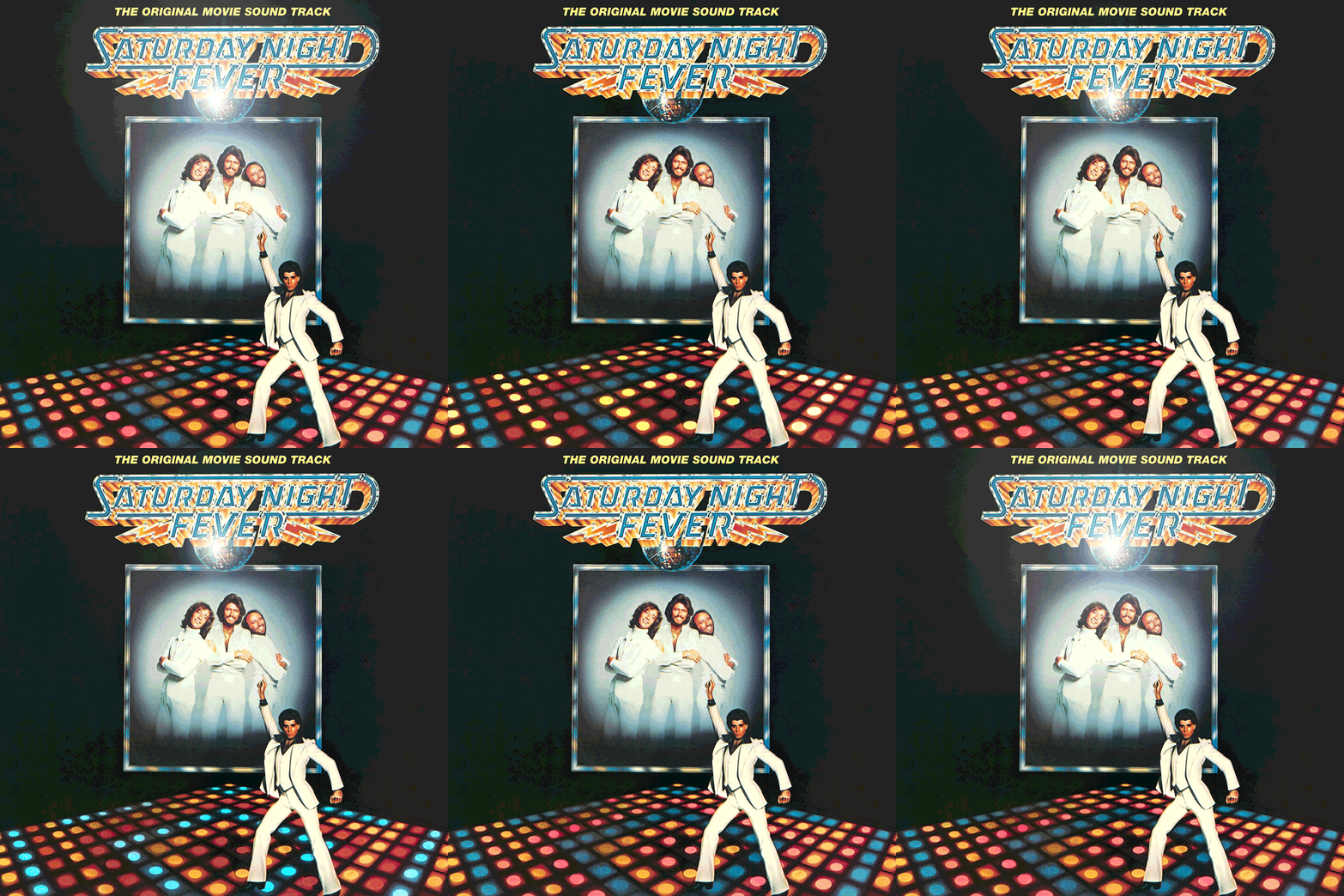
    In the late ‘70s, the band had massive hits, including songs featured on the 40-million-selling Saturday Night Fever soundtrack: “Stayin’ Alive,” How Deep is Your Love,” More Than a Woman,” Jive Talkin’,” and “Night Fever.”

    In 1978, the band made a significant misstep, starring in a musical based on The Beatles’ music called Sgt. Pepper’s Lonely Hearts Club Band, produced by Robert Stigwood, the man behind Saturday Night Fever and Grease. The film was a colossal bomb, although the soundtrack sold well.

    The Beatles’ George Harrison thought the Bee Gees film was about what happens when you become successful and greedy.

    “I just feel sorry for Robert Stigwood, the Bee Gees, and Pete Frampton for doing it because they had established themselves in their own right as decent artists,” Harrison said. “And suddenly… it’s like the classic thing of greed. The more you make the more you want to make, until you become so greedy that ultimately you put a foot wrong.”

    Even though the Bee Gees’ Beatle-themed musical was a flop, former Beatle John Lennon remained a fan of the group. He sang their praises after the public’s growing distaste of disco resulted in a significant backlash.

    john lennon, the beatles
    John Lennon was a fan of the Bee Gees. Giphy

    “Try to tell the kids in the seventies who were screaming to the Bee Gees that their music was just the Beatles redone,” he told Playboy magazine in 1980. “There is nothing wrong with the Bee Gees. They do a damn good job. There was nothing else going on then.”

    The Bee Gees historic career ended when Maurice passed away in 2003 at 53. Robin would follow in 2009 at 62. Barry is the final surviving member of the band.

    This article originally appeared last year.


Parenting

‘Millennial Parenting Whisperer’ shares the most important moment to have with your child

Life Hacks

Timeboxing: The science-backed productivity method that can double your output

Pop Culture

In 1973, the Bee Gees sang an unplugged medley tribute to the Beatles. It’s gorgeous.

Family

5 ‘core’ childhood memories your kid will cherish forever, according to a psychologist