Jessica Offer

  • Teachers share the tell-tale signs they know a parent truly cares about their kid
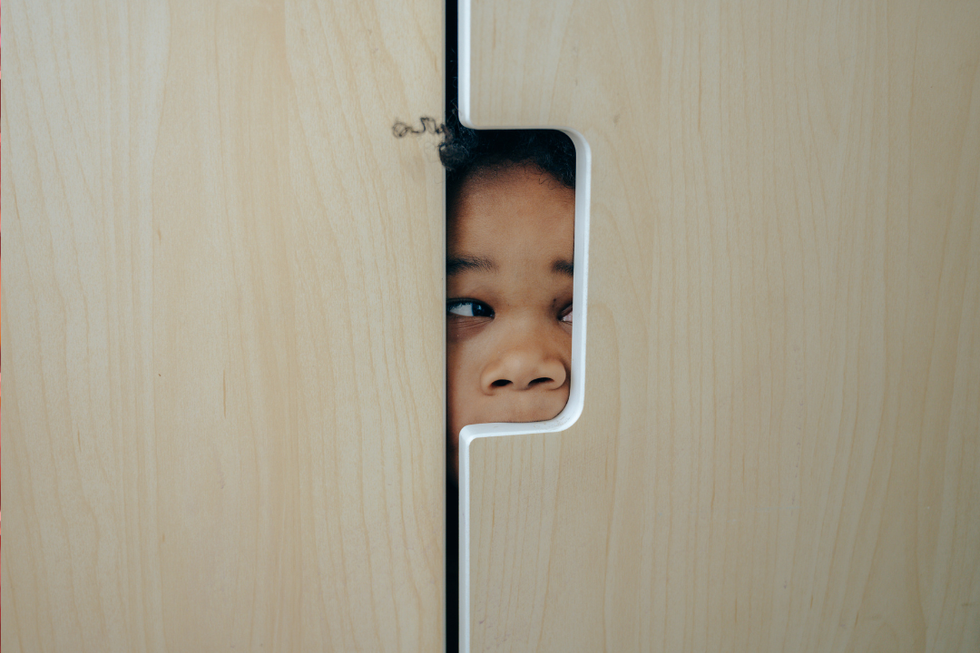
    Teachers share insights on the signs parents truly care about their kids.Photo credit: Image via Canva
    , ,

    Teachers share the tell-tale signs they know a parent truly cares about their kid

    “When the child speaks, the adult listens. When the adult speaks, the child listens.”

    Few people spend more time with kids than teachers. From the classroom to the playground, teachers have deep and intuitive insight into what their students’ relationships are like with their parents, and many teachers can tell when parents are invested and truly care about their kids.

    In a Reddit forum, member @allsfairinwar posed the question: “Teachers of Reddit: What are some small, subtle ways you can tell a child’s parent really cares about them?”

    Teachers from all education levels shared their insight. From elementary teachers to high school teachers, these educators offered their firsthand experience with students that informed them about their relationship with parents at home. These are their most powerful observations.

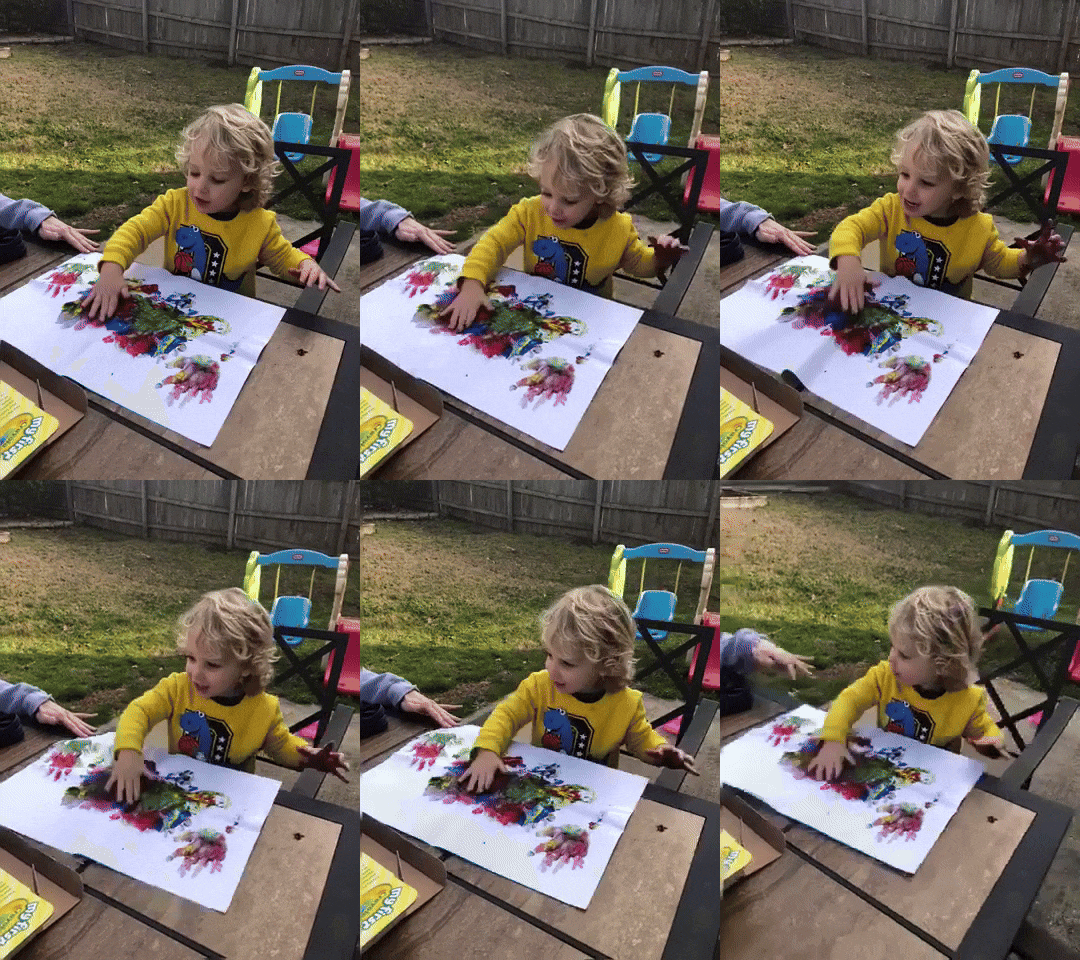
    art, kids art, child painting, kids art project, finger paint
    Hit It Bang Bang GIF by Eddie & Laura Burton Realty Group Giphy

    “When the parent stops and actually looks at their kid’s art/work/listens about their day before heading home. I know everyone gets busy but damn don’t shove the art your kid is proud of right in their bag without first looking at it. We do the same piece of art for a week. They spent 2 hours on that, spare 2 minutes to show them their effort is worth something to you.” —@Worldly_Might_3183

    “When the child speaks, the adult listens. When the adult speaks, the child listens.” —@homerbartbob

    “When the parents are familiar with the child’s friends and talk to their child’s friends, I know they’re listening to their child talk about their day at school. Or when parents let slip that they got a full recap of something I said or that happened at school. I know they are having conversations with their child at home, and paying attention.” —@Pinkrivrdolphn

    minecraft, minecreaft gif, minecraft meme, minecraft kids, minecraft movie

    Games GIF Giphy

    “When the kid is happy/quick to tell their parents about things. Not just serious or important things, but just random bullsh*t. Do I care about Minecraft? Not really. Do I care that my kid cares about Minecraft? Very much. Lay it on me kid. Spare no detail.” —@IJourden

    “They let their kids fail and experience natural consequences. Good parents are preparing their children to be adults, and part of that is learning responsibility and accountability. Let your kids make mistakes and learn from them!” —@oboe_you_didnt

    “You can tell a lot about home life based on students behavior the week leading up to a break. If they are happy/excited/giddy/endearingly obnoxious I know they are going somewhere safe to someone who cares. The students who don’t have that are often increasingly anxious/angry/withdrawn/acting out.” —@pulchritudinousprout

    hug, greeting, hugs, greet, reunited

    Monsters Inc Hug GIF Giphy

    “The moment that a parent greets the child at the end of the day is very telling. Some parents clearly want to know all about their child’s day and connect with them, some don’t.” —@Smug010

    “When I make positive contact home and the parent speaks glowingly about their own kid. It’s great to hear.” —@outtodryclt

    “A few years back, I heard a parent ask their kid if they found someone to be kind to today. That made a real impact on me. Now I try to remind my own kids to ‘find someone to be kind to’ if I’m doing drop off and/or ask ‘Who were you kind to today?’ after school.” —@AspiringFicWriter

    “When a student asks for help, they actually need the help. They are not doing it just to get your attention.”—@Typical_Importance65

    cute kid, well groomed, kid hair, clean clothes, kid cared for

    Dance Marathon Reaction GIF by Children’s Miracle Network Hospitals Giphy

    “It doesn’t always mean everything is perfect at home, but a child who is well-groomed is always a good sign. That doesn’t always mean the most fashionable clothes or perfect hair, just that the child is clean, their clothes are clean and appropriate for the weather. Also when a child knows how to celebrate their own wins and isn’t afraid of making a mistake or being wrong- that shows that their parents have modeled good emotional regulation.” —@itscornelectric

    “They get them services when they’re struggling. I work with kids with disabilities and the learning outcomes/experience of school (and by extension, the greater world) for kids who have their needs met is far different to those who don’t. The number of parents who respond to a teacher saying ‘I think it might be worth John seeing an OT/a speech therapist/ getting his eyes checked’ with something along the lines of ‘f*ck you, what would you know?’ Is astounding. The parents who make appointments, share information from specialists with the school, and are proactive about their children’s abilities or disabilities – their kids see such improvements.” —@prison_industrial_co

    “They ask thoughtful questions. Even something that seems routine to adults like, ‘How is/was your day?’ I’m in elementary, and it’s appropriate for kids to talk mostly about themselves. Kids who ask thoughtful questions are doing so because it’s consistently modeled. It’s also not very common (again, age appropriate egocentrism) so it stands out.” —@mundane-mondays

    read, reading, kid reading, kids read, reading with kids

    Read Book Club GIF Giphy

    “When you know they’re being exposed to reading at home. Maybe they can read at a higher level or they’re mastering their sight words. For students with learning disabilities, the kids are trying their hardest to read, using context clues, using pictures and making up a story, or even making different voices for characters. When I was in a low functioning Autistic support room, this one little boy couldn’t form words, but he made noises is different voices and used dramatic face expressions on each page to represent characters talking.” —@Mediocre-Bee-9262

    “Accountability. A good parent knows that their kids isn’t perfect and if the kid does something wrong (like hitting or bullying other kids) they don’t look for excuses, or for how the other kid provoked that behavior, but helps their kid understand why their behavior was hurtful.” —@SadlyNotDannyDeVito

    This article originally appeared last year. It has been updated.

  • The real-life love story of Maria and Georg Von Trapp we didn’t see in ‘The Sound of Music’
    Maria Von Trapp was not in love with Georg when they got married, but that changed.Photo credit: Public domain

    The Sound of Music has been beloved for generations, partially for the music (and Julie Andrews’ angelic voice), partially for the historical storyline, and partially for the love story between Maria and Georg Von Trapp. The idea of a nun-in-training softening the heart of a curmudgeonly widower, falling in love with him, and ultimately becoming a big, happy family is just an irresistible love story.

    But it turns out the real love story behind their union is even more fascinating.

    maria von trapp, georg von trapp, the sound of music, love story, history
    Maria Von Trapp (left) was played by Julie Andrews and her husband Georg was played by Christopher Plummer in Photo credit: Public domain

    The National Archives has collected information about what’s fact and what’s fiction in The Sound of Music, which is based on a real family in Austria named Von Trapp. The film was generally based on the first section of Maria Von Trapp’s 1949 autobiography, The Story of the Trapp Family Singers, with some of the details being true and others fictionalized for a movie audience.

    For instance, Maria was actually hired on as a tutor for just one of Georg’s children, not as a governess for all of them. The children, whose names, ages and sexes were changed, were already musically inclined before Maria arrived. Georg was not the cold, grumpy dad he was portrayed as in the beginning of the film, but rather a warm and involved parent who enjoyed making music with his kids. Maria and Georg were married 11 years before leaving Austria, not right before the Nazi takeover. The Von Trapps left by train, not in a secret excursion over the mountains.

    But perhaps the most intriguing detail? Maria was not in love with Georg at all when they got married.

    gif, the sound of music, von trapp family, movie, true events

    Sound Of Music Flag GIF by The Rodgers & Hammerstein Organization Giphy

    It doesn’t initially make for a great Hollywood romance, but the Von Trapp love story began with marriage for other reasons and evolved into a genuine love story. Maria wrote that she fell in love with Georg’s children at first sight, but she wasn’t sure about leaving her religious calling when Georg asked her to marry him. The nuns urged her to do God’s will and marry him, but for Maria it was all about the children, not him. When Georg proposed, he asked her to stay with him and become a second mother to his children. “God must have made him word it that way,” Maria wrote, “because if he had only asked me to marry him I might not have said yes.”

    “I really and truly was not in love,” she wrote. “I liked him but didn’t love him. However, I loved the children, so in a way I really married the children.”

    However, she shared that her feelings for Georg changed over time. “…[B]y and by I learned to love him more than I have ever loved before or after.”

    The idea of marrying someone you don’t love is antithetical to every romantic notion our society celebrates, yet the evolution of Maria’s love for Georg has been a common occurrence across many cultures throughout history. Romantic love was not always the primary impetus for marriage. It was more often an economic proposition and communal arrangement that united families and peoples, formed the basis of alliances, and enabled individuals to rise through social ranks. Some cultures still practice arranged marriage, which limited research has found has outcomes identical to love-first marriage in reports of passionate love, companionate love, satisfaction, and commitment. The idea of marrying someone you don’t already love is anathema to modern Western sensibilities, but the reality is that people have married over the centuries for many reasons, only one of which is falling in love.

    Maria’s marriage to Georg actually was about falling in love, but not with him. She loved his children and wanted to be with them. It definitely helped that she liked the guy, but she wasn’t swept off her feet by him, there were no moonlit confessions of love a la “Something Good,” and their happily ever after love story didn’t come until much later.

    Ultimately, Maria and Georg’s love story was one for the ages, just not one that fits the Hollywood film trope. And it’s a compelling reminder that our unwritten rules and social norms determining what love and marriage should look like aren’t set in stone. Do marriages for reasons other than love always evolve into genuine love? No. Do marriages based on falling in love first always last? Also no. Should a marriage that starts with “like” and develops into to a genuine, deep love over years be considered “true love” in the way we usually think of it? Who can say? Lots to ponder over in this love story.

    But Maria’s description of learning “to love him more than I have ever loved before or after” is a pretty high bar, so clearly it worked for them. The Von Trapps were married for 20 years and had three more children together before Georg died of lung cancer in 1947. Maria would live another four decades and never remarried. She died in 1987 at age 82 and is buried next to Georg on the family’s property in Vermont.


    This article originally appeared last year It has been updated.

  • Parents go viral for ‘secret’ praise technique. Science confirm it’s certifiably genius.
    Namwila Mulwanda and her partner Zephi practice gentle parenting. Photo credit: Credit: Instagram @namwilamulwanda
    , ,

    Parents go viral for ‘secret’ praise technique. Science confirm it’s certifiably genius.

    “I promise that if you do this in front of your child, their confidence will skyrocket!”

    There are so many conflicting ideas about building self-confidence in children. Is there a right way? Could praise be harmful? Should everyone receive a gold star? As with many things in life, sometimes the best solution is the simplest one—hiding in plain sight, or just out of it.

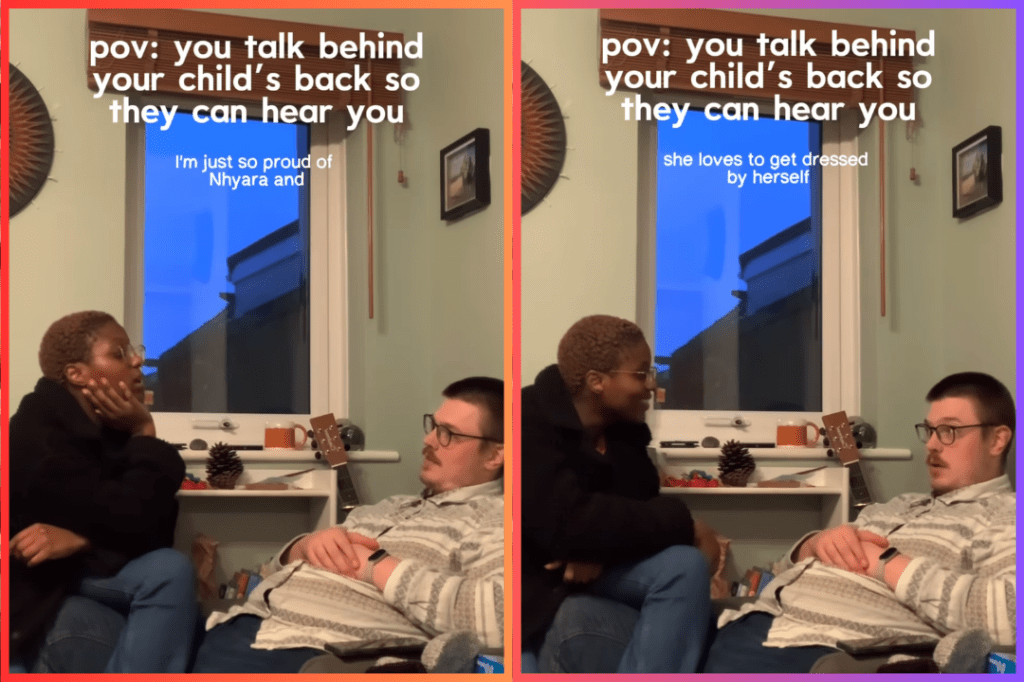
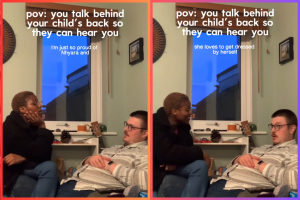
    Namwila Mulwanda and her partner Zephi practice “gentle-parenting” with their daughter, Nhyara. Shared in a video on Instagram, one of their techniques is talking about Nhyara when she’s within earshot but out of sight. These aren’t your typical behind-closed-doors parent conversations—no venting about daily frustrations or sharing complaints they’d never say to her face. Instead, they create intentional moments of celebration, offering genuine praise and heartfelt affirmation.

    In a viral Instagram post that’s garnered over one million likes, Mulwanda writes, “POV: You talk behind your child’s back so they can hear you.” Self-described as a “passionate mother, content creator, and small business owner,” Mulwanda naturally overflows with ideas: she writes a Substack, She Who Blooms, which is about “blooming in our own time, in our own way.” She also runs Rooted, a shop where she “carefully curates products that embody the essence of growth, empowerment, and staying rooted in one’s true self.”

    In the video, Mulwanda and her partner sit in a quiet corner, chatting about their daughter Nhyara while occasionally peeking around to see if she’s listening—which she is. With her within earshot but not directly part of the conversation, they discuss their daughter:

    “I’m just so proud of her and the things she does,” her mom starts.

    “She works on her reading, like that difficult word that she took the time to really sound out,” adds her dad. They go on to applaud her independence (“She’s always telling me, ‘Daddy, I want to brush my teeth on my own,’” says Zephi), before concluding that she’s amazing.

    “She’s amazing,” says Mulwanda. “So, so, so amazing,” Zephi responds.

    People in the comments were obviously here for it. Parents shared their own versions of this technique, including one who wrote, “As a solo mom, I pretend to make phone calls to a family member and do this.”

    Another parent shared a powerful example:

    “My son used to be scared of climbing down the stairs. So, my husband said loudly, ‘He’s very brave! He has shown a lot of courage lately.’ The next day, when we tried carrying him down the stairs, he said, ‘Nope, I have a lot of courage in me.’”

    Others reflected on their own childhoods. One commenter wrote, “No exaggeration, I’d be an entirely different person had my parents been like this with me.”

    “Stop, I was just thinking last night, ‘When I have kids, I’m going to have loud conversations with my future husband about how much I love our children and how proud I am of them,’” another enthusiastically shared.

    child, hiding, parenting, conversations, praise
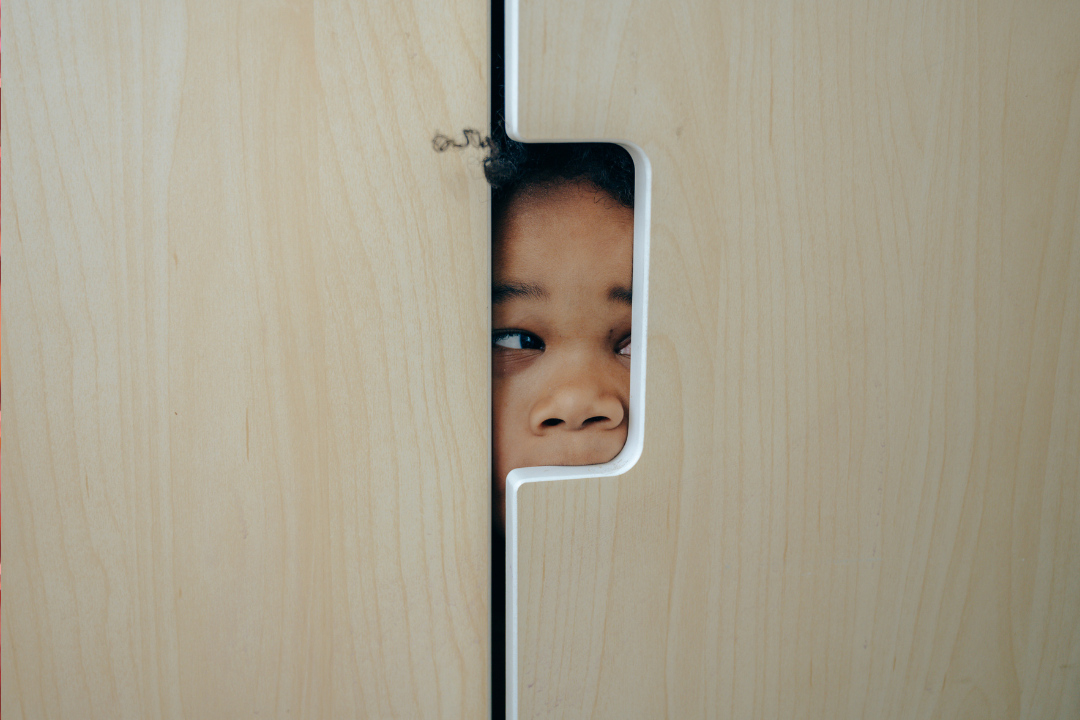
    Children believe that conversations between adults are more u201cauthenticu201d and honest. Photo credit: Canva

    Research indicates that indirect praise has a stronger psychological impact than direct praise, particularly in young children.

    “This is such a powerful way of reinforcing positive behavior,” explains parenting influencer Cara Nicole, who also went viral for her unique approach to parenting. “There’s something special about overhearing others talk about you—you know they’re being genuine because they’re not saying it directly to you.”

    This effectiveness stems from children’s innate understanding that conversations between adults tend to be more honest than parent-child interactions. From an early age, children recognize that direct conversations with parents often have an intentional, behavior-shaping purpose. In contrast, overheard praise feels authentic and spontaneous, rather than an attempt to influence the child’s self-image.

    These techniques work best when praise focuses on effort and process rather than innate qualities. Take Nhyara’s dad’s comment: “She works on her reading, like that difficult word that she took the time to really sound out.”

    Yet, it’s crucial to keep praise realistic and measured. Avoid overzealous claims about future achievements, like acing every spelling test for the rest of her life. Children have keen intuition; if they sense insincerity, the strategy can backfire, damaging their trust in parents. Similarly, over-inflated praise—like declaring “incredible” performance for average effort—can burden children with unrealistic expectations.

    Keep it simple. A casual remark like, “I noticed how carefully Maya put away her toys without being asked. That was so nice. It really helped keep the house clean.”

    https://youtube.com/watch?v=jI502h-1WkY%3Fsi%3DmQdZF4eD1wz9SYZX%26controls%3D0

    The viral response to Mulwanda’s video demonstrates the power of gentle parenting combined with thoughtful, specific praise. It’s heartening to see modern parents sharing their diverse approaches to showing their children love. For many commenters who didn’t experience this kind of upbringing, these conversations offer a path to healing. As Mulwanda eloquently states in her pinned comment:

    “To those of you who only heard negative as a child, you were never the problem. You were a child, and you didn’t deserve the experience you had. Your presence on this earth is a blessing, and the fact that you show up every single day is proof of just how amazing you are. You are brave, you are beautiful (you too, boys), and you deserve the world and more.
    If any of you feel emotions rising up, close your eyes, hug your inner child, and remind them that you’re there.” Namwila Mulwanda


    This article originally appeared last year. It has been updated.

  • 20 forgotten foods and drinks from the 1980s that Gen Xers are still hankering for
    Foods from the 1980s that Gen X is nostalgic for.Photo credit: Reddit/algebramclain/dannyhogan200

    In the 1980s, food was entering a new era of convenience. A big reason was more women continuing to enter the workforce throughout the ’80s—a trend that began in the 1960s and peaked in the late 1990s, according to the U.S. Bureau of Labor Statistics.

    With more women working jobs outside the home, convenience and frozen foods became more popular. Thus, the 1980s marked the height of microwave cooking.

    By the mid-1980s, microwaves had become standard kitchen appliances, notes the Henry Ford Museum. Cooking was all about saving time.

    “The act of eating—once a leisurely undertaking synonymous with pleasure and social interaction—has been reduced to a necessary function not unlike shaving or refueling a car,” wrote New York Times reporter Dena Kleiman, according to The International Wine & Food Society.

    While homemade meals were becoming more rare, they made way for a robust processed and snack foods market. Many of these foods defined Gen X childhoods and are now making a comeback in 2026 with the “newstalgic” food trend: modern consumers are craving nostalgic flavors, according to Food Dive.

    On Reddit, Gen Xers got nostalgic about the foods that filled their pantries, fridges, freezers (and stomachs) back in the 1980s. From microwave meals to sweets and drinks, these are the ’80s foods and drinks they miss most.

    Microwave meals

    “Soggy fries [from MicroMagic] while staying home sick from school and watching either The Price is Right or Gilligan’s Island.” – CompleteTruth

    “Chef Boyardee Smurf pasta. DEEEEEP memory unlocked!” – sevnthcrow, ButIAmYourDaughter

    “I miss Pepperidge Farm Broccoli & Cheese Puff Pastries.” – pixietulip

    “Weaver chicken croquettes.” – Klutzy-Reporter4223

    “Yes! Jeno’s Pizza [Rolls] Snacks. They were, like, dollar coin size and there was a row of cheese, a row of pepperoni, and a row of crumbled italian sausage. And anyone who comments with anything regarding bagel bites OBVIOUSLY never had Pizza Snacks. I would LOVE for them to come back. Bagel Bites SUCK!” – Accomplished-Push190

    “Chef Boyardee Roller Coasters.” – Chef Boyardee Roller Coasters

    Snacks

    “Hot buttered Cheerios. When I told people I grew up eating buttered Cheerios, they thought I was nuts.” – electric_pole_6

    “Fruit Wrinkles fruit snacks. These were so good!” – JenaPet02

    “Pizzarias pizza chips.” – LittleWhiteFuzzies

    “I occasionally crave the Peanut Butter Boppers. I think I convinced my mother they were heathy since they were created by Nature Valley granola.” – jfdonohoe

    Sweets

    “Pudding pops! They were so good. They finally discontinued them several years ago.” – Adelaide_Farmington

    “Giggle cookies. I KNEW there was a reason why Trader Joe’s pumpkin Oreos were bringing back memories!!!! I just couldn’t remember what!!” – laurenishere, Altruistic-Win9651

    “Hostess Teenage Mutant Ninja Turtles pies. Man we’re these tasty. I remember exactly what shelf they were on at my neighborhood convenience store, I can see it now. Lol. Good memories!” – The_OtherGuy_99, Ok_Owl5141

    “Nestle Alpine White— sweet dreams you can’t resist.” – Metzger4Sheriff

    “PB Max bars.” – my-coffee-needs-me

    Drinks

    “I remember BRIM coffee. ‘Fill it to the rim with BRIM’.” – User Unknown

    “Hi-C Peach.” – LdyWarner

    “I lived on Five Alive juice as a kid. Damn do I miss it.” – kardde

    “I miss Slice soda.” – wookie_opera_singer

    “I also liked Like cola.” – DiscoSprinkles

  • Non-Americans share the 13 dead giveaways a tourist is American
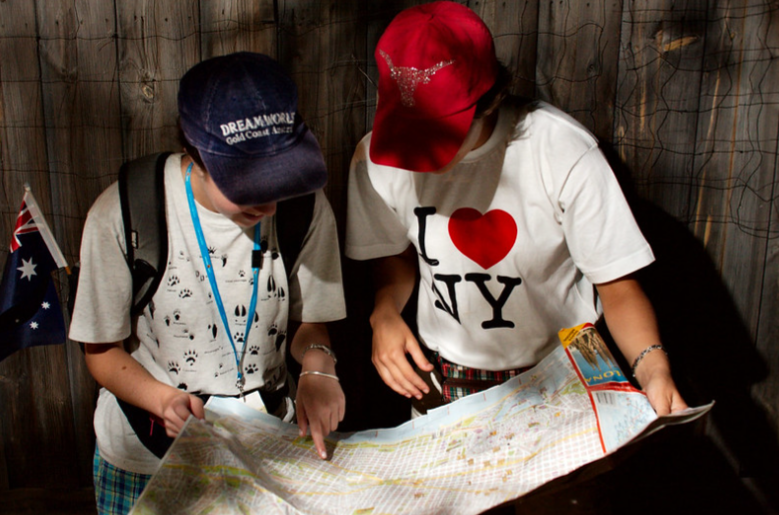
    A group of Americans looking at a map. Photo credit: via SoStark/Flickr
    ,

    Non-Americans share the 13 dead giveaways a tourist is American

    “Americans recognize other Americans in most countries because they smile at strangers on the street.”

    It’s wonderful to go on vacation and learn all about other people’s cultures. But when you travel to another country, you also learn a lot about your own. When you’re a fish out of water, it’s easy to see the ways you stand out in a foreign environment. It’s especially noticeable when you’re an American, because your culture is known around the world.

    A big way Americans stand out overseas is through their fashion. Wearing a New York Yankees cap, cargo shorts, and white New Balance sneakers may be camouflage in America, but in Paris, you stick out like peanut butter on a baguette.

    americans, american tourists, americans aborad, americans on holiday, tourists,
    Americans looking at a map. Photo credit: tAlex Bikes/Flickr

    To reveal the many ways Americans stand out while traveling, a Reddit user asked non-Americans a simple question: “Besides their accent, what’s one way you know a tourist is American?” The post received over 18,000 responses. Evidently, there are a lot of ways to spot an American abroad.

    Here are 13 of the best responses:

    1. They wait to be seated

    “When visiting Paris, my wife and I learned they don’t seat you at restaurants. You just walk in and sit down at an available table. We figured it out after standing around at the entrance a few times. Then we started noticing other American tourists doing the same.”

    2. They start conversations with everyone

    “Saying ‘hi, how are you?’ to the barista, servers, retail workers. My country doesn’t quite have that culture so I find it really sweet.”

    “I’m fascinated with Norway and remember watching a vlog from an American who had moved there. She said one of the biggest differences was the lack of politeness, because people view it as fake. I would love to live somewhere that’s more introverted than the US.”

    “The absolute fearlessness of asking anyone on the street about anything.”

    “This is something i still don’t understand after being in Europe for a few years. Why are people so afraid of other people just like them?”

    “I’ll literally talk to anyone that wants to chat me up, never thought that was uniquely American.”

    americans, american tourists, americans aborad, americans on holiday, tourists,
    Americans filming on a city street. Photo credit: Joseph Tame/Flickr

    3. The smile is a dead giveaway

    “When I went to Italy with a friend, I couldn’t figure out why everyone greeted me in English before I said a word. I don’t wear running shoes outside of the gym, I dress pretty posh, I can’t remember the last time I owned a baseball cap, and I try to have a basic grasp on the local language. How can they tell I’m American? My friend told me, ‘it’s because you’re smiling at them.’”

    “It’s not so much about the fact that Americans smile, it’s how you smile. Nobody here smiles with their teeth. Maybe if they heard a really funny joke or are trying to look happy in a picture, but that’s about it. When I visited America, my family literally spent hours trying to learn how to properly smile with all your teeth showing. I still can’t do it correctly, it looks weird. I remember the first times I saw pictures from a highschool yearbook on the internet. I thought, ‘What is wrong with them? Why are they smiling so much?’ If you smile with your teeth at someone in Europe, it’s either your job, or you’re American.”

    “Americans recognize other Americans in most countries because they smile at strangers on the street.”

    “I live in New York, I don’t understand this smiling thing.”

    Why do Americans smile so much? It’s because they come from a diverse country. A study of 32 different countries found that emotional expressiveness is correlated with diversity. When people are around others from diverse cultures, they are more likely to use a smile to build trust and cooperation.

    4. Americans are very polite

    “Some of yous are way more polite than expected. Whenever I hear someone say ‘ma’am’ I know they’re American. Like one time I was in Lidls and there was an American family asking someone who worked there if they sold ‘cell phones’ and when the woman said they didn’t they were all ‘oh okay, thank you for your time ma’am! Have a great day!’ which is mucb more cheery than the average Scot.”

    “Yes, sir, that’s southern manners.”

    “I’m gonna piggyback the Midwest in here, too. If you just walk away without putting something like this in Kansas, you might as well have slapped them.”

    americans, american tourists, americans aborad, americans on holiday, tourists,
    American tourists. Photo credit: Canva

    5. Americans are friendly

    “Most American tourists I’ve come across are really friendly and talkative. They always seem to be genuinely stoked to be here haha.”

    “Let’s put it this way: in the Eurozone, you can make a day trip of going to another country. For most of the US, getting to literally any other country is a massive ordeal with a huge price tag, so when we get to go, it’s a really special occasion that we have to make the most of because a lot of us have no idea when or if we’ll ever get to do it again.”

    6. They are amazed by old things

    “Girlfriend used to work on a farm and an estate in the U.K. and would often have Americans in awe of the old buildings. One once said ‘some of these buildings are older than my country.’”

    “Reminds me of that old saw ‘Americans think a hundred years is a long time, Europeans think a hundred miles is a long way.’”

    7. They need to find a trash can

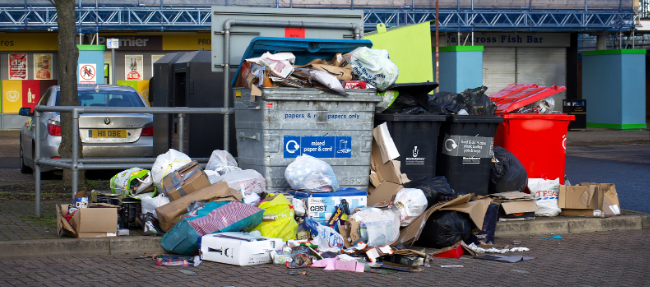
    “If you see an American in Japan, they will frantically look for public trash cans. The absence of trash receptacles is something unfounded in the US, and we become confused at the idea of having to hold it for extended periods of time.”

    “EXACTLY!! Im American, went last year and i ended up having half of my backpack filled with trash until i found a trashcan, it didnt help it was mid summer so we would buy drinks from vending machines a lot, not all the vending machines had trashcans.”

    americans, american tourists, americans aborad, americans on holiday, tourists,
    An urban dumpster. Photo credit: Canva

    8. They won’t stop tipping

    “Tipping. Americans will try to tip everyone, even in countries where tipping isn’t a thing/is considered a serious insult.”

    “True. I used to work in a bar in the UK, and American customers would insist on tipping me even after I declined. The relief on their faces when I took the money was hilarious.”

    9. They shop late at night

    “They’re looking for a store open at like 11 pm. Even if in most European countries stores close at like 7-8 pm.”

    “Yeah, I’m italian but live in the US right now. One of my coworkers went to Italy on vacation and she was texting me stuff like ‘there’s no circle k here?’ Lmao.”

    10. Just look at their feet

    “Americans will be wearing sneakers.”

    “Yep. I walked into a museum in Germany, and the woman selling tickets greeted us in English. We were dressed conservatively, and hadn’t said a word, yet she knew. I asked her how, and she said, ‘It’s your shoes.’ Indeed, I was wearing running shoes.”

    Although there is no specific reason why Americans tend to wear sneakers more often than people in other countries, a major factor is car culture. When you don’t walk much, you value comfort and style over everything else. Plus, America is a country based on individuality, which breeds a culture that’s more casual than in other developed countries.

    11. They take off their shoes in the airport

    “I hear that us Americans can easily be spotted in the airport by the fact usually were use to taking off our shoes in TSA.”

    “Dude when we landed in Japan a couple of years ago I started to take my shoes off to go through customs and I’ll never forget, one of the agents there just completely froze and looked at me like I had frogs coming out of my ears. He then motioned for me to put my shoes back on. I was very embarrassed.”

    12. It’s how Americans dress

    “Baseball caps, University spirit wear, cargo shorts, free t-shirts from events with ads and text all over them, and for the older Americans, they always seem to just kinda stand in the middle of everything looking around.”

    “People may mock Americans for wearing shirts with ads on them but Europeans and their soccer (ahem, football) gear is just as questionable.”

    “As opposed to football jerseys with ads prominently featured on the design that the wearer paid good money for.”

    “For the longest time, I thought that there was a soccer team named Fly Emirates.”

    americans, american tourists, americans aborad, americans on holiday, tourists,
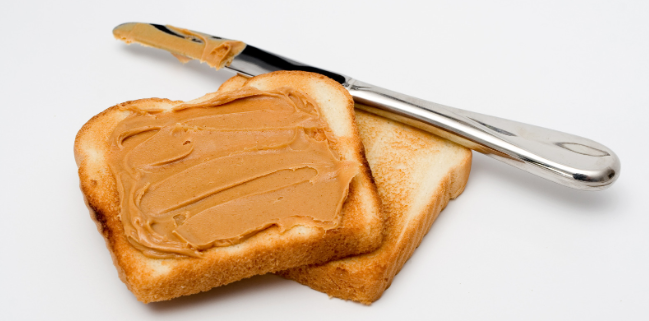
    A peanut butter sandwich. Photo credit: Canva

    13. They’re looking for peanut butter

    “If they buy peanutbutter. It sounds very weird, but everyone who buys peanut butter where I work, turns out to be American.”

    “I was desperately homesick while living in Belfast and had a quiet cry in the grocery store because I wanted it and couldn’t find it. I eventually did, made a peanut butter and jelly sandwich, and felt better. Not seeing the sun for three months was doing my head in.”

    Interestingly, although Americans are stereotyped as the biggest consumers of peanut butter in the world, it’s actually much more popular in developing nations such as Burkina Faso, Myanmar, and Chad, where it is used as a nutritional supplement and an ingredient in soups and stews.

  • A teacher asked students to draw a square with 3 lines. How the kids approached it was fascinating.
    Can you draw a square with three lines? Photo credit: Canva

    Logic puzzles and brain teasers have long been used to challenge our minds and encourage critical thinking. Sometimes the most intriguing puzzles are the ones that seem the simplest. For instance, a teacher in India, Raviraj Master, posted a seemingly simple yet seemingly impossible problem for his students: “Draw a square with three lines.” That’s it. Could they do it?

    Student after student came up to the board to make an attempt. One by one, they drew three lines, which of course did not add up to a square. One student cleverly drew three sides of a square with lines and the fourth side with a dotted line. That move demonstrated creative thinking, but it was not the solution.

    Finally, a student walked up to the board, drew a square with all four sides, and then drew three lines inside it. That was it. She had drawn a square with three lines. Problem solved.

    Thinking critically about wording

    The solution is so straightforward that most people miss it. It’s not that it’s hard; it’s that our brains interpret the prompt a certain way and go full speed ahead with that interpretation. It’s an excellent lesson in thinking critically about how something is worded and what is being asked.

    For instance, “Draw a square using three lines” would be a totally different ask than “Draw a square with three lines.” Just that one-word difference changes the possible meaning of the prompt. What if the teacher had asked, “Is there another way these words can be interpreted?” Proactively looking at each word to see if it could have a different meaning makes puzzles like this one a little easier.

    However, the lesson extends far beyond silly brain teasers. Advertisers, politicians, and others who exploit the power of persuasion sometimes use words in ways that confuse or mislead.

    The logical fallacy of equivocation or ambiguity

    For instance, let’s look at the logical fallacy of equivocation, also known as the fallacy of ambiguity. Using words that have more than one meaning makes it easy to be vague and leave statements open to interpretation.

    In our brain teaser, the word “with” could mean “using,” which is the way most students interpreted it. But “with” can also mean “accompanying,” which is how it’s used in the actual solution.

    Politicians use ambiguity a lot. Philosopher Justin D’Ambrosio called it “manipulative under-specification.” Using terms that are open to multiple interpretations gives politicians plausible deniability if you disagree with them. They can simply say they meant something different. Even important concepts like justice, fairness, and democracy are underspecified terms, making it easy for politicians to use them in slogans or soundbites without detailing what they mean.

    Ambiguity can be used to manipulate people via the media as well. Sharon Haigler and C. Anneke Snyder’s “Propaganda Techniques in Media” handout at Texas A&M University lists 12 media propaganda techniques. Check out number 10:

    Obfuscation: Intentionally confusing the issue with vague, non-specific language. By avoiding clarity, propagandists create uncertainty and prevent critical analysis. Complex legal jargon or ambiguous statements serve this purpose.”

    Understanding ambiguity may help us understand each other

    It’s wise to think critically when it comes to wording, whether we’re trying to solve a silly logic puzzle or serious social and political problems. Pay attention to words that are vague. Ask what various definitions or interpretations there might be for ambiguous terms.

    On the positive side, staying aware of words with multiple meanings can sometimes help us see where others are coming from. Sometimes disagreements are due to defining a word differently, rather than an actual issue. So many words in our social and political discourse require definitions before we engage. Otherwise, we risk talking past one another rather than meaningfully discussing things with one another.

    Amazing what we can learn from a simple brain teaser, isn’t it?

  • Body language expert explains how the winner of ‘The Traitors’ spotted liars and how to do it yourself
    Rob Rausch and Vanessa Van Edwards.Photo credit: Peacock on YouTube/Wikimedia Commons

    In the latest season of the popular reality game show The Traitors, Rob Rausch emerged as the winner and the sole surviving Traitor. One reason he won was because he was able to see through the lies of his fellow competitors. A body language expert explained how Rausch was able to read people and win the entire cash prize.

    Vanessa Van Edwards said that Rausch was able to discern who was lying to him and who was telling the truth while showing a clip from the show. In the Traitors clip, Rausch explained his strategy for trying to win the dagger prize through a game that required him to find who had it by asking questions.

    @vvanedwards

    Is Rob Rausch really a human lie detector? A human lie detector reacts! 👀 #robrausch #traitors #liedetector #react #behavioralscience

    ♬ Pick (Blowout, pop-up, adsorption) 2(819462) – Koi

    What is baselining?

    Rausch explained that he was able to be a “human lie detector.” He would ask questions that he already knew the answers to and monitor his competitors’ responses. He would then ask whether the person had the dagger, watching how they responded to determine whether they were lying. After observing competitor Natalie Anderson’s responses, Rausch concluded that she was lying and had the dagger.

    On TikTok, Van Edwards explained that Rausch was using a technique called “baselining.” Baselining involves making mental notes of a person’s baseline behaviors when they are speaking comfortably and truthfully. If you notice a person displaying atypical behavior when answering a question, it could be a sign that they’re lying, uncomfortable, or conveying a specific nonverbal response.

    For example, if a person who doesn’t normally touch others when speaking to them suddenly touches you, that could indicate extra interest. In contrast, if someone who is known for touching people while speaking to them doesn’t touch you, they could be hiding something. In the case of The Traitors, Van Edwards said Rausch interpreted Anderson’s lip purse in response to his question as an indication that she was lying.

    How baselining can help day-to-day life

    Being able to baseline a person’s behavior can be helpful both professionally and personally. Professionals consider it one of the cornerstones of negotiation in business because both sides of a deal are likely withholding information. Much like in a game of poker, business professionals aren’t showing their “full hand” and are looking for “tells” before contracts are signed.

    In terms of home life, baselining a family member can be especially helpful when communicating with children. This isn’t in a business negotiation or interrogation sense, though. Noticing a loved one’s common behaviors when speaking and seeing aberrations could indicate that something is wrong. You could approach them privately to ask if anything is making them feel uncomfortable and offer help. This way, you’re spotting their lies not to confront them, but to let them know they’re seen and that you’re someone they can trust.

    Whatever your reasoning, baselining is a useful skill for reading people. In Rausch’s case, it helped him win hundreds of thousands of dollars.

  • 12 years ago, this unassuming couple went viral for the greatest gas station karaoke performance ever
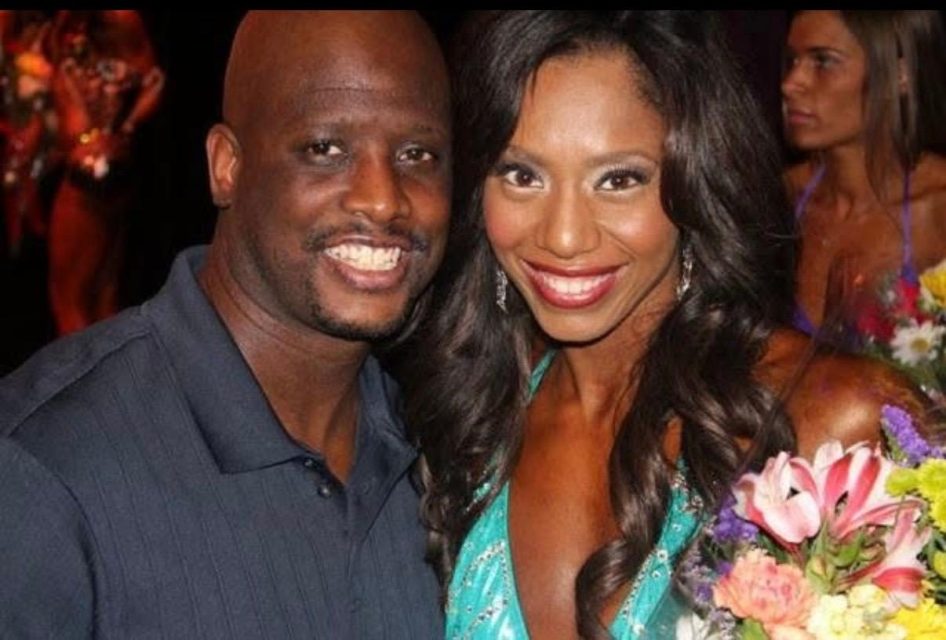
    Twelve years ago, this unassuming couple went viral for the greatest gas station karaoke performance ever.Photo credit: Monifa Sims (used with permission)

    When Will and Monifa Sims stopped to get gas in Burbank, California, in 2013, they had no idea they were about to become a viral sensation. What began as a little “go-with-the-flow” singing on the spot at a gas station altered their lives forever.

    Here’s what happened: Will began pumping gas when suddenly actor Tim Stack (playing newscaster Jack Rafferty) appeared on a tiny TV above pump 16. What Will didn’t know was that this was one of The Tonight Show with Jay Leno’s pranks, where a fake newscast appears. The fake newscaster then asks a gas station patron to perform some type of wacky stunt or sing their favorite karaoke song. In exchange, they’re told they’ll get free gas.

    The setup

    After Will hummed a few bars of a song to himself, Stack suddenly addressed him. “You at pump 16 in Burbank. You’ve got a real nice singing voice.” It took Will a few seconds to understand what was happening, but he soon laughed and expressed gratitude. Stack continued, “Do you do that professionally?” Will answered, “No, just karaoke.”

    It was then that Stack made him a proposition: “Guess what? We’ll pay for your gasoline. How ’bout a little karaoke from you?”

    Will was totally game. He didn’t hesitate for a second. “Okay! What you want?” It was determined that Will was an “eighties kid,” so he liked Bon Jovi. They decided “Livin’ on a Prayer” was the way to go, and Stack asked, “Do you need the words?” Will answered emphatically, “No, I know ’em, baby.”

    He started singing the 1986 hit with all his might. “Tommy used to work on the docks / Union’s been on strike / it’s tough / So tough.” He went on, nailing every note, even hitting the falsetto parts in the chorus. “Ooooh, we’re halfway there / Oh, oh! Livin’ on a prayer…” We then heard another voice on the “TV” note, “The girl in the front seat is just dying.”

    Will finished strong and asked, “How was that?” Stack asked if it was his wife in the car, and Will didn’t miss the opportunity to ask if she should show off her skills as well. “Want to do it as a duet?” Monifa wasn’t quite ready, so Stack continued complimenting Will while he improvised, “Oh, oh! Livin’ on a tank of gas! Livin’…for…the…gas…whoa!”

    Other customers at the station began gathering to see where the “pumpcast” was set up. Perhaps they’ll get lucky too. But it was Monifa who Stack and the gang had their sights on. And somehow, they convinced her.

    “‘Sweet Dreams’ by the Eurythmics!” she says boldly. Stack gets the words up on his laptop, shows them to the camera, and away she goes. “Sweet dreams are made of these / Who am I to disagree / I travel the world and the seven seas / Everybody’s looking for something…” Like her husband, she is 100 percent on key and outstanding. Will chimes in every once in a while (especially on the “Hold your head up / Keep your head up” part), and they finish perfectly.

    It’s then that Stack informs them enthusiastically, “You’re gonna be on Jay Leno on The Tonight Show.” Now what started out as an unusually awesome day just got even better. They both scream with delight, “Oh yeah! Tell Bon Jovi I love him!”

    The pair did joyously make it onto The Tonight Show, wherein Leno admits, “It almost seems like a plant. We had no idea these people would come to the tank.” Monifa jokes there’s no way she could have known ahead of time, because she’d have prepared. “I wouldn’t have looked like that! That wasn’t my best look after working out.”

    Leno asked how long the couple had been married. They answered, “Twelve years this year!” They then shouted out their daughter in the audience. Of course, the appearance wouldn’t have been complete without a song. This time, they got an entire band backing their duet rendition of “Livin’ on a Prayer.” Once again, it was absolute perfection.

    People are loving the viral revival

    The original clip is making the rounds once more, and, as one might imagine, social media is loving it.

    On YouTube, it continues to spark joy. “I come back to this video every so often for the past few years…always puts a smile on my face,” one person wrote. “This couple is so cool and down to earth…not bad singers either.”

    One fan on Facebook wrote, “This couple will be retired, 90 years of age, re-watching this beautiful clip on some new platform. This is LOVE right there.”

    Where are they now?

    That prediction seems to be true so far. Upworthy had the chance to chat with Monifa, who gave us a bit more information about that fateful day.

    “It happened in Burbank, California, where, believe it or not, lots of good things used to happen like this, so it was not uncommon at all,” she said. She shared that it was a no-brainer to take the challenge. “We’re always up for a good time, so a good time paired with a free tank of gas was easy.”

    She said the virality of it was surprising:

    “We were absolutely shocked about how viral it went and still continues to be. That was made 12 years ago. It was on the cusp of YouTube becoming really big. There was no Instagram or TikTok. Once it was over, we went home and didn’t even think twice about it until The Tonight Show reached out to us about how funny they thought it was. I always say editing really helped it to be funny, but obviously, you can only edit what you have.”

    As for where they are now? Still happily together and working.

    “I am a host on QVC. Will is bicoastal (works in LA a few months of the year, so he travels back and forth). Most exciting? Right now, we are in our year of 25! We are celebrating 25 years of marriage in July, but we have been celebrating all year long. We started off the year with an amazing trip to Phuket, Thailand, and Bali! We will be celebrating more this year with friends and family as well.”

    They’re creating more consistent content and trying to grow their brand. “I wrote a cookbook,” Monifa shares, referring to Life in Full Flavor. And as for their karaoke songs? “They really have not changed, but we sing a little bit of everything to keep it spicy!”

Education

A teacher asked students to draw a square with 3 lines. How the kids approached it was fascinating.

People Skills

Body language expert explains how the winner of ‘The Traitors’ spotted liars and how to do it yourself

Videos

12 years ago, this unassuming couple went viral for the greatest gas station karaoke performance ever

Life Hacks

17 life hacks that work so well it’s stunning that more people don’t know them