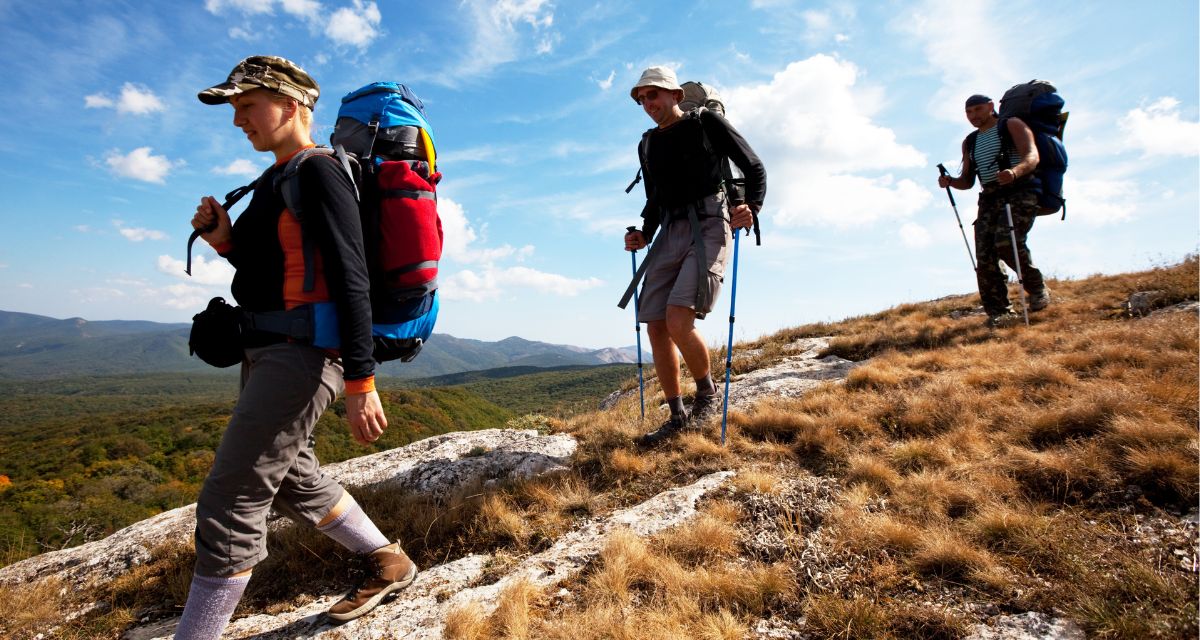
For the past 52 years, St. Benedict’s Preparatory School in Newark, New Jersey, has maintained one mandatory rite of passage for all freshmen: a five-day, 55-mile hike along the Appalachian Trail.
This tradition begins in early spring, when students at this private high school start training through exercise and team-building, in addition to learning a specialty. Next, the group is broken down into smaller units with a captain, camp specialist, navigators, cooks and medics.
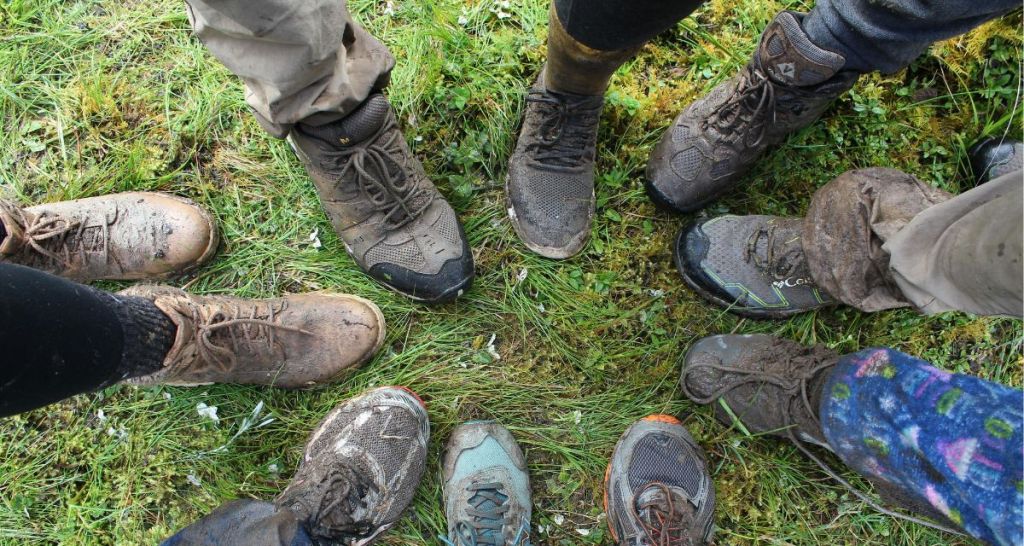
Then, in May, rain or shine, comes the actual hike. While there is “some adult supervision,” according to St. Benedict’s Prep administrator Glenn Cassidy, the kids are meant to rely on what they’ve learned—and each other—to complete the journey.
“The only way we can get through this is if we work together and make it there,” Cassidy told CBS News.
“We’ll learn how to work together in different ways and finish the task at hand,” said a student preparing to complete the hike last month.
At the end of their excursion, the hikers cross a wooden bridge that symbolically welcomes them into their sophomore year, along with high fives from teachers. Some cross that bridge with a few scrapes and bruises, but all cross with wisdom that can’t really be taught in a classroom. Plus, they get some pretty incredible views along the way.
A lesson in teamwork before the first step
This kind of unconventional curriculum seems especially appropriate (and challenging) for these city-dwelling kids, many of whom have never hiked or camped before. Not to mention it gives them a hands-on lesson in resilience.
“When life gets difficult, it’s something you can refer back to,” said Cassidy. “You know, there’s a lot of rainy days in life.”
A school built on resilience and reinvention
Interestingly, the history of St. Benedict’s is, as reporter and New Jersey native Anthony DePalma put it, “a testament to survival.” Racial tension and financial instability overtook the city in the late 1960s, eventually causing the monks who ran the school to consider closing it indefinitely and heading to the suburbs.
However, half of the group committed to staying and, over the years, completely adjusted the curriculum to align with their ideals. This includes not only the 55-mile hike, but also an 11-month school year filled with out-of-the-box yet practical elective classes like “Real Men Cook,” “Social Justice and Science,” and “Art, Nature, and Protest,” offered to combat end-of-the-year lethargy.
What experiential learning can teach that classrooms can’t
It goes to show what kind of magic can happen when adults who are truly passionate about education are able to experiment with new ways of keeping learning fresh and alive. Sure, a hike of this scale may be a bit of a pipe dream for most public schools, but there are still opportunities to instill hands-on, experiential and communal learning.
In other words, while not every school can send students into the mountains for five days, they can take a cue from the idea that some of the most lasting lessons happen when students are asked to do hard things together.