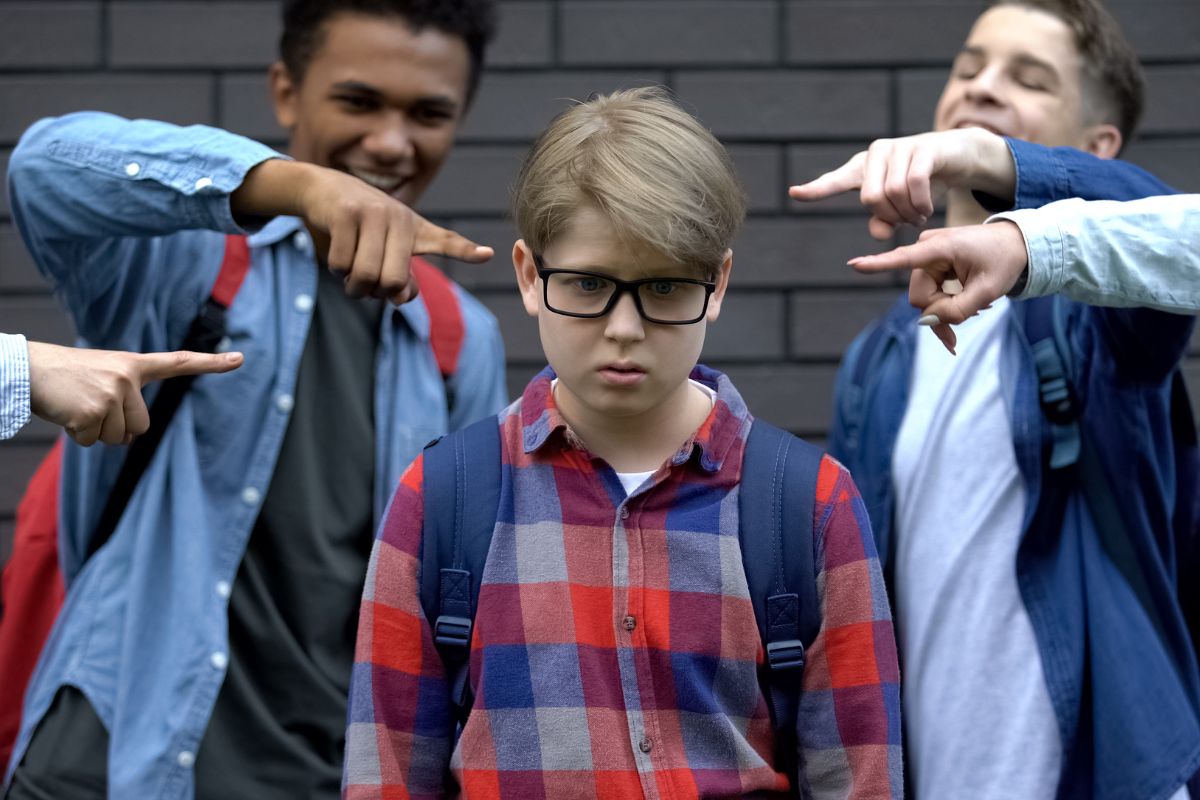
Most parents would agree that we want to encourage our kids to be themselves. But most parents also know the excruciating pain of their child coming home in tears because someone teased them for being different.
The question parents have always struggled with is, how do we guide them? Do we encourage them to “fit in” to avoid cruelty and bullying? Or should we let them be as weird as they want, no matter the cost?
Mom and former teacher urges parents not to encourage “weird” behaviors
Carlyn, a mom, 20-year teaching veteran, and social media creator with over 80,000 followers, makes no bones about her own stance on the topic:
“Parents, do not let your child be ‘weird.’”
Those are her opening words to a recent TikTok video that ignited a firestorm of comments and attention.
“Yes, your child should be unique. Yes, they should have their own style. No, they don’t have to be exactly like everyone else,” she clarifies. “However, if your child has habits and tendencies that are causing them to be ostracized in school, they do not have peer relationships, it has gone too far.”
She says loving and accepting your kids the way they are is great, but not if it comes at the cost of their ability to make friends and thrive in school.
“Your job is to parent them. Your job is not to just love them, [let them] be however they want to be, and send them out. You’re sending them out to ridicule and scorn and no positive peer relationships.”
In other words, when parents don’t intervene in their kids’ behaviors that are off-putting to others:
“You are setting them up for a life of struggle.”
What behaviors are “weird” or “odd”?
“Weird” is a loaded word and will mean different things to everyone. In a follow-up video, Carlyn shares exactly what she means through a few examples:
Picking their nose and eating boogers, poor hygiene, and having poor conversational skills. Other examples might be not washing or brushing their hair or teeth, wearing the same unwashed clothes over and over, eating messily, not wearing deodorant, or not respecting others’ personal space.
Of course, one of the problems with the word weird is that it’s often used to denigrate people with neurodivergence.
Rattling off endless facts about a topic, for example, might be an example of poor conversational skills. It’s also a trait heavily tied to neurodivergence and autism, in particular. People with autism have exceptional rote memory and can often recite the names of hundreds of dinosaurs, for example, but may struggle with “engaging in spontaneous conversation.”
It’s a balanced effort
Carlyn says her own daughter is neurodivergent and they’ve had to work on certain behaviors in order to help her have better peer relationships at school.
But the discussion gets much thornier here because it’s far more difficult for neurodivergent kids to be aware of these behaviors, let alone to change them. Carlyn argues that parents still have the responsibility to try for the sake of helping their child make genuine connections with other kids.
“[People with ADHD or autism] can sometimes have some tendencies that other people can perceive as weird. Just because your child may be operating from that [place of neurodivergence] we still have to work on those,” she says. “We want everyone to be as successful as possible.”
“I still make sure [my daughter with ADHD] wears clean clothes, maintains hygiene, and is aware of others around her. …She’s allowed to dress how she wants and express herself as long as she’s in clean clothes and it’s appropriate for time and place. She can hang with friends once she’s brushed her teeth and picked up her room —etc! Just because she has ADHD doesn’t mean she doesn’t need rules & boundaries. It starts at home,” added one commenter.
The difference for kids with ADHD, autism, and other neurodivergence is that adopting more pro-social behaviors may be a job too big for just their parents. Professional help might be necessary.
Thoughtful debate ensues
Carlyn is also clear that a lot of people have taken her words and reposted her video with their own spin on them. One popular comment making the rounds on X claims parents shouldn’t let their kids watch anime because “anime is weird,” for example.
That’s not what Carlyn said, but plenty of people still took issue with her message.
“This woman is defending bullies,” one commenter said.
“This just feels like it’s targeting neurodivergent kids,” added another.
“You can’t condition ‘weirdness’ out of a kid, because it very often has to do with things that are innate to one’s self,” another chimed in.
One person saw things differently: “As a former weird kid, listen to this woman, life after adolescence was HARD.”
“Kids aren’t fully emotionally developed, they can be and are mean to each other at school doesn’t matter where you live, that will never change,” someone added. “This lady is trying to help parents help their kids socially, she’s not defending bullies “
Teaching kids not to ostracize and bully is crucial
In one of her videos, Carlyn admits that it may not be fair or right, but kids have been bullied for being different for centuries. There’s a certain blunt reality to it: life is going to be a lot harder for kids who still pick their nose or don’t wear deodorant.
“First and foremost, we need to educate kids about differences,” she says, specifically in relation to neurodivergent kids. “We need to teach tolerance and love and acceptance.”
It’s a fire worth fighting from both ends. Teaching our kids to be helpers, friends, and inclusive of others is how we create a better future where everyone can belong.
But a lot of kids are struggling with cruelty right now, and they just need a way to survive.
Fitting in vs belonging
Fitting in has its benefits. First, the obvious: Suffering from bullying and ostracization at a young age can have lasting consequences into adulthood. It’s traumatic and leaves a scar, with adults who suffered bullying as a child more likely to have depression and anxiety, lower academic and career achievement, and lifelong struggles maintaining relationships.
Fitting in with our peers offers protection, not just at a young age, but well into adulthood. But what we’re really seeking is true belonging. Fitting in means being like everyone else, but truly belonging in a peer group gives you the room to be your true self.
Conforming too much to the norms can be detrimental and suppresses our creativity, authenticity, and compassion. Psychology Today writes, “We need to recognize when fitting in requires that we abandon our sense of what is right or suppress our ideas or preferences.”
Every parent, and every child, will have to draw their own line. Kids with certain hobbies, passions, and mannerisms will, unfortunately, get picked on more than others. But hobbies and passions are critical to who we are. They aren’t things we should give up lightly in the name of fitting in. At the same time, a better understanding of acceptable social behaviors, hygiene, and manners can lead to better connections with others without sacrificing key parts of a child’s identity.