Mom has TikTok viewers in stitches after revealing she got her son’s birthday wrong—for years
Sometimes, we have to just laugh at our failures. “Here’s a little story to allow all the moms of littles out there to maybe feel a little better about yourself,” Emily Vondy told her 1.3 million TikTok followers. In a TikTok video that has now garnered more than 500,000 views, Vondy shared perhaps one of…
“Here’s a little story to allow all the moms of littles out there to maybe feel a little better about yourself,” Emily Vondy told her 1.3 million TikTok followers.In a TikTok video that has now garnered more than 500,000 views, Vondy shared perhaps one of the most hilarious “mom fail” stories of all time: forgetting her son’s actual birthdate.
After a recent trip to the pediatrician, Vondy was ready to give her insurance company the ol’ what for, after being told her son’s birthday was February 25.
“Per my words: ‘my son’s birthday is the 26th. I’m his mother. I know his birthday,’” Vondy affirmed. Emphatically so.
A quick scroll through Facebook to find the original birth date announcement proved the correct birthdate was, in fact, the 25th. Whoops.
“For two years I’ve been celebrating his birthday on the 26th!” exclaimed Vondy.
To make matters worse, Vondy revealed this was her middle child. My, my, how stereotypes manifest themselves.
She then shouted “I love my kids! They may not have their birthday celebration on the correct day but they celebrate it the next!” She then hilariously tried to sign off with a quick “Merry Christmas,” only to realize “Christmas is over!”
We get it, Vondy. What is time, anyway?
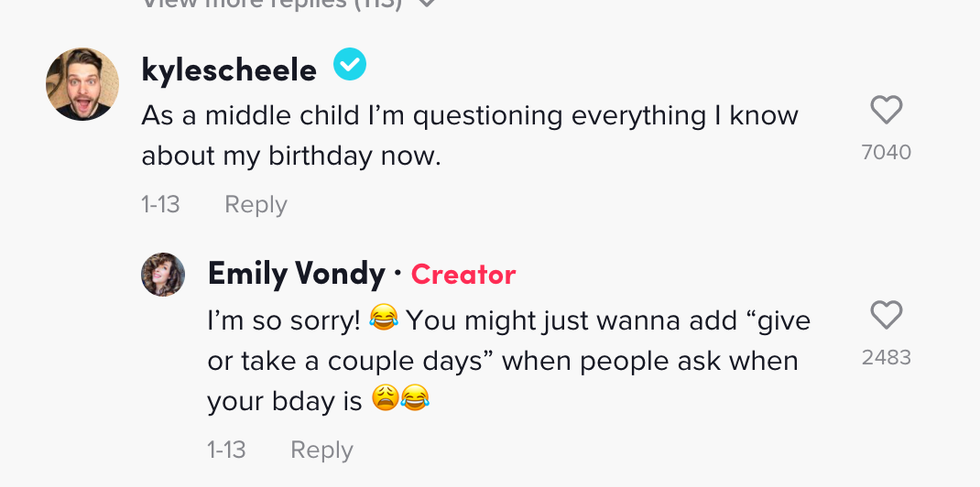
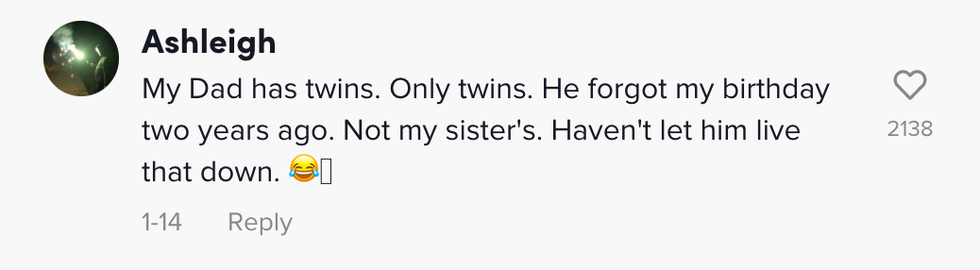
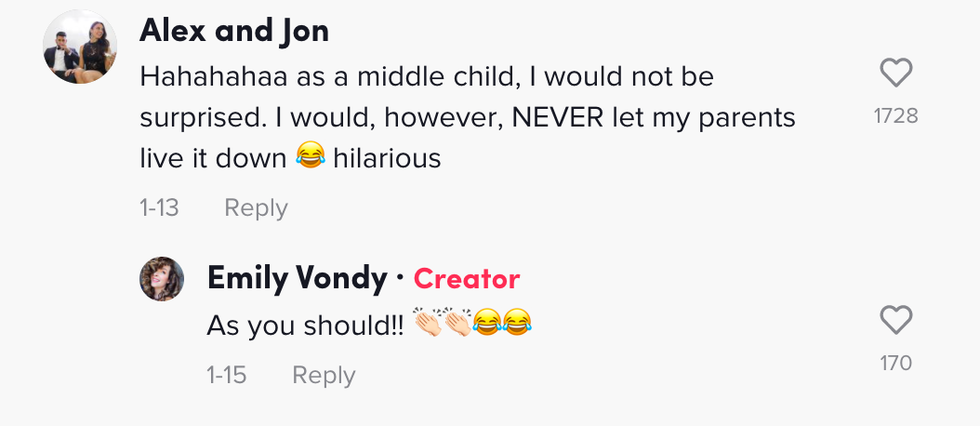
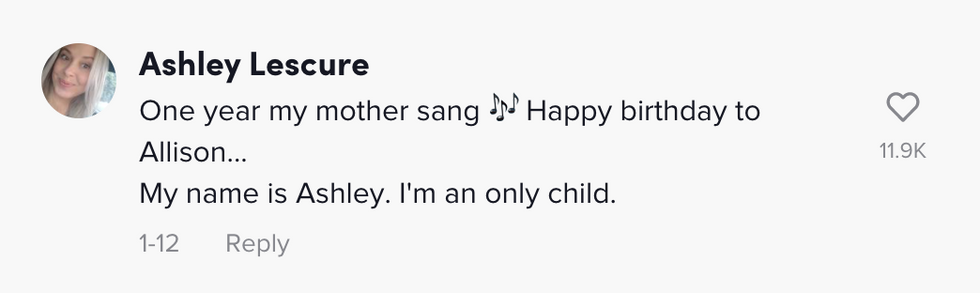
Parents and children alike delivered comments nearly as entertaining as the video itself:
If you enjoy Vondy’s ultra silly charm (that definitely gives off Amy Poehler vibes, no?), you’re in luck. Her channel is full of truly delightful videos that capture parenting life in a real, yet comical way.
I mean, just look at her music video promoting the meal delivery service Home Chef, complete with a “no prep two step.”
In a small village in Pwani, a district on Tanzania’s coast, a massive dance party is coming to a close. For the past two hours, locals have paraded through the village streets, singing and beating ngombe drums; now, in a large clearing, a woman named Sheilla motions for everyone to sit facing a large projector screen. A film premiere is about to begin.
It’s an unusual way to kick off a film about gender bias, inequality, early marriage, and other barriers that prevent girls from accessing education in Tanzania. But in Pwani and beyond, local organizations supported by Malala Fund and funded by Pura are finding creative, culturally relevant ways like this one to capture people’s interest.
The film ends and Sheilla, the Communications and Partnership Lead for Media for Development and Advocacy (MEDEA), stands in front of the crowd once again, asking the audience to reflect: What did you think about the film? How did it relate to your own experience? What can we learn?
Sheilla explains that, once the community sees the film, “It brings out conversations within themselves, reflective conversations.” The resonance and immediate action create a ripple effect of change.
MEDEA Screening Audience in Tanzania. Captured by James Roh for Pura
Across Tanzania, gender-based violence often forces adolescent girls out of the classroom. This and other barriers — including child marriage, poverty, conflict, and discrimination — prevent girls from completing their education around the world.
Sheilla and her team are using film and radio programs to address the challenges girls face in their communities. MEDEA’s ultimate goal is to affirm education as a fundamental right for everyone, and to ensure that every member of a community understands how girls’ education contributes to a stronger whole and how to be an ally for their sisters, daughters, granddaughters, friends, nieces, and girlfriends.
Sheilla’s story is one of many that inspired Heart on Fire, a new fragrance from the Pura x Malala Fund Collection that blends the warm, earthy spices of Tanzania with a playful, joyful twist. Here’s how Pura is using scent as a tool to connect the world and inspire action.
A partnership focused on local impact, on a global mission
Pura, a fragrance company that recognizes education as both freedom and a human right, has partnered with Malala Fund since 2022. In order to defend every girl’s right to access and complete 12 years of education, Malala Fund partners with local organizations in countries where the educational barriers are the greatest. They invest in locally-led solutions because they know that those who are closest to the problems are best equipped to solve and build durable solutions, like MEDEA, which works with communities to challenge discrimination against girls and change beliefs about their education.
But local initiatives can thrive and scale more powerfully with global support, which is why Pura is using their own superpower, the power of scent, to connect people around the world with the women and girls in these local communities.
The Pura x Malala Fund Collection incorporates ingredients naturally found in Tanzania, Nigeria, Pakistan, and Brazil: countries where Malala Fund operates to address systemic education barriers. Eight percent of net revenue from the Pura x Malala Fund Collection will be donated to Malala Fund directly, but beyond financial support, the Collection is also a love letter to each unique community, blending notes like lemon, jasmine, cedarwood, and clove to transport people, ignite their senses, and help them draw inspiration and hope from the global movement for girls’ education. Through scent, people can connect to the courage, joy, and tenacity of girls and local leaders, all while uniting in a shared commitment to education: the belief that supporting girls’ rights in one community benefits all of us, everywhere.
You’ve already met Sheilla. Now see how Naiara and Mama Habiba are building unique solutions to ensure every girl can learn freely and dare to dream.
Naiara Leite is reimagining what’s possible in Brazil
Julia with Odara in Brazil. Captured by Luisa Dorr for Pura
In Brazil, where pear trees and coconut plantations cover the Northeastern Coast, girls like ten-year-old Julia experience a different kind of educational barrier than girls in Tanzania. Too often, racial discrimination contributes to high dropout rates among Black, quilombola and Indigenous girls in the country.
“In the logic of Brazilian society, Black people don’t need to study,” says Naiara Leite, Executive Coordinator of Odara, a women-led organization and Malala Fund partner. Bahia, the state where Odara is based, was once one of the largest slave-receiving territories in the Americas, and because of that history, deeply-ingrained, anti-Black prejudice is still widespread. “Our role and the image constructed around us is one of manual labor,” Naiara says.
But education can change that. In 2020, with assistance from a Malala Fund grant, Odara launched its first initiative for improving school completion rates among Black, quilombola, and Indigenous girls: “Ayomidê Odara”. The young girls mentored under the program, including Julia, are known as the Ayomidês. And like the Pura x Malala Fund Collection’s Brazil: Breath of Courage scent, the Ayomidês are fierce, determined, and bursting with energy.
Ayomidês with Odara in Brazil. Captured by Luisa Dorr for Pura
Ayomidês take part in weekly educational sessions where they explore subjects like education and ethnic-racial relations. The girls are encouraged to find their own voices by producing Instagram lives, social media videos, and by participating in public panels. Already, the Ayomidês are rewriting the narrative on what’s possible for Afro-Brazilian girls to achieve. One of the earliest Ayomidês, a young woman named Debora, is now a communications intern. Another former Ayomidê, Francine, works at UNICEF, helping train the next generation of adolescent leaders. And Julia has already set her sights on becoming a math teacher or a model.
“These are generations of Black women who did not have access to a school,” Naiara says. “These are generations of Black women robbed daily of their dreams. And we’re telling them that they could be the generation in their family to write a new story.”
Mama Habiba is reframing the conversation in Nigeria
Centre for Girls' Education, Nigeria. Captured by James Roh for Pura
In Mama Habiba’s home country of Nigeria, the scents of starfruit, ylang ylang and pineapple, all incorporated into the Pura x Malala Collection’s “Nigeria: Hope for Tomorrow,” can be found throughout the vibrant markets. Like these native scents, Mama Habiba says that the Nigerian girls are also bright and passionate, but too often they are forced to leave school long before their potential fully blooms.
“Some of these schools are very far, and there is an issue of quality, too,” Mama Habiba says. “Most parents find out when their children are in school, the girls are not learning. So why allow them to continue?”
When girls drop out of secondary school, marriage is often the alternative. In Nigeria, one in three girls is married before the age of 18. When this happens, girls are unable to fulfill their potential, and their families and communities lose out on the social, health and economic benefits.
Completing secondary school delays marriage, and according to UNESCO, educated girls become women who raise healthier children, lift their families out of poverty and contribute to more peaceful, resilient communities.
Centre for Girls’ Education, Nigeria. Captured by James Roh for Pura
To encourage young girls to stay in school, the Centre for Girls’ Education, a nonprofit in Nigeria founded by Mama Habiba and supported by Malala Fund and Pura, has pioneered an initiative that’s similar to the Ayomidê workshops in Brazil: safe spaces. Here, girls meet regularly to learn literacy, numeracy, and other issues like reproductive health. These safe spaces also provide an opportunity for the girls to role-play and learn to advocate for themselves, develop their self-image, and practice conversations with others about their values, education being one of them. In safe spaces, Mama Habiba says, girls start to understand “who she is, and that she is a girl who has value. She has the right to negotiate with her parents on what she really feels or wants.”
“When girls are educated, they can unlock so many opportunities,” Mama Habiba says. “It will help the economy of the country. It will boost so many opportunities for the country. If they are given the opportunity, I think the sky is not the limit. It is the starting point for every girl.”
From parades, film screenings to safe spaces and educational programs, girls and local leaders are working hard to strengthen the quality, safety and accessibility of education and overcome systemic challenges. They are encouraging courageous behavior and reminding us all that education is freedom.
Experience the Pura x Malala Fund Collection here, and connect with the stories of real girls leading change across the globe.
On a hot Sunday in July, Carole Wade took the mic at a Dallas senior living facility where my mom lives. I happened to be visiting for the karaoke event, and the list of residents who couldn’t wait to put their stamps on their favorite tunes was so long, the event had to be extended.…
On a hot Sunday in July, Carole Wade took the mic at a Dallas senior living facility where my mom lives. I happened to be visiting for the karaoke event, and the list of residents who couldn’t wait to put their stamps on their favorite tunes was so long, the event had to be extended. ABBA’s “Mamma Mia,” David Lee Roth’s “Just a Gigolo”—you name it, they sang it.
When it was Wade’s turn, the microphone was brought to her table. She took it in her hands as though it was an extension of her fingers as the music cued up. Then, as she began to effortlessly sing “Landslide” by Fleetwood Mac, the room got still. Frozen. All eyes were on her, and most of those eyes were wet. The lyrics, so beautifully fitting:
“Well, I’ve been afraid of changin’ ‘Cause I’ve built my life around you. But time makes you bolder, Even children get older, I’m getting old too.”
A man sitting at our table took notice of how emotional I had become. He leaned over to say, “Never stop feeling the music.”
I had the honor of chatting with Wade, who at 85, has been singing nearly her whole life. She got started in the business as a backup singer in Elvis impersonator groups in Dallas and surrounding areas. In and out of bands, playing Deep Ellum clubs and local hotels, she shares, “I’ve been singing since I was a small child. I’ve loved music all my life.”
As luck would have it, she was at a jam session when she started harmonizing with other musicians. They would soon form her most recent band, Psychedelic Oatmeal. They officially stopped playing gigs when she was in her 70s, but they remain close. (She notes her bandmates were all much younger.)
Carole and her band mates. Carole Wade
They covered classic rock tunes from Stevie Nicks, The Eagles, Janis Joplin, and Led Zeppelin. Songs like “Me and Bobby McGee,” “Seven Bridges Road,” and “Whole Lotta Love.” She laughs that most of the men in the band couldn’t hit those Zeppelin high notes made famous by Robert Plant, so she took on the challenge—with great success.
They even branded themselves at gigs, making little Ziploc bags of oatmeal and glitter, which they would throw to the audience at shows. That is, until a club owner asked them to stop, as the oatmeal was mixing with spilled drinks, “creating goo.”
Rare footage of Psychedelics Oatmeal.
Wade makes clear that music is her therapy. “If you’re down on a certain day, it will bring you up.” She has lived a full life, with two grown sons who are both excelling in life. But music, and the friends with whom she makes it, brings her that extra piece of joy and purpose.
Michael Hatcher, the Resident Services Director at The Reserve at North Dallas (the senior facility in which this event was held), has seen firsthand how music soothes seniors. It reconnects them to their purest selves, no matter how hazy their memories might become. Hatcher shares, “They remember the music, and the time. It’s a vessel for anyone of age. It can be used to bring someone out of the deepest sun-downing and back to life.”
A man sings “Just a Gigolo” at The Reserve karaoke day.
There is much research to support this. Bannerhealth.comquotes music therapy coordinator Tammy Reiver for Banner Hospice in Phoenix: “Music holds the power to increase dopamine levels (happy hormones), decrease symptoms of depression and pain, and improve a person’s quality of life. Pleasing music plays an important role at every age, but for aging adults, the benefits are even greater.”
As for Wade? She jokes that she and a few other musicians at the senior home have plans to start their own band. She certainly has the chops for it—and the fans.
This article originally appeared last year. It has been updated.
Millennials have never shied away from sharing their feelings about their Boomer parents (and their grandparenting abilities) on the Internet. Millennials are once again uniting to discuss a similar observation about their Boomer parents’ frustrating phone use. On Reddit in a thread generational differences, Millennial member Old-Beautiful-3971 shared their frustrating experience with their Boomer parents…
Millennials have never shied away from sharing their feelings about their Boomer parents (and their grandparenting abilities) on the Internet. Millennials are once again uniting to discuss a similar observation about their Boomer parents’ frustrating phone use.
On Reddit in a thread generational differences, Millennial member Old-Beautiful-3971 shared their frustrating experience with their Boomer parents who are perpetually on their phones.
“My parents are on the very young end of being ‘boomers’. For some reason they’re both acting like me when I was 20… that is to say, gluuuued to their phones,” they wrote. “I tried to have an important conversation with my dad this morning and he did not once look up (and I’m certain he was scrolling through Instagram videos).”
Self Portrait Reaction GIF by The Garcu00edas Giphy
They went on to add, “The only difference is that when I was 20 he could, and would often say ‘Look at me when I’m talking to you. Put that thing away.’ But if I said that to him now he’d get defensive and probably yell at me for being disrespectful. What the heck??? ”
The passionate post got a rousing response from fellow Millennials who have experienced the same thing with their Boomer parents.
“I have noticed it too and it makes me feel even weirder for having developed in the habit of flipping my phone face-down with my hands folded on top of it to let the person know that I’m listening for that they have my attention,” one commented. “And to think that it’s coming from the generation that tells everybody else that phones and TV will rot your brains.”
Turn It Off Reaction GIF by Robert E Blackmon Giphy
Another shared, “My parents are visiting me right now. My dad is glued to his phone, even at the table during meals. Never once participating in the conversation except to point at the salt. This is the same man who would have screamed at me for bringing a book to the dinner table.”
Others could commiserate about the role-reversal. “I’ve noticed this with my parents. It seems like I’ve switched places with them. I’m trying to use the online world less where as they are using it more and more,” one commented.
Some Millennials noted that their Boomer parents’ phone use has impacted other activities they attempt to do together. “It’s become so difficult to watch a movie with my parents. I tell them to put away their phone. Sometimes movies take two days to finish,” another shared.
Creators Club Phone Addiction GIF by Dylan McKeever Giphy
Many Millennials also shared how they communicate with their parents when they notice it. “I am witnessing that as well, my boomer mom and my almost gen z brother visit and they are both glued to their phones. I try and ask if they can put them away because I don’t like my little son to see people like that. I do scroll but never when I am with him,” one Millennial shared.
Another added, “I stopped visiting my boomer mom for awhile. I told her to her face that I couldn’t stand the fact that I took the time to drive to her, which I really hate driving, it scares me and I’m not very good at it, and spend MY time with her only for her to be on her phone most of that time. I stopped calling her too because of all the times she’d put me on hold to take another call and then tell me that she’d have to call me back, but she never did. I still rarely call her. I just text so it’s less intrusive and hurtful for me. Now when I visit, her and her husband stay off their phones. They turn the TV down and only put quiet music on instead of blaring whatever crap they were watching. I did thank them for it.”
However, a Gen Z commentor was quick to point out that Gen X is guilty of the same habit. “My gen x parents are hella addicted to their phones (I’m 22 for context),” they wrote. “I’m not saying i’m not, but it’s really hypocritical when they’ll be bitching at me about ‘playing on my phone too much’ when they’re literal ipad kids lol. the reality is, screens and social media are addicting to ANYONE, regardless of age.”
Other Millennials pointed out that it’s not just certain generations that are addicted to their phones. “I’m guilty of it as well. Everyone is at risk of screen addiction in this era,” another noted. And another Millennial quipped, “Phones are addictive, that doesn’t just like go away with oldness .”
This article originally appeared last year. It has been updated.
One of the most iconic movies from the 1980s is Ferris Bueller’s Day Off. The film premiered in 1986, and is the epitome of Gen X pop culture. Recently Gen Xers (those born between 1965 and 1980) have been re-watching the childhood classic with their Gen Z kids…and it’s not quite what they remembered. In…
One of the most iconic movies from the 1980s is Ferris Bueller’s Day Off. The film premiered in 1986, and is the epitome of Gen X pop culture.
Recently Gen Xers (those born between 1965 and 1980) have been re-watching the childhood classic with their Gen Z kids…and it’s not quite what they remembered. In a Reddit community of Gen Xers, member dilatanntedad shared his thoughts after a recent viewing, and it has Gen Xers passionately dissecting it.
“Ferris Bueller did not age well,” he wrote. “I (m53) watched Ferris Bueller’s Day Off this weekend with my kids, ages 9 and 10. Of course there are the iconic lines like ‘Life moves fast…’ and ‘Bueller, Bueller, Bueller…’ but the more I watched, the less fun it was.”
“To be honest, at the end I agreed with Ferris’ sister: why does he get away with all this shit when she never could? He’s a rich privileged white boy who punches down, tricking and taking advantage of pathetic school administrators, restaurant workers, younger kids at school, his parents, and even manipulates his best friend,” he wrote, before adding, “He has no empathy for others and does everything for his own enjoyment.”
He ended his post with a final thought: “I know I’m a grumpy old man yelling at clouds, but I’m no longer amused by his antics. And I don’t think Ferris Bueller could be the hero today that he was in the Reagan 80’s.” He then followed up with a comment about his kids’ thoughts: “To be clear, my kids laughed a lot. And I did too. I was just uncomfortable with the overall message.”
His fellow Gen Xers had a lot of opinions to add in, noting that it may not be the film that aged poorly…but them. “I think part of the charm is that at the time it was fun to watch and we could half-identify with the antics,” another Gen Xer wrote. “Watching it from today’s lens, it seems clear that he was likely peaking, destined for very little or mediocrity at best. His privilege came from his two very hard-working, square, corporate parents.”
Tthe comment got a meaningful reply: “This. It’s less that the movie aged poorly, it’s that we aged and see it from a totally different perspective. At 16 I wanted to be Ferris. Care free, everything works out, hot girlfriend, zero responsibilities. Looking back at people I went to high school [with] who were close to that, aren’t exactly successful in life. So we see what that behavior leads to and no longer idolize it.”
Many Gen Xers feel the movie is cinema gold to this day. “I still love it. Stop acting like a boomer ,” one wrote. Another added, “This movie is the GOAT. It aged like wine.” Another agreed: “The movie aged fine. We’re the ones that aged out of its target demographic.”
However, Gen Xers championed Cameron as the film’s most redeeming character. “My kids thought it was great. I’ve always considered Cameron to be the actual protagonist of the story – he’s the one who experiences character growth and conflict,” one commented.
A fellow Gen Xer added, “That is critically accurate. Without Cameron, this movie is a fable. Ferris learns nothing and does not change. He is the narrator—we know this because he talks to the audience and is definitely aware he’s in a movie. Someone else pointed out that Ferris is Cameron’s manic-pixie dream girl. That’s a good way to look at it. Another is that he is the wise mentor figure (like Ben Kenobi) and Cameron is following the heroes journey. We just don’t see his confrontation with his father as the REAL confrontation is internal.”
While Gen Xers may not all agree on the movie’s current-day relevance, many had fun theorizing where Ferris may be today, with one noting, “I bet Ferris would use AI to write his English papers :/.”
This article originally appeared last year. It has been updated.
Living a frugal life is all about saving money. Frugal people pay attention to how much they spend on pretty much everything they buy. But even penny pinchers know that for quality, life-improving items, certain things are worth splurging on. On a Reddit thread of frugal people, member WildRootKitchen posed the following question to fellow…
Living a frugal life is all about saving money. Frugal people pay attention to how much they spend on pretty much everything they buy. But even penny pinchers know that for quality, life-improving items, certain things are worth splurging on.
On a Reddit thread of frugal people, member WildRootKitchen posed the following question to fellow frugal shoppers: “What’s one thing you splurge on that’s worth every penny?”
Frugal people spilled on the things they don’t mind dropping money on. These are 35 splurges frugal people say are worth “every penny.”
“For me, it’s a solid pair of boots and a good mattress. If my feet and back are shot, the whole day’s downhill from there. I’ll eat leftovers and skip takeout all week if it means I’m sleeping right and walking easy. Also decent coffee and laundry service are creeping up the list too.” —WildRootKitchen
“Air conditioning. I make money so I can be comfortable, not be uncomfortable so I can save money.” —strwbrymocha
“AC/Heat, always. I’ll never bat an eye at a higher utility bill so long as my sleep goes uninterrupted.” —MediumBullfrog8688
“A house cleaner. Maybe that doesn’t sound frugal, but for the mental health benefits I get from knowing every two weeks I will come home to a spotless house, it’s something I will continue to prioritize over many other expenses.” —mzmonarda
“Gym membership, mattress and pillow, running shoes, quality ingredients from supermarket.” —LoudSilence16
“I have a method for splurges on unfamiliar items. I’ll buy a tool from harbor freight or a cheap version of something I’m interested in to see if I actually need the item or if I’m interested in it. If I use it a bunch and it breaks, then I splurge on a high quality version. If it just sits somewhere either because I didn’t need it as much as I thought or I wasn’t as interested as I thought, then I’m only out a few bucks. Example: I really enjoy cooking, I wanted to learn how to make sausage. I bought a cheap sausage stuffer on amazon for like $30. I used the hell out of it and it broke broke a couple years later. I did some research and bought a LEM 5lbs sausage stuffer that was like $120 and now I have a high quality piece of equipment that works WAY better than my POS amazon stuffer and it will likely outlive my great grandchildren. Also, name brand hardware like faucets. Learned my lesson from buying cheap faucets. Now I’ll just buy Moen.” —40ozT0Freedom
“I live in rural South Carolina. It’s worth it to me to pay for quarterly pest control service from a professional. There are a lot of insects, rodents, reptiles, etc.” —snarkker
“Vacations.” —Proud_Trainer_1234
“An ergonomic desk chair. Back pain is no joke. I only wish I had done it much sooner. Not 20 years into my desk job. At least I should have another 20 years with a good chair and no back pain. I spent $700 on my chair and it was worth every penny. The frugal me shopped around but this was the cheapest one I could find new, some outlets were selling the exact same chair for over $800. 10 year warranty on the chair was a nice bonus too. My husband found the exact same chair secondhand for $100 so now we match. His doesn’t have a 10 year warranty but that’s OK for $100.” —Bunnyeatsdesign
“Buy a second pair of good boots and rotate them. Letting the leather air out a day before wearing the shoes again really help extend their life. I have two cats. I feed them the best grain-free food they will eat. Not only does this extend their life span, the daily litter box collections are much smaller than if they get grain.” —Childless_Catlady42
“I tend to indulge myself when it comes to exercise stuff. The gym classes that I’ll actually go to, the races, the equipment, the good clothes & shoes. I know that everyone talks about a good mattress for their back, but for me, no mattress is as effective as yoga and weight lifting. As long as I keep my core strong, I don’t have back spasms. And running has been amazing for my mental health along with physical, and helped me make some amazing friends. Totally worth every penny.” —kaizenkitten
“I dedicate a decent portion of my budget to ‘self care’. Think massages, pedicures, manicures. It’s the one thing I forward to it every month, as it’s some of the only downtime I have right now.” —YesChef__
“Professional Movers. Stop asking your friends ( especially over 30) to help you move! It’s not worth a six pack of beer and some pizza.” —1tiredmommy
“Business class/first class — never once have I regretted it. We live reasonably the rest of the time, but when it comes time to travel, this is an indulgence that we grant ourselves.” —Weekly_Leg_2457
“Just here in case nobody said tattoos yet. Good work ain’t cheap & cheap work ain’t good.” —Clear_Beat5117
“Reverse osmosis filter. Makes tap water taste good again.” —wonminus1
“Ethical meat. I feel better about eating it, I’m supporting local farmers, and the taste and quality blows supermarket meat out of the water. At this point, I am perfectly happy only eating meat a few times a week (my husband and I are both former vegetarians) and making sure that when we do eat it, it comes from animals who only had one bad day. (This goes for eggs, too – pasture raised/certified humane whenever it’s available. We don’t eat much dairy for health and animal welfare reasons.)” —dzwonzie
“I’m frugal to the max most of the time, but come spring I spend money on flowers, shrubs, things for gardening. That’s my guilty pleasure. I listen to audiobooks from my library. I haven’t watched tv in years because trying to get local channels is impossible. So no streaming service, no cable, but I’m content. I can splurge without feeling guilty like I’ve saved up for it.” —Garden_Lady2
“Furniture. Well made, excellent cushions, materials…both indoor and out.” —ildadof3
“Ice cream.” —Clutcha15
This article originally appeared last year. It has been updated.
Shawn Michaels stopped a performance in front of 13,000 to help a fan in need. – Photo credit: Mandy Coombes – Flickr: WWE – Birmingham 210695 (19), CC BY-SA 2.0 & David Seto, CC BY 2.0,
Professional wrestling in the 1990s was really something else. Dominated at the time by the WWF (now WWE), stars like Stone Cold Steve Austin, Bret “The Hitman” Hart, and The Undertaker were larger than life and some of the most popular public sports figures in the world well before The Rock and John Cena hit…
Professional wrestling in the 1990s was really something else. Dominated at the time by the WWF (now WWE), stars like Stone Cold Steve Austin, Bret “The Hitman” Hart, and The Undertaker were larger than life and some of the most popular public sports figures in the world well before The Rock and John Cena hit the scene.
And then there was Shawn “The Heartbreak Kid” Michaels, who was perhaps the biggest star of all during his heyday. Known for his extraordinarily cocky and vain character, Michaels was a terrific performer both in the ring and on the mic, making him a beloved fan favorite.
In one iconic moment from a 1997 match, Shawn Michaels stopped and left the ring mid-match when he noticed a security scuffle taking place just a few feet away.
The 1997 King of the Ring Pay Per View event featured Shawn Michaels taking on Stone Cold Steve Austin, pitting two of the sport’s biggest stars against each other for what would become a legendary showdown.
Just a minute or so into the match, Steve Austin stops to stare outside the ring at some kind of disturbance. Michaels quickly clocks what’s going on and slides out of the ring. He saunters over to a group of security personnel who seem to be roughly grabbing at and restraining a young boy. Michaels gently shoves them aside and offers comfort to the boy, who it becomes clear has Down syndrome.
It would have been the perfect heartwarming moment…if Steve Austin hadn’t run over and immediately started “punching” Michaels in the head! The performers resume their match in the ring for another minute before Michaels again exits and finds the boy. He waves off the security guards and gently escorts the boy down the aisle and safely away from the ring, effectively breaking character in front of the crowd of 13,000 stunned onlookers.
Once they’re a safe distance from the ring, Michaels hands the boy over to some other officials and a woman who comes running after him, and then returns to the match.
As a show of respect, Steve Austin holds the ropes open for his opponent to return to the regularly scheduled match, which went on to be an all-time classic.
Shawn Michaels breaks out of his heel character to help a child with Down Syndrome who tried jumping into the ring and was grabbed by security. Respect to HBK ? pic.twitter.com/AcXNM3O8Uh
In professional wrestling, there’s a concept called “kayfabe“— it means that at no point are the performers or the production to ever, ever indicate that what’s taking place isn’t real.
We all know that professional wrestling like WWE is staged and mostly scripted. While the athletic stunts are impressive (and the falls really do hurt), the wrestlers in the ring aren’t really fighting each other. It’s all a giant soap opera, with dramatic storylines written that build anticipation for the big showdown.
What’s so unique about pro wrestling is that this illusion is never broken—especially not in the 90s. Performers like Shawn Michaels were never to break character in interviews or fan interactions, and absolutely never during a live match, let alone one of the main events of a Pay Per View performance!
Think kayfabe is silly? Tell that to the wrestlers. In 1975, a trio of wrestlers were involved in a horrific plane crash. One of the wrestler’s, Mr. Wrestling, survived and made it to the hospital, where he proceeded to lie to the doctors:
“While lying in a hospital bed, and with no way of knowing if his compatriots were alive or dead, Mr. Wrestling provided his true name…and then lied about his job to preserve the illusion of wrestling. He knew that if word got out that a good guy, the owner of the company’s brother and three bad guys were all on the same plane, it could ruin that illusion forever,” according to Uproxx.
A wrestler named Junkyard Dog once became “blinded” during a match and wore dark glasses and a walking cane in public for months afterward, even claiming that he could not see his newborn son. One story goes that the “blind” Junkyard Dog was once sitting ringside at a match when a fan jumped the barrier with a gun close by, and JYD was legitimately torn about whether to stop the man and break kayfabe (luckily, police officers intervened first, but can you believe he really had to give this decision serious weight?!).
Junkyard Dog took kayfabe extremely seriously. Giphy
Kayfabe also means that, no matter what’s going on around the production, the show must go on. In 1999, a wrestler named Owen Hart died in the ring after some acrobatics equipment sadly malfunctioned. The others wrestlers were ordered to continue performing the rest of the show with Hart’s blood still drying on the mat.
For Michaels, and Austin to a lesser extend, to break that illusion of reality in order to help a fan showed a tremendous amount of compassion.
The match has over 12 million views on YouTube, striking a cord with viewers both for the performance and for the amazing display of integrity and warmth by Shawn Michaels. Commenters shared their admiration in droves:
“Shawn Michael protects the special kid like a caring father. Respect.”
“Shawn Michaels taking the time to make sure that young man got out of the ring side safely is one of the best things Ive ever seen in wrestling. A legend in the ring and out.”
“The way Shawn loving blanketed the boy with love to keep him out of the ring and content at the same time was so angelic”
“How great of shawn was it to break character and go help that disabled olympian kid. What a great guy.”
“Stone Cold holding the ropes for Shawn Michaels out of respect for what just happened is the greatest breaking kayfabe moment in the history of the WWE. … Stone Cold acknowledged what just happened and how much he had respect for what Michaels just did.”
Police and security personnel often have extremely poor training on dealing with people with disabilities, which can lead to unnecessary violence. When the young man at this WWF event hopped the railing, he unknowingly put himself in a lot of danger. Shawn Michaels stopping the live performance, breaking character, and helping the boy out with warmth and compassion may have prevented a tragic outcome.
This article originally appeared [time-difference] ago. It has been updated.
Let’s take a look at that growing stack of books in your room. You know the one: the pile that seems to grow faster than you can read it. It might look like neglect, but it actually says something about your curiosity and hopefulness. Did you know there’s a Japanese word for this? It might…
Let’s take a look at that growing stack of books in your room. You know the one: the pile that seems to grow faster than you can read it. It might look like neglect, but it actually says something about your curiosity and hopefulness. Did you know there’s a Japanese word for this? It might just change how you see your book pile from now on.
Enter the world of “tsundoku” (積ん読). This Japanese term describes buying books you intend to read but end up stacking around your home. Unopened, unread and collecting dust—not mistreated, just waiting for the right time.
The history behind the “Tsundoku Sensei”
The word “tsundoku” comes from Japan’s Meiji era, a time when books and reading were becoming more popular. It combines “tsunde-oku,” which means to pile things up and leave them, with “dokusho,” which means “reading books.” The result is a word that perfectly captures an experience every book lover knows well.
The earliest use of the word dates to a Japanese satirical text from 1879, notes bibliographer Mori Senzo. It described a teacher whose shelves were packed with unread books. The word was a gentle joke, carrying no malice—a connotation that remains today. Professor Andrew Gerstle adds that “tsundoku” still carries no stigma in Japan.
Tsundoku vs. Bibliomania: A meaningful distinction
Both “tsundoku” and “bibliomania” involve collecting books, but the reasons behind them are different.
“Bibliomania” describes an excessive obsession with collecting books, often for their rarity, beauty, or the pleasure of owning them rather than for reading. A bibliomaniac focuses on obtaining desirable volumes—such as first editions or illustrated works—valuing the collection itself above the books’ contents.
“Tsundoku,” on the other hand, is about wanting to read the books you buy, even if you haven’t gotten to them yet. Maybe you picked up a book because a friend recommended it or because something new caught your eye. The stack grows not out of obsession but out of the hope that you’ll read them all someday.
That difference matters. A “tsundoku” pile isn’t just a collection; it’s a sign of your curiosity and your goals. It shows not only who you are but who you want to be.
Your brain on “tsundoku“
So why do we keep buying books when we have a pile of them we haven’t read yet? The answer has a lot to do with how our brains work.
Buying a new book triggers a dopamine release, the same neurochemical associated with anticipation. The pleasure hits the moment your credit card is swiped. Reading can wait, but “later” often never comes.
Your unread books are like little promises to yourself. They represent the “aspirational self.” Each one is a version of you who has finally read Anna Karenina, finished The Secret Lives of Color, or learned something new from The Trauma of Everyday Life. That future self feels close, just waiting for you to catch up. So the pile grows, full of hope and possibility.
There’s nothing wrong with wanting to learn more, even if your curiosity sometimes outpaces your reading speed. The desire for new ideas is a good thing.
The “antilibrary” concept
Italian novelist and philosopher Umberto Eco practiced a more extreme version of this habit. His personal library contained more than 30,000 books, most of which he hadn’t read. Eco celebrated it. He referred to his collection of unread books as an “antilibrary”—a clear reminder of all the knowledge he had yet to discover.
Every unread book on your shelf is a little promise to yourself. Photo credit: Canva
Nassim Nicholas Taleb, author of The Black Swan, expanded on Eco’s idea of an antilibrary. He argued that you should maximize your library’s space by keeping books on topics you know little about. “Let us call this collection of unread books an antilibrary,” he says.
An antilibrary is a “memento sciendi”—a representation of all you have yet to learn. Rather than a failure, a shelf of unread books signals intellectual humility: “I know what I don’t know and want to learn more.”
“Tsundoku” meets the modern world
“Tsundoku” is now found far from Japan. The idea lives on in gaming culture, where players build libraries of unplayed games on platforms like Steam—sometimes dubbed “Steamdoku.” As cartoonist Ronnie Filyaw put it, “Tsundoku is collecting books you won’t read. Steamdoku is your Steam library.”
Then there’s BookTok, TikTok’s beloved part of the Internet dedicated to all things literary. On BookTok, reading is a shared social experience. Creators turn the act of collecting books into engaging content, often filming their towering “to-be-read” (TBR) piles. Here, an unread stack becomes a form of individual expression and a way to connect with fellow book lovers.
This digital domain has had a remarkable impact on the publishing world. NPD BookScan reports that a group of writers rule BookTok and have enjoyed lucrative rewards: 80 authors with large BookTok followings saw their collective sales more than double in one year, rising from nine million copies in 2020 to 20 million in 2021.
The irony, of course, is that the gap between books bought and books read may be wider than ever. Despite the boom in book buying, reading is on the decline. A survey from the National Endowment for the Arts found that only 48.5% of American adults read at least one book in 2022. That’s a noticeable drop from 52.7% in 2017 and 54.6% in 2012. The numbers for fiction are even more stark, with just 37.6% of adults reading a novel in 2022—the lowest rate in the survey’s 30-year history.
“Tsundoku” lives in the space between wanting to read and actually finding the time to do it. Life gets busy, but the desire to read and keep learning is always there. Your bookshelf is waiting, ready for you to choose a book and begin.
Embracing “tsundoku” as an act of optimism
Remember, every unread book on your shelf is a promise to your future self. Each perfect, unbent spine represents an inquisitiveness that hasn’t found its moment yet.
At its core, “tsundoku” is about optimism. Every new book you buy shows you believe there will be time for new ideas. The world is full of stories, and there’s always more to learn.
So the next time someone questions your growing stack of books, remember: there’s a name for your habit. Book lovers in Japan have used it for over a century. You’re not alone in believing that, one day, those books will be read.
And if some books stay unread? That’s okay. The pile is still proof of your curiosity and your commitment to keep growing. “Tsundoku” is a sign of hope and the drive to learn, not a sign of failure.
Gym class may be the easiest class for some kids in school, but for others, it’s the roughest. For the not-athletically-inclined, P.E. can feel like torture, both physically and psychologically. Oliver Foit was one of the kids for whom gym class was fine. But he recognized that wasn’t the case for all. He shared a…
Gym class may be the easiest class for some kids in school, but for others, it’s the roughest. For the not-athletically-inclined, P.E. can feel like torture, both physically and psychologically.
Oliver Foit was one of the kids for whom gym class was fine. But he recognized that wasn’t the case for all. He shared a story about a gym class experience when he was 14 that he said changed the way he treated people for the rest of his life.
“I remember I was in gym class and my teacher had chosen me to be one of the captains to pick teams for basketball,” he shared in an Instagram video. “And I remember I was getting ready to make my pick, and I was standing up in front of everyone. And before I did, I saw this girl that was sitting in the back of the class, and she usually got picked last. She was a little bit heavier set, wasn’t really super coordinated, wasn’t really into sports, which is fine. I called her name, and I remember she looked up and was like, ‘Me?’”
Foit said his friend, the other captain, leaned over to him and asked, “Why’d you pick her?” Foit responded, “Why not?”
The girl came up and stood right behind Foit. He told her to stand next to him since she was on his team.
“She stood next to me, and I remember my friend was getting ready to pick whoever he was going to pick. And I remember she whispered something in my ear that I’ll never forget. She leaned over and said, ‘Are you sure?’ And it kind of hit me. I looked over at her, and I said, ‘Absolutely.’”
It was a rogue decision. Competition means picking the best athletes first, right? Everyone knows that. But this wasn’t an NBA coach choosing players for a professional sports team—it was P.E. class.
From that moment on, Foit picked the kids who normally didn’t get picked to join his team. It paid off.
“That gym class was one of the most fun gym classes I’ve ever had in my life,” Foit said. “Because I remember it wasn’t about trying to prove something or having your friends competing or anything like that. It was seriously about just having fun and including people…it was so fun. And I didn’t shoot one time, I was just passing the ball the whole time, and it was so fun.”
That was his freshman year. Fast forward to graduation. After the ceremony, the girl from gym class four years earlier approached him and grabbed his arm.
“She looked at me, and she said, ‘Oliver, I still remember when you picked me first when we played basketball in ninth grade.’ And I was like, ‘Really? I remember that too.’ And she’s like, ‘That was the only time I was picked first for anything in school.’ And that hit me really hard.”
Years later, that act of kindness still meant something to her. Foit said he shared the story in the hope that it might inspire people to be kind and more aware of those around them.
“It takes so little to be kind to someone, but it makes such a big impact on them,” he said. “Include people. That’s what the world’s about. It’s about including people and being kind to them.”
The story did inspire people, both from the perspective of someone who experienced the impact of being kind and from those on the receiving end of that kindness. Here’s what people are saying in the comments:
“Being a good person is more rewarding and enriching than anyone could imagine. It is life changing for the person doing the deed as much as it is for the person it done for.”
“You are so awesome. I was that girl in high school. I wish I knew someone like you then.”
“In school, I was always picked last and bullied for just existing. After I broke out of that shell and gained confidence, I made it a point to make those still in their shells feel welcome & included. Thinking back, it’s amazing how sometimes it only takes one person to crack that shell.”
“I was a skinny, sickly version of that girl. I remember kids arguing over who had to take me for PE. More than once, I was part of a 2-for-1 deal after all the other kids were picked. I’m 60, and I haven’t forgotten. Bless you, Oliver. ❤️”
“As a girl who also was always picked last in school… thank you. I have no doubt that small gesture impacted and changed her in ways you’ll never know. ❤️”
But as much as anything: I’m really sorry to hear how bad gym class was for so many of y’all.
We hear so much about how education has gotten worse and staid but, really, sounds like it was bad in all sorts of ways already.
“From every ‘last picked in gym class’ kid, thank you. I guarantee you that she still thinks about this moment to this day. I know I would.”
“This made me cry. I was always picked last. That would’ve changed my life if I was her.”
“At my 30th reunion last summer, a woman walked up to me and hugged me tight. She said to her husband who I hadn’t yet met, that I was nice to her in high school. I was taken back for a moment bc she was this girl in the back of gym who was probably never chosen. I smiled and responded with ‘Of course. We were friends. You were so easy to love.’ We both cried. I hope your feed finds as many people as possible.”
Even Katie Couric responded: “Okay Oliver. I love you. You’re so right. Pick the person who might get picked last. Go talk to the person at the dance who is alone and looks uncomfortable. Ask the new kid to sit at your table for lunch. Simple, seemingly small acts of kindness make a huge difference. You are going to be a successful human. ❤️”
It was a simple but beautiful reminder of the power of a kind act. (And perhaps an indication that we should stop picking teams this way in gym class?)
People are allowed to dislike whatever they want, but sometimes that comes with questions. Tyreak, who runs the Instagram account Tyreak Told You, has a peculiar beef that often leaves people laughing and scratching their heads. The New Yorker spends some of his free time disliking the universe, but the planets within our solar system…
People are allowed to dislike whatever they want, but sometimes that comes with questions. Tyreak, who runs the Instagram account Tyreak Told You, has a peculiar beef that often leaves people laughing and scratching their heads. The New Yorker spends some of his free time disliking the universe, but the planets within our solar system take the brunt of his disdain.
It’s unclear why he doesn’t like the planets, but he makes it his mission to roast them. No planet’s feelings are spared when Tyreak gets fired up about whatever new information he has just learned about them. His research into space and the deadpan delivery of his annoyance with the planets have people learning while laughing.
Some planets in his crosshairs take a little more heat than others. Parents may want to preview any video before showing it to their child to take note of any profanity. In his amusing takedown of Jupiter, he uses colorful language while trying to figure out what happens to the planets Jupiter eats. Yes, scientists have discovered that the large planet may be expanding after consuming smaller planets. That news just didn’t sit right with the space critic.
“Can you believe that Jupiter just gave me another reason to not like it? Look at this,” Tyreak says. “Jupiter may have grown by swallowing baby planets reveals a new study. I told y’all Jupiter was morbidly obese. Jupiter just overeats. Jupiter never gets full. You can’t satisfy Jupiter. Jupiter just eats everything around it. That’s why it’s so big. That’s why it looks like that. These are stretch marks.”
He goes on to talk about the 95 moons orbiting Jupiter before asking whether the planet poops. A logical question after finding out it eats other planets. But don’t worry, other unsuspecting planets aren’t escaping his amusingly nonsensical ire for their existence.
In another video, he petitions to exile Mercury from the solar system because it’s dead.
“We shouldn’t have dead planets just rotting away in our solar system. Isn’t that like some type of health code violation?” Tyreak asks. “You have dead planets just chilling out in the solar system? Like, what does it smell like? Do you think Mercury smells worse than Saturn? Cause Saturn has a bunch of ammonia crystals, so that whole planet probably smells like pee.”
He calls Saturn a “giant UTI” before moving on to explain Mercury’s distance from the Sun, the reason it may be shrinking, and information about its core.
Commenters can’t get enough of his series about why he dislikes the planets and the universe as a whole.
One person writes, “I love this series. It’s giving Tyreak DeGrasse Tyson.”
Another person adds, “My dude got beef with the Galaxy.”
“So Mercury is a planet but Pluto isn’t?? Feels racist somehow,” someone jokes.
One person conjures a horrifying image of Jupiter, saying, “I bet you Jupiter’s mouth is that red super hurricane! It just sucks those planets in. Horrifying!”
Jupiter is a honey badger, and honey badgers don’t care, says this person: “Jupiter is out here behaving like a Honey Badger.”
Someone else is proving that Tyreak is educating viewers one annoyed planet video at a time: “I haven’t been this invested in science since Miss Frizzle and Bill NYE.”
“Please never stop doing these. They bring me so much joy and laughter, for real,” one person swears. Another says the videos belong on TV: “This is PBS Science documentary worthy commentary.”