
A new camera developed at MIT can photograph a trillion frames per second (fps).
Compare that with a traditional movie camera which takes a mere 24fps. This new advancement in photographic technology has given scientists the ability to photograph the movement of the fastest thing in the Universe: light.
The actual event occurred in a nano second—that is one billionth of a second—but the camera has the ability to slow it down to twenty seconds.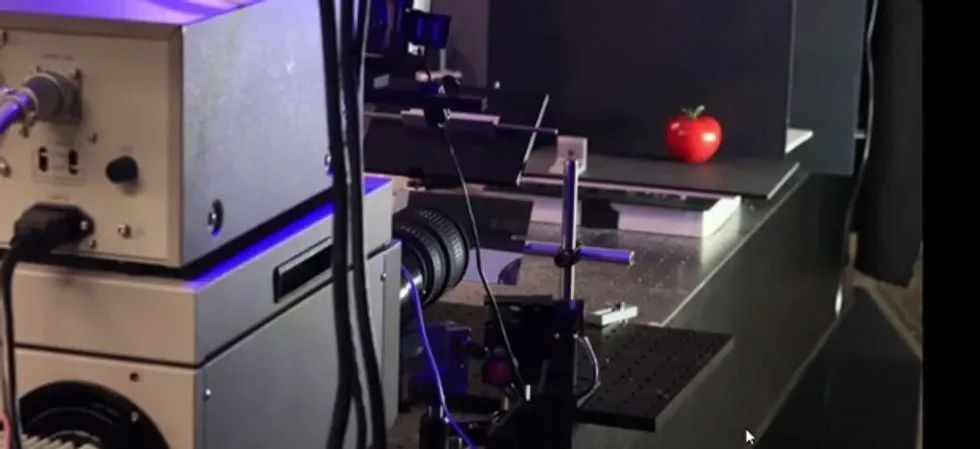
For some perspective, according to New York Times writer John Markoff, “If a bullet were tracked in the same fashion moving through the same fluid, the resulting movie would last three years.”
In the video below, you’ll see experimental footage of light photons traveling 600-million-miles-per-hour through water.
It’s impossible to directly record light, so the camera takes millions of scans to recreate each image. The process has been called “femto-photography” and according to Andreas Velten, a researcher involved with the project, “There’s nothing in the universe that looks fast to this camera.“
This article originally appeared seven years ago.