
Few things can take women down a rabbit hole of self-consciousness like picking out a swimsuit. The sheer number of thoughts we can have about our bodies—shape, size, symmetry, skin color, skin texture, hairiness, sagginess, and more—in a single minute is mind-boggling. Add in the “How much of my body do I actually want exposed?” question, pondering how people might leer at or judge us, and it’s easy to see how we twist ourselves into knots over what to wear to swim.
It doesn’t help that it feels like there’s no winning on this front. Case in point: The varied reactions to Anne Hathaway wearing a full-body swimsuit while on vacation. The suit she was recently seen in shortly after announcing her third pregnancy is not the first. She’s also been photographed out on a boat in a similar suit multiple times. Some have called the full-body suit a “burkini,” which isn’t accurate, as it doesn’t include a head covering. But the terminology doesn’t matter as much as the discussion her swimwear has sparked.
The debates highlight the multiple layers of pressure women face from all sides, even from other women. But it also offers hope that we, as a society, may finally be getting the fact that all that pressure is b.s.
The pressure to be uncovered is no better than the pressure to cover up
One response to Hathaway’s full-cover swimwear choice was the assumption that there was something sad or “depressing” about it.
“It is so sad how we’re denying ourselves natural seratonin, natural Vitamin D, what the Earth wants to give to us, because we don’t want to have wrinkles,” shared one woman. “I get wearing sunscreen on your face. I wear sunscreen on my face. But I also love to go to the beach and soak up the sun. It’s part of the experience. It’s just not as fun if you’re all covered up! Just live your life!”
However, as people responded, Anne Hathaway is living her life. She’s out on boats, clearly enjoying the water in her fun, bright sun protection. Some people can’t be in the sun for very long without burning, and some people hate the feel, smell, and expense of wearing sunscreen. A full-body rashguard suit is often preferable to burning or sunscreen.
But ironically, the fear of being seen as prudish, self-conscious, disempowered, or simply unfun sometimes stops women from covering up even when they want to. Feeling social pressure to not cover ourselves is just as bad as pressure to cover ourselves.
On the other hand, praising Hathaway for her sun protection while side-eyeing women in actual burkinis is also a problem
When I say women can’t win, it’s because we face inconsistencies in the messages we receive. There have been public debates about burkinis, which are basically what Anne Hathaway wore, just with a head covering included. Some municipalities in France have banned burkinis in public pools and beaches, and certain hotels and resorts in other countries have banned them as well. Muslim women sometimes face criticism for fully covering themselves while enjoying some fun in the sun.
Meanwhile, Vogue magazine has an article praising Anne Hathaway for her dedication to sun protection in her full-cover suit. Naturally, there are different reasons for wearing a full-body swimsuit, but as long as a woman is making the choice for herself, does the reason matter? (Also, where are the mainstream articles touting burkinis as smart sun protection?)
The message we’re getting is that it’s okay to cover up for sun protection but not for other reasons. Why? And why is it anyone’s business in the first place?
There’s hope in the reactions people have to those policing or judging what women wear
Making assumptions about why women choose the swimsuits they wear is pretty clearly silly. Judging what women choose to swim in is even more silly. People seem to be recognizing more and more that liberation from oppressive expectations doesn’t have a particular look, and empowerment means something different to everyone.
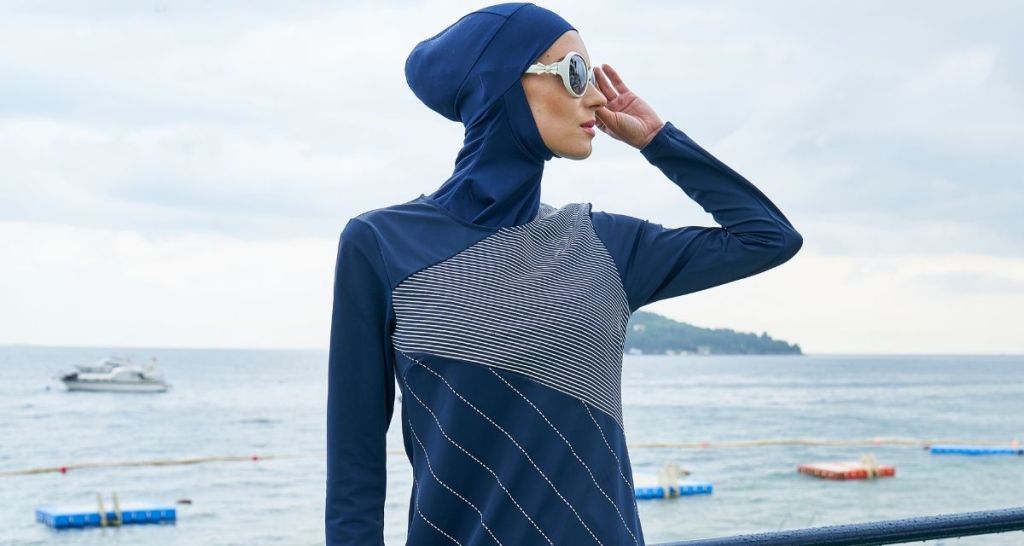
Both the bikini and the burkini can be symbols of oppression or empowerment, depending on our motivations for wearing them. Freeing ourselves from the pressures of social messaging and fear of judgment allows us to choose what we are genuinely most comfortable in. Bikini, burkini, or something in between. It doesn’t really matter, as long as it fits our needs and is something we actually want to wear.
Perhaps we’re getting closer to a world where women wear what they’re most comfortable swimming in without facing judgment one way or another. After all, there’s plenty more to be concerned about in the world than what Anne Hathaway or any other woman wears on a boat, at the beach, or in a swimming pool.