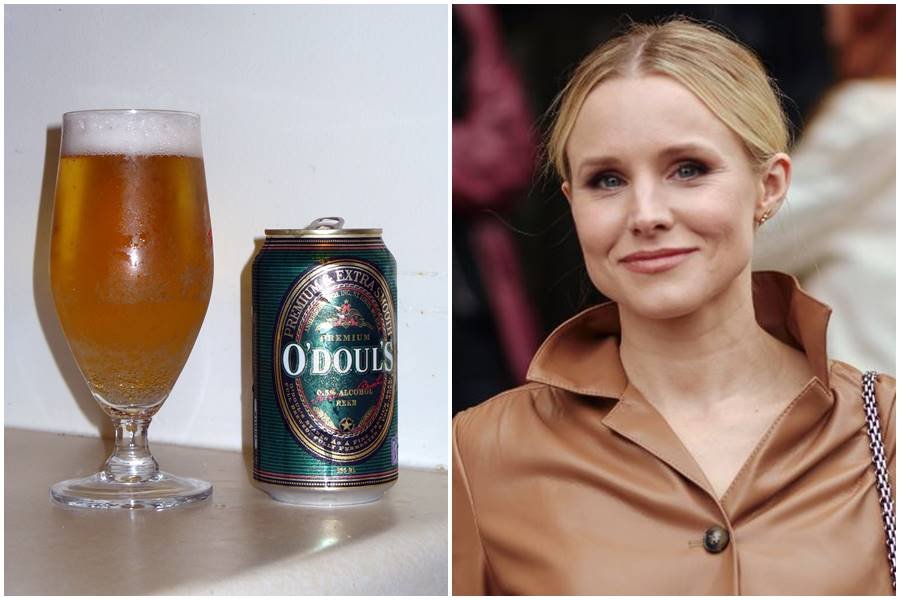
‘Judge me if you want’: Kristen Bell on why she allows kids to drink non-alcoholic beer

What do you think?

O'Doul's beer, Kristen bell, parenting
A frothy glass of non-alcoholic beer and Kristen BellPhoto credit: via Hisakazu Watanabe/Flickr and Myles Kalus Anak Jihem/Wikimedia Commons

Every family has its own rules regarding children and alcohol. Some believe that allowing their kids to drink before the age of 21 can lead to severe problems and have stringent zero-tolerance policies. Others allow their kids to have the occasional wine at dinner because they believe being too restrictive could make drinking more desirable, so it’s best to take a casual approach.

What do the experts say?

Psychology Today says that a review of 13 studies concludes that young people are less likely to develop alcohol problems if their parents have stricter rules about its use. “On current evidence, parents should be advised not to allow children to use alcohol,” the meta-analysis concludes.


On Monday, July 24, Kristen Bell put her spin on the age-old debate on “The Kelly Clarkson Show” by admitting that her older daughter occasionally drinks non-alcoholic beer. Bell and her husband, Dax Shepard, are the parents of two daughters, Lincoln, 10, and Delta, 8.

The conversation arose after Clarkson noted that her daughter accidentally drank champagne as a baby.

“My kids have ordered non-alcoholic beers at restaurants before, which sounds insane if you don’t know,” Bell admitted.

Lincoln developed a fondness for non-alcoholic brews at a young age because her father would drink one when the family went on walks.

“He’s a recovering addict, but he likes non-alcoholic beer, so he’d pop one open, he’d have [our oldest daughter] on his chest, and we’d walk and look at the sunset,” she recalled. “As a baby, she was pawing at it, and sometimes she’d suck on the rim of it. So I think it feels to her like something special, something daddy, something family.”

Lincoln’s taste for non-alcoholic beer has made for a few uncomfortable moments for her mom and dad.

“We’ve been at restaurants where she’s said, ‘Do you have any non-alcoholic beer?’ and I’m like…maybe we just keep that for home time,” Bell continued. “But then I’m also sort of like, you can judge me if you want. I’m not doing anything wrong. Like that’s your problem.”

Czech researchers found parents should avoid giving their children non-alcoholic beer because they’ll become accustomed to the bitter, hoppy taste, which could lead to abuse later in life.

Bell and Shepard’s casual approach to non-alcoholic beverages feels like an extension of their overall parenting philosophy. “I hate the word ‘taboo.’ I think it should be stricken from the dictionary,” Bell told Real Simple earlier this year. “There should be no topic that’s off the table for people to talk about.”

Shepard has been open with his daughters about the dangers of alcoholism.

“One of the cuter moments was, I wanna say, my oldest daughter was 3—back when my daughters really wanted to be with me 24 hours a day—and she said, ‘Where are you going?’ I said, ‘I’m going to AA,’” Shepard recalled. “She said, ‘Why do you have to go?’ I go, ‘Because I’m an alcoholic and if I don’t go there, then I’ll drink, and I’ll be a terrible dad.’”

  • Mom shares daughter’s epic response to girls who bullied her, and people are applauding
    Emmie Droubay shares her response to kids saying, “We don’t like you.”Photo credit: @marendroubay/Instagram
    ,

    Mom shares daughter’s epic response to girls who bullied her, and people are applauding

    It can be tough for parents to see their kids on the receiving end of unkind comments. But sometimes, we’re reminded that many kids have unshakable confidence—and actually have a thing or two to show us about what resilience really looks like. Recently, a mom named Maren Droubay shared that her young daughter Emmie was…

    It can be tough for parents to see their kids on the receiving end of unkind comments. But sometimes, we’re reminded that many kids have unshakable confidence—and actually have a thing or two to show us about what resilience really looks like.

    Recently, a mom named Maren Droubay shared that her young daughter Emmie was the target of some mean-girl bullying. A few girls had apparently told Emmie, “We don’t even like you.” Ouch.

    But apparently Emmie was completely, totally, undeniably unbothered. And Droubay was so proud of her response that she shared it on Instagram.

    Holding a very apropos princess wand, Emmie recited the words:

    “Well, guess what? My family thinks I’m a princess, and I’m super kind and nice…If you don’t think that, that’s okay because that’s what I think of myself, and that’s who I actually am…I know who I am.”

    “I hope someday I can be as confident as she is,” Droubay wrote in her video. She added in the caption that this was “one of those moments where you realize you might be doing at least one thing right as a parent.”

    Indeed, viewers credited Droubay for Emmie’s delightful resilience.

    “That is the product of some A-plus parenting and a village that has poured confidence into this babygirl. May we see more of this in our kids. All of our kids,” one viewer wrote. 

    Another added, “Wouldn’t it be amazing if all parents talked to their children like this and they all thought they were super nice and kind. Good job, she is a sweet little princess! 🌟”

    While Droubay told Upworthy that Emmie’s self-esteem comes rather naturally (“she has always been a confident girl”), she nonetheless has proactively worked to “encourage” it, mainly by “speaking to her with love.”

    “One thing I learned in college that really impacted me is that children form their sense of self in the first five years of life,” recalled Droubay. “I have tried to make them feel loved as much as I can because of that. We love the new Cinderella and so ‘have courage and be kind’ has been a repeated phrase for me with my children.”

    That is a sentiment shared by experts like parenting educator Samantha Moe, who said that words of affirmation “help children feel valued and reinforce their positive qualities.” That said, many parents might be concerned, and rightfully so, that too much praise could cause a child to seek external validation. In the video below, Moe explained that even consistent “I love yous” can offer a self-esteem boost without causing dependence.

    Since the encounter, Droubay has spoken to the other girls’ parents, and all is well. Her stance: “Little girls are just kids! Not every kid has the tools to be kind and is still learning. Every parent is doing their absolute best.”

    And even better, Emmie has gotten to see the incredible impact her video has had and has apparently “cried happy tears” because of it. All in all, it’s a pretty happy ending. It has inspired Droubay to offer these words of encouragement to fellow parents:

    “Your children only have one brief childhood, and then they go out into the world as adults. Our words have deep impact on who they will be. Every action we take as parents affects their lives—obviously I mess up as a parent all the time—but we have the power to speak love, kindness, and condolence into our kids—so why not?”

    Can’t argue with that. 

  • Doctor adopts 5-year-old boy who showed up to heart surgery completely alone
    A woman looking concerned. A boy in a hospital bed. Photo credit: Canva
    ,

    Doctor adopts 5-year-old boy who showed up to heart surgery completely alone

    Back in 2022, True, a five-year-old under the care of social services, was dropped off at Children’s Nebraska in Omaha for a seven-hour heart procedure. No parent, guardian, or caseworker was to be found. True had been struggling with complications from a previous open-heart surgery for his congenital heart disease, a condition that caused parts…

    Back in 2022, True, a five-year-old under the care of social services, was dropped off at Children’s Nebraska in Omaha for a seven-hour heart procedure. No parent, guardian, or caseworker was to be found.

    True had been struggling with complications from a previous open-heart surgery for his congenital heart disease, a condition that caused parts of his heart to be underdeveloped. Unfortunately, his caseworker had COVID-19 at the time, leaving True to face the surgery alone.

    A fateful encounter

    After spotting him in the pre-op room, pediatric cardiac anesthesiologist Dr. Amy Beethe “could not stop staring” at the sweet child’s face throughout the surgery, CBS News reported.

    “It just took me back that this four-year-old kid was undergoing heart surgery and no one was there,” she told KETV.

    Despite already having six children of her own, Beethe couldn’t shake the connection she felt to True and called her husband Ryan to discuss making him their seventh child.

    “I just said, ‘we need to have a talk when we get home and I need ya to have an open mind,’” Beethe recalled. 

    Though initially “hesitant,” Ryan nonetheless agreed that “it just felt right.” A year and a half later, True was adopted.

    “It didn’t take long to fall in love with him and know that we needed him in our family,” Ryan told KETV

    The story doesn’t end there, however

    Beethe and her husband knew that True had five siblings in the same foster care situation and not only worked to get them adopted into stable homes, but also into homes within Beethe’s community—including her sister, her sister-in-law, and a coworker. This ensured the entire family stayed in close contact.

    The couple even adopted True’s older sister, Laney, bringing the family to eight children in total. While the now 10-year-old will need a full heart transplant in the future, he won’t be facing those challenges alone.

    The effects of sibling separation in foster care

    Sibling separation is recognized as a significant, yet common issue in the child welfare system. It is estimated that between 53% and 80% of siblings in foster care are separated from one or more of their brothers or sisters. This is either because the foster home is not large enough to accommodate them, because of different care needs, or because of the timing of their removal. It makes an already traumatic situation worse—potentially leading to long-term mental health issues, substance abuse, academic struggles, difficulties maintaining close relationships, and a lasting feeling of rejection.

    The fact that Beethe could keep all six siblings together is nothing short of a miracle. She hopes their story will inspire others to consider taking in a foster child: “They are like a little flower bud that just blossoms. If more people would do it, it would change the world.”

  • 18 moms share their most intense and strange pregnancy cravings
    Women share their most intense and strange pregnancy cravings.Photo credit: Canva
    ,

    18 moms share their most intense and strange pregnancy cravings

    Pregnancy cravings are one of the many bizarre things experienced during pregnancy. From sweet to salty, they run the gamut of tastes. A study published in Frontiers in Psychology found that an estimated 50–90% of women experience pregnancy cravings and noted that they often begin at the end of the first trimester and become most…

    Pregnancy cravings are one of the many bizarre things experienced during pregnancy. From sweet to salty, they run the gamut of tastes.

    A study published in Frontiers in Psychology found that an estimated 50–90% of women experience pregnancy cravings and noted that they often begin at the end of the first trimester and become most intense during the second trimester.

    A June 2025 study on pregnancy cravings found that pregnant women tended to crave cold foods rather than hot ones. They also preferred “crunchy” textures over foods described as “smooth” or “creamy.”

    @jayshettypodcast

    To all the moms out there – what’s the strangest thing you’ve craved during pregnancy? 🤯🎙️ full episode all about pregnancy nutrition with @Glucose Goddess out everywhere now. LINK IN BIO or search ‘On Purpose Glucose Goddess’ to watch on YouTube #pregnancyjourney #motherhood #pregnant #moms #pregnantlife

    ♬ original sound – On Purpose Podcast

    Moms on Reddit opened up about their intense and strange pregnancy cravings, sharing the crazy combos they couldn’t get enough of while pregnant. These are some of their salty, sweet, and super-weird cravings:

    Salty cravings

    “There’s a mom and pop restaurant almost 45 minutes from my house, and very much out of my budget, that has the most AMAZING dry rub boneless wings- and their ranch is house made. I want to BE the chicken wing, I swear to god it’s the best thing I’ve ever eaten in my life.” – Disastrous-Radish504

    “I just about had a meltdown at work when the fast food place forgot ketchup. I actually walked through the entire office asking if anyone had ketchup packets stashed away somewhere, ransacked the break room…I finally went down to the cafe in the building and asked to buy just ketchup. The guy took one look at me and just started pouring it into a container, free of charge, he could see my big belly and my face and pretty sure he knew exactly what was up.” – superherostitch

    “McDonald’s hamburgers (like the super basic one that comes in a happy meal) with no cheese and extra extra extra extra extra extra pickles.” – glory87

    “Anything with lots of avocado, lemon, meat, and olive oillllll 🤤.” – PitchGlittering

    “My favorite craving was Olive Garden’s salad, I ate it every day for a week it was so intense, my weirdest was my craving for McDonald’s fish fillets 🤢🤢🤢 I still can’t wrap my head around it because I think they are so gross, fish and cheese is the worst but man I’d ask my husband every other day to stop after work and get me at least 2, for a solid month. Ugh.” – CoffeeTvCandy

    “The first time I found myself eating beef jerky in my car in a gas station parking lot without any recollection of purchasing it was when I realized I needed to buy a pregnancy test. I’d been vegetarian for over 8 years at that point and now for over 30 years aside from that pregnancy.” – Visual-Fig-4763

    Sweet cravings

    “Watermelon and fruit in general the first trimester. Then smoothies and milkshakes second trimester. I think I just wanted all the foods third trimester, but could only eat a few bites at a time.” – Jusmine984

    “Blood oranges. I just couldn’t stop eating them. Also helped that we lived in Florida. So I was like a blood orange hoarder for 9 months. Would make my husband go to random farms to pick up oranges on his way from work.”- Senior_Tangerine3083

    “Chocolate chip pancakes.” – soul-searcher3476

    “Cinnamon Toast Crunch lol. I’m not a cereal person but i was when pregnant.” – tiredmillienal

    “Oooooh I’ve got some funny ones. I had a lot of cravings, but ironically my most intense ones weren’t for food. Except at the end- at the end of my first pregnancy, I VIOLENTLY craved snow cones. Bought a literal whole machine yo make them. At the end of my second, it was popsicles, so I was in heaven at the hospital 🤣🤣🤣 was like ‘please can i have a popsicle?’ And the hospital was super happy to bring me all the popsicles I wanted LOL.” – Darkovika

    “Mine was orange juice. For about the first 8 weeks, even before I knew I was pregnant, I was going through a half gallon a day.” – ButterflyTangerine

    Crazy combination cravings

    “With my first: all the cheeseburgers and those weird candy orange slice candies. I’m 32 weeks with my second and I’ve consumed nearly all the heirloom tomatoes the world has grown. That’s why your grocery store doesn’t have them. Twas meeeeeeeeee.” – heylittlefightergirl

    “With my oldest I craved a mayo lettuce sandwich – yep just a mayo, lettuce on white bread.” – syaami

    “Sushi. Raw fish. And blue cheese. Not even kidding. I was so nauseous all the time, and thinking about eating sushi was the only thing that got me through.” – Ok_Bumblebee_3978

    “The food that slapped was Sea Salt and Vinegar chips with Sardines stuck between two crunchy chips.” – DogsNCoffeeAddict

    “Vegetable sushi, stewed okra and tomatoes, and M&Ms.” – ghostdumpsters

    “One time I went to the grocery store at 10 pm because I was craving salt and vinegar chips with French onion dip. Sounds gross but damn did that hit the spot at the time.” – yogipierogi5567

  • Mississippi church posts new ‘loud kid policy’ on Facebook and people are raving
    A church went viral for its tongue-in-cheek new policy regarding “loud kids.”Photo credit: First Baptist Union/Facebook & Canva

    It seems kids are becoming less and less welcome in public spaces. For one thing, fewer Americans are choosing to have children at all. Couple that with social media, and the trend has only served to amplify the disruption kids cause in traditionally adult spaces like breweries and brunch spots. An eternal struggle exists between busy parents with no babysitter who still want to enjoy avocado toast and the folks who’d prefer to do so without noisy kids around.

    But surely, one place where families are always welcome would have to be church—the original community gathering space. A place where all are not only welcome, but embraced. Even loud kids. However, this has turned out not to be strictly true either.

    Over the years, many churches have separated children from the main worship space and instead provided them with age-appropriate activities. It’s a noble idea, but many parents say the practice feels exclusionary and forces families to spend that time apart. Even in the supposedly loving environment of church, there are plenty of folks who want to hear the service without the wail of a toddler in a tantrum.

    Julie, a blogger and pastor’s wife, writes, “If you walk into a church that doesn’t have a heart for kids, you’ll know almost instantly. Congregants will look annoyed at childlike behavior and sounds, they’ll strongly discourage children from staying in the worship service, and folks will appear generally disinterested in them.”

    One church is going viral for its cleverly worded “new policy” when it comes to noisy kids attending services.

    church, family, kids, children, noisy kids, child free, kid free spaces, kids in public, parenting, kids at church
    Many churches don’t allow children in the main worship area, or at least frown upon it. Photo credit: Canva

    First Baptist Union in Union, Mississippi, recently posted an announcement on its Facebook page regarding loud kids at church.

    “There have been updates to the Loud Kid Policy at FB Union,” the post read. “If you have a loud kid, then this is for you. I know it might ruffle some feathers, but we had to do the right thing.”

    The whole memo has to be read to be fully appreciated, but in short, church leaders announced they would offer “five” options for families who wanted to visit with loud children. With a little clever wordplay, all of the options amounted to the same thing: Bring them.

    “We believe the sound of children in worship is not a distraction. It is evidence of life, growth, and the future of the church. If your child makes noise, you are not bothering us. You are blessing us.”

    The post was a viral hit. Not only was it re-shared hundreds of times by the Union community, but it also reached far beyond Mississippi. The original memo and slight alterations of it were posted by churches across the country.

    Reactions were largely positive. Many parents and church members chimed in to comment on how much they appreciated the tongue-in-cheek gesture:

    “I’m not even a member of FBC so I’m unsure as to why I’m seeing this, however, this is great. A pastor once said that a church without children is the signs of a dying church. Bring in the little ones!!”

    “A friend shared your post with me and wow! What a relief! Someone from leadership [at my church] called me and told me that my 18month old foster son was very distracting and then he asked me 1) Do I know we have a nursery? And 2) Why am I not utilizing it. I was livid.”

    “I once heard a preacher say, ‘If I can’t preach over a crying kid, it’s time for me to stop preaching,’ when someone got up to take a loud child out of the sanctuary.”

    “Not a member but I love this. When I first came to our church I was so worried cuz all of my kids are loud. When they would be loud id look at the older adults and would see smiles. Now I bring our baby in and they all love seeing him. Its so nice not to feel like I can’t sit thru a service because my baby is fussy.”

    However, not everyone was on board with the sentiment, especially as the announcement began reaching a wider audience. After New York Times columnist David French reposted it, a few folks took umbrage.

    “I don’t love it at all. If your child is being unruly, loud, or disruptive during a church service, you should be considerate of everyone else and step out with them. If they’re old enough, they should be disciplined appropriately. Assuming it’s acceptable to let a child scream and whine through the service is ridiculous.”

    “No. When the Word of God is preached, we should have an environment that eliminates distractions. I have 5 beautiful children, but if they’re starting to fuss, or just be a normal 2-4 year-old, we remove them and take them to children’s church or out in the foyer.”

    With its post about loud kids at church, First Baptist Union unintentionally sparked a fascinating debate about the presence of children in public, even in family-friendly spaces. Whether we like it or not, children come pre-packaged with noise, movement, and disruption—and it’s not always the result of poor parenting. Whether you find their childish chaos beautiful and invigorating or extremely annoying is a matter of personal taste.

    One thing is for sure. With more and more breweries outright banning children and airlines separating young children from their parents during the seating process, thereby sparking wars in the economy section, it’s refreshing to see at least one place take a stand and allow kids to be seen and heard. No matter how loud.

  • Teachers share the tell-tale signs they know a parent truly cares about their kid
    Teachers share insights on the signs parents truly care about their kids.Photo credit: Image via Canva
    , ,

    Teachers share the tell-tale signs they know a parent truly cares about their kid

    “When the child speaks, the adult listens. When the adult speaks, the child listens.”

    Few people spend more time with kids than teachers. From the classroom to the playground, teachers have deep and intuitive insight into what their students’ relationships are like with their parents, and many teachers can tell when parents are invested and truly care about their kids.

    In a Reddit forum, member @allsfairinwar posed the question: “Teachers of Reddit: What are some small, subtle ways you can tell a child’s parent really cares about them?”

    Teachers from all education levels shared their insight. From elementary teachers to high school teachers, these educators offered their firsthand experience with students that informed them about their relationship with parents at home. These are their most powerful observations.

    art, kids art, child painting, kids art project, finger paint
    Hit It Bang Bang GIF by Eddie & Laura Burton Realty Group Giphy

    “When the parent stops and actually looks at their kid’s art/work/listens about their day before heading home. I know everyone gets busy but damn don’t shove the art your kid is proud of right in their bag without first looking at it. We do the same piece of art for a week. They spent 2 hours on that, spare 2 minutes to show them their effort is worth something to you.” —@Worldly_Might_3183

    “When the child speaks, the adult listens. When the adult speaks, the child listens.” —@homerbartbob

    “When the parents are familiar with the child’s friends and talk to their child’s friends, I know they’re listening to their child talk about their day at school. Or when parents let slip that they got a full recap of something I said or that happened at school. I know they are having conversations with their child at home, and paying attention.” —@Pinkrivrdolphn

    minecraft, minecreaft gif, minecraft meme, minecraft kids, minecraft movie

    Games GIF Giphy

    “When the kid is happy/quick to tell their parents about things. Not just serious or important things, but just random bullsh*t. Do I care about Minecraft? Not really. Do I care that my kid cares about Minecraft? Very much. Lay it on me kid. Spare no detail.” —@IJourden

    “They let their kids fail and experience natural consequences. Good parents are preparing their children to be adults, and part of that is learning responsibility and accountability. Let your kids make mistakes and learn from them!” —@oboe_you_didnt

    “You can tell a lot about home life based on students behavior the week leading up to a break. If they are happy/excited/giddy/endearingly obnoxious I know they are going somewhere safe to someone who cares. The students who don’t have that are often increasingly anxious/angry/withdrawn/acting out.” —@pulchritudinousprout

    hug, greeting, hugs, greet, reunited

    Monsters Inc Hug GIF Giphy

    “The moment that a parent greets the child at the end of the day is very telling. Some parents clearly want to know all about their child’s day and connect with them, some don’t.” —@Smug010

    “When I make positive contact home and the parent speaks glowingly about their own kid. It’s great to hear.” —@outtodryclt

    “A few years back, I heard a parent ask their kid if they found someone to be kind to today. That made a real impact on me. Now I try to remind my own kids to ‘find someone to be kind to’ if I’m doing drop off and/or ask ‘Who were you kind to today?’ after school.” —@AspiringFicWriter

    “When a student asks for help, they actually need the help. They are not doing it just to get your attention.”—@Typical_Importance65

    cute kid, well groomed, kid hair, clean clothes, kid cared for

    Dance Marathon Reaction GIF by Children’s Miracle Network Hospitals Giphy

    “It doesn’t always mean everything is perfect at home, but a child who is well-groomed is always a good sign. That doesn’t always mean the most fashionable clothes or perfect hair, just that the child is clean, their clothes are clean and appropriate for the weather. Also when a child knows how to celebrate their own wins and isn’t afraid of making a mistake or being wrong- that shows that their parents have modeled good emotional regulation.” —@itscornelectric

    “They get them services when they’re struggling. I work with kids with disabilities and the learning outcomes/experience of school (and by extension, the greater world) for kids who have their needs met is far different to those who don’t. The number of parents who respond to a teacher saying ‘I think it might be worth John seeing an OT/a speech therapist/ getting his eyes checked’ with something along the lines of ‘f*ck you, what would you know?’ Is astounding. The parents who make appointments, share information from specialists with the school, and are proactive about their children’s abilities or disabilities – their kids see such improvements.” —@prison_industrial_co

    “They ask thoughtful questions. Even something that seems routine to adults like, ‘How is/was your day?’ I’m in elementary, and it’s appropriate for kids to talk mostly about themselves. Kids who ask thoughtful questions are doing so because it’s consistently modeled. It’s also not very common (again, age appropriate egocentrism) so it stands out.” —@mundane-mondays

    read, reading, kid reading, kids read, reading with kids

    Read Book Club GIF Giphy

    “When you know they’re being exposed to reading at home. Maybe they can read at a higher level or they’re mastering their sight words. For students with learning disabilities, the kids are trying their hardest to read, using context clues, using pictures and making up a story, or even making different voices for characters. When I was in a low functioning Autistic support room, this one little boy couldn’t form words, but he made noises is different voices and used dramatic face expressions on each page to represent characters talking.” —@Mediocre-Bee-9262

    “Accountability. A good parent knows that their kids isn’t perfect and if the kid does something wrong (like hitting or bullying other kids) they don’t look for excuses, or for how the other kid provoked that behavior, but helps their kid understand why their behavior was hurtful.” —@SadlyNotDannyDeVito

    This article originally appeared last year. It has been updated.

  • Parents go viral for ‘secret’ praise technique. Science confirm it’s certifiably genius.
    Namwila Mulwanda and her partner Zephi practice gentle parenting. Photo credit: Credit: Instagram @namwilamulwanda
    , ,

    Parents go viral for ‘secret’ praise technique. Science confirm it’s certifiably genius.

    “I promise that if you do this in front of your child, their confidence will skyrocket!”

    There are so many conflicting ideas about building self-confidence in children. Is there a right way? Could praise be harmful? Should everyone receive a gold star? As with many things in life, sometimes the best solution is the simplest one—hiding in plain sight, or just out of it.

    Namwila Mulwanda and her partner Zephi practice “gentle-parenting” with their daughter, Nhyara. Shared in a video on Instagram, one of their techniques is talking about Nhyara when she’s within earshot but out of sight. These aren’t your typical behind-closed-doors parent conversations—no venting about daily frustrations or sharing complaints they’d never say to her face. Instead, they create intentional moments of celebration, offering genuine praise and heartfelt affirmation.

    In a viral Instagram post that’s garnered over one million likes, Mulwanda writes, “POV: You talk behind your child’s back so they can hear you.” Self-described as a “passionate mother, content creator, and small business owner,” Mulwanda naturally overflows with ideas: she writes a Substack, She Who Blooms, which is about “blooming in our own time, in our own way.” She also runs Rooted, a shop where she “carefully curates products that embody the essence of growth, empowerment, and staying rooted in one’s true self.”

    In the video, Mulwanda and her partner sit in a quiet corner, chatting about their daughter Nhyara while occasionally peeking around to see if she’s listening—which she is. With her within earshot but not directly part of the conversation, they discuss their daughter:

    “I’m just so proud of her and the things she does,” her mom starts.

    “She works on her reading, like that difficult word that she took the time to really sound out,” adds her dad. They go on to applaud her independence (“She’s always telling me, ‘Daddy, I want to brush my teeth on my own,’” says Zephi), before concluding that she’s amazing.

    “She’s amazing,” says Mulwanda. “So, so, so amazing,” Zephi responds.

    People in the comments were obviously here for it. Parents shared their own versions of this technique, including one who wrote, “As a solo mom, I pretend to make phone calls to a family member and do this.”

    Another parent shared a powerful example:

    “My son used to be scared of climbing down the stairs. So, my husband said loudly, ‘He’s very brave! He has shown a lot of courage lately.’ The next day, when we tried carrying him down the stairs, he said, ‘Nope, I have a lot of courage in me.’”

    Others reflected on their own childhoods. One commenter wrote, “No exaggeration, I’d be an entirely different person had my parents been like this with me.”

    “Stop, I was just thinking last night, ‘When I have kids, I’m going to have loud conversations with my future husband about how much I love our children and how proud I am of them,’” another enthusiastically shared.

    child, hiding, parenting, conversations, praise
    Children believe that conversations between adults are more u201cauthenticu201d and honest. Photo credit: Canva

    Research indicates that indirect praise has a stronger psychological impact than direct praise, particularly in young children.

    “This is such a powerful way of reinforcing positive behavior,” explains parenting influencer Cara Nicole, who also went viral for her unique approach to parenting. “There’s something special about overhearing others talk about you—you know they’re being genuine because they’re not saying it directly to you.”

    This effectiveness stems from children’s innate understanding that conversations between adults tend to be more honest than parent-child interactions. From an early age, children recognize that direct conversations with parents often have an intentional, behavior-shaping purpose. In contrast, overheard praise feels authentic and spontaneous, rather than an attempt to influence the child’s self-image.

    These techniques work best when praise focuses on effort and process rather than innate qualities. Take Nhyara’s dad’s comment: “She works on her reading, like that difficult word that she took the time to really sound out.”

    Yet, it’s crucial to keep praise realistic and measured. Avoid overzealous claims about future achievements, like acing every spelling test for the rest of her life. Children have keen intuition; if they sense insincerity, the strategy can backfire, damaging their trust in parents. Similarly, over-inflated praise—like declaring “incredible” performance for average effort—can burden children with unrealistic expectations.

    Keep it simple. A casual remark like, “I noticed how carefully Maya put away her toys without being asked. That was so nice. It really helped keep the house clean.”

    https://youtube.com/watch?v=jI502h-1WkY%3Fsi%3DmQdZF4eD1wz9SYZX%26controls%3D0

    The viral response to Mulwanda’s video demonstrates the power of gentle parenting combined with thoughtful, specific praise. It’s heartening to see modern parents sharing their diverse approaches to showing their children love. For many commenters who didn’t experience this kind of upbringing, these conversations offer a path to healing. As Mulwanda eloquently states in her pinned comment:

    “To those of you who only heard negative as a child, you were never the problem. You were a child, and you didn’t deserve the experience you had. Your presence on this earth is a blessing, and the fact that you show up every single day is proof of just how amazing you are. You are brave, you are beautiful (you too, boys), and you deserve the world and more.
    If any of you feel emotions rising up, close your eyes, hug your inner child, and remind them that you’re there.” Namwila Mulwanda


    This article originally appeared last year. It has been updated.

  • Dad shares how he raises his 2-year-old daughter while working on a cruise ship
    Ben Featherstone and his family.Photo credit: @benfeatherstone_/TikTok

    Raising a child on a cruise ship might not be the most conventional parenting choice, but it certainly comes with a view.

    Just ask Ben Featherstone, who, in between singing sets aboard the MSC Virtuosa, lives with his wife and their two-year-old daughter, Piper. He documents their adventure along the way for his growing social media audience.

    This globetrotting lifestyle wasn’t necessarily something Featherstone originally envisioned. In fact, when he first learned he was going to become a dad, he assumed his cruise ship performing days were behind him. The cruise line he worked for at the time didn’t allow family members to stay onboard, and understandably, fatherhood seemed incompatible with months at sea.

    On a whim, he auditioned for a different cruise line. When the contract offer came through, it included an unexpected twist: immediate family members were allowed to stay onboard for up to four weeks at a time. Suddenly, what felt like an ending became a brand-new beginning.

    So, Featherstone and his wife decided to give it a go. Their current routine looks a little something like this: every other month, he performs for three days while at sea. During the remaining days of that stretch, the family explores whichever port they’ve docked in—whether that’s a sun-soaked Mediterranean town or a bustling European city. After those weeks onboard, Piper and her mom, who thankfully has flexibility in her own work schedule, return to London for four weeks. Then the cycle repeats.

    “Little did I know this [audition] would lead me to create a whole new lifestyle,” Featherstone shared in a video clip.

    And for little Piper, life is anything but dull. When she’s not toddling through charming cobblestone streets in a new country, she’s taking full advantage of the ship’s amenities. There are water parks, splash zones, live entertainment, and seemingly endless holiday-themed festivities throughout the year. She also attends the ship’s baby club, where she socializes and plays with other children her age from all over the world. In many ways, the ship has become its own tiny, ever-changing village.

    In one particularly heart-melting moment shared online, Featherstone’s castmates serenade Piper for her second birthday as crew members gather to celebrate. The video captures how this unconventional life still manages to create a sense of community. Though constantly on the move, Piper is surrounded by familiar faces who cheer her milestones and help create memories that will last a lifetime.

    @benfeatherstone_

    The cast really are her extended family whilst we’re on the ship 🫰 #cruiselife #cruisetok #performer #backstage #fyp

    ♬ original sound – Ally Rendall

    “What an amazing life!” one viewer commented. It’s kind of hard not to agree.

    Of course, the lifestyle isn’t without its challenges. As Featherstone candidly told People, “raising a 2-year-old is quite hard either way.”

    Parenting doesn’t suddenly become effortless just because there’s an ocean view. There are still tantrums, sleep schedules, and picky eating to contend with, plus the logistical puzzle of traveling with a toddler. During the four weeks when Piper and her mom return to London, Featherstone deeply feels their absence.

    Still, for this family, the trade-offs feel worth it. Instead of choosing between career and parenthood, they’ve found a creative way to blend both—proving that sometimes the most custom-made paths lead to the richest experiences.

  • Grandma offers wake-up call for grandparents who can’t stop buying the grandkids presents
    Gift giving should feel good for the giver and the receiver. But around the holidays, it can be a major cause of stress. Photo credit: @morethangrand/TikTok
    , , ,

    Grandma offers wake-up call for grandparents who can’t stop buying the grandkids presents

    She’s got the perfect solution for what to do when you just can’t pass up a great deal at the store.

    Parents and grandparents find themselves at odds frequently. It could be a disagreement over how much screen time the kids get, battles over grandma giving them too many sweets, or arguments around how often grandma and grandpa should be babysitting. Conflict in their relationships is almost a given, and navigating disagreements in a healthy, productive way is key for the relationship to evolve and grow.

    One huge source of that conflict comes in the form of… stuff! All parents can relate to the sense of dread they feel at the sight of the grandparents arriving for a visit with a trunk-full of of presents. Toys, furniture, costumes, decor, you name it. And that’s just on a regular Tuesday. Around the holidays, it can get even worse. It’s not that they don’t want their kids getting gifts, it’s just all too much, especially when you live in a home with a finite amount of storage.

    DeeDee Moore, a grandma behind the website More Than Grand, recently shared on the her TikTok account that “too much stuff” given from grandparents to their grandkids is one of the main sources of holiday frustration for parents.


    gift guide for grandparents, christmas gifts, in law at christmas, grandparents, parents, kids, family, love
    Moore says experience gifts, and spending quality time, are better options than trunk-loads of presents. Photo by Christian Bowen on Unsplash

    “75% of the parents that we surveyed wished grandparents would respect their wishes about gifts,” she explained, noting that while there are myriad reasons why this would be the case, the most common one (and incidentally the one most “waved off” by the grandparents) is the lack of physical space to accommodate.

    Now, you might be thinking: How much harm can it really do to give a kid a new card game or a baby doll? Certainly those don’t take up that much room. But when Moore breaks down the math, it’s a bit hard to deny.

    “Say your grandson has four other grandparents and four aunts and uncles. Each of these people get him one gift for a second birthday. That’s already nine gifts plus something for mom and dad. We’re up to 10,” she said.

    “If all of those grandparents buy him three things, and two of the aunts get him a little extra something, that’s 22 presents for a 2 year old who would be just as happy with a box.”

    Add in gifts from friends, and random gift-dumps from grandma when she’s been on a hot-streak at the thrift store, and you’ve got a serious storage problem on your hands.

    @morethangrand

    Gifts should be a joy for both the giver and recipient, but at this time of year, they can end up being a source of conflict. Watch for a tip on how to channel your grandparent generosity! For more ways to navigate hotspots during upcoming holidays, make sure you are on our email list! Go to my bio to sign up! #grandparents #grandparent #CommunicationTips #GrandparentsLove #AdultChildren #NewGrandparent #newgrandma#newgrandparents #newgrandma #Grandparenting #grannytok #HealthyBoundaries #Boomer #EffectiveCommunication #GentleGrandparenting

    ♬ original sound – MoreThanGrand

    Yikes, gotta admit that’s a lot. And that’s not counting the additional problems too much gift-giving can incite listed on the More Than Grand website, which included:

    • Undermining the parent’s values that they are trying to instill to their children
    • Damaging a child’s ability to use their imagination
    • Normalizing overconsumption
    • Teaching children to associate seeing grandma or grandpa with getting a gift, rather than focusing on the actual relationship
    (Here’s another one: Too many gifts steals Mom and Dad’s thunder! Parents often put a lot of thought into picking out presents they know their kids will love, only for them to get buried in the avalanche of surprise presents.)

    These are all good points, and yet, what to do with all those good intentions and a desire to spoil some precious little nugget? Luckily, Moore has the perfect fix.

    “While your grandchildren are faced with getting too many gifts, many children are in the opposite situation. Take some of the things you bought to Toys for Tots or another organization that provides gifts for less fortunate families.”

    This allows folks to step into the “true spirit of giving,” Moore concluded.

    Viewers by and large seemed to agree, though many also noted how powerful experiential or future-building gifts could be, even if they’re not as cute as toys or as fun to open.


    @morethangrand

    How often do we hear “it takes a village to raise a child’? Grandparents can be that village, but it can be hard to show up the way today’s parents need. We created a digital grandparenting course that will teach you everything you need to know to be the village for your grandchild’s parents. It’s called New Grandparent Essentials, and you can find a link in my profile! It’s the best investment you can make in your family as you become a grandparent! #grandparents #grandparent #CommunicationTips #GrandparentsLove #AdultChildren #NewGrandparent #newgrandparents #newgrandma #Grandparenting #grannytok #HealthyBoundaries #Boomer #EffectiveCommunication #GentleGrandparenting

    ♬ original sound – MoreThanGrand

    “My in-laws opened up a college fund for both my kids. Instead of stuff they put more money in the account. I’m so grateful!” one person wrote.

    Another added, “I am giving experiences and putting money in an account for future needs (college, 1st house, starting business, etc).”

    In the vein, here are two other tips grandparents can use for intentional gift-giving…

    First and foremost: open up a discussion with the parents. See if they need help with a big ticket item, find out which hobby or sport the child is interested in, ask what’s a definite “no.” this can save a lot of headaches for everyone.

    “The gifts should surprise the grandkids, not their parents,” as one commenter wrote on the video.

    Second: prioritize memories over stuff. A trip to the zoo, an education membership, a ticket for two to the movies…these are often the gifts that truly keep on giving.

    And grandparents, don’t forget: just because you’re honoring boundaries, it doesn’t mean you have to pass up that sweet little something you see in the aisles. After all, shopping is fun, and it’s even better when you find a great deal or a cool discovery. But it can easily go to a little one who could really use it.

    For even more tip on all things grandparenting, give More Than Grand a follow here.

    This article originally appeared last year. It has been updated.

Modern Families

Doctor adopts 5-year-old boy who showed up to heart surgery completely alone

Culture

Wife finds an incredibly clever way to find her husband buried in an avalanche

Generations

Gen Xers and Boomers recall 18 unforgettable sounds and smells from the ’80s that disappeared

Culture

A dad who lost his young son to cancer shared a note on male grief that has gone massively viral