Family

Joe Biden delivered a powerful speech about 'the only bipartisan thing left in America.'

'I assure you there’s still a lot of really decent people left in the Congress in both parties.'

Joe Biden delivered a powerful speech about 'the only bipartisan thing left in America.'

For nearly an hour on March 12, 2017, former Vice President Joe Biden spoke to an audience of innovators at South by Southwest about a topic very close to his heart: cancer.

He was there to discuss the newly formed Biden Foundation's Cancer Initiative, something of an outgrowth of the "Cancer Moonshot" task force Biden led during his final year in office.

Former Vice President Joe Biden outlines his cancer initiative at SXSW. Photo by Ricardo B. Brazziell/Austin American-Statesman via AP.


On May 30, 2015, Biden's son Beau died from brain cancer. He was just 46 years old.

The former Delaware attorney general, Army veteran, and rising star was diagnosed with the disease less than two years earlier, devastating the Biden family and ultimately leading Joe to forgo a run for the 2016 Democratic nomination for president. While Beau's passing may have cooled his father's presidential ambitions, it sparked a laser-focused passion within the patriarch. His charisma, 44 years in public service, and knowledge of Washington bureaucracy made him uniquely qualified to try to help save cancer patients and their families from having to endure heartbreak.

Beau and Joe Biden during the 2008 Democratic National Convention. Photo by Mark Wilson/Getty Images.

It seems like there's not a lot Democrats and Republicans can agree on these days. Biden used his SXSW speech to discuss what he called the "only bipartisan thing left in America."

Cancer doesn't care whether you're a Democrat or a Republican, rich or poor, black or white, young or old. It's ruthless, and it's almost certainly touched all our lives in one way or another. It's that type of tenacity that makes fighting cancer something worth setting aside political differences for — and it's been done, even very recently.

On Dec. 13, 2016, President Barack Obama signed the 21st Century Cures Act into law. The bill, which set aside $6.3 billion in funding for things like medical research and drug development, passed the Senate by a vote of 94-5 and the House by 392-26. During his speech, Biden pointed to the bipartisan success of the bill, using it as a sign that, when pressed, we really can come together for the greater good.

"I assure you there’s still a lot of really decent people left in the Congress in both parties," Biden said, noting that Republican Mitch McConnell even moved to name $1.8 billion of the bill's funding after Beau.

Biden speaks at SXSW. Photo by Ricardo B. Brazziell/Austin American-Statesman via AP.

It's easy to feel cynical, but Biden offers a bit of much-needed hope for a better world.

"I am optimistic. I’m optimistic about the American people," he said. "Given half a chance, they’ve never, ever, ever, ever, ever, ever let their country down. And the core of the Republicans in the Congress and Democrats are good, decent, honorable people being almost artificially separated by a new kind of partisanship. I’m confident we can break through it. I’m confident it can be done."

And if he, a man who has seen just how broken Washington can be, still has faith that our elected officials will do the right thing, that's worth something — isn't it?

Biden speaks at SXSW. Photo by Ricardo B. Brazziell/Austin American-Statesman via AP.

There are things we must be unwilling to postpone. The fight against cancer, a bipartisan effort, is one of them.

Biden ended his speech by invoking President John F. Kennedy:

"He talked about the effort to go to the moon as a commitment the American people had made and that they were 'unwilling to postpone.' … I am unwilling to postpone for one day longer the things we can do now to extend people’s lives — and so should you be.”

Let's be unwilling to postpone that better world.

Beau and Joe Biden hug at the 2008 Democratic National Convention. Photo by Spencer Platt/Getty Images.
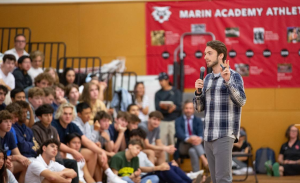

Watch Biden's full SXSW speech below:

Photo by Steven HWG on Unsplash

The world is getting older, and it's getting older quickly. In 2019, there were approximately 700 million people aged 65 and older. The UN predicts that the number will more than double by 2050.

Helping the aging population live their later years with as much comfort and dignity as possible is a growing concern. And one German town is serving as an example of how to create a community where the elderly can thrive.

According to Reasons to be Cheerful, it all started in 1995 with a survey of 28,000 people aged 50+, exploring their wishes and expectations for their latter years. What the city of Arnsberg discovered was that aging residents wanted to participate in social life, actively contribute to society, continue learning, and—most importantly—not live alone.

Previously, Arnsberg had taken a "deficit-oriented" approach to its elderly population, focusing on what they couldn't do instead of what they had to offer.

Today, the city sees its aging residents totally differently, in large part thanks to its Department of Future Aging (DFA). That's right. In 2004, the town created an entire (albeit tiny) department dedicated to making sure elderly residents can live full, fulfilling lives as part of Arnsberg community.

Keep Reading Show less
Photo by Steven HWG on Unsplash

The world is getting older, and it's getting older quickly. In 2019, there were approximately 700 million people aged 65 and older. The UN predicts that the number will more than double by 2050.

Helping the aging population live their later years with as much comfort and dignity as possible is a growing concern. And one German town is serving as an example of how to create a community where the elderly can thrive.

According to Reasons to be Cheerful, it all started in 1995 with a survey of 28,000 people aged 50+, exploring their wishes and expectations for their latter years. What the city of Arnsberg discovered was that aging residents wanted to participate in social life, actively contribute to society, continue learning, and—most importantly—not live alone.

Previously, Arnsberg had taken a "deficit-oriented" approach to its elderly population, focusing on what they couldn't do instead of what they had to offer.

Today, the city sees its aging residents totally differently, in large part thanks to its Department of Future Aging (DFA). That's right. In 2004, the town created an entire (albeit tiny) department dedicated to making sure elderly residents can live full, fulfilling lives as part of Arnsberg community.

Keep Reading Show less
True

If you've ever donated to a cause but worried that your contribution wasn't really enough to drive real change, you're not alone. As one person, it can be tough to feel like you're making a real difference, especially if you don't have a lot to donate or if times are tough (aka there's a worldwide pandemic going on.)

That's why, for years, the idea of philanthropy felt a little bit like a rich person's thing: if you had millions, you could donate and make change. The rest of us were just tossing pennies into a cup without really doing much.

But that's a problem: the priorities of a wealthy few don't represent the priorities of many, which means that good causes are often left underfunded, leading to a lack of meaningful action.

The thing is: it doesn't have to be like this. We can all make a difference, especially if we pool our money together.

Enter: Giving Circles. These are when groups of people with shared values come together to drive change. They do it by pooling their time and money together, then deciding as a circle where it should go. That way, they can cause a real targeted change in one place quickly in a very people-powered way by giving what they can, whether that's volunteer hours, money, or a mix of both. Best of all, Giving Circles are a social experience — you get to work together as a community to make sure you do the most good you can.

In other words, giving circles are a way to democratize philanthropy, making it more accessible regardless of your age, income, gender, or race.

That's why this year, The Elevate Prize, a nonprofit founded in 2019, is launching a new pop-up "Giving Circle" program so that problem solvers, budding philanthropists, and anyone that wants to do good can come together and drive real impact at a large scale. And you can do it all in just 90 minutes.

All you have to do is join one of the Elevate Giving Circles online. Learn about organizations doing good for the world, then pool your money together, and as a group, direct it where you think that donation could make the most difference.

But that's not all: every single donation made is matched by the Elevate Prize Foundation — basically guaranteeing that you double your impact for good. The theme for the first cycle is education, and Elevate Giving will match up to $75,000 in total donations for each cycle.

Ready to get involved? Elevate Giving experiences start June 26th, so sign up now for your spot to make a difference. There's no minimum fee to join either — so get involved no matter what you have to give. Now that's philanthropy for all.