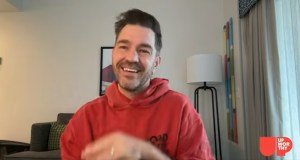
If this video made you angry, you might want to share it. (I don’t think that would make you a terrorist.) Especially if you live in Utah, Arkansas, South Carolina, Missouri, or Iowa (or Pennsylvania or North Carolina, where ag-gag laws are pending). Or eat meat from there. Or like animals.
Tags
More for You
-
Transforming girls’ education across the world takes a village.
From Pakistan to Tanzania, the most effective education solutions are community-led. Here’s how local leaders, in partnership with Malala Fund and supported by Pura, are mobilizing entire communities.
When asked to describe what Tanzania smells like, Grace Isekore closes her eyes and breathes in deep. For a moment, she’s somewhere else entirely. Tanzania is a rich tapestry of sights and scents, from the smell of sea mist that permeates the coastline to the earthy cardamom and cloves she cooks with in her kitchen. But when Grace emerges from her reverie, her answer is unexpected.
“Tanzania smells like peace,” she says, her eyes still closed. “I see a beautiful country where we are free to move, free to speak. And there is peace within the community.”
For Grace, that sense of peace isn’t just something she smells; it’s something she works toward every day. As a project coordinator with Pastoral Women’s Council (PWC), a women-led organization that empowers pastoralist communities in northern Tanzania, she has seen firsthand how girls flourish when they have the opportunity to attend school. Like scent, education not only connects girls to their own culture, but also helps broaden their horizons, realizing new possibilities for themselves and others. That transformation reshapes entire communities and ripples outward, with the potential to change countries and transform the world for the better.
Different scents, different approaches, and communities driving change

Spices in Tanzania. Captured by James Roh for Pura For Grace and others around the world, education is freedom, as well as a pathway to a stronger community. Rooted in that shared belief, Pura, a home fragrance company, was inspired to build on their four-year partnership with Malala Fund to create something truly unique: a fragrance collection that connects people through scent to communities in Tanzania, Nigeria, Pakistan, and Brazil, where barriers to girls’ education are among the highest.
Using ingredients from each region, the new Pura x Malala Fund Collection uses scent to transport people to these regions directly. “Future in Bloom,” for example, invokes Pakistan’s lush valleys through notes of jasmine, cedarwood, and mango; while Tanzania’s fragrance, “Heart on Fire,” evokes the spirit and joyfulness of the girls who live there through cardamom, lemon, and green tea.
The new Collection honors the work Malala Fund does every day, partnering with locally-led organizations in these four countries to ensure every girl can access and complete 12 years of education. Each scent celebrates the joy, tenacity, and courage of the women and girls driving change on the ground, while also augmenting Pura’s annual grant to Malala Fund by donating eight percent of net revenue from the Pura x Malala Fund Collection to Malala Fund directly.
Just as each country’s scent is unique, so too are their needs related to education. But with support from Malala Fund and Pura, local leaders are coming up with creative ways to mobilize entire communities (parents, teachers, elders, and the students themselves, in their pursuit of solutions, understanding that educating girls helps everyone thrive. Here’s how their efforts are creating real, durable impact in Tanzania and Pakistan, and creating a ripple effect that changes the world for the better.
Parent-teacher associations help Maasai girls and their communities in Tanzania problem-solve

A girl’s school in Tanzania. Captured by James Roh for Pura Northern Tanzania, Grace’s home, is home to pastoralist communities like the Maasai, a nomadic people who have moved with the seasons to nurture the land and care for their livestock for centuries. The nomadic nature of this lifestyle creates significant and unique barriers to girls’ education. Longstanding gender roles have enabled Maasai to survive in the harsh environment and have placed great value on both women and men. Over time, as nomadic life has been threatened by the privatization of land and stationary education models have been implemented, the reality of pastoralist livelihood has shifted and introduced new complexities. Now, the sheer distance to schools is both a practical challenge and one that often comes with danger from the landscape, predators, and potential exposure to assault along the journey. Girls shoulder the responsibility of household chores and there is often cultural pressure around early marriage – both leading to boys’ education being prioritized over girls’.
“There are very, very good [pastoralist] cultural practices, which are passed from generation to generation,” says Janet Kimori, an English teacher at Lekule Girls Secondary School in Longido, Tanzania. But when cultural practices act as educational barriers, “you have to sit down and look for where you are going to assist. As a school, as an individual, the school administration—all of us will chip in and know how we are going to deal with this problem.”
PWC works to ensure girls are able to exercise their right to an education while also preserving pastoralist culture. One successful approach, the organization found, has been the formation of Parent Teacher Associations (PTAs), created with help from Malala Fund. In PTA meetings, students, parents, teachers, elders, and government officials meet, discuss educational barriers, and come up with community-led solutions that preserve and honor their culture while advancing educational outcomes.

PTA meeting in Tanzania. Captured by James Roh for Pura One recent PTA meeting highlights how these community-led solutions are often the most effective. At Lekule Girls Secondary School, the lack of fresh water forces girls to walk long distances to collect water for the school’s kitchen during the school day, and these long journeys not only disrupt class time but can leave girls vulnerable to sexual assault in isolated areas. Through facilitated discussion, PTA members landed on a solution: installing a borehole to pipe in fresh water to the school. Reliable access to water creates a better learning environment for the girls, but it also benefits the community at large, as local governments are then more likely to invest in health clinics and other community resources nearby.
With a solution in place, the PTA was then able to discuss ideas and map out a course of action. The women would raise money for the cost of the borehole, while the men would recruit workers to dig the hole and lay the pipe. Together, they would ask government officials to match their investment.
The benefits of PTA meetings within the pastoralist communities are undeniable. “The girls are talking and addressing issues in a confident way, and parents feel they are part of the resource team to solve challenges happening at school,” Grace says. One unexpected benefit: The larger cultural impact these PTA meetings have created. Thanks to the success of PTAs within pastoralist communities, the models are now being endorsed on a national level, and schools across Tanzania are starting to use them to solve problems in their own communities. When a community creates opportunities for girls to learn, everyone benefits.
Safe spaces in rural Pakistan help students and their parents connect, then drive change

Safe space for girls meeting in Pakistan. Captured by Insiya Syed. A continent away in Pakistan, the country’s northernmost region of Gilgit-Baltistan seems like a land untouched by time. The region’s looming mountains, snow-capped peaks, lush valleys and crystalline lakes draw nature lovers and landscape photographers from around the world, but living among this kind of breathtaking scenery has its drawbacks. Schools in the region are few and far between, and the area’s harsh climate often makes roads inaccessible for travel. Poverty and gender-based discrimination are additional obstacles, making school even further out of reach, and girls are affected disproportionately. Going up against these barriers requires a persistent, quiet strength that’s found in the women who live there and reflected in Pakistan’s signature scent.
Saheli Circles are how local leaders in Gilgit-Baltistan are bridging the gap between girls and education. An Urdu term for “female friend,” Saheli Circles are after-school safe spaces where girls explore subjects like art and climate change, while also developing skills that help them manage emotions, set goals, and build positive relationships. Girls study in groups, visit the library, play sports, and tackle filmmaking and photography projects, all designed to develop self confidence and teach the girls how to advocate for issues that matter to them. But the work doesn’t stop there.
“What we’re trying to achieve here will only be impactful if it trickles down to the home environment and the school environment,” says Marvi Sumro, founder and program director of Innovate, Educate, and Inspire Pakistan (IEI), the local organization that developed the Saheli Circles model and partnered with Malala Fund in 2021 to make it a reality. Ever since, Saheli Circles have grown to involve teachers, elders, and parents to encourage relationship building that’s essential for young girls and adolescents. “Our spaces can give mothers and daughters an opportunity to interact a little differently—do an art activity, or have a cup of tea together, or some good conversation,” Marvi says.
The relationship building is what makes the biggest positive impact throughout the community. Recently, one Saheli Circle was able to bring together parents, teachers, and administrators to advocate for better education at their local school, and together they convinced the department of education to hire a science teacher. Another Saheli Circle organized a fund where members of the community can contribute monthly to pay for uniforms, books, and other school expenses for the girls in their village, eliminating those small, hidden costs that are often a barrier to education for many. A third Saheli Circle was able to produce a short film about how gender-based household chores can take away valuable study time from girls, leaving them at a disadvantage. “The girls put the film together and showed it to the mothers, and the response from the mothers was just beautiful,” Marvi says.

Girls smiling in Pakistan. Captured by Insiya Syed. The education and relationship building that the girls receive in Saheli Circles connects them to larger opportunities and economic freedom that are not possible in their hometown. “For girls in Gilgit-Baltistan, education is extremely important because of the fact that we’re so far away from where the economy is, where the opportunity is. Education becomes this bridge for us, for our girls, to access all the opportunity and economy that exists in [larger cities].”
From rural Tanzania to remote Pakistan, local organizations prove every day that prioritizing girls’ education benefits everyone. Communities that lift up girls are able to secure resources like clean water and well-staffed schools, as well as build stronger relationships.
These outcomes are only possible because of the women and girls who work tirelessly in these regions to overcome barriers and drive progress. The Pura x Malala Fund Collection is a way to honor them, celebrate their achievements, and unite people the world over around a shared belief that education is freedom. Like scent, that belief can build, travel, and has the possibility to transform the world.
Experience the Pura x Malala Fund Collection here, and connect with the stories of real girls leading change across the globe.
-
Mental performance coach reveals 4-minute ‘GRIT’ morning routine to make every day a success
Ever wake up in the morning, and you’re not sure what you want to get out of the day?
Ever wake up in the morning unsure of what you want to get out of the day? One day rolls into the next, and it’s easy to lose track of time and go on through our daily routines without any real purpose. That’s why, if we want to achieve our dreams and live the best life possible, it’s important to have a clear idea of what we’re working towards and to affirm it every morning.
Dr. Cindra Kamphoff, a certified mental performance coach who has worked with the Minnesota Vikings, USA Track & Field, and several Fortune 100 and 500 companies, created a 4-minute practice you can do every morning to have a successful day. She calls it the GRIT morning routine. “This simple GRIT routine gets my day started on the right foot!” she wrote on LinkedIn.
How to start your day using Dr. Cindra Kamphoff’s GRIT morning routine
To perform the GRIT routine, Kamphoff says that you should focus for one minute on each of the following:
1. Gratitude
“For one minute, remind yourself what you’re grateful for, the good things and the tough things,” she said in a YouTube video. Kamphoff told CNBC to envision a highlight reel of everything that has shaped your path. Think about the people you love, the blessings you’ve had in life, and the challenges that you’ve overcome to be the person you are today.
Gratitude is extremely important because it’s at the root of living a satisfied life. If you don’t appreciate the things you have in life, then it’s almost like not having them at all. A 2024 Harvard study found that gratitude is associated with greater emotional well-being, lower risk of depression, better sleep and heart health, and may even extend people’s lives.

A woman drinking coffee. Credit: Canva 2. Remember your purpose
“R is remember your purpose, or your ‘why.’ For one minute, remember and remind yourself why you do what you do,” Kamphoff says. If you haven’t found a specific purpose yet, that’s okay. Your purpose can be as lofty as creating a great movement that changes the world or as small as learning to be 1% kinder every day. Mark Manson, author of The Subtle Art of Not Giving a F*ck, says that finding purpose may feel overwhelming, so it’s best to boil it down to a simple question: “What can I do with my time that is important?”
3. Set your intentions
“For one minute, state at least three intentions. These are the ways you want to show up today, less about what you want to do but who you want to be,” Kamphoff says. She says to consider “who you want to be” and how you “want to show up” in the world, whether at home or at the office. Some examples include: “I will be a more patient parent” or “I will do everything in my power to avoid being distracted.”
4. Talk to yourself powerfully
“The last step is T, which is to talk to yourself powerfully. For one minute, tell yourself who you really are,” she says. She suggests that people talk to themselves with statements that include “I will,” “I can,” or “I am,” she told CNBC. If you are going to a job as a teacher, tell yourself, “I am the best teacher these kids have ever had,” or if you have a mile-long to-do list, tell yourself, “I can accomplish everything on my list and more.”
As the great Taoist philosopher Lao Tzu once said, “The journey of a thousand miles begins with one step.” Every morning, we begin our own journey, and the most important thing is to take that step in the right direction. With the GRIT morning ritual, hopefully, finding that direction and staying on the path is a lot easier.
-
The wife of the Mercedes-Benz inventor once stole his car to prove it was safe. It changed automobiles forever.
Bertha Benz embarked a 60-mile journey that would later become the world’s first road trip.
German engineer Karl Benz is generally credited with inventing the modern car, patenting his three-wheeled “Benz Patent-Motorwagen” on January 29, 1886. However, not many know that his wife played a key part in bringing it to the mainstream. She’s also technically the world’s first car thief…before the word “car” even existed.
Bertha Benz was a constant supporter of her husband’s idea: using her dowry to back him financially and even offering her own input to make the contraption more practical. Her input was most impressive, considering women weren’t allowed to formally study engineering at the time.

Benz, Carl Friedrich Wikipedia And yet, despite their efforts, no one would believe that the automobile was anything more than a novelty, and a potentially dangerous one at that.
Some religious groups even associated it with witchcraft or the devil. This unfortunately took a lot of the wind out of Karl’s sails.
As the story goes, Bertha could not sit idly by while their invention faded away into obscurity.
So, in the wee hours of August 5, 1888, she set out in secret with her two young sons, Eugen and Richard Benz. She left Karl a note saying that the trio had ventured to her mother’s home, around 60 miles away. She had failed to mention that she’d be using their automobile to get there.
This became not only the world’s first long-distance automobile journey but also a very fruitful field test, during which she encountered several mechanical problems along the way.
Luckily, Bertha was nothing if not resourceful. When a fuel pipe got clogged, she cleared it with a hatpin. She used a garter as insulation material for a frayed ignition lead. When the wooden brakes began to fail, Benz had a cobbler install leather, making the world’s first pair of brake linings. When the automobile ran low on petrol, she even stopped at a pharmacy to purchase a petroleum-based cleaning agent and use that as fuel. This essentially created the world’s first gas station.
Despite these challenges, Bertha made it to her destination twelve hours later. It was only then that she sent Karl a telegram sharing the details of her clandestine excursion. Relieved, Karl urged Bertha to rush the car’s chains back on a freight train to be shown at a car show. Instead, she drove it right back home.
All in all, Bertha’s stunt brought global attention to the Benz Patent-Motorwagen, which led to skyrocketing sales and changed history forever.
And yet, despite her remarkable contributions, she wouldn’t be inducted into the Automotive Hall of Fame until 2016. Meanwhile, Karl was inducted in 1984, a good 32 years before her.
In 2019, Mercedes-Benz released an ad that cinematically imagined what Bertha’s journey must have been like. How she must have appeared like a supernatural being to those who had never seen an automobile, how she surely endured sexist comments, and (perhaps most importantly) how inspiring she might have looked to young girls who witnessed her bravery.
The ad ends with: “She believed in more than a car. She believed in herself,” which feels like a little more than sensational marketing. As Bertha did famously say, “Before me, no automobile existed.”
Even though we don’t hear their stories as often, history is full of women just like Bertha. Women who believed in themselves enough to ignore the odds and change the world forever.
-
Emma Thompson reveals the detail that made that big ‘Love Actually’ scene so heartbreaking
Thompson beautifully explained the layers that make the scene so iconic.
The 2003 film Love Actually is probably best known for its controversial-ish cue card scene, where Andrew Lincoln’s character professes his love for Keira Knightley by silently showing her cue cards, including the famous (or infamous) line, “To me, you are perfect.”
But there’s another scene in the film that doesn’t get nearly the recognition it deserves. It’s well-regarded, but not nearly well-regarded enough.
It’s been over 20 years since the late Alan Rickman broke Emma Thompson’s heart by buying that little office tart a necklace in Love Actually, and some of us still haven’t forgiven him.
With its overlapping love stories set during Christmastime, the film has become a holiday classic, despite some controversy over whether it’s actually any good. Some people love it, some people hate it, but no one can deny that Thompson gives an Oscar-worthy performance in one utterly heart-wrenching scene.
Of the eight “Love Actually” relationships, Harry and Karen (Rickman and Thompson, respectively) is the one that gives the film some serious gravitas. While other characters are pining or shooting their shot with varying levels of success, Harry is having a midlife-crisis affair with a modelesque coworker, while Karen shuffles their children to and fro and keeps Harry’s life running smoothly. We see him lie, we see her start to suspect, but the scene where she opens her Christmas present from Harry (a Joni Mitchell CD, not the necklace she had found hidden in his coat and thought was for her) is when we see Thompson’s acting strengths in full view.
Like, phew.
What’s so striking about the scene, however, is that it’s not dramatic in a typical way. There’s no external conflict—it’s just Thompson excusing herself from the family to process, in secret, what she’s just discovered. We see and feel her heartbreak—it’s so visceral—but that’s not what makes the scene so powerful. Heartbreak happens all the time in movies.
As Thompson explains in a BBC Radio 1 interview, it’s the fact that she can’t react the way she wants that pulls at people’s heartstrings so hard.
“I think it’s just because everybody’s been through something like it,” Thompson says. “What I think really gets to them, though, is that she has to pull herself together. It’s not that she’s upset. That’s, you know, ten a penny. But it’s that she has to pull herself together.”
It’s true. The conflict in the scene is between her wanting to break down and her wanting to keep her family’s Christmas memories happy and intact. She is a devastated wife, but she’s also a devoted mother who doesn’t want to devastate her kids. We feel the tension between those two roles and the way she swallows up her grief in order to get her kids to their holiday concert right after finding out her marriage isn’t what she thought it was.
When you think about it, it’s incredibly poignant. And though not everyone loves the film, it’s moments like this one that have helped it stand the test of time and stay on many people’s holiday watch-list.
“I think it’s to do with the fact that we’re required in our lives to repress the things that we’re feeling,” Thompson explained on TODAY. “So, you can be hit right between the eyes with some terrible piece of news, but you can’t react immediately because you’ve got your children there. It’s that thing of not showing — that’s why it hurts. That’s why it moves us.”
“If she went, ‘Oh my God! I thought you were going to give me a necklace! And now you’ve given it to somebody else,’ we would not be moved, you know?” she continued. “We’re moved because she just goes, ‘I’m not gonna do it.’ And then she makes the bed, the bed that sort of suddenly feels so empty of meaning. And then she goes down and goes, ‘Hello, everyone! Let’s go.’ That’s why people identify.”
And the way she plays it is perfect. Any actor can cry, but it’s her crying while trying not to cry, and the way she shows us her inner emotional turmoil without ever saying a single word is impressive.
If you’ve never seen “Love Actually” and want to see the Harry and Karen story, here are just their scenes:
Some people have asked whether Harry actually physically cheated or not, but “Love Actually” script editor Emma Freud clarified that he did. “DEFINITELY had an affair,” she wrote on X in 2015. “I begged Richard just to make it a flirtation, but no. The whole way.”
And did Harry and Karen stay together in the end? The film doesn’t really make it clear, but at the screening Freud answered the question: “They stay together but home isn’t as happy as it once was.” Oof. There’s just no non-heartbreaking answer to that question.
This is why we watch films, though, isn’t it? To see our humanity reflected back to us? To feel what the characters feel? To have our hearts broken vicariously so we can have a good cry without going through the actual pain ourselves?
People usually watch rom-coms for the romance, the comedy, and the happy endings, though. So here’s to Emma Thompson and Alan Rickman for giving us one of cinema’s most poignant scenes in one of its most unexpected places.
This article originally appeared two years ago. It has been updated.
-
Your next favorite podcast is about humor, hope, and immigration.
In the second season of Freedom to Thrive, host Hector Flores explores the immigrant experience, and what we can all learn from it.
Ifrah Mansour is no stranger to conflict.
A Somali refugee and current resident of Minneapolis, the multimedia artist and activist draws on her lived experiences to create work that explores trauma, displacement, and resilience. But like so many of the guests on Freedom to Thrive, an award-winning podcast produced by the National Immigration Law Center (NILC), Mansour doesn’t want to focus only on trauma; she also wants to celebrate the unexpected beauty she’s found during difficult experiences.
“One of the beautiful things about tragedies is that it activates hearts, and courageous people are born,” she says. For example, Mansour has noticed more Minnesotans than ever are reaching out to help the vulnerable, after the anti-immigrant crackdowns carried out by the Department of Homeland Security. “They are bringing food, they’re bringing extra clothes, they’re walking with people, and it’s just really beautiful.”
Hector Flores, co-founder of the Las Cafeteras and host of Freedom to Thrive, agrees with her. A child of immigrants himself, he has also seen how hope and hardship often live side by side.
Flores comes from a family with mixed status and is highly aware of the challenges immigrants and refugees in his community face, and how they’re affected by people’s misconceptions. “People want to know about trauma all the time, but we’re more than just undocumented,” he says. “We’re artists, singers, creatives … there’s so much richness in the culture.”
At its core, Flores’ comment is exactly what the Freedom to Thrive podcast is all about: Celebrating immigrants as complex, dynamic individuals, and challenging the dominant narrative that too often reduces them to symbols of hardship.
Launched in 2024, Freedom to Thrive explores heritage, resilience, community, and the ways art and comedy can spark social change. Now in its second season, the podcast continues to feature conversations with immigrants, policymakers, artists, musicians, activists, and more. Recent guests have included comedian Mo Amer, Grammy Award-winning singer Lila Downs, and Pulitzer Prize-winning author Viet Thanh Nguyen.
Where the first season focused on individual stories of identity and belonging, Flores says his goal for season two, where he joins as host, is to “take it to the next level” — using storytelling to highlight “the fact that we’re more similar than different.”
One recent podcast episode drives this point home. In December, Flores interviewed Bryan Andrews, a rising country music star and rural Missouri native who frequently uses his platform to speak about issues affecting immigrant families. At the heart of his message and his songwriting, Andrews says, is the idea that small-town Americans and the rest of the country, including immigrants, have more in common than they realize.
“It doesn’t matter where you’re from,” Andrews says on the podcast. “We’re all trying to make a living and we’re tired of getting railroaded by corporate greed or by politicians who don’t care.”
Rural Americans, Andrews says, are often stereotyped as racist and misogynistic but “the overwhelming majority of people in my home town have love in their hearts.” Media stereotypes often amplify differences and divide, he says, but at the end of the day, “we’re all in this together.”
Flores, who was raised in a working-class immigrant neighborhood in East Los Angeles, had similar thoughts. He says he often sees its residents stereotyped as wealthy, consumerist, and status obsessed. “That exists, but that’s not my life, that’s not my community,” he says. Like small-town Americans, people in the city “just want to work hard and take care of their families. We all want the same thing.”
Although the podcast tackles some heavy issues, each episode’s ultimate focus is how personal and collective struggles can be healed through art, driving home a message of hope and resilience:
Mansour’s episode about her experiences in Minnesota is just one of many examples. Flores asks her,
“What gives you hope for the people creating a home here?”
“The love I feel from other Minnesotans. It is trumping any hate we’re experiencing,” she replies.
CTA: Stream all episodes now on the Freedom to Thrive YouTube channel or the website, here.
The podcast has been nominated for a Webby in the “Belonging & Inclusion” category. You can vote for it to win until Thursday, April 16!
This article is part of Upworthy’s “The Threads Between U.S.” series that highlights what we have in common thanks to the generous support from the Levis Strauss Foundation, whose grantmaking is committed to creating a culture of belonging.
-
Boomer grandma challenges family norms by asking why she has to do the traveling for visits
“Should grandmas be the ones on the road, or should families pick everything up and drive to her?”
When the holidays roll around, it’s time for families to decide where they will meet to celebrate. For the most part, parents with younger kids dread packing their bags and traveling to a family member’s house where things aren’t set up for young children. You fumble around setting up the pack ‘n plays, can’t find your bottle brush, and freak out because the electrical sockets aren’t child-proof.
However, many grandparents aren’t keen on enduring the mental and physical strain of traveling at an older age. So, who’s right? Grandma Jan, founder of Grandma Camp and a TikTok influencer who shares fun ideas for grandparents and grandkids, argued that parents should pack up their kids and visit Grandma.
“Okay, so, here’s the debate: families say, ‘Grandma, why don’t you come visit us?’ But let’s be honest, Grandma’s house is where the traditions are, the cookies are, and all of the toys are,” Grandma Jan begins. “But if grandma is driving, flying, hauling all the gifts, and packing up her car to come see you, maybe it’s time to flip the script. When did it become normal for Grandma to pack up all her stuff and come see you? Should the kids pile into the car, bring all their toys, and just go visit grandma? Bring all that love and chaos to her?”
So she asked her followers: “Should grandmas be the one on the road or should families pick everything up and drive to her?” Just about everyone in the comments said that grandparents should have to travel to see their grandchildren.
“Nope. I want Christmas morning in pajamas with my family. I want my traditions. My parents and in-laws (the grandparents) got all of this how they wanted. It’s my turn now,” Maggie wrote. “Gramma is retired and now has a shit ton of time. Kids and parents have a very finite amount of time off in the holidays that they do not want to spend on the road,” Mrs. Wright added.
Some grandparents also checked in to disagree with Grandma Jan. “Why would I put that on my kids and grandkids? It’s so hard traveling with kids, not to mention expensive to fly for more than one person,” Populustultus wrote. “What a weird way to think about that. Why wouldn’t you help your kids create magic in their home? Signed a grandma,” LifestylebyKat added.
The response inspired Grandma Jan to release a follow-up video clarifying her opinion. She admits she came up with the idea after seeing older people having a hard time getting through the airport. “[I saw] older grandparents struggling their way through airports carrying their own heavy bags while managing a walker or a plane or a wheelchair, struggling through all on their own with no one to assist,” Grandma Jan said. “And as an occupational therapist, that actually broke my heart. For younger, healthier grandparents, travel can be fun, but for the older generation, it can be quite a struggle.”
Ultimately, Grandma Jan didn’t intend to put anyone out; she just wanted to have a conversation about what’s best for families as a whole. “And Grandma Camp by Grandma Jan is about having those conversations, not making rules. And at the end of the day, it’s about connection, not distance,” she concluded her video.
This article originally appeared last year. It has been updated.