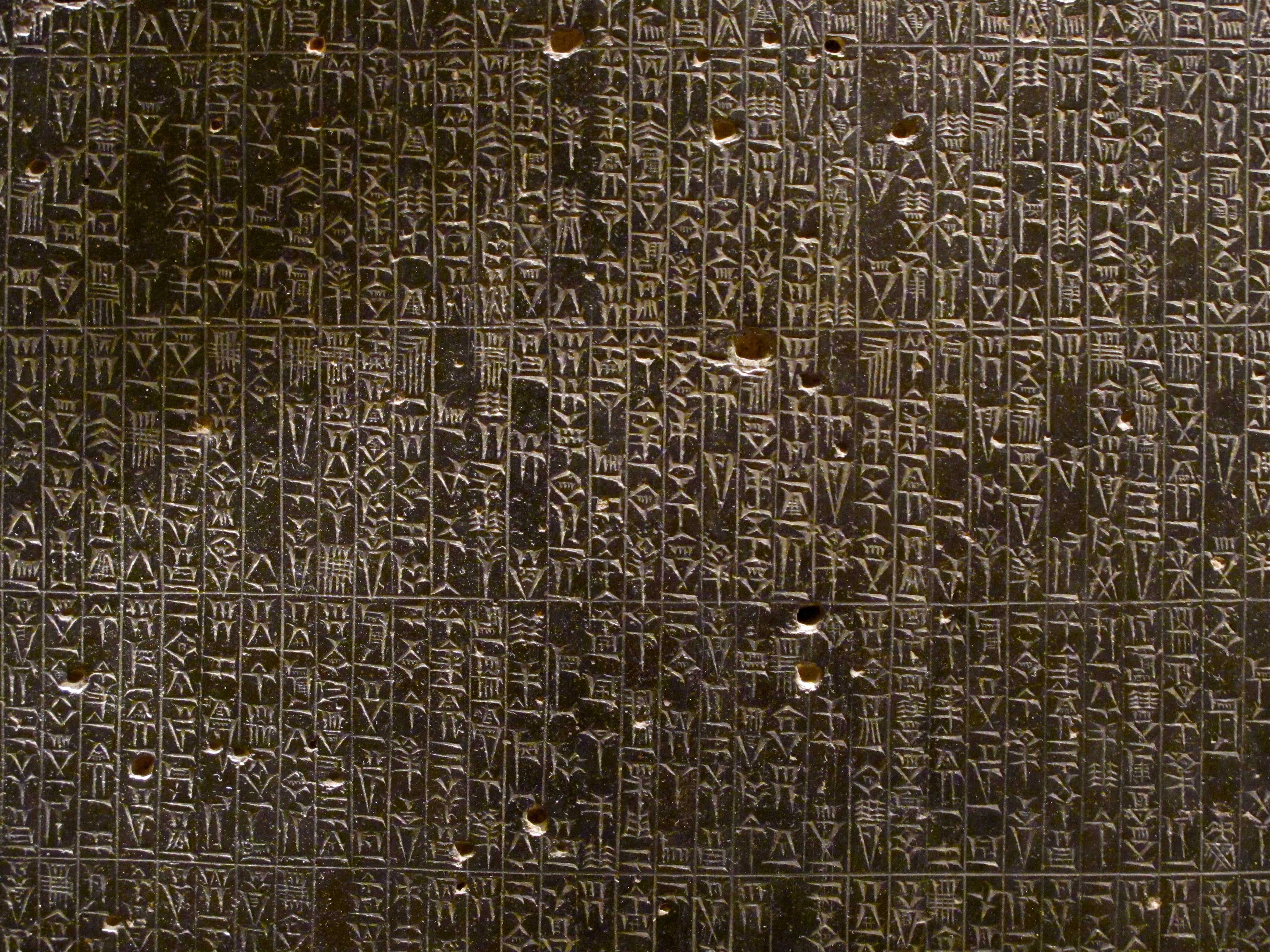
How a 3,800-year-old stone tablet helped create modern legal systems
'Innocent until proven guilty' isn't that new of a concept.

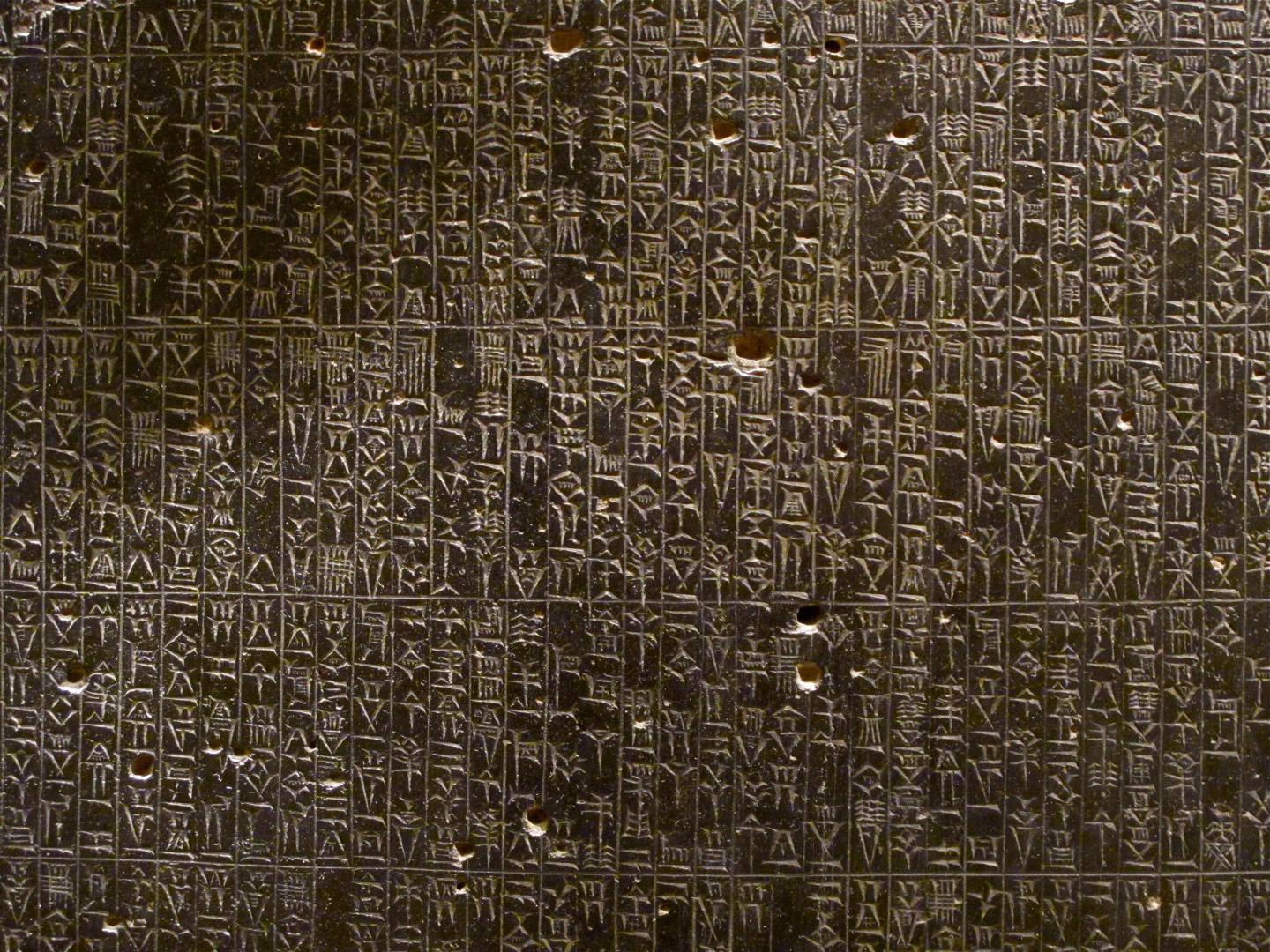
Kind of looks like the Matrix code...
The modern justice system is certainly not without its flaws, however most can agree that the concept of “innocent until proven guilty” is one that (when not abused) stands as the foundation of what fair due process looks like. This principle, it turns out, isn’t so modern at all. It can actually be traced all the way back to nearly 3,800 years ago.

English barrister Sir William Garrow is known for coining the "innocent until proven guilty" phrase between the 18th and 19th century, after insisting that evidence be provided by accusers and thoroughly tested in court. But this notion, as radical as it seemed at the time, can, in fact, be credited to an ancient Babylonian king who ruled Mesopotamia.
During his reign from 1792 to 1750 B.C., Hammurabi left behind a legacy of accomplishments as a ruler and a diplomat. His most influential contribution was a series of 282 laws and regulations that were painstakingly compiled after he sent legal experts throughout his kingdom to gather existing laws, then adapted or eliminated them in order to create a universal system.
Those laws were inscribed on a large, seven-foot stone monument, and they were known as the Code of Hammurabi.
The Code of Hammurabi was extensive and included rules and penalties pertaining to economic, family, criminal and civil law. On top of the stone sits a carving of the king receiving the laws from Shamash, the Mesopotamian god of justice and equity, implying that the laws are divinely ordained.
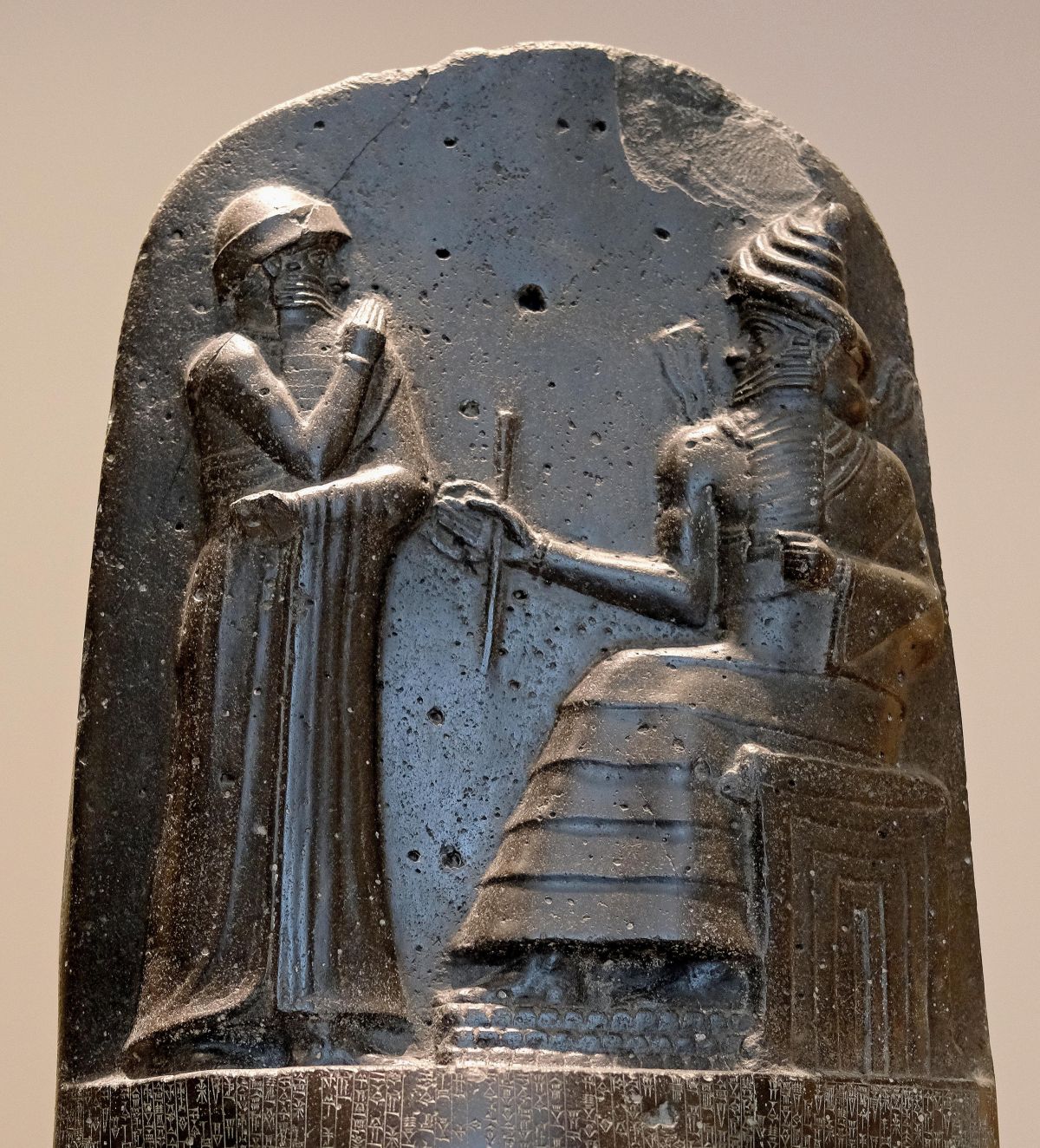
Nothing says official like a picture of you next to a god.
en.wikipedia.org
Historians only know of one earlier recorded law collection, created just 300 years before Hammurabi, and it was much less detailed by comparison. As Dawn McCormack, associate dean of the College of Graduate Studies at Middle Tennessee State University, explains, this was most likely due to the growing group of different peoples conquered during Hammurabi’s reign. “As the population diversified, the law codes adapted to meet the new circumstances.”
Some of the laws in the Code of Hammurabi might be seen as barbaric by today's standards, with punishments being the removal of the guilty party’s tongue, hands, breasts, eye or ear. On the other hand, many laws were quite progressive. Kelly-Anne Diamond, an assistant teaching professor of history at Villanova University, told History, the code provides the first recorded alimony payment law.
Diamond also notes that Mesopotamians “put a lot of emphasis on getting to the truth of a case,” and therefore mandated the use of witnesses, oral testimony and written evidence to prove guilt. They also established having individuals swear they were telling the truth by oath. “Oaths were particularly effective because of the people's profound belief that the gods would punish them if they lied under oath,” she explained.
Presuming innocence in today’s legal system has had its fair share of negative impact on victims, primarily in sexual harassment cases, not to mention the heavy use of media coverage for court cases of public figures, which can certainly sway public opinion. Still, the fact that evidence-based, fair and impartial justice has been a goal throughout history offers an encouraging outlook for humanity as a whole. Perhaps it’s an ideal that will never fully be achieved, but the fact that people continue to pursue integrity is something worth noting.







A woman is getting angry at her coworker.via
A man with tape over his mouth.via
A husband is angry with his wife. via 
a man sitting at a desk with his head on his arms Photo by
Can a warm cup of tea help you sleep better? If you believe it, then yes. Photo by 
Three women sit on a blanket in the park. 
Two women engaging in a pleasant conversation inside a coffee shop
Two men engaging in a peaceful disagreement.
Resurfaced video of French skier's groin incident has people giving the announcer a gold medal
"The boys took a beating on that one."
Downhill skiing is a sport rife with injuries, but not usually this kind.
A good commentator can make all the difference when watching sports, even when an event goes smoothly. But it's when something goes wrong that great announcers rise to the top, and there's no better example of a great announcer in a surprise moment than when French skier Yannick Bertrand took a gate to the groin in a 2007 super-G race.
Competitive skiers fly down runs at incredible speeds, often exceeding 60 mph. Hitting something hard at that speed would definitely hurt, but hitting something hard with a particularly sensitive part of your body would be excruciating. So when Bertrand slammed right into a gate family-jewels-first, his high-pitched scream was unsurprising. What was surprising was the perfect commentary that immediately followed.
This is a clip you really just have to see and hear to fully appreciate:
- YouTube youtu.be
It's unclear who the announcer is, even after multiple Google inquiries, which is unfortunate because that gentleman deserves a medal. The commentary gets better with each repeated viewing, with highlights like:
"The gate the groin for Yannick Bertrand, and you could hear it. And if you're a man, you could feel it."
"Oh, the Frenchman. Oh-ho, monsieurrrrrr."
"The boys took a beating on that one."
"That guy needs a hug."
"Those are the moments that change your life if you're a man, I tell you what."
"When you crash through a gate, when you do it at high rate of speed, it's gonna hurt and it's going to leave a mark in most cases. And in this particular case, not the area where you want to leave a mark."
Imagine watching a man take a hit to the privates at 60 mph and having to make impromptu commentary, straddling the line between professionalism and acknowledging the universally understood reality of what just happened. There are certain things you can't say on network television that you might feel compelled to say. There's a visceral element to this scenario that could easily be taken too far in the commentary, and the inherent humor element could be seen as insenstive and offensive if not handled just right.
The announcer nailed it. 10/10. No notes.
The clip frequently resurfaces during the Winter Olympic Games, though the incident didn't happen during an Olympic event. Yannick Bertrand was competing at the FIS World Cup super-G race in Kvitfjell, Norway in 2007, when the unfortunate accident occurred. Bertrand had competed at the Turin Olympics the year before, however, coming in 24th in the downhill and super-G events.
As painful as the gate to the groin clearly as, Bertrand did not appear to suffer any damage that kept him from the sport. In fact, he continued competing in international downhill and super-G races until 2014.
Alpine skiing is a notoriously dangerous sport, with a reported injury rate of 36.7 per 100 World Cup athletes per season, according to a 2018 study. Of course, it's the knees and not the coin purse that are the most common casualty of ski racing, which we saw clearly in U.S. skiier Lindsey Vonn's harrowing experiences at the 2026 Olympics. Vonn was competing with a torn ACL and ended up being helicoptered off of the mountain after an ugly crash that did additional damage to her legs, requiring multiple surgeries (though what caused the crash was reportedly unrelated to her ACL tear). Still, she says she has no regrets.
As Bertrand's return to the slopes shows, the risk of injury doesn't stop those who live for the thrill of victory, even when the agony of defeat hits them right in the rocks.