Harvard psychologists have been studying what it takes to raise 'good' kids. Here are 6 tips.
Help unlock your child's best self with a few tried-and-true strategies.

Kids playing baseball with a slide into second.
A lot of parents are tired of being told how technology is screwing up their kids. Moms and dads of the digital age are well aware of the growing competition for their children's attention, and they're bombarded at each turn of the page or click of the mouse with both cutting-edge ideas and newfound worries for raising great kids.
But beneath the madness of modernity, the basics of raising a moral child haven't really changed. Parents want their kids to achieve their goals and find happiness, but Harvard researchers believe that doesn't have to come at the expense of kindness and empathy. They say a few tried-and-true strategies remain the best ways to mold your kids into the morally upstanding and goals-oriented humans you want them to be.

Entertaining the toddlers.
Cartoon by Sara Zimmerman/Unearthed Comics.
Here are six practical tips:
1) Hang out with your kids.

Cleaning the hands.
Image by Cade Martin/Public Domain Images.
This is, like, the foundation of it all. Spend regular time with your kids, ask them open-ended questions about themselves, about the world and how they see it, and actively listen to their responses. Not only will you learn all sorts of things that make your child unique, you'll also be demonstrating to them how to show care and concern for another person.
2) If it matters, say it out loud.

Teamwork in process.
Image by Steven Bennett/Wikimedia Commons.
According to the researchers, "Even though most parents and caretakers say that their children being caring is a top priority, often children aren't hearing that message." So be sure to say it with them. And so they know it's something they need to keep up with, check in with teachers, coaches, and others who work with your kids on how they're doing with teamwork, collaboration, and being a generally nice person.
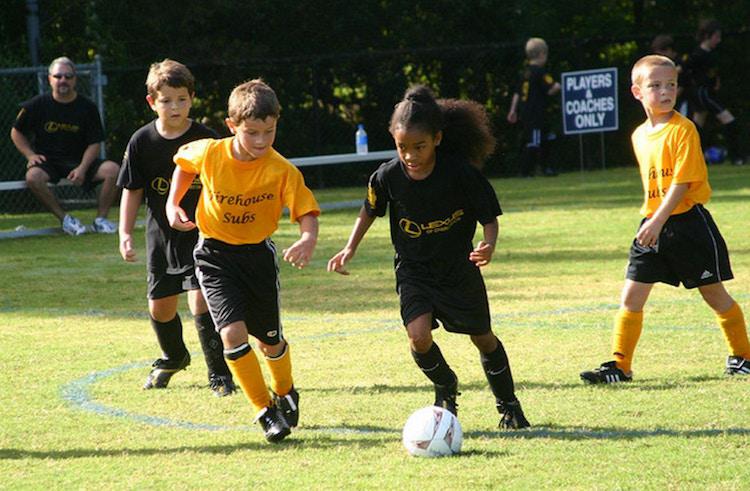
3) Show your child how to "work it out."

Playing soccer.
Image by susieq3c/Flickr.
Walk them through decision-making processes that take into consideration people who could be affected. For example, if your child wants to quit a sport or other activity, encourage them to identify the source of the problem and consider their commitment to the team. Then help them figure out if quitting does, in fact, fix the problem.
4) Make helpfulness and gratitude routine.

Ingenuity for cleaning up.
Image by David D/Flickr.
The researchers write, "Studies show that people who engage in the habit of expressing gratitude are more likely to be helpful, generous, compassionate, and forgiving — and they're also more likely to be happy and healthy." So it's good for parents to hold the line on chores, asking kids to help their siblings, and giving thanks throughout the day. And when it comes to rewarding "good" behavior, the researchers recommend that parents "only praise uncommon acts of kindness."
5) Check your child's destructive emotions.

An automatic save.
Image by Thomas Ricker/Flickr.
"The ability to care for others is overwhelmed by anger, shame, envy, or other negative feelings," say the researchers. Helping kids name and process those emotions, then guiding them toward safe conflict resolution, will go a long way toward keeping them focused on being a caring individual. It's also important to set clear and reasonable boundaries that they'll understand are out of love and concern for their safety.
6) Show your kids the bigger picture.

A reflective moment by the ocean.
Image by debowcyfoto/Pixabay.
"Almost all children empathize with and care about a small circle of families and friends," say the researchers. The trick is getting them to care about people who are socially, culturally, and even geographically outside their circles. You can do this by coaching them to be good listeners, by encouraging them to put themselves in other people's shoes, and by practicing empathy using teachable moments in news and entertainment.
The study concludes with a short pep talk for all the parents out there:
"Raising a caring, respectful, ethical child is and always has been hard work. But it's something all of us can do. And no work is more important or ultimately more rewarding."
This article originally appeared ten years ago.

- As a therapist, here are the three rules I give my sons to combat toxic behavior ›
- 7 secrets to raising awesome, functional teenagers. ›
- High school senior is going to Harvard after inspiring essay on losing her mom goes viral - Upworthy ›
- Neuropsychologist shares the one sentence boys need to hear (over and over again) - Upworthy ›
- Man makes argument to raise sons like you raise daughters - Upworthy ›


Student smiling in a classroom, working on a laptop.
Students focused and ready to learn in the classroom.
Fish find shelter for spawning in the nooks and crannies of wood.
Many of these streams are now unreachable by road, which is why helicopters are used.
Tribal leaders gathered by the Little Naches River for a ceremony and prayer.

Communications expert shares the perfect way to gracefully shut down rude comments
Taking the high ground never felt so good.
A woman is insulted at her job.
It came out of nowhere. A coworker made a rude comment that caught you off guard. The hair on the back of your neck stands up, and you want to put them in their place, but you have to stay tactful because you're in a professional setting. Plus, you don't want to stoop to their level.
In situations like these, it helps to have a comeback ready so you can stand up for yourself while making making sure they don't disrespect you again.
Vince Xu, who goes by Lawyer Vince on TikTok, is a personal injury attorney based in Torrance, California, where he shares the communication tips he's learned with his followers. Xu says there are three questions you can ask someone who is being rude that will put them in their place and give you the high ground:
Question 1: "Sorry, can you say that again?"
"This will either make them have to awkwardly say the disrespectful remark one more time, or it'll actually help them clarify what they said and retract their statement," Xu shares.
Question 2: "Did you mean that to be hurtful?"
The next step is to determine if they will repeat the disrespectful comment. "This calls out their disrespect and allows you to learn whether they're trying to be disrespectful or if there's a misunderstanding," Xu continues.
Question 3: "Are you okay?"
"What this does, is actually put you on higher ground, and it's showing empathy for the other person," Xu adds. "It's showing that you care about them genuinely, and this is gonna diffuse any type of disrespect or negative energy coming from them."
The interesting thing about Xu's three-step strategy is that by gracefully handling the situation, it puts you in a better position than before the insult. The rude coworker is likely to feel diminished after owning up to what they said, and you get to show them confidence and strength, as well as empathy. This will go a lot further than insulting them back and making the situation even worse.
Xu's technique is similar to that of Amy Gallo, a Harvard University communications expert. She says that you should call out what they just said, but make sure it comes out of their mouth. "You might even ask the person to simply repeat what they said, which may prompt them to think through what they meant and how their words might sound to others," she writes in the Harvard Business Review.
More of Gallo's suggested comebacks:
“Did I hear you correctly? I think you said…”
“What was your intention when you said…?”
“What specifically did you mean by that? I'm not sure I understood.”
“Could you say more about what you mean by that?”
Ultimately, Xu and Gallo's advice is invaluable because it allows you to overcome a negative comment without stooping to the other person's level. Instead, it elevates you above them without having to resort to name-calling or admitting they got on your nerves. That's the mark of someone confident and composed, even when others are trying to take them down.