Recent data confirms that people rarely talk on the phone these days. About 80% of cell phone calls go unanswered. Seeing that number, you might assume we’re all constantly leaving one another voicemails.
Not so. Only about 20% of those unanswered calls result in a voicemail, and as most of us know, many of those are spam. In most personal situations, people are far more likely to send a text than leave a voicemail. And yet, those of us who grew up with landlines—Millennials and Gen Xers in particular—often find it hard to break the habits that were ingrained in us as children.
Creator showcases her pitch-perfect voicemail skills
In the days before automatic caller ID or digital call-back buttons (remember *69?), leaving a detailed voicemail was crucial if you wanted someone to get back in touch with you.
It’s hard to imagine now, but there was a time when someone might not even know they’d missed a call, let alone who it was from. As a result, Millennials and Gen Xers were taught proper phone etiquette from a young age. There were rules. If you answered the phone and someone asked for you, the correct response was, “This is he.”
If you were a kid and someone asked to speak to one of your parents, you were never, under any circumstances, allowed to say, “They’re not home.”
And we all followed a very particular script when leaving messages.
Creator, mom, and self-proclaimed “geriatric Millennial” Chrissy Allen demonstrated it in a recent Instagram reel.
“Hi, this is Chrissy Allen. I was calling about my appointment next week,” she announces into a (corded) phone in a professional, crystal-clear, perfectly enunciated phone voice. “If you could please give me a call back when you get a chance, my number is…”
After reciting her phone number with impeccable phone-number rhythm, she repeats the entire message—just like only someone over 35 can:
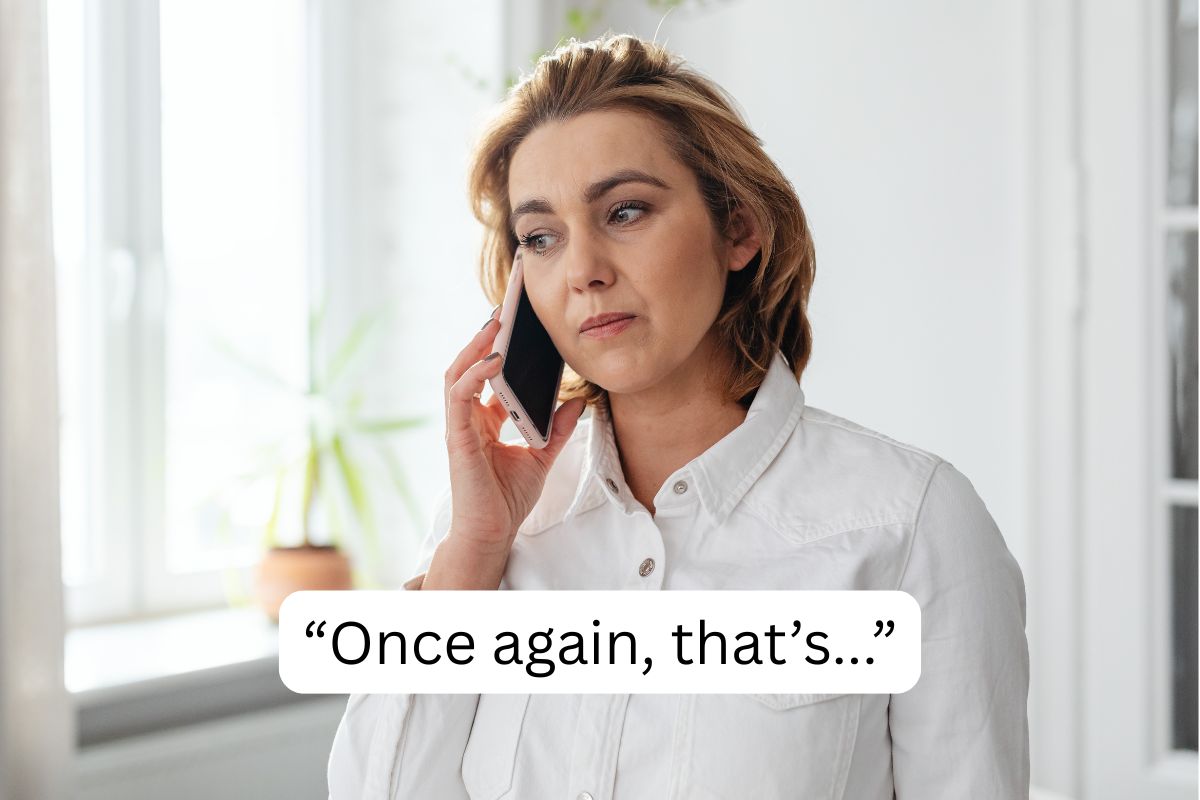
“Again, my name is Chrissy Allen. … Again, that number is 410…”
For good measure, she repeats the number one more time at the very end, just in case. It’s a masterclass in how to leave a voicemail circa 1999.
Phone etiquette has changed
The 35-and-over crowd got a huge kick out of Allen’s skit.
“My husband: they have caller id, you don’t need to do that. Me: I have a script I have perfected since 2000, leave me alone,” one commenter wrote.
“For the record, this is the correct way to do it,” added another.
Another user elaborated on the household landline ritual: “We all also have excellent ‘telephone voice(s).’ This a product of being made to answer the phone with ‘This is the ABC’s residence. Mr. ABC can’t come to phone right now, can I take a message?’ And then scrambling to find a working pen.”
Allen’s video briefly pokes fun at Gen Z’s lack of phone training and etiquette. It’s a generation that’s notoriously anxious about making phone calls, but that’s largely because the rules have changed. The way we use phones, and the etiquette surrounding them, has shifted dramatically since the 1980s and 1990s. Things have evolved even further since the early 2000s, when cell phones were becoming commonplace:
Want to call a friend? These days, the answer is probably: don’t. But if you must, send a text first or arrange a time to talk.
Don’t leave voicemails outside of a professional setting. And definitely don’t bury any important information in one—it may never be heard.
When calling someone you know, there’s no need to announce who you are when they answer. In fact, doing so would be extremely strange.
Furthermore, saying “Hello” when you answer the phone is becoming a little less common. Younger generations often answer and expect the caller to speak first, which can be a tough pill for Millennials and Gen Xers to swallow.
Phone behavior has also changed because of the rise of spam and scam calls. Some estimates suggest that nearly half of all calls to cell phones are spam, and Americans now receive more than 2.5 billion robocalls each month. It’s no wonder so few people want to answer the phone anymore.
Older generations aren’t ready to let go of some of the tech habits they grew up with
Much of the phone etiquette adults over 30 learned as children traces its roots to the earliest days of the telephone. Back then, there was no playbook for communicating with someone by voice over long distances. Early telephones were also far more complicated to use, requiring multiple steps to place and end a call—often with the help of a telephone operator.
Communicating clearly and politely was absolutely crucial.
Still, Millennials and Gen Xers probably won’t ditch their penchant for repeating their phone number three times or answering with lines like, “Speaking!” or “This is she!” anytime soon. They’re stubborn like that.
Similarly, they’ll probably never fully trust password managers enough to stop writing down their most top-secret passwords. They’ll likely always book big purchases—like plane tickets and hotel reservations—on a laptop, never quite trusting that a cell phone can get the job done. And they’ll keep hitting “Save” every few minutes, just in case autosave somehow fails and wipes out all their hard work.
The common thread is trust. Older generations simply don’t place the same level of trust in technology, so they like to have a failsafe at the ready. That’s when all that childhood training kicks in. If we can’t be absolutely sure the person on the other end of the line has caller ID, we’re going to repeat our phone number three times—no matter how outdated it makes us sound.