Let’s face it, the image of an oblivious, ignorant American tourist is a stereotype for a reason. And Europeans have the receipts to prove it.
Recently, someone on Reddit asked Europeans to share the “craziest question” they received from an American. They were looking for questions that might at first seem like jokes but, tragically, were said with full seriousness.
What becomes a very apparent theme across all the responses—be they stemming from a concerning lack of understanding of basic history, language, or geography—is the unfortunate byproduct of having a strictly American-centric point of view. There are certainly downsides to only observing the world through a U.S. lens. Luckily in this case, the main consequence was second embarrassment.
Europeans have had to keep a straight face while baffled Americans applied modern sensibilities to ancient architecture
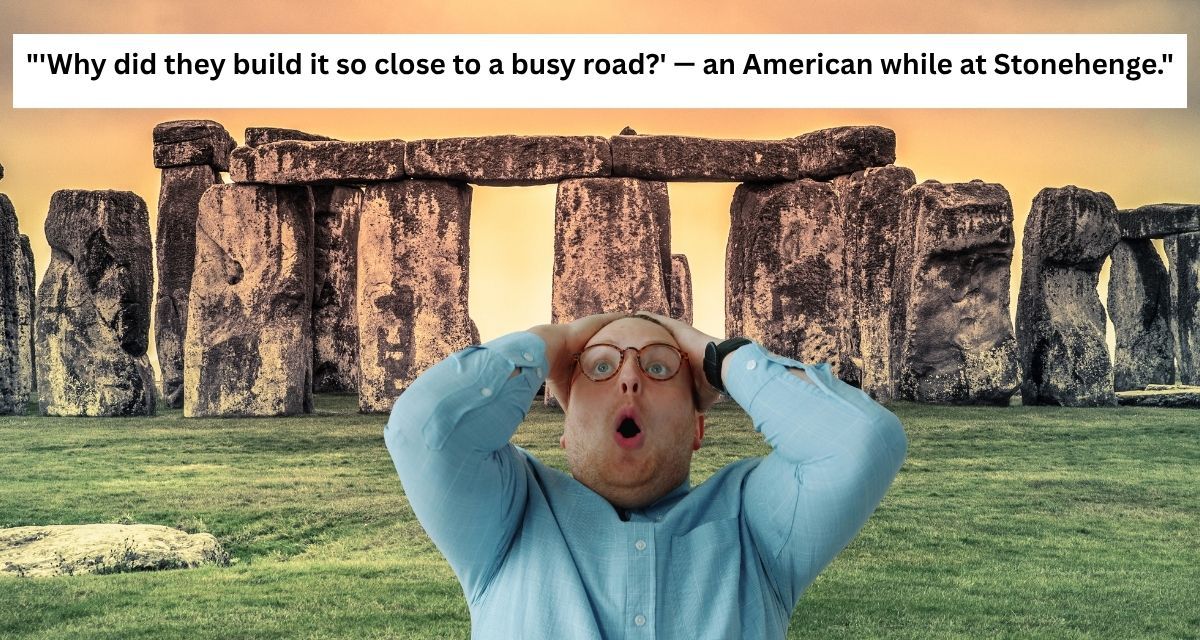
“‘Why did they build it so close to a busy road?’ — an American while at Stonehenge.”
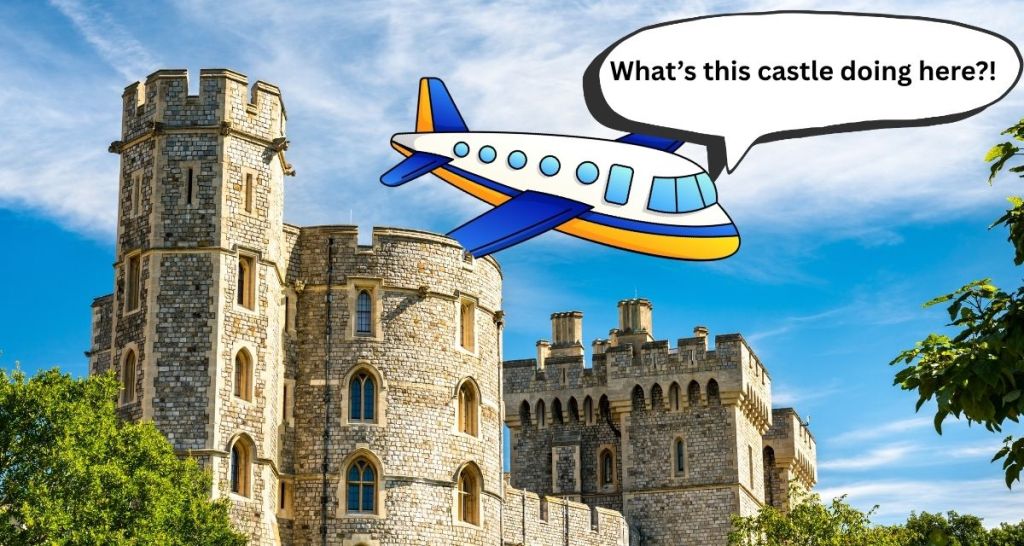
“I was near Windsor Castle and heard an American tourist — who was annoyed by the noise of a plane taking off from Heathrow — asking why they had built the castle so close to the airport.”
“I was once on a tour of the tower in Pisa and overheard an American girl exclaim, ‘Ugh, why don’t they turn on the AC??’”
In case there’s any confusion: Stonehenge was constructed thousands of years before the modern road system existed, while Windsor Castle dates back to the 11th century. The Leaning Tower of Pisa was begun in the 12th century, long before air conditioning became a standard feature of buildings.
…Or when Americans assumed the U.S. is the only country with modern-day conveniences…
“I’m Scottish and used to be a taxi driver. I picked up a tourist who wanted to know how we’re liking having electricity now. After a few confused exchanges, I discovered she genuinely thought we all lived in stone buildings with candles and shit. When she arrived, there was electricity everywhere, so the logical conclusion for her was that we must have only gotten electricity recently.”
“‘Have you ever been in a car on a highway before?’ ‘This is called a red light; we go when it turns green. Don’t know if you have these over there.’ ‘We have water on tap! It works like this: *demonstrates*’ ‘Do you have coins, too?’”
“‘Do you have toilets in England?’ An adult asked me this. Have the Americans just decided to collectively troll us? Can they actually believe that the rest of the world is in darkness or frozen in the past? Maybe they’re really confused when they read history, like, the Puritans came from England, and they had buckle shoes and funny hats and muskets, so that’s what England must be like.”
“I’m Irish, and when Halo 3 came out, I was playing online and speaking to a bunch of Americans. They were really surprised that Ireland had Xboxes. They then asked me if we had cinemas.🤣”
“An American asked me, online, in a chatroom, if we had internet in Ireland….online….in a chatroom.”
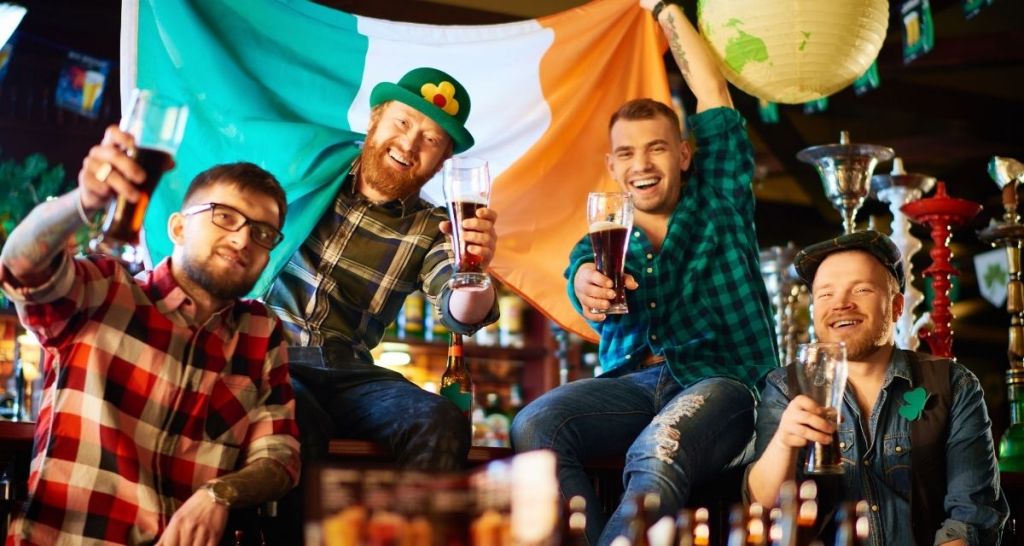
As one person quipped, “This is what happens when period dramas are your main source of education about the world.”
It is worth remembering that many countries Americans picture as being historically quaint are also highly developed modern nations. The United Kingdom has had widespread electricity access for generations, Ireland has one of Europe’s highest internet usage rates, and European cities have all the familiar trappings of contemporary life, from highways and movie theaters to smartphones and high-speed trains.
Apparently, many Americans have trouble with seemingly common-sense linguistics
“On a riverboat cruise on the Mississippi, a couple with three young kids argued, in all earnestness, that ‘Austria is short for Australia.’ I am Austrian. Just minutes before that, they had told us they homeschool.”
“Our friend from Holland was visiting us in California several years ago, and multiple people asked if the language he spoke was Hollish. He said yes every time.”
“I’m from England and got asked what language we speak here! On another occasion, I was asked if I was driving back to England. I was in California.”
“I’m English and have a half-sister who was born in the US. We were chatting one day, and I said, ‘It’s our language.’ She asked what I meant. She’d never realized the link between England and English. Good ol’ American education.”
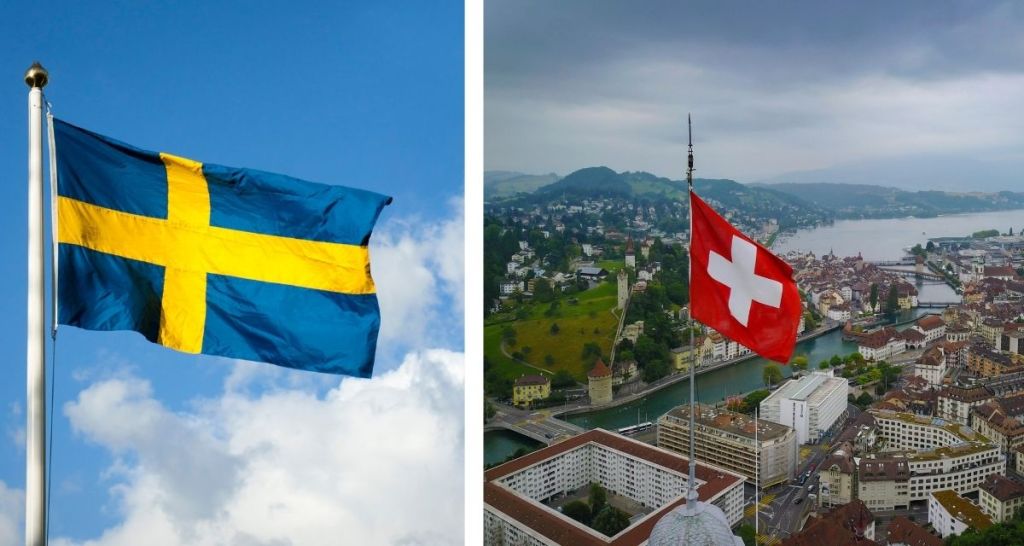
“‘Why don’t you speak Swedish?’ Because I live in Switzerland. We have four official languages; Swedish is not one of them.”
“Not a question but an accusation. I was speaking my native language (Dutch), and an American in the room was dead certain it was German, and therefore I was also a Nazi.”
And then there are the geography questions, which somehow manage to take things to another level
“When asked where I was from, I answered, ‘the Netherlands.’ She replied, ‘Is that where Peter Pan is from?’ She meant Neverland, the, needless to say, fictional place. 😂”
“‘Germany, is that in France?’”
“A person heard me and my mom speak and asked where we were from. We answered, ‘Portugal.’ Without hesitation, ‘Is that like Germany or China?’”
“I was told by someone in Boston that they were ‘most likely more Irish’ than me. I was born and raised in Ireland. They had never left Boston.”
Many Europeans recalled having to deal with Americans assuming that U.S. values and standards are superior, mainstream…or even the first of their kind
“An American student challenged me when I told her Greeks invented democracy. She said, ‘No, we invented democracy.’ When I tried to explain that democracy was invented a few thousand years ago, she was like, ‘Okay, so we invented modern-day democracy.’ Meanwhile, democracy itself is a Greek word.”
To this American’s point, there are differences between ancient Greek democracy and modern-day American democracy—primarily in who could vote and how leaders were chosen. And, as many historians would attest, our forefathers saw their fledgling country as more of a republic than an actual democracy, which they might have considered “mob rule.” But still.
“‘But you’re not really free in Europe, are you?’ Me: ‘We have freedoms. We are free.’ ‘No, but really, you’re not that free.’ Americans really think freedom is unique to them. I genuinely think their definition of freedom is being free from repercussions and is closer to anarchy.”
“‘What do y’all do on the 4th of July?’ is a surprisingly common question. Even from otherwise intelligent people.”
There was also something to be said about American…let’s call it…naivety…
“In Northern Norway, American tourists felt scammed because the midnight sun was just the same as the regular daytime sun. They expected a new sun to rise at midnight.”
“‘Which one came first?’ — an American asking a tour guide about King Frederick the Second and King Frederick the Third.” (“Did they think it was a countdown? Wonder what they thought happened at zero.”
“I moved from Greece to the US in high school. Several people asked if I still worshipped Zeus and the old mythological gods.”
“When I was working at Waterloo station, an American fresh from the Eurostar came up to me and asked me where he could buy a sword. Apparently, someone in Paris told him we sell them in London because we don’t have guns. I love the French.”
The midnight sun is a real phenomenon. In parts of northern Norway, the sun remains above the horizon for extended periods during summer because of Earth’s axial tilt. There isn’t a second sun involved, sadly.
As one person noted, maybe the person asking about the King Fredericks thought it was a “countdown” of some sort. Although that’s generous.
As for Zeus, ancient Greek religion hasn’t been the dominant religion of Greece for many centuries. Modern Greece is a predominantly Christian country, with the Eastern Orthodox tradition playing a major role in its cultural history.
Lastly, a couple of questions pointed to major points of controversy in American culture, from guns to the very flawed healthcare system
“‘Where do you buy your guns?’ (Shocked to see no gun stores) Me: ‘People are not allowed to have guns at home here.’ ‘Omg! How do you protect yourself then?’ Me: ‘From…whom?’ Silence.”
“I talked with some acquaintances and told them about my pulmonary embolisms, and that I was brought to the hospital by ambulance and had to stay there for a week. This has happened twice. They asked about my insurance, coverage, co-pay, total price, if I was in debt, etc. I just kept trying to tell them that it was all free. I don’t even have an idea what the cost was. ‘Haven’t you seen the bill?’ No, there is no bill. No co-pay. Nothing.”
Get out of your own sense of “normal”
For all the laughs these responses provide, there is something useful hiding underneath the absurdity. Traveling gives people an opportunity to discover how much of what feels “normal” is actually very much shaped by where they grew up.
The world gets considerably easier to understand once we stop assuming our own frame of reference is universal. This is just one of the many reasons traveling, or at least learning about other parts of the world, is so crucial. If nothing else, asking a few questions before boarding the plane might save you from arriving in London and searching the country in vain for a place to buy a sword.