
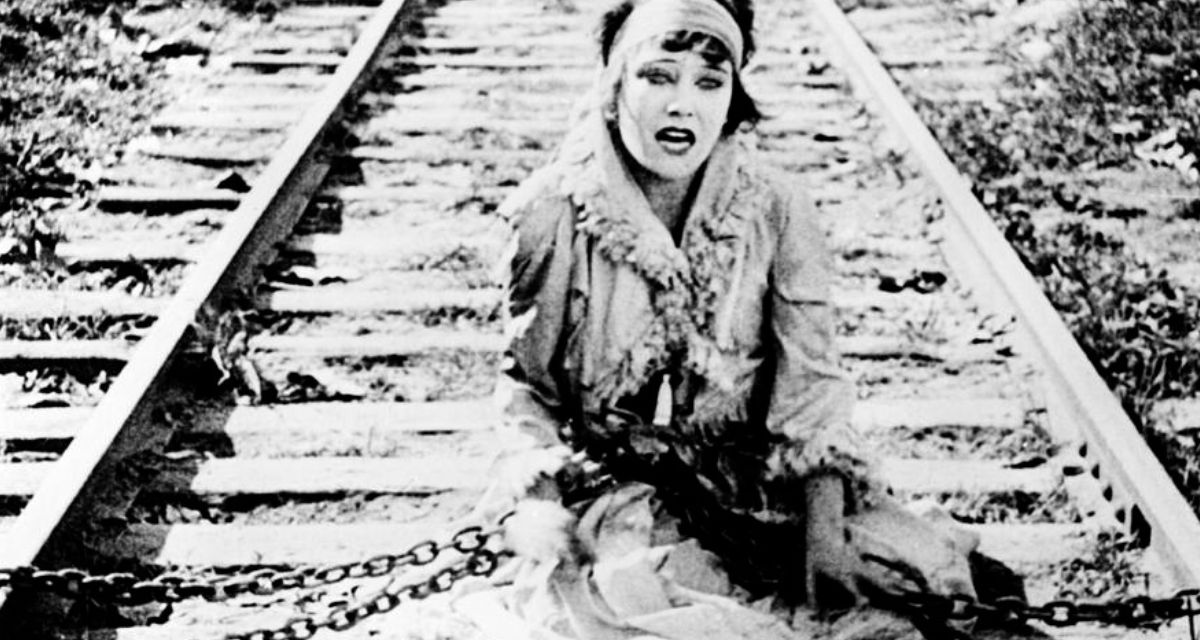
Unless you’re one of those sad younger folks who’s done away with all forms of scripted media, we’ve all seen some form of this trope: an innocent, attractive young woman is tied to a train track by a dastardly villain sporting a ‘stache. Then, just in the nick of time, she is rescued by the dashing hero.
But why is this odd image such a cinematic classic? When did it first appear? Were railroads and rope actually popular murder weapons in olden times?
From classic theatre to Victorian stage plays
As media personality Simon Whistler explains, this scene predates film. In ancient Greece, stories depicted female victims tied to rocks to lure mythical monsters. One example is Andromeda, who was chained to a rock as a sacrifice to the sea monster Cetus. Just like the railroad scene, our hero Perseus showed up just in time to kill the monster and save Andromeda from her demise.
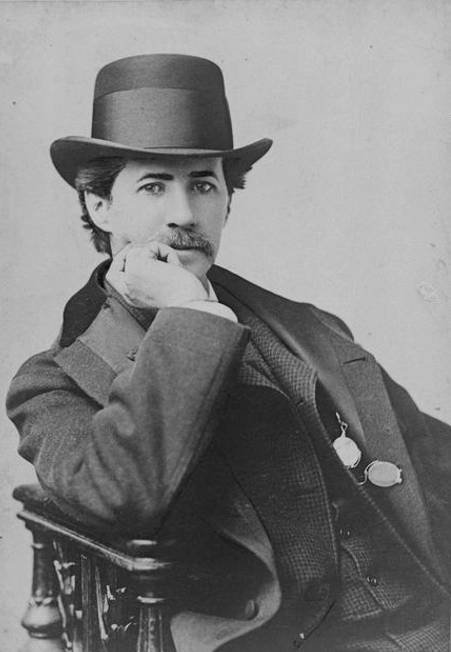
By the 1800s, stage plays seemingly adapted this trope for more modern audiences, noted Whistler. Augustin Daly’s 1867 play, Under the Gaslight, appeared to introduce the railroad-centered concept. Interestingly, it was a man named Snorkey who found himself precariously tied up and a leading lady who saved him.
…to copyright court
While there is at least one play (The Engineer, which debuted in 1863 in London) that featured this scene, Daly’s incorporation of it thrust the idea into the pop culture zeitgeist. So many rival playwrights began using their own version of the segment that the frustrated Daly tried to sue them for stealing his idea. In a first-of-its-kind copyright court case, Daly was able to legally establish that copying the essence of an already established scene, even with altered dialogue or other minor details, was considered infringement.
Although, as Whistler put it, “Nevertheless, theatre promoters heroically ignored this ruling and continued to rip Daly off anyway, presumably duly under the assumption that Daly wouldn’t get around to suing everyone.”
Basically, rehashing the same idea over and over again is deeply ingrained into the entertainment industry.
Which brings us to the silent film era, where many assume the railroad trope originated
However, it was already a cliché at this point and often used more as tongue-in-cheek humor. Two well-cited examples of this are the silent comedies Barney Oldfield’s Race for a Life and Teddy at the Throttle.
The first featured real-life racing legend Barney Oldfield racing a locomotive using an Atchison, Topeka and Santa Fe Railway train in Inglewood, California to save…you guessed it…a damsel in distress.
In the second, the damsel (played by the soon-to-be legendary Gloria Swanson) ends up saving herself. The stunt is Buster Keaton-level anxiety-inducing.
And let’s not forget Rocky and Bullwinkle’s famous Dudley Do-Right segments, where top hat-wearing Snidely Whiplash routinely tied poor Nell Fenwick to the railroad tracks.
Railroad-related deaths…were they a thing?
As for whether or not people actually died this way: there have been a handful of cases over the years. In 1874, for instance, Whistler explained that a Frenchman was killed after being tied up to some train tracks during a murderous robbery.
However, these recorded cases, Whistler noted, do fall after the railroad scene became popularized within fiction, implying that life imitated art.
So there you have it, folks. The railroad scene might seem like a silent film staple but, in reality, it’s one of humanity’s oldest, most enduring, and perhaps most misunderstood storytelling devices.








.jpg)