Having shared values is important in a successful relationship, but does that also mean sharing all of the same beliefs? Some people feel strongly about marrying someone from the same religion or faith tradition, as they want to share that with their partner. But what happens when two people with different convictions on God, the afterlife, and the purpose of life here on Earth fall in love?
The answer to that question depends on many factors, of course. But one couple is showing how a strong faith/no-faith relationship can actually be an example of deep love and respect. Poet G. Zeeshan is an atheist who is married to a Muslim man. Two of her poems, one about their unshared faith from her perspective and one from his, beautifully convey what love beyond belief can look like.
A poem by an atheist woman about being loved by a Muslim man
Zeeshan’s first poem, “The Man Who Speaks to God for Me,” details how she admires her husband’s dedication to God, even though she doesn’t believe herself. She writes about the first time he “left dinner unfinished to speak to Someone he loved enough to stop everything for.” She calls herself a “lifelong student of absuridity” and “a collector of unanswered prayers,” but still, she finds herself watching her husband, sharing:
“I am not envious exactly.
I am homesick
For a place
I have never lived.
I do not believe in anything
And yet…
I love a man who does.
Somehow,
that feels adjacent to faith.“
She shares how she makes two dinners sometimes and supports her husband through Ramadan, and how “none of this feels like sacrifice.”
There’s so much more to the poem, so definitely watch the video above and pause on each slide to read it. In the end, Zeeshan ponders: If God does exist, does He know her already through her husband? Perhaps she is “loved through proximity” and “understood in translation.”
A poem from her Muslim husband’s perspective
Zeeshan shared that people had challenged her to write another poem on the same theme from her husband’s perspective. So after talking with him, she wrote “The Woman I Pray For.”
“This isn’t a transcript of what he said,” she shared. “It’s the poem I imagined he might have written if poetry had always been his native language.”
That poem has been viewed over a million times, and it’s easy to see why. So many beautiful lines expressing how his love for her doesn’t transcend his faith, but rather flows through it.
The poem begins with an acknowledgment of their shared life, even if they interpret their shared experiences differently.
The rain falls
on both of us.
I call it a gift.
My wife
calls it weather.
We both
stand in it.
Then it moves to his love for her selfless heart, explaining that he “never loved her ability to believe.” Rather, he loves how “she does not believe in miracles while becoming one for strangers every day.”
He eases her fear of him spending his life trying to convince her to believe, saying, “Faith arrives when it arrives. Or it doesn’t.” His only job is to be a gentle, present example.
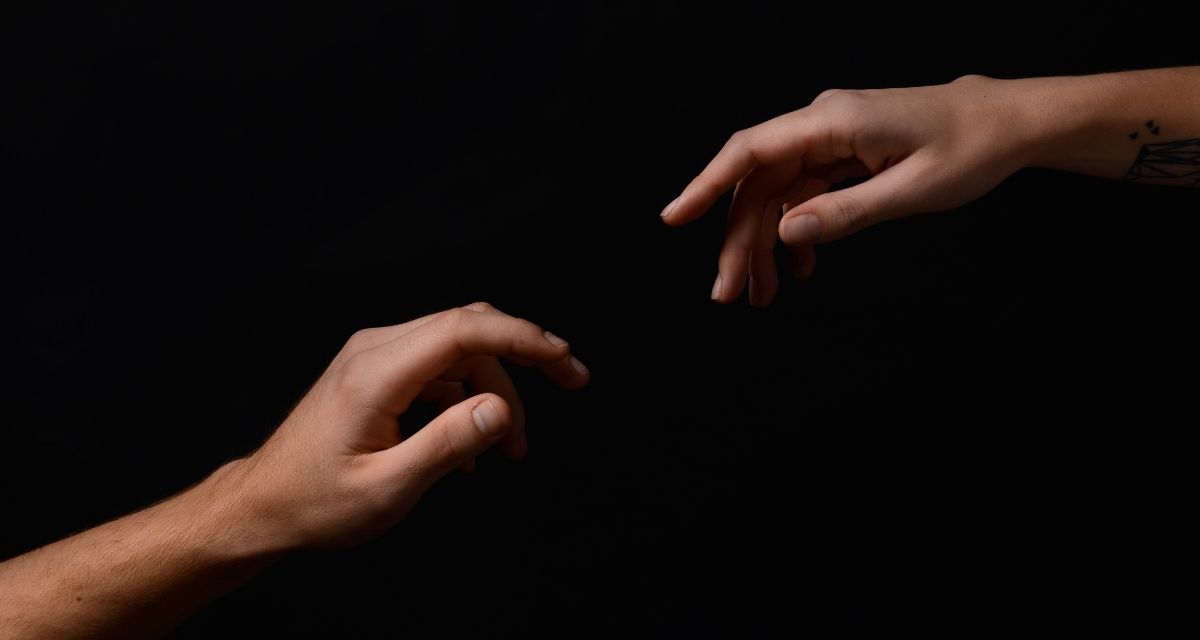
There is so much to love in this poem, how the narrator-husband describes belief not as a distance between them but as something that lives in the space between her hand and his. “She reaches. I reach. That will always be enough.”
The final stanzas allude to her first poem as her husband says God knows her name well because he’s whispered it so many times in his prayers. And when she asks about children, when they ask who is right, he points to them learning love first. And the last lines bring it all home:
“If they become
kind
patient
honest
I will thank God.
If they become like their mother,
I will thank Him
twice.”
People from all backgrounds are loving her poems
Some commenters told Zeeshan her poetry brought them to tears. Others expressed gratitude for her representing a reality we don’t often see expressed so beautifully.
“Awwww. This is religion done right, a personal journey as a beacon of light not a sword of truth. 🥰”
“As an agnostic, this was tearfully beautiful. I wish that all believers and non believers loved and were loved like this. Maybe then the world would know peace. 😌”
“You wrote this? Holy crap. I thought this was a poem from like a hundred years ago or something it’s so beautiful. I almost cried as an agnostic it’s just…wow.”
“As someone with complicated religious beliefs, I think this is so beautiful.”
“I will thank him twice omg that got me! Coming from someone who left religion and lost so many relationships, this was so so beautiful!”
“This reminds me of my husband; he’s so sweet and kind to me 🥹 He’s Muslim but I am not. I believe in God but not the way he does and that’s okay with him.”
“I imagine your relationship flourishes due to your respect for her and hers for you. No one’s trying to change the other. BEAUTIFUL 🥰🙏”
One man even shared how he and his late wife shared the same kind of relationship
“My late wife (Baha’i) and I (agnostic) would sometimes wake up on a Saturday, get our coffee, and fall into deep conversation about faith. We would sit across from each other, my legs tucked over hers, and she would share her religion and her experiences. I would share my indifference to seeking out spiritual experiences. People in her faith would ask me how I have such a strong moral compass if I didn’t believe in God. I would simply respond, why is it hard to imagine not wanting to hurt those around me if God wasn’t around?”
“We buried my wife with the full rites of her faith,” he continued. “She’s buried at a cemetery less than five minutes from an education and meeting site she went to her whole life. Her mother takes comfort in knowing they’ll be back together soon. I tell her I hope that they’re both right and I will see her again when I die.”
“She would have loved this poem,” he concluded. “She would have cried because of the way it captures love and faith so deeply. I like to think when she sat across from me all those weekend mornings, this is how she felt. I hope she’s watching me and is proud. I miss her, and hope she’s right.”
You can follow G. Zeeshan on TikTok and support her first book of poetry (as well as purchase prints of some of her poems) here.