A viral video celebrating kids who don't see difference may be missing a larger point.
In a heartwarming video, pairs of young friends are asked to think on one question: "How are you different from each other?"
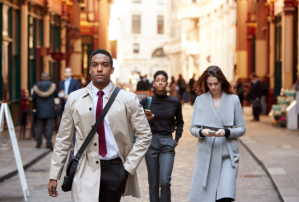
In the viral video from the BBC kids network CBeebies, the pairs of children usually have a very clear difference, be it height, race, disability, or gender.
But the elementary-age kids tended to focus on differences that were a bit more ... elementary.
Toe size, lettuce appreciation, position on the soccer field, and whether or not their homes had squirrels in the roof were all discussed by the BFFs.
It's a delightful, charming scene, but there's an unspoken message here that needs to be addressed.
Reading through the comments on the post, lots of readers applauded the children for not paying attention to their more obvious differences, like race, gender, or disability. "Why can't adults be like this? Why can't we all be like this?" one viewer wrote.
But that's just it: Children should be raised to recognize and celebrate the fundamental differences between people. And they can only learn that if we openly talk about them.
Image via Cbeebies/Facebook.
Whether their parents talk about it at home or not, kids notice race.
Their parents might assume that by not talking about race or difference, their children will grow up "colorblind" to the challenges of society. Not only is that view misguided and denies people their own identity, but usually the opposite happens. White children as young as 3 or 4 years old in the U.S., Europe, and Canada, already show a preference for other white children. Kids are curious and learning new things about the world around them, so they often draw their own conclusions about how things work. If race isn't talked about at home or at school, those assumptions (sometimes totally incorrect) can go unexamined for years.
Children at Scripps Ranch KinderCare in San Diego. Photo by Robert Benson/Getty Images for Knowledge Universe.
Parents raising children of color usually have these conversations, earlier and more often, simply as a matter of necessity. If we hope to encourage the next generation to be conscious of and thoughtful about difference, then more white families (and educators) need to start having these conversations. The same goes for all families when it comes to disability.
As early as 5 to 8 years old, children are old enough to learn and consider social issues and their implications.
The can understand that people of color and people with disabilities may be underrepresented in the books they read, the characters they watch on TV, or even in their classrooms at school. As parents, grandparents, and trusted adults in children's lives, it's important to model your own friendships with people different from you. Read books with characters of color, different types of families, and characters with disabilities. Don't shy away or shush children talking about differences. Help clarify their thoughts and assumptions.
Our differences make us strong. Our differences make us unique. And our differences make us beautiful.
But these differences in race, religion, ability, class, gender, and more must be acknowledged and celebrated with specificity and respect. (Even if that difference is liking lettuce.)

Image via Cbeebies/Facebook.


A Generation Jones teenager poses in her room.Image via Wikmedia Commons
An office kitchen.via
An angry man eating spaghetti.via 


An Irish woman went to the doctor for a routine eye exam. She left with bright neon green eyes.
It's not easy seeing green.
Did she get superpowers?
Going to the eye doctor can be a hassle and a pain. It's not just the routine issues and inconveniences that come along when making a doctor appointment, but sometimes the various devices being used to check your eyes' health feel invasive and uncomfortable. But at least at the end of the appointment, most of us don't look like we're turning into The Incredible Hulk. That wasn't the case for one Irish woman.
Photographer Margerita B. Wargola was just going in for a routine eye exam at the hospital but ended up leaving with her eyes a shocking, bright neon green.
At the doctor's office, the nurse practitioner was prepping Wargola for a test with a machine that Wargola had experienced before. Before the test started, Wargola presumed the nurse had dropped some saline into her eyes, as they were feeling dry. After she blinked, everything went yellow.
Wargola and the nurse initially panicked. Neither knew what was going on as Wargola suddenly had yellow vision and radioactive-looking green eyes. After the initial shock, both realized the issue: the nurse forgot to ask Wargola to remove her contact lenses before putting contrast drops in her eyes for the exam. Wargola and the nurse quickly removed the lenses from her eyes and washed them thoroughly with saline. Fortunately, Wargola's eyes were unharmed. Unfortunately, her contacts were permanently stained and she didn't bring a spare pair.
- YouTube youtube.com
Since she has poor vision, Wargola was forced to drive herself home after the eye exam wearing the neon-green contact lenses that make her look like a member of the Green Lantern Corps. She couldn't help but laugh at her predicament and recorded a video explaining it all on social media. Since then, her video has sparked a couple Reddit threads and collected a bunch of comments on Instagram:
“But the REAL question is: do you now have X-Ray vision?”
“You can just say you're a superhero.”
“I would make a few stops on the way home just to freak some people out!”
“I would have lived it up! Grab a coffee, do grocery shopping, walk around a shopping center.”
“This one would pair well with that girl who ate something with turmeric with her invisalign on and walked around Paris smiling at people with seemingly BRIGHT YELLOW TEETH.”
“I would save those for fancy special occasions! WOW!”
“Every time I'd stop I'd turn slowly and stare at the person in the car next to me.”
“Keep them. Tell people what to do. They’ll do your bidding.”
In a follow-up Instagram video, Wargola showed her followers that she was safe at home with normal eyes, showing that the damaged contact lenses were so stained that they turned the saline solution in her contacts case into a bright Gatorade yellow. She wasn't mad at the nurse and, in fact, plans on keeping the lenses to wear on St. Patrick's Day or some other special occasion.
While no harm was done and a good laugh was had, it's still best for doctors, nurses, and patients alike to double-check and ask or tell if contact lenses are being worn before each eye test. If not, there might be more than ultra-green eyes to worry about.