Megan was trafficked for a year. After the FBI rescued her, she found refuge at Covenant House New Orleans
This year, we’ve all experienced a little more stress and anxiety. This is especially true for youth facing homelessness, like Megan and Lionel. Enter Covenant House, an international organization that helps transform and save the lives of more than a million homeless, runaway, and trafficked young people. Watch the full story: Amazon is Delivering Smiles…
This year, we’ve all experienced a little more stress and anxiety. This is especially true for youth facing homelessness, like Megan and Lionel. Enter Covenant House, an international organization that helps transform and save the lives of more than a million homeless, runaway, and trafficked young people.
Watch the full story:
Amazon is Delivering Smiles this holiday season by donating essential items and fulfilling AmazonSmile Charity Lists for organizations, like Covenant House, that have been impacted this year more than ever. Visit AmazonSmile Charity Lists to donate directly to a charity of your choice or simply shop smile.amazon.com and Amazon will donate a portion of the purchase price of eligible products to your selected charity.
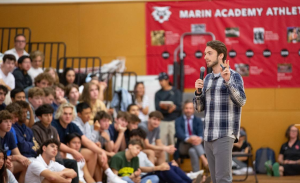
A Somali refugee and current resident of Minneapolis, the multimedia artist and activist draws on her lived experiences to create work that explores trauma, displacement, and resilience. But like so many of the guests on Freedom to Thrive, an award-winning podcast produced by the National Immigration Law Center (NILC), Mansour doesn’t want to focus only on trauma; she also wants to celebrate the unexpected beauty she’s found during difficult experiences.
“One of the beautiful things about tragedies is that it activates hearts, and courageous people are born,” she says. For example, Mansour has noticed more Minnesotans than ever are reaching out to help the vulnerable, after the anti-immigrant crackdowns carried out by the Department of Homeland Security. “They are bringing food, they’re bringing extra clothes, they’re walking with people, and it’s just really beautiful.”
Hector Flores, co-founder of the Las Cafeteras and host of Freedom to Thrive, agrees with her. A child of immigrants himself, he has also seen how hope and hardship often live side by side.
Flores comes from a family with mixed status and is highly aware of the challenges immigrants and refugees in his community face, and how they’re affected by people’s misconceptions. “People want to know about trauma all the time, but we’re more than just undocumented,” he says. “We’re artists, singers, creatives … there’s so much richness in the culture.”
At its core, Flores’ comment is exactly what the Freedom to Thrive podcast is all about: Celebrating immigrants as complex, dynamic individuals, and challenging the dominant narrative that too often reduces them to symbols of hardship.
Launched in 2024, Freedom to Thrive explores heritage, resilience, community, and the ways art and comedy can spark social change. Now in its second season, the podcast continues to feature conversations with immigrants, policymakers, artists, musicians, activists, and more. Recent guests have included comedian Mo Amer, Grammy Award-winning singer Lila Downs, and Pulitzer Prize-winning author Viet Thanh Nguyen.
Where the first season focused on individual stories of identity and belonging, Flores says his goal for season two, where he joins as host, is to “take it to the next level” — using storytelling to highlight “the fact that we’re more similar than different.”
One recent podcast episode drives this point home. In December, Flores interviewed Bryan Andrews, a rising country music star and rural Missouri native who frequently uses his platform to speak about issues affecting immigrant families. At the heart of his message and his songwriting, Andrews says, is the idea that small-town Americans and the rest of the country, including immigrants, have more in common than they realize.
“It doesn’t matter where you’re from,” Andrews says on the podcast. “We’re all trying to make a living and we’re tired of getting railroaded by corporate greed or by politicians who don’t care.”
Rural Americans, Andrews says, are often stereotyped as racist and misogynistic but “the overwhelming majority of people in my home town have love in their hearts.” Media stereotypes often amplify differences and divide, he says, but at the end of the day, “we’re all in this together.”
Flores, who was raised in a working-class immigrant neighborhood in East Los Angeles, had similar thoughts. He says he often sees its residents stereotyped as wealthy, consumerist, and status obsessed. “That exists, but that’s not my life, that’s not my community,” he says. Like small-town Americans, people in the city “just want to work hard and take care of their families. We all want the same thing.”
Although the podcast tackles some heavy issues, each episode’s ultimate focus is how personal and collective struggles can be healed through art, driving home a message of hope and resilience:
Mansour’s episode about her experiences in Minnesota is just one of many examples. Flores asks her,
“What gives you hope for the people creating a home here?”
“The love I feel from other Minnesotans. It is trumping any hate we’re experiencing,” she replies.
CTA: Stream all episodes now on the Freedom to ThriveYouTube channel or the website,here.
The podcast has been nominated for a Webby in the “Belonging & Inclusion” category. You can vote for it to win until Thursday, April 16!
This article is part of Upworthy’s “The Threads Between U.S.” series that highlights what we have in common thanks to the generous support from the Levis Strauss Foundation, whose grantmaking is committed to creating a culture of belonging.
A lot of people here are like family to me,” Michelle says about Bread for the City — a community nonprofit located in Washington DC that provides local residents with food, clothing, health care, social advocacy, and legal services. And since the pandemic began, the need to support organizations like Bread for the City is…
A lot of people here are like family to me,” Michelle says about Bread for the City — a community nonprofit located in Washington DC that provides local residents with food, clothing, health care, social advocacy, and legal services. And since the pandemic began, the need to support organizations like Bread for the City is greater than ever, which is why Amazon is Delivering Smiles to local charities across the country this holiday season.
Watch the full story:
Amazon is giving back by fulfilling hundreds of AmazonSmile Charity Lists, and donating essential pantry and food items to help organizations like Bread for the City provide to those disproportionately impacted this year.
Visit AmazonSmile Charity Lists to donate directly to a local charity in your community, or simply shop smile.amazon.com and Amazon will donate a portion of the purchase price of eligible products to your charity of choice.
This year more than ever, many families are anticipating an empty dinner table. Shawn Kaplan lived this experience when his father passed away, leaving his mother who struggled to provide food for her two children. Shawn is now a dedicated volunteer and donor with Second Harvest Food Bank in Middle Tennessee and encourages everyone to…
This year more than ever, many families are anticipating an empty dinner table. Shawn Kaplan lived this experience when his father passed away, leaving his mother who struggled to provide food for her two children. Shawn is now a dedicated volunteer and donor with Second Harvest Food Bank in Middle Tennessee and encourages everyone to give back this holiday season with Amazon.
Watch the full story:
Over one million people in Tennessee are at risk of hunger every day. And since the outbreak of COVID-19, Second Harvest has seen a 50% increase in need for their services. That’s why Amazon is Delivering Smiles and giving back this holiday season by fulfilling hundreds of AmazonSmile Charity Lists, donating essential pantry and food items to help organizations like Second Harvest to feed those hit the hardest this year.
Visit AmazonSmile Charity Lists to donate directly to a local food bank or charity in your community, or simply shop smile.amazon.com and Amazon will donate a portion of the purchase price of eligible products to your selected charity.