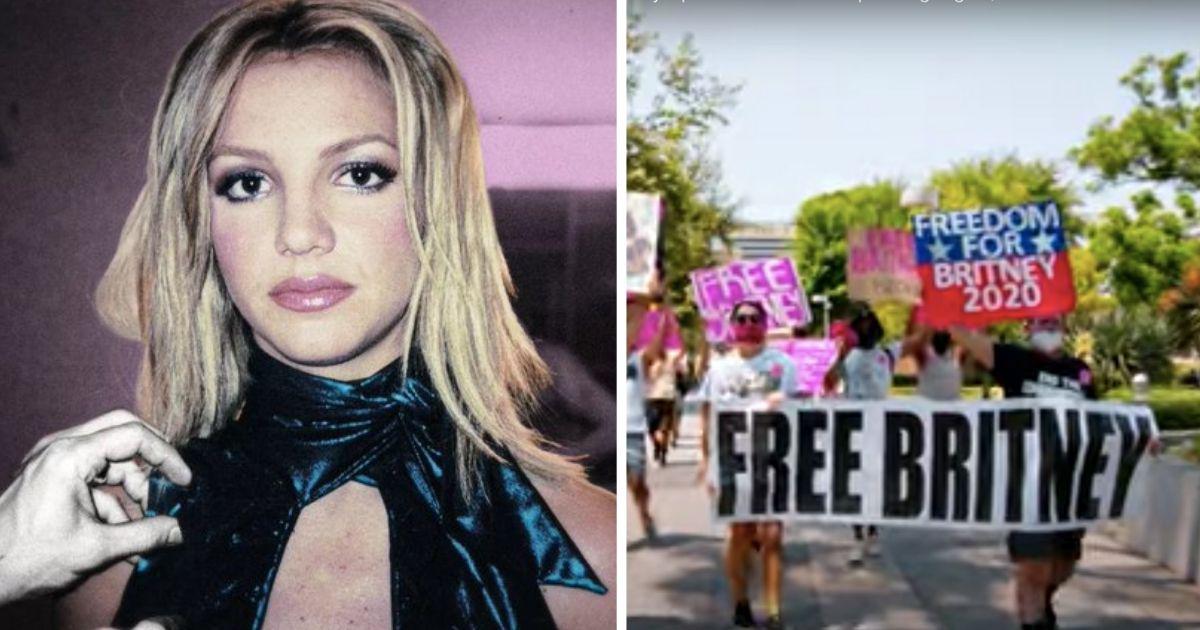
The new Britney Spears documentary is making people completely re-think the pop star’s life

I never thought I’d voluntarily watch a documentary about Britney Spears, much less recommend one. While her music is fine, celebrity culture does nothing for me and the news surrounding her always felt too tabloidy for my taste. Over the years, I’ve brushed off Spears’ personal saga as clickbaity fame drama not worth my time…

Array

I never thought I’d voluntarily watch a documentary about Britney Spears, much less recommend one. While her music is fine, celebrity culture does nothing for me and the news surrounding her always felt too tabloidy for my taste. Over the years, I’ve brushed off Spears’ personal saga as clickbaity fame drama not worth my time and energy—a dismissal I now regret.

After seeing multiple people I admire and respect share how the New York Times’ Britney Spears documentary impacted them, I decided to check it out. And all I can say is—holy crap. There’s so much to her story that we should all be aware of, because so much of it involves all of us.

This post will contain spoilers, so if you’d rather just watch the documentary yourself, search for “The New York Times Presents: Framing Britney Spears” on Hulu. (You can sign up for a 7-day free trial if you don’t have a subscription.)

The focus of “Framing Britney Spears” is the growing #FreeBritney movement—the push from Spears’ fans to let her have control over her life. For the past 12 years, Spears’ has had a court-appointed conservator of her person and her estate, meaning that she doesn’t have agency over decisions about her life or her money. For nearly all of that time, her father Jamie has served that conservator—a fact that is strange in and of itself, since he hadn’t played an active role in her life prior to her public breakdown.


Every documentary has a purpose, and this one clearly leads us in the direction of the #FreeBritney message. We’re shown how capable she had been even when she was young and how she had always held the reins of her own career. We see how she’s continued to be able to perform and work at a high level, despite the fact that she supposedly doesn’t have the mental capacity to handle her own affairs.

There are plenty of revelations that point to people in her life manipulating the situation for their own gain. You have to wade through some kind of cringey connect-the-dots conspiracy thinking from obsessed fans in the documentary, but there are legitimate questions about why the conservatorship remains in place for someone who appears to have her wits about her. We don’t have access to her medical records, but there are millions of people who live with mental health issues—even severe ones—and don’t have the right to make decisions about their life taken away from them like this.

That’s one element that should concern us all.

Another huge piece of the Britney story that I wasn’t aware of was how absolutely relentless the paparazzi was with her from the get-go. Celebrities get followed and photographed all the time, of course, but with Britneys Spears it was literally all the time, up in her face, surrounding her car, swarming her every step she took.

And she was so young when this all started. While she clearly had the ambition to become a singer, she was a sweet, approachable young woman who didn’t seem equipped to tell these grown men surrounding her with cameras and questions to back the eff off. At first, she seemed to enjoy the attention, but that luster only lasts so long. And these grown men with their cameras were so predatory, even while they talked nicey to her. Super icky.

Watching the constant flashing of cameras and bombardment of questions she endured nearly gave me a panic attack, and I’m a middle-aged adult. But because of society’s insatiable appetite for the “sexy schoogirl,” paparazzi could make up to $1 million per photo. So they hounded and hounded her, and the more drama in her life began to unfold, the worse it got.

Combine the paparazzi with the way the media treated her and, like I said, holy crap. The questions journalists and show hosts thought they could ask this young woman, the details of her private life they thought they were entitled to, and the cruelty they purposefully subjected her to is shocking. So many of the questions she was expected to answer wouldn’t even be asked today, much less answered. (Can you imagine someone in today’s media straight-up asking a teen girl if she was still a virgin? Or asking about her breast size?)

One of the things pointed out in the documentary is that there’s a misogynistic infrastructure and apparatus ready and waiting to come for a woman if that’s what our vulturous society decides to do. The media clearly plays a huge role in that, and they came for Britney in full force.

https://www.twitter.com/musingshistory/status/1359190160966115330

When Spears and Justin Timberlake broke up, Timberlake ended up controlling the media narrative, which basically made her seem like a slut. He even made a revenge music video with a look-alike of her—yuck.

Diane Sawyer said in a segment that Britney had disappointed mothers all over the country and pointed out that the wife of the governor of Maryland said she would shoot Britney Spears if she had the opportunity. She asked Britney what she thought about that, indicating that she had legitimate concerns as a mother.

Seriously? Saying she wanted to shoot her is just an expression of motherly concern?

After Britney married Kevin Federline and had her first baby, she was almost immediately painted as an unfit mother. And the paparazzi still wouldn’t let up.

Matt Lauer asked her what she could do about the paparazzi, and she said, “I don’t know. I don’t know.” Then she broke down crying. He asked her if getting them to stop hounding her was her biggest wish, and she said it was. At that point, she was 23 or 24 and had been dealing with this stuff for years.

https://www.twitter.com/morninggloria/status/1358974058906329095

By the time the documentary gets to Britney’s infamous head-shaving (Britney asked a hairdresser to shave her head, and when they refused, she took the shears and did it herself) and her beating the side of a paparazzi’s truck with an umbrella, those behaviors seemed less like a cry for help and more like a justified “eff y’all.”

Of course, there are details about her mental health history that we are not privy to. She has had issues with substance abuse according to court documents, and there have been numerous reports of truly erratic behavior from various reputable outlets. It seems quite clear that she’s in need of some kind of mental health treatment, but does that justify someone taking total control over her life and finances?

From this documentary, it appears many in Britney’s life may not have her best interest at heart, or whose “best interest” shifted with the tens of millions of dollars she rakes in as a working pop star. And so many questions remain. Why does the conservatorship remain if she’s as functional as she appears to be? Is she on board with the idea of a conservatorship in general, or did she just not want her dad to serve in that capacity?

Jamie no longer has total control—his own health issues in 2019 caused him to step down from being conservator of her person, and a court case in November made a bank representative co-conservator of her estate along with Jamie. But is all of that really still necessary?

And what about the media’s complicity in all of this? Glamour Magazine has issued an apology to Britney Spears, writing on Instagram, “We are all to blame for what happened to Britney Spears—we may not have caused her downfall, but we funded it. And we can try to make up for that.”

Spears’ boyfriend of four years, Sam Asghari, doesn’t appear in the documentary, but he made a rare statement criticizing Britney’s father on Instagram after it came out, saying he has “zero respect” for Jamie and calling him “a dick.” But this documentary also leaves one with a feeling of distrust for pretty much everyone close to Britney. There’s just so much money at stake, too many people who have taken advantage, and too many unknowns to feel 100% good about anyone in her life at this point.

I walked away from this documentary with concerns about civil rights for people with mental illness, concerns about misogyny in the media, concerns about how our obsession with fame can literally destroy lives, and concerns about this individual woman’s well-being.

It’s worth watching, even if you’re not a celebrity documentary watcher. Underneath the over-the-top fandom is an important story that needs to be told.

And according to Page Six, we may be getting more of Britney’s story from her own perspective, as she’s reportedly working on a documentary about her life. That’s one we’ll all be on the lookout for.


  • Sunbather doesn’t budge when Harry and Meghan’s entourage has to walk around her. She’s the internet’s new hero.
    Photo credit: Mark Jones via Wikimedia Commons(L) Meghan Markle and Prince Harry; (R) A sunbather reads a book.
    ,

    Sunbather doesn’t budge when Harry and Meghan’s entourage has to walk around her. She’s the internet’s new hero.

    A beachgoer couldn’t be bothered by Prince Harry and Meghan Markle’s visit and the internet is absolutely obsessed with her: “The level of not giving a f* I dream of achieving.”

    When Prince Harry and Meghan Markle visited Bondi Beach on April 17, they were surrounded by the usual circus: paparazzi, crowds, bodyguards in matching uniforms, the whole production. One woman lay on her mat in the middle of it all, scribbling in her notebook, wearing sunglasses, and apparently not giving a single thought to any of it.

    A TikTok clip posted by News.com.au captured the moment as the Duke and Duchess of Sussex walked the beach during the final day of their Australian tour. Their entourage had to navigate around her. She did not look up. The royal couple’s eyes tracked her as they passed. She continued writing.

    News.com.au summed it up in their caption: “One woman’s complete indifference is peak Bondi attitude.”

    @news.com.au

    One woman’s complete indifference is peak Bondi attitude. #princeharry #meghanmarkle #bondibeach #sydney #royals

    ♬ original sound – News.com.au

    The internet agreed enthusiastically. “The level of not giving a f* I dream of achieving,” one commenter wrote. “Peak unbothered,” said another. “Well done to that lady for not giving a damn,” a Facebook commenter added.

    The coda that made the story perfect: a TikTok commenter recognized the woman as her sister and revealed she thought the crowd had gathered around an actor.

    Prince Harry, Meghan Markle, viral, Australia, celebrity
    Aerial view of Bondi Beach in Australia. Photo credit: Canva

    The visit itself was a quieter affair than Harry and Meghan’s 2018 Australian tour, when they were still working royals and the reception was considerably more ceremonial.

    This trip included stops to support volunteer first responders at the Bondi Surf Bathers’ Life Saving Club, a Masterchef Australia appearance, and promotion of Meghan’s As Ever lifestyle brand. The Guardian described it as less a royal tour than something else entirely. One woman on a beach mat seems to have agreed.

  • A child star from ‘Mrs. Doubtfire’ got expelled while filming.  The principal framed the letter Robin Williams wrote in response.
    Photo credit: 20th Century FoxRobin Williams as the inspiring English teacher John Keating in "Dead Poets Society."
    ,

    A child star from ‘Mrs. Doubtfire’ got expelled while filming. The principal framed the letter Robin Williams wrote in response.

    Robin Williams wrote a letter to the principal who expelled his 15-year-old co-star during Mrs. Doubtfire. The principal framed it. And still didn’t let her back in.

    Lisa Jakub was 15 years old and filming Mrs. Doubtfire when her high school sent her a letter saying not to come back.

    She’d been a 9th grader at a Canadian school when production started. With no internet to submit work digitally, she’d set up a system to mail her assignments back and forth. It worked … until it didn’t. A few months in, the school decided the arrangement wasn’t working for them, and Jakub was out.

    At 15, she was devastated. Robin Williams noticed she was upset, and did what Robin Williams apparently just did: he wrote a letter to the principal asking them to support her education and her career.

    Jakub shared the story during a Mrs. Doubtfire cast reunion on the Brotherly Love podcast, and the punchline is perfect: “The principal got the letter, framed the letter, put it up in the office, and didn’t ask me to come back.”

    She got into the University of Virginia anyway. When she did, a teaching assistant handed back a statistics assignment with the note: “Dear Doubtfire Girl, you got a B-.”

    What she also got, from her time on set with Williams, was something harder to grade. She described working with him as a crash course in presence and spontaneity, which was a total departure from the scripted rhythms she’d learned as a child actor. “We had always used a script, so I knew when it was my turn to speak, I could say my line. Then you go on set with Robin, and it’s like, who the f*ck knows what’s going to happen now?”

    He also later wrote her a recommendation letter for college. The school never did ask her back. She turned out fine.

  • An elderly woman’s card kept declining at Walmart. The teen cashier didn’t hesitate for a second.
    Photo credit: CanvaA cashier hands change to a customer.

    Brent Cabahug moved from the Philippines to Minnesota with his mom and sister. He’s a high school senior at Stillwater Area High School, and Walmart is his first job. He’s been saving up to buy a car.

    During a shift in late January, an elderly woman came through his checkout line and her card kept declining. The line grew restless. Cabahug walked around the register and paid her $80 grocery bill himself. Then he went back to work.

    Another customer in line, a mom of four named Dani Dircks, watched the whole thing happen, as reported by WCCO. “I watched this cashier, knowing nothing about him, walk around, knowing nothing about that lady, and he didn’t care,” she said. “He didn’t care in that moment who she was, who she loved, who she voted for.”

    kindness, teens, immigration, Walmart, pay it forward
    A young cashier rings up an item at the store. Photo credit: Canva

    Dircks wanted to do something. She learned Cabahug was saving for a car, planned to help his family buy a house after graduation, and intended to become a nurse. A leg injury had ended his volleyball career, and he’d redirected his ambitions toward healthcare. She started a GoFundMe. It has raised over $12,000 toward a $14,000 goal.

    Cabahug didn’t pay $80 expecting anything back. He paid it because that’s apparently just who he is. The rest took care of itself.

    The story brings to mine this viral classic:

  • The fascinating reason people looked much older in the past than they do today
    Photo credit: via Vsauce/YouTubeNorm was only in his 30s?

    Ever look at your parents’ high school yearbooks and think people looked so much older back then? All of the teenagers look like they’re in their mid-30s and the teachers who are 50 look like they’re 80. When we watch older movies, even those from the 1980s, the teenagers appear to be a lot older as well. Why is it that they looked so much older? Was life harder? Did people act more mature? Did they spend more time outdoors and less time playing video games? Is it their sense of fashion? Were they all smokers?

    Educator Michael Stevens, who runs the super-popular Vsauce YouTube channel, explains the phenomenon in a video called, “Did people used to look older?” In it, he explains that people in the past appear a lot older due to retrospective aging.

    What is retrospective aging?

    This is how it works: when we see people in the past, they are wearing outdated styles that we associate with older people; therefore, we think they have aged rapidly. For example, a teenager in the 1950s may have been in fashion while wearing thick Buddy Holly-style glasses.

    anti-aging, youth, why do i look older, how to look younger, treatments for looking younger, anti-aging products
    Buddy Holly was 20 years old in this photo. Photo credit: upload.wikimedia.org

    But as people age, they tend to cling to the fashion of their youth. So many people of that generation continued to wear the Buddy Holly-style glasses into their 50s. So when younger people see those glasses they see them as old people’s glasses and not a hip kid from the ’50s.

    So in the photo from the ’50s, the teen appears to look a lot older because our perspective has been tainted by time.

    But it isn’t all just an illusion. Stevens also points out that people did age faster back in the day due to differences in nutrition, lifestyle and medicine. In addition, he also does a deep dive on how a person’s name can affect their appearance, referencing the Dorian Gray effect, which theorizes that cultural stereotypes linked to a name come to be written on the faces of their bearers, as well as the name matching effect, in which people whose faces “match” their names tend to be better perceived.

    Why do young people today look younger than previous generations?

    It might be worth noting that, in addition to healthier lifestyle options, younger generations have more access to anti-aging procedures than ever before. “Tweakments,” like fillers and botox, are less expensive and more readily available than ever, not to mention every anti-aging cream, serum, and cleanser known to man. And many millennials and Gen Zers take advantage of that, whether prompted by selfie anxiety, a growing obsession with youth, or some other motivation.

    Plus, millennial and Gen Z fashion often honors their inner child. Nostalgic cartoon tees, colorful prints, cutesy accessories, etc. Granted, under the retrospective aging theory, even those styles could one day look dated, but they are so youthful that it’s hard to imagine that being the case. That said, can’t wait to see a bunch of geezers sporting those broccoli haircuts.

    This article originally appeared four years ago. It has been updated.


  • Sorry, ‘Miss Congeniality,’ meteorologists agree April 25 isn’t even close to the perfect date
    Photo credit: The Chow Hall/YouTube & CanvaA scene from "Miss Congeniality" and a woman enjoying the sun.
    ,

    Sorry, ‘Miss Congeniality,’ meteorologists agree April 25 isn’t even close to the perfect date

    “I’d have to say April 25th because it’s not too hot, not too cold. All you need is a light jacket.”

    In 2000’s Miss Congeniality, Sandra Bullock’s character goes undercover as an FBI agent posing as a contestant in a beauty pageant. One of the film’s most memorable lines comes when the pageant host, portrayed by William Shatner, asks Miss Rhode Island to describe her “perfect date.”

    Shatner’s character is beside himself when Miss Rhode Island, played by Heather Burns, describes her perfect calendar date instead of a romantic rendezvous. “I’d have to say April 25th because it’s not too hot, not too cold. All you need is a light jacket,” she responds.

    Since the movie’s release, April 25 has become known in some circles as “Miss Congeniality Day,” a pop-culture holiday celebrating the amazing spring weather.

    Does April 25 have the best weather of the year?

    However, does April 25 really have the best weather of any day of the year? Is it the day when the Earth is at the perfect distance from the sun so it’s not too hot and not too cold? The meteorology team at WeatherBug, a people-first forecasting app, analyzed U.S. weather patterns from 2018 to the present day and found that, unfortunately for Miss Rhode Island, April 25 isn’t even close to the best day of the year.

    The WeatherBug team discovered that October 8 is “The Perfect Date,” claiming that it “most consistently delivers the ideal combination of comfortable temperatures and minimal rainfall across the country.” October 8 is the strongest contender for the “Perfect Date” title because it consistently delivers the lowest amount of rainfall, just 0.0573 inches, and a comfortable average temperature of 66°F.

    weatherbug, weather chart, good weather
    “The Perfect Date” Photo credit: WeatherBug (used with permission)

    April 25 ranks 80th, with 0.1297 inches of rain and an average temperature of 60°F. Over the past eight years, the best day for weather in America was May 9, 2022. There was virtually no rain and an average temperature of 68°F nationwide.

    “Through years of daily weather pattern monitoring and weighing precipitation amounts by population size through WeatherBug’s extensive database of active users, we’ve determined April 25th might hold a special place in pop culture, but the date actually ranks 80th measured against the 365 days of the year,” Brittney Gomez, a meteorologist at WeatherBug, said in a statement. “April 25th saw an average of 0.1297 inches of precipitation in the past 8 years, with an average temperature of 60°F. So, while it might not be the ‘perfect date,’ April 25th is still ‘light jacket’ friendly.”

    What are the hottest and coldest days of the year?

    The team also found that the hottest day of the year is July 14, reaching a nationwide average of 81°F, and that January 20 is the coldest, averaging just 33°F.

    When most people hear that April 25 is the nicest day of the year, they probably take it at face value. It’s a nice spring day—who’s gonna challenge the idea? However, the opinion is coming from Miss Rhode Island, a woman who misunderstood a very basic question at a beauty pageant. While we all nodded our heads in agreement, we never considered the source of the information. So, good on WeatherBug for challenging the status quo and giving us a reason to look forward to early October.

  • 9 automatic habits that are telltale signs someone grew up in the ’70s
    Photo credit: Canva9 automatic habits that are telltale signs someone grew up in the ’70s.
    ,

    9 automatic habits that are telltale signs someone grew up in the ’70s

    Saving small things for later might be due to the era you were born in.

    Each generation has its own unique quirks that mark the times in which its members grew up. Often, people belonging to those generations don’t fully recognize their own idiosyncrasies. But once they’re pointed out, you can’t unsee them. Way Back Americana shares a list of subtle habits that signal you were a ’70s child.

    Adults who grew up in the ’70s are solidly Gen X, and aside from being known as the “Forgotten Generation,” a few habits might give away their age. It’s likely not what you think, either. Repetitive directives given during childhood often define automatic behaviors that we carry into adulthood. Rinsing a dish before use, even when it’s clean, is one example, but Gen X has a few that are unique to its generation.

    Gen X, habits, 70s kids, growing up Gen X, generations
    ’70s teens in a group. Photo credit: Canva

    Listening before opening a door

    Pausing to listen before entering a room doesn’t always mean someone’s being nosy. This is a leftover habit of people who grew up in the ’70s, likely due to stricter social rules around children being present during adult conversations. Children were still encouraged to be quiet and unobtrusive when inside the house, especially in the presence of adults who didn’t live with them.

    Silence is suspicious

    If you’ve had a parent burst into your room unannounced and look around suspiciously, chances are they grew up in the ’70s or before. Silence is suspicious to them. It can feel like something is missing. The Way Back Americana YouTube channel explains that there was always some quiet commotion or background noise in a room during the ’70s. The absence of noise can be unsettling to some.

    Gen X, habits, 70s kids, growing up Gen X, generations
    A girl in ’70s clothes lying on the floor. Photo credit: Canva

    Flipping the switch

    Turning off the lights is something that seems helpful. It conserves energy and reduces your power bill, but this helpful habit is so reflexive that it happens without thinking. Someone could be sitting in the room reading a book when it’s abruptly interrupted by the light being turned off.

    In the ’70s, lightbulbs didn’t last as long as they do now, so kids were constantly reminded to turn off lights. “Lights weren’t left on unnecessarily, and it wasn’t framed as a suggestion. It was just how things were done. Over time, that simple action became instinct, and now it happens without effort. Like a small rule that never stopped applying,” Way Back Americana says.

    Saving things “just in case”

    Keeping things like containers, gift bags, grocery bags, or other random items in case you need to repurpose them later. “This comes from growing up in a time when replacing things wasn’t always easy or immediate, and there was value in holding onto something that could serve a purpose again,” Way Back Americana explains.

    “Hey that’s my spot”

    According to the channel, this habit goes back to a time when certain chairs belonged to certain people. Seating wasn’t random in many households. The adults had their preferred seats, and the children filled in where they could and stayed there. Essentially, everyone subconsciously had assigned seats, which is still something that may be familiar to today’s households.

    Boundaries around time

    When an event is about to end, “You instinctively start wrapping things up without needing to be told. There’s no urge to push past it or stretch it out longer than it’s meant to last,” Way Back Americana shares. “‘Cause you’re used to the idea that when something closes, it closes. That understanding was built early, when schedules were still fixed and expectations were clear, and it created a natural respect for boundaries that still shows up today in how you handle time.”

    Gen X, habits, 70s kids, growing up Gen X, generations
    A woman blows bubbles out a car window. Photo credit: Canva

    Everything has its place

    Noticing when things are slightly out of place is also a marker of the ’70s. Even if it’s a table moved an inch to the left, your brain picks up on it quickly. This is likely due to things having designated places when growing up, which allowed for structure in the house, according to the channel.

    Pausing before leaving the house

    This small reset helps you mark the shift between two different environments. Way Back Americana explains, “Growing up, leaving the house wasn’t rushed, and that sense of transition became part of the experience. Even now, that pause remains. Subtle, but consistent. Like a quiet habit that signals you’re about to go somewhere else.”

  • Teacher lets kindergarteners choose their name for a day. Their choices are delightfully unhinged.
    Photo credit: Canva PhotosA kindergarten teacher decided to let his kindergarteners choose their name for the day and beautiful chaos ensued.
    ,

    Teacher lets kindergarteners choose their name for a day. Their choices are delightfully unhinged.

    “Marshmallow” and “Ochy” will remember this day for a long time.

    It’s not easy to get a classroom full of wiggly, goofball five- and six-year-olds to sit through an entire day of instruction in kindergarten. Teachers have to utilize structure, routine, and just the right pacing to keep things moving. They also have to know when to dial things back and let the kids do what comes naturally: be silly.

    The best educators have a lot of tricks up their sleeve when it comes to getting kids to laugh, move their bodies, and be ready to focus again on the next assignment. But one teacher recently came up with a funny idea that really seemed to stick.

    Teacher attempts hilarious experiment

    Teacher Jordan Lake, a popular creator on Instagram and fifth year kindergarten teacher, recently took to social media to share the results of a fun experiment he did with his students.

    “Letting students change their name for the day because they’re only young once,” he titled the Reel. In it, he’s seen sitting at a desk with a stack of “Hello My Name Is” stickers and a sharpie, bracing himself for the worst.

    In the original clip, which has racked up over seven million views, he addresses a student who’s off camera:

    “What do you want your name to be for the rest of the day?” Lake asks.

    “Marshmallow,” the child answers without a single beat of hesitation.

    “Uh, Ochy,” the next student says, barely holding in a giggle. “I was thinking in my head, I think Ochy is the perfect name.”

    “I love that,” Lake says. “Do you know what it means, or it just sounds cute?”

    “Mmm, I don’t know,” the student says, seemingly having pulled the name completely out of left field.

    “Nice to meet you, Ochy,” Lake says as he hands over the brand new name tag.

    Watch the whole adorable interaction in the viral clip here:

    Thousands chimed in with a single sentiment: The kids will remember this day for a long time

    Perceptive viewers realized what’s not necessarily obvious in the clip. Whether the kids picked silly, made-up, or mundane names, being able to choose for themselves and build a new temporary identity for the day was a joy they won’t forget anytime soon:

    “Love this! We used to do this at our nursery school. So empowering! “

    “Thanks for the idea. I did this the day before spring break with 3rd-5th graders. They loved it!”

    “My 1st grade teacher and all of the class called me Baby Spice for the entire year … it was AWESOME!!!!! I wrote that name on all my tests or assignments. I will never forget Mr. Schmitty for this.”

    “They get to be creative AND get a little secret spelling AND reading lesson?!”

    “We all deserve this level of Whimsy”

    “We all needed a teacher like you”

    “I still remember the day we did this in second grade

    “Im a speech therapist who LOVES this for more than just for its cuteness for which it exceeds the highest level. It also give kids a chance to step into a new identity for the day. I’d ask each kid what their new personas personality is like and what’s they’re strengths are too.”

    “I have a daughter whose kinder teacher was willing to call her ‘strawberry fields’ for an entire school year. I still love that teacher.”

    Lake later posted the full video, covering each kid in his class, and revealed the delightfully unhinged final roster:

    • Morty
    • Kipper
    • Marshmallow
    • Hello
    • Jorbee
    • Shady
    • Foggy
    • Bhum Bhum Kachoom
    • Wiggly
    • Cindy
    • Ochy

    Even tiny, silly amounts of independence for kids make a big difference

    One commenter recalled being allowed to pick a new name for herself as a kid while on a family vacation. It turned a run-of-the-mill trip to the beach into an unforgettable experience that has stayed with her into adulthood.

    Why is that?

    Research shows that agency, even the tiniest amounts of independence, are deeply meaningful to young children. In fact, it’s something they crave—”I can do it myself!”

    Experts say allowing kids, even young children, more autonomy does wonders for their brain and self-esteem. It improves their confidence, allows them to develop critical thinking, and is crucial in their journey to form their own identity. In a school setting, autonomy, choice, and independence allow them to be far more engaged in learning tasks, which explains why it worked so well for Lake.

    And our names? Well, we can pick our clothes, tie our shoes, and decide what we’re having for lunch; but names are forever. Being tasked with the gigantic responsibility of choosing a new name, a new persona—even a temporary one–is the ultimate act of agency for a kid of kindergarten age.

    Having their teacher call them “Marshmallow” or “Jorbee” (because they want to be a bee and sting their brother, obviously) goes so much deeper than just the giggles. Based on all the adults chiming in on Lake’s video, it’s a safe bet that he will be one of those kid’s all-time favorite teachers. And they’ll always have fond memories of the day they got to choose exactly who they wanted to be.

  • Language experts explain the fascinating reason we say ‘goodbye’ and the journey it took from the 1600s
    Photo credit: CanvaA woman waves goodbye from a car.

    Goodbye. It’s a word so many of us use daily. Some shorten it and simply say, “Bye!” If you’re a toddler, you might say, “Bye bye.” If you’re from the South, you may say, “Bah.” But have you ever stopped to think where the word came from?

    A clip from the podcast The Rest is Science, co-hosted by Hannah Fry (a British mathematician) and Michael Stevens (an educator), has been making the rounds on Facebook. Fry explains how the word gently morphed from a completely different phrase in the 1600s.

    Across many languages

    Fry shares the etymology, saying, “The 1600s is the exact century when the parting blessing ‘God be with ye’ was so said so rapidly and often as phatic communion that it permanently mashed together into ‘God b’wy’ and eventually ‘goodbye.’”

    What is of equal fascination (at least for linguist-lovers) is that this seems to be common among many languages, not just English. A commenter shares the Spanish and French equivalents, writing, “Adios from phrase (a Dios vais), meaning ‘I entrust you to God,’ and adieu from phrase ‘a dieu vous commant,’ meaning ‘I command you to God,’ are both formal farewells.”

    Another adds that Croatians have a similar term. “In Croatian, you can say ‘zbogom,’ which translates to ‘with God’ or ‘go with God.’”

    John Howarth (@Johnsenglishpage) shares the same knowledge in an Instagram Reel and specifically asks commenters to share versions in other languages. One writes, “Yes. In Brazilian Portuguese we say ‘Vai com Deus,’ which translating word by word would be ‘May God go with you,’ which means ‘God be with you.’”

    Germany enters the chat with one commenter writing, “In southern Germany, or more specifically in Bavaria, we say ‘Pfia God’ (also Pfiad di God). This is a warm, traditional Bavarian farewell greeting that literally means ‘May God protect you.’”

    Russians have their own version. “Thank you in Russian is spasibo which is a shortened spasi bog meaning ‘god save you.’ Every time we say thanks we (are) actually wishing each other to be saved by God,” writes another commenter.

    And it’s not just ‘goodbye’

    Upworthy spoke with Spanish language expert Jennifer Jin, who doubles down on the similarity that’s often seen among cultures. “You see something similar in Spanish with the word ‘adiós,’ which can be broken down into two Spanish words: a (to) + dios (God). This is similar to English phrases like ‘go with God’ or ‘I commend you to God,’ showing how similar these farewells are across languages and cultures.”

    She also shares that some common sayings are less obvious than others. “There are other common phrases in English and Spanish, like ‘¡Dios mío!’ (My God!) or ‘gracias a Dios’ (thank God) that are more obviously linked to religion, whereas in ‘goodbye’ it’s a more hidden connection.”

    Why it possibly became ‘good’

    In a 2016 piece for Columbia Journalism Review further exploring the origin of the word morphing, former New York Times copy editor Merrill Pearlman writes, “The Oxford English Dictionary traces it to the 16th century and says our current ‘goodbye’ was formed partly by clipping or shortening ‘Godbewithyou,’ where people speak hastily or in shorthand, and partly by compounding, the practice of combining two or more words into one. ‘God’ may also have become ‘good’ because it seemed to go with other expressions like ‘good morning’ and ‘good night.’ And we do like some consistency in our language.”

    If one goes further back in time, they can find partings that don’t have the religious affiliation. “You can, of course, say ‘farewell,’ shortened for ‘fare thee well.’ These are among the oldest parting words in the English language; the OED traces the phrase to the late 14th century.”

Nature

Florida zoo captures adorable moment when a newborn baby sloth meets his dad

Family

Dad demands DNA test after his daughter is born with the ‘wrong’ eye and hair color

Pop Culture

Sorry, ‘Miss Congeniality,’ meteorologists agree April 25 isn’t even close to the perfect date

Parenting

Genius parents devise bedtime ritual: son is allowed to stay up late, but he has to run