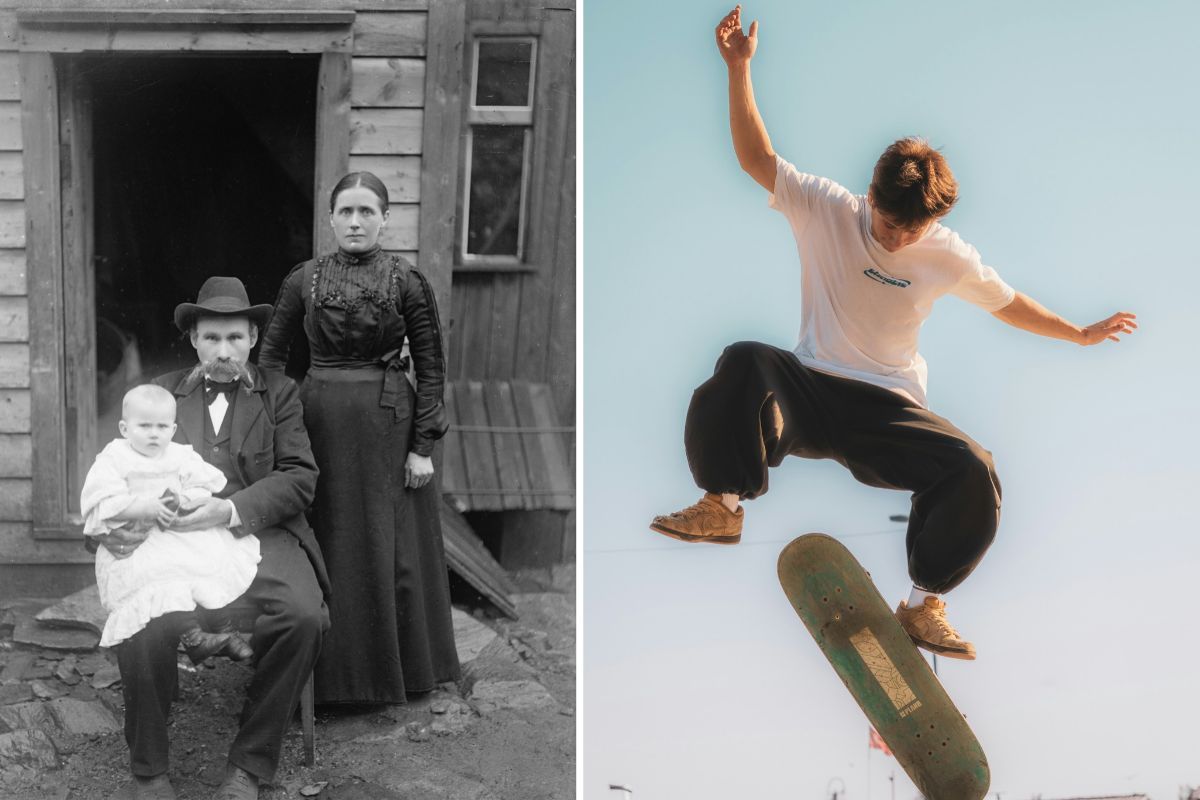
Most of us have a pretty good sense of who we think Gen Xers are and how they were raised: the latchkey kids who raised themselves, drank from the hose, and came in for dinner when the streetlights came on because their Boomer parents were either stuck at work or totally hands-off.
But not all Gen Xers were raised by Baby Boomer parents. A sizable chunk, and even some older Millennials, had parents who were born a little bit earlier. This generation of parents, the Silent Generation, had a noticeably different approach.
Some Gen Xers were raised by Silent Generation parents
Your typical member of Generation X was born in the mid to late ’60s through around 1980, making most of them around 46-61 years old today.
Typically, we think of Gen Xers as being raised by the Baby Boomers, who were in their 20s and 30s for most of that time period. But there’s a small slice of time, a few years in the mid-1960s, when it was actually a different generation having most of the kids: The Silent Generation.
The Silent Generation refers to people born right smack in the middle of the Great Depression or near the beginning of World War II. It’s a generation that gets far less discussion than others, partly because it’s small, comprising only around 50 million people in the United States.
The depression and the war caused birth rates to plummet, which, of course, set the stage for the “boom” of the Baby Boomers after WWII ended.
But the Silent Generation grew up in notoriously harsh times, which strongly shaped how a handful of older Gen Xers were raised.
Hallmarks of Silent Generation parents
How was growing up with Silent Generation parents different than being raised by Boomers?
Extreme thriftiness
The Silent Generation was born and came of age in some of the leanest times our country has ever seen. Whether it was the Great Depression or wartime rationing, they had to make the absolute most of what they had.
Those penny-pinching habits followed them well into their life as parents raising a family.
“We weren’t allowed to take a shower, because my dad thought it would raise the water bill. So my sister and I had to take baths, and we had to share bath water,” TheOver50Woman shares about her parents on TikTok. “That’s probably the reason I’m a raging, raging germaphobe.”
Gen Xers also add that the Silent Generation was the ultimate “finish everything on your plate” generation.
GenXJono on YouTube quipped, imitating his own parents, “You no like your food? I didn’t have food! Or a mother to make it for me!”
Gen Xers raised by Silent Generation parents report getting very little in the way of toys or clothes that weren’t hand-me-downs, and that snacking between meals was usually forbidden and seen as wasteful.
Heads down
While Boomers came of age in the 1960s, a time of social rebellion, the Silent Generation grew up in far more conservative times. The ’50s were all about conformity, traditional gender roles, and a return to normalcy after the war. The Silent Generation was raised to work hard, keep their head down, and toe the company line.
It follows, then, that they often had little tolerance for children’s whining, crying, or squabbles. This is the generation that coined the terms “Children should be seen, not heard” and “I’ll give you something to cry about.”
A commenter on TheOver50Woman’s video writes, “Opinions against the grain were seen as silly and attention seeking. Crying? My parents used to sing ‘crybaby Becky, crybaby Becky’ and get other children to do the same.”
They also tended to show affection by providing food and shelter rather than with words or physical touch.
Another commenter added, “In college, I stayed a weekend at a friend’s house with his parents. It was a revelation: I didn’t realize that other mothers hugged their children.”
If Boomers were about climbing the ladder and reaching new heights of achievement, the Silent Generation was the lunch-pail type—show up, work hard, and don’t complain until it’s time to retire. Those values showed up in how they raised their kids.
No time for leisure
Growing up during the Great Depression or World War II, the Silent Generation didn’t have much time for leisure. If they weren’t working, scavenging, or helping around the house, their very survival was at stake.
It’s another habit they carried into adulthood.
TheOver50Woman shares, “We were not allowed to sit during the day. This was not up for debate, you always had to be doing something. Chores were not an option and we certainly didn’t get paid to do them.”
It’s a strong contrast to the stereotypical Gen X upbringing, where a single parent or both parents were out of the house working, leaving the kid to roam the neighborhood, play Nintendo, or practice with their rock band all day.
Many Gen Xers raised by the Silent Generation had to get jobs as soon as they could and use that money to contribute to the household.
Resilience & family-first
Some Gen Xers report that their Silent Generation parents were often emotionally distant and demanding, but this generation had many admirable qualities as well.
For example, many survived extremely harsh childhoods and passed that resilience on to their children. They passed down frugal Great Depression recipes; kids learned practical skills like gardening and home repair, and they had little to no sense of “keeping up with the Joneses.”
Maureen Hennessy on TikTok says, “Our vacations were visiting family… We didn’t stop for food, we didn’t get a hotel. And I really wouldn’t have it any other way because … they were smart to make sure that they used their resources and didn’t set us up for failure. My Gen Z kids have grown up with stuff, we could fill landfills. If I could go back and do it over again, I’d raise them the way I was raised.”
The Silent Generation is also known for being selfless and willing to sacrifice for the good of the family. Many Gen Xers raised by these parents have eventually come to appreciate how hard they worked.
Gen X is known as the latchkey kids, the laissez-faire slackers, the MTV generation. But that reputation doesn’t paint a full picture, and it certainly doesn’t describe all Gen Xers, especially not the older ones raised by Silent Generation parents.
If Boomer parents were hands-off and lenient, the Silent Generation was far stricter and more demanding overall. Whatever they lacked in emotional openness and warmth, they made up for it—at least in part—with a self-sacrificing work ethic that ensured their kids could survive anything, just like they did.