Being in a healthy, loving relationship usually involves two people who can share emotional reciprocity. There is patience, understanding, and peace.
But some people often feel like they are “too much” in relationships. This can come with feelings of anxiety and disrupt trust and growth—whether the relationship is with a romantic partner, family member, or friend.
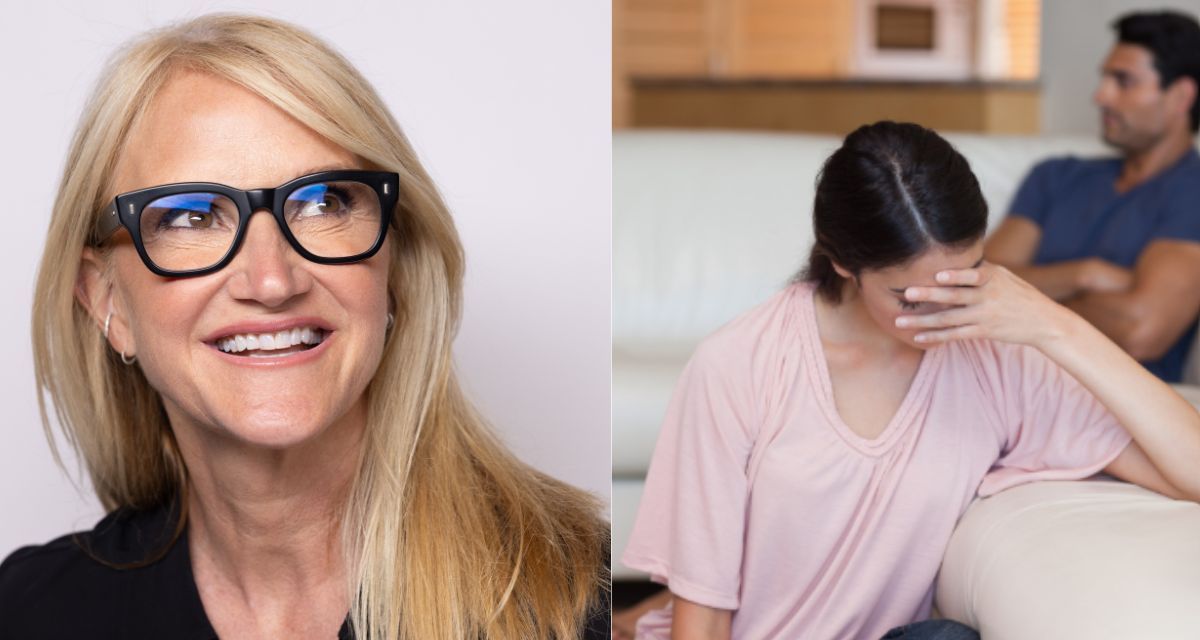
During a recent appearance on the Zach Sang Show, motivational expert Mel Robbins broke down exactly why some people feel they are “too much.” Robbins explained it with an analogy called the “10-gallon people” theory that Oprah Winfrey first shared with her.
The ‘10-gallon people’ theory
In the clip, Robbins explained that understanding the “10-gallon people” theory has been “so transformational for me.”
Robbins added that she learned it from Oprah, who first heard about it from Bishop T.D. Jakes. Jakes helped Oprah apply it to her complicated relationship with her mom.
The theory uses measurement sizes to describe people: There are “10-gallon people” and “pint people.”
“‘Ten-gallon people’ need 10 gallons of love, and 10 gallons of attention, and 10 gallons of excitement, and 10 gallons of energy—and 10 gallons is what I need,” Robbins said. “If you’re a ‘10-gallon person’ looking for 10 gallons of love, and you’re dealing with a person that has a pint-size capacity because of their past or maybe because of what they’re dealing with in the present, you’re not going to feel satisfied,” she added.
Robbins went on to say that she is definitely a “10-gallon person,” and there are “lots of people in my life that are ‘pint-size.’ And they’ll pour the entire pint that they have to give into me. But I’m not satisfied.”
She called it “sad,” because that person with the pint-size capacity gave “everything they had to give. And there’s nothing wrong with somebody who’s pint-sized,” she explained.
Avoiding resentments regarding capacity
Unfortunately, this can lead to resentment. Robbins explains that this can leave the 10-gallon person feeling like the pint-size person “didn’t give me enough.” However, it was all they had to give—their everything.
“And you didn’t see it because you were looking for something different,” said Robbins.
She added that she has learned “it’s not better or worse to be pint-size or 10-gallon—it just is.”
Robbins said it comes down to having an awareness about which one you are, based on both past and present circumstances. For example, 10-gallon people may become pint-sized when things happen in life, such as a friend dealing with a cancer diagnosis or another struggle.
Rather than being judgmental and taking a step back, Robbins explained with her own “Let Them” theory that it’s important to “let them show up differently, and let me ask myself: How do I want to show up? What kind of friend do I want to be? Do I want to write this person off, or do I want to pick up the phone and ask, ‘You don’t seem like yourself. Everything going okay?’ And then you can decide what to do next.”
Oprah explains the ‘10-gallon people’ theory
During a September 2026 appearance on The Mel Robbins Podcast, Oprah introduced the concept to Robbins and explained more about how she related to the 10-gallon people theory in regard to her relationship with her mother.
“I’m a 10-gallon person, and you’re a 10-gallon person, and a lot of you are 10-gallon people trying to get 10 gallons worth of love from pint-sized people who cannot carry the 10 gallons,” Oprah said. “They can’t even carry the gallon.”
She added that when expecting to gain 10-gallon “love, responses, reception, acceptance” from people who have a “pint-sized ability,” they “don’t have it.”
Oprah added it’s about recognizing that, and changing the focus to what they have by asking yourself: “Can I accept you exactly as you are, with what you do have?”
“With my mother, she could cook, she made some incredible collard greens, and could make cornbread like nobody else—and that was the way she offered love,” she said, explaining that people in her generation or others may be familiar with this.
“Because I provided for you, that was love. You had food on the table, you had shelter, you weren’t on the streets. That was all I had,” Oprah explained, connecting that both her mom and grandmother were maids and domestic workers who were “giving all your energy to taking care of other people’s kids, putting on the face for them, wearing the mask for them. And by the time you came home, you had nothing left for me. I recognize that now, and I forgive that.”