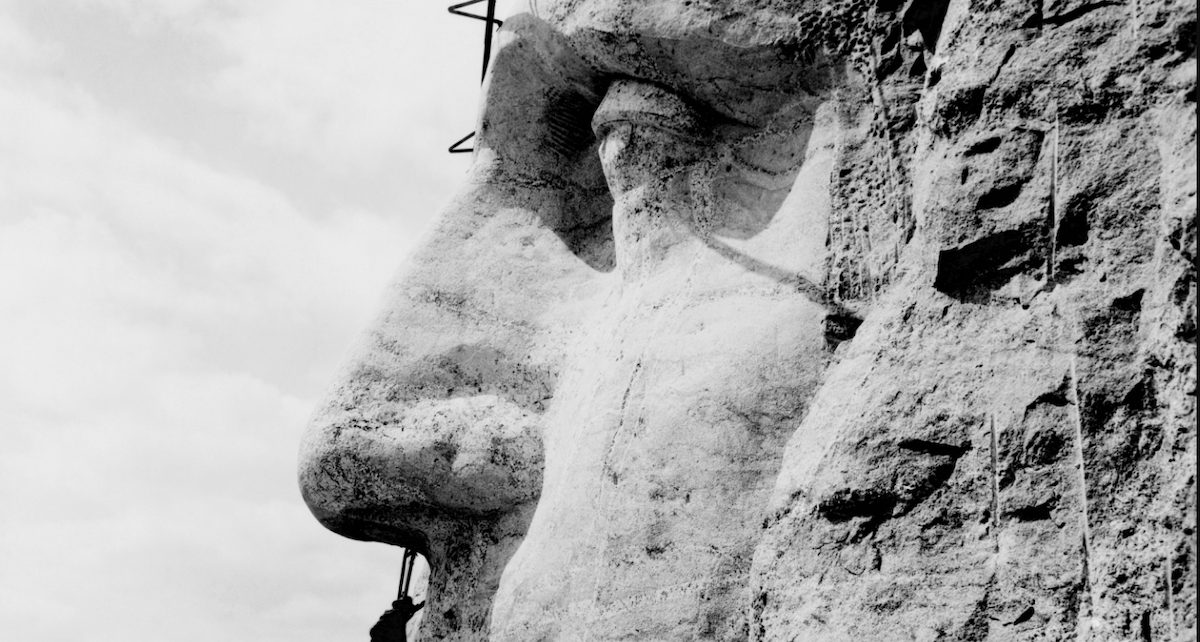
Two million people a year walk the Avenue of Flags in South Dakota’s Black Hills to look up at four 60-foot granite faces. Most of them don’t know they’re looking at an unfinished job.
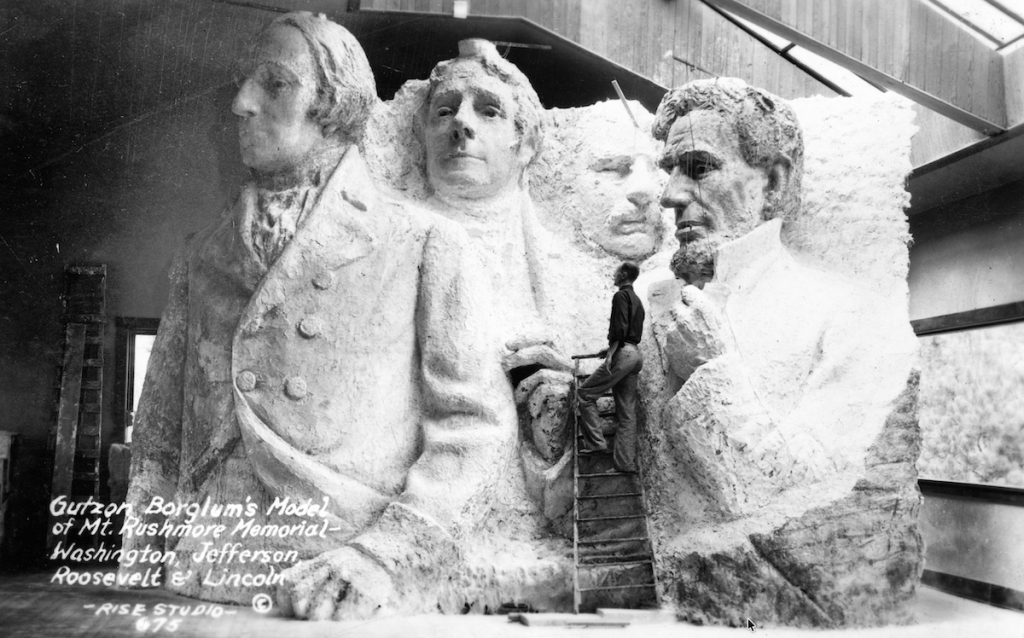
Gutzon Borglum started carving in 1927 with a considerably larger plan. According to UNILAD, his 1925 scale model, photographed at Rise Studio, shows the presidents rendered down to the waist, with Washington and Lincoln worked out in detail. The heads were meant to be the top of something.
He also wanted an inscription. The Entablature would be a massive panel on the mountain’s eastern face, carved into the rock, shaped like the Louisiana Purchase, and bearing a brief history of the United States.
The Entablature went first, dropped in 1934 over cost and the technical difficulty of carving legible text on that scale. The torsos went when Congress threatened to withhold funding unless every remaining dollar went to finishing the heads.
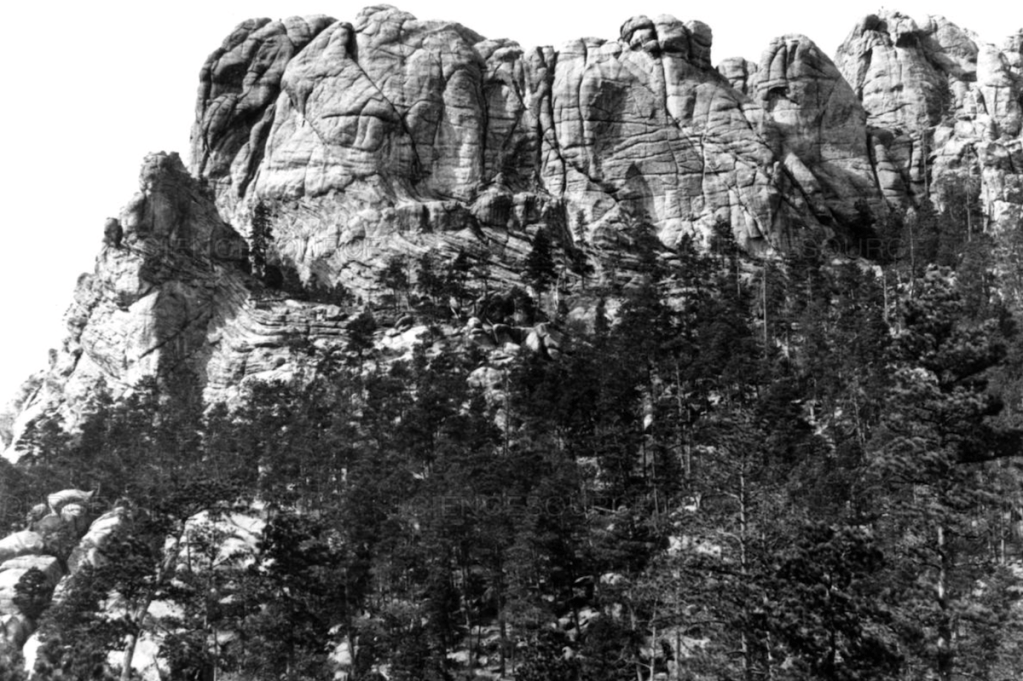
Borglum was 60 when he started and gave the last 14 years of his life to it. He died in March 1941. His son Lincoln took over, and the work stopped that October, leaving Mount Rushmore permanently unfinished.
The Black Hills are sacred to the Lakota, and the United States promised the territory to the Sioux in perpetuity in the Treaty of Fort Laramie in 1868. The government took the Black Hills back after gold was found there. The faces on the mountain belong to men who presided over that expansion, carved into land taken from the people who were there first.