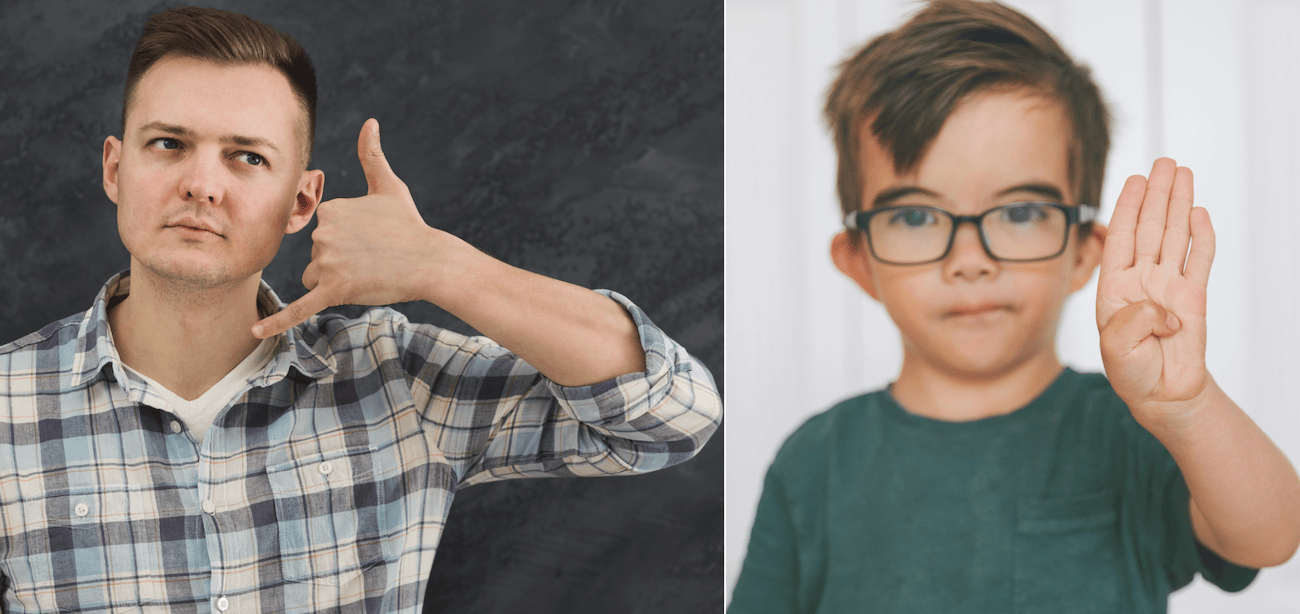
Technology evolves rapidly, but the physical habits we form around it linger for a lifetime. TikTok creator Chelsea Bare (@chelseabare) highlighted that divide by testing her Millennial husband and her Gen Alpha son on how they would perform basic, everyday actions.
Separated by a 25-year age gap, the father and son stood on opposite sides of a door, unable to see each other, and responded to a series of rapid-fire prompts.
When Bare asked how they would roll down a car window, the dad immediately mimicked cranking an old manual handle. The son pantomimed pressing a button to lower it automatically.

The pattern repeated with every prompt. When asked how to answer a phone, the dad made a classic 1990s handset gesture with his thumb and pinky, while the boy mimicked tapping a sleek smartphone screen. When asked how to hang up, the dad slapped his hand down as if dropping a receiver, while the son mimed tapping a button.
Taking a photograph showed the sharpest contrast, as the dad framed a vintage camera with both hands and clicked an imaginary shutter, while the boy casually used his palm as a digital screen and, again, tapped a button.

They only seemed to match when Bare asked how to dial a phone; they both pantomimed similar actions. But they diverged again when asked to make a heart with their hands. While the dad stretched his fingers wide to form a sprawling, old-school heart, the boy flashed a tight, four-finger Gen Z hand sign.
The fun demonstration tapped into a well-documented phenomenon. Research on generational interactions with technology, such as studies by Calvo-Porral and Pesqueira-Sanchez, suggests that people naturally adopt the interface habits they formed as kids and rely on the physical shortcuts they grew up with.
Commenters on TikTok delighted in the nostalgia, with many pointing out how muscle memory shapes our perception of the everyday world.
Follow Chelsea Bare (@chelseabare) on TikTok for more humor and lifestyle content.