Humans are living longer and longer, which is generally a good thing. One of the downsides of that fact, though, is that more will eventually get dementia. The percentage of people with Alzheimer’s increases with age, affecting 5% of those from 65 to 74, 13% of those aged 73 to 84, and a third of people 85 and older.
One method doctors use to assess whether people have dementia is the Luria test, which is highly effective and simple to administer. Alexander Luria, a Soviet neuropsychologist, created the test as part of a battery he used on soldiers returning from World War II. In a recent viral TikTok, Dr. Adnan Husein, a neurologist and fellow physician at UCLA Health, explained the test.
What is the Luria test for dementia?
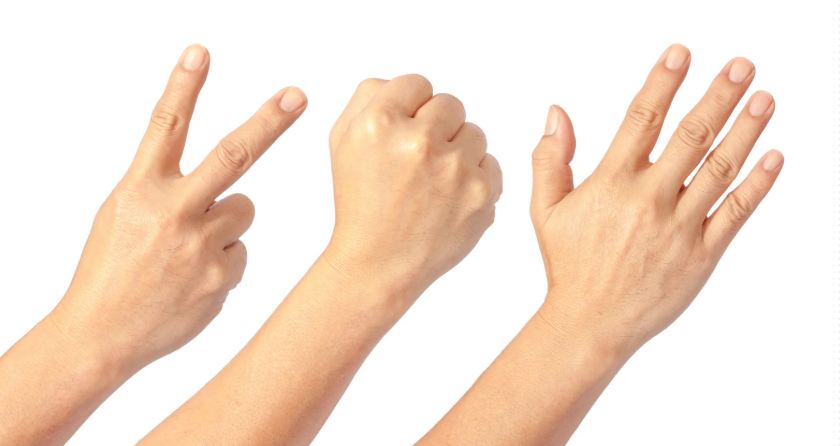
First, Dr. Husein explained the fist-edge-palm sequence, in which patients are asked to imitate three hand motions shown to them by the physician. “That was the Luria test, and it’s testing different parts of your brain: motor function, executive function, and sequencing,” Dr. Husein said. “Now, for most of you, that test will be pretty simple. But for some people, they can’t do the movement smoothly. They sometimes persevere on the same movement again and again, or they miss the sequence.”
Over the years, the test has been very reliable. According to Dr. Husein, only about 2% of people will have “difficulty” with the test. However, 50% of people with Alzheimer’s will have difficulty with the test and 70% of those with frontal temporal dementia. Dr. Husein also clarified that the test is just one of a battery of assessments to determine whether someone has dementia. “So is that test diagnostic for dementia? No, but it’s a quick screening test that you can do in your clinic at any time,” he clarified.
The test is harder than it looks
What’s challenging about the Luria test is that it asks the patient to be conscious of how they move their hand because it follows an irregular pattern. Most of the time when we’re pounding our fist, we do it multiple times whether we’re playing rock, paper, scissors or talking with our hands.
Many folks in the comments were shocked by how difficult the seemingly simple test is. “I mean, I can do it, but it takes all of my concentration,” one person wrote.
“What does it mean if I started doing rock paper scissors instead?” another joked.
People in the comments who are neurologically atypical found the test especially difficult.
“Hey neurodivergent friends, this isn’t for us, ok?” one wrote.
“Me: why is this SO HARD *checks comments* ah, my autism strikes again,” added another.
“Hey neurodivergent peeps, we need to tell people we’re neurodivergent before cognitive testing. I was volunteered for a Mini ACE demonstration and smashed some of it but bombed the working memory segment because of my ADHD. So it led to an important practice discussion for neurodivergent considerations for these screeners,” someone else reminded their fellow commenters.
Ultimately, the Luria test shows how important executive functioning is in a normal human brain and the mental disruptions that occur when people have dementia. For the average person, it shows that when we break our basic patterns, such as how we pound our fists into our hands, it can be more challenging than you’d think.